Trump Spending Cuts are About Waste, Not Retribution

Trump Spending Cuts are About Waste, Not Retribution

Trump Spending Cuts are About Waste, Not Retribution
February 27, 2025

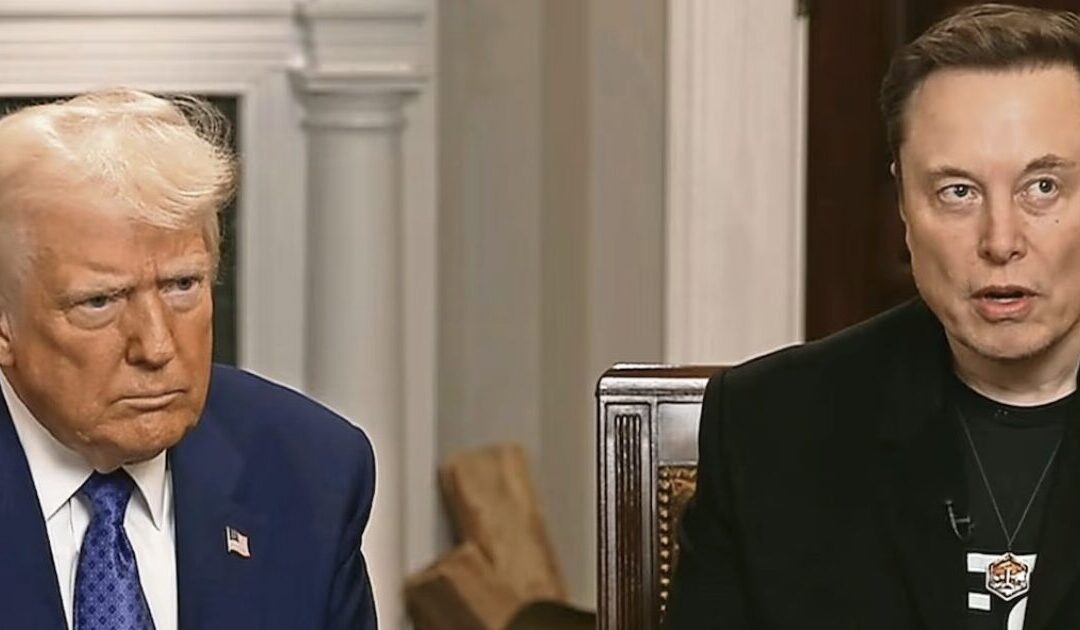
Trump and Musk, DOGE photo courtesy of El Universal


The media is framing the budgetary cuts implemented by the Department of Government Efficiency (DOGE) under Elon Musk as retribution against government departments that previously criticized or investigated President Trump. This is far from the truth, however. These cuts are sweeping across multiple departments that never attacked or investigated President Trump, including the Centers for Medicare and Medicaid Services (CMS) Operational Efficiencies, U.S. Agency for International Development (USAID), Environmental Protection Agency (EPA) Budget Cuts, Department of Education Proposed Elimination, National Oceanic and Atmospheric Administration (NOAA), Department of Defense (DoD), among others. Additionally, there is a general reevaluation and reduction in the total number of government employees across all departments.

The media claims that the budget cuts are being made to support tax breaks for the ultra-rich, with common taxpayers ultimately bearing the burden. This view, however, is inconsistent with the facts. President Trump’s recent budget proposal includes several tax cuts designed to benefit everyday Americans. These include the elimination of federal income taxes on tips, overtime earnings, and Social Security benefits, which would increase take-home pay for many workers.

The proposal also seeks to extend key provisions from the 2017 Tax Cuts and Jobs Act, maintaining current tax rates and deductions for individuals. Additionally, it introduces a new itemized deduction for auto loan interest, potentially reducing taxable income for car owners, and removes the $10,000 cap on state and local tax (SALT) deductions, which could help taxpayers in high-tax states. These measures are part of a broader plan that includes $4.5 trillion in tax cuts and $2 trillion in spending reductions over the next decade.

Below is a partial list of departments and actions DOGE has initiated to reduce the federal budget:

National Institutes of Health (NIH): NIH imposed a 15% cap on administrative costs for research projects, including expenses like personnel, facility maintenance, and equipment. The policy aimed to save $4 billion annually but has been temporarily blocked by a lawsuit. Additionally, NIH has laid off over 1,100 staff members, according to an internal email obtained by Reuters. Centers for Medicare and Medicaid Services (CMS): CMS has been working with DOGE to identify opportunities for more efficient resource use, aligning with President Trump’s goals.

U.S. Agency for International Development (USAID): The proposed cuts to USAID are driven by concerns over inefficiency and misallocation of resources. Critics argue that the agency has often prioritized administrative overhead, with as much as 20-30% of its budget going toward salaries, contractors, and other expenses rather than direct aid. For example, after the 2010 Haiti earthquake, USAID’s disaster relief efforts were criticized for slow response times and wasteful spending, including duplicate services and excessive contractor fees. Additionally, the agency’s focus on initiatives like Diversity, Equity, and Inclusion (DEI) has drawn scrutiny, while there are parts of the world where basic needs such as food, water, and healthcare are not being met.

Infrastructure projects funded by USAID in countries like Afghanistan and Iraq have also been criticized for being poorly planned and unsustainable, often resulting in abandoned or underused facilities. Furthermore, the practice of paying foreign contractors exorbitant salaries, sometimes reaching six figures, has been seen as an inefficient use of taxpayer money when local personnel could fulfill similar roles at much lower costs. These issues have prompted calls for cuts to USAID’s budget as part of a broader push to eliminate waste and redirect resources to more immediate needs, both domestically and internationally.

Department of Education: The administration has proposed eliminating the Department of Education, a longstanding goal among many conservatives, although this proposal faces significant legal and political challenges. The rationale for this policy is rooted in the belief that education should be managed at the local or state level, rather than by a federal agency. Advocates argue that local school boards and state governments are better equipped to address the specific needs of their communities, as opposed to a one-size-fits-all approach from Washington.

Supporters also see the Department of Education as an example of unnecessary federal overreach, contending that education is a responsibility traditionally handled by states. They believe that eliminating the department would reduce the size of the federal government and restore more power to states. Budgetary concerns also play a role, as the department’s large budget is seen as an area where savings could be achieved to help reduce the federal deficit. Additionally, proponents often push for increased school choice, arguing that reducing federal involvement would foster competition among schools, improve quality, and provide parents with more educational options.

Critics also highlight the bureaucratic nature of the Department of Education, suggesting that eliminating it could direct more funds to schools rather than administrative overhead. Finally, some proponents argue that the U.S. Constitution does not grant the federal government authority over education, with the Tenth Amendment reserving such powers to the states or the people.

Other government departments targeted by DOG include the Department of Defense (DoD), IRS, National Institutes of Health (NIH), and USAID, as well as agencies like NASA, FEMA, and the Consumer Financial Protection Bureau (CFPB). DOGE has initiated investigations into fraud and waste at the DoD, with layoffs expected for probationary employees. The Environmental Protection Agency (EPA) has already experienced significant cuts, including a 31% reduction in 2018, which resulted in the elimination of over 50 programs and the loss of 3,200 jobs.

Similarly, the National Oceanic and Atmospheric Administration (NOAA) faces proposed cuts that could reduce its budget by 30% and halve its staff, potentially affecting vital services like weather forecasting and climate research. At the IRS, DOGE sought access to sensitive taxpayer data, ultimately agreeing to read-only access to anonymized information. Other departments, such as the Federal Aviation Administration (FAA) and Treasury, are also facing scrutiny, with Musk’s involvement raising concerns about conflicts of interest, particularly regarding SpaceX contracts. Additionally, thousands of probationary workers at agencies like the IRS and FEMA have been laid off as part of these efforts.

The post Trump Spending Cuts are About Waste, Not Retribution appeared first on The Gateway Pundit.

Go to Source
Author: Antonio Graceffo
JUST IN: President Trump Says Tariffs on Canada and Mexico go into Effect March 4

JUST IN: President Trump Says Tariffs on Canada and Mexico go into Effect March 4

JUST IN: President Trump Says Tariffs on Canada and Mexico go into Effect March 4
February 27, 2025

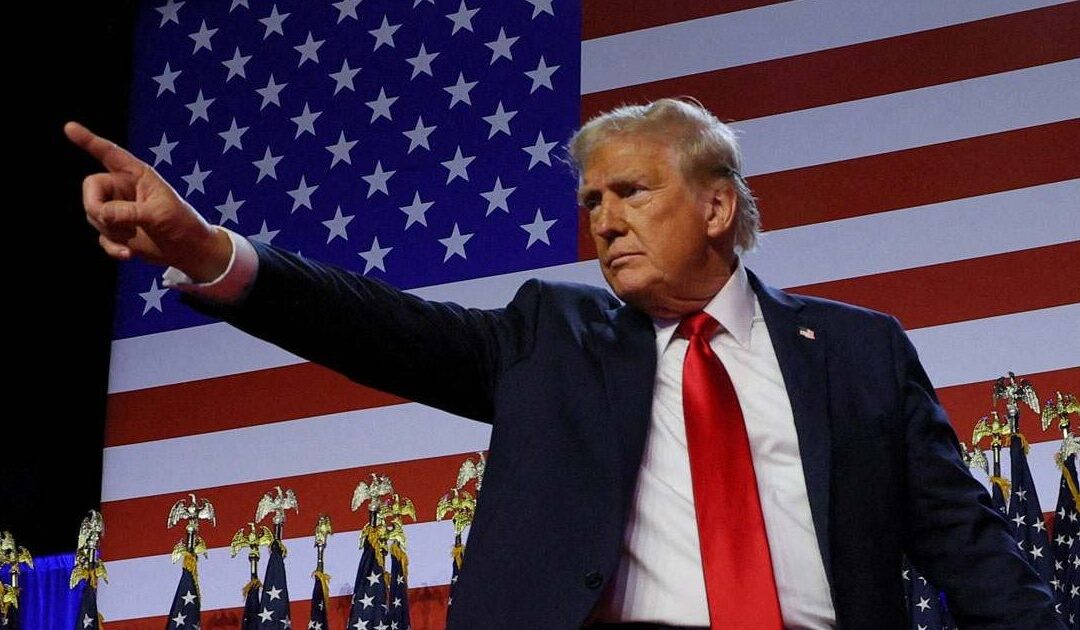
President Donald Trump courtesy of El Economista.

President Trump’s tariffs against Mexico, Canada, and China will go into effect on March 4, he announced on Thursday morning. 

As The Gateway Pundit reported earlier this week, President Trump signaled that his 25% tariffs on China and Mexico were “going forward on time [and] on schedule” after a one-month pause.

WATCH: President Trump Says Tariffs on Mexico and Canada are “Going Forward on Time, on Schedule” Following One Month Suspension

President Trump previously imposed his long-awaited 25% tariffs on Mexico and Canada on February 1, a move that was first met with pushback from Canadian Prime Minister Justin Trudeau. Trudeau responded by announcing he would impose his own tariffs on the United States, which many in Canada thought would be a big mistake.

Trump slapped the tariffs on the three countries under the International Emergency Economic Powers Act.

  • 25% tariffs on all Mexico imports
  • 25% tariffs on nearly all Canadian imports — 10% on Canadian energy resources
  • 10% tariffs on all China imports

After the economic and political fallout, Trudeau caved to Trump's demands and agreed to implement a $1.3 billion border plan to reinforce border security. He promised “new choppers, technology and personnel, enhanced coordination with our American partners, and increased resources to stop the flow of fentanyl.” Trump, in turn, agreed to suspend the tariffs temporarily for one month.

Mexican President Claudia Sheinbaum also agreed to send 10,000 Mexican Soldiers to the border in exchange for a temporary pause on tariffs less than 48 hours after President Trump imposed tariffs on the country.

Still, this wasn't enough as "drugs are still pouring into our country and Mexico at very high and unacceptable levels," says President Trump.

Drugs are still pouring into our Country from Mexico and Canada at very high and unacceptable levels. A large percentage of these Drugs, much of them in the form of Fentanyl, are made in, and supplied by, China. More than 100,000 people died last year due to the distribution of these dangerous and highly addictive POISONS. Millions of people have died over the last two decades. The families of the victims are devastated and, in many instances, virtually destroyed.

We cannot allow this scourge to continue to harm the USA, and therefore, until it stops, or is seriously limited, the proposed TARIFFS scheduled to go into effect on MARCH FOURTH will, indeed, go into effect, as scheduled. China will likewise be charged an additional 10% Tariff on that date. The April Second Reciprocal Tariff date will remain in full force and effect. Thank you for your attention to this matter. GOD BLESS AMERICA!

The post JUST IN: President Trump Says Tariffs on Canada and Mexico go into Effect March 4 appeared first on The Gateway Pundit.

Go to Source
Author: Jordan Conradson

Betrayed by the Science: Doctors Confirm COVID Shot Linked to Nursing Home Director’s Devastating Bone-Rotting Condition

Betrayed by the Science: Doctors Confirm COVID Shot Linked to Nursing Home Director’s Devastating Bone-Rotting Condition

Betrayed by the Science: Doctors Confirm COVID Shot Linked to Nursing Home Director’s Devastating Bone-Rotting Condition
February 27, 2025

Credit: Daily Mail

Tennessee native Brittany Burnette devoted her life to caring for the elderly, putting her patients first as a nursing home director. But after dutifully rolling up her sleeve for the COVID shot, she found herself in a nightmare she never could have imagined—one where her bones were literally rotting inside her body, Daily Mail first reported.

Burnette, now 34, took the Pfizer vaccine in January 2021, believing she was protecting herself and her vulnerable patients. But months later, she developed unbearable pain in both hips.

Doctors initially dismissed her suffering as arthritis—at just 31 years old. Yet the pain only worsened, forcing her into a wheelchair. Finally, after undergoing an MRI, the shocking truth emerged: her hip bones were dying.

By December 2021, Burnette had to undergo her first hip replacement. Just months later, she needed a second. What followed was an unrelenting cascade of surgeries—shoulders, knees, elbows, feet—all as her bones continued to collapse.

“Even though I have had all of these replacements and surgeries, I am still in constant deep bone pain every day,” she told Daily Mail.

“It isn’t as bad as bone death pain but some days are still unbearable. The pain is so bad some days it takes everything I have to get out of bed and move, let alone be a mother and wife… Doctors think I will likely suffer with bone pain for the rest of my life.”

After nearly a year of suffering, a doctor made the connection that many refuse to acknowledge: the COVID vaccine had triggered a catastrophic immune response, cutting off the blood supply to her bones.

The devastating diagnosis? Multifocal avascular necrosis (AVN), a condition where bone tissue dies due to lack of blood flow.

“The pain is so debilitating,” Burnette told Daily Mail, adding, “I have never felt so helpless in my entire life. I’ve always been trying to be the best provider I could be caring for other people.”

“Now I can’t even drive my kids to school in the morning anymore… it’s devastating.

“I have really had to mourn the life that I thought I was going to have because I will no longer be able to be the same person I’ve always wanted to be because of a virus and a vaccine.

“It’s absolutely destroyed my life, and so I’ve had to just totally sit back and reevaluate everything,” she added.

Burnette, however, is not anti-vaccine. Like millions of Americans, she trusted what the government and media told her.

The post Betrayed by the Science: Doctors Confirm COVID Shot Linked to Nursing Home Director’s Devastating Bone-Rotting Condition appeared first on The Gateway Pundit.

Go to Source
Author: Jim Hᴏft

State Department to Deny Visas for Transgender Athletes on the Basis of ‘Fraud’

State Department to Deny Visas for Transgender Athletes on the Basis of ‘Fraud’

State Department to Deny Visas for Transgender Athletes on the Basis of ‘Fraud’
February 27, 2025

The State Department has issued a directive to block visas for transgender athletes based on “fraud” and “misrepresenting” their sex to compete.

The directive was issued on February 24 and orders officials to issue permanent visa bans on those who misrepresent their birth sex on their travel documents.

The new rules will apply to the 2028 Olympics, which is scheduled to take place in Los Angeles.

The Guardian reports:

The 24 February state department cable obtained by the Guardian instructs visa officers to apply Immigration and Nationality Act section 212(a)(6)(C)(i) – the “permanent fraud bar” – against trans applicants. Unlike regular visa denials, this section triggers lifetime exclusion from the United States with limited waiver possibilities.

“In cases where applicants are suspected of misrepresenting their purpose of travel or sex, you should consider whether this misrepresentation is material such that it supports an ineligibility finding,” reads the directive from the US secretary of state, Marco Rubio.

The instructions come after Donald Trump issued an executive order on 5 February barring trans athletes from competing in women’s sports. While signing the order, the president directed the homeland security secretary, Kristi Noem, to deny visas to “men attempting to fraudulently enter the United States while identifying themselves as women athletes” during the 2028 Olympics in Los Angeles – which will take place under Trump’s watch.

While signing the executive order, Trump told Rubio to let the International Olympic Committee know that America “will not stand by and watch men beat and batter female athletes”.

The post State Department to Deny Visas for Transgender Athletes on the Basis of ‘Fraud’ appeared first on The Gateway Pundit.

Go to Source
Author: Cassandra MacDonald

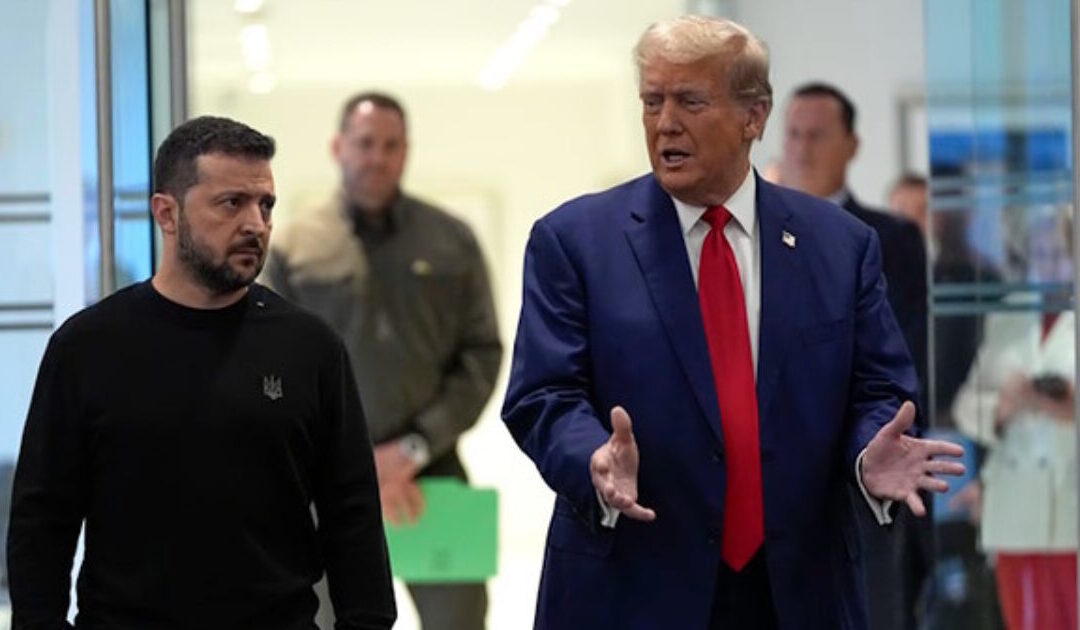
Trump-Zelensky Defense for Minerals: The Art of the Fair Deal

Trump-Zelensky Defense for Minerals: The Art of the Fair Deal

Trump-Zelensky Defense for Minerals: The Art of the Fair Deal
February 27, 2025

As Americans grow weary of sending tens of billions of dollars to Ukraine to fund its defense, President Trump has offered President Zelensky a fair deal: Zelensky would receive financial support, and the U.S. would gain access to rare earth minerals crucial for national security.

This deal benefits both the U.S. and Europe by bringing the supply chain closer to home, taking it out of China’s hands. It also provides Zelensky the money he needs to continue the war, even as Europe scrambles to find the cash to replace U.S. support, which Trump is threatening to withhold.

While Zelensky would not receive an explicit U.S. security guarantee, he would have an implied guarantee, as the U.S. would station personnel in Ukraine to manage the resources and would likely defend its critical supply chain.

Initially, Zelensky rejected this deal. Trump was right: he offered Zelensky a fair deal—defense in exchange for rare earth minerals.

However, Zelensky rejected it because it wasn’t the free money he had grown accustomed to. The media and our European allies are now calling Trump Hitler because he proposed an exchange of value rather than giving away American taxpayer dollars.

As of now, despite badmouthing the U.S. and complaining about the deal, Zelensky is scheduled to meet President Trump at the White House, where a deal is expected to be reached.

In February 2025, U.S. President Donald Trump proposed an agreement to Ukrainian President Volodymyr Zelensky concerning Ukraine’s critical and rare-earth mineral resources.

The deal entailed Ukraine allocating 50% of the revenue from the future monetization of its natural resources—including minerals, natural gas, oil, and other extractable materials—to a joint U.S.-Ukraine fund.

This fund would be managed collaboratively, with the United States holding the majority ownership stake.

The agreement aimed to provide the U.S. with a substantial share of Ukraine’s resource-related revenue, potentially valued up to $500 billion.

In exchange, the United States committed to maintaining a long-term financial commitment to Ukraine’s development, contributing to the country’s stability and prosperity.

However, the agreement did not include specific security guarantees for Ukraine, a point of contention for President Zelensky. He emphasized the necessity of U.S. security assurances to protect Ukraine against ongoing Russian aggression.

The proposed deal was framed by President Trump as a means to recoup the financial aid provided to Ukraine during the conflict with Russia.

He stated, “We’re gonna make sure everything goes well… Nobody’s going to be messing around with our people when we’re there.”

President Zelensky expressed concerns over the lack of concrete security guarantees in the agreement, stating, “I have questions, and we very much need honest answers because we are at war, and we have to understand what we can count on.”

While the deal does not include the specific security guarantees Zelensky had pushed for, U.S. support for Ukraine’s peace efforts was acknowledged.

Trump clarified that the U.S. would not provide security guarantees beyond limited terms but suggested that the presence of American workers in Ukraine would offer “automatic security.”

He also indicated that the U.S. would continue supplying military aid to Ukraine until a deal is reached with Russia.

The agreement was described as “preliminary” and required approval from Ukraine’s parliament, the Verkhovna Rada, before it could be finalized.

The draft agreement outlined the terms of a joint Reconstruction Investment Fund, with the U.S. holding the “maximum percentage of ownership.”

The Ukrainian government would contribute 50% of the proceeds from the future monetization of all relevant state-owned natural resource assets to the U.S.-controlled fund.

In exchange, the U.S. would maintain a long-term financial commitment to Ukraine’s development.

The Trump-Zelensky mineral deal is a historic example of The Art of the Deal and highlights the difference between having a deal-making president and a compliant globalist who simply writes checks to causes.

The Ukraine mineral deal could ultimately end the war, or at the very least, ensure Ukraine can continue fighting, which is what both Europe and Kyiv want.

It provides the U.S. with critical minerals while striking a blow to China, converting U.S. aid into a long-term investment that benefits America.

The post Trump-Zelensky Defense for Minerals: The Art of the Fair Deal appeared first on The Gateway Pundit.

Go to Source
Author: Antonio Graceffo