
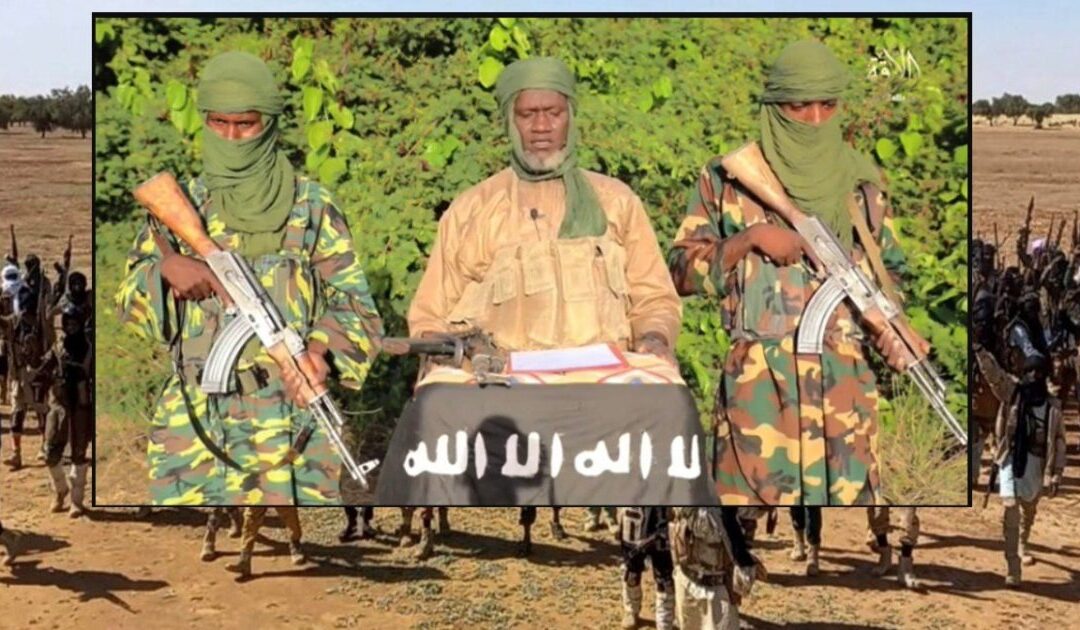
Mali Under Siege: Al-Qaeda and Separatists Launch Largest Coordinated Attack in the Country’s History
April 30, 2026

The growing terrorist coalition in Mali, comprising FLA-JNIM, does not yet match ISIS at its 2014 peak; however, JNIM is strangling the Malian state from within, blockading fuel supplies, taxing rural communities, coordinating with separatists, and positioning for negotiation rather than outright conquest.
On April 25, 2026, Mali suffered the largest coordinated jihadist attack in its history, as two armed groups, the al-Qaeda-affiliated Jama’at Nusrat al-Islam wal-Muslimin (JNIM) and the Tuareg separatist Azawad Liberation Front (FLA), struck simultaneously from the capital, Bamako, to the northern city of Kidal, roughly 1,500 km away.
The attack is the latest in a region that now leads the world in terrorist attacks. The Sahel, a band of West African states including Mali, Burkina Faso, Niger, and Chad, accounts for over half of all terrorism-related deaths worldwide in 2025, a share that stood at under one percent less than two decades ago.
A wave of military coups since 2020 expelled Western and UN counterterrorism forces across the region and replaced them with Russian mercenaries, accelerating the collapse of state authority in rural areas that jihadist groups have systematically exploited. In the April 25 attack, terrorists struck Bamako, Kati, Sévaré, Mopti, Gao, and Kidal across Mali’s full geographic span. Shortly before 5:20 a.m., two explosions and heavy gunfire were reported near Kati, the main military base outside Bamako and the residence of junta leader Gen. Assimi Goïta.
A suicide attacker drove an explosives-laden vehicle into the residence of Defense Minister Sadio Camara. He survived the blast but later died of his injuries in the hospital. His second wife and two grandchildren were also killed.
Camara was a key architect of the military government’s security partnership with Russia, described by Ulf Laessing of the Konrad Adenauer Foundation as the “architect of cooperation with Russia.” He proposed deploying Russian mercenaries in 2021 and expelling MINUSMA, helped bring Wagner Group forces into Mali, and regularly announced Russian military equipment transfers, most recently after visiting his counterpart in June 2025.
In Bamako, sustained heavy weapons and automatic rifle fire were reported near Modibo Keïta International Airport, about 15 kilometers from the city center. All flights were canceled, and the U.S. Embassy issued a security alert urging Americans to shelter in place. A 72-hour curfew from 9:00 p.m. to 6:00 a.m. was imposed.
In the north, the FLA claimed control of Kidal within the first hour of fighting, with checkpoints at the city’s entrance changing hands. Malian troops and Russia’s Africa Corps withdrew from Kidal, Aguelhok, and Tessalit in Kidal Region; Tessit in Gao Region; and Ber in Tombouctou Region. Kidal had been recaptured in November 2023 with the help of Wagner Group forces and was touted as a major symbolic victory for the junta. Its loss now directly reverses that achievement and undermines the regime’s claim that its pivot toward Russia improved security.
FLA spokesman Mohamed Elmaouloud Ramadane told the BBC the operation had been long planned and coordinated with JNIM. A field commander said preparations took months and that the rebels aimed to block the Kidal–Tessalit road to prevent reinforcements, with the goal of seizing Gao before moving on to Timbuktu.
Separately, fighters from the Islamic State Sahel Province (ISSP) entered the northeastern town of Menaka near the Niger border by Tuesday morning, according to residents, security analysts, and an FLA official. They established checkpoints in some neighborhoods while Malian soldiers withdrew to a nearby camp, with no direct clashes reported.
JNIM and ISSP have fought since 2019, with more than 2,100 killed in their clashes, according to ACLED. Their simultaneous advances on separate fronts highlight the Malian military’s inability to hold territory against either group.
The April 25 offensive culminated months of military and economic pressure. On March 22, 2026, the junta struck a hostage deal with JNIM that included a pause in fuel convoy attacks through at least the end of May, meaning the offensive was launched while a negotiated détente was still in effect.
On March 31, FLA rebels used drones to strike a Russian-Malian camp in eastern Mali. Since 2023, JNIM has conducted nearly 100 drone attacks, reflecting a steady increase in tactical capability.
From September 2025, JNIM intensified attacks on fuel convoys, targeting tankers and blocking key supply routes from Senegal and Côte d’Ivoire, causing severe fuel shortages. In July, the Maçina Liberation Front (FLM), JNIM’s most active coalition member, launched seven simultaneous attacks across western Mali, expanding operations beyond its traditional northern and central strongholds. In August 2025, JNIM struck Malian army positions in Farabougou and Biriki-Were in the Ségou region, drawing condemnation from the African Union Commission.
Gen. Goïta did not appear publicly until April 29, four days after the attacks, when his office released photos of him meeting Russian Ambassador Igor Gromyko. The two discussed the situation and Russia’s support for Mali. That evening, Goïta declared “the situation is under control” and vowed “the complete neutralization of the groups involved.” His absence had fueled speculation about the junta’s cohesion. Independent researchers say that the Malian army is now fragmented, with commanders negotiating separately for their own troops rather than operating under unified command.
JNIM spokesman Bina Diarra released a video threatening a full siege of Bamako, describing the attacks as retaliation for Malian drone strikes. “As of today, Bamako is closed off from all sides,” he said.
Russia’s Defense Ministry claimed its Africa Corps forces prevented a coup by stopping insurgents from seizing key facilities and inflicting heavy losses. The claim is unverified and contradicts reports that Russian forces withdrew from multiple northern positions.
Analysts note parallels with HTS in Syria, where a rebel coalition aligned with al-Qaeda overthrew Bashar al-Assad in 2024 and transitioned into a governing political-military force. JNIM appears to be pursuing a similar strategy, combining military pressure with positioning for influence over future authorities rather than outright control.
The group already exercises de facto authority in areas it controls, imposing its interpretation of sharia, dispensing justice, and collecting taxes, including zakat, while banning secular music, alcohol, and uncovered women.
The Africa Center for Strategic Studies assesses that the insurgent threat now exceeds the Malian military’s capacity and poses growing risks to coastal West African states. The April 25 attacks are not an isolated escalation but part of a sustained trajectory targeting key elements of Mali’s security structure, with no sign of reversing.
The post Mali Under Siege: Al-Qaeda and Separatists Launch Largest Coordinated Attack in the Country’s History appeared first on The Gateway Pundit.
Go to Source
Author: Antonio Graceffo