
Texas Delivers Spectacular Blow to Woke Public School Teachers – Slowly We Are Bringing God Back to America

Texas Delivers Spectacular Blow to Woke Public School Teachers – Slowly We Are Bringing God Back to America

Texas Delivers Spectacular Blow to Woke Public School Teachers – Slowly We Are Bringing God Back to America
June 22, 2025

Texas lawmakers are close to scoring a major victory in America’s culture wars by enacting a law requiring the Ten Commandments to be displayed in all public school classrooms.

The bill is currently awaiting Gov. Greg Abbott’s signature and would affect over five million students statewide.

Senate Bill 10 was passed by both the Senate and the House, according to Texas Legislature Online, prompting some school districts to already start preparing.

“Obviously, I’m a believer and I don’t have a problem with the Ten Commandments,” Dr. John Kuhn, Abilene ISD superintendent, said, according to KTXS-TV.

“If there’s a law that says we must post the Ten Commandments in our classroom, we’re gonna abide by that law. We’re not lawbreakers.”

If signed, every public classroom in Texas would be required to display a poster or framed copy of the Ten Commandments measuring at least 16 inches wide and 20 inches tall, KXAN-TV reported.

A similar law passed by Louisiana in 2024 was the target of litigation by the American Civil Liberties Union and is currently on appeal in the Fifth Circuit.

The ACLU has promised to pursue the Texas law with the same vigor, saying on its website, “S.B. 10 is blatantly unconstitutional. We will be working with Texas public school families to prepare a lawsuit to stop this violation of students’ and parents’ First Amendment rights.”

Yet what about the rights of those who wish to display the tenets upon which our country was founded? Is free speech only limited to topics the far left cares about?

When children are encouraged by these ten life lessons not to steal, lie, and to honor their parents, radical liberal organizations declare war on all of Christianity.

The commandment they most likely fear, however, is the one concerning false idols.

Worshipping at the altar of Critical Race Theory or Diversity, Equity and Inclusion is perfectly acceptable by the ACLU’s standard. When sowing seeds of division and hate, organizations like these — aided by radical Democrat lawmakers — have no complaints about the effect on students or parents.

Those who stand against Christian influence work vigorously to keep the Bible out of the classroom, yet in the same breath, they fight to keep their preferred form of indoctrination alive, even in the face of intense cultural backlash.

The Texas Public Policy Foundation released a video back in 2023, highlighting various instances in which Texas teachers were pushing woke ideologies as if they were a sacred religion.


There was a “non-binary” teacher who expressed pride for “indoctrinating” her students, school boards barring parents from attending public meetings, young minors being exposed to pornographic books, and stories of children being encouraged to switch genders by their educators.

This sheds light on a shocking truth. Not only are these acts being used to brainwash students, but they distract children from subjects that matter, tanking educational standards throughout all of Texas. One parent in the video said only 19 percent of the Texas curriculum is at grade level, and only 30 percent of students can read at grade level. Clearly, the fundamentals of education have fallen by the wayside as schools prioritize the indoctrination of kids into woke ideology.

But if you encourage the teachings of Jesus like forgiveness, conscience and moral order; you’re crossing the line. In what world does this even remotely make sense?

As the Bible says in the book of Peter, “Be vigilant; because your adversary the devil, as a roaring lion, walketh about, seeking whom he may devour.”

The Ten Commandments may be just what the country needs to set us on the path of true north and offer children a road map for life, rather than a set of depraved talking points that can only lead to misery.

This article appeared originally on The Western Journal.

The post Texas Delivers Spectacular Blow to Woke Public School Teachers – Slowly We Are Bringing God Back to America appeared first on The Gateway Pundit.

Go to Source
Author: Nick Givas, The Western Journal
Iranian Foreign Minister Abbas Araqchi: US Will Have to Take Full Responsibility for Its Attacks on Iranian Nuclear Facilities

Iranian Foreign Minister Abbas Araqchi: US Will Have to Take Full Responsibility for Its Attacks on Iranian Nuclear Facilities

Iranian Foreign Minister Abbas Araqchi: US Will Have to Take Full Responsibility for Its Attacks on Iranian Nuclear Facilities
June 22, 2025

Iranian Foreign Minister Abbas Araqchi was fortunate enough to be out of country on Saturday night during the US strikes on the Iranian nuclear sites.

On Saturday night the United States military under the direction of President Donald J. Trump bombed three nuclear facilities in Iran in Operation Midnight Hammer.

The US dropped 14 bunker busting bombs on Iran’s largest nuclear site in Fordow. It was the largest ever attack by B-2 stealth bombers by the United States. It was also the longest flight the bombers have made since 2001.

The US strike involved more than 125 US aircraft.

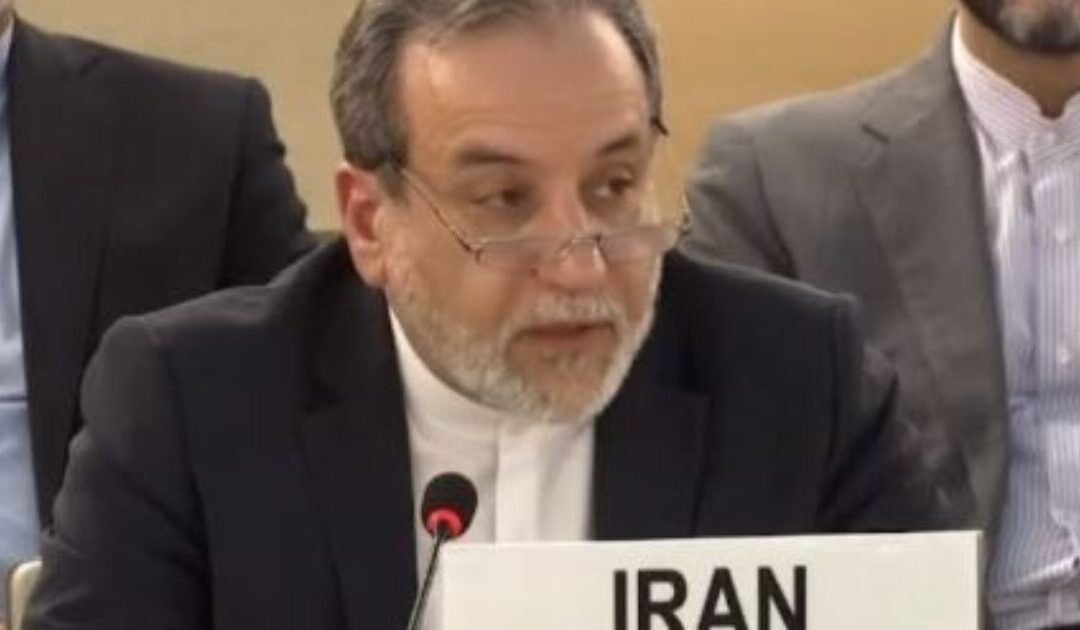
Following Saturday night’s historic attacks, Iranian Foreign Minister Abbas Araqchi lashed out at the United States.  Araqchi is in Turkey for the OIC meeting in Istanbul.

Iranian Tasmin News reported:

Iranian Foreign Minister Abbas Araqchi said the US will have to take full responsibility for the consequences of its attacks on Iran’s nuclear facilities, saying Tehran reserves the right to resort to its own options for reaction.

Addressing a press conference on the sidelines of an OIC meeting in Istanbul on Sunday, Araqchi said the US has violated all international rules and regulations by striking Iran’s nuclear sites.

The US must accept full responsibility for the dire consequences of such an aggressive measure, he warned.

Highlighting Iran’s entitlement to self-defense under the UN Charter, Araqchi said Tehran reserves the right to take a series of options to respond to the US attacks.

Araqchi, or Araghchi, condemned the US actions on X earlier today and said, “Iran reserves all options to defend its sovereignty, interest, and people.”

Abbas Araghchi: The United States, a permanent member of the United Nations Security Council, has committed a grave violation of the UN Charter, international law and the NPT by attacking Iran’s peaceful nuclear installations. The events this morning are outrageous and will have everlasting consequences. Each and every member of the UN must be alarmed over this extremely dangerous, lawless and criminal behavior. In accordance with the UN Charter and its provisions allowing a legitimate response in self-defense, Iran reserves all options to defend its sovereignty, interest, and people.

Here is the tweet.

The post Iranian Foreign Minister Abbas Araqchi: US Will Have to Take Full Responsibility for Its Attacks on Iranian Nuclear Facilities appeared first on The Gateway Pundit.

Go to Source
Author: Jim Hoft

From Tehran to Jerusalem: The Escalating Proxy War and Nuclear Standoff.

From Tehran to Jerusalem: The Escalating Proxy War and Nuclear Standoff.

From Tehran to Jerusalem: The Escalating Proxy War and Nuclear Standoff.
June 22, 2025

from-tehran-to-jerusalem-the-escalating-proxy-war-and-nuclear-standoff.

Since the 1990s, Israel has been wary of Iran’s pursuit of a “nuclear program for peaceful purposes” that includes uranium enrichment. Meanwhile, the Iranian regime — led by its Ayatollah — has repeatedly voiced its aspirations to «Liberate Al-Quds (Jerusalem)» from what it calls the Zionist state.

During the Obama administration, a deal was reached between Iran and the so-called “group of five plus one” (the five permanent members of the United Nations Security Council along with Germany) to limit Iran’s uranium enrichment activities.

Verification of the agreement was entrusted to the International Atomic Energy Agency (IAEA). However, IAEA inspectors have repeatedly cited Iran for violations related to its enrichment program and for concealing sites from inspection.

President Trump later withdrew the United States from the agreement, aiming to impose stringent sanctions designed to cripple the Iranian economy. While some observers had long doubted the effectiveness of earlier sanctions, President Trump combined them with an unprecedented clause: any government or multinational company engaging in trade or collaboration with Iran would be banned from conducting business in the United States.

The immediate impact was severe, triggering dramatic currency devaluation, soaring unemployment, and staggering inflation in Iran.

Fast forward to the Biden administration, which offered Iran a brief reprieve. During this period, Iran managed to resurface along with its proxies in the Middle East and accelerate its nuclear program. Iran’s strategic blueprint became evident through the activities of its proxies.

The Iranian Revolutionary Guard Corps (IRGC) aimed to secure its influence over the Strait of Hormuz. Simultaneously, through its Houthi proxies in Yemen, Iran sought leverage over the Bab al-Mandab Strait and the Red Sea.

A second strategic objective involved connecting Iran to the Mediterranean via a “Shia crescent” stretching from western Iran, across northern Iraq and Syria, and into Lebanon. By 2022, it was clear that Iran maintained substantial proxy influence over parts of Iraq, most of Syria (with the Assad regime consolidating power), and Lebanon (where Hezbollah has significantly undermined formal governmental institutions).

On October 7, 2023, Israel and the West as a whole received a wake-up call when Hamas, an Iranian proxy, launched an unprecedented attack on Israel. Soon after, on October 8, Hezbollah openly entered the conflict, with the Houthis following shortly thereafter in Yemen. As Iran’s plan unfolded, it became apparent that Israel was the primary target.

In response, Israel decisively attacked Hamas and Hezbollah forces, even toppling the Syrian regime’s capabilities while targeting air defense networks throughout Syria. This operation effectively cleared the airspace between Israel and western Iran for the Israeli Air Force. Amid these developments, the United States initiated negotiations with Iran regarding its nuclear ambitions. During these talks, Iran granted the IAEA access—albeit limited—to some of its facilities.

On June 9, 2024, the IAEA reported traces of synthetic uranium particles at three undeclared sites (Varamin, Marivan, and Turquzabad). Iran, however, denied requests for inspection at these locations. As Israeli intelligence reported a marked acceleration in both uranium enrichment and ballistic missile development, alarms were raised. President Trump had originally given Iran 60 days to reach an agreement. When that deadline passed without success, Israel acted on the 61st day.

Since October 7, 2023, observers, analysts, and intelligence agencies have increasingly acknowledged that the roots of this conflict trace directly back to Tehran. While Israel has focused on curtailing Iran’s nuclear program, the broader threat looms larger. Iran retains the capability to disrupt both the Strait of Hormuz and Bab al-Mandab, and its ballistic missiles can reach as far as Israel—nearly 1,800 kilometers away—with some capable of extending up to 4,000 kilometers.

Israel has also initiated offshore gas production near Haifa and advanced the “East-Med Pipeline” project—a plan to connect the Eastern Mediterranean to Europe via pipelines. As the Abraham Accords expand, potentially incorporating Saudi Arabia, inland oil and gas pipelines could connect to the Mediterranean, ultimately supplying Europe. This development would diminish Iran’s leverage over the Strait of Hormuz and relieve countries such as Saudi Arabia, Kuwait, Iraq, Bahrain, and Qatar from the Ayatollah’s grip.

Iran’s ballistic missiles, aside from posing a direct threat to Israel, could potentially target Europe—and possibly the United States in the future. The ongoing negotiations with Iran boil down to three core objectives:

1. Dismantling its nuclear program

2. Halting the production of ballistic missiles

3. Suspending support for its proxies, or at least significantly curtailing their capabilities

Israel now stands at a point of no return, while the U.S. administration maintains daily reiterations of its demands. Meanwhile, Western leaders are more inclined to favor a ceasefire, negotiations, and the immediate implementation of agreements.

Iran continues to waver between clinging to its national pride and heading towards a self-destructive confrontation with Israel, the United States, and their allies. For many Iranian leaders, the prospect of losing power looms larger than the potential sacrifices in lives or capabilities. Although they may view any significant setback as a blow to Khomeini’s Islamic Revolution of 1979, the ideological foundation remains intact, poised to resurface in a renewed form.

The ultimate military objectives are clear: dismantle Iran’s nuclear infrastructure and cease ballistic missile production. While the air campaign has significantly damaged the NATANZ facilities, the deeply embedded Fordo facility—located almost 240 feet underground—remains a formidable challenge for the Israeli Air Force. Despite extensive destruction of launch facilities, there is no conclusive evidence that key production facilities are either operational or completely decommissioned.

Rumors regarding a potential regime change in Iran continue to circulate in Middle Eastern media. While these claims may seem far-fetched, the U.S. and its allies might need to consider this possibility seriously. The deeply ingrained ideology of the Ayatollah and his adherents will likely sustain the regime as long as the clerics continue to propagate their beliefs.

The views expressed in this article are those of the author and do not necessarily represent the official position of Gateway Hispanic.

The post From Tehran to Jerusalem: The Escalating Proxy War and Nuclear Standoff. appeared first on The Gateway Pundit.

Go to Source
Author: Gateway Hispanic

Why Iran’s Threats Ring Hollow: An Analysis of Tehran’s Limited Retaliation Capabilities After Operation Midnight Hammer By Antonio Graceffo

Why Iran’s Threats Ring Hollow: An Analysis of Tehran’s Limited Retaliation Capabilities After Operation Midnight Hammer By Antonio Graceffo

Why Iran’s Threats Ring Hollow: An Analysis of Tehran’s Limited Retaliation Capabilities After Operation Midnight Hammer By Antonio Graceffo
June 22, 2025

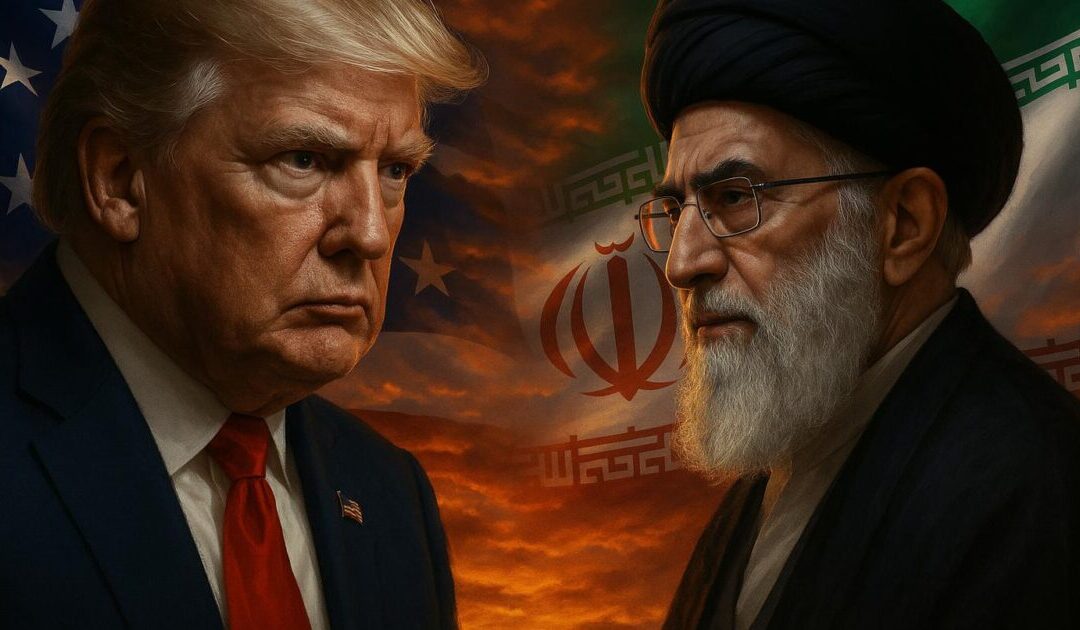
Image generated by OpenAI’s DALL·E. Prompt and concept by Antonio Graceffo


With Operation Midnight Hammer, the United States has successfully degraded Iran’s nuclear program. While Iranian officials are threatening retaliation, Tehran lacks any meaningful options for an effective counterattack.

Yesterday’s coordinated U.S. assault marked the most significant direct American military action against Iran in modern history. The operation involved seven B-2 Spirit stealth bombers flying an 18-hour round-trip mission from Missouri, supported by over 125 total aircraft in what Pentagon officials described as the largest B-2 operational strike ever conducted. The targets—Iran’s nuclear facilities at Fordow, Natanz, and Isfahan—were hit with 14 Massive Ordnance Penetrator “bunker-buster” bombs and dozens of Tomahawk cruise missiles.

President Trump announced that Iran’s “key nuclear enrichment facilities have been completely and totally obliterated,” a statement corroborated by Pentagon assessments reporting “extremely severe damage and destruction” at all three sites. The operation was highly classified, with only a handful of people in Washington aware of its timing or nature. It achieved complete tactical surprise, no shots were fired at U.S. forces.

Notably, the strike came just days after President Trump had publicly stated that he would take two weeks to decide whether or not to launch an attack. Tehran, familiar with the pattern of previous U.S. administrations, assumed American threats were hollow and that Washington would never go as far as conducting a direct military strike.

For many in the United States, however, this attack was seen as long-overdue retaliation for 1979, when Iran’s Islamic revolutionaries stormed the U.S. Embassy in Tehran, taking 52 Americans hostage and holding them for 444 days. That crisis marked a tremendous humiliation for the U.S., and the 45 years that followed, absent of any direct retaliation, emboldened Iran to believe it could attack U.S. interests or thwart American policy without consequence.

Iran’s response has been predictably dramatic but strategically hollow. The Islamic Revolutionary Guard Corps (IRGC) threatened strikes on U.S. forces in the Middle East, claiming that “the number, dispersion, and size of U.S. military bases in the region are not a strength, but have doubled their vulnerability.” Iran’s Parliament also voted to approve closure of the Strait of Hormuz, though the final decision rests with the Supreme National Security Council.

These threats reflect desperation more than capability. While Iran possesses short-range missiles that can reach some regional U.S. bases, defense analysts agree that its ability to sustain military action is limited. Its options are described as minor “potshots,” not serious strategic retaliation. Israeli strikes in recent years have degraded Iran’s ballistic missile infrastructure and decapitated portions of its military command. Iran lacks the capacity for large-scale, sustained attacks on U.S. assets.

U.S. airstrikes on Iran’s nuclear facilities have raised fears of global energy disruptions, particularly through the Strait of Hormuz, a chokepoint for roughly 20% of global oil and gas flows. While Iran has the capability to mine the strait, seize vessels, or stage harassment attacks, past incidents—including the 1980s Tanker War and more recent ship seizures—have shown that such disruptions are typically brief and met with swift U.S. naval response. The U.S. Fifth Fleet, based in Bahrain, remains a powerful deterrent.

Moreover, there are practical constraints on Iran’s threat to close the strait. Much of the waterway lies in Omani territorial waters, and the strait is too wide for Iran to close entirely. Even a partial blockade would provoke devastating retaliation and alienate countries that currently oppose broader sanctions on Iran. Most critically, such a move would cut off Iran’s own economic lifeline.

That lifeline is already fragile. Approximately 90% of Iran’s oil exports go to China via heavily sanctioned “shadow fleet” tankers and small “teapot” refineries. These transactions are conducted in yuan, bypassing the Western financial system. Since this oil trade already operates outside formal global markets, threats to disrupt global oil flows lack credibility. Iran cannot cut off supplies it’s not widely selling. New U.S. Treasury sanctions on Chinese firms involved in this trade also show Washington’s ability to further choke Tehran’s limited revenue streams.

Finally, Iran stands alone strategically. Neither Russia nor China has offered meaningful military support. Russia’s deputy security council chair issued verbal condemnation of the strikes, and China has provided only generic diplomatic statements. Neither power appears willing to escalate on Iran’s behalf. Without international backing, Iran is isolated and strategically boxed in.

The reaction in the U.S. has been largely supportive. While some anti-interventionist conservatives voiced concerns, mainstream Republican leaders quickly rallied behind the strike. Speaker Mike Johnson praised Trump’s “strength, precision, and clarity,” Senator Lindsey Graham called it “the right call,” and Senate Armed Services Chairman Roger Wicker said Trump made a “deliberate—and correct—decision.” Even anti-interventionists like Steve Bannon suggested they might ultimately support the move. This unity undercuts any Iranian hope that domestic political divisions might restrain further U.S. action.

Strategically, Iran’s options are limited and increasingly symbolic. Their nuclear program has been crippled, their military command degraded by Israeli strikes, their economy under maximum sanctions, and their international support virtually nonexistent. Any attempt at retaliation, whether through regional harassment, missile attacks, or proxy strikes, would provoke overwhelming U.S. countermeasures without advancing Tehran’s objectives. Trump’s warning that “many targets remain” if Iran escalates underscores Washington’s upper hand. Iran’s threats may persist, but its ability to follow through remains constrained by military, economic, and geopolitical realities.

The post Why Iran’s Threats Ring Hollow: An Analysis of Tehran’s Limited Retaliation Capabilities After Operation Midnight Hammer By Antonio Graceffo appeared first on The Gateway Pundit.

Go to Source
Author: Antonio Graceffo

(VIDEO) Paris Music Festival Descends into Chaos: 145 Report Being Pricked in “Syringe Attack” – Reportedly 1,500 Injured, 371 Arrested

(VIDEO) Paris Music Festival Descends into Chaos: 145 Report Being Pricked in “Syringe Attack” – Reportedly 1,500 Injured, 371 Arrested

(VIDEO) Paris Music Festival Descends into Chaos: 145 Report Being Pricked in “Syringe Attack” – Reportedly 1,500 Injured, 371 Arrested
June 22, 2025

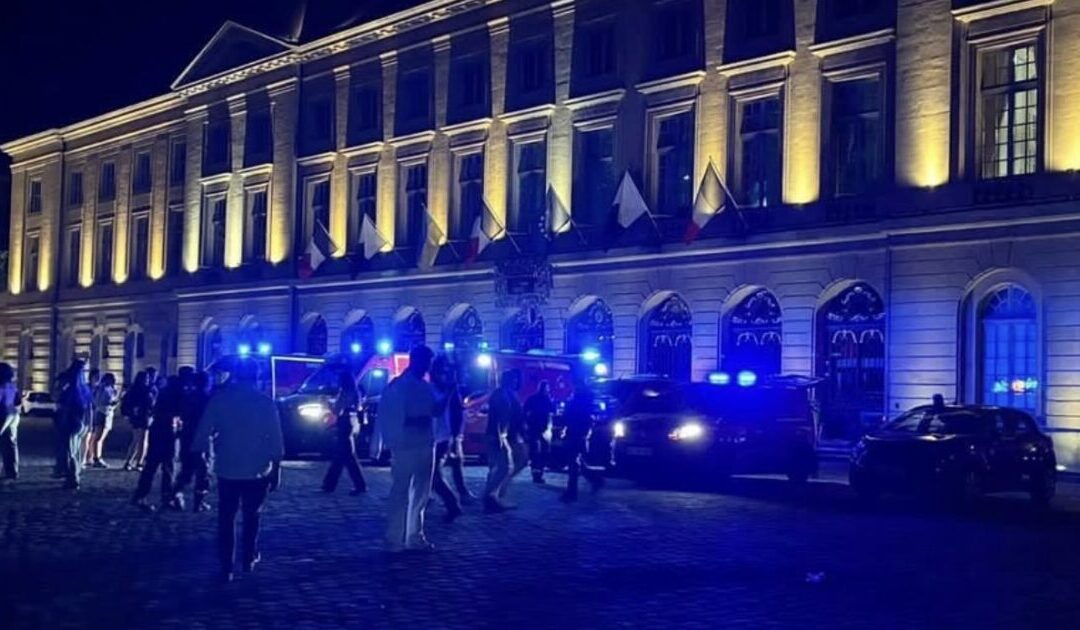
Via Metz Mayor François Grosdider on Instagram

Millions were in the streets across France on Saturday for a music festival, known as the Fête de la Musique, when chaos broke out in the streets with reported brawls, clashes with police, and stabbings, leaving hundreds or thousands injured. 

145 people were reportedly assaulted in so-called “syringe attacks,” with the suspected intention being to intoxicate one with a date-rape drug.

A local mayor said the festival had “broken all attendance records” as the FC Metz soccer team was playing in a play-off match.

Per France 24, “Nearly 150 people reported being assaulted with syringes across France during its annual “Fête de la Musique” summer festival, with Paris police reporting 13 cases in the capital alone. Twelve suspects in the attacks were arrested, the interior ministry said. More than 370 other people were detained nationwide on various other charges.”

Additionally, unconfirmed reports circulating on social media suggest that there was massive violence, leaving 1,500 injured.

Per Remix News, six were stabbed with one in critical condition, 371 were arrested, 13 police officers were injured, 51 cars were set ablaze, and 1,500 were injured.

One clip shows a large mob throwing trash down what appears to be a subway entrance before dispersing rapidly as police in riot gear begin to deploy gas or smoke grenades:

Another clip shows a massive crowd stampeding away from smoke and what looks like a fire in the background:

Details on the rioting and mass brawling are still unclear.

However, Metz Mayor François Grosdider confirmed in an Instagram post that “two individuals, including an attacker with a syringe,” were arrested.

“On social networks, a call for syringe assaults has been launched during the Music Festivals in major cities. At 21h15 [9:15 pm], a first assault of this type was reported to us on Rue du Palais. About fifteen young girls (aged 14 to 20) were victims of this in Metz,” the post continued.

“The municipal police also intercepted, in Bonne Ruelle, an individual who slapped a young girl National and municipal police quickly controlled a few brawls at night and had to intervene on the effects of alcohol.”

INSTAGRAM:

More from France 24:

Before the party, posts on Snapchat and other social media had called for targeting women during the festivities.

The interior ministry said 145 victims reported being stabbed with needles across the country, with Paris police reporting 13 cases in the capital.

Officials did not specify if they were cases of so-called needle spiking with date-rape drugs such as Rohypnol or GHB, used by attackers to render victims confused or unconscious and vulnerable to sexual assault.

“Some victims were taken to hospital for toxicological tests,” the ministry said.

In Paris, investigations were opened after three people including a 15-year-old girl and an 18-year-old male, reported being stabbed in three different locations in Paris, prosecutors said.

The post (VIDEO) Paris Music Festival Descends into Chaos: 145 Report Being Pricked in “Syringe Attack” – Reportedly 1,500 Injured, 371 Arrested appeared first on The Gateway Pundit.

Go to Source
Author: Jordan Conradson