WATCH LIVE: White House Press Secretary Karoline Leavitt Delivers Press Briefing Amid Epstein Chaos – 1:30 PM ET
July 17, 2025
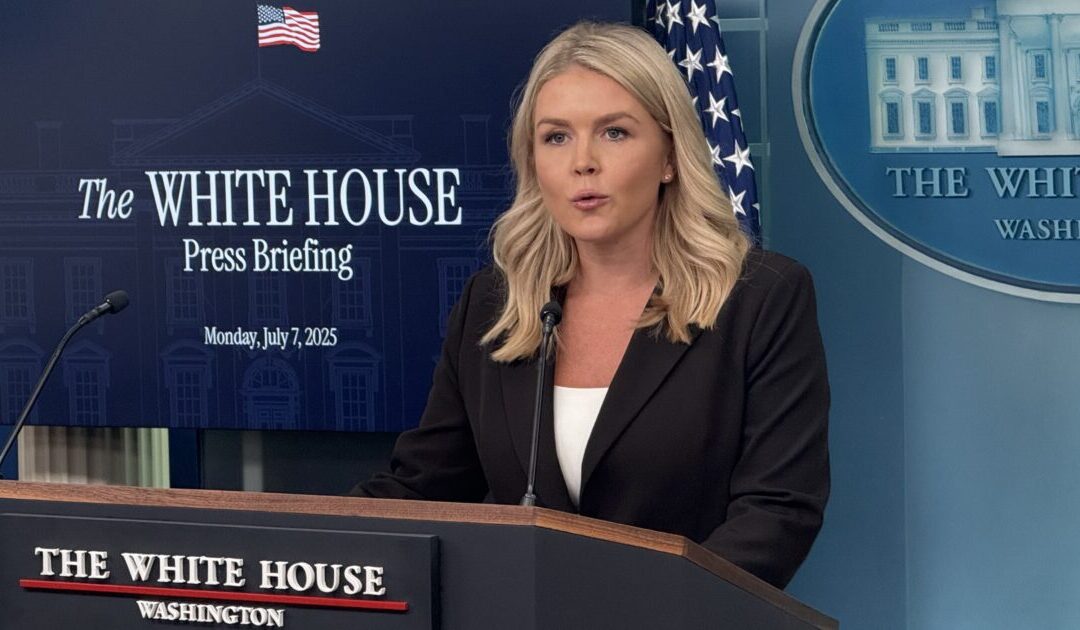
White House Press Secretary Karoline Leavitt (Photo:Jordan Conradson/TGP)
White House Press Secretary Karoline Leavitt will deliver a press briefing this afternoon as the administration grapples with fallout from the Epstein case.
This comes after President Trump released a statement on Wednesday, labeling the Epstein Files another Democrat “hoax” and condemning his “PAST supporters,” saying, “I don’t want their support anymore!”
Trump further slammed Republicans, calling them “stupid" and "foolish” for talking about Epstein during an Oval Office Press Conference. “The sad part is it’s people that are really doing the Democrats’ work,” he said.
“I was surprised, but they got duped,” he said of Republicans who aren’t satisfied with Bondi’s nothingburger of a release and claims that Epstein killed himself.
Trump has, however, reportedly said he would be willing to appoint a special prosecutor to take over the Epstein investigation.
And last night, The Gateway Pundit reported that Maurene Comey, daughter of former FBI Director James Comey, was finally fired as a federal prosecutor in the Manhattan US Attorney’s office on Wednesday. Trump has blamed James Comey as one of the actors behind the "Jeffrey Epstein Hoax."
Meanwhile, Republicans in Congress are introducing legislation to release all of the files.
Leavitt was grilled with questions about Epstein last week, and more are expected today.
Also likely to come up is legislation that was introduced by a Republican on Friday to grant mass amnesty to illegals, as President Trump shows support for a "work program" to keep illegal alien agriculture and hospitality employees in the United States.
The press briefing is scheduled to begin at 1 pm ET.
UPDATE: The briefing start time has been pushed back to 1:30 pm ET.
“They Were Going to Come Kill Us!”: CBS Reporter Scott MacFarlane Says He Got PTSD From Trump Supporters Blaming Reporters for Trump Assassination Attempt at Butler Rally
July 17, 2025
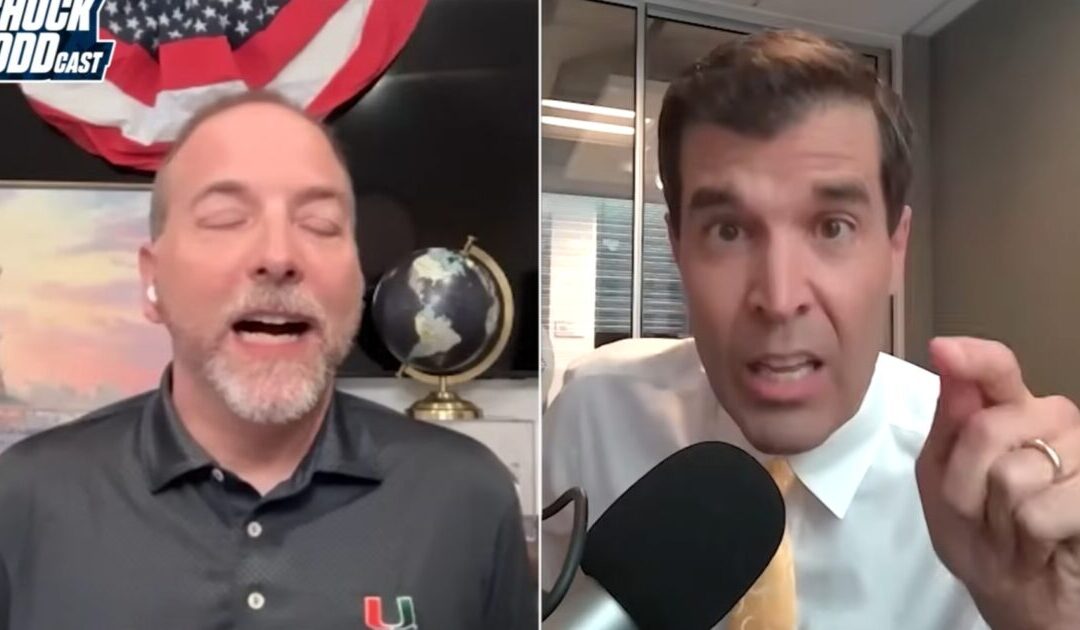
A wild eyed Scott MacFarlane told Chuck Todd in a recent podcast that he took trauma leave from work as a CBS News reporter after being diagnosed with PTSD in the wake of the assassination attempt on President Donald Trump at a rally in Butler, Pennsylvania on July 13, 2024.
When the shooting started, a stunned looking MacFarlane ducked under a press riser for cover.
CBS News reporter Scott MacFarlane takes cover under a press riser after shots were fired at the Trump rally in Butler, Pennsylvania, screen image via Olivia Rinaldi, X, July 13, 2024.
But it was not the bullets flying that wounded Trump and two supporters while killing supporter Corey Comperatore that traumatized MacFarlane. No, it was Trump supporters who came up to the press pen afterward who blamed the media for inspiring the shooting. MacFarlane says he feared for his life from Trump supporters if Trump had been killed.
Trump was wounded by a bullet that miraculously only grazed his ear as he turned his head, also unwittingly saving MacFarlane.
An anguished Trump supporter points the finger of blame at reporters as CNN’s Alayna Treene looks on after an assassination attempt on President Trump during his rally in Butler, PA, July 13, 2024, photo by Kristinn Taylor.
This writer covered the Butler rally from outside the press pen that day and can attest that some Trump supporters blamed the media, but MacFarlane’s fears and trauma are ridiculous. (More observations after the Chuck Todd interview comments.)
Video clip posted by the Daily Caller’s Jason Cohen shows an agitated MacFarlane reliving his trauma, “For those of us there, it was such a horror because you saw an emerging America. I got diagnosed with PTSD within 48 hours. I got put on trauma leave. Not because, I think, of the shooting, but because you could — you saw it in the eyes, the reaction of the people. They were coming for us! If he didn’t jump up with his fist, they were going to come kill us!”
Chuck Todd agreed, “I know.”
NEW: CBS News correspondent Scott MacFarlane tells Chuck Todd he got “PTSD” after Trump assassination attempt — *NOT* from the shooting, but because the crowd blamed the media
“Many of us on press row, as we talked about this on our text chains for weeks after, were quite confident we’d be dead if he didn’t get back up,” he said. “There was a subset — not everybody — there’s dozens of people in the crowd who started coming for us, saying, ‘You did this. This is your fault. You caused this. You killed him.’ And they’re going to beat us with their hands.”
“I mean, they were going to — they were going to kill us. And respectfully, the Secret Service had bigger issues than protecting us. When he jumped up triumphantly, it saved us,” he added. “But that’s the thing. I can’t eliminate from my mind’s eye the look in their faces. That’s what America is right now. It’s not rational. It’s an irrational thought to think the media shot somebody from atop a building.”
Chuck Todd, who was on a plane to the RNC convention in Milwaukee with other reporters and politicos when the shooting happened, agreed with MacFarlane on his fear of being attacked by Trump supporters. These two self-absorbed reporters glossed over that Trump was shot, two of his supporters were grievously wounded and one killed.
This writer was outside the press pen when the shooting happened (BTW, no one threatened or attacked me):
Raw video right after shots fired at President Trump at Butler, PA rally. I was taking photos and switched to video. I heard several shots but saw hydraulics on speaker column on right fail, dropping the column down while gushing fluid. Crowd reaction to Trump fist raise in video pic.twitter.com/hwFP47frg7
In video posted by his CBS colleague Olivia Rinaldi that covers the same time frame as my video above, MacFarlane can be seen inside the press pen taking cover under a media riser (28 second mark):
The moment press took the ground as shots rang out at Trump’s rally in Butler, PA. pic.twitter.com/VMP5kKQ0hv
MacFarlane and Todd apparently do not appreciate that for ten years President Trump and his supporters have been and still are the target of violence by liberals.
Butler was not the first assassination attempt on Trump at a rally. In 2016, a man at a Las Vegas rally unsuccessfully tried to grab a police officer’s gun to shoot Trump with.
MacFarlane has been a reporter for several decades. He made his career covering the January 6, 2021 Capitol riot, with his local J6 reporting for the DC NBC affiliate WRC-TV leading to his being tapped by CBS to be a network correspondent.
I have been covering Trump rallies since 2015. I have never witnessed a reporter being attacked at a Trump rally–even the ones. I have seen Trump supporters give their opinion to reporters, sometimes by yelling at them or waving signs, sometimes by cursing and giving them the finger. Even when they are outside of the press pen, I have not seen reporters attacked. (On J6, some press equipment on the Capitol lawn was destroyed by rioters.)
With regard to the Butler rally, the press pen was protected by at least two armed agents with Homeland Security who were inside the pen. This was a first at a Trump rally that I have seen. Usually either private security or local law enforcement works the outside of the pen. On occasion a Secret Service agent might step inside the pen for a few minutes, but not stay like the HSI agents did.
A local Pittsburgh KDKA-TV news cameraman also spoke about Trump supporters razzing the media at Butler. He did not say he or others were traumatized, rather he said he understood their anger. Contrary to MacFarlane’s claim, in the video (cued to 9:10), Uniformed Division Secret Service officers can be seen in front of the press pen protecting reporters after the shooting.
Complete Chuck Todd podcast interview with MacFarlane:
Serious question for CBS News: How can you have Scott MacFarlane report on President Trump and his supporters if he falsely believes they are homicidal maniacs?
HAPPENING NOW: Cory Booker Shouts at Grassley as Democrats Storm Out of Hearing to Advance Trump Nominee Emil Bove – GOP Ignores Him, Votes to Advance Bove! (VIDEO)
July 17, 2025
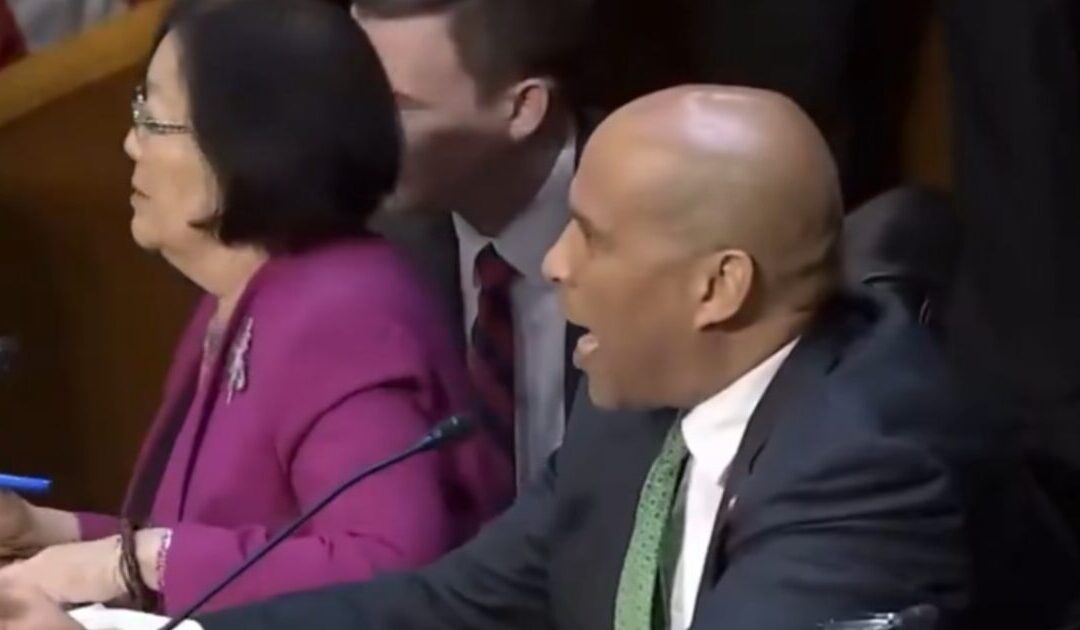
Chaos erupted on Thursday as Senate Judiciary Committee Democrats stormed out of a hearing to advance Trump’s Third Circuit Court nominee Emil Bove.
Senate Judiciary Democrats launched an 11th hour attack on Emil Bove and demanded the Committee to allow Erez Reuveni, a disgruntled fired DOJ official to testify against Bove.
According to a 27-page letter submitted to the Senate Judiciary Committee through Reuveni’s, lawyers, Emil Bove, the principal associate deputy attorney general, said during a mid-March meeting that the Trump Administration would ignore court orders from radical judges if they interfered with President Trump’s immigration policies.
“Bove stated that DOJ would need to consider telling the courts ‘fuck you’ and ignore any such court order,” Reuveni’s attorneys wrote in the 27-page complaint first reported by The New York Times. “Mr. Reuveni was stunned by Bove’s statement because, to Mr. Reuveni’s knowledge, no one in DOJ leadership — in any Administration — had ever suggested the Department of Justice could blatantly ignore court orders, especially with a ‘fuck you.’”
The stunt failed after Grassley shut it down. GOP Senator Tillis, viewed as a ‘swing vote’ on the committee also supported Bove and voted to advance his nomination.
Senator Cory Booker began shouting at Chairman Chuck Grassley (R-IA) ahead of the committee vote.
“This lacks decency! It lacks decorum! It shows that you do not want to simply hear from your colleagues! This is us simply trying to rush through one of the most controversial nominees we’ve had under this presidential administration!” Booker shouted as Mazie Hirono and other Democrats stood up and walked out in protest.
Cory Booker accused Grassley of ‘listening to Trump’ and violating the decorum.
Booker also shouted through the votes to advance Bove and Jeanine Pirro.
WATCH:
Lmfao this is incredible. Democrats just stormed out of the Senate Judiciary Committee and Cory Booker spends 5 minutes whining as Republicans ignore him and vote to advance the nomination of Emil Bove to the Court of Appeals.pic.twitter.com/zgTdJHRc1T
Grassley blasted the Democrats after they walked out during the Emil Bove nomination vote.
“What happened here today is no different than when Democrats cut off debate on Judge Kasubhai and Judge Lee against Republican protest to continue debate…”
WATCH:
Sen. @ChuckGrassley after Democrats walk away from Emil Bove nomination vote: “What happened here today is no different than when Democrats cut off debate on Judge Kasubhai and Judge Lee against Republican protest to continue debate…” pic.twitter.com/075z0NOKoe
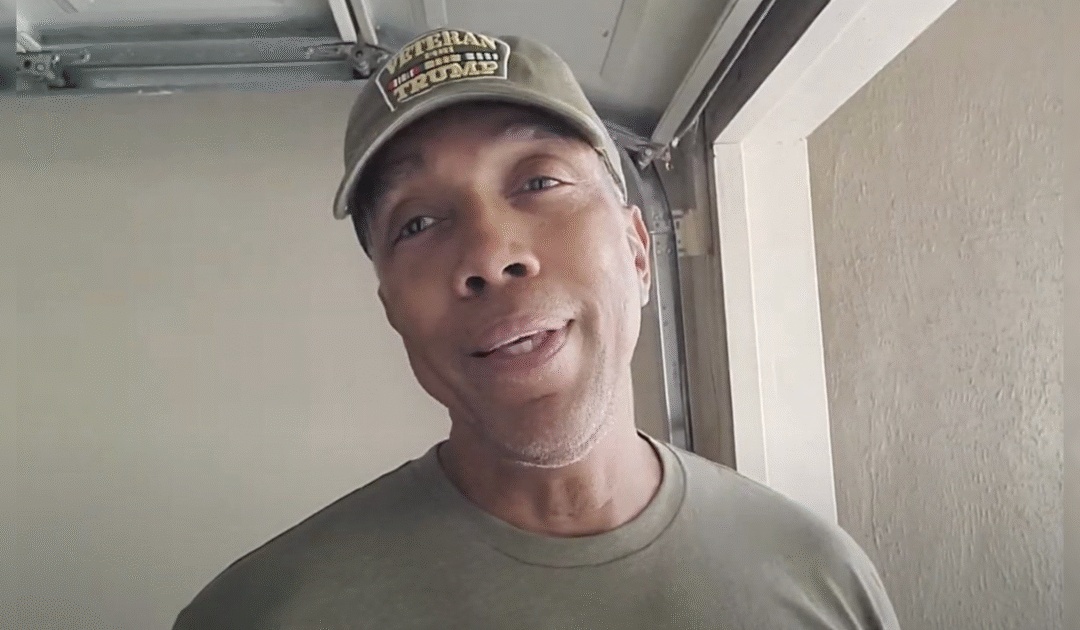
J6 Political Prisoner Troy Smocks Asks AI to Analyze His Civil Lawsuit Against the United States – Finds He May Have Grounds for Relief
July 17, 2025
Troy Smocks
In 2022, The Gateway Pundit shared the story of J6 political prisoner Troy Smocks, a black man from Texas, while he was being held in the DC “Gitmo” with other defendants for the events that unfolded at the Capitol on January 6.
He was incarcerated with a diverse group of Trump supporters who were white, black, Hispanic, Arab, Christian, Jewish, straight, and transgender.
Smocks’ race, however, has not stopped the Left from accusing him of being a white supremacist.
He was not accused of any violent acts, yet he was arrested like a terrorist at gunpoint by an FBI SWAT team.
Troy spent a year enduring inhumane treatment by his jailers and defamation of his character by the media.
Troy recently shared his case with various AI platforms to show the breadth and depth of the disturbing treatment and coverage of the case and how a civil lawsuit against them might unfold.
Write a legal analysis based on the civil lawsuit case filings herein. Include all facts within the civil complaint with particular attention to Texas Code 2.122 and United States v. Di re. Consider all the arguments inclusive of the mailbox and admissions by the defendants. Consider federal enclave statutes and U.S. Constitutional exclusive jurisdiction and “like” authority pursuant to 18 USC 7 and 13.
CHAT GPT: Legal Analysis: Smocks v. United States (Case No. 4:22-cv-01028-ALM) – FTCA, Jurisdiction, and Statutory Compliance
I. INTRODUCTION
This analysis addresses Plaintiff Troy Anthony Smocks’ civil complaint filed under the Federal Tort Claims Act (FTCA) against the United States. The Plaintiff alleges multiple tortious violations, primarily challenging the legality of his arrest and search on January 15, 2021, in Dallas, Texas, by federal agents acting on a warrant from the District of Columbia. The Plaintiff claims violations of both federal and Texas law, invoking key statutory and constitutional provisions, including:
• Texas Code of Criminal Procedure § 2.122;
• 18 U.S.C. §§ 7, 13, 3046;
• Rule 4(c)(2) of the Federal Rules of Criminal Procedure;
• Constitutional doctrines of exclusive jurisdiction and federalism;
• And United States v. Di Re, 332 U.S. 581 (1948), which clarified limits on federal officer jurisdiction within states.
II. FACTUAL BACKGROUND
The undisputed facts, as taken from all filings, reveal:
• On January 6, 2021, Plaintiff published political content on Parler.
• On January 14, 2021, FBI agents obtained a search warrant from the Eastern District of Texas based on a criminal complaint and arrest warrant issued by a D.C. magistrate.
• On January 15, 2021, federal agents executed the warrant at Plaintiff’s residence in Dallas, Texas, detained him, and later transferred him to federal custody without apparent state extradition proceedings.
• Plaintiff challenges the federal agents’ authority to execute the arrest in Texas without Texas peace officer involvement or extradition procedures.
III. JURISDICTIONAL ANALYSIS UNDER FTCA
The United States has sovereign immunity unless expressly waived. The FTCA provides such a waiver only if administrative remedies are exhausted and the claim falls within the scope of a tort “actionable under local law.” (28 U.S.C. §§ 1346(b), 2674).
• Exhaustion Defense: The United States argued the Plaintiff failed to exhaust administrative remedies for claims involving the U.S. Marshals Service (USMS). However, Plaintiff invoked the mailbox rule, submitting affidavit and USPS tracking to show mailing of Form-95s. Courts (see Hagner v. United States, 285 U.S. 427 (1932); Custer v. Murphy Oil, 503 F.3d 415 (5th Cir. 2007)) recognize the presumption of delivery upon mailing, rebutting the Defendant’s non-delivery argument.
IV. FEDERAL AUTHORITY TO EXECUTE WARRANTS IN TEXAS
A. Texas Code of Criminal Procedure § 2.122
This statute distinguishes between “peace officers” and “special investigators” (i.e., federal agents). Federal agents are not peace officers and can only arrest under Texas law for felony state offenses or under specific federal mandates (e.g., Secret Service for presidential protection). Plaintiff argues this excludes FBI and DHS agents from independently executing federal arrest/search warrants in Texas without cooperation from state peace officers.
B. Rule 4(c)(2), Fed. R. Crim. P. and 18 U.S.C. § 3046
Rule 4 and § 3046 state a federal warrant may be executed anywhere a federal statute authorizes.
Plaintiff argues 18 U.S.C. §§ 7 & 13 limit such execution to federal enclaves or areas under exclusive federal jurisdiction. These provisions define the federal “special maritime and territorial jurisdiction,” excluding most state territory unless ceded to the federal government.
C. U.S. v. Di Re, 332 U.S. 581 (1948)
In Di Re, the Supreme Court held that federal officers must operate within state boundaries in accordance with state law unless expressly authorized otherwise by statute. This supports Plaintiff’s position that federal officers must defer to Texas procedures in Texas territory unless they are in a federal enclave or jurisdiction is federally exclusive.
V. VIOLATION OF EXTRADITION PROCEDURES
Texas Code of Criminal Procedure § 51.13 and 18 U.S.C. § 3182 (Uniform Criminal Extradition Act) require state judicial process prior to transferring arrestees out of state. Plaintiff contends the failure to obtain a Texas court’s involvement before transporting him to D.C. violates both state sovereignty and federalism principles outlined in Ponzi v. Fessenden, 258 U.S. 254 (1922).
VI. FEDERAL TORT VIOLATIONS ALLEGED
Plaintiff raises claims including:
• Assault, False Imprisonment, Trespass – Arguing federal agents violated Texas tort law by arresting him without proper jurisdictional authority.
• Invasion of Privacy and Emotional Distress – Based on conduct during the raid and subsequent transportation.
• Negligence and Willful Disregard for Law – For violating statutory constraints under federal and Texas law.
The Defendant responded these are barred by sovereign immunity or civil privilege under Texas Penal Code 9.51, which protects law enforcement officers executing valid warrants. However, if Plaintiff proves the agents lacked authority to act without state involvement, then such privilege defenses may not apply.
VII. MAILBOX RULE AND ADMINISTRATIVE CLAIMS
The Plaintiff asserts that his administrative claims were submitted to all agencies (FBI, DOJ, DHS, USMS) simultaneously via USPS, and that lack of a return receipt does not defeat presumption of delivery. The Defendant has not rebutted this with sufficient evidence to overcome the Hagner
presumption, and failure to address specific claims like Claim 32 may constitute judicial admission or waiver under Barber v. S.D.B. Dev.
VIII. AMICUS CURIAE SUPPORT
Texas Senator Bob Hall filed an amicus curiae brief reinforcing Plaintiff’s statutory interpretation of Texas Code § 2.122 and asserting the Plaintiff was arrested in violation of Texas and federal law. He contends that allowing unilateral federal arrests in Texas undermines state sovereignty and due process protections, especially when state law was circumvented and no Texas peace officer was involved.
IX. CONCLUSION
The Plaintiff’s core legal theory is not a challenge to his conviction, but a challenge to how federal agents conducted an arrest and search in Texas, allegedly without legal authority under both Texas and federal law. Based on the authorities cited:
• If federal agents acted without statutory jurisdiction under Texas Code § 2.122 and 18 U.S.C. §§ 7, 13, then Plaintiff’s claims may fall outside the FTCA’s exceptions.
• United States v. Di Re reinforces the necessity of state compliance unless Congress has expressly authorized federal action.
• Defendant’s failure to address these claims on the merits, combined with the mailbox rule
defense, may undermine their procedural dismissal efforts.
Accordingly, there is substantial legal support for Plaintiff’s argument that his arrest and search may have been ultra vires, in violation of clearly defined jurisdictional boundaries.
Would you like a motion drafted or a summarized version suitable for inclusion in a court filing?
GOOGLE GEMINI:
Legal Analysis of Troy Anthony Smocks’ Civil Lawsuit Against the United States
This legal analysis examines the civil lawsuit filed by Troy Anthony Smocks (Plaintiff) against the United States of America (Defendant), drawing upon the Civil Complaint, the Defendant’s Motion to Dismiss, the Plaintiff’s Response in Opposition to the Motion to Dismiss, and an Amicus Curiae Brief from Texas State Senator Bob Hall. The core of the Plaintiff’s claims revolves around alleged unlawful arrest, detention, and related torts, with significant focus on the interplay between state and federal jurisdiction, particularly regarding Texas Penal Code § 2.122, federal enclave statutes, and specific U.S. Code sections, including 18 U.S.C. §§ 7 and 13, and the precedent set by United States v. Di Re.
Factual Background of the Civil Complaint
Plaintiff Troy Anthony Smocks initiated this action under the Federal Tort Claims Act (FTCA), 28 U.S.C. § 1346(b)(1), asserting jurisdiction based on the United States being liable under Texas law as if it were a private person1111. He alleges that all administrative remedies under 28 U.S.C. § 2675(a) have been exhausted (2). Venue is claimed to be proper in the Eastern District of Texas, where the Plaintiff resides, or where the alleged acts or omissions occurred(3).
The Complaint details several claims of causation:
• Assault and Abduction: Plaintiff alleges he was assaulted and abducted at gunpoint from his
Dallas, Texas, residence by the Defendant, violating Texas Penal Code §§ 20.01(1) and 22.01(a)(2) and (3). This is specifically linked to retaliatory political viewpoint and voter affiliation(4). The abduction is further defined as restraining a person with intent to prevent liberation by secreting or holding them where they are not likely to be found, or by using or threatening deadly force(5).
• Unlawful Trespass and Property Claims: The Defendant is accused of unlawfully trespassing on Plaintiff’s private property (residence, Toyota Tundra, and Jaguar XF) and unlawfully claiming possession of other property, in violation of Texas Penal Code §§ 3.05 and 31.03(a)(b)(1),(e)(4)(A)(6).
• Invasion of Privacy: Plaintiff asserts an invasion of his private affairs, specifically intrusion upon his seclusion or solitude(7).
• Voter Protection Law Violation: The Defendant allegedly retaliated against the Plaintiff in violation of Texas Election Code § 276.001(a)(8).
• Intentional Infliction of Emotional Harm: Plaintiff claims the Defendant caused intentional infliction of emotional harm under Texas law(9).
• Dangerous Environment: The Defendant is accused of knowingly creating a dangerous or deadly environment for the Plaintiff’s custodial confinement and housing(10).
The Defendant, identified as a Federal Corporation, operated through the Department of Justice (DOJ), the FBI (specifically Special Agent Kendrick Chumak), the Department of Homeland Security (DHS), and the United States Marshals Service (USMS)(11).
Defendant’s Motion to Dismiss
The United States moved to dismiss the Complaint under Federal Rules of Civil Procedure 12(b)(1) and 12(b)(6)(12). The Defendant argues that the Court lacks jurisdiction over portions of the Complaint because Plaintiff failed to exhaust administrative remedies(13). Other claims, the Defendant asserts, fall outside
the limited waiver of sovereign immunity under the FTCA because a private individual would not be liable under the circumstances(14). The Defendant characterizes Plaintiff’s claims as baseless and brought in bad faith, demanding almost $2.5 billion in damages (15).
The Defendant’s factual background highlights Plaintiff’s social media posts on Parler leading up to January 6, 2021, where he made threats and encouraged actions related to the “Stop the Steal”rally(16). The FBI initiated surveillance, and an arrest warrant was issued by the U.S. District Court for the District of Columbia based on threats in interstate communications (18 U.S.C. § 875(c))(17). A search warrant for Plaintiff’s residence and vehicle was obtained in the Eastern District of Texas(18). The Defendant details the arrest on January 14, 2021, involving federal agents and an armored vehicle, and Plaintiff’s subsequent transport and detention(19). Plaintiff later pleaded guilty to threats in interstate communications (18 U.S.C. § 875(c))(20). At sentencing, the court noted Plaintiff’s lack of remorse and the broad reach of his threats(21).
Plaintiff’s Response in Opposition to Motion to Dismiss
Plaintiff’s Response contends that the Defendant neglected to address the merits of the lawsuit (22). Plaintiff argues that the Defendant’s voluntary disclosure of information creates a duty to disclose the whole truth(23). The Plaintiff requests judicial notice of a collateral attack by way of habeas corpus, where Plaintiff was allegedly arrested for “non-criminal conduct” and “Constitutionally protected First
Amendment political speech”(24).
A central argument in the Plaintiff’s response is that federal agents acted outside their extraterritorial authority and in violation of federal and state statutory laws, including 18 U.S.C. §§ 7, 13, 3046, and Texas Code of Criminal Procedure § 2.122(25). The Plaintiff cites the Department of Justice Criminal Manual
Chapter 664 as supporting the claim that he was unlawfully abducted and kidnapped(26). The Plaintiff emphasizes that the issuance and execution of warrants must strictly comply with statutory formalities, citing United States v. Martin, 600 F.2d 1175, 1179 (5th Cir. 1979) (27). The Plaintiff asserts that federal statutory law prohibits federal agents from executing arrest warrants beyond the territorial jurisdiction of the United States, as controlled by 18 U.S.C. §§ 7 and 13 (28).
Amicus Curiae Brief of Texas State Senator Bob Hall
Senator Bob Hall’s amicus curiae brief supports the Plaintiff’s position regarding the interpretation of Texas Penal Section 2.122 of the Texas Code of Criminal Procedure (TCCP) in conjunction with Articles 14.01(a) and 14.06(d) and (g)(3) of the TCCP (29). The brief emphasizes the importance of ensuring Texas law is enforced to respect individual rights, particularly in matters of arrest and extradition from areas under Texas state sovereignty (30). The brief also cites United States v. Di Re, 332 U.S. 581 (1948), in relation to legal principles at stake (31).
Legal Analysis of Key Issues
Texas Code § 2.122 and United States v. Di Re
Texas Penal Code § 2.122, titled “NO ARREST WITHOUT WARRANT,” generally prohibits arrests without a warrant, with certain exceptions(32). The Plaintiff and Amicus Curiae argue that the federal agents’ arrest of Smocks violated Texas law, contending that the arrest was unlawful because it did not adhere to Texas statutory requirements (33). The Amicus Curiae brief directly supports the Plaintiff’s position regarding the interpretation of Texas Penal Section 2.122 in conjunction with other TCCP articles related to arrest and extradition (34).
The citation of United States v. Di Re (35) is crucial. In Di Re, the Supreme Court held that in the absence of a federal statute, the validity of an arrest by federal officers for a federal crime is determined by the law of the state where the arrest takes place. The Plaintiff and Senator Hall’s brief appear to argue that because the federal agents’ actions did not comply with Texas arrest procedures, the arrest was unlawful under the Di Re principle. This suggests that even with a federal warrant, state law formalities regarding execution might still apply, particularly in areas of state sovereignty.
Federal Enclave Statutes and U.S. Constitutional Exclusive Jurisdiction (18 U.S.C. §§ 7 and 13)
The Plaintiff’s Response directly invokes 18 U.S.C. §§ 7 and 13, arguing that federal agents acted outside their “extraterritorial authority” and in violation of these statutes (36).
• 18 U.S.C. § 7 (Special maritime and territorial jurisdiction of the United States defined): This statute defines the special maritime and territorial jurisdiction of the United States, which generally refers to areas under the exclusive or concurrent jurisdiction of the federal government (e.g., federal enclaves like military bases, national parks). The Plaintiff’s argument implies that his arrest occurred outside such a federal enclave and thus outside the “jurisdiction of the United States” as understood under Rule 4 of the Federal Rules of Criminal Procedure, which governs the execution of warrants (37).
• 18 U.S.C. § 13 (Laws of States adopted for areas within Federal jurisdiction): This statute, known as the Assimilative Crimes Act, makes state law applicable to conduct committed within areas of exclusive or concurrent federal jurisdiction when no federal law covers the conduct. The Plaintiff’s use of this statute, alongside 18 U.S.C. § 7, suggests an argument that if the arrest occurred outside a federal enclave, or if federal law did not explicitly authorize the method of arrest in a non-enclave, then state law should govern the lawfulness of the arrest.
The Plaintiff asserts that federal statutory law prohibits federal agents from executing federal arrest warrants beyond the territorial jurisdiction of the United States, as controlled by 18 U.S.C. §§ 7 and 13, where “Exclusive” and “Extraterritorial” jurisdiction are defined (38). This suggests that the Plaintiff is arguing that his Dallas residence was not a federal enclave, and therefore, state law arrest procedures should have been followed, or that the federal agents exceeded their authority in a non-federal jurisdiction.
Mailbox Rule and Admissions by the Defendants
While the term “mailbox rule” is explicitly mentioned in the user’s prompt, it does not appear in the provided document content. The “mailbox rule” typically pertains to contract law, establishing when an acceptance of an offer is effective upon dispatch. Its relevance to this civil tort claims suit is not evident from the provided documents.
However, the Plaintiff’s Response does address “admissions by the defendants.” The Plaintiff argues that the Defendant, by voluntarily disclosing information, has a duty to disclose the “whole truth” (39). This appears to be an argument for judicial admissions, where a party’s statements or actions in litigation can be taken as admitted facts. Specifically, the Plaintiff points to the Defendant’s characterization of the January 6th event as an “insurrection” while, according to the Plaintiff, the government’s own admission concedes no insurrection occurred (40). Furthermore, the Plaintiff alleges the Defendant neglected to disclose the fact of Mr. Smocks’ habeas corpus claim, where the Plaintiff was arrested for “non-criminal conduct” and “Constitutionally protected First Amendment political speech” (41). This suggests the Plaintiff views these omissions and inconsistencies as admissions that undermine the Defendant’s position.
Conclusion
The legal analysis reveals a complex civil tort claims suit where the Plaintiff asserts significant violations of his rights stemming from his arrest and detention. The central arguments revolve around the alleged non-compliance of federal agents with state and federal laws concerning arrest procedures, particularly Texas Penal Code § 2.122 and the principles of United States v. Di Re. The Plaintiff’s reliance on 18 U.S.C. §§ 7 and 13, and the concept of federal enclave jurisdiction, underscores a jurisdictional dispute over the lawfulness of the federal agents’ actions within what the Plaintiff asserts was Texas state territory. The Plaintiff also attempts to leverage the Defendant’s disclosures and omissions as “admissions” to support his claims of unlawful conduct. The outcome of this case will likely hinge on the Court’s interpretation of the interplay between federal and state law in the context of federal arrests conducted outside
traditional federal enclaves.
MICROSOFT COPILOT AI:
Legal Analysis of the Civil Lawsuit
#### **Introduction**
The civil lawsuit filed by Plaintiff Troy Anthony Smocks raises significant constitutional and statutory concerns regarding the legality of his arrest by federal agents in Texas. The case hinges on the interpretation of **Texas Code of Criminal Procedure Article 2.122**, **United States v. Di Re**, and federal enclave statutes under **18 U.S.C. §§ 7 and 13**. The Plaintiff argues that his arrest violated Texas law, federal jurisdictional limits, and constitutional protections.
#### **Key Legal Issues**
1. **Texas Code of Criminal Procedure Article 2.122**
Texas law explicitly limits the authority of federal agents in executing arrests within the state. **Article 2.122** states that certain federal investigators are **not deemed peace officers** under Texas law and may only exercise arrest powers for felony offenses. The Plaintiff contends that his arrest did not meet these criteria and was therefore unlawful.
2. **United States v. Di Re (332 U.S. 581, 1948)**
This Supreme Court case established that federal agents must comply with state law when executing
arrests unless Congress explicitly provides otherwise. The Plaintiff argues that his arrest violated **Texas Penal Code § 2.122**, which requires state peace officers to be involved in arrests within Texas jurisdiction.
3. **Federal Enclave Jurisdiction (18 U.S.C. §§ 7 and 13)**
Federal jurisdiction applies in **exclusive federal enclaves**, such as military bases or federal buildings. However, the Plaintiff was arrested at his private residence in Texas, which does not fall under exclusive federal jurisdiction. Under **18 U.S.C. § 13**, federal law incorporates state law in areas where the federal government has jurisdiction. The Plaintiff argues that Texas law should have governed his arrest.
—
#### **Factual Background**
– The Plaintiff attended the **January 6, 2021, rally** in Washington, D.C., but did not participate in the Capitol unrest.
– Federal agents conducted **pre-seizure surveillance** of the Plaintiff at his **gated residential community** in Dallas, Texas.
– On **January 15, 2021**, approximately **30 heavily armed federal agents** executed a **military- style raid** on his residence.
– The Plaintiff was **forcibly detained** in near-freezing temperatures, dressed only in underwear.
– Federal agents **transported the Plaintiff to a federal enclave** without following Texas extradition procedures.
—
#### **Legal Arguments**
1. **Violation of Texas Arrest Procedures**
– The Plaintiff argues that federal agents **lacked authority** to arrest him without involvement from Texas peace officers.
– **Texas Penal Code § 2.122** requires state law enforcement participation in arrests within Texas.
2. **Failure to Follow Extradition Laws**
– The Plaintiff was **transported across state lines** without compliance with **Texas extradition statutes**.
– Under **United States v. Di Re**, federal agents must adhere to state law when executing arrests.
3. **Federal Enclave Jurisdiction Does Not Apply**
– The Plaintiff was arrested at his **private residence**, not a federal enclave.
– **18 U.S.C. § 7** defines federal jurisdiction as applying to **specific federal properties**, which does not include private residences.
— **Conclusion**
The Plaintiff’s legal arguments challenge the **lawfulness of his arrest** under Texas law and federal jurisdictional statutes. If the court finds that federal agents **exceeded their authority**, the Plaintiff may have grounds for relief based on **state sovereignty, due process violations, and improper
extradition procedures**. The case underscores the **tension between federal enforcement actions and state legal protections**.
GOING VIRAL: American Airlines Passenger LOSES IT in Profanity Laced Meltdown – Threatens Passengers, Blames Flight Attendant with “Beautiful Eyes”
July 17, 2025
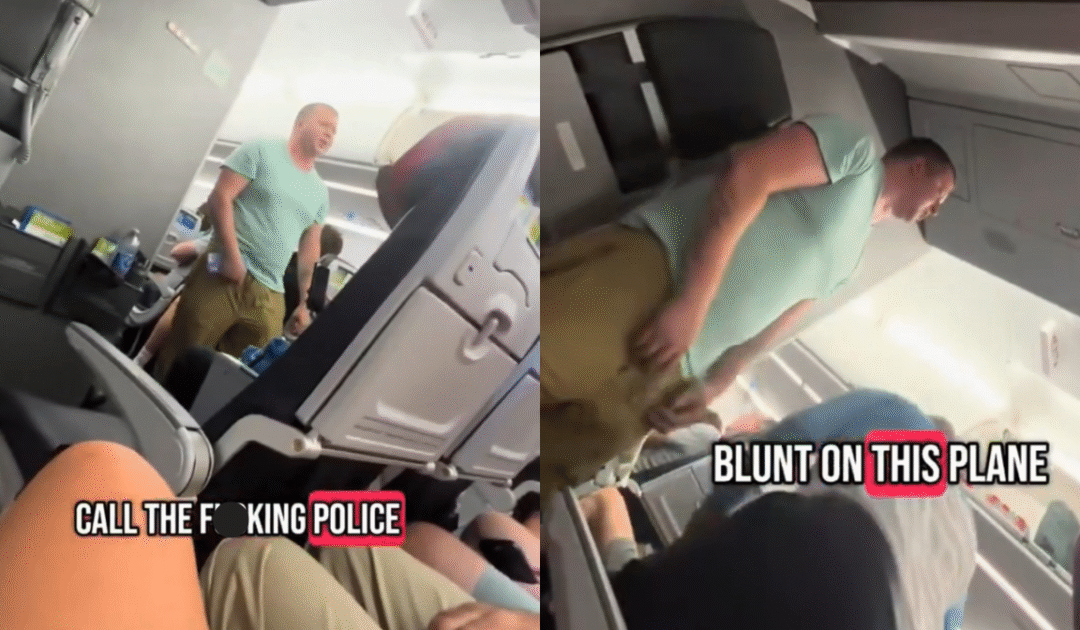
In a bizarre viral incident on an American Airlines flight from Charlotte, North Carolina to Denver, Colorado, a man had a profane meltdown, where he demanded a refund, threatened passengers, screamed profanities, and threatened to light up a blunt on the plane.
American Airlines said the “disruptive passenger” was eventually yanked off the plane before takeoff.
“The flight continued as scheduled following the removal. We thank our customers for their patience and apologize for the inconvenience,” the airline said.
During the rant, the man, who said he makes “over a million a year,” repeatedly offered to give money to passengers to get off the plane and begging for a phone charger. “I’m not shutting up until I get a chord,” bro.
“I need a f*cking shot right now,” he said, demanding Don Julio tequila and asserting that “I don’t even like to drink.”
“You’re literally pissing off your customer. Shut the f*ck up,” he screamed at the flight attendant. “Call the police. I’ll f*ck them up,” he said at the beginning.
He further claimed that he’s working with rapper Kodak Black, calling himself “the realest person on the East Coast.”
Due to an apparent delay, the man complained that he spent $53 for a “f*cking kids meal” from Starbucks and started demanding a refund for his plane ticket. “I’m about to get off this sh*t. I don’t have time for this. Like peace out,” he said before threatening to “light up a blunt on this plane.”
“SOS bro, you f*cked with the wrong one.”
When one passenger confronted him, telling him to “shut the f*ck up,” he screamed, “f*ck you bro! You want to talk to me bro?” The other passenger told him “Don’t talk to women like that,” and he responded, “If she’s being a b*tch, I’m going to call it out bro… F*ck you, I have four sisters. If I want to talk to a b*tch like that, I f*cking will.
Eventually, the captain came out, and the man demanded a refund and even asked if he could sit in the pilot seat if he pays $100.
One social media user identified the man as Lil Nate, a rapper from Raleigh, North Carolina, but it is unclear at this time.
In more clips from the incident, a flight attendant asked him to stop yelling, telling him, “nobody’s talking to you any kind of way,” and he accused her of “being disrespectful,” demanding she talk to him “like a man.” Eventually, he threatened to get off the plane before changing his mind and telling another person, “I’ll sit down and shut up, bro.”
He later told the flight attendant, “I expected better from you. I said you have beautiful eyes… You don’t deserve anything you have on your body,” and the captain stepped in, saying, “please don’t disrespect her.”
We use technologies like cookies to store and/or access device information. We do this to improve browsing experience and to show (non-) personalized ads. Consenting to these technologies will allow us to process data such as browsing behavior or unique IDs on this site. Not consenting or withdrawing consent, may adversely affect certain features and functions.
Functional
Always active
The technical storage or access is strictly necessary for the legitimate purpose of enabling the use of a specific service explicitly requested by the subscriber or user, or for the sole purpose of carrying out the transmission of a communication over an electronic communications network.
Preferences
The technical storage or access is necessary for the legitimate purpose of storing preferences that are not requested by the subscriber or user.
Statistics
The technical storage or access that is used exclusively for statistical purposes.The technical storage or access that is used exclusively for anonymous statistical purposes. Without a subpoena, voluntary compliance on the part of your Internet Service Provider, or additional records from a third party, information stored or retrieved for this purpose alone cannot usually be used to identify you.
Marketing
The technical storage or access is required to create user profiles to send advertising, or to track the user on a website or across several websites for similar marketing purposes.