President Trump Says U.S. to Send More Weapons to Ukraine Just Days After Pentagon Warned of Depleted Stockpiles
July 7, 2025
In a whiplash reversal that has infuriated America-First conservatives, President Donald Trump now says the United States “has to” ship still more arms, missiles, and ammo to Ukraine — just days after the Pentagon froze deliveries because our own stockpiles are running dry.
Less than a week ago, Defense Secretary Pete Hegseth halted Patriot interceptors, artillery shells, and precision missiles, citing “dangerously low” U.S. inventories.
The Trump Administration is withholding shipments promised by the Biden Regime after the Pentagon’s policy chief Elbridge Colby found the US’s stockpiles of munitions and air defense missiles are dangerously low.
Last September, the Biden Regime announced an eye-watering $8 billion in military aid for Ukraine during Ukrainian President Volodymyr Zelensky’s visit to Washington.
Since the onset of Russia’s full-scale invasion, Congress has approved nearly $175 billion in aid and military assistance for Ukraine.
“Biden emptied out our whole country giving them weapons, and we have to make sure that we have enough for ourselves’, the president argued. ‘We’ve given so many weapons, but we are giving weapons, and we’re working with them and trying to help them,” Trump said.
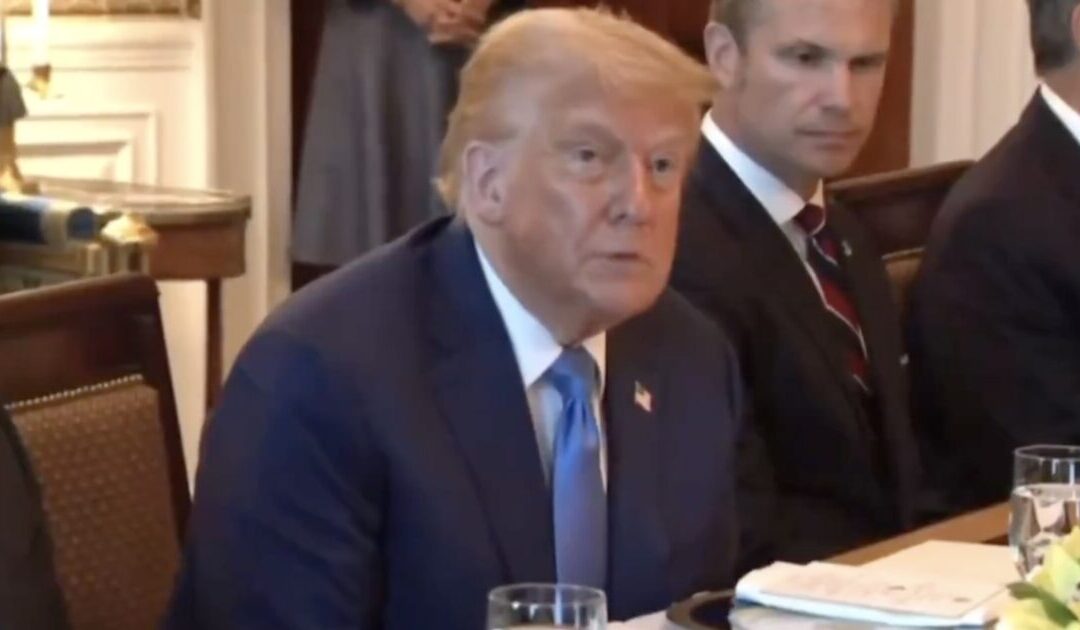
Yet on Monday night, seated beside Israeli Prime Minister Benjamin Netanyahu, Trump declared that Ukraine is being hit “very hard” and must receive more “defensive weapons.”
“We’re going to send some more weapons. We have to. They have to be able to defend themselves. They’re getting hit very hard now,” Trump told reporters.
“Defensive weapons, primarily, but they’re getting hit very, very hard. So many people are dying in that mess,” he added.
The Gateway Pundit reported last week that President Trump spoke Thursday with Russian President Vladimir Putin, but we now know his reaction: he very honestly said that he ‘didn’t make any progress with him [Putin]’ on the peace process in Ukraine.
“’It was a pretty long call. We talked about a lot of things, including Iran… ‘We also talked about the war with Ukraine, and I’m not happy about that … I didn’t make any progress with him today at all’.”
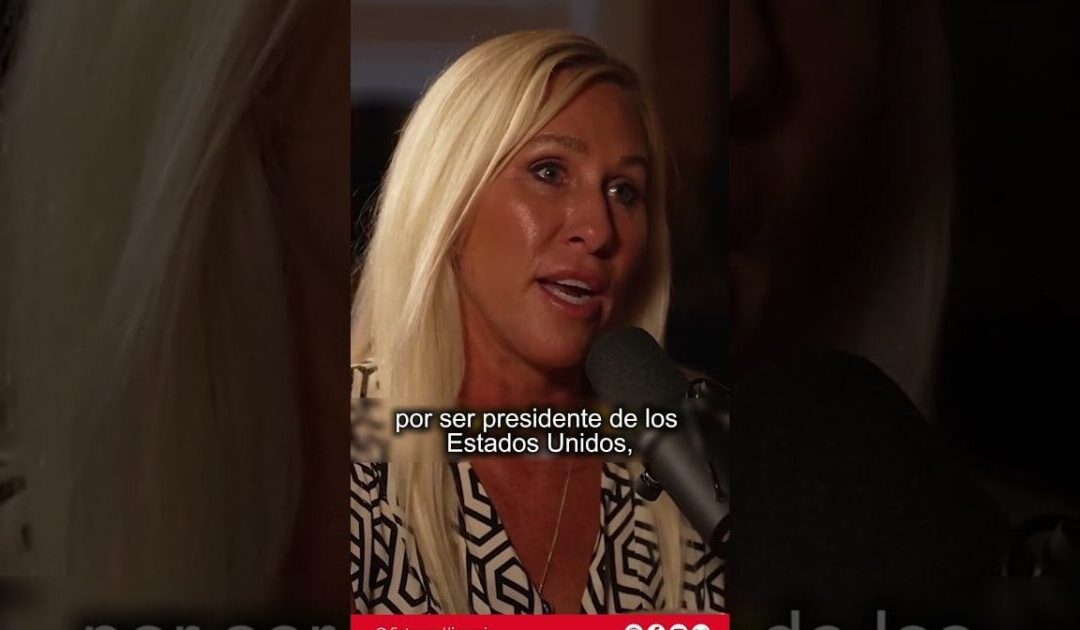
Marjorie Taylor Greene Calls Out U.S. Leaders
July 7, 2025
Marjorie Taylor Greene: Hey, we all live in this house. It’s called the United States of America. This is our house. And if we’re giving our full allegiance to another foreign country that doesn’t pay our taxes, that won’t pay our debt, that didn’t come to defend our southern border when it was being invaded for four years straight…
When their Prime Minister, Netanyahu, was the first to congratulate Joe Biden on becoming President of the United States — he was the first foreign leader to do so.
NEW: Magistrate Judge Says Milwaukee County Judge Hannah Dugan Is NOT Entitled to Claim Judicial Immunity to Dismiss Federal Criminal Charges
July 7, 2025
A federal magistrate judge on Monday said Milwaukee County Judge Hannah Dugan is not entitled to dismiss her federal case on a judicial immunity claim.
“Dugan moves to dismiss the indictment under Fed. R. Crim. P. 12(b) on the grounds that she, as a judge, is immune from criminal prosecution for judicial acts, that her prosecution violates the limits of federal power under the Tenth Amendment, and that the indictment could be dismissed under the canon of constitutional avoidance,” magistrate judge Nancy Joseph wrote.
“For the reasons explained below, I recommend that Dugan’s motion to dismiss be denied,” the judge said.
In May, Milwaukee County Judge Hannah Dugan moved to dismiss the case against her one day after a federal grand jury indicted her on two counts for obstructing an ICE arrest this Spring.
In April, a federal grand jury indicted Milwaukee County judge Hannah Dugan for helping an illegal alien evade ICE agents.
Dugan is facing up to six years in prison and $350,000 in fines.
According to the FBI, Dugan became angry when she found out that ICE agents were waiting outside of her courtroom last week to arrest Eduardo Flores-Ruiz, an illegal alien involved in a domestic abuse case she was overseeing. She allegedly directed Flores-Ruiz to exit the courthouse through a private jury door to evade arrest.
FBI Director Kash Patel said Judge Dugan “intentionally misdirected federal agents away from the subject to be arrested at her courthouse.”
The shocking criminal complaint detailed Judge Dugan’s actions to intimidate federal agents and how she helped the illegal alien evade arrest.
Judge Dugan learned of ICE’s presence and angrily confronted the arrest team of ICE agents.
The video shows Hannah Dugan in her robes walking through the courthouse halls and confronting ICE agents dressed in plain clothes.
Later on, the illegal alien, Flores-Ruiz, and his lawyer are seen sneaking out the “jury door” so he could evade arrest.
Federal agents were then seen running into the street and chasing Flores-Ruiz before apprehending him. Judge Dugan put the agents in danger.
JUST IN: Israeli Prime Minister Benjamin Netanyahu Nominates Trump for Nobel Peace Prize, Presents Him with Letter of Nomination (VIDEO)
July 7, 2025
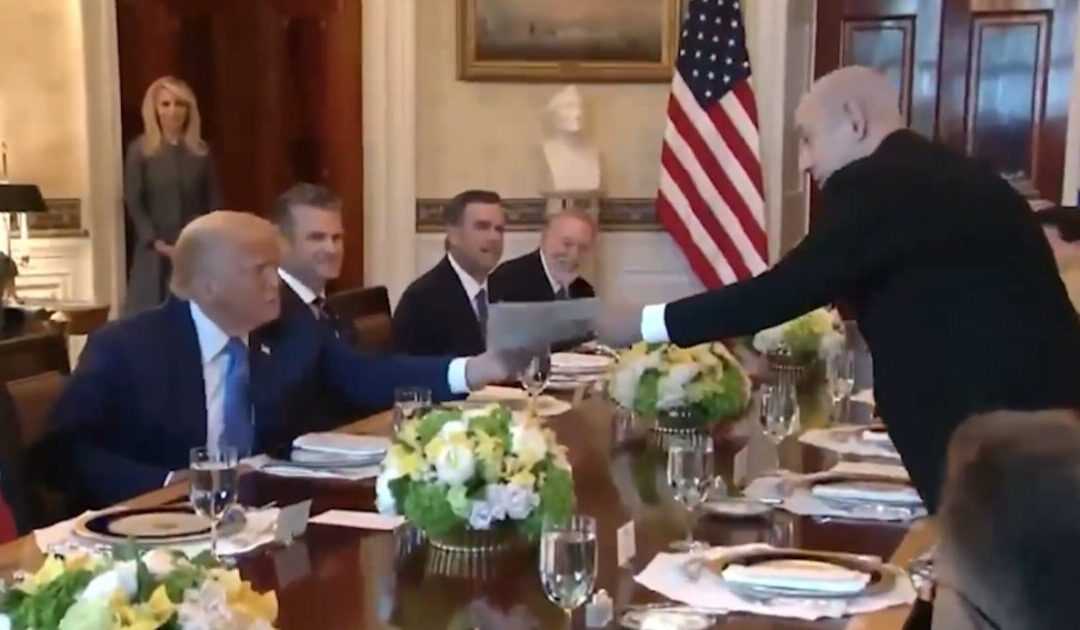
Benjamin Netanyahu presents President Trump with Nobel Peace Prize nomination letter
Israeli Prime Minister Benjamin Netanyahu announced on Monday during a dinner meeting with President Trump that he is nominating the President for the Nobel Peace Prize.
Netanyahu made his third appearance at the White House —the most of any foreign leader—on Monday to have dinner and meet with the President to discuss the situation in Gaza.
During their dinner, the Prime Minister presented President Trump with his letter to the Nobel Prize Committee, officially nominating Trump for the Peace Prize.
“He’s forging peace as we speak, in one country and one region after the other,” Netanyahu said.
WATCH:
Netanyahu: He forged the Abraham Accords. He’s forging peace as we speak, in one country and one region after the other. So, I want to present to you, Mr. President, the letter I sent to the Nobel Prize Committee. It’s nominating you for the Peace Prize, which is well deserved, and you should get it.
Trump: Thank you very much. This, I didn’t know. Wow. Thank you very much. Coming from you, in particular, this is very meaningful.
This comes after the President was nominated by Pakistan for the Nobel Prize, citing the President’s “diplomatic intervention and pivotal leadership during the recent India-Pakistan crisis.”
Shortly after the announcement from Pakistan, the President announced that he secured peace in the decades-long conflict between the Democratic Republic of the Congo and the Republic of Rwanda, marking another significant milestone in the President's record of world peace. However, as President Trump noted, he won't get the credit he's due for this or his many other historic peace agreements.
"I won’t get a Nobel Peace Prize for this, I won’t get a Nobel Peace Prize for stopping the War between India and Pakistan, I won’t get a Nobel Peace Prize for stopping the War between Serbia and Kosovo, I won’t get a Nobel Peace Prize for keeping Peace between Egypt and Ethiopia (A massive Ethiopian built dam, stupidly financed by the United States of America, substantially reduces the water flowing into The Nile River), and I won’t get a Nobel Peace Prize for doing the Abraham Accords in the Middle East which, if all goes well, will be loaded to the brim with additional Countries signing on, and will unify the Middle East for the first time in 'The Ages!'" the President said last month.
"No, I won’t get a Nobel Peace Prize no matter what I do, including Russia/Ukraine, and Israel/Iran, whatever those outcomes may be, but the people know, and that’s all that matters to me!"
Trump: The Toughest President on China in U.S. History
July 7, 2025
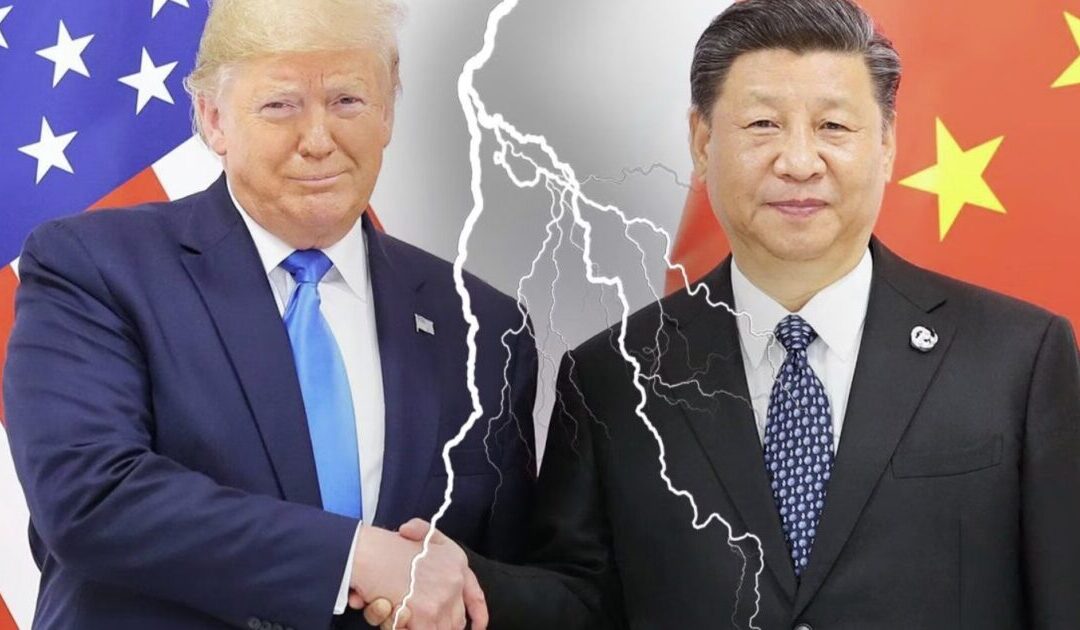
Photo courtesy of Xinhua
The consensus among America’s intelligence and defense establishments is that China represents the most comprehensive threat to U.S. economic and national security interests. The 2025 Annual Threat Assessment from the U.S. Intelligence Community identifies China as presenting “the most comprehensive and robust military threat to U.S.” forces, while the FBI has declared that “the counterintelligence and economic espionage efforts emanating from the government of China and the Chinese Communist Party are a grave threat to the economic well-being and democratic values of the United States.”
The Defense Intelligence Agency’s 2025 assessment flags China as “the long-term pacing challenge,” noting its military modernization, expanding defense budget, and assertive foreign policy as contributing to elevated risk for America.
Amid this unprecedented threat, many China analysts view President Trump’s tough stance as a necessary response to safeguard American sovereignty, economic interests, and national security. The Department of Defense’s 2024 China Military Power Report notes China’s nuclear arsenal has grown to over 600 warheads, with projections surpassing 1,000 by 2030. Meanwhile, the U.S. Trade Representative reports that China is pursuing “production and market share targets that can only be achieved through non-market means” across critical economic sectors.
An objective analysis of previous administrations’ approaches to China shows that Donald Trump has implemented the most aggressive and comprehensive economic measures of any American president.
Before President Trump launched the U.S.–China trade war in 2018, average U.S. tariffs on Chinese imports were just 3 percent, while China imposed average tariffs of around 8 percent on U.S. goods. To correct this imbalance, Trump implemented aggressive tariff increases, which by his second term had surged to an average of 51.1 percent on all Chinese exports, a more than 15-fold jump. These measures marked the most comprehensive trade action against any major U.S. trading partner in modern history and were widely seen by Trump supporters as a justified response to decades of unfair Chinese practices.
In 2025, Trump threatened tariffs as high as 145 percent on all Chinese goods. While ultimately negotiated down, the implemented rates remain at unprecedented levels. The economic impact has been swift: U.S. tariff revenue reached $24.2 billion in May 2025 alone, while direct imports from China fell 43 percent year-over-year to a 19-year low. Overall, the 2025 tariffs are projected to raise $156.2 billion in federal revenue, equal to 0.51 percent of GDP, making them the largest tax increase since 1993.
Beyond tariff’s, the president’s approach to China extended into a broad, strategic decoupling across multiple sectors. His administration imposed sweeping restrictions on Chinese investment in critical U.S. industries, technology, infrastructure, energy, healthcare, food supplies, farmland, ports, and minerals, primarily through enhanced powers of the Committee on Foreign Investment in the United States (CFIUS).
Trump also restricted China’s access to American capital markets. Executive Order 13959, signed on November 12, 2020, barred U.S. investors from holding securities in companies identified as “Communist Chinese military companies,” forcing divestment from dozens of major Chinese firms and triggering broader financial separation.
In parallel, Trump signed the Holding Foreign Companies Accountable Act, creating a pathway for delisting Chinese firms from U.S. stock exchanges if they fail to comply with American auditing standards for three consecutive years. Since its implementation, the SEC has flagged over 135 companies relying on auditors based in China or Hong Kong for potential future action, though enforcement mechanisms and audit access agreements have prevented mass delistings as of 2025. Many Chinese companies have proactively pursued alternative listings in Hong Kong and other venues in anticipation of potential future enforcement.” These measures were meant to cut Chinese firms off from the world’s largest capital markets.
The Trump administration also targeted Chinese technology with export controls and outright bans. Huawei Technologies was barred from purchasing vital U.S. components and excluded from American telecom networks on national security grounds. Trump further ordered bans on dealings with the Chinese owners of TikTok and WeChat, citing similar concerns. These actions aimed to sever Chinese tech giants from critical U.S. technology and cripple their global operations.
Trump’s decoupling strategy extended to academia. The administration imposed strict visa restrictions on Chinese students and scholars, especially those with ties to the Chinese Communist Party or enrolled in sensitive research fields. Secretary of State Marco Rubio announced that the U.S. would begin “aggressively” revoking such visas, representing a dramatic shift from decades of academic exchange.
Together, these non-tariff actions constituted the most comprehensive economic and technological confrontation with China in modern U.S. history. Unlike previous administrations, Trump’s strategy was unified, far-reaching, and explicitly designed to achieve long-term decoupling from the Chinese Communist Party’s influence.
We use technologies like cookies to store and/or access device information. We do this to improve browsing experience and to show (non-) personalized ads. Consenting to these technologies will allow us to process data such as browsing behavior or unique IDs on this site. Not consenting or withdrawing consent, may adversely affect certain features and functions.
Functional
Always active
The technical storage or access is strictly necessary for the legitimate purpose of enabling the use of a specific service explicitly requested by the subscriber or user, or for the sole purpose of carrying out the transmission of a communication over an electronic communications network.
Preferences
The technical storage or access is necessary for the legitimate purpose of storing preferences that are not requested by the subscriber or user.
Statistics
The technical storage or access that is used exclusively for statistical purposes.The technical storage or access that is used exclusively for anonymous statistical purposes. Without a subpoena, voluntary compliance on the part of your Internet Service Provider, or additional records from a third party, information stored or retrieved for this purpose alone cannot usually be used to identify you.
Marketing
The technical storage or access is required to create user profiles to send advertising, or to track the user on a website or across several websites for similar marketing purposes.

BREAKING: Trump says he’ll be sending ‘MORE’ weapons to Ukraine pic.twitter.com/X1EKazvtrg