We Were Right: Hillary Was Sick in 2016 – The Reason Why She Was Tossed into a Van Like a Slab of Meat
July 25, 2025
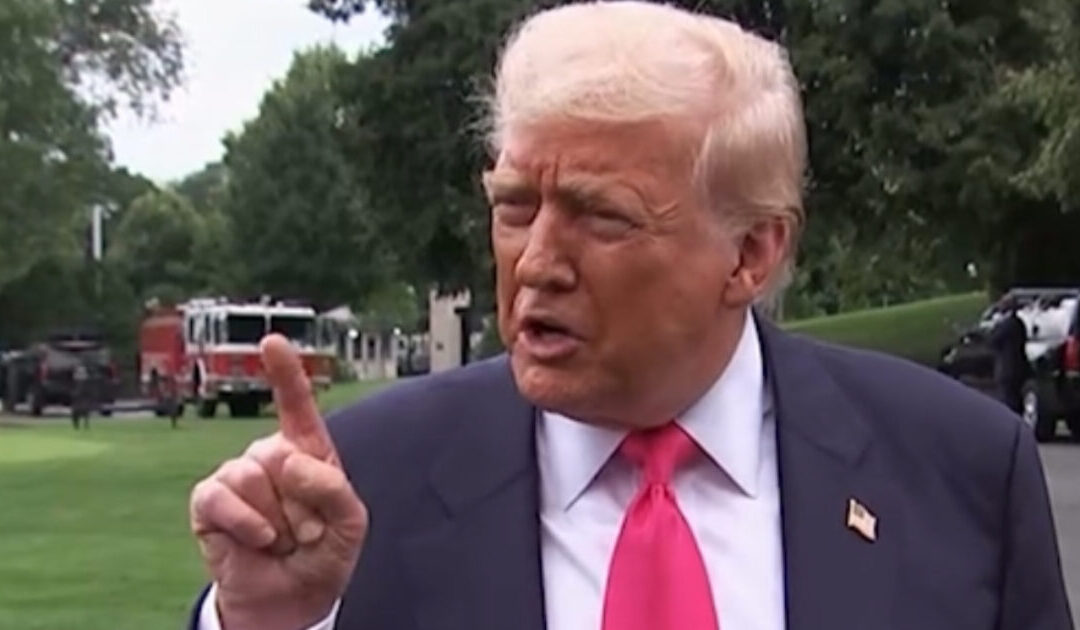
During the 2016 Presidential Election we were chastised for reporting on Hillary’s poor health. This week DNI Tulsi Gabbard provided evidence that we were absolutely spot on.
(One of my first posts at TGP was a story of Hillary taking off weekends.) On August 15, 2016 we reported that Hillary was taking weekends off while candidate Trump was a machine.
By reviewing the activities of Presidential candidates Trump and Clinton a new phenomenon has appeared. While Trump continues to smash Clinton in attendance at events, Hillary appears to have decided to take weekends off.
Clinton took the weekend of August 6th and 7th off and she decided to take three days off this past weekend August 12th through 14th. She also has no events scheduled to participate in this coming Thursday through Saturday August 18th through 20th. This in essence would mean another three days off after three days of events scheduled starting today. In total Clinton has taken 7 days off in August out of the first 14 days and is scheduled to continue with this approach through at least this coming Saturday.
Donald Trump on the other hand has taken only two days off in August, Sunday August 7th and Sunday the 14th. Trump has 7 days where he has participated in more than one campaign event.
This article was the top story in the country as it appeared on Drudge as the headline. (This was back when Drudge led the news cycle and before it turned far-left radical.)
This led to more and more reporting on Hillary’s horrible health culminating in reports of a doctor traveling with her and Hillary needing help up stairs and more leading up to 9-11.
On that day Hillary left an event at Ground Zero and got up and mysteriously walked out with what appeared to be a doctor. A citizen reporter caught what happened next on his cell phone.
Now we know why Hillary really fell out and had to be tossed into that van
It’s been revealed that during the 2016 presidential campaign, Hillary Clinton was on strong tranquilizers for psycho-emotional problems and was suffering from ischemic heart disease. pic.twitter.com/6AFZtON1fq
Earlier this week, DNI Gabbard shared that the media lied about Hillary’s health. She was as bad off as we reported.
Gabbard reported that “DNC emails that detail evidence of Hillary’s ‘psycho-emotional problems, uncontrolled fits of anger, aggression, and cheerfulness,’ and … a daily regimen of heavy tranquilizers.”
.@DNIGabbard: The House report details information Russia had on Hillary Clinton, including “DNC emails that detail evidence of Hillary’s ‘psycho-emotional problems, uncontrolled fits of anger, aggression, and cheerfulness,’ and … a daily regimen of heavy tranquilizers.” pic.twitter.com/k3a77dMiHg
— Rapid Response 47 (@RapidResponse47) July 23, 2025
The media seemingly lies about everything and has done so for years.
Trump Issues Perfect Response After UN Pushes Policy Where US Can Be Sued Over Climate
July 25, 2025
After the International Court of Justice ruled this week that countries are required to cut emissions in the name of climate change, the White House gave a simple reply: “America first.”
Any decision from the court is non-binding, but far-left advocates are hopeful it will cause a chain reaction, leading to “domestic lawsuits” and “other legal actions,” according to the Associated Press.
The case was reportedly brought before the United Nations’ highest court by small island countries, seeking to force international standards onto larger governments.
When Axios reached out to the White House Monday regarding potential penalties the United States could face, the response was direct.
“As always, President Trump and the entire Administration is committed to putting America first and prioritizing the interests of everyday Americans,” Spokeswoman Taylor Rogers said in a statement.
Spot on. We cannot be sucked into global affairs — and follow edicts from other countries — as we rebuild our own domestic infrastructure.
Hence, Trump’s move to withdraw America from the Paris Climate Accords — something he’d already done in his first term, but had to do again after former President Joe Biden reversed it.
“[The ICJ case] specifically calls out the responsibility of industrialized nations to take the lead in limiting emissions,” Axios reported.
Are we supposed to believe that countries like China and Russia are going to have their feet held to the fire on pollution? The target seems to be the United States. Why? Because we have far-left lawmakers willing to throw trillions of dollars at an issue that hasn’t even been fully settled.
First, it was “global warming” because the polar caps were melting, setting up an ice age. Then the argument shifted to temperatures getting hotter, and the phrase was switched to climate change. Every time a doomsday event was predicted, it got pushed off. “The Day After Tomorrow” never came. That’s red flag number one.
Red flag number two is the potential money-laundering aspect. After laundering tactics were exposed inside the USAID by Elon Musk’s DOGE team, what’s to stop climate change funding from being used as a personal piggy bank?
During the Obama years, the firm Solyndra had the federal government cosign a loan for over $500 million in solar technology before it went under, Forbes reported.
The same Forbes piece highlighted how several similar firms were given hundreds of millions of dollars in taxpayer funds, yet they all failed. Where did the money go?
Even CNN had to admit earlier this month that Americans are less concerned with climate change than they have been in years.
CNN’s chief data analyst Harry Enten showed a poll that asked: “Are Americans afraid of climate change?
“And the answer is: Americans aren’t afraid of climate change,” he said, citing network data going back decades. “Climate activists have not successfully made the case to the American people.”
The numbers showed that people who are ‘greatly worried about climate change’ was initially going up, but then it took a massive dip in 2025. The percentage went all the way down to levels from the year 2000.
When asked if climate change would have an “effect on my home area,” only 17 percent of all adults said yes, with Democrats polling at a mere 27 percent. Independents were even lower at 16 percent, and Republicans were at 6 percent.
“This is across the aisle in terms of the percentage,” Enten added. “They may worry about it in the abstract, but when it comes to their own lives, they don’t worry.”
Environmental regulations are important for clean air, clear skies, and fresh water — but not at the expense of accountability and national autonomy.
Especially when it has devolved into a cult-like religion, where extremists are willing to perpetrate violence to get their way.
Americans are tired of the preaching. They’re tired of the alarmism. But most importantly, they’re tired of having their pockets picked when so many other issues need the country’s undivided attention.
Glacier Retreat Hijacked: How Funding Bias and Normative Science Fuel the Manufactured ‘Climate Crisis’ Narrative
July 25, 2025
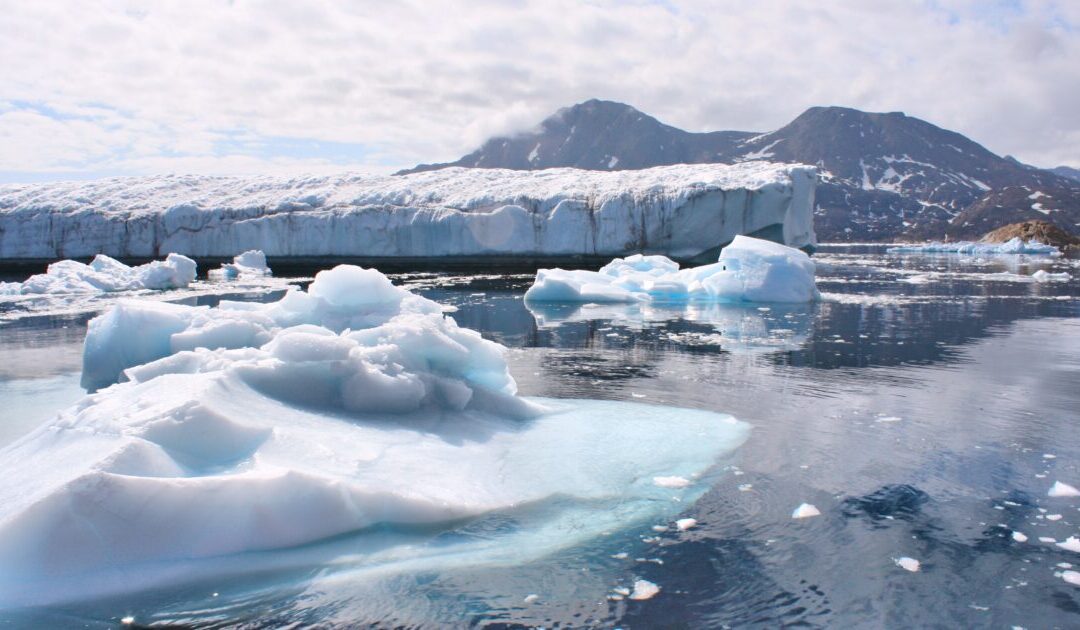
Christine Zenino from Chicago, US, CC BY 2.0 <https://creativecommons.org/licenses/by/2.0>, via Wikimedia Commons
Glacier retreat is one of the concepts often used to support the climate crisis narrative.
However, while there is clear evidence that glaciers have been retreating over the past 70 years, and according to NOAA, global average temperatures have risen approximately 1.1°C since the late 1800s, this does not, in itself, prove the existence of a climate crisis.
Globally, the World Glacier Monitoring Service (WGMS) reports over 30 meters of cumulative ice loss among long-term reference glaciers since 1950, with annual losses exceeding 1 meter water equivalent in recent years.
NOAA data shows glacier loss rates increased from -171 mm per year in the 1980s to -889 mm per year in the 2010s.
The WGMS currently tracks about 60 climate reference glaciers across 19 mountain regions, supported by field data from 500 glaciers and satellite data from approximately 200,000 more.
Although most glaciers have been retreating since the 1950s, glaciers naturally advance and retreat over time. Many glaciers were advancing from the 1950s to 1970s due to cooler conditions, and most reached their maximum extent during the Little Ice Age in the 1800s.
While glacier retreat is well documented, whether it constitutes a “climate crisis” is far less certain.
Glaciers have naturally advanced and retreated for centuries due to climate variability, making it difficult to treat current trends as uniquely alarming. The global average temperature rise of approximately 1.1°C since the 1800s is relatively modest and not unprecedented in paleoclimate records.
Regional impacts of glacier melt also vary, some areas may face reduced water availability, while others may benefit from increased runoff.
Many human and ecological systems have the capacity to adapt, further complicating the crisis narrative.
Ultimately, labeling glacier retreat a crisis depends on subjective judgments about risk, urgency, and acceptable change. Research on normative science supports this view, showing that value-laden conclusions are often framed as empirical findings, what Former EPA scientist Robert Lackey terms “stealth policy advocacy.”
The very term “climate crisis” embeds a normative judgment, implying unproven assumptions about human causation, moral obligation, and the urgency of intervention.
Funding structures that reward alarming portrayals of climate data reinforce these assumptions, turning scientific inquiry into institutional advocacy for predetermined policy goals.
For scientific researchers, there are clear economic incentives to support the climate crisis narrative.
According to the Heritage Foundation, federal funding for climate change research rose from $2.4 billion in 1993 to $11.6 billion in 2014, with an additional $26.1 billion provided through the American Recovery and Reinvestment Act. This funding structure creates strong financial motivation to frame findings in ways that support crisis-driven policy.
Lackey identifies this trend as a form of “normative science”, information developed or interpreted based on an assumed, often unstated, preference for particular policy outcomes.
He warns that public policy issues are frequently presented as purely scientific questions, without acknowledging the underlying value judgments embedded in the framing.
Climate change, he notes, is a prominent example of this phenomenon. Supporting this concern, researchers Wojick and Michaels found that federal funding exerts systematic influence on research outcomes, where the prospect of funding influences the result in a way that benefits the funder.
As a result, scientific claims often rest on embedded assumptions that cannot be empirically tested but still shape the direction of policy and public perception.
According to research on funding patterns, funding bodies operate on several unexamined premises, such as the assumption that climate change constitutes a “crisis” requiring intervention – but this represents a subjective value judgment about what constitutes an acceptable versus unacceptable state of nature.
No empirical science can determine what climate conditions “should” exist.
The climate crisis narrative assumes that human behavior is both the primary cause of and solution to climate change. It presupposes that climate change is a problem, that human intervention is both possible and desirable, and that humanity has a moral obligation to alter natural climate systems.
This framework embeds a series of philosophical and political positions, namely, that climate change is inherently harmful, that it can be controlled by human action, and that such control is necessary, while presenting these normative assumptions as if they were scientific conclusions.
The funding structure reinforces this by institutionalizing value-laden premises under the guise of objective research.
The Committee for a Constructive Tomorrow (CFACT), a nonprofit known for challenging climate crisis narratives, reported “If a young climate researcher wants to build a career today, their chances of getting government funding for their research proposals is directly proportional to how seriously they portray the threat of global warming.”
The interaction between funding structures, institutional pressure, and the framing of climate science directly influences how glacier retreat is interpreted.
In congressional testimony, Dr. Judith Curry described “enormous pressure for climate scientists to conform to the so-called consensus,” driven by federal funding agencies, universities, and professional societies, amounting to institutional enforcement of specific assumptions.
This pressure shapes how data, including glacier melt, is presented and understood. Critics argue that even funding categories reflect this bias.
As David Wojick noted, “The CAGW [Catastrophic Anthropogenic Global Warming] paradigm says the warming is mostly due to the carbon cycle.
The natural variability paradigm says it may be largely due to solar cycles,” yet funding structures overwhelmingly support the former while marginalizing the latter.
When only one paradigm receives institutional backing, the interpretation of glacier retreat as evidence of a climate crisis becomes not just a scientific assessment, but a product of selective support and constrained debate.
DNI Tulsi Gabbard Torches Media for Spreading Obama’s Russia Hoax — Says Press Complicit in “Historic Lie” to Sabotage Trump: ‘They Printed What the Deep State Told Them to Print’
July 25, 2025
The Deep State house of cards is collapsing — and DNI Tulsi Gabbard just lit the match.
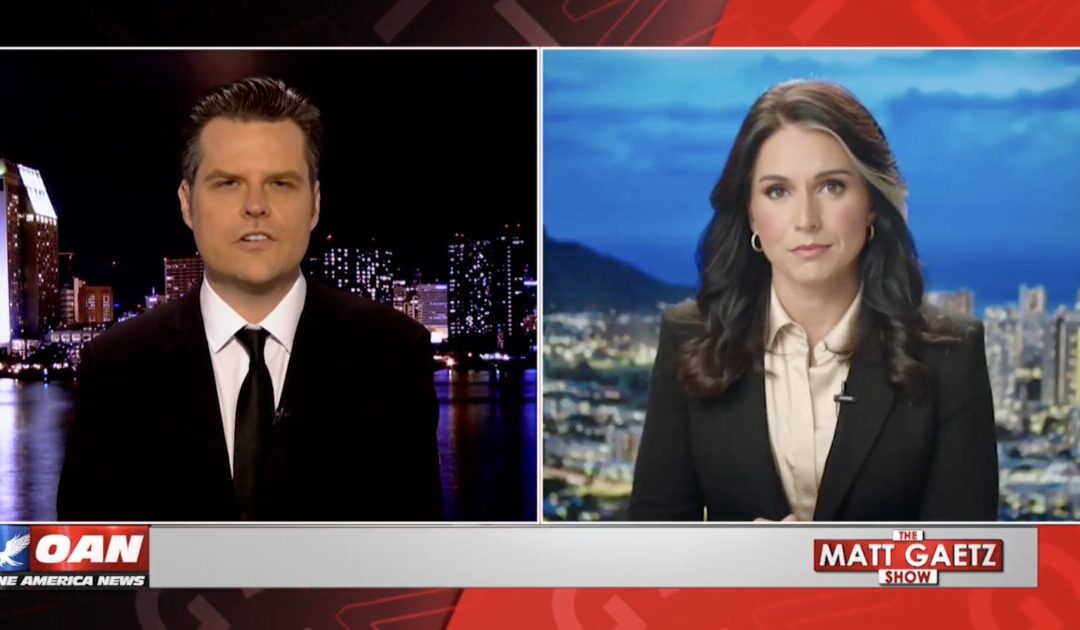
During an interview on OANN with former Rep. Matt Gaetz, Director of National Intelligence Tulsi Gabbard accused the Obama Administration and its loyal media mouthpieces of orchestrating and perpetuating a “historic lie” to sabotage Donald Trump’s presidency before it even began.
As The Gateway Pundit reported earlier this week, Gabbard’s second explosive document release contains indisputable evidence: Barack Obama not only knew the Russia Collusion narrative was bogus — he ordered it.
The so-called Intelligence Community Assessment (ICA), rushed out in January 2017, was a politically motivated hit job — a fabricated intelligence document, pushed by CIA Director John Brennan, and blessed by Obama himself — designed to frame Donald Trump as a Russian asset.
During a surprise appearance at Press Secretary Karoline Leavitt’s briefing, Gabbard called out the media to their faces:
TULSI: “I’m not asking you to take my word for it. I’m asking you in the media to conduct honest journalism — and for the American people to see for yourselves.”
But instead of owning up to their role in pushing Obama’s fake narrative, the so-called “mainstream” media scrambled to bury the truth.
CNN’s Response? PANIC. The network infamously known for breathlessly reporting the Steele dossier and pushing the Russia hoax cut the feed as Gabbard detailed Obama’s criminal involvement.
TULSI: “I’m not asking you to take my word for it. I’m asking you in the media to conduct honest journalism and the American people to see for yourselves…”
In a follow-up interview with Rep. Matt Gaetz on OANN, Gabbard pulled no punches.
MATT GAETZ: It’s been several days since your monumental release of documents tying President Obama, his CIA director, and his DNI to Russia hoax fabrications. What do you think so far about the public’s reaction and the media’s reaction?
TULSI GABBARD: Well, I think a lot of the public—first of all, thanks for having me on your show, Matt—I think we’ve seen a lot of people, if you look across social media, those who’ve been following this closely, they’re not surprised at the revelation. But we are surprised, I think, that we have found the evidence that proves that this Obama-led intelligence community assessment was a contrived document, knowingly made using fake or substandard intelligence, in order to drive this conclusion that President Obama wanted to see—which was that Russia helped Donald Trump get elected in 2016, or at least aspired to.
This directly contradicted every other intelligence community assessment—every other assessment that came from the intelligence community for the last several months prior, both before the 2016 election as well as immediately after.
But I want to focus here on the media’s response, because this has been really what is most striking. When you look at outlets like The New York Times, The Washington Post, MSNBC, CNN, Politico—you’ll see in these outlets either total and complete silence, or, for those choosing to cover it, they are not actually pointing to the documents and the revelations that were released—that we released last week and this week—exposing the truth about this manufactured intelligence assessment.
Instead, they’re saying, “Oh, well, President Obama’s office says this is bizarre,” or focusing on these other issues that have nothing to do with the core, very disturbing revelation that we released. That, frankly, has to do not with Democrats or Republicans—but with the integrity of our democratic republic. It’s a serious issue that should concern every American. It should concern every serious news outlet.
I can only conflate their silence or attempts at misdirection as one thing: they’re afraid to tell the truth. Because if they tell the truth, they’ll have to remind the American people that over those four years—both during President Trump’s election, after the election, and in the years of President Trump’s first administration—they furthered the lie. They printed what the deep state actors in the intelligence community—and the John Brennans and James Clappers of the world—told them to print. Some even won Pulitzer Prizes for it.
In order for them to cover this honestly and objectively—and simply report the truth that we released in these documents—they would also have to admit their culpability in furthering this historic, historic, historic lie.
WATCH:
Director of National Intelligence @DNIGabbard believes the media printed the lies pushed by the Obama Administration to further the contrived narrative that Russia meddled in the 2016 Election to help Trump. Now, the media is silent because they know in covering the truth they… pic.twitter.com/CuBuVc37HD
Trump’s Tariff War Is Working: Record Revenues and New Trade Deals
July 25, 2025
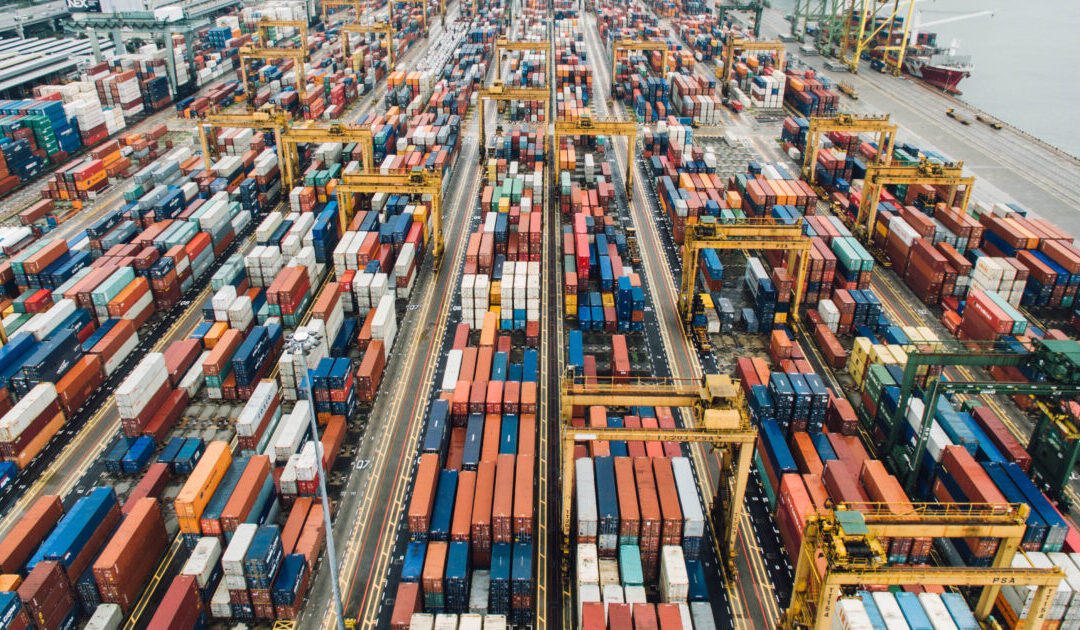
chuttersnap chuttersnap, CC0, via Wikimedia Commons
President Trump’s tariff policy is delivering measurable results, generating $113 billion in revenue and pushing key trading partners to the negotiating table. A new trade agreement with China is being fleshed out, and a deal with the European Union is reportedly close.
Since January 2025, President Trump has enacted sweeping tariff increases under his reciprocal trade policy, aimed at countries with significantly higher tariff rates than the U.S., which maintains a 3.3% average MFN rate. India averages 17%, Brazil 11.2%, and China 7.5%, though China’s rate is misleadingly low, as it imposes much higher tariffs on specific goods, often 25%, 40%, or more. These disparities have fueled the $1.2 trillion U.S. goods trade deficit and undermined domestic manufacturing and national security.
Launched on April 2, declared “Liberation Day” by the White House, revenue from tariffs will help fund tax cuts and reduce the deficit, while also countering foreign value-added tax systems that disproportionately affect U.S. firms.
Since President Trump modified U.S. tariff rates approximately 90 days ago, dozens of countries have expressed willingness to lower tariffs and eliminate non-tariff barriers to achieve more balanced trade with the United States. As of July 2025, 4 to 7 formal agreements have been completed, resulting in reduced tariffs from Trump’s initial “reciprocal tariff” rates. Under the U.S.-China deal, tariffs on Chinese goods dropped from 145% to 30%, and U.S. exports to China now face only 10%, down from 125%.
Trump maintained a 10% baseline tariff on U.K. imports. Japan secured a deal lowering its tariffs from 25% to 15%, while Vietnam’s rate was reduced to 20%, with double that for Chinese transshipped goods. Indonesia’s rate was cut from 32% to 19%, and Cambodia’s from 49% to 36%. The Philippines also reached an agreement with the U.S. on July 22. These deals reflect early progress in Trump’s effort to renegotiate global trade on more reciprocal terms.
Many major U.S. trading partners, including Canada, the European Union, and South Korea, face steep tariffs starting August 1, 2025, after President Trump extended the original July 9 deadline. Canada, facing a 35% tariff, is the most economically dependent on the U.S. and stands to suffer the most if a deal isn’t reached.
Over 75% of Canadian exports go to the U.S., accounting for up to 34% of provincial GDP and supporting more than two million jobs, particularly in provinces like Ontario, Alberta, and New Brunswick. Canada’s economy is further tied to the U.S. through deeply integrated supply chains and daily trade flows totaling $2.7 billion.
Canada’s economy depends not only on exports to the U.S. but also on foreign direct investment (FDI) driven by tariff-free access under CUSMA. In 2024, Canada attracted a record $85.5 billion in FDI, much of it tied to access to the U.S. market, as firms from Europe, China, and elsewhere established manufacturing operations in Canada to bypass U.S. tariffs ahead of President Trump’s second term.
New tariffs now threaten over $430 billion in exports and risk triggering an investor pullout if U.S. access is no longer assured. With such deep exposure, Canada is uniquely vulnerable in a Trump-era trade standoff. Reaching an agreement with President Trump is in Canada’s best interest, or the average citizen will see a decline in their standard of living.
Now that a trade deal with China is close, the European Union remains the most significant U.S. trading partner yet to reach an agreement. The EU faces a 30% tariff starting August 1, 2025, but negotiations are actively ongoing. President Trump has signaled openness to a deal, and EU officials confirmed continued high-level discussions. Meanwhile, at the June 2025 NATO summit in The Hague, Trump secured a landmark agreement: all NATO allies committed to raising defense spending to 5% of GDP by 2035, up from the longstanding 2% target.
This includes 3.5% in direct defense spending by 2032 and 1.5% on broader security. The agreement is expected to reduce the U.S. defense burden, previously nearly 69% of NATO’s total spending, and boost revenue for American defense firms as European nations procure U.S. weapons to meet the new goals. This dual-track strategy, leveraging trade negotiations while rebalancing NATO spending, represents a major political and economic win for the Trump administration.
We use technologies like cookies to store and/or access device information. We do this to improve browsing experience and to show (non-) personalized ads. Consenting to these technologies will allow us to process data such as browsing behavior or unique IDs on this site. Not consenting or withdrawing consent, may adversely affect certain features and functions.
Functional
Always active
The technical storage or access is strictly necessary for the legitimate purpose of enabling the use of a specific service explicitly requested by the subscriber or user, or for the sole purpose of carrying out the transmission of a communication over an electronic communications network.
Preferences
The technical storage or access is necessary for the legitimate purpose of storing preferences that are not requested by the subscriber or user.
Statistics
The technical storage or access that is used exclusively for statistical purposes.The technical storage or access that is used exclusively for anonymous statistical purposes. Without a subpoena, voluntary compliance on the part of your Internet Service Provider, or additional records from a third party, information stored or retrieved for this purpose alone cannot usually be used to identify you.
Marketing
The technical storage or access is required to create user profiles to send advertising, or to track the user on a website or across several websites for similar marketing purposes.