‘MACRONISM WILL END’: French Interior Minister Retailleau Trashes Macron’s Legacy, Moving to Position Himself for Presidential Succession
July 24, 2025
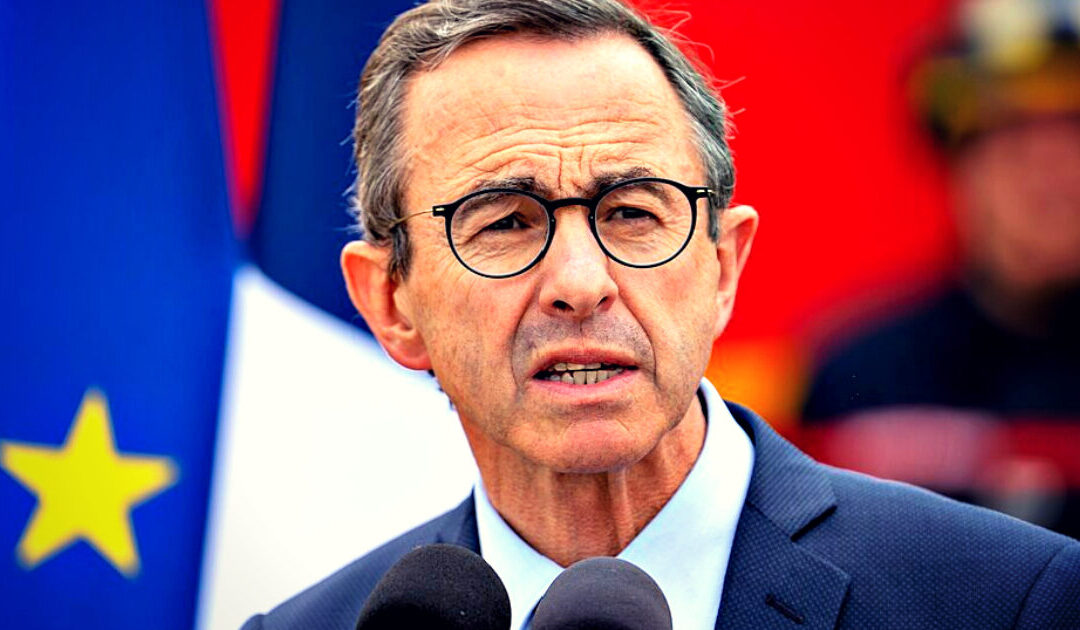
French Interior Minister Bruno Retailleau distancing himself from Macron to prepare his run/Wiki Commons.
The French Presidential Campaign has started two years ahead of time.
While President Emmanuel Macron pontificates around the world and unsuccessfully tries to meddle into all sorts of international crises, the French Republic is suffering.
French post-colonial power is all but dead: troops have been expelled from no less than eight African nations in the last few years: Mali, Burkina Faso, Niger, Chad, Ivory Coast, Senegal, Central African Republic and Gabon.
Unchecked mass migration has wrecked the social fabric, while the economy is stagnant. Farmers suffer under the yoke of ‘Climate change’ fanaticism.
Is it any wonder that viable candidates are starting to position themselves?
Interior Minister preparing to run for the big office.
We have reported here in TGP how French Interior Minister Bruno Retailleau is one such candidate.
Retailleau gave an interview yesterday (23), in which he delivered a ‘stern rebuke’ of Macron’s legacy.
This has been widely understood as a ‘break’ with the President to build his stature as a potential successor in the 2027 election.
“Less than two years before the end of Macron’s second term, after which he can’t immediately seek reelection, an increasingly crowded group of potential candidates to succeed the French leader is starting to emerge.
Retailleau, a veteran conservative, has yet to declare his candidacy for 2027 but his comments to the right-wing Valeurs Actuelles magazine underline how likely presidential contenders are now trying to distance themselves from Macron’s bruised political brand and carve out their own electoral niche.”
Polls show that 82% of French citizens think Macron’s presidency has been a failure – including 63% of those who voted twice for him.
Macron’s minority government is cracking up. A coalition of centrists and ‘mainstream conservatives’ out of step with the times.
“’Macronism will end with Emmanuel Macron, quite simply because it’s neither a political movement nor an ideology: it essentially relies on one man’, [Retailleau] was quoted as saying.”
The ‘petit Roi’ Macron is seen as ‘too pro-wealth for the left and not tough enough on crime and immigration for the right’.
“A source close to Retailleau, speaking on condition of anonymity, said the minister’s comments were to be expected in a coalition government and that he had no plans to resign. He was set to meet Macron on Thursday for a previously scheduled chat.”
Tackle Your Credit Card Debt by Paying 0% Interest Until 2027
July 24, 2025
(Note: Thank you for supporting businesses like those presenting a sponsored message below and ordering through the links below, which benefits Gateway Pundit. We appreciate your support!)
Did you know some credit cards can actually help you get out of debt faster?
Second Court Ignores Landmark SCOTUS Ruling, Issues Nationwide Injunction
July 24, 2025
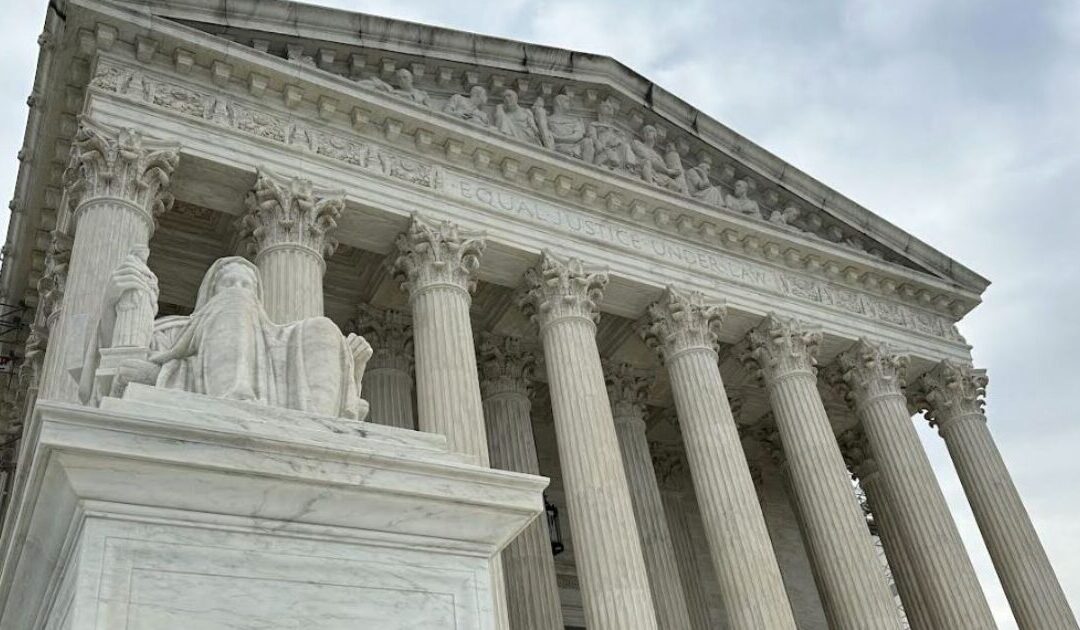
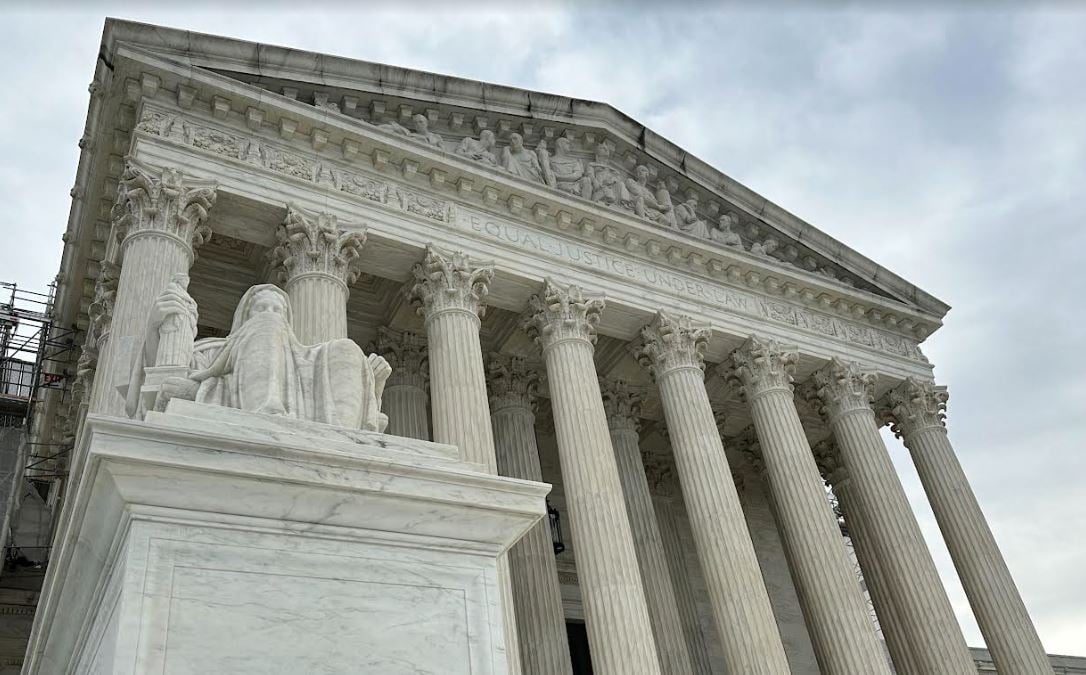
In a 6-3 ruling late last month, Justice Amy Coney Barrett minced no words when it came to so-called “universal injunctions,” lower-court rulings that extended far beyond that court’s jurisdiction.
“It is unnecessary to consider whether Congress has constrained the Judiciary; what matters is how the Judiciary may constrain the Executive,” Barrett wrote in the decision.
“That goes for judges, too,” Barrett added. “When a court concludes that the Executive Branch has acted unlawfully, the answer is not for the court to exceed its power, too.”
That decision, by the way, did not decide the merits of the case in which the universal injunction was issued: President Donald Trump’s administration has argued that the 14th Amendment does not grant birthright citizenship because those born to citizens of other countries within U.S. borders are not among “persons born in the United States and subject to the jurisdiction thereof.”
The meaning of this language, and whether children of foreign nationals are “subject to the jurisdiction” of the United States will eventually be decided one way or another before the high court. But the ruling itself was clear: Before that, nationwide universal injunctions were the judiciary acting in a way that exceeded its power.
So, for the second time since the decision, the judiciary has exceeded its power, because what the heck?
In a 2-1 decision handed down late Wednesday by the 9th U.S. Circuit Court of Appeals, judges ruled that the plaintiffs — attorneys general from four Democratic-led states, Arizona, Illinois, Oregon, and Washington — could receive a nationwide injunction because that was the only way to obtain requisite relief, according to The Hill.
“States’ residents may give birth in a non-party state, and individuals subject to the Executive Order from non-party states will inevitably move to the States,” U.S. Circuit Judge Ronald Gould wrote in the opinion of the court.
Both Gould and Judge Michael Hawkins, who voted to issue the universal injunctions, were Bill Clinton appointees.
The dissenter was Judge Patrick Bumatay, who was a Trump appointee.
“Courts must be vigilant in enforcing the limits of our jurisdiction and our power to order relief,” Bumatay wrote in his dissent.
“Otherwise, we risk entangling ourselves in contentious issues not properly before us and overstepping our bounds,” he added. “No matter how significant the question or how high the stakes of the case — at all times, we must adhere to the confines of ‘the judicial Power.’”
As The New York Times noted, this is the second time that the same case has received a universal injunction from a lower-court judge despite the fact that I believe they call it the Supreme Court because, in large part, it has supremacy over lower courts.
Judge John C. Coughenour of the Western District of Washington first issued the injunction, ruling that, to use the Times’ words, “Mr. Trump’s executive order would force them to put in place new systems to determine who is eligible for state benefits, and reduce the payments they receive from the federal government.”
Of course, the states could abide by the order until it’s decided before the Supreme Court — which I would assume will happen in relatively short order given the nature of the case — but that isn’t the point.
The point, again, is that the Supreme Court is only so supreme when it acts as rubber-stamp branch of the left. It no longer does so. Now, the left relies on lower courts to do that. The Supreme Court ended that, too.
Their response? Well, apparently, their argument is something along the lines of the fictional non-jurist Jeff “The Dude” Lebowski: “Well, you know, that’s just like uh, your opinion, man.”
It’s almost as if they’re setting out to prove the Trump administration’s point.
To be fair to the fictional Mr. Lebowski, his reasoning was only slightly better than Justice Ketanji Brown Jackson’s dissent. Both, however, should hold as much force as the law of the land.
Although Robert Mueller failed to find an election conspiracy between Donald Trump and Moscow, the former Special Counsel threw a lifeline to the Russiagate narrative by alleging that the Kremlin had engaged in a “sweeping and systematic” effort to get Trump elected and “sow discord” among Americans.
Six years later, that questionable but enduring claim continues to unravel.
According to newly declassified documents, U.S. intelligence leaders concealed high-level doubts about one of Russiagate’s foundational allegations: that Russia stole and leaked Democratic Party material to help Trump defeat Hillary Clinton. In a September 2016 report that was never made public until now, the NSA and the FBI broke with their intelligence counterparts and expressed “low confidence” in the attribution to Russia.
The previously undisclosed dissent about Russia’s alleged hacking activities in the 2016 election is among several revelations released last week by Tulsi Gabbard, Trump’s Director of National Intelligence. According to Gabbard, President Obama and senior members of his cabinet “manufactured and politicized intelligence” in its waning months to wage “a years-long coup against President Trump.”
Gabbard’s material adds to a body of evidence previously reported by RealClearInvestigations that challenges the widely parroted claim about the quality of evidence and the extent of Russian “interference operations” in the 2016 election. These conclusions – based on questionable assertions presented as hard facts – have been falsely portrayed as an intelligence consensus. When Trump, the nation’s commander-in-chief, cast doubt on the Russian interference allegations in a July 2018 news conference, former CIA chief John Brennan denounced him as “nothing short of treasonous.”
It turns out that Trump was not out of sync with the U.S. intelligence community he was accused of betraying.
“Low Confidence” in Core Allegation
Until now, the purported U.S. intelligence consensus on Russian meddling has been conveyed to the public in three seminal reports.
The first was a January 2017 intelligence community assessment (ICA) released in the final days of the Obama administration under the direction of Brennan and then-Director of National Intelligence James Clapper. The ICA accused Russian President Vladimir Putin of ordering an “influence campaign” to “denigrate” Democratic candidate Clinton and “help” Trump win the 2016 election. Some of this effort involved propaganda on Russian media outlets and messaging on social media.
The larger component hinged on the allegation that the GRU, Russia’s main intelligence agency, stole emails and documents from the Democratic Party and released that material principally via two online entities, DCLeaks and Guccifer 2.0, as well as the whistleblower organization WikiLeaks. Julian Assange, the founder of WikiLeaks, has long denied that Russia or any other state actor was his source. Nevertheless, the January 2017 ICA stated that U.S. intelligence had “high confidence” that Russia engineered the hack.
The documents newly declassified by Gabbard show that the ICA, Mueller, and Senate reports all excluded the intelligence community’s own secretly identified doubts and evidentiary gaps on the core allegation of Russian meddling.
In a previously unpublished Intelligence Community Assessment circulated within the government on Sept. 12,2016 (hereafter “September ICA”), the FBI and NSA expressed “low confidence” that Russia was behind the hack and release of Democratic Party emails. U.S. intelligence agencies, the report explained, “lack sufficient technical details” to link the stolen Democratic Party material released by WikiLeaks and other sources “to Russian state-sponsored actors.”
The joint FBI-NSA dissent was especially significant given their central role in investigating Russia’s alleged cyber meddling. With its sweeping foreign surveillance capability, the NSA is the agency best positioned to assess the source of the alleged hacking of the Democratic National Committee (DNC) and Democratic Congressional Campaign Committee (DCCC). Meanwhile, the FBI had taken the lead in probing the cyber-theft and release of stolen material from the Democratic Party networks. The private acknowledgment that these two agencies did not have the “technical” data to link the hacking to Russia bolsters longstanding criticism, overlooked by legacy media, that the “Russian interference” allegations lacked supporting evidence.
Contrary to subsequent assertions, the September ICA shows that the U.S. intelligence community had no hard evidence that Putin ordered the theft of Democratic Party material as part of an influence campaign to help Trump.
“If the disclosures of the DNC and DCCC documents were indeed orchestrated by the Russian intelligence services,” the report stated, “those services would very likely have sought Putin’s approval for the operation.” This passage indicates that U.S. intelligence had declined to endorse assertions promoted by Brennan and leaked to the media during Trump’s first term, that a highly placed Kremlin mole had captured Putin’s orders to meddle in the 2016 election in support of Trump. The alleged mole was later identified as a mid-level Kremlin official named Oleg Smolenkov, who left Russia to live in the Virginia suburbs under his own name.
President Obama Pushes Narrative
Rather than make the September ICA and its dissenting contents public, the Obama administration told a much different story, one that ensured that allegations of “Russian interference” would hobble Trump’s presidency even before he took office.
On Oct. 7, 2016, the Department of Homeland Security (DHS) and the Office of the Director of National Intelligence (ODNI) issued a joint statement claiming that the “U.S. Intelligence Community is confident” that Russia hacked the Democratic Party in order to “interfere with the U.S. election process.” No mention was made of the NSA and FBI’s shared “low confidence” in that allegation, or their lack of technical evidence for it.
Notably, the FBI objected to formally accusing Russia and refused to participate. But by that point, the joint statement had a more powerful endorser. According to testimony from Jeh Johnson, who then served as DHS secretary, President Obama “approved the statement” and “wanted us to make [it].” On December 6, 2016, Obama made another request, asking the intelligence community to produce a new version of the ICA that could be made public. As RCI has previously reported, and a recent CIA review has newly confirmed, that version of the ICA – released in January 2017 and hereafter referred to as the “January ICA” – was tainted by a hurried production schedule and the exclusion of key intelligence agencies under the close control of Brennan and Clapper.
Apart from references to the Steele dossier – now debunked opposition research financed by Hillary Clinton’s campaign alleging a Trump/Russia conspiracy – it contained no new evidence that would have reversed the previous assessments.
After ordering a replacement ICA, Obama administration officials moved to silence dissent. According to Gabbard’s Office of the Director of National Intelligence, a senior official who “led” the September ICA on allegations of Russian meddling was “sidelined” from the new process. This unidentified official, whom Gabbard’s office describes as the “ODNI Whistleblower,” was shunned after “questioning his leadership about why an IC assessment was being created that contradicted multiple IC assessments.” The ODNI whistleblower also asserts that he was later pressured to accept unsupported findings in the January ICA, “including that the Russian government had a preference for President Trump.”
Speculation Accepted as Fact
Meanwhile, in a newly disclosed Dec. 7 memo written one day after Obama’s ICA tasking, the Office of the Director of National Intelligence acknowledged that the confidence level about alleged Russian hacking had barely changed.
The document claimed to have “high confidence” that Russia had, in 2015 and 2016, hacked into networks belonging to the Democratic National Committee and the Democratic Congressional Campaign Committee. But when it came to whether this Russian hacking actually led to exfiltration, dissemination, and public release to actors like WikiLeaks, the document used qualified, tepid language that reflected continued uncertainty. “Most IC agencies,” the DNI wrote, only had “moderate confidence that Russian services probably orchestrated at least some of the disclosures” of stolen Democratic Party material (emphasis added).
The Dec. 7 DNI memo also inadvertently confirmed another evidentiary gap: a reliance on evidence provided by Trump’s campaign rival. The “attribution of the intrusions” to Russia, the DNI wrote, was “based on the forensic evidence identified by a private cyber-firm and the IC’s review and understanding of cyber activities by the Russian Government.”
That private cyber-firm is CrowdStrike, which worked directly for the Clinton campaign, and which had triggered Russiagate the previous June by accusing Russia of hacking the DNC servers. As RCI has previously reported, despite the high stakes involved, the FBI acceded to the DNC’s refusal to let the bureau independently analyze its server, deferring instead to CrowdStrike’s analysis. The timing of the FBI’s “low confidence” assessment suggests that it did not find CrowdStrike’s initial attribution to Russia convincing. CrowdStrike submitted its third and final report to the FBI on Aug. 24, three weeks before the September ICA recorded the FBI and NSA’s dissent on the Russian hacking allegation.
The DNI’s reliance on the forensics of a firm working for Trump’s political opponent – just as the FBI simultaneously relied on the Clinton-funded Steele dossier in its fruitless hunt for collusion – was kept under wraps. And as RCI has previously reported, so was another critical disclosure made in closed-door congressional testimony one year later.
In December 2017, CrowdStrike President Shawn Henry testified that his firm “did not have concrete evidence” that Russian hackers had exfiltrated data from the DNC servers. He said there were signs of potential Russian malware on the servers, but no evidence that any information had been uploaded by them. Put another way, they might have had keys to the servers, but there was no proof that they had removed any content. Henry’s admission to the House Intelligence Committee was also kept from the public throughout the Mueller probe.
For unspecified reasons, the FBI again declined to endorse the intelligence assessment on alleged Russian meddling. On Dec. 8, one day after the DNI memo was circulated, an FBI official replied that the bureau was “drafting a dissent,” and asked that the ODNI “remove our seal [and] annotations of co-authorship.” In response, an ODNI official opined that the FBI’s “only difference” with the Dec. 7 memo “was over confidence level on the attribution.” The ODNI official also pointed out that the FBI’s disagreement was with “I&A.” This was a reference to the Office of Intelligence and Analysis at DHS, which had co-authored, along with the Clapper-run ODNI, the Oct. 7 statement that the FBI had refused to endorse, and that falsely claimed to speak on behalf of the “U.S. Intelligence Community.”
The FBI’s continued dissent underscores that, by the time Obama had ordered the production of a new ICA, the intelligence community still had not reached consensus on the attribution of the email hacking to Russia.
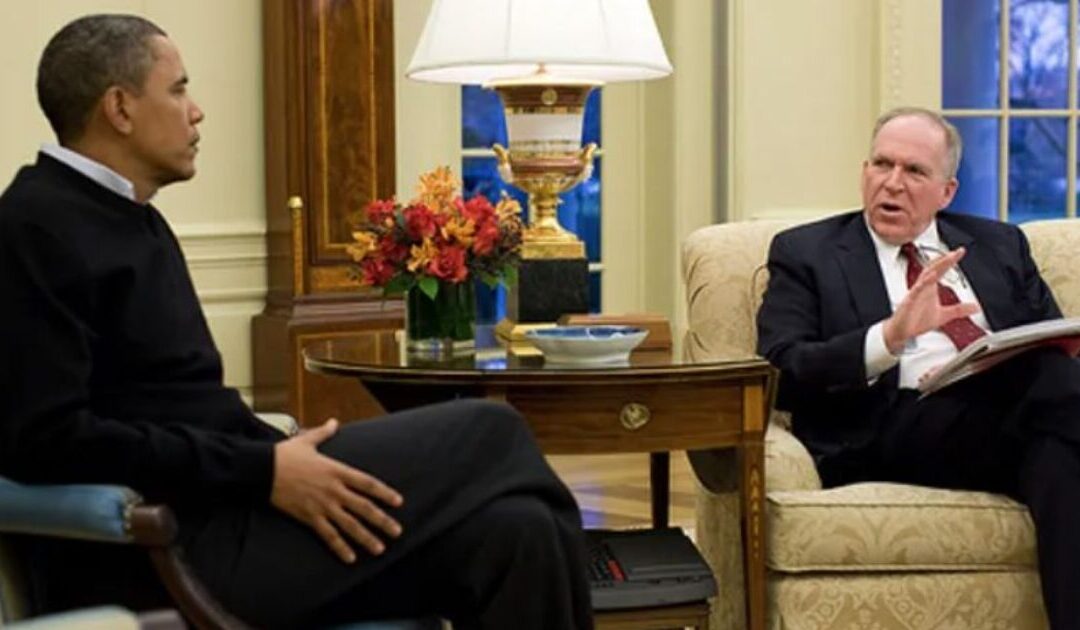
Despite the lingering divisions over the evidence for alleged Russian hacking, a meeting between President Obama and top principals just one day later claimed to have reached a united front. On Dec. 9, Obama huddled with top national security officials, including Clapper and Brennan, at the White House. Notably, the two agencies that had previously dissented on Russian hacking – the FBI and NSA – were not represented by their respective leaders, James Comey and Mike Rogers, but instead by deputies Andrew McCabe and Richard Ledgett. According to a newly declassified summary of that meeting, the Principals Committee resolved to “publicly release and attribute to Russian intelligence services technical and other information … in intelligence reporting ” from that same day. It is unclear why Obama and his principals suddenly felt confident publicly attributing the Democratic Party hack to Russia when the FBI and NSA had expressed “low confidence” in that judgment based on a lack of technical evidence.
Spreading the False Narrative
As Obama and senior intelligence officials concealed the community’s doubts about the alleged Russian hack and releases, as well as their reliance on a Clinton campaign contractor to investigate it, more false claims were leaked to the public.
Two days after the DNI’s Dec. 7 memo, the Washington Post published a story claiming that a “secret assessment” from the CIA had concluded that the hacking of Democratic Party emails was “part of a wider Russian operation to boost Trump and hurt Clinton’s chances” in the 2016 election. A senior U.S. official told the Post that it was “the assessment of the intelligence community” that Russia sought “to help Trump get elected. That’s the consensus view.” In fact, there had been no such assessment or consensus, only strong doubts about the hacking allegation at the heart of the purported “Russian operation.”
Rather than refute the erroneous Post story, the Obama administration continued to promote its unsupported narrative. Three weeks later, on Dec. 29, the Department of Homeland Security, this time joined by the FBI, issued a report that newly promoted the allegation of Russian email theft. Without mentioning the IC’s low-to-moderate confidence in Russian hacking or the integral role of Clinton contractor CrowdStrike, the joint report described the alleged Russian hacking effort as “likely leading to the exfiltration of information” from Democratic Party networks. It is unclear how the FBI arrived at this conclusion after voicing at least two previous dissents. This pattern, where privately identified evidentiary holes were later supplanted by publicly confident assertions, was repeated time and time again to advance the Russia narrative.
After burying dissenting opinions on Russian meddling and leaking false claims to the media, Obama administration and intelligence officials released a newly sanitized version of the ICA on Jan. 6, 2017. Two other versions of that document with higher levels of classification were produced, one of which – a “downgraded” product below the highest-level classified one, hereafter referred to as the Downgraded ICA – has been newly released by Gabbard.
The Downgraded ICA points to more evidentiary gaps. When it comes to the ICA’s contention that Putin ordered Russian military intelligence to pass stolen Democratic Party material to WikiLeaks and other conduits, the ICA makes no reference to any evidence of such an order. Instead, it points to a speculative guess based on a psychological reading of Putin’s perceived grievances:
Putin most likely wanted his intelligence services to discredit Secretary Clinton because he has blamed her since 2011 for inciting mass protests against his regime in late 2011 and early 2012 and holds a grudge for comments he almost certainly saw as disparaging him, judging from press reporting. Given this, we assess with high confidence that the GRU was directed to pass material it collected to WikiLeaks and other intermediaries.
In the public version, the January ICA suggested that an online persona that released stolen Democratic material, Guccifer 2.0, had a “likely Russian identity” tied to the GRU. But the Downgraded ICA acknowledges that U.S. intelligence only has “moderate confidence” that Guccifer 2.0 and another site, DCleaks.com, were “under direct GRU control.” By contrast, the Mueller report of March 2019 asserted as fact that the GRU “created” and “used both the DCLeaks and Guccifer 2.0 personas” to release stolen material publicly and transfer it to WikiLeaks.
Most significantly, Gabbard’s new releases raise the question of how U.S. intelligence officials went from their low to moderate confidence in Russian interference allegations through the last months of 2016 into “high confidence” in the first week of January 2017, a stance they have clung to in the ensuing eight years even as the underpinnings of those claims have unraveled.
In its memo on the new documents, Gabbard’s office notes that the January ICA’s assertion of a Putin-ordered effort to defeat Clinton claimed to be drawing on “further information” that had “come to light” since the 2016 election. That “further information,” Gabbard’s office states, was later found to be the Steele dossier, which Brennan and others have falsely claimed played no part in their analysis.
Whatever the case, these new disclosures confirm that to make the case of Russian interference and present it to the public as a consensus view, U.S. intelligence officials in the Obama administration suppressed ample doubts within their highest ranks.
This article was originally published by RealClearInvestigations and made available via RealClearWire.
Aaron Maté has provided extensive coverage of corruption within federal intelligence agencies as a contributor to RealClearInvestigations. He is also a contributor to The Nation, and his work has appeared in Democracy Now!, Vice, Al Jazeera, Toronto Star, The Intercept, and Le Monde Diplomatique. Maté is the host of the news show Pushback with Aaron Maté.
Salvadoran Illegal Accidentally ‘Self-Deports’ to Mexico and is Detained After Trying to Re-Enter America – Will Now Be Sent Back to His Homeland
July 24, 2025
Credit: NBC News 7 San Diego YouTube Screenshot
An illegal alien from El Salvador will lose his unearned freedom in America after making a devastating error that landed him south of the border.
As NBC News 7 San Diego reported, a Deferred Action for Childhood Arrivals (DACA) recipient (Dreamer) named Erick Hernandez gave two people a ride from L.A. to the border in San Ysidro on June 1, but he revealed that he missed an exit and ended up crossing into Mexico by mistake. In other words, he ‘self-deported’ himself.
Hernandez’s attorney, Valerie Sigamani, alleges that after being detained by Customs and Border Patrol (CBP), agents demanded a probe from the Dreamer in exchange for being allowed to return to the United States.
Here is NBC News 7 San Diego’s video report on the incident:
“One of the officials told him, ‘Well, if you pay us $800, we’ll forgive everything, and we’ll let you into the United States with no problem,’” Sigamani said.
Sigimani told NBC News 7 San Diego that she has filed a complaint with the FBI in an effort to shield her client from deportation. She also revealed that Hernandez is no longer protected by DACA.
“And when that happened (missing the turn), he lost everything, basically,” his attorney Valerie Sigamani said, noting that anyone with DACA must have prior approval to leave the U.S.
“He no longer has DACA. His attempt to come back to the United States and say, ‘This was a mistake. It was an accident. I was not trying to leave the United States,’ was ignored,” she added.
Sigamani said Hernandez has been placed in expedited removal and is being held without bond. He is currently at Otay Mesa Detention Center in San Diego County.
According to NBC News 7 San Diego, Hernandez’s parents illegally entered America with him 20 years ago from El Salvador. He was 14 years old at the time.
Hernandez’s wife Nancy Rivera, an American citizen, said that she was trying to help him gain legal status after they got married last fall. She is currently pregnant.
Now, she may have to raise their baby by herself due to Hernandez’s foolish and selfish actions.
We use technologies like cookies to store and/or access device information. We do this to improve browsing experience and to show (non-) personalized ads. Consenting to these technologies will allow us to process data such as browsing behavior or unique IDs on this site. Not consenting or withdrawing consent, may adversely affect certain features and functions.
Functional
Always active
The technical storage or access is strictly necessary for the legitimate purpose of enabling the use of a specific service explicitly requested by the subscriber or user, or for the sole purpose of carrying out the transmission of a communication over an electronic communications network.
Preferences
The technical storage or access is necessary for the legitimate purpose of storing preferences that are not requested by the subscriber or user.
Statistics
The technical storage or access that is used exclusively for statistical purposes.The technical storage or access that is used exclusively for anonymous statistical purposes. Without a subpoena, voluntary compliance on the part of your Internet Service Provider, or additional records from a third party, information stored or retrieved for this purpose alone cannot usually be used to identify you.
Marketing
The technical storage or access is required to create user profiles to send advertising, or to track the user on a website or across several websites for similar marketing purposes.