The MAHA movement is doing pretty well. Since last year when Robert F. Kennedy Jr formed the Make America Healthy Again movement to align with President Trump’s MAGA movement, there have been positive effects. Unfortunately, there is a whole lot more that has gone untouched.
For most Americans, the various battles against societal norms, Big Pharma, Big Insurance, and the Medical Industrial Complex as a whole begins with personal choices. While there are many who are stuck in “the system,” others are willfully engaged in their own unhealthy habits.
On today’s episode of Patriot TV Premieres on The Gateway Pundit, we dive into some of the challenges facing us as millions of Americans strive for improved health. Dr. Casey Means spoke to Allie Beth Stuckey about the greed in medicine. John Richardson joined us to discuss the buried “answer to cancer.”
How Palestinians Destroyed Lebanon: From Prosperous Christian Majority to Nearly Failed State
August 25, 2025
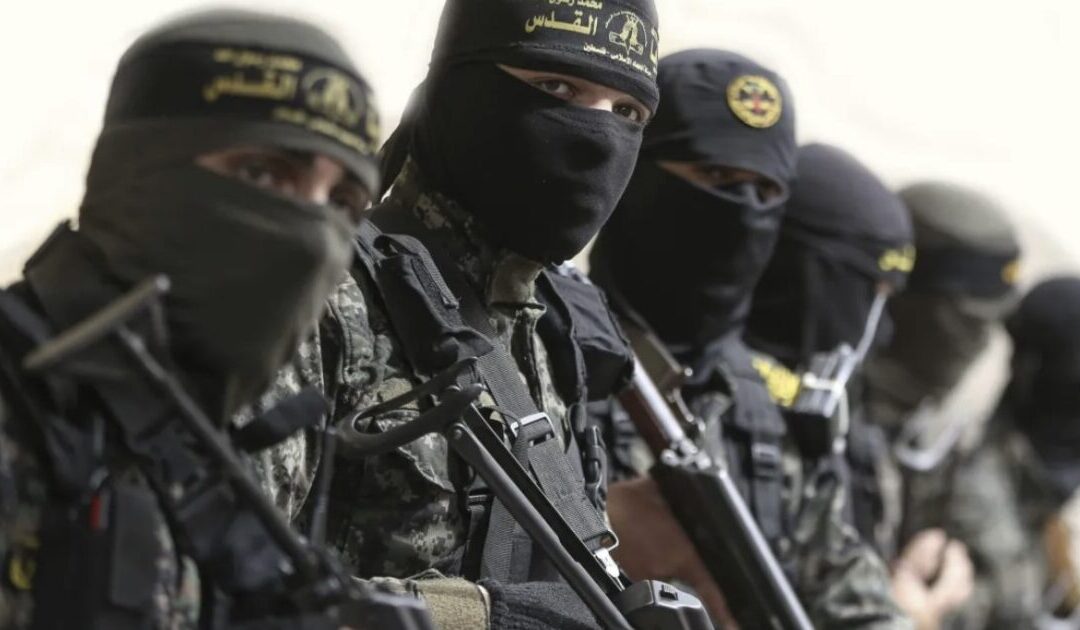
Photo courtesy of the Combating Terrorism Center at West Point
Before the influx of Palestinians and the rise of Hezbollah, Lebanon was the wealthiest, most educated, and only Christian-majority country in the Middle East. Today, it stands on the edge of becoming a failed state.
It is a bit of a cliché, but through the 1960s, Lebanon was known as the “Switzerland of the Middle East” and Beirut was celebrated as the “Paris of the Middle East.” It was the region’s banking capital, a hub of education, and a cultural powerhouse. The American University of Beirut (founded in 1866) and Université Saint-Joseph (founded in 1875) were the best universities in the Arab world, drawing students from across the Middle East, Iran, and beyond. With the highest literacy rates in the Arab world, Lebanon was also a center for publishing and research.
Banking and finance thrived under strong, stable currency and bank secrecy laws that attracted deposits from oil-rich Gulf states. Lebanese banks pioneered modern financial practices in the region, cementing Beirut’s reputation as its financial capital.
Culturally, Lebanon was the Arab world’s filmmaking and publishing hub. Most Arabic films, music, and books were produced there. Beirut also hosted the freest press in the Middle East, with newspapers, television, and radio influencing audiences far beyond its borders.
As a natural bridge between Europe and the Arab world, Lebanon dominated regional trade. The Port of Beirut was among the busiest in the eastern Mediterranean, while Lebanese merchants built commercial networks stretching into Africa, the Americas, and the Arab world.
Lebanon’s pluralism was also unique. Christians, Muslims, and minorities coexisted relatively peacefully, and Christians held genuine political power. French, Arabic, and English were widely spoken, adding to its cosmopolitan character. Tourists from conservative Gulf states flocked to Beirut for its casinos, beaches, nightlife, and liberal atmosphere. Its tourism infrastructure was the most advanced in the region, matched by healthcare facilities that attracted patients from across the Middle East for specialized treatment.
Lebanon, as a pluralistic society with Judeo-Christian values, welcomed people from all over the world. Unfortunately, the influx of Palestinian refugees, particularly after the 1967 Arab-Israeli War and later after Black September in Jordan (1970–71), significantly altered Lebanon’s demographic and political balance. The PLO established a strong presence in southern Lebanon and used it as a base for operations against Israel. This created tensions with many Lebanese, particularly Christians, who feared losing their political influence and worried about Israeli retaliation.
After being expelled from Jordan during Black September (1970–71), numerous Palestinian militant groups established bases in Lebanon, turning the country into their primary stronghold.
The core factions of the PLO included Fatah, led by Yasser Arafat, which became dominant in Lebanon after 1971. The Popular Front for the Liberation of Palestine (PFLP), founded in 1967 by George Habash, became notorious for pioneering aircraft hijackings.
Another faction, the Democratic Front for the Liberation of Palestine (DFLP), split from the PFLP in 1969 and carried out the 1970 Avivim school bus massacre and the 1974 Ma’alot massacre. The PFLP–General Command, led by Ahmed Jibril, was responsible for the 1974 Kiryat Shmona massacre and later the Night of the Gliders attack in 1987.
Extremist offshoots soon followed. Black September, a Fatah-linked faction, was behind the Munich Olympics massacre in 1972 and the assassination of Jordan’s Prime Minister Wasfi al-Tel.
The Abu Nidal Organization, founded after a split with the PLO, became one of the most feared transnational terrorist groups from the mid-1970s through the early 1990s. The Palestinian Liberation Front (PLF), particularly the Abu Abbas faction, carried out the 1985 Achille Lauro hijacking.
Lebanon’s refugee camps also became home to groups like Asbat al-Ansar, an Islamist faction tied to Al Qaeda. Together, these organizations created what was described as a “state within a state” in southern Lebanon, using it as a base for attacks on Israel and international targets throughout the 1970s and 1980s. Their activities played a central role in the destabilization that fueled Lebanon’s civil war.
The 1975–1990 civil war in Lebanon was complex, involving multiple factions and shifting alliances. It was not simply a conflict of Christians versus Palestinians and Muslims. While the armed Palestinian presence acted as a catalyst, the war also reflected deeper sectarian tensions and longstanding socioeconomic grievances.
Hezbollah emerged in the 1980s during the Israeli occupation of southern Lebanon, backed by both Iran and Syria. Although Hezbollah and the Palestinian factions shared opposition to Israel, their relationship was complicated—sometimes cooperative, other times competitive. Over time, Hezbollah largely displaced Palestinian military influence in Lebanon, while continuing to offer rhetorical support for the Palestinian cause.
Hezbollah has entrenched itself as a “state within a state” in Lebanon, with a militia larger than the national army, it has repeatedly paralyzed government. Backed by Iran and Syria, the group has repressed minorities and fueled sectarian tensions, particularly targeting Christians through assassinations, intimidation, and the use of their towns as rocket bases, which exposes civilians to Israeli retaliation and has displaced tens of thousands.
As a result of the Palestinian and Hezbollah militants, Lebanon has undergone a dramatic demographic and economic collapse. In the 1960s, Christians made up roughly 50–55% of the population; by 2025, estimates place them at only 30–35%.
Since 2019, the economy has shrunk by 38%, and as of April 2024, Lebanon’s banks are insolvent with more than $72 billion in losses. Inflation peaked at 221.3% in 2023 before dropping to 45.2% in 2024, after years of triple-digit rates. Today, 44% of the population lives in poverty, the country has only one functioning power plant, and the government provides electricity for barely an hour a day.
Meanwhile, liberal protesters across the West openly support Hamas, Hezbollah, Iran, and others whom President Donald Trump rightly opposes.
Poland May Stop Paying for Ukraine’s Starlink Terminals – Musk’s Satellite Internet Is the Only Connectivity for Kiev’s Troops
August 25, 2025
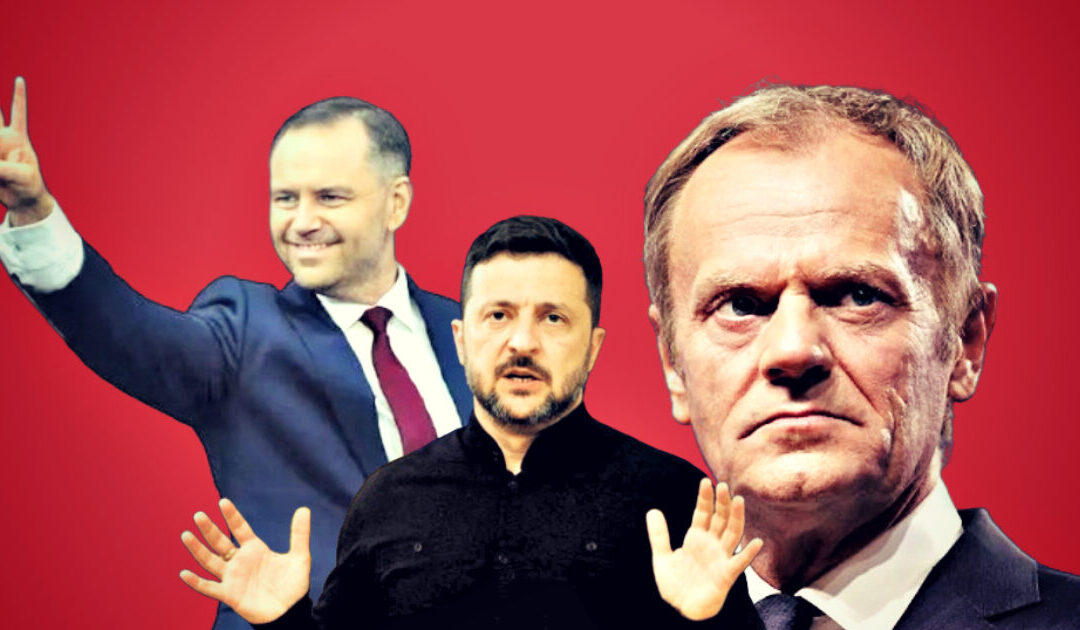
Polish president Karol Nawrocki (left) and Prime Minister Donald Tusk, Ukrainian leader Volodymyr Zelensky – Photos Wiki Commons.
Will Poland ‘pull the plug’ on Ukraine’s Starlink?
Poland has been a lifeline to Ukraine during the ongoing war: sending money, hosting the sites where most of the military aid from other countries is stored before it is sent to the war-torn neighbor.
Warsaw government also has welcomed more than a million Ukrainian refugees, extending to them access to social benefits.
But there’s a thorn in the side of this relationship: the WW2 massacre of 100,000 Poles by the Ukrainian Nazi-allied forces of Stephan Bandera, who is presently Kiev’s national hero.
Now, against the backdrop of the dispute between conservative President Karol Nawrocki and the Liberal-Globalist Prime Minister Donald Tusk, decisions are being taken in Poland that will deeply affect not only the bilateral relations, but the course of Ukraine’s war against Russia.
A report arises today that Ukraine’s access to Elon Musk’s satellite internet service Starlink could be cut due to the Polish president’s veto of a refugee aid bill.
It is widely known that Poland pays for the Starlink terminals in Ukraine, securing the only internet connectivity to the country and its military in the middle of the war with Russia.
Polish president Karol Nawrocki – Photo by Marsilar – Wiki Commons.
“Polish President Karol Nawrocki on Monday vetoed a bill extending state financial support provided to Ukrainian refugees and unveiled plans to limit their future access to child benefits and healthcare.
However, Deputy Prime Minister and Digital Affairs Minister Krzystof Gawkowski said the vetoed legislation also provided the legal basis for providing Starlink to Ukraine.
‘This is the end of Starlink internet, which Poland provides to Ukraine as it wages war’, he wrote on X.”
Zelensky’s troops may be out of internet conectivity if Poland cuts the payments.
With Nawrocki’s veto, from October 1 there will be no legal basis for paying for Starlink.
“Poland has been one of Ukraine’s staunchest backers since Russia invaded in 2022. Both the centrist government of Prime Minister Donald Tusk and Nawrocki, a conservative nationalist, agree on the need to help Ukraine resist Russia’s invasion but some Poles have grown weary of helping to support an estimated 1.5 million Ukrainians currently living in Poland.”
Inspired by U.S. President Donald J. Trump’s America First movement, Nawrocki promised during his election campaign this year to put ‘Poles first’, and to limit the handouts to foreigners.
“’I did not change my opinion and I intend to fulfil my obligations and I believe that (family) benefit should only be granted to those Ukrainians who make the effort to work in Poland, the same with healthcare’, he told journalists.”
Lock in a Medicare Supplement Plan for 100% Healthcare Coverage
August 25, 2025
(Note: Thank you for supporting businesses like the one presenting a sponsored message below and working with them through the links below which benefits Gateway Pundit. We appreciate your support!)
Are you on Medicare but still find yourself constantly paying for healthcare costs out of pocket?
Message to Christians: Islamists Raise Flags at Finland’s Most Historic Cathedral
August 25, 2025
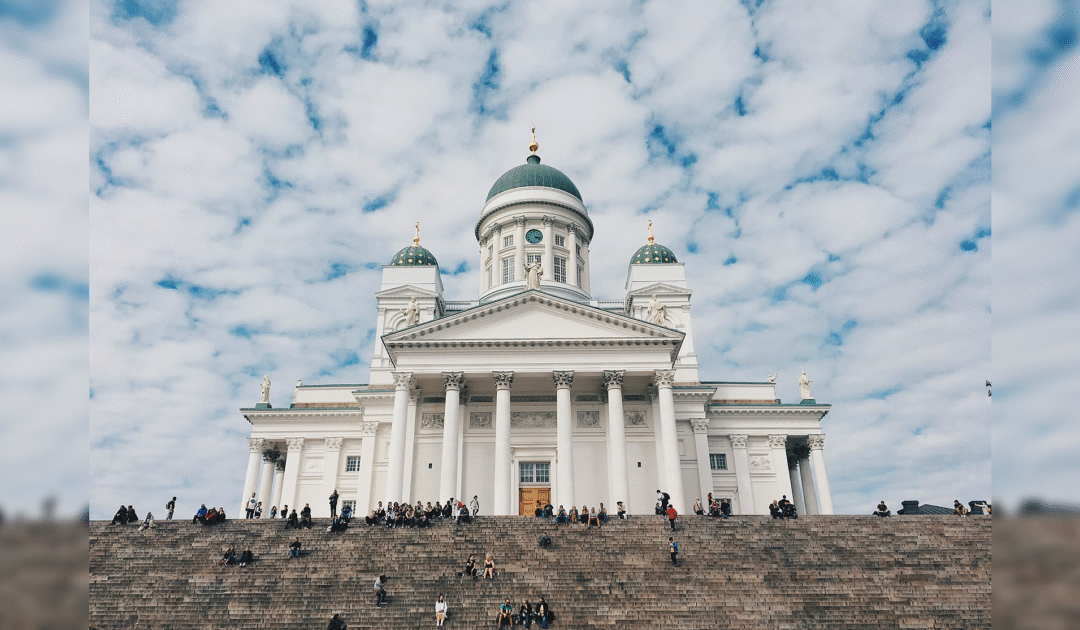
Helsinki Cathedral/Creative Commons Attribution-Share Alike 4.0 International license/Author: Julie tsarfati
The Helsinki Cathedral is a symbol of Finland’s Christian identity and, as such, became a target for Islamists during an Ashura procession.
Muslims mark the day of Ashura as a whole, but for Shia Muslims, it is a major religious commemoration. It also became a show of force and an opportunity to send a message to Christians and the West.
On the steps of the historic landmark, Muslims gathered holding banners, martyrdom flags, and signs with militant-style Islamic calligraphy. According to RAIR, some of the flags “bore a striking resemblance to those carried by jihadist movements.”
This is Helsinki Cathedral, Finland. This is pure provocation. This won’t end weII. pic.twitter.com/bSAsji7bk8
This was not simply a religious commemoration. It was a show of force, staged at the very heart of Finland’s Christian identity.
*****
To surround this building with sectarian flags was no neutral act. It was an intrusion — a calculated demonstration that Islamic rituals and militant symbols could overshadow Finland’s most sacred space.
In the Middle East, it has long carried political undertones, often mobilizing crowds in militant processions. In Europe, however, Ashura gatherings have increasingly chosen symbolic locations: near government buildings, in city centers, and — disturbingly — around Christian churches.
Islamic Flags on Finland’s Most Sacred Cathedral
At Helsinki’s Cathedral — the beating heart of Finland’s Christian identity — was engulfed in militant Islamic banners during an Ashura procession.
RAIR notes the significance of the various symbols of force:
Red flags proclaiming “blood not yet avenged” — a Shiite battle cry tied to the idea of perpetual struggle.
Black flags evocative of jihadist movements, indistinguishable in style from those carried by jihadi fighters in Iraq and Syria.
White banners inscribed with religious slogans in militant calligraphy.
A massive Shiite banner explicitly labeled “Helsinki – Finland”, leaving no doubt that this was a formally organized event, not a spontaneous gathering.
We use technologies like cookies to store and/or access device information. We do this to improve browsing experience and to show (non-) personalized ads. Consenting to these technologies will allow us to process data such as browsing behavior or unique IDs on this site. Not consenting or withdrawing consent, may adversely affect certain features and functions.
Functional
Always active
The technical storage or access is strictly necessary for the legitimate purpose of enabling the use of a specific service explicitly requested by the subscriber or user, or for the sole purpose of carrying out the transmission of a communication over an electronic communications network.
Preferences
The technical storage or access is necessary for the legitimate purpose of storing preferences that are not requested by the subscriber or user.
Statistics
The technical storage or access that is used exclusively for statistical purposes.The technical storage or access that is used exclusively for anonymous statistical purposes. Without a subpoena, voluntary compliance on the part of your Internet Service Provider, or additional records from a third party, information stored or retrieved for this purpose alone cannot usually be used to identify you.
Marketing
The technical storage or access is required to create user profiles to send advertising, or to track the user on a website or across several websites for similar marketing purposes.