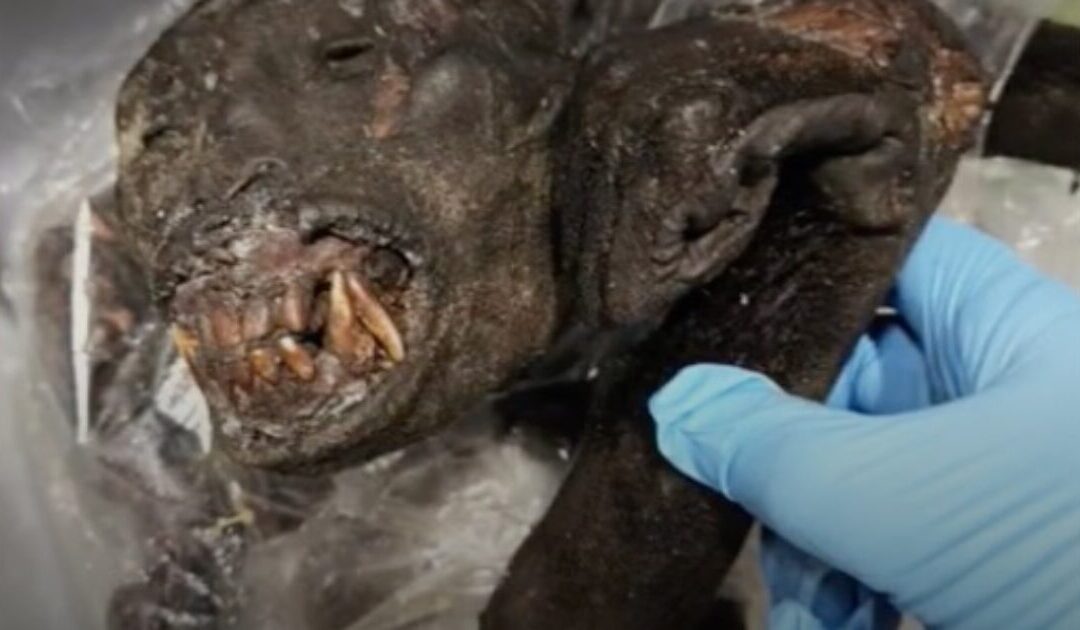
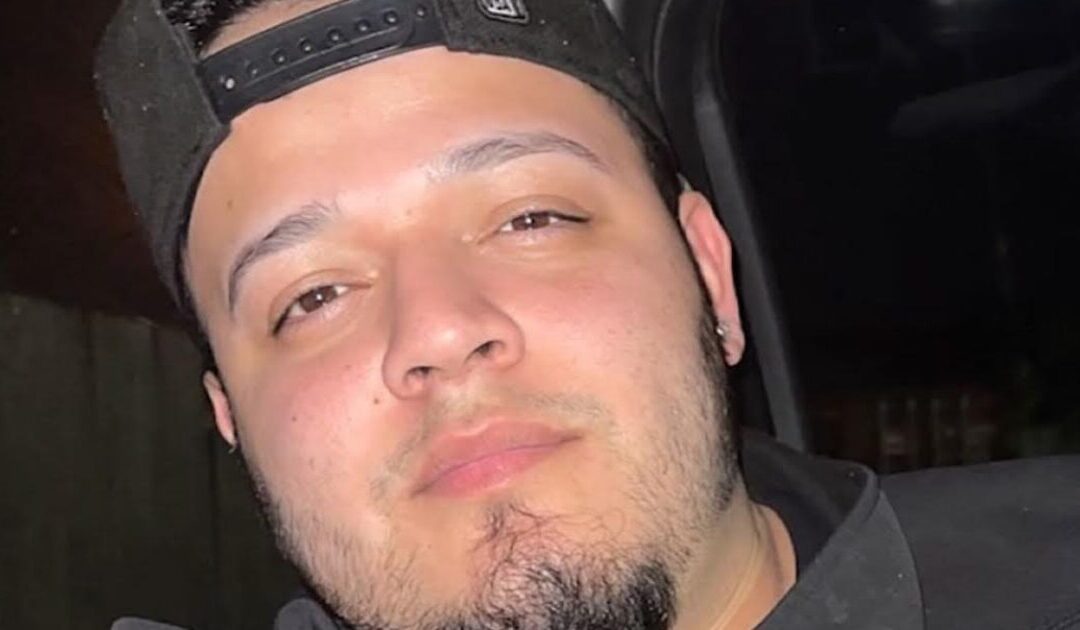
52 pounds of monkey meat were found in someone’s luggage at Detroit Metro Airport and that was not the end of it.
Monkey meat was smuggled into someone’s luggage at Detroit Metro, and it was the second bust of so-called ‘bushmeat’ recently.
First, 11 pounds of rodent meat were found in the bags of a passenger coming from Togo in West Africa.
Meanwhile, Customs and Border Protection uncovered 52 pounds of primate meat. The monkey meat came from Central Africa, possibly from the sun-tailed monkey.
Border Protection says primate seizures are very rare.
The rodent packer and monkey meat smuggler were slapped with a $300 fine. The not-so-funny part is that this kind of bushmeat has a serious risk of carrying communicable diseases, which can wreak havoc in humans.
52 pounds of monkey meat and 11 pounds of rodent bushmeat were smuggled into Detroit.
A measly $300. fine. Such a deterrent. pic.twitter.com/DOtjMEpOMu
Job Future Unclear for Rhode Island Prosecutor Seen Berating Police and Flauting Her Position in Viral Arrest Video
August 23, 2025
Screenshot: Nicole Solas
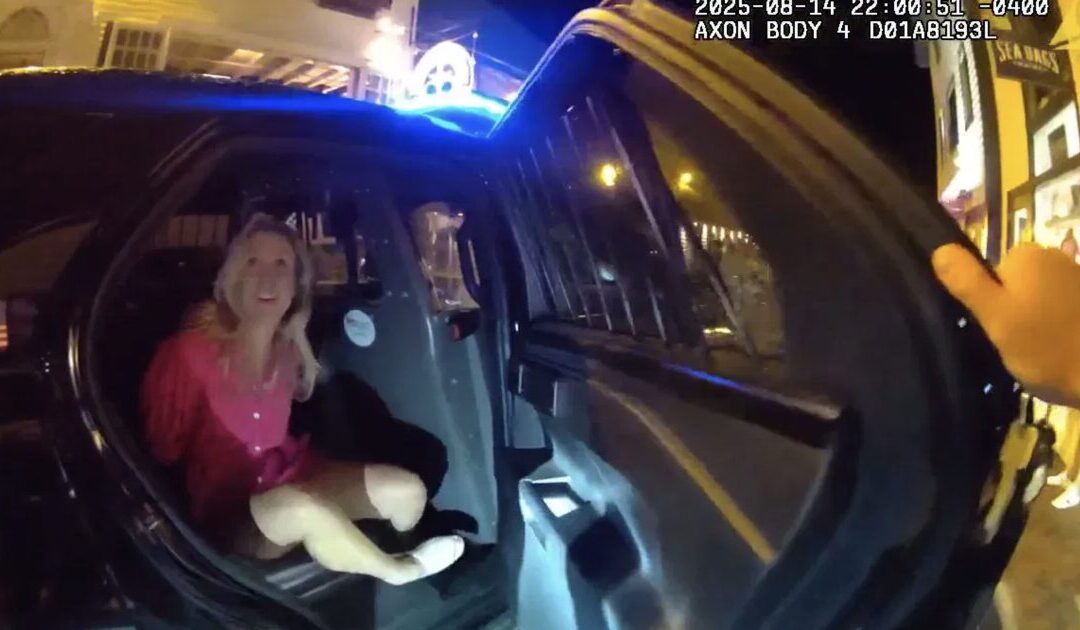
Rhode Island’s Special Assistant Attorney General, Devon Hogan Flanagan, was hauled off in handcuffs following a drunken meltdown in Newport, and her future remains uncertain.
The Gateway Pundit previously reported that Flanagan, a Democrat-appointed prosecutor, was arrested after refusing to leave the upscale Clarke Cooke House restaurant and berating responding officers while flaunting her government “status.”
Bodycam footage obtained by parental rights activist Nicole Solas shows the entitled Flanagan berating officers, desperately clinging to her job title like it was a “get out of jail free” card.
“I’M AN AG!” Flanagan shrieked eleven times while resisting arrest, even threatening officers saying, “Buddy, you’re gonna regret this.”
BREAKING: Bodycam footage obtained by @Nicoletta0602 of drunken Democrat appointed Rhode Island assistant AG arrest:
Rhode Island’s Democrat Attorney General Peter Neronha (D) announced on local radio that Flanagan will face a suspension without pay.
“Look, she’s put me in a bad position. She’s embarrassed herself, humiliated herself, and treated the Newport Police Department horribly. She is going to take some steps to try to address that in the next day or so. But I just don’t know what I’m going to do yet, Jean, and I have to give it some more thought.”
“But the inexcusable behavior—she knows better. The office knows better. I’ve got 110 lawyers. She embarrassed all of them, in a sense. I haven’t had many issues like this while I’ve been attorney general, though I’ve had a few. I want to get some more information, frankly, about what’s going on with her before I make my final decision.”
BREAKING: RI Attorney General Peter Neronha (D) says assistant AG Devon Flanagan will be SUSPENDED after she was arrested for trespassing while drunk:
It is unclear how long Flanagan will remain on unpaid leave until a final determination is made on her employment. The Attorney General’s office did not respond to additional questions about its ongoing review of the matter, or when it might make a final decision.
State payroll records, according to the Boston Globe, show that Flanagan was raking in approximately $113,000 a year in her position as a Special Assistant Attorney General.
Should Trump Push to Ban Mail-In Voting?
August 23, 2025
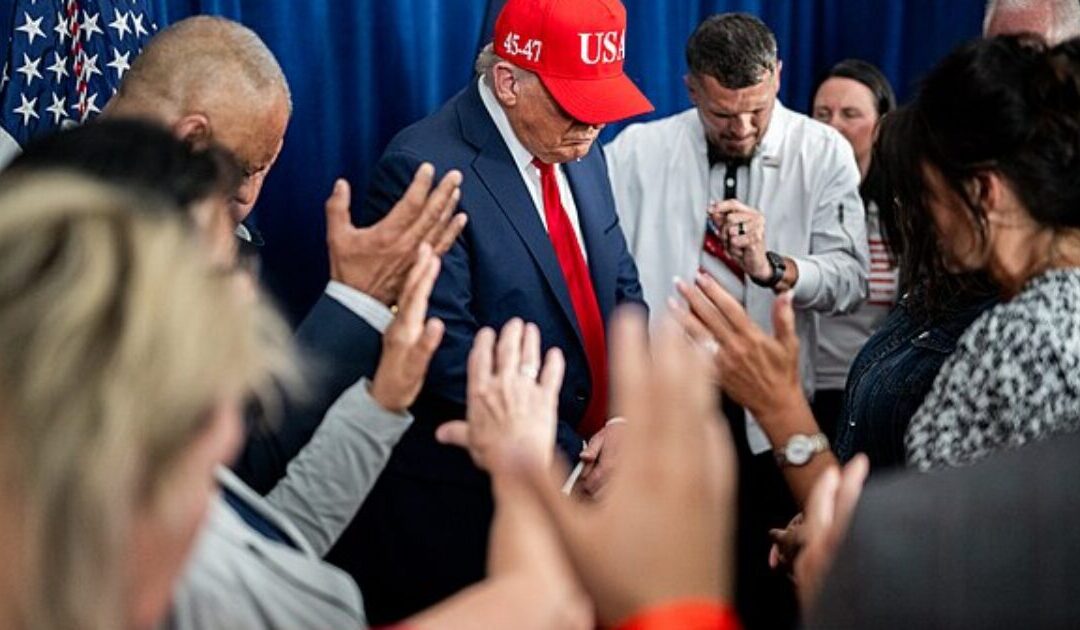
President Donald Trump participates in a prayer before a rally in Des Moines, Iowa, Thursday, July 3, 2025. (Official White House Photo by Daniel Torok)
The debate over mail-in voting has become one of the central divides in American politics. While millions of voters use absentee or universal mail ballots, there is a consistent record showing that this method is more vulnerable to fraud than in-person voting.
The evidence shows that when fraud is uncovered in American elections, it is most often tied to the misuse of mail ballots.
One of the clearest examples came from North Carolina’s 9th Congressional District in 2018. There, a Republican political operative orchestrated a scheme that involved illegally collecting and manipulating absentee ballots.
In my CONVERSATION with @charliekirk11 today, we AGREED it’s not realistic to END ALL mail-in voting overnight.
But SMALL WINS matter. Even ONE STATE ending UNIVERSAL mail-in voting is a BIG STEP toward protecting ELECTION INTEGRITY. @gatewaypundit
The scale of the fraud was so significant that state officials threw out the results and ordered a new election. It marked the first time in decades that a congressional race had to be redone due to fraud, and it all centered on absentee voting.
Two years later, in Paterson, New Jersey, authorities uncovered another large-scale case. Four men, including a sitting councilman and a councilman-elect, were charged in connection with hundreds of fraudulent mail ballots.
Investigators ultimately rejected one in five ballots cast in that election. These are not isolated examples but reminders that when mail-in ballots are abused, entire elections can be called into question.
The Gateway Pundit has built its reputation on uncovering major cases of voter fraud in swing states such as Michigan.
Across its investigations, the consistent conclusion has been that mail-in voting was the main driver of fraud. Through these findings, the Gateway Pundit has demonstrated how mail-in ballot systems create deep vulnerabilities and corruption, making the outlet a leading voice in exposing the dangers of mail-in voter fraud.
One of The Gateway Pundit’s biggest cases exposed shocking ballot trafficking in Detroit during the 2020 presidential election. Working with Michigan Citizens for Election Integrity (MC4EI), investigators reviewed thousands of hours of surveillance footage, uncovering dozens of individuals depositing stacks of ballots—sometimes 30 to 50 at once—into drop boxes.
The 13-minute video includes clips of postal workers and healthcare employees illegally delivering multiple ballots. Michigan law allows only voters, family, or election officials to return ballots, but the evidence captured on film shows widespread violations.
The vulnerabilities of mail voting are structural. In-person voting takes place under the direct supervision of election officials, with ballots cast and secured at polling stations. Mail ballots, on the other hand, are distributed, completed, and returned outside that controlled environment.
That creates opportunities for ballots to be intercepted in the mail, collected by political operatives, or filled out under coercion. Signature verification is the primary safeguard, but in practice, signatures are inconsistently checked and often misread.
The Public Interest Legal Foundation reported that in the 2016 and 2018 federal elections alone, more than 28 million mail ballots went missing—ballots that were sent out but never returned or accounted for. These missing ballots represent a weakness that does not exist in traditional in-person voting.
Even when fraud is not the issue, mail-in ballots are more likely to be rejected. In the 2020 presidential election, approximately one percent of all mail ballots were rejected nationwide. That number sounds small, but it represented hundreds of thousands of voters.
In states such as New York, rejection rates during the 2020 primaries reached as high as 4%. Most rejections were due to mismatched signatures, ballots arriving after deadlines, or missing witness information. While in-person votes are rarely rejected, mail ballots carry an added layer of risk that can easily disenfranchise voters or invite abuse.
The historical context is important to understand. For most of American history, absentee voting was tightly limited to individuals who could not physically appear at polling places, such as members of the military or those with medical disabilities.
The shift toward universal mail-in systems is relatively new. Prior to 2020, only five states conducted elections primarily by mail. That changed during the COVID-19 pandemic, when more than 65 million Americans—around 43% of the electorate—cast ballots by mail.
The rapid and uneven expansion of mail voting created logistical challenges and exposed weaknesses that states had little time to address.
Experts have long warned about the risks of mail voting. The 2005 Carter-Baker Commission on Federal Election Reform concluded that absentee ballots “remain the largest source of potential voter fraud.”
That assessment was not partisan rhetoric but the conclusion of a commission that sought to improve election integrity across the board. Election law scholars have likewise noted that while voter impersonation at polling places is rare, organized fraud involving mail ballots has been uncovered multiple times in the past two decades.
Mail-in voting is convenient for many voters, but it has also been the channel for the most serious election fraud cases in modern American history. Its reliance on unsupervised handling, weak verification standards, and high rejection rates makes it a persistent challenge for election integrity.
Whether lawmakers ultimately choose to expand, restrict, or prohibit the practice is a separate question, but the factual record shows clearly that mail-in voting carries risks that American elections have yet to control.
Trump Administration Allegedly Gives MS-13 Gangbanger Kilmar Abrego Garcia an Ultimatum as He Faces Deportation to Uganda
August 23, 2025
Kilmar Abrego Garcia
It appears the left’s favorite illegal alien will get to choose his destiny as the Trump administration has allegedly given him an ultimatum.
As The Gateway Pundit reported, MS-13 gang member Kilmar Abrego Garcia may be deported to the East African country of Uganda after he was released from a Tennessee jail on Friday. According to Fox News’ Bill Melugin, the DHS notified Abrego Garcia that his deportation will happen “no earlier than 72 hours from now.”
Abrego Garcia is reportedly headed back to Maryland to be with his family.
The Ugandan government announced earlier this week that it struck a deal with the Trump administration to accept third-country deportees from America. However, the African nation’s foreign minister issued a caveat: Uganda will not welcome “individuals with criminal records and unaccompanied minors” and prefers individuals from African countries.
The DOJ previously told the Court that Abrego Garcia will be deported to a ‘third country’ that is not El Salvador after he is released from a Tennessee jail.
Now, Politico reports on Saturday that Abrego Garcia has claimed the Trump Administration is using the threat of Ugandan deportation to bully him into accepting a guilty plea for human smuggling.
The gangbanger’s attorneys stated in a court filing that if he pleads guilty, the Trump Administration will deport him to Costa Rica, where he would be free from jail, after the completion of any criminal sentence.
Given a choice between one of the most beautiful countries in the world and a third-world East African backwater, one would think even a low-IQ individual like Abrego Garcia would choose the former. But he is currently resisting the offer.
Politico reveals that Trump officials told Abrego’s lawyers that the Costa Rica option would remain on the table if he pleads guilty by Monday.
“There can be only one interpretation of these events: the DOJ, DHS, and ICE are using their collective powers to force Mr. Abrego to choose between a guilty plea followed by relative safety, or rendition to Uganda, where his safety and liberty would be under threat,” Abrego’s attorney Sean Hecker wrote in the court filing.
A federal grand jury in Tennessee recently indicted Abrego Garcia for “transporting undocumented migrants within the United States.” He was charged with one count of conspiracy to transport aliens and one count of unlawful transportation of undocumented aliens.
Abrego Garcia was an illegal alien residing in Maryland when he was deported to his home country of El Salvador earlier this year and placed in the notorious CECOT prison; however, leftist judges ordered him to be returned to the US.
Abrego Garcia was previously ordered deported by an immigration judge, but he was not to be sent to his home country of El Salvador. Now, he can choose a relative paradise or an outright nightmare.
Corrupt Democrats Smear Michigan City With Election Fraud Scandals Including Individual Charged with Forging Nursing Home Ballots
August 23, 2025
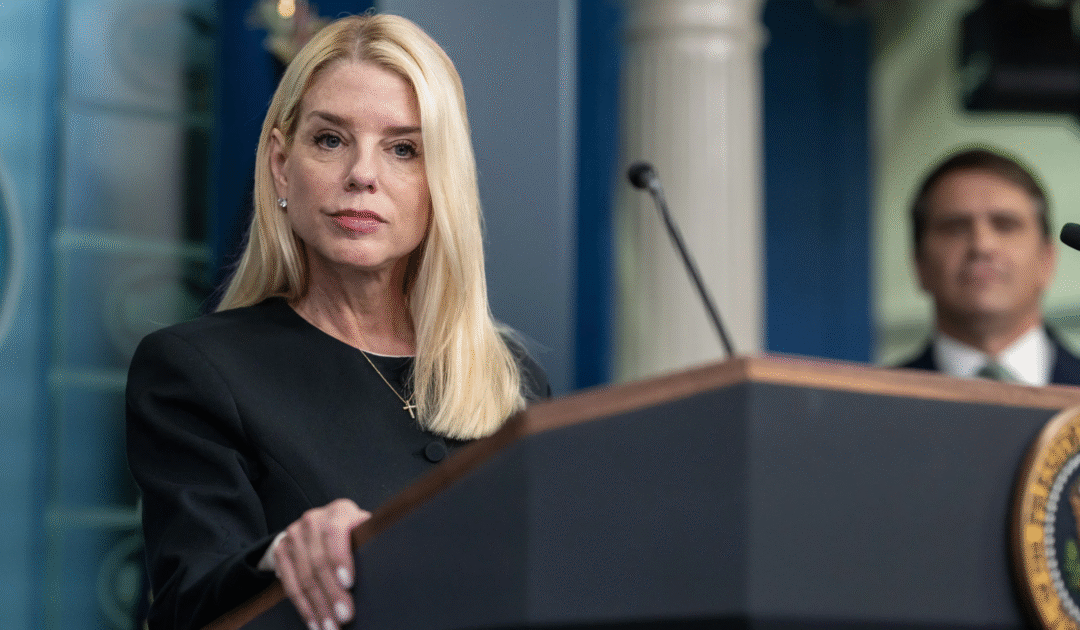
President Donald Trump holds a press conference with Attorney General Pam Bondi and Deputy Attorney General Todd Blanche on Supreme Court Victory (White House).
The city of Hamtramck, Michigan, has a long and disturbing history of election corruption—one that Democrats have consistently ignored.
Just three days before Michigan’s August primary, surveillance footage obtained by 7 News Detroit showed a man placing three thick stacks of absentee ballots into a drop box while Hamtramck City Councilman Abu Musa sat in the passenger seat of the car.
Michigan State Police later confirmed they are finalizing an investigation, and prosecutors are expected to announce whether charges will be filed. Musa, who is up for re-election, has refused to comment.
If the ballots did not belong to Musa’s immediate family or members of his household, then Michigan election law was almost certainly violated. State law allows a person to submit absentee ballots only for themselves, their immediate family, or those residing in the same household—not for unrelated voters, and not by the stack.
WATCH: Democrats like NANCY PELOSI and LETITIA JAMES EXPOSED on The Patriot Perspective—uncovering MAJOR insider trading & CORRUPTION scandals
But for anyone familiar with Hamtramck, this isn’t an isolated incident, but rather part of a systemic pattern.
In 2023, Trenae Myesha Rainey, a 28-year-old employee at the Father Murray Nursing Home in Center Line, Michigan, was charged with six felonies for forging absentee ballot applications—three counts of election law forgery and three counts of forging signatures, each carrying up to five years in prison.
Her case stemmed from the 2020 election, when local election clerks flagged approximately two dozen absentee ballot requests with mismatched signatures. A state investigation later found that Rainey had forged applications on behalf of elderly nursing home residents, many of whom were unaware of the forms submitted in their names.
Rainey used her position at the nursing home to access residents’ personal information and submit forged applications without their consent.
Though no fraudulent ballots were cast, her actions undermined the security of Michigan’s absentee ballot system.
Ultimately, Rainey accepted a plea deal and pled guilty to three misdemeanors for making false statements on absentee ballot applications. In April 2023, she was sentenced to 45 days in Macomb County Jail and two years’ probation.
And she is not the only one.
The case raised serious concerns about ballot security in institutional settings. According to the U.S. Election Assistance Commission, over 1.3 million absentee ballots were requested from nursing home and long-term care residents during the 2020 election.
Attorney General Dana Nessel often claims that these prosecutions demonstrate that the system works. But her logic assumes that those who get caught are the only ones breaking the law.
What these cases actually show is that the system has exploitable weaknesses—and those weaknesses are being targeted in politically convenient jurisdictions.
Hamtramck’s city council is already under investigation. Two other city council members were arraigned this year on charges related to forged absentee ballot applications.
Both have pleaded not guilty, but their trials are pending. At the same time, the city’s police chief and city manager are on administrative leave for unrelated reasons, leaving Hamtramck’s government in disarray.
Hamtramck is not a sprawling metropolis with layers of oversight. It’s a working-class city of fewer than 30,000 residents, yet it has become a testing ground for election manipulation—from forged absentee requests to drop box stuffing and ballot harvesting schemes conducted through guardianship networks in nursing homes.
Earlier this year, a whistleblower filed a lawsuit alleging misconduct by city officials across multiple departments. Now, it’s possible that several sitting council members could face criminal indictments simultaneously.
None of this should be surprising in a state like Michigan, where absentee voting has surged since 2020 and oversight has declined.
Statewide, absentee ballots accounted for nearly 60% of all votes cast in the 2020 general election—a dramatic increase from 27% in 2016. But election security laws didn’t evolve alongside the new volume.
Michigan still lacks robust voter ID requirements for absentee ballots. There are no residency verification checks, no consistent ballot tracking infrastructure, and minimal consequences for ballot misuse unless a camera or whistleblower catches the fraud directly.
A few hundred forged ballots in a municipal election can swing a council seat or judicial race. When those forged ballots come from nursing home residents, or when they’re dropped off by political allies with no transparency, the integrity of the vote collapses.
Absentee voting is not inherently fraudulent. But when it’s left unsecured, unverified, and unenforced, it becomes the easiest point of entry for manipulation. In Hamtramck, that manipulation has become a political routine.
We use technologies like cookies to store and/or access device information. We do this to improve browsing experience and to show (non-) personalized ads. Consenting to these technologies will allow us to process data such as browsing behavior or unique IDs on this site. Not consenting or withdrawing consent, may adversely affect certain features and functions.
Functional
Always active
The technical storage or access is strictly necessary for the legitimate purpose of enabling the use of a specific service explicitly requested by the subscriber or user, or for the sole purpose of carrying out the transmission of a communication over an electronic communications network.
Preferences
The technical storage or access is necessary for the legitimate purpose of storing preferences that are not requested by the subscriber or user.
Statistics
The technical storage or access that is used exclusively for statistical purposes.The technical storage or access that is used exclusively for anonymous statistical purposes. Without a subpoena, voluntary compliance on the part of your Internet Service Provider, or additional records from a third party, information stored or retrieved for this purpose alone cannot usually be used to identify you.
Marketing
The technical storage or access is required to create user profiles to send advertising, or to track the user on a website or across several websites for similar marketing purposes.