India-Born Democrat Rep. Raja Krishnamoorthi Pushes Bill to Flood America with DOUBLE the Amount of H-1B Visa Workers – Indians Stand to Gain the Most
November 30, 2025
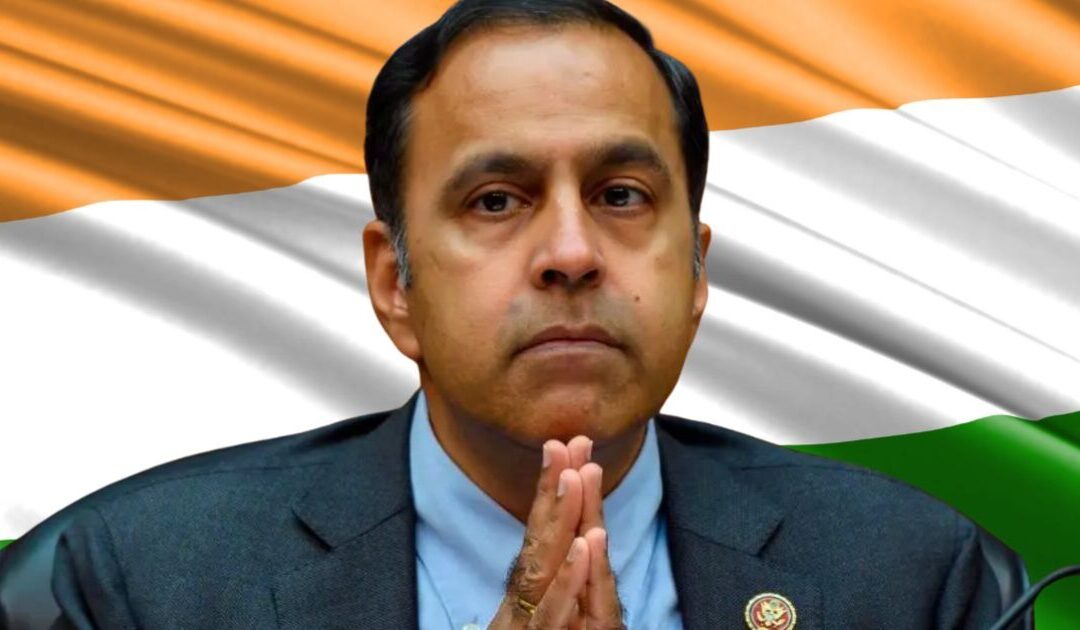
Democrat Congressman Raja Krishnamoorthi, who was born in New Delhi, India, has reintroduced legislation to double the annual cap on H-1B visas from 65,000 to 130,000.
The bill, known as the High-Skilled Immigration Reform for Employment (HIRE) Act, or H.R. 6305, was introduced on Tuesday.
Krishnamoorthi, representing Illinois’ 8th District, argues the measure will boost U.S. competitiveness by lowering “workforce shortages” in tech and other fields.
“To build the jobs and industries of tomorrow, America must stay at the forefront of innovation by strengthening our own workforce while continuing to welcome top talent from around the globe,” the congressman said in a statement about his bill.
Krishnamoorthi continued, “By growing our domestic talent pipeline and ensuring employers can recruit the skilled workers they need, we can create good-paying jobs and secure America’s leadership in the technologies of the future.”
However, critics slam the proposal as a giveaway to foreign labor at the expense of American workers, especially amid rising unemployment in the tech sector.
Importing foreign workers has long been criticized for displacing U.S. citizens from their jobs and driving down wages. There are countless stories of Americans having to train their cheaper, foreign replacements.
Indians have long dominated the H-1B program, receiving over 72% of all visas issued in fiscal year 2023 (October 2022 to September 2023).
Social media erupted with backlash, with users accusing Krishnamoorthi of prioritizing his homeland over America.
One post called him an “Indian First, Forever Extremist,” highlighting his past efforts to ease green card limits and expand visa categories.
He is an Indian First, Forever Extremist.
Always has been.
in 2018, @RajaForIL proposed Congress:
• eliminate per-country limits for green cards
• enables F-1 holders to seek permanent resident status while a student OR during F-1 OPT
• weakens the (artificial) H-1B cap by… pic.twitter.com/twmeItVp6e
This isn’t Krishnamoorthi’s first push for visa expansion. He introduced similar legislation in 2023.
The bill has been referred to the House Committees on Education and the Workforce, and the Judiciary, but it faces an uphill battle in a Republican-controlled Congress focused on America First policies.
WATCH: President Trump Makes Chip Shot and Walks Away Like a Boss in Viral Video
November 30, 2025
President Trump posted a video of himself sinking a chip shot and walking away like a boss.
This weekend, President Trump golfed with LIV Golf star Brooks Koepka, NHL legend Wayne Gretzky and Fox News host Bret Baier.
Trump made a chip shot and walked away smiling.
“Winning is always nice!” President Trump said in a Truth Social post.
WATCH:
Last week, President Trump took a swipe at Joe Biden after he was asked about a Biden-Trump golf match.
Joe Biden is a horrible golfer. Video of Biden playing golf shocked viewers after the golf ball bounced off a rock and went the opposite direction.
A petty officer on a call during an interview with President Trump asked about a Biden golf match.
“What is your true golf handicap, not according to Fake News, and are you and President Biden going to play that golf match?” a petty officer asked President Trump.
“I’d love to. I’ve invited him, but he doesn’t want to show up. I know a lot about golf. I’ve won 38 club championships,” Trump boasted.
“You have a lot of people talk, but they can’t play like Biden. Biden can’t hit a ball 30 yards. I’m telling you, I looked at his swing. He cannot hit a ball 30 yards,” Trump said.
“He said he was a six handicapper. That was the only thing that made me angry. During the debate with him, he said he was a 6. I said, ‘You’re not a 6.’ And he said, ‘Well, I’m an 8.’ I said, ‘That was quick. I picked up two.’ But he’s not 100. He’s not 100,” Trump said.
“But it’s a great game, and I hope you guys get to play a little bit of it,” Trump added.
WATCH: Retarded Gov. Tim Walz Dodges Accountability for His Somali Illegals Committing Fraud in Minnesota, Says Minnesota Just “Attracts Criminals” – “But to Demonize an Entire Community on the Actions of a Few, It’s Lazy!”
November 30, 2025
Screenshot
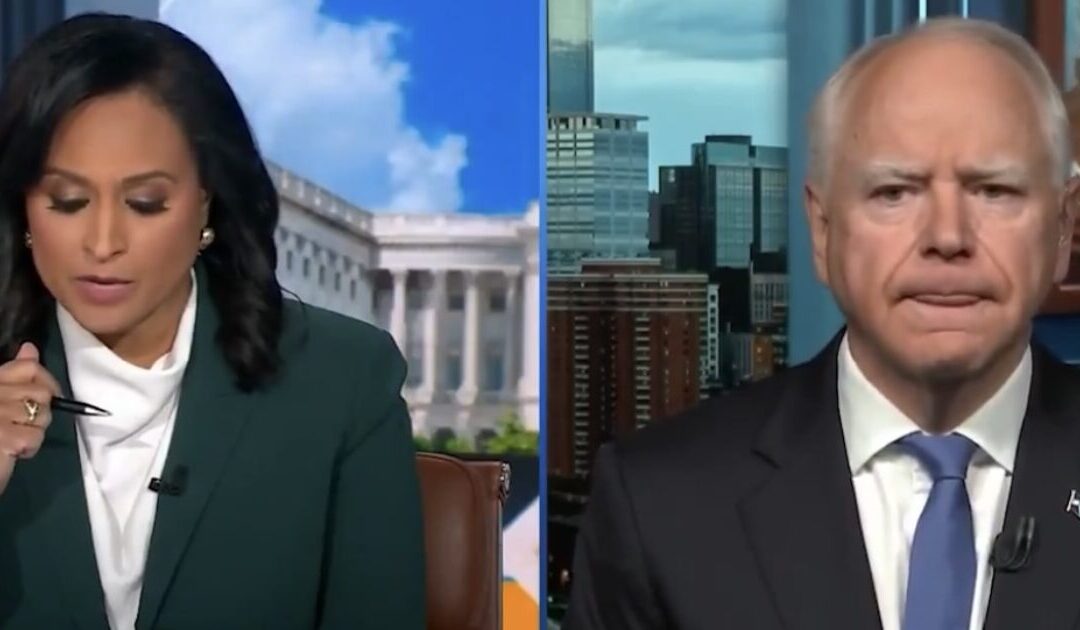
Minnesota Governor Tim Walz on Sunday responded to revelations that more than $1 billion in federal COVID funds have been stolen by Somali Immigrants in Minnesota, dodging responsibility, touting his state’s generosity, and attempting to deflect blame from Somali aliens defrauding taxpayers.
As The Gateway Pundit reported, 70 members of the Somali community in Minnesota were involved in stealing $250 million in COVID funds that were intended to feed children. Millions of dollars were stolen from American taxpayers and sent overseas to Somalia, and 80% of the money has not been recovered.
Seven defendants were tried in connection with the scheme on charges related to stealing more than $40 million in taxpayer funds, and five were found guilty. However, the FBI is still investigating an attempt by a Somali woman to bribe one of the jurors with $120,000 in cash.
But the fraud goes deeper, with multiple schemes like this over the last five years.
Per the New York Times, “Federal prosecutors say that 59 people have been convicted in those schemes so far, and that more than $1 billion in taxpayers’ money has been stolen in three plots they are investigating.”
Surprisingly, far-left NBC host Kristen Welker actually pressed him with a tough question, asking whether he takes responsibility for not stopping the fraud, which amounts to “more than Minnesota spends each year to run its Department of Corrections.”
And Walz gave a bizarre answer, championing his policies that “attract criminals.”
“We’re doing everything we can, but to demonize an entire community on the actions of a few, it’s lazy!” he added.
WATCH:
Welker: Dozens of people of East African descent have been charged, convicted and sentenced for stealing more than a billion dollars in taxpayer money from government programs during COVID. As you know, Governor that is more than Minnesota spends each year to run its Department of Corrections. So, I want to give you a chance to respond to this. Do you take responsibility for failing to stop this fraud in your state?
Walz: Well, certainly, I take responsibility for putting people in jail. Governors don’t get to just talk theoretically. We have to solve problems. And I will note, it’s not just Somalis. Minnesota is a generous state, Minnesota is a prosperous state, a well run state. We’re AAA bond rated.
But that attracts criminals. Those people are going to jail. We’re doing everything we can, but to demonize an entire community on the actions of a few, it’s lazy!
Before giving this seriously retarded take, Walz responded to Trump recently calling him “the seriously retarded Governor of Minnesota,” telling Kristen Welker that he wears it as a “badge of honor.”
Despite China’s Military Modernization and Expansion, the PLA Still Has Significant Weaknesses
November 30, 2025
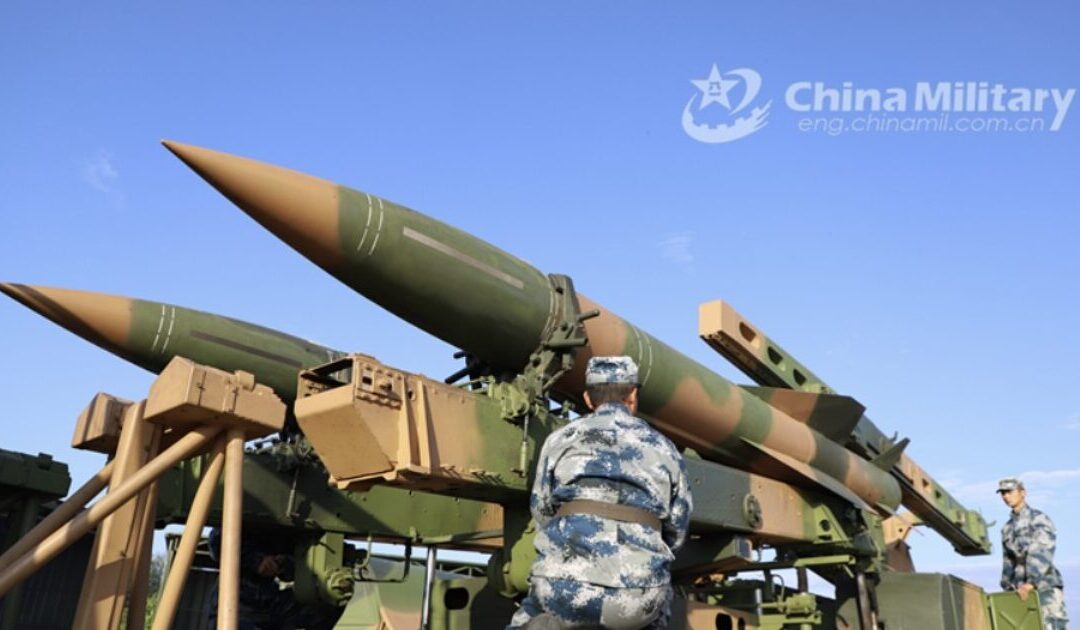
Airmen assigned to a surface-to-air missile brigade of the air force under the PLA Southern Theater Command practice loading missiles onto a launching vehicle during a combat readiness field training exercise on December 30, 2021. (eng.chinamil.com.cn/Photo by Gao Lei)
While China has made remarkable strides toward developing the “three superiorities,” information, air, and maritime dominance, required for military parity with the United States, several critical capabilities remain conspicuously absent from the People’s Liberation Army.
These gaps include limited global range, lagging nuclear capabilities, weak joint-operations capacity, the absence of reliable allies, no warfighting experience, poor interservice integration, and the pressure of an accelerating political timeline.
Taken together, these gaps represent fundamental limitations that could determine the outcome of any major conflict in the Indo-Pacific and beyond.
China’s most glaring deficiency lies in its inability to project sustained military power beyond its immediate periphery. Although China’s reach is growing and future U.S. military dominance will likely be challenged at greater distances from China’s coast, the PLA remains fundamentally constrained by geography and logistics.
Unlike the United States, which maintains a global network of bases, allies, and forward-deployed forces, China operates from a single continental base with limited overseas infrastructure. The PLA’s lone overseas base in Djibouti, while symbolically important, cannot support major combat operations far from Chinese shores. This forces China to rely on a largely untested logistics chain that becomes increasingly vulnerable as the distance from the mainland increases.
While China can credibly threaten Taiwan, deny access within the First Island Chain, and project limited power to the Second Island Chain, it cannot sustain large-scale military operations in the Indian Ocean, Pacific beyond Guam, or any other theater requiring extended supply lines.
The second issue is nuclear weapons. China’s nuclear modernization, although rapid, remains incomplete. The Pentagon estimates that China has only about 600 nuclear warheads today and is expected to have more than 1,000 operational warheads by 2030, most of them deployed on systems capable of striking the American homeland and maintained at higher readiness levels. However, this represents only the beginning of nuclear parity, not its achievement.
The United States currently maintains approximately 5,177 nuclear warheads, with 1,700 deployed strategic warheads and a sophisticated triad of delivery systems tested over decades.
Additionally, China’s nuclear command structure remains centralized and potentially vulnerable to decapitation strikes. Unlike the U.S. system, which is designed for distributed decision-making during conflict, China’s nuclear forces may not function effectively if senior leadership is eliminated. China’s expanding nuclear arsenal also includes many untested systems. The reliability of Chinese missiles, warheads, and command systems under actual combat conditions remains unknown, whereas U.S. systems have undergone extensive testing and operational deployment.
While China is developing road-mobile ICBMs and submarine-launched ballistic missiles, its nuclear forces still lack the geographic distribution and concealment capabilities of U.S. strategic forces spread across multiple continents and oceans.
One of China’s most critical strategic weaknesses is its lack of allies. Beijing has only one formal mutual-defense treaty, the 1961 pact with North Korea, and even that relationship is strained. Its ties with Russia, Iran, Pakistan, and other authoritarian partners do not include binding defense obligations, and Russia’s “no limits partnership” with China explicitly excludes a military alliance. By contrast, the United States maintains the world’s strongest alliance network, including NATO in Europe and formal defense treaties with Japan, South Korea, the Philippines, Australia, Thailand, and states across the Western Hemisphere under the Rio Treaty.
Even within China’s informal axis of Russia, Pakistan, and other aligned states, there is no proven joint operations capability. China and Russia have conducted more than 90 joint exercises since 2003, some involving amphibious assault or naval blockade simulations, and China and Pakistan conduct regular training, exchanges, and arms transfers. On paper, these activities project an image of unity. In practice, however, analysts consistently find that the cooperation falls far short of true interoperability.
A 2024 U.S. Army War College study concluded that China and Russia still lack the ability to conduct real joint operations, and there is no sign this will change. Despite two decades of exercises, Chinese and Russian troops have never fought side by side, executed a joint deployment, or integrated their command structures in wartime scenarios.
Most “joint” drills amount to geographic de-confliction rather than unified command, shared communications systems, or combined-arms doctrine. The China–Pakistan relationship shows similar limits: Beijing trains and arms Pakistani forces, but no evidence demonstrates a mature, battle-tested joint-operations framework.
The United States and its allies operate at a far higher level because they have spent decades, and in many cases more than a century, building deep military interoperability. NATO and America’s treaty partners share standardized communications protocols, compatible weapons systems, and common doctrine through formal mechanisms such as NATO Standardization Agreements.
English serves as the de facto operating language across most allied militaries, making planning, command, and training vastly easier. These shared systems, procedures, and communications frameworks give the U.S.-led alliance system a structural foundation for real coalition warfare.
That foundation has been reinforced by repeated combat experience. The United States, United Kingdom, Australia, Canada, France, and others have fought side by side in World War I, World War II, Korea, Vietnam, the 1991 Gulf War, the 1999 Kosovo campaign, the twenty-year war in Afghanistan under NATO’s Article 5 mandate, and the 2003 Iraq War.
They have also deployed together in countless smaller conflicts, counterterrorism missions, peacekeeping operations, and maritime patrols. This shared wartime history builds trust, habit, and an instinctive understanding of how to coordinate joint operations under pressure—real-world readiness no rival bloc can match.
China’s partnerships lack this institutional depth and combat experience. The China–Russia relationship, despite more frequent exercises and growing alignment, remains informal and largely symbolic. Joint drills rarely address the requirements of true interoperability—integrated communications, unified command-and-control structures, synchronized logistics, or standardized equipment.
Training typically occurs in parallel rather than as integrated combat formations, and China has never fought a modern war alongside Russia, Pakistan, Iran, or any other partner. Differences in language, doctrine, equipment, and command systems further limit integration. As a result, China and its partners have no proven joint-operations capability, no shared wartime history, and no alliance framework capable of matching the global reach and combat-tested cohesion of U.S. and allied forces.
Combat experience is another glaring deficiency. The PLA has not fought a major conflict since the 1979 Sino-Vietnamese War, which lasted less than a month, leaving an entire generation of officers without real wartime experience. While training and exercises have improved dramatically, they cannot fully replicate the chaos, friction, and unpredictability of actual combat.
The PLA also faces significant organizational and interoperability issues. Despite recent reforms, the creation of new cyber, space, and information forces has introduced additional integration challenges that will take years to resolve. China’s rapid acquisition of advanced technologies, from hypersonic weapons to AI-enabled systems, now outpaces its ability to integrate them effectively. The core challenge is not building individual platforms but creating seamless coordination between sensors, shooters, and decision-makers across all domains simultaneously.
The PLA’s emphasis on informatized and intelligent warfare demands unprecedented synchronization between space-based sensors, cyber operations, electronic warfare, kinetic strikes, and information operations. This integration problem becomes exponentially more difficult when facing a peer adversary with sophisticated jamming, cyber capabilities, and systems designed to disrupt Chinese command-and-control.
China’s most pressing problem is one the US does not have to face at all, a time frame. China has set ambitious milestones: 2027 for initial capability, 2035 for full modernization, and 2049 for “world-class” status.
While these goals remain achievable, they create pressure that could lead to premature action or insufficient development of critical capabilities. The 2027 target, marking the PLA’s centenary, represents building material capabilities for credible military options, not necessarily invasion timelines. However, the political symbolism attached to these dates creates pressure to demonstrate capabilities that may not be fully mature.
China’s strategic patience, while generally sound, faces internal pressures from nationalist expectations and external pressures from a changing strategic environment. The window for peaceful resolution of core interests like Taiwan may be narrowing, potentially forcing China to act before its military capabilities are fully developed.
These missing capabilities suggest that while China poses an increasingly credible threat within its immediate periphery, true global military parity remains years away. The United States retains significant advantages in power projection, nuclear sophistication, joint operations experience, and systems integration.
However, China’s methodical approach and strategic patience mean these gaps will likely narrow over time. While the PLA has made remarkable progress in developing individual capabilities, transforming them into integrated, combat-tested systems capable of challenging U.S. military dominance globally remains the ultimate test of Chinese military modernization.
Former CNN Host Jim Acosta Calls for Media to Take ‘Collective Action’ Against Trump (VIDEO)
November 30, 2025
Former CNN White House correspondent Jim Acosta urged mainstream media outlets to band together in “collective action” against President Donald Trump’s insults towards journalists.
Acosta made the call to action on the network formerly known as MSNBC, now known as “MS NOW,” on Saturday morning.
The disgraced pundit’s comments came in response to an incident earlier this month where Trump told Bloomberg reporter Catherine Lucey to be “quiet, piggy” during a press event, after she pressed him on questions related to Jeffrey Epstein’s files.
Acosta described the remark as “disgusting” and argued that if a boss spoke to a female employee that way in any other workplace, they would be fired. The reporter, of course, does not work for the president.
“Other folks in the press in the room should speak up in that moment and say, ‘Mr. President, that is not appropriate,’” Acosta said. “And, you know, double down on the questions that were asked. ‘Why didn’t you answer that question? Why are you resorting to personal attacks? Why can’t you take the heat? What’s going on here?’”
“I think the only solution to all of this is collective action,” he added.
Acosta suggested that major newspapers and networks send a formal letter to White House Press Secretary Karoline Leavitt, warning that if Trump doesn’t stop mocking journalists, they would boycott Oval Office press events and travel on Air Force One, leaving coverage to outlets like Fox News until he “cleans up [his] act.”
Jim Acosta: Leftwing media should threaten to not show up to Trump’s press avails anymore “until you clean up your act.”
“You can have Fox and all these other sycophantic outlets covering you, but we’re just not going to do it. We’re going to take a break for a while until you clean up your act,” Acosta suggested outlets tell the White House.
Acosta has a long history of openly hating and clashing with President Trump.
One of the most notorious incidents occurred in November 2018, during a post-midterm election press conference. Acosta pressed Trump on his characterization of a migrant caravan from Latin America as an “invasion,” leading to a heated exchange.
Trump repeatedly told Acosta to sit down and relinquish the microphone, calling him a “rude, terrible person” and accusing him of treating Press Secretary Sarah Huckabee Sanders poorly.
The White House later suspended Acosta’s press credentials, citing his alleged physical contact with an intern trying to take the mic.
Trump, at the time, told Acosta, “CNN should be ashamed of itself having you working for them.”
Following Acosta’s January announcement that he was leaving CNN, Trump took to Truth Social to mock him, calling him a “major loser who will fail no matter where he ends up.”
We use technologies like cookies to store and/or access device information. We do this to improve browsing experience and to show (non-) personalized ads. Consenting to these technologies will allow us to process data such as browsing behavior or unique IDs on this site. Not consenting or withdrawing consent, may adversely affect certain features and functions.
Functional
Always active
The technical storage or access is strictly necessary for the legitimate purpose of enabling the use of a specific service explicitly requested by the subscriber or user, or for the sole purpose of carrying out the transmission of a communication over an electronic communications network.
Preferences
The technical storage or access is necessary for the legitimate purpose of storing preferences that are not requested by the subscriber or user.
Statistics
The technical storage or access that is used exclusively for statistical purposes.The technical storage or access that is used exclusively for anonymous statistical purposes. Without a subpoena, voluntary compliance on the part of your Internet Service Provider, or additional records from a third party, information stored or retrieved for this purpose alone cannot usually be used to identify you.
Marketing
The technical storage or access is required to create user profiles to send advertising, or to track the user on a website or across several websites for similar marketing purposes.