CNN Panelist Issues Retraction and Apology After Going Too Far in On-Air Trump Attack

CNN Panelist Issues Retraction and Apology After Going Too Far in On-Air Trump Attack

CNN Panelist Issues Retraction and Apology After Going Too Far in On-Air Trump Attack
January 22, 2026

The all-star panel on CNN continues to royally step in it.

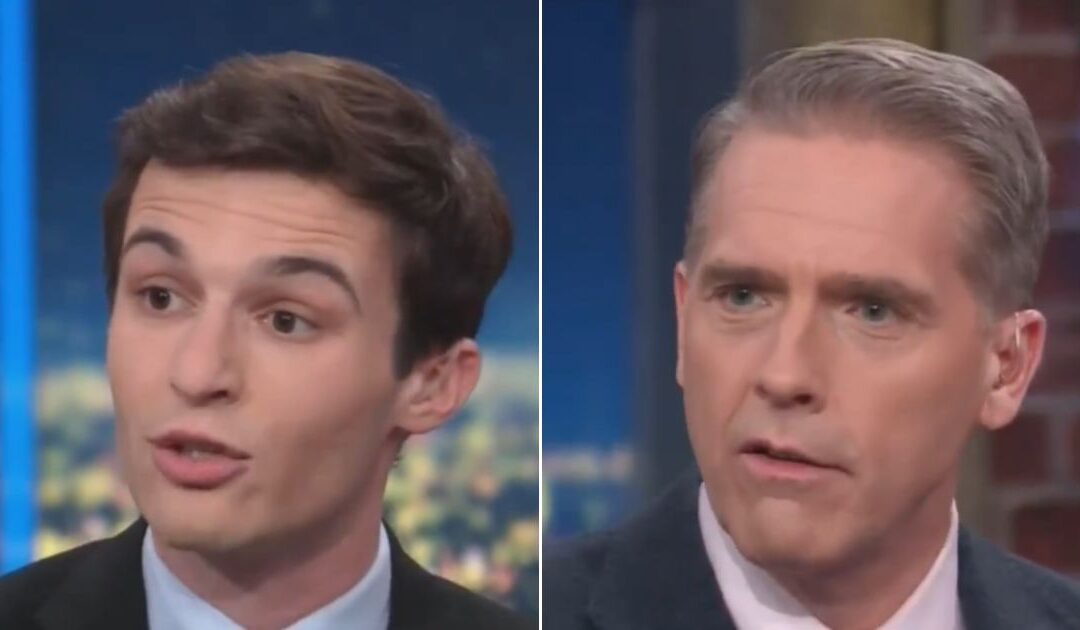
On Monday, footage of CNN’s “Newsnight with Abby Phillip” was posted to social media platform X featuring 25-year-old leftist activist Cameron Kasky alongside panel mainstay Scott Jennings.

A moment between the two went viral when Kasky casually declared that President Donald Trump had been involved in an international sex trafficking ring.

Jennings wasn’t going to let that remark go unchallenged by host John Berman.

The topic of conversation had been Trump’s interest in Greenland and the Nobel Peace Prize, but Kasky threw in a jab at Trump with an allusion to the president’s relationship with the late sex offender Jeffrey Epstein — an allusion Kasky’s now trying to walk back.

“I would love it if he was more transparent about the human sex trafficking network that he was a part of, but you can’t win ’em all,” he blurted out.

Berman asked Jennings a follow-up question about Greenland, but instead of addressing that, Jennings circled back to Kasky’s remark.

“You’re gonna let that sit?” Jennings asked Berman. “Are we going to claim here on CNN that the president is part of a global sex trafficking ring or …?”

After assuring Jennings that he would do the fact-checking, Berman asked Kasky to repeat what he’d said about the global sex-trafficking ring.

“That Donald Trump was … probably … very involved with it,” the arrogant young man replied, with perhaps a touch less confidence.

To Berman’s credit, and the CNN legal team’s, he immediately said, “Donald Trump has never been charged with any crimes in relation to Jeffrey Epstein.”

Kasky, who should have kept his mouth shut, dimwittedly decided to fire back, “Yeah, but let’s be adults here …” which Berman wisely disregarded.

However, sometime later, Kasky must have gotten an earful from someone with better sense and more legal knowledge, because he made a post from his X account, strangely claiming his remarks on the show had been an “accident.”

“I would like to retract my comments from CNN last night and truly apologize.

“Donald Trump was obviously not involved with a giant international child sex trafficking ring where women and children were systematically raped by elites.

“I said that by accident and didn’t mean it,” he wrote.

Clearly, saying something like this about Trump is a great way to find yourself embroiled in a high-dollar-value lawsuit.

Likely, Kasky, as a relatively inexperienced and young political pundit, thought CNN would not be so discerning.

This is the anti-Trump network after all.

Jennings probably saved Kasky’s skin — and CNN’s — by pushing back.

It’s hard to extend any grace to Kasky — he gave none to Trump on-air — but hopefully he will learn from this moment.

This article appeared originally on The Western Journal.

The post CNN Panelist Issues Retraction and Apology After Going Too Far in On-Air Trump Attack appeared first on The Gateway Pundit.

Go to Source
Author: Samuel Short, The Western Journal
Iran’s Kurds and Other Minorities Saw Window of Hope in Antiregime Protests

Iran’s Kurds and Other Minorities Saw Window of Hope in Antiregime Protests

Iran’s Kurds and Other Minorities Saw Window of Hope in Antiregime Protests
January 22, 2026

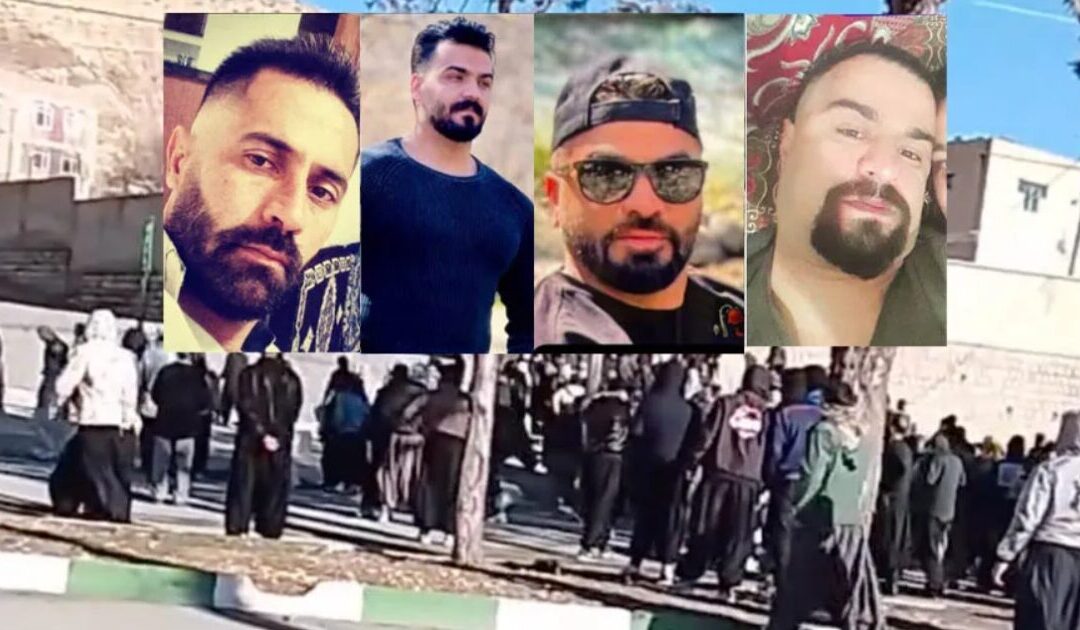
Crowd gathering in a public space with four individual portraits displayed, highlighting their expressions and surroundings.
Kurds in Iranian Kurdistan suffer lethal force and mass arrests during anti-regime protests. Photo courtesy of the Democratic Party of Iranian Kurdistan (PDKI).

Iran’s ethnic minorities, who make up nearly half of the country’s population, played a central role in nationwide protests that began on December 28, 2025. Of Iran’s roughly 92 million people, about 61 percent are Persian, while the remainder includes Azerbaijanis at approximately 16 percent, Kurds at around 10 percent, Lurs at about 6 percent, Arabs and Baloch each at roughly 2 percent, and various Turkic groups at approximately 2 percent.

These minorities have opposed Tehran’s centralized governance with varying levels of organization and armed activity.

The Baloch, concentrated in Sistan and Baluchestan province along the borders with Pakistan and Afghanistan, have waged a low-intensity insurgency since 2004 through several Sunni militant groups, most recently consolidated under the People’s Fighters Front, which opposes the Velayat-e-Faqih system.

Baloch communities remain marginalized, with Sistan and Baluchestan ranking as Iran’s poorest province despite its natural resources.

Arab minorities are concentrated in Khuzestan province along the Persian Gulf and the Iraqi border.

Although Khuzestan holds much of Iran’s oil and gas wealth, Arab activists report systemic discrimination and exclusion from economic benefits.

Arab nationalist groups exist but have been less active militarily than Kurdish or Baloch organizations.

Azerbaijanis, Iran’s largest minority at approximately 16 percent of the population, live mainly in the northwest and are predominantly Shia, like Persians.

They are more integrated into Iranian political and social life and, despite some separatist sentiment, do not maintain armed resistance groups.

Across these communities, opposition centers on Tehran’s centralized, Persian-dominated system.

Armed ethnic groups generally demand either autonomy within a federal structure or independence, while Kurdish movements in particular advocate a decentralized, pluralistic system of self-administration and reject centralized rule as incompatible with ethnic self-governance.

On January 8, 2026, seven Kurdish opposition parties issued a unified statement calling for general strikes, marking rare coordination among groups including the Democratic Party of Iranian Kurdistan (PDKI), the Kurdistan Free Life Party (PJAK), and the Kurdistan Freedom Party (PAK).

Kurds in Iran have no autonomy, no official political representation, and no recognized self-governing authority. Kurdish language education is severely restricted.

Kurdish political parties do not seek separation but instead call for a federal Iran that guarantees Kurdish self-governing rights.

Kurds form the majority population in Kurdistan, Ilam, and Kermanshah provinces and, along with Azerbaijanis, are one of the two main ethnic groups in West Azerbaijan province.

Kurdish regions stretch across northwestern Iran along the borders with Turkey and Iraq, directly adjoining Iraqi Kurdistan.

Kurdish efforts at autonomy date back to the mid-twentieth century. In January 1946, Kurds established the Republic of Mahabad following an Azeri-led autonomy movement in December 1945, both with Soviet support.

Both collapsed later that year after Soviet forces withdrew. After the 1979 Islamic Revolution, Kurds initially supported the new regime in hopes of self-rule, but Ayatollah Khomeini declared jihad against Iran’s Kurds on August 19, 1979.

During the Kurdistan War from 1979 to 1983, many Kurdish villages were destroyed.

Iranian Kurdish armed groups have engaged in armed struggle against the government for decades. All Kurdish parties are illegal in Iran and classified as terrorist organizations by the state.

These groups operate primarily from bases in Iraq’s Kurdish region and include the PDKI, PJAK, the PAK with its military wing known as the Kurdistan National Army, and factions of the Komala Party.

During the protest period, the PAK’s military wing conducted operations against Islamic Revolutionary Guard Corps bases in Kermanshah, Isfahan, and Lorestan provinces.

Some fighters gained combat experience fighting ISIS alongside Peshmerga forces between 2014 and 2017.

Kurdish regions again became centers of resistance during the 2022 Mahsa Amini protests and subsequent unrest. Of 77 new arrests reported, 45 involved Kurds, and 17 of 27 civilian deaths were Kurdish.

In 2024, Kurds accounted for 77 percent of executed political and religious activists, with 136 Kurdish prisoners executed that year.

The Islamic Revolutionary Guard Corps Ground Forces were deployed to suppress protests in Kermanshah, Ilam, and Lorestan provinces.

On January 6, protesters briefly took control of towns including Malekshahi and Abdanan before security forces withdrew.

Economic conditions remain severe. In fall 2022, Kurdistan province recorded Iran’s highest unemployment rate at 13.8 percent, while Kermanshah reached 17.4 percent compared to a national average of 8.2 percent.

Opposition to Tehran remains fragmented, with ethnic minorities pursuing different political goals. Kurdish leaders have expressed reluctance to work with exiled Crown Prince Reza Pahlavi, citing his refusal to recognize the right of non-Persian nations to self-determination. Some monarchist supporters favor restoring a system under which Kurds faced repression similar to that experienced under the Islamic Republic.

Tensions also exist among minority groups themselves, including disputes between Kurds and Azerbaijanis in West Azerbaijan province and between Arabs and Lurs in Khuzestan over local power and resources.

Regional dynamics further complicate coordination, as Turkey and Azerbaijan promote Azeri nationalism inside Iran. Tehran exploits these divisions, portraying Kurdish dissent as separatism to weaken broader opposition.

Despite these fractures, limited cooperation has emerged. Most Kurdish groups advocate federalism and autonomy, while the Kurdistan Freedom Party (PAK) calls for independence.

Baloch groups tend toward independence, and Arab groups advance mixed demands. During the 2022–2023 Mahsa Amini protests, Kurdish and Baloch activists demonstrated solidarity.

Institutional efforts at coordination also exist, including the Congress of Nationalities for a Federal Iran, formed in 2005, and a joint memorandum signed in November 2018 by Kurdish, Baloch, and Arab opposition groups.

Several Iranian Kurdish parties have also jointly appealed to the international community to respond to

Tehran’s crackdown on protests, arguing that the scale of repression reflects broad public opposition to the ruling system.

The statement warned that continued international inaction would enable further abuses and was signed by multiple Kurdish political organizations.

The post Iran’s Kurds and Other Minorities Saw Window of Hope in Antiregime Protests appeared first on The Gateway Pundit.

Go to Source
Author: Antonio Graceffo

Influencer Sneako Is Banned and Accused of Antisemitism and Hate (VIDEO)

Influencer Sneako Is Banned and Accused of Antisemitism and Hate (VIDEO)

Influencer Sneako Is Banned and Accused of Antisemitism and Hate (VIDEO)
January 22, 2026

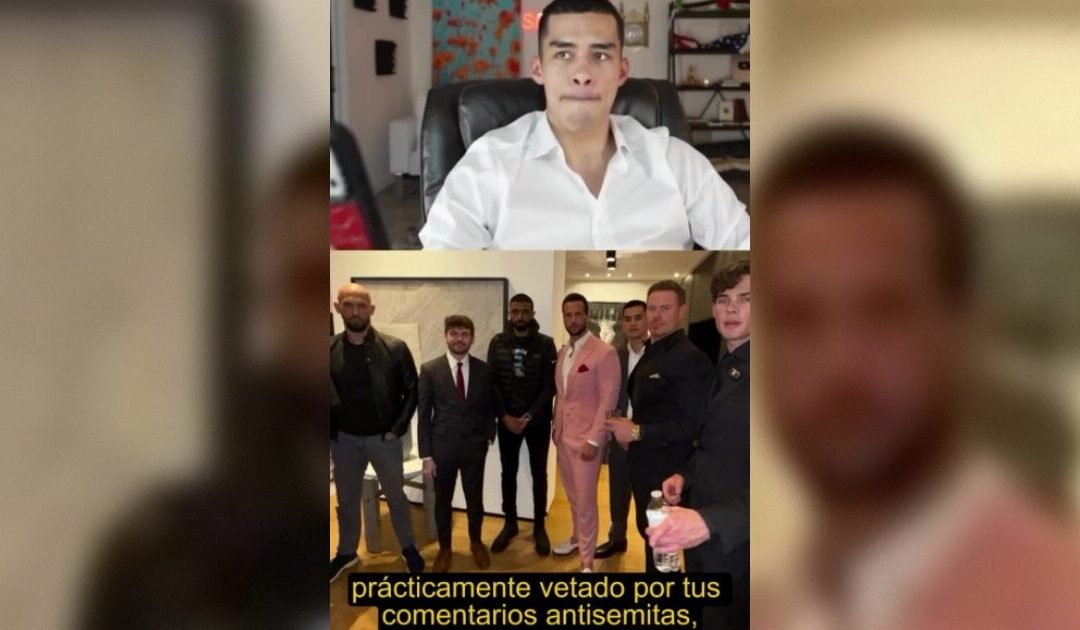
Group of men in formal attire posing for a photo, with one man sitting at a desk in a white shirt, conveying a serious expression.

Content creator Sneako has once again sparked controversy after a private call was leaked in which a friend tells him that he is “practically banned from everything” across various social, business, and hospitality circles in the United States. In the video, Sneako appears confused and questions who made such a decision and on what grounds, insisting that he has never been racist or promoted hate.

During the conversation, the other person—who claims to have been Sneako’s friend for years—directly accuses him of persistent antisemitism, describing it as “repugnant” and “very offensive.” According to the interlocutor, Sneako

The post Influencer Sneako Is Banned and Accused of Antisemitism and Hate (VIDEO) appeared first on The Gateway Pundit.

Go to Source
Author: Gateway Hispanic

Nigerian Catholic Priest Says Trump’s Strikes on Extremists Are Effective in Protecting Christians

Nigerian Catholic Priest Says Trump’s Strikes on Extremists Are Effective in Protecting Christians

Nigerian Catholic Priest Says Trump’s Strikes on Extremists Are Effective in Protecting Christians
January 22, 2026

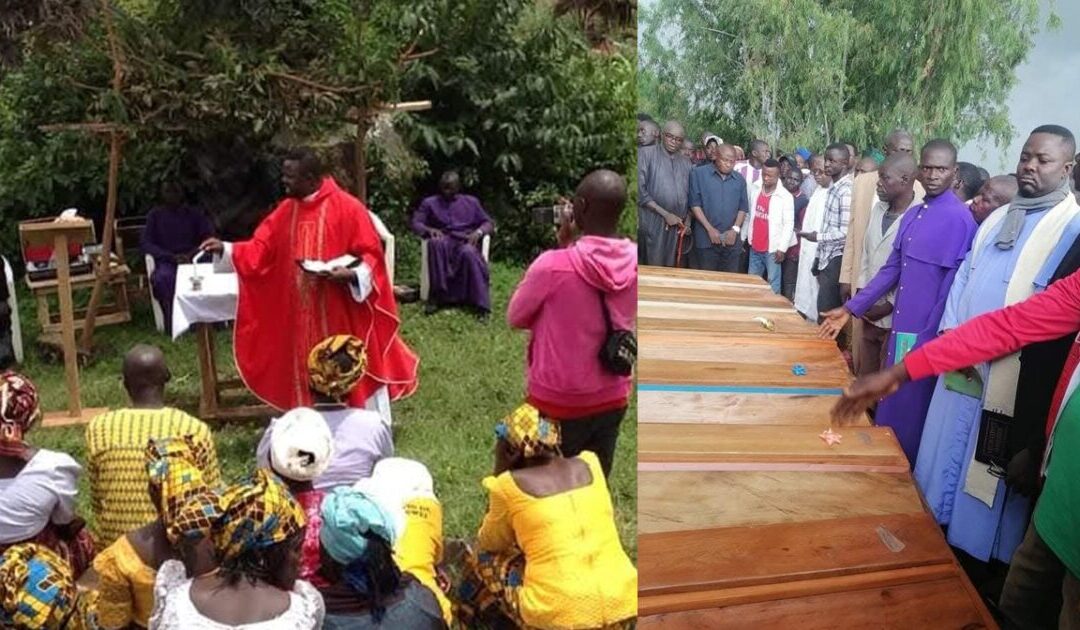
A priest in red vestments leads a procession of community members along a rural path surrounded by greenery.
Nigerian Christians in Plateau State are on the front lines, caught between the Muslim north and the Christian south. They have been subjected to mass killings and mass kidnappings by Islamic extremist groups. Photo courtesy of Paul, a local Christian journalist.

“My parish is really on the front line between the Muslim North and the Christian South,” said Father George, a Catholic priest and pastor of St. Augustine Parish in Dong, on the outskirts of Jos, Plateau State, Nigeria. Plateau, one of only two predominantly Christian states in northern Nigeria, has been the site of numerous attacks by Islamist groups, particularly Fulani militias.

According to local Christians, several factors have made Christian communities especially vulnerable. First, civilians are not permitted to own firearms in Nigeria. As a result, Christians have no means of defending themselves, while jihadists and extremist groups are able to obtain weapons on the black market. In many cases, these weapons have been traced back to the security forces, either sold illegally or reported as “lost.”

Another factor is demographics. Muslims have, on average, many more children than Christians, leaving Christian communities severely outnumbered. In northern Nigeria, Christians make up only about 10 percent of the population.

Other issues date back to the period following independence from Britain, when Muslim communities encouraged their children to enter the security services. “Christians are underrepresented in the police and the security forces,” Father George confirmed. As a result, protection for Christian communities is often limited, delayed, or absent altogether. In some instances, attacks have taken place despite security forces being stationed nearby.

Political power in northern Nigeria is also largely held by Muslims. “Christians have not been taught to play politics,” Father George said regretfully.

There are also religious and cultural factors behind the present situation. Father George explained that Muslims benefited from earlier evangelization by Arab traders, which gave them access to education through the Islamic system. “That system is rooted in domination, and as a result, they learned the art of dominating other tribes they came into contact with,” he said. “Christians are now trying to catch up.”

The historical context for Muslim political power in northern Nigeria began with Ahmadu Bello, who served as the Sardauna, a traditional title meaning “Crown Prince,” of Sokoto and as the first Premier of Northern Nigeria from 1954 until his assassination in 1966. Operating within the framework of the Sokoto Caliphate, he was a central architect of northern Nigerian politics during the transition to independence and the early post-independence period. Bello worked to integrate traditional Islamic authority structures, known as the emirate system, into modern democratic institutions. He also pushed to promote Islamic education and religious unity across the region.

“He was even supposed to form the government at the national level as Prime Minister, but he considered that position beneath him,” Father George said. “He preferred to rule Northern Nigeria rather than serve as Prime Minister of the whole country at independence.” As a result, Father George estimates that the northern Nigerian power bloc has ruled for 47 of the 63 years since independence.

Father George explained how this affects his parish. “It affects us because it limits our access and our opportunities. It limits access to a better life, and it even limits freedom of worship.” He noted that the state exercises broad regulatory power, whether over land to build a church or land to build a school. He went on to say, that in the 1970s “the government unilaterally confiscated all private schools. Most of those private schools were missionary schools, Christian missionary schools,” adding that the government nationalized all of them.

These takeovers were implemented at the state level, with multiple academic sources confirming that Christian missionary schools, which had dominated the Nigerian education system since independence, made up the vast majority of private schools that were nationalized. Multiple sources also document that the takeover led over time to decreased education quality, increased enrollment accompanied by declining standards, and the loss of moral instruction previously provided by religious institutions.

Turning to the security situation and raids by Fulani militias and jihadist groups, Father George said, “In my previous assignment, before I came here, I was serving in Riyom Local Government Area.” Riyom, located in Plateau State, is one of the major flashpoints of violence against Christians and has been the site of multiple, systematic attacks.

In 2025 alone, numerous attacks were recorded. On July 14–15, 2025, thirty-two Christians were killed in Jebu village, where a church was destroyed and homes were burned. On July 15, 2025, twenty-seven Christians were killed in Bindi (Jebu) village, with a mass burial held on July 25. In June 2025, multiple attacks were reported in the Jol and Rim communities, including an assault on Bachi village on June 1. On May 13–14, 2025, twelve Christians were killed in the Wereng community. In April 2025, there were multiple attacks, including the shooting death of Daniel Mwanti on April 12 and the destruction of crops. On March 24, 2025, a nineteen-year-old woman was abducted and gang-raped for four days in Tahoss. On October 31, 2025, twelve Christians were killed in Kwi village.

In most instances, the documented perpetrators were Fulani militias, identified by multiple eyewitnesses and corroborated by local organizations.

“I lost about six outstation churches there,” Father George lamented. “They were completely closed down. One entire village was totally evacuated because of attacks.” In total, he said about six villages that had Catholic churches were evacuated, along with several other Catholic villages that were too small to have their own church. “Altogether, the number of villages evacuated due to Fulani attacks in Riyom Local Government, where I previously served, was about twelve villages.”

He went on to say that his current parish has experienced a brief window of peace, which he attributed to targeted strikes ordered by Donald Trump against extremist groups in Nigeria.

“We are always thanking God because we can see that He is answering our prayers,” Father George said. “I have been in my parish for two years, and in those two years we have experienced, for the first time, two months with no kidnappings and no violence. No kidnapping incidents by the Fulani and no attacks by the Fulani. This is the first time that has happened.”

“The places Trump targeted were the worst ones. They were the main centers of organization. Those areas functioned as their bases. They would gather there, organize themselves, train, mobilize, and strategize. From those sanctuaries, they would then spread out across the country to carry out these atrocities,” he said. “Trump was able to strike them at the source, where they were organizing and mobilizing. It is not that Trump has personally killed any bandits in our state, but because of the pressure he has placed on the Nigerian government.”

Father George explained that the strikes drew international attention to the suffering of Christian communities, which in turn pressured the Nigerian government to allow security forces to act against Islamic extremists. “Before this, there was clear impunity,” he said.

“Now that is why you are seeing calm,” he added. “Beyond that, the situation has exposed the Nigerian government. Their hypocrisy has unraveled. They are now being forced to act, so they have no option but to sit up, and they are sitting up. That is why, as I said, in the last two months we have not heard of any attacks here personally, not even in Riyom.”

Mainstream media and Democrats in Congress have claimed that President Trump is wrong and that there are no attacks on Christians in Nigeria. These claims contradict well-documented evidence. The attacks have been the subject of repeated reporting by the U.S. Commission on International Religious Freedom (USCIRF), which has repeatedly identified Nigeria as a country of particular concern because of the ongoing slaughter of Christians. The media have also claimed that Trump’s airstrikes have been ineffective, a claim that is likewise inconsistent with the facts on the ground.

It is disturbing that the democrats and liberals would abandon Christians in Nigeria even denying that they are under attack simply to spite President Trump. People in Nigeria, however, are aware of the threat and grateful for President Trumps intervention.

The post Nigerian Catholic Priest Says Trump’s Strikes on Extremists Are Effective in Protecting Christians appeared first on The Gateway Pundit.

Go to Source
Author: Antonio Graceffo

REPORT: The FCC is Going to Start Cracking Down on Partisan TV Shows That Exist Only to Bash One Side Every Single Day

REPORT: The FCC is Going to Start Cracking Down on Partisan TV Shows That Exist Only to Bash One Side Every Single Day

REPORT: The FCC is Going to Start Cracking Down on Partisan TV Shows That Exist Only to Bash One Side Every Single Day
January 21, 2026

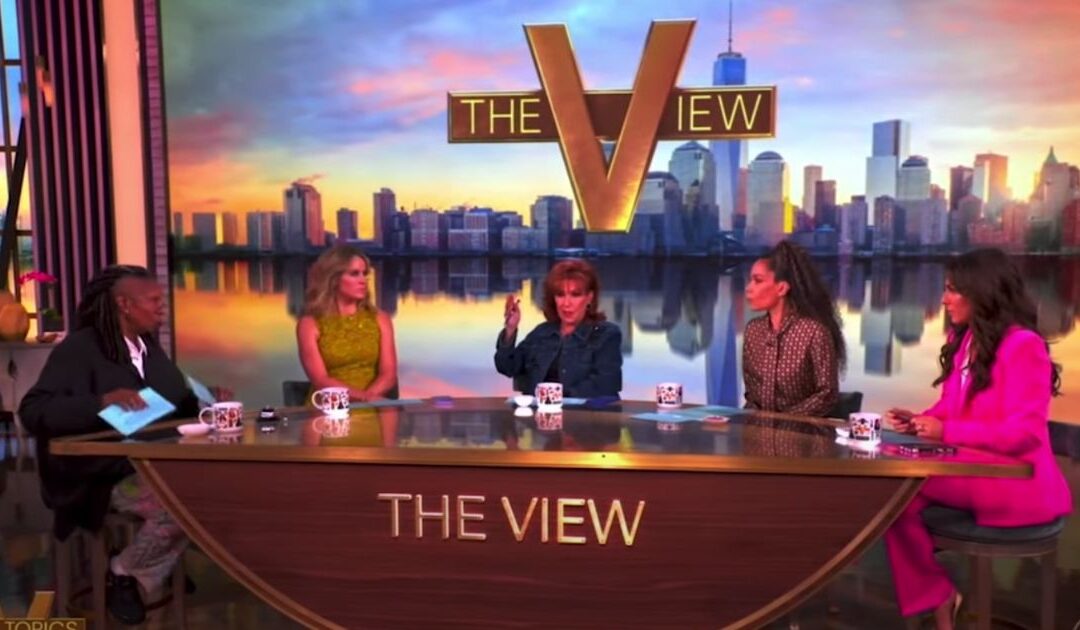
In a new ranking, “The View” came in last on a most loved and most loathed talk show list, and the individual hosts did not do much better. (New York Post / YouTube screen shot)

Shows like ‘The View’ and liberal late-night shows, may soon find themselves under pressure from the FCC to include more Republican guests and to present a point of view other than the constant one-sided programming we see every day.

The View is just one example. Jimmy Kimmel and Stephen Colbert are just as bad, if not worse.

Colbert had Bernie Sanders on his show last night. It was his NINETEENTH appearance on Colbert’s show, and they used the time to push Bernie’s left wing politics. Elizabeth Warren has also been on Colbert countless times. They are using these shows on public airwaves to advance a political agenda.

This is way overdue.

FOX News reports:

FCC to crack down on liberal late-night shows, ‘The View’ for not giving equal airtime to GOP guests

The Federal Communications Commission (FCC) is cracking down on partisan talk shows in both daytime and late night in an effort to provide equal treatment for political candidates.

The FCC announced Wednesday it is providing guidance to the three broadcast networks to adhere to the “statutory equal opportunities requirement,” citing the Communications Act of 1934, “including their airing of late night and daytime talk shows.”

“Under section 315, if a broadcast station permits any legally qualified candidate for public office to use its facilities, it shall provide an equal opportunity to all other legally qualified candidates for that office,” the FCC wrote in a press release.

There has been a longstanding “bona fide” exception for news programming that wouldn’t require equal time for an opposing candidate, but the FCC now says it “has not been presented with any evidence that the interview portion of any late night or daytime television talk show program on the air presently would qualify for the ‘bona fide’ news exemption.”

FCC Chair Brendan Carr addressed this in a post on Twitter/X:

It goes beyond bias. Joy Behar of The View, has made it known that she wants part of her ‘legacy’ to be the taking down of Trump.

These people are out of control and it’s not fair. They need to be made to change. They’re certainly not going to do it on their own.

The post REPORT: The FCC is Going to Start Cracking Down on Partisan TV Shows That Exist Only to Bash One Side Every Single Day appeared first on The Gateway Pundit.

Go to Source
Author: Mike LaChance