
Budapest Suspends Diesel to Ukraine Until Kiev Regime Repairs Druzhba Pipeline Transporting Russian Oil to Hungary – Slovakia Also Stops Energy Transfers to Kiev (VIDEOS)

Budapest Suspends Diesel to Ukraine Until Kiev Regime Repairs Druzhba Pipeline Transporting Russian Oil to Hungary – Slovakia Also Stops Energy Transfers to Kiev (VIDEOS)

Budapest Suspends Diesel to Ukraine Until Kiev Regime Repairs Druzhba Pipeline Transporting Russian Oil to Hungary – Slovakia Also Stops Energy Transfers to Kiev (VIDEOS)
February 19, 2026

PMs Robert Fico (Slovakia) and Viktor Orbán (Hungary) under the shadow of embattled Ukrainian leader Volodymyr Zelensky.

Hungary and Slovakia no longer fueling Ukraine’s society and war effort.

With the constant position by Hungarian Prime Minister Viktor Orbán against military help to Ukraine, as well as against Kiev joining NATO and the EU, he became an enemy of Volodymyr Zelensky’s regime.

So, it was hardly surprising when Zelensky’s goons blew up the Druzhba (‘Friendship’) pipeline that carried Russian oil to Hungary and Slovakia through Ukrainian territory – even though Budapest and Bratislava both help Kiev in humanitarian ways, and with diesel and energy supplies.

Now, on the verge of the elections in Hungary, even the globalist European Union is pleading with Zelensky to repair the pipeline, lest PM Orbán gets to use this very potent political argument against Kiev and Brussels.

So yesterday (18), we learned that Hungary is suspending its shipments of diesel to Ukraine until the Druzhba pipeline is repaired and the Russian oil supplies to the country are restored.

Associated Press reported:

“Hungary and Slovakia, which have both received a temporary exemption from a European Union policy prohibiting imports of Russian oil, have accused Ukraine — without providing evidence — of deliberately holding up supplies.

In a video posted on social media Wednesday, Hungarian Foreign Minister Péter Szijjártó said the interruption to oil deliveries was ‘a political decision made by the Ukrainian president himself’.”

“Facing what promises to be the most challenging election of his last 16 years in power in April, Orbán has launched an aggressive anti-Ukraine and anti-EU campaign, seeking to convince voters that the neighboring country poses an existential risk to Hungary and that he is the only guarantor of its safety.”

Two political leaders in suits, one gesturing, against a gradient blue background, representing a discussion or debate on political issues.
Robert Fico and Viktor Orbán.

Hungary’s actions were immediately mirrored by Slovakia, who announced an end to energy transfers to Ukraine.

Read more:

Trump Backs Hungarian Prime Minister Viktor Orbán Ahead of Critical EU Election

The post Budapest Suspends Diesel to Ukraine Until Kiev Regime Repairs Druzhba Pipeline Transporting Russian Oil to Hungary – Slovakia Also Stops Energy Transfers to Kiev (VIDEOS) appeared first on The Gateway Pundit.

Go to Source
Author: Paul Serran

DHS Expands Detention Power for Refugees Awaiting Green Cards

DHS Expands Detention Power for Refugees Awaiting Green Cards

DHS Expands Detention Power for Refugees Awaiting Green Cards
February 19, 2026

Credit: Homeland Security

A memo dated February 18, 2026, from US Citizenship and Immigration Services Director Joseph Edlow and Acting US Immigration and Customs Enforcement Director Todd Lyons signals an expansion of ICE’s ability to detain refugees who have not yet adjusted to lawful permanent resident status (ie. obtained a Green Card) after a year.

The directive was submitted by government lawyers in a federal court filing on Wednesday.

Under prior policy, failure to obtain a green card after one year was not grounds for detention or removal. Refugees in this situation were typically released within 48 hours if arrested, or DHS had to initiate full removal proceedings. The new guidance rescinds that approach.

Immigration officers can now arrest and detain refugees who have “failed to adjust” status after one year. They must be placed in custody for “inspection and examination” (a mandatory re-vetting process) to screen for fraud, criminal history, national security threats, or public safety risks.

Per CNN:

“When a refugee is admitted to the United States, the admission is conditional and subject to a mandatory review after one year,” the memo reads, noting refugees who are detained may remain in custody “for the duration of the inspection and examination process.”

****

“Refugees may be considered to have voluntarily returned to custody” by submitting application paperwork and appearing at scheduled appointments with immigration services, according to the new memo.

DHS responded to CNN’s headline framing the issues as an attack on ‘legal refugees’ by noting, “We are following the law. Read 8 USC 1159.

“The Trump Administration is complying with the law as written.”

Refugees are encouraged to “voluntarily return to DHS custody” by filing their adjustment application (Form I-485) and attending required interviews/appointments.

If they do not comply, authorities will locate, arrest, and detain them for the duration of the review. Those who pass may proceed to green card approval; failures could lead to loss of status or deportation.

This applies to refugees (admitted under the U.S. Refugee Admissions Program), not asylees (who gain status after arriving and applying).

The post DHS Expands Detention Power for Refugees Awaiting Green Cards appeared first on The Gateway Pundit.

Go to Source
Author: Margaret Flavin

Trump’s America First Agenda Can’t Afford a Rail Monopoly (VIDEO)

Trump’s America First Agenda Can’t Afford a Rail Monopoly (VIDEO)

Trump’s America First Agenda Can’t Afford a Rail Monopoly (VIDEO)
February 19, 2026

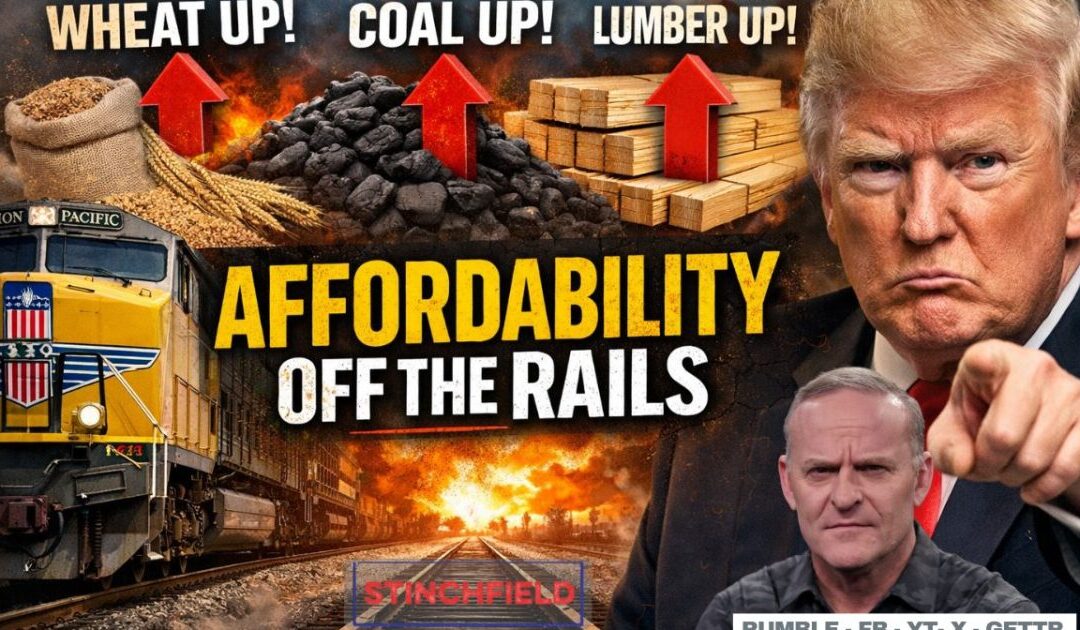
Image depicting rising costs of wheat, coal, and lumber with a train and a serious figure emphasizing the theme of affordability crisis.

President Trump’s economic vision has centered on a simple but powerful idea, make life more affordable for American families by restoring competition, strengthening supply chains, and putting domestic production first.

That vision depends on markets that are dynamic and competitive, not dominated by a handful of massive players with the power to dictate terms.

That is why the proposed merger between two of the nation’s largest railroad companies, Union Pacific and Norfolk Southern, deserves serious scrutiny and ultimately should be denied.

At first glance, a railroad merger may sound like an obscure issue far removed from kitchen-table concerns. It is anything but. Railroads are one of the most critical arteries of the American economy.

They move the grain harvested by our farmers, the coal and energy products that keep the lights on, the automobiles assembled in American plants, and the raw materials used to build homes, roads, and infrastructure. When rail transportation becomes more expensive or less efficient, the cost of nearly every product Americans buy spikes.

History teaches us that large-scale consolidation, like the merger proposed, rarely delivers the promised savings to consumers. Instead, it always leads to reduced competition, fewer choices for shippers, and increased pricing power concentrated in the hands of a single entity.  This is the opposite of President Trump’s free market vision for American savings.

This proposed deal would create a transcontinental rail system of unprecedented scale.  A mega-network capable of dominating vast shipping corridors with limited competitive pressure. That is not the kind of environment that produces lower costs or better service. It is the kind of environment where prices quietly rise and accountability diminishes.

The Surface Transportation Board is tasked with reviewing this proposed mega merger, and it exists precisely to prevent that outcome. Its statutory responsibility is to determine whether a transaction enhances competition and serves the public interest.

Any merger that reduces competitive access to rail service must be denied.  The Union Pacific – Norfolk Southern deal, if approved, would be a costly blow to the nation’s economic resurgence we are experiencing right now.

By consolidating two major carriers into a single coast-to-coast powerhouse, the merger would eliminate key areas where railroads currently must compete for business. Today, many agricultural producers, manufacturers, and energy suppliers can negotiate rates or routes among multiple carriers.

Under a merged system, those options could shrink dramatically, leaving shippers with fewer alternatives and less leverage.  And when businesses lose leverage, consumers eventually lose money.

Vice President J.D. Vance summarized the broader danger succinctly: “When you have one or two companies dominating an entire sector, it’s bad for liberty and it’s bad for prosperity.” That warning reflects a long-standing conservative understanding that concentrated economic power, whether public or private, undermines the freedom and innovation that drive American growth.

Free markets are not defined by size alone. They are defined by competition.

One of the most striking aspects of the opposition to this merger is the coalition forming against it. In an era when Washington struggles to agree on even routine matters, lawmakers from sharply different political perspectives are raising the same concerns.

MAGA firebrand Senators Jim Banks and Tim Sheehy, strong advocates of market-driven growth, have found common ground with far left Democrats such as Raphael Warnock and Dick Durbin. These lawmakers disagree on many policy questions, yet they recognize that excessive consolidation in freight rail threatens the competitive balance that both parties claim to value. When such an unlikely alliance emerges, Americans should take notice.

The stakes are especially high for rural America. Farmers depend heavily on rail to bring crops to market. With tight margins already shaped by weather, fuel costs, and global price swings, even modest increases in transportation rates can mean the difference between profit and loss. A larger, less competitive railroad system could impose exactly those kinds of increases.

Manufacturers face similar risks. Rail is often the most cost-effective way to move heavy inputs like steel, chemicals, and industrial components. Reduced competition could translate into higher shipping costs, less flexible service, and slower delivery times—all of which work against efforts to rebuild American manufacturing.

Energy markets would feel the impact as well. Bulk commodities such as coal, ethanol, and other fuels rely on dependable rail access. When transportation costs climb, utility prices and energy bills often follow.  In every case the consumer loses.

In short, this merger could act as a nationwide cost increase disguised as corporate efficiency.

At a moment when policymakers say they want to combat inflation, secure supply chains, and make American goods more affordable, approving a consolidation of this magnitude would send the wrong signal. It would reward scale over competition and concentration over resilience.

America’s economic strength has always come from rivalry, companies striving to outperform one another, win customers, and innovate. The rail industry should be no exception.

The Surface Transportation Board should uphold its mandate, protect competitive access to the nation’s freight network, and reject this merger. Doing so would not be anti-business. It would be pro-consumer, pro-competition, and most importantly pro-America.

Competition built this country. Preserving it is how we keep it strong.

The post Trump’s America First Agenda Can’t Afford a Rail Monopoly (VIDEO) appeared first on The Gateway Pundit.

Go to Source
Author: Grant Stinchfield

(VIDEO) Trump Threatens Iran if They Don’t Make a Deal – “You’re Going to be Finding Out in the Next 10 Days… Bad Things Will Happen if it Doesn’t”

(VIDEO) Trump Threatens Iran if They Don’t Make a Deal – “You’re Going to be Finding Out in the Next 10 Days… Bad Things Will Happen if it Doesn’t”

(VIDEO) Trump Threatens Iran if They Don’t Make a Deal – “You’re Going to be Finding Out in the Next 10 Days… Bad Things Will Happen if it Doesn’t”
February 19, 2026

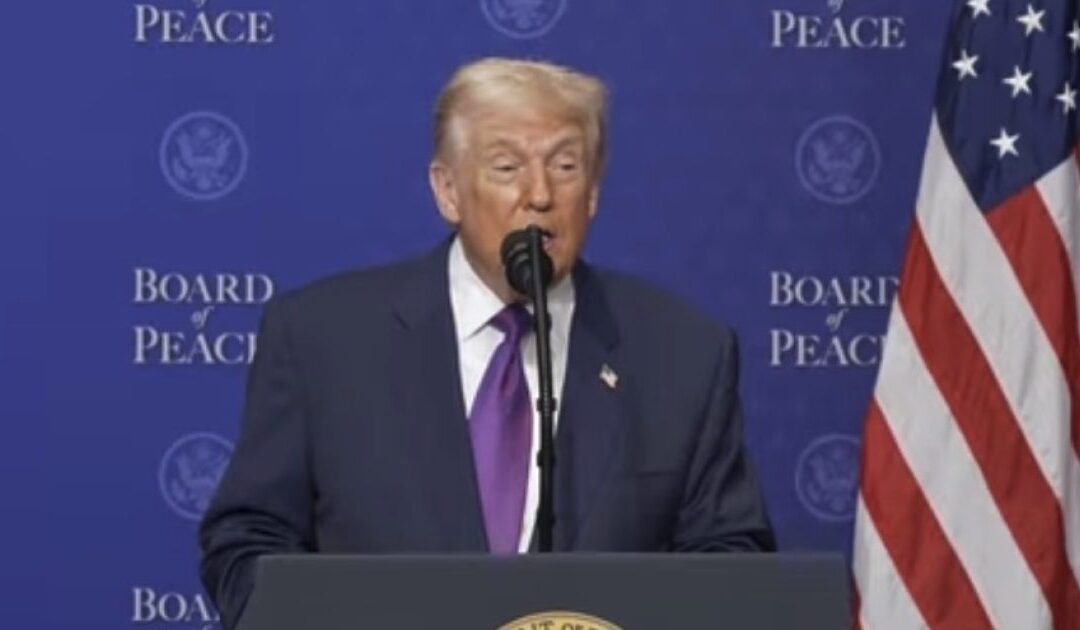
President Trump on Thursday threatened to escalate with Iran within the next ten days if they don’t make a deal with the United States, while delivering remarks at the first Gaza Peace Board meeting. 

With representatives from nearly 50 countries in attendance, Trump highlighted Operation Midnight Hammer, where American B-2 bombers executed major strikes on three Iranian nuclear facilities last Summer, crediting the move for taking out the “black cloud” that prevented other countries from working on peace in the Middle East.

Trump then urged Iran to make a deal amid discussions surrounding Iran’s development of missiles and nuclear weapons. “We may have to take it a step further, or we may not,” he said after touting the previous strikes on nuclear facilities.

“Maybe we’re going to make a deal. You’re going to be finding out over the next probably 10 days.

WATCH:

Trump: We have peace in the Middle East right now that’s bigger than— people said it couldn’t be done. For 3000 years, they’ve been talking about Middle East. They said it couldn’t be done. And you look at what’s happened in Gaza, and one of the keys to it was when we took those beautiful, magnificent— we just ordered 22 more of them, updated model— the B-2 Bombers, they’re incredible. I never understood the B-2 bomber. I’d watch, it’s a wing, and I’ve never quite understood that Johnny. I’d look at it and say it was beautiful. But what does it do?

It carries very big bombs, and it went into Iran, and it totally decimated the nuclear, nuclear potential. And when it did, when it decimated that, all of a sudden we had peace in the Middle East because nobody— there was a black cloud hanging over the Middle East. And if that wasn’t done, that cloud would have been there, and countries like Saudi Arabia, countries like Qatar, countries, nobody could have signed. You would have had that threat nobody could have had. You couldn’t have had peace in the Middle East.

So, now we may have to take it a step further, or we may not. Maybe we’re going to make a deal. You’re going to be finding out over the next probably 10 days.

Later in his speech, Trump warned that “bad things will happen” if Iran does not make a deal with the US. “Now is the time for Iran to join us on a path that will complete what we’re doing, and if they join us, that will be great. If they don’t join us, that will be great too, but it will be a very different path,” he said.

WATCH:

Trump: Now is the time for Iran to join us on a path that will complete what we’re doing, and if they join us, that will be great. If they don’t join us, that will be great too, but it will be a very different path. They cannot continue to threaten the stability of the entire region, and they must make a deal. Or if that doesn’t happen, I maybe can understand if it doesn’t happen, it doesn’t happen, but bad things will happen if it doesn’t.

As The Gateway Pundit reported, a Trump advisor recently warned that the President is now weighing military action against Iran in the coming weeks in a joint U.S.-Israeli campaign.

“The boss is getting fed up. Some people around him warn him against going to war with Iran, but I think there is 90% chance we see kinetic action in the next few weeks,” the unnamed Trump advisor said as negotiations stall.

Iranian Supreme Leader Ayatollah Ali Khamenei threatened to sink US warships as the US accelerates deployments in what Trump has called an “armada” of warships.

‘The Boss is Getting Fed Up’: Trump Advisor Warns of 90% Chance of U.S. Strike on Iran Within Weeks

The post (VIDEO) Trump Threatens Iran if They Don’t Make a Deal – “You’re Going to be Finding Out in the Next 10 Days… Bad Things Will Happen if it Doesn’t” appeared first on The Gateway Pundit.

Go to Source
Author: Jordan Conradson

WATCH: Horrifying Footage Shows North Carolina High School Students Bolt Out of Class and Run Across Busy 4-Lane Highway to Protest ICE – No Teachers in Sight

WATCH: Horrifying Footage Shows North Carolina High School Students Bolt Out of Class and Run Across Busy 4-Lane Highway to Protest ICE – No Teachers in Sight

WATCH: Horrifying Footage Shows North Carolina High School Students Bolt Out of Class and Run Across Busy 4-Lane Highway to Protest ICE – No Teachers in Sight
February 19, 2026

Shocking video from the AC Reynolds High School in Asheville, North Carolina, shows more than 200 students running across a busy 4-lane highway to protest ICE.

The “ICE Out” protest took place on Wednesday.

The students carried anti-ICE signs as they bolted out of class and ran across the busy street.

WLOS reported:

More students in western North Carolina (WNC) held a walkout Wednesday, Feb. 18, gathering for a peaceful protest against ICE and recent immigration enforcement by the Trump administration.

About 200 students at A.C. Reynolds High School walked out at 11 a.m., carrying signs and chanting.

“We don’t just represent the students that are here. We represent every student that can’t come because they’re scared or something else,” said Tommy Philyaw, a senior at A.C. Reynolds High. “Whatever they couldn’t come here for, we represent them.”

Also on Wednesday, students from Nesbitt Discovery Academy organized a protest at the school and in downtown Asheville, which had several dozen attendees.

In a statement to WLOS, Buncombe County Schools praised the students for running onto a busy highway:

“This activity was not organized by the school, but we respect the right of students to peacefully and respectfully express their views. We continued our normal school operation and schedule during this time, including maintaining our attendance policies for students who were not in class.

We are appreciative of our school resource officers and law enforcement partners who helped keep our students safe.”

The horrifying video shows the students running across the street without a teacher in sight.

Video obtained by Matt Van Swol:

The post WATCH: Horrifying Footage Shows North Carolina High School Students Bolt Out of Class and Run Across Busy 4-Lane Highway to Protest ICE – No Teachers in Sight appeared first on The Gateway Pundit.

Go to Source
Author: Cristina Laila