Taiwan Ruling Party Pushes to Shoulder Greater Defense Burden While Opposition Seeks Greater U.S. Dependency

Taiwan Ruling Party Pushes to Shoulder Greater Defense Burden While Opposition Seeks Greater U.S. Dependency

Taiwan Ruling Party Pushes to Shoulder Greater Defense Burden While Opposition Seeks Greater U.S. Dependency
February 18, 2026

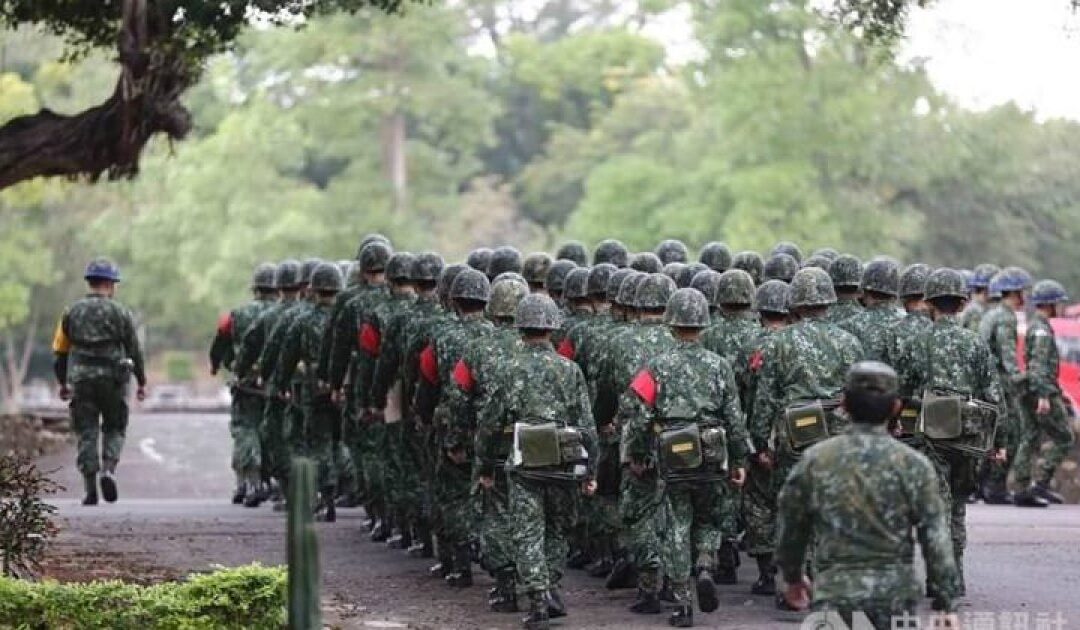
Military personnel in camouflage uniforms march in formation along a tree-lined path during a training exercise.
Taiwan military photo courtesy of Taiwan OCAC

In response to Beijing’s tightening political control and leadership purges within the PLA in early 2026, Taiwan’s ruling Democratic Progressive Party has accelerated its $40 billion Special Budget for asymmetric warfare. Taipei views the consolidation of power under Chinese leader Xi Jinping as a shift from gray-zone coercion toward preparation for a potential 2027 invasion window. U.S. officials assess that the PLA is nearing the capability to conduct missile strikes, enforce blockades, and carry out a full amphibious invasion.

As of February 2026, Taiwan’s legislature, the Legislative Yuan, remains locked in a standoff between the ruling administration and opposition parties over two competing versions of the Special Defense Budget.

The opposition, Taiwan People’s Party, supported by the Kuomintang, would allocate approximately $12.7 billion over the same eight-year period, subject to annual review. By cutting the $27 billion difference, which primarily funds indigenous defense initiatives such as the T-Dome air-defense system, tactical software, and mass drone production, the opposition plan focuses almost exclusively on purchasing off-the-shelf American hardware. Without investment in a local defense-industrial base, as the DPP proposes, Taiwan would remain dependent on U.S. delivery timelines and long-term maintenance support.

Some critics, including U.S. lawmakers, argue that by slashing the budget, the opposition is attempting to avoid provoking Beijing, which could leave Taiwan more vulnerable and increasingly dependent on U.S. intervention if deterrence fails. Taiwan assuming a larger share of its defense costs aligns with the current U.S. National Defense Strategy, which emphasizes burden-sharing and expects partners in the First Island Chain, including Japan, South Korea, the Philippines, and Taiwan, to invest more in collective deterrence.

The strategy also highlights integrated deterrence, stressing that local partners must have the resilience to withstand an initial strike. The DPP’s emphasis on infrastructure, drones, and domestic missile shields fits this framework. Higher defense spending also serves as political signaling in Washington, where it is viewed as an indicator of Taiwan’s seriousness about self-defense. If Taiwan reduces spending while requesting stronger U.S. protection, it provides political ammunition to America First skeptics who question defending the island.

While Taiwan’s regular 2026 defense budget stands at approximately $31.1 billion, the central dispute concerns a separate special budget covering 2026 through 2033. Under the government-backed proposal, total spending would reach roughly $39.5 billion over eight years. The plan includes the proposed “T-Dome” air-defense system, large-scale drone fleets, expanded long-range missile capabilities, and mobile systems such as HIMARS, Javelin anti-tank missiles, and Altius loitering munitions.

The proposal calls for deploying more than 200,000 aerial drones and over 1,000 unmanned surface vessels, supported by a multilayered, AI-integrated missile-and-drone defense network designed to counter saturation attacks. The opposition has repeatedly blocked the measure.

This policy aligns with the Porcupine Strategy, designed to make Taiwan unswallowable in the event of invasion.

The opposition alternative, advanced by the Taiwan People’s Party and supported by the Kuomintang, is titled the “Special Act on National Security and Asymmetric Warfare Procurement.” The proposal narrows the scope of spending and focuses on five of eight major U.S. weapon systems.

It significantly reduces the scale and funding of the government’s broader asymmetric strategy and omits systems such as layered air defenses, expanded drone fleets, and integrated networked systems that many defense experts consider central to Taiwan’s defense needs. As of February 2026, the measure has advanced to committee for review.

Both proposals claim to strengthen asymmetric-warfare capabilities, but they differ sharply in philosophy and scale. The opposition plan retains certain asymmetric tools and supports purchasing U.S.-made missiles, yet reduces the overall package by roughly 70 percent. Kuomintang and Taiwan People’s Party lawmakers argue that the government’s request amounts to a blank check and lacks sufficient transparency.

They have removed funding for certain domestic research-and-development programs, including the T-Dome system, favoring specific, pre-approved U.S. arms sales and a more fiscally conservative approach. They also question what they describe as the astronomical costs of expansive indigenous drone and AI programs.

Many Americans are tired of the United States funding the defense of other countries, even close allies. By relying on the U.S. for defense, those nations can direct resources to other national priorities.

Countries such as Germany and Taiwan have historically kept defense spending relatively low, around 1.5 percent to 2 percent of GDP, allowing them to reinvest those savings into high-tech manufacturing, infrastructure, and research and development. By lowering their national overhead, these countries can produce goods such as semiconductors in Taiwan or automobiles in Germany more competitively than U.S. firms, which bear the high cost of maintaining a global military presence.

A lower defense burden also helps these nations sustain trade surpluses, which can influence the strength of their currencies, such as the euro or the New Taiwan dollar, relative to the U.S. dollar. This dynamic can make American exports more expensive and less competitive in global markets.

When countries refuse to spend adequately on their own defense, it raises questions about their commitment to taking responsibility for their security. In such cases, Americans may reasonably question why the United States should continue bearing a disproportionate share of the cost.

The post Taiwan Ruling Party Pushes to Shoulder Greater Defense Burden While Opposition Seeks Greater U.S. Dependency appeared first on The Gateway Pundit.

Go to Source
Author: Antonio Graceffo

Five Indicted in Kentucky DMV Scam Flooding Roads with Fake Licenses for Non-Citizen Immigrants

Five Indicted in Kentucky DMV Scam Flooding Roads with Fake Licenses for Non-Citizen Immigrants

Five Indicted in Kentucky DMV Scam Flooding Roads with Fake Licenses for Non-Citizen Immigrants
February 18, 2026

Five people in Louisville, Kentucky, have been indicted on federal charges for orchestrating a scheme to illegally issue driver’s licenses to legal resident non-citizens, including illegal aliens.

The indictment, returned by a federal grand jury on February 4, accuses the group of fraud, money laundering, and producing unlawful identification documents.

Donnita Wilson, 32; Aariel Matthews, 27; Raul Tellez Ojeda, 32; Lazaro Alejandro Castello Rojas, 37; and Robert Danger Correa, 41, face a total of 14 counts each of mail fraud, honest services mail fraud, and unlawful production of identification documents, along with conspiracy charges for mail fraud, honest services mail fraud, and money laundering.

Wilson and Matthews were temporary contract employees assigned to the Kentucky Transportation Cabinet’s (KYTC) Division of Driver Licensing, primarily at the NIA Center branch in Louisville.

The three men, who had no official role in the licensing process, allegedly recruited legally present non-U.S. citizens, many of whom struggled with English and the application process, promising expedited services for fees ranging from $200 to $1,500.

According to the indictment, the scheme operated from at least November 1, 2023, through October 2024.

The recruiters would arrange appointments, escort applicants to the NIA Center, and direct them to specific counters manned by Wilson and Matthews.

The employees then allegedly manipulated the state database by altering records to issue “duplicate” licenses without the applicants ever taking the required written or road tests, meaning they never demonstrated their ability to safely operate a vehicle.

This not only compromised road safety but also undermined the integrity of state-issued IDs, which are often used for banking, housing, travel, and in some cases, voter registration.

U.S. Attorney Kyle Bumgarner said in a statement obtained by the Courier Journal, “This fraudulent scheme involved kickbacks and bribes leading to numerous legally present, non-U.S. citizens obtaining unlawfully issued drivers licenses.”

The operation came to light following a whistleblower lawsuit filed in 2025 by a former KYTC clerk, who alleged that colleagues were selling licenses to illegal aliens for $200 each.

The indictment specifies the applicants were legally present, but the initial allegations raised concerns about broader fraud involving illegal immigrants, prompting an investigation by Kentucky State Police, the Attorney General’s office, and federal partners.

If convicted, the fraudsters may face significant fines and prison time.

The post Five Indicted in Kentucky DMV Scam Flooding Roads with Fake Licenses for Non-Citizen Immigrants appeared first on The Gateway Pundit.

Go to Source
Author: Cassandra MacDonald

Barack Obama Gets Savagely ROASTED After His Infamous Presidential Center Receives this “Headache-Inducing” New Update

Barack Obama Gets Savagely ROASTED After His Infamous Presidential Center Receives this “Headache-Inducing” New Update

Barack Obama Gets Savagely ROASTED After His Infamous Presidential Center Receives this “Headache-Inducing” New Update
February 18, 2026

Screencap of YouTube video.

The ugly Obama Presidential center/library has received a hideous new update due to the man’s malignant narcissism and it is sparking widespread mockery.

As TGP readers know, Obama’s presidential Center, which is located on Chicago’s South Side, has been universally mocked during construction as austere and “prison-like.”

It is also coming in over budget and way past schedule and those are not the only problems facing the project. Moreover, some residents of Chicago are unhappy about the ‘monstrosity’ that looms over what was once a popular public park.

Now, the former president has decided what the center needs in an excerpt of one of his speeches on the building. As The New York Post notes, words added to the $830 million structure are from a 2015 speech Obama delivered in Selma, Ala., to mark the 50th anniversary of the civil rights marches.

But this move has backfired horribly and made the center look like an even bigger joke.

One user called the update “headache-inducing” while noting how many words are disjointed.

LOOK:

Other X users savagely roasted Obama after seeing the mid-boggling update, complete with funny memes.

The Center is scheduled to open next June. But who would want to visit it?

The post Barack Obama Gets Savagely ROASTED After His Infamous Presidential Center Receives this “Headache-Inducing” New Update appeared first on The Gateway Pundit.

Go to Source
Author: Cullen Linebarger

Exclusive: How a Civil Disobedience Movement Gave Way to a Revolution in Burma

Exclusive: How a Civil Disobedience Movement Gave Way to a Revolution in Burma

Exclusive: How a Civil Disobedience Movement Gave Way to a Revolution in Burma
February 18, 2026

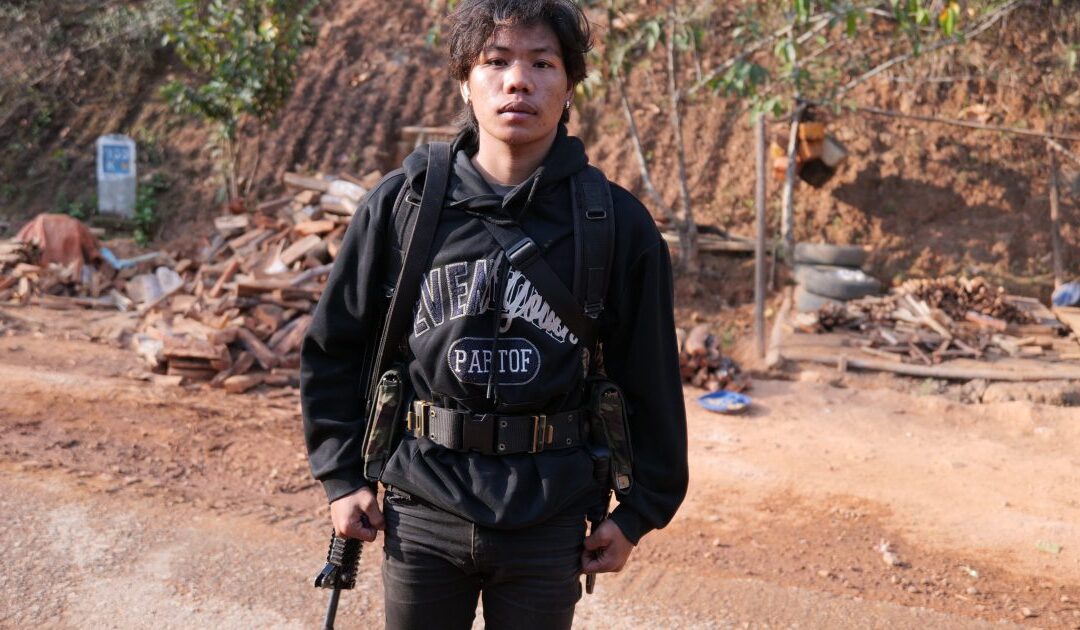
Young man dressed in tactical gear standing on a dirt road with a wooded background, holding a firearm and wearing wireless earbuds.
Before the coup, many resistance soldiers were students, tradesmen, and professionals who began in the Civil Disobedience Movement and then transitioned into resistance fighters. They receive no salary. They fight to protect their families and with the hope of gaining a free and democratic Burma. Photo by Antonio Graceffo

From far off, a motorcycle can sound like a drone. The sound always causes my anxiety to rise as I wait to see what materializes over the horizon.

Fortunately, this time it was a motorcycle coming down the dusty trail to the resistance camp where I was staying.

The driver was Saw Emmet, a thirty-four-year-old civil engineer who joined the revolution shortly after the Burma army overturned the election and seized control of the government in 2021.

His first move was to participate in the Civil Disobedience Movement, a widespread protest by teachers, doctors, nurses, and other government employees who refused to serve the generals.

Originally, he and many others tried to remain in the city, launching a campaign of guerrilla warfare. But a friend warned him that the army was coming for him, so he fled to the jungle.

After spending several years on the front lines with combat units, he decided to dedicate himself to volunteering as an engineer wherever his skills were needed in resistance-controlled areas.

Over a cup of instant coffee from my rucksack, Saw Emmet told me about the time before the military coup.

“When we had the NLD government, there were a lot of work opportunities for people in Burma,” he said, recalling the period after the 2015 election, which was won in a landslide by Aung San Suu Kyi’s National League for Democracy.

Although the military retained most of the decision-making power, conditions improved for ordinary citizens under quasi-civilian rule. People had choices.

“People could choose what kind of work they want to do. We had medical work, engineering work, and also business. Some of the young people, they did online business,” he said.

“But after the coup, it was difficult for everybody to find a job,” he added.

Irrespective of official unemployment numbers to the contrary, a significant proportion of Burma’s population is unemployed, and the average citizen has a cash income of about $100 per month. That figure is only an average, however, as the estimated 4 million displaced people often have no income at all.

He noted that the country has been like this, in one form or another, since the 1962 coup led by General Ne Win.

“That is a very long time,” he lamented. Referring to the succession of dictators, he said, “The SAC government, they govern since then.”

The current government under General Min Aung Hlaing, formerly calling itself the SAC, is politically and ideologically the successor to the system established by Ne Win.

Ne Win established the “Three National Causes”: non-disintegration of the Union, non-disintegration of national solidarity, and perpetuation of sovereignty. The current SAC leader, Min Aung Hlaing, uses these same phrases to justify the 2021 coup.

Ne Win pioneered the idea that the military should not only defend the country but also manage its economy and politics. The SAC’s structure, which places military officers in charge of civilian ministries, is a direct continuation of Ne Win’s 1962 Revolutionary Council.

In 1988, there was a pro-democracy movement that resulted in thousands of people, mostly students, monks, and ordinary citizens, being killed in the streets of Yangon and other cities.

Daw Aung San Suu Kyi became the face of democracy at that time and was arrested the following year along with thousands of others.

In 1990, elections were held, and her party, the National League for Democracy (NLD), won by a landslide. However, the military refused to honor the results, and hope for democratic change evaporated.

In 2010, the first general election in 20 years was held. It was widely criticized as a “sham” because it was designed by the military to ensure its proxy party, the USDP, won.

This led to the formation of the Thein Sein government in early 2011. It was called “quasi-civilian” because, although the leaders wore suits instead of uniforms, most were retired generals. Still, conditions improved somewhat for the population.

Saw Emmet explained, “Before 2010, under the dictator government, the people could not own a cellphone. It was very expensive. It cost about $2,000 to $3,000 for one SIM card. Only the cronies, the businessmen, and the generals, the government leaders, could own cell phones. The people could not.”

He continued, “But in 2010, the first civilian government came out, so the SIM card price dropped to about $180. After five years, in 2015, when the NLD government won the election, the SIM card price fell to $12. So we could have our own SIM card, our own cell phone, and freely use the Internet.”

“Almost all of the young people in Burma, our eyes were wide open when we used the Internet at that time,” he said. He began seeing things about Burma that he had never known before.

“It was shocking, very shocking. Before that, we could not hear the news about what was happening in the ethnic areas, like Karen or Kachin or Chin or Arakan.”

He explained that most of Burma’s ethnic minorities, who comprise about 40 percent of the population, previously had little access to outside information.

“After the civilian government, from 2010 to 2020, we could widely use the Internet and share information,” he said.

Ethnic communities often did not realize there was violence in other ethnic regions, particularly in areas, far from his home. “It was impossible to empathize about the violence because we didn’t know,” he said.

This was when solidarity slowly began to take root among people of different ethnicities, who started to realize that the government was abusing all the minorities.

“So from 2015 to 2020, our people in Burma, we had full human rights, a democratic country. At that time, we had freedom. We could criticize the government if they were doing wrong. We had free speech. Before, if we criticized the government, they would send us to jail.”

But everything changed after the coup. Human rights and civil rights came to an end, and protesting became deadly. Saw Emmet referenced the first civilian killed during the protests, Mya Thwe Thwe Khine.

“She got shot in the head,” he said. “When I heard about this, I asked, why did the government shoot their own people? They are supposed to protect us. But they killed that girl.”

That was the turning point for Saw Emmet and many like him who had pinned their hopes on parliamentary procedure and protest as a means of gaining a democratic government. “So, we cannot win in this way, with this kind of protesting. So, we must prepare for the revolution.”

He explained that once people could freely use the Internet, he began researching Burma’s history on his own. What he discovered shocked him.

The SAC, he said, had committed “very terrible things since 1962,” including the violence of 1988, events that were never taught in government schools.

With access to witnesses and video evidence, he began to see proof of killings that he had previously struggled to believe. “When you have access to information and start to find out that people are being killed, I didn’t want to believe it, but I saw the witnesses and the evidence,” he said.

That realization changed him. Concluding that protest alone would not succeed, he decided the revolution had to take another form. “So at that time, I decided we needed to prepare for the revolution in another way. I chose to join the revolution in May 2021.”

This is how an educated civil engineer ended up at a resistance army camp to receive frontline training. Across Burma, thousands, perhaps tens of thousands, have a similar story.
The Burma government succeeded in turning everyone from teachers to accountants into resistance operatives.
Portrait of a soldier wearing a military helmet, showcasing a serious expression against a textured background, emphasizing themes of duty and resilience.
The author, Antonio Graceffo, reporting from the war in Burma.

The post Exclusive: How a Civil Disobedience Movement Gave Way to a Revolution in Burma appeared first on The Gateway Pundit.

Go to Source
Author: Antonio Graceffo

‘Not My Business’: U.S.-Born Skier Eileen Gu Competing for China Is a ‘Skeptic’ of Uyghur Genocide Claims

‘Not My Business’: U.S.-Born Skier Eileen Gu Competing for China Is a ‘Skeptic’ of Uyghur Genocide Claims

‘Not My Business’: U.S.-Born Skier Eileen Gu Competing for China Is a ‘Skeptic’ of Uyghur Genocide Claims
February 18, 2026

Eileen Gu during a press conference at the 2026 Winter Olympics.

Eileen Gu, the U.S. born skier competing for China at the Winter Olympics, has said she is “skeptical” that China is really carrying out a genocide against their Uyghur minority.

Gu, who was raised in San Francisco but has chosen to represent the Chinese Olympic team, was asked in a profile by TIME magazine about the country’s well documented genocide against Uyghur Muslims.

“I’m not an expert on this,” said Gu, who is a student at Stanford University. “I haven’t done the research. I don’t think it’s my business. I’m not going to make big claims on my social media.”

When pressed about the issue, Gu said she remains a “skeptic” about the official data.

“I’m just more of a skeptic when it comes to data in general. So it’s not like I can read an article and be like, ‘Oh, well, this must be the truth.’

“I need to have a ton of evidence. I need to maybe go to the place, maybe talk to 10 primary-source people who are in a location and have experienced life there.”

“Then I need to go see images. I need to listen to recordings. I need to think about how history affects it. Then I need to read books on how politics affects it. This is a lifelong search.”

The Uyghur genocide is a reality acknowledged by those on both sides of the political spectrum.

The situation is outlined in a report by Genocide Watch:

Since 2017, 800,000 to 2 million Uyghurs have been detained in mass detention centers where they undergo forced CCP indoctrination, physical abuse, sexual violence, and cultural erasure.

The Uyghur language is banned in these “reeducation camps.”  

During indoctrination, detainees are coerced into abandoning Islam. The CCP has demolished many Uyghur mosques, severely restricting Uyghur religious freedom.

The Chinese government continues its campaign of Mass Detention in Reeducation Camps, where Uyghur Muslims face Forced Assimilation and Cultural Genocide through CCP indoctrination and Uyghur language bans.

Gu, meanwhile, appears unfazed. She continues to bask in the glow of her Olympic triumph while reaping tens of millions of dollars each year from a string of lucrative sponsorship deals.

The post ‘Not My Business’: U.S.-Born Skier Eileen Gu Competing for China Is a ‘Skeptic’ of Uyghur Genocide Claims appeared first on The Gateway Pundit.

Go to Source
Author: Ben Kew