DEVELOPING: Cuba’s Electrical Grid Suffers Complete Collapse
March 16, 2026
Cuba’s electrical grid has suffered a complete collapse as the Trump Administration prepares to take action on the island country.
“Cuba’s electrical grid has suffered a complete and total collapse. This is according to the country’s power operator,” CNN’s Brianna Keilar.
“It’s the 1st nationwide blackout since the US effectively shut off the flow of oil to Cuba,” she said.
BREAKING: CNN’s Brianna Keilar: “Cuba’s electrical grid has suffered a complete and total collapse. This is according to the country’s power operator.”
“It’s the 1st nationwide blackout since the US effectively shut off the flow of oil to Cuba.” pic.twitter.com/hnoo243eG7
“A total disconnection of the National Electric Power System has occurred. Restoration protocols are beginning to be implemented,” Cuba’s electrical grid provider said on Monday.
#AHORA || Ocurrió una desconexión total del Sistema Electroenergético Nacional. Comienzan a implementarse los protocolos de restablecimiento.
President Trump told reporters on Sunday evening that he will finish dealing with Cuba “soon.”
“Cuba’s a failed nation. Cuba also wants to make a deal, and I think we will pretty soon, either make a deal or do whatever we have to do,” Trump told Bloomberg’s Jeff Mason during a gaggle on Air Force One.
“We’re talking to Cuba, but we’re going to do Iran before Cuba,” he said.
“They’ve been waiting 50 years for what’s happening with Cuba. So, I think something will happen with Cuba pretty quickly,” Trump added.
“You know, people have been waiting 50 years to hear this story with Cuba, and when I left Palm Beach today, there were thousands of people in the road. I’m sure you saw them, and they were from Cuba and from Venezuela, all friendly, all friendly, waving the flag and waving the American flag,” he said.
“They’ve been waiting 50 years for what’s happening with Cuba. So, I think something will happen with Cuba pretty quickly,” Trump said.
WATCH:
This comes as the Department of Justice is preparing to charge Communist Cuban leaders in cases related to drugs or violence.
The Justice Department is preparing to indict Cuban leaders as President Trump says the island country is ‘going to fall.’
(VIDEO) Trump Says He’ll Soon “Make a Deal or do Whatever We Have to Do” with Cuba – “I Think Something Will Happen with Cuba Pretty Quickly”
March 16, 2026
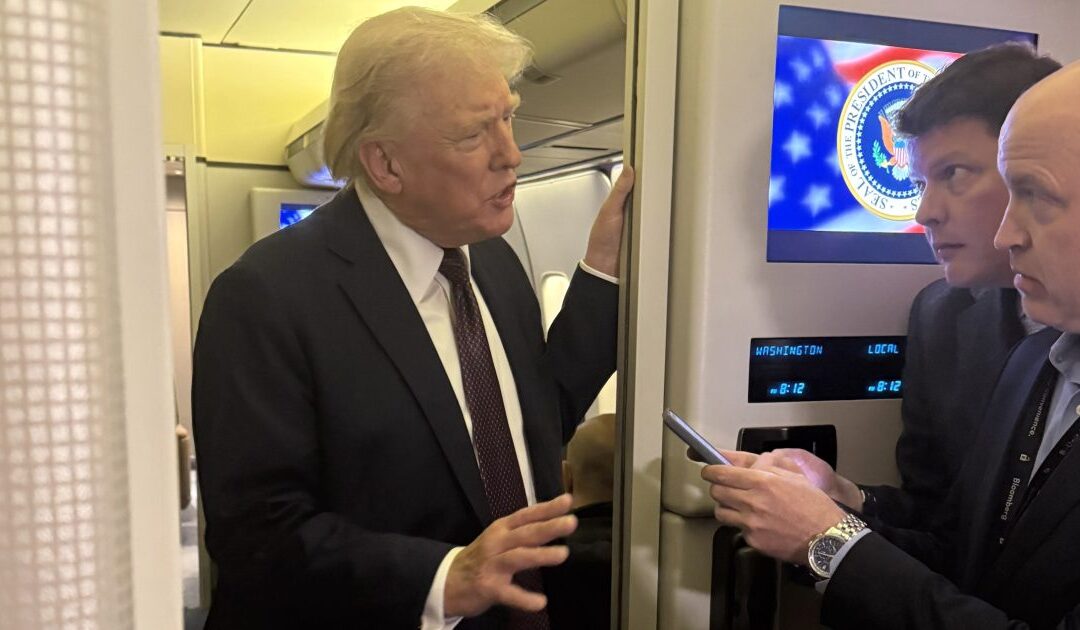
President Trump gaggles on Air Force One (photo by Jordan Conradson)
President Trump told reporters on Sunday that he will finish dealing with Cuba “soon” as war with Iran rages on and months-long threats to take over Cuba linger.
“Cuba’s a failed nation. Cuba also wants to make a deal, and I think we will pretty soon, either make a deal or do whatever we have to do,” Trump told Bloomberg’s Jeff Mason during a gaggle on Air Force One last night. “We’re talking to Cuba, but we’re going to do Iran before Cuba.”
This comes as the Department of Justice is preparing to charge Communist Cuban leaders in cases related to drugs or violence.
Meanwhile, as The Gateway Pundit recently reported, U.S. Southern Command announced new operations with the Ecuadorian military against narco-terrorists in South America and is still surging troops to the region.
Trump noted that on Sunday afternoon, a large group of supporters with Cuban and American flags was waiting on his motorcade’s route from Mar-a-Lago to Palm Beach International Airport. “People have been waiting 50 years to hear this story with Cuba, and when I left Palm Beach today, there were thousands of people in the road. I’m sure you saw them, and they were from Cuba and from Venezuela, all friendly, all friendly, waving the flag and waving the American flag,” he said.
The group stood outside for hours in the rain to show their support.
Trump supporters in West Palm Beach stood for hours in the rain waving Cuban and American flags waiting for Trump’s motorcade to pass pic.twitter.com/uCwqSypkNz
“They’ve been waiting 50 years for what’s happening with Cuba. So, I think something will happen with Cuba pretty quickly,” Trump added.
WATCH:
Mason: You said that you’re talking to Cuba. What do you want to hear from them, and what is at risk for them?
Trump: Well, I am holding Cuba— Cuba’s a failed nation. Cuba also wants to make a deal, and I think we will pretty soon, either make a deal or do whatever we have to do. We have a lot of great people that happen to vote for Trump, not that that matters, but we have a lot of great people from Cuba that were violently and viciously thrown out of the country, and worse. Their families were killed. And so we’re talking to Cuba, but we’re going to do Iran before Cuba.
Mason: And what is at risk for Cuba?
Trump: You know, people have been waiting 50 years to hear this story with Cuba, and when I left Palm Beach today, there were thousands of people in the road. I’m sure you saw them, and they were from Cuba and from Venezuela, all friendly, all friendly, waving the flag and waving the American flag. They’ve been waiting 50 years for what’s happening with Cuba. So, I think something will happen with Cuba pretty quickly.
As The Gateway Pundit reported, Trump said earlier this month that “Cuba is going to fall pretty soon.” Previously, he had suggested that the US could “very well end up having a friendly takeover of Cuba,” adding, “They’re in big trouble.”
“They want to make a deal so badly. They want to make a deal. And so I’m going to put Marco [Rubio] over there, and we’ll see how that works out,” Trump told CNN.
This is in addition to an oil embargo and threatening tariffs on any country that provides oil to Cuba through an Executive Order.
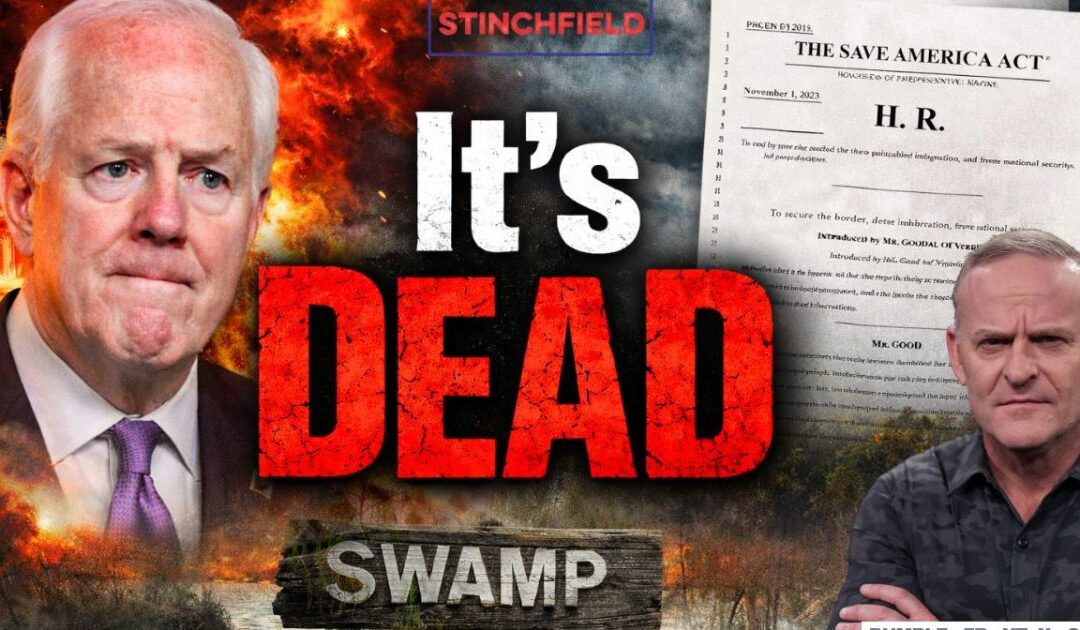
The Save America Act is Dead… John Cornyn Proves it in One Slip Up that Says it All (VIDEO)
March 16, 2026
Washington keeps promising results. But when it comes to the Save America Act, I’m calling it exactly what it is: dead on arrival.
But before we even get into the bill itself, there was one moment that exposed everything. Senator John Cornyn let something slip in a comment that most people completely missed. It wasn’t shouted. It wasn’t dramatic. In fact, it was almost brushed aside in the interview. But if you listen closely, that one remark reveals the truth about what’s really happening behind closed doors in Washington.
Grant breaks down the line that slipped past the media and explains why that single comment tells you the Save America Act is going nowhere.
Today on Stinchfield, Grant makes the blunt declaration that many in Washington won’t say out loud. The Save America Act isn’t stalled because of procedure. It’s stalled because the political will simply isn’t there. Despite the speeches, press releases, and social media posts claiming momentum, the truth is the bill is stuck in the swamp and not moving an inch.
Grant breaks down why leadership knows it can’t pass, why lawmakers are quietly backing away from it, and how the entire process has become more about political theater than real results. If conservatives are serious about saving the country, Grant argues, they’ll have to stop pretending this bill is the solution and start demanding something that can actually get across the finish line.
The reality is simple. Washington is great at talking about saving America. Passing legislation to actually do it is another story entirely.
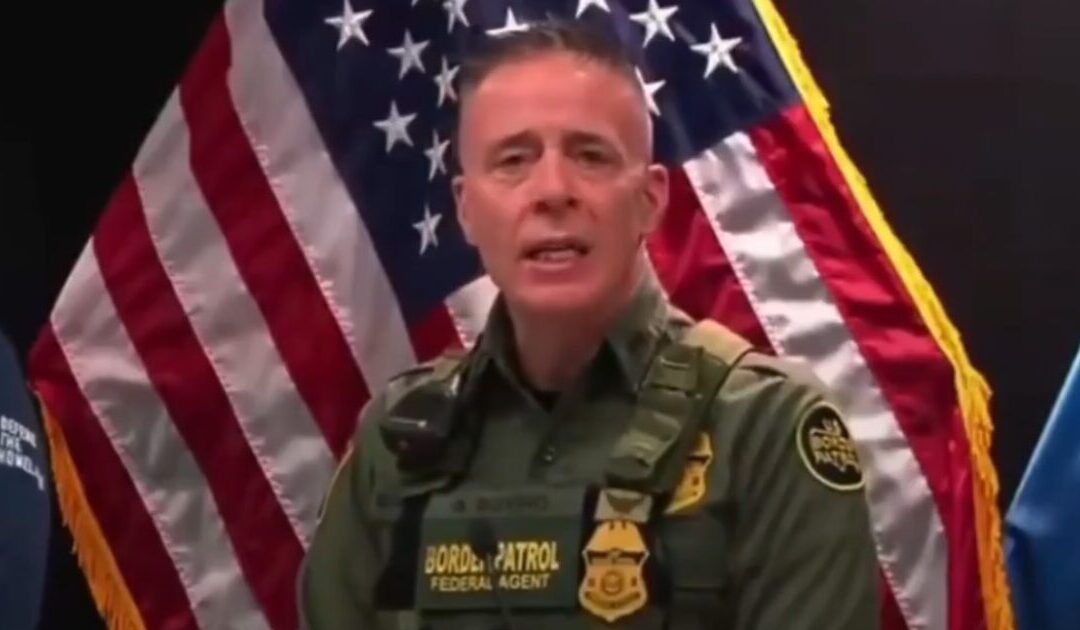
Border Commander Greg Bovino to Retire After Decades of Service
March 16, 2026
Border Commander Gregory Bovino is retiring at the end of the month after decades of service, according to CBS News.
Bovinio also told Breitbart News that he will retire after 30 years of service.
“The greatest honor of my entire life was to work alongside Border Patrol agents on the border and in the interior of the United States in some of the most challenging conditions the agency has ever faced,” Bovino told Breitbart.
“Watching these agents out there giving it their all in some of the most dangerous of environments we have ever faced was humbling,” he said.
Outspoken Border Patrol official Gregory Bovino is retiring from federal service at the end of this month, after being pulled away from a high-profile role leading immigration raids in major U.S. cities, two sources directly familiar with his decision told CBS News on Monday.
Over the past years, Bovino, a longtime Border Patrol official, has been serving as the chief patrol agent of the El Centro sector along the California-Mexico border. But he quickly became a leading public face of the Trump administration’s aggressive crackdown on illegal immigration after he was deployed to cities across the U.S., to oversee sweeping and often controversial immigration raids.
Bovino and his team of green-uniformed Border Patrol agents were dispatched first to the Los Angeles area in June of last year. There, they conducted immigration arrest operations that sparked local outcry, including at Home Depot parking lots.
In September, Bovino and his agents were deployed to Chicago, followed by Charlotte, New Orleans and ultimately, Minneapolis. In all those cities, their operations came under scrutiny, with local residents and leaders denouncing them as heavy-handed and indiscriminate.
Border Patrol agents under Bovino’s commands were captured on video stopping people to ask for their immigration status, including because of the person’s accent.
In January Bovino and some federal immigration agents abruptly left Minnesota after two fatal officer-involved shootings.
CBS News previously reported that Bovino headed back to his post in California’s El Centro sector.
“Mr. Bovino is a wonderful man, and he’s a great professional. He is going to very much continue to lead Customs and Border Patrol throughout and across the country. Mr. Homan will be the main point of contact on the ground in Minneapolis,” Leavitt told reporters in January.
CNN Reporter: “With Homan now going to Minnesota, is Gregory Bovino also going to remain in Minnesota overseeing these ICE operations?”
White House Press Secretary Karoline Leavitt: “Mr. Bovino is a wonderful man, and he’s a great professional. He is going to very much continue… pic.twitter.com/9Sty0Qee9R
China’s Infiltration of the U.S.: CCP Surrogacy and Birth Tourism
March 16, 2026
By Foudeelau, CC BY-SA 3.0, via Wikimedia Commons.
Two practices are allowing Chinese nationals to obtain U.S. citizenship for their children at scale: commercial surrogacy, conducted primarily in California, and birth tourism, in which pregnant women travel to the U.S. on tourist visas to deliver on American soil. Both exploit the 14th Amendment guarantee of citizenship to anyone born in the United States. Surrogacy is illegal in China, driving wealthy clients abroad, and California’s permissive surrogacy laws make it the preferred destination.
Federal prosecutors have brought cases against operators of both types of services, and Congress has introduced legislation targeting surrogacy contracts with nationals of adversarial countries. The practice has drawn national security attention because U.S.-born children of Chinese nationals retain citizenship rights for life, including the right to vote, hold federal employment, and sponsor family members for permanent residence.
California has some of the most permissive surrogacy laws in the world. Under California Family Code Sections 7960–7962, gestational surrogacy, where the surrogate has no genetic link to the child, is explicitly legal, enforceable, and compensated. Courts routinely issue pre-birth parentage orders establishing the intended parents’ rights, regardless of marital status, sexual orientation, or nationality. No U.S. residency or citizenship is required for intended parents.
Costs range from $150,000 to $250,000 per child, covering legal fees, medical care, and surrogate compensation, typically between $30,000 and $60,000. This contrasts with states like Michigan and New York, where commercial surrogacy is restricted or banned.
In compensated surrogacy, Chinese parents purchasing the child do not necessarily have to enter the United States. Foreign clients can ship genetic material to U.S. clinics while surrogates carry and deliver the babies in California hospitals. By contrast, in birth tourism, the biological mother travels from China to the United States during the third trimester on a tourist visa, gives birth in an American hospital, and then returns home with a U.S.-citizen child.
The birth-tourism industry offered far more than hospital access. Agencies sold full-service packages including visa assistance, airport pickup, housing, meals, doctor referrals, shopping trips, and documentation to return to China with the newborn. Many also provided Chinese maternity matrons who prepared traditional postpartum meals and supervised the customary 30-day recovery period.
Clients were typically wealthy professionals from major Chinese cities. One agency operator described customers as business owners, university teachers, and technology-sector employees with household incomes exceeding 2 million yuan, roughly $300,000. American physicians also became part of the system. One California obstetrician at Fountain Valley Regional Hospital said a birth-tourism agent initially asked if he would accept Chinese patients. Referrals eventually grew until 60 to 70 percent of his caseload consisted of Chinese nationals, and he estimated delivering more than 1,000 babies for Chinese clients, sometimes eight in a single day. Prenatal records prepared in Chinese were translated and incorporated into U.S. medical care.
The operations could be large-scale. One agency owner maintained more than 15 properties in Los Angeles and San Francisco, employed about 40 staff in China and 30 in the United States, including drivers, cooks, and maternity caregivers, and handled between 600 and 1,000 pregnant clients each year.
Operators often directed clients to fly into Las Vegas or Hawaii rather than Los Angeles because CBP screening was viewed as easier. Women were coached to wear loose clothing to conceal pregnancies and instructed on what to say during U.S. consulate interviews. Federal prosecutions have also cited money laundering and fraudulent applications for indigent hospital rates.
Obama created a loophole for birth tourism in U.S. territories. Under the Obama-era Guam–CNMI Visa Waiver Program, Chinese nationals could enter the Northern Mariana Islands without a visa. In some years, births to Chinese nationals in Saipan exceeded those of local residents.
Chinese nationals have been the dominant client group for both pathways. Surrogacy is illegal in China under a 2001 Ministry of Health ban, forcing wealthy individuals abroad. U.S. citizenship provides future education access, visa-free international travel, and long-term immigration options. Once a child turns 21, the entire family can apply for a green card through a family-based immigration petition. Surrogacy agencies have marketed this arrangement as a cheaper alternative to the EB-5 investor visa. Some parents cite concerns over China’s environmental problems, competitive education system, and political uncertainty. The documented surge sometimes called the “Run” or Runxue movement reflects wealthy Chinese families seeking exit options.
A 2024 study published in Fertility and Sterility, drawing on CDC-collected data from 2014–2020, found that Chinese nationals accounted for 41.7 percent of all international commercial surrogacy contracts in the United States, and 75 percent of those contracts took place in California. A separate Emory University study found international surrogacy quadrupled from 2014 to 2019. According to a congressional report, as many as 1.5 million Chinese babies may have been born in the United States over the last thirteen years and are being raised in China. Senators Tom Cotton and Rick Scott have cited reports of more than 107 Chinese-owned surrogacy agencies operating in Southern California alone, some allegedly affiliated with Chinese state-owned entities.
Los Angeles family court clerks first noticed an unusual pattern in 2023 when the same name appeared repeatedly on surrogacy petitions before Judge Amy Pellman. The best-documented case involves Xu Bo, a Chinese videogame billionaire who sought parental rights to more than 20 unborn children, stating via video from China that he hoped to father roughly that number of children, specifically boys, to inherit his business empire. His company later confirmed he had commissioned “only a little over 100” children through U.S. surrogates, most of whom he has never met. Judge Pellman denied him parental rights in 2023, concluding the arrangement resembled a production line rather than family building.
A second case involves Guojun Xuan and Silvia Zhang, a CCP-linked couple who had more than 26 children via surrogates in Arcadia, California. In 2025, authorities raided their home in Arcadia after their two-month-old infant was hospitalized with injuries suspected to be caused by abuse. Authorities removed 21 mostly surrogate-born children.
The couple had arranged surrogacies across multiple states and are now engaged in a legal battle to regain custody of the children. At the same time, some surrogates claim they were misled about the number of babies the couple intended to have. Surrogates say they were recruited through agencies tied to the couple and believed they were helping a family have one or two children, not dozens.
Xuan allegedly stated a goal of having a child become U.S. president, with some of the children reportedly named after American politicians. Authorities and federal investigators are examining possible abuse, fraud, and broader concerns about international surrogacy networks, while lawmakers warn the case could highlight risks of child trafficking linked to foreign surrogacy arrangements.
A third case involves Wang Huiwu, an education executive who used American models as egg donors for ten daughters, describing plans to form alliances with powerful families through strategic marriages.
The federal government has since moved to tighten enforcement. A 2020 State Department rule barred B visas for the primary purpose of birth tourism. In January 2026, a new USCIS policy memorandum directed officials to re-review visa holders from high-risk countries for signs of birth-tourism fraud. President Trump’s January 2025 executive order sought to end birthright citizenship for children of non-citizens and non-permanent residents, a measure now under Supreme Court review.
Congress has also proposed restrictions. Senator Rick Scott introduced the SAFE Kids Act, which would void surrogacy contracts involving nationals of adversarial countries and impose penalties on brokers facilitating them. In February 2026, Senators Tom Cotton and Rick Scott asked Attorney General Pam Bondi to open a Justice Department investigation into surrogacy centers run by foreign nationals.
At the state level, Florida’s House passed the Foreign Interference Restriction and Enforcement (FIRE) Act in March 2026, banning surrogacy and pre-planned adoption contracts involving citizens of countries of concern, including China, Russia, and Iran. California moved in the opposite direction. Senate Bill 729 took effect on January 1, 2026, expanding insurance coverage for surrogacy and IVF. Meanwhile, the One Nation, One Visa Policy Act was introduced to close the visa-free entry loophole for Chinese nationals entering U.S. territories such as Saipan.
We use technologies like cookies to store and/or access device information. We do this to improve browsing experience and to show (non-) personalized ads. Consenting to these technologies will allow us to process data such as browsing behavior or unique IDs on this site. Not consenting or withdrawing consent, may adversely affect certain features and functions.
Functional
Always active
The technical storage or access is strictly necessary for the legitimate purpose of enabling the use of a specific service explicitly requested by the subscriber or user, or for the sole purpose of carrying out the transmission of a communication over an electronic communications network.
Preferences
The technical storage or access is necessary for the legitimate purpose of storing preferences that are not requested by the subscriber or user.
Statistics
The technical storage or access that is used exclusively for statistical purposes.The technical storage or access that is used exclusively for anonymous statistical purposes. Without a subpoena, voluntary compliance on the part of your Internet Service Provider, or additional records from a third party, information stored or retrieved for this purpose alone cannot usually be used to identify you.
Marketing
The technical storage or access is required to create user profiles to send advertising, or to track the user on a website or across several websites for similar marketing purposes.


Continuaremos informando. pic.twitter.com/nZq5aakE3Y
 (@ConradsonJordan)