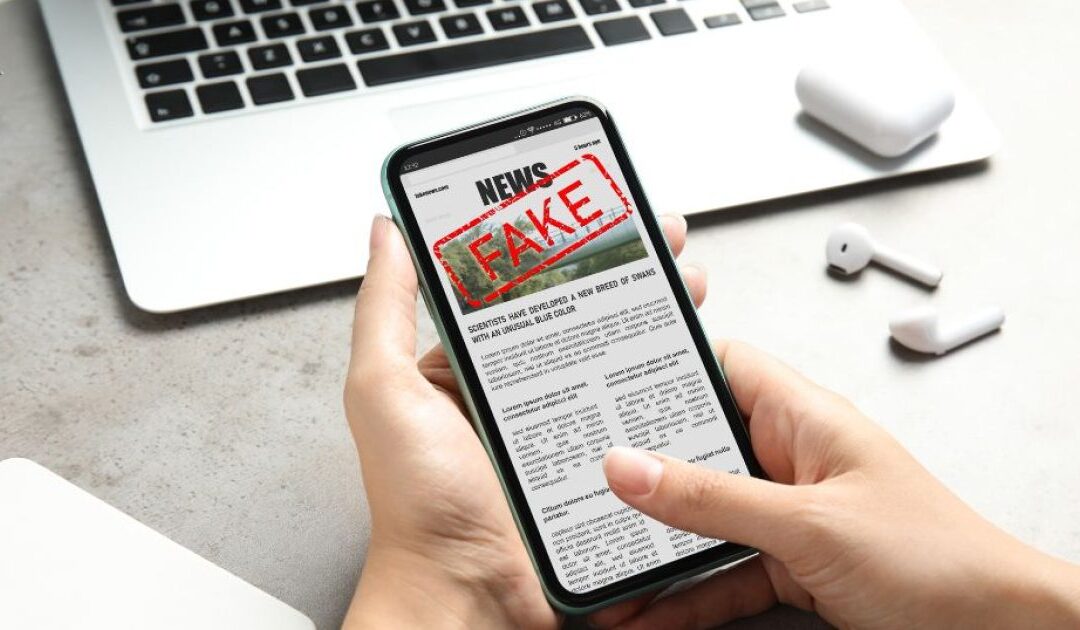
Trump Announces That the FCC, Under Brendan Carr, Will Review Licenses of Corrupt Networks for ‘Fake News’ in Coverage of the War with Iran
March 16, 2026
‘TRIANGLES’: DOJ-Released Files Show Disgraced Former British Ambassador to the US, Peter Mandelson, Getting Illegal Drugs and Botox From Jeffrey Epstein
March 16, 2026
Mandelson and Epstein living the life – Photo released by DOJ
The fallout from the ‘Epstein files’ was particularly hard on former Labour peer Peter Mandelson.
While British elite member ‘Petie’ felt he was powerful and untouchable over his Jeffrey Epstein ties, the reality proved much different.
Mandelson was fired from his US ambassadorship, had to resign from the Labour Party and the House of Lords, his consulting firm collapsed, and to top it all, he was arrested over his Epstein ties, as he is criminally investigated for ‘Misconduct in Public Office’.
And, as bad as things already are, the revelations keep popping up from the documents released by the US DOJ.
Mandelson pictured in his underwear in Epsteins NY townhouse – photo released by US DOJ
Now, a report, appearing first on the Daily Mail, shows how late pedophile Epstein allegedly supplied illegal drugs and Botox to Mandelson.
“Messages show the two men discussing the use of anti-anxiety pill Xanax, with Mandelson relying on his disgraced friend for medical advice, according to the Mail on Sunday.
In the UK, Xanax is a Class C controlled substance, making it illegal to buy or supply. It is also controlled in the US due to the risk of addiction.”
Xanax. Valium. Ketamine. Vicodin. Oxycodone.
That’s a potent chemical cocktail of powerful sedatives and opioids.
The DOJ released emails where Mandelson and Epstein discuss ‘triangles’ – a nickname for Xanax due to their shape – while he was a UK cabinet minister.
“One exchange shows Epstein asking Mandelson: ‘feeling bettter [sic]?’ Mandelson, who was then serving in government as the UK’s business secretary, responds by asking: ‘How will I get more triangles ?!’”
Mandelson and his ‘best pal’ Epstein shopping in the US Virgin Islands – Image released by US DOJ
The late Epstein victim Virginia Giuffre spoke about the use of Xanax by Epstein.
In other email, Epstein and Mandelson discuss organizing Botox injections for Mandelson ahead of his official trip to New York.
“The sex offender suggests ‘face and neck’ on a Wednesday, before Mandelson provides times when he is free and asks: ‘Do you think I should ??’ Epstein replies: ‘botox first step.’”
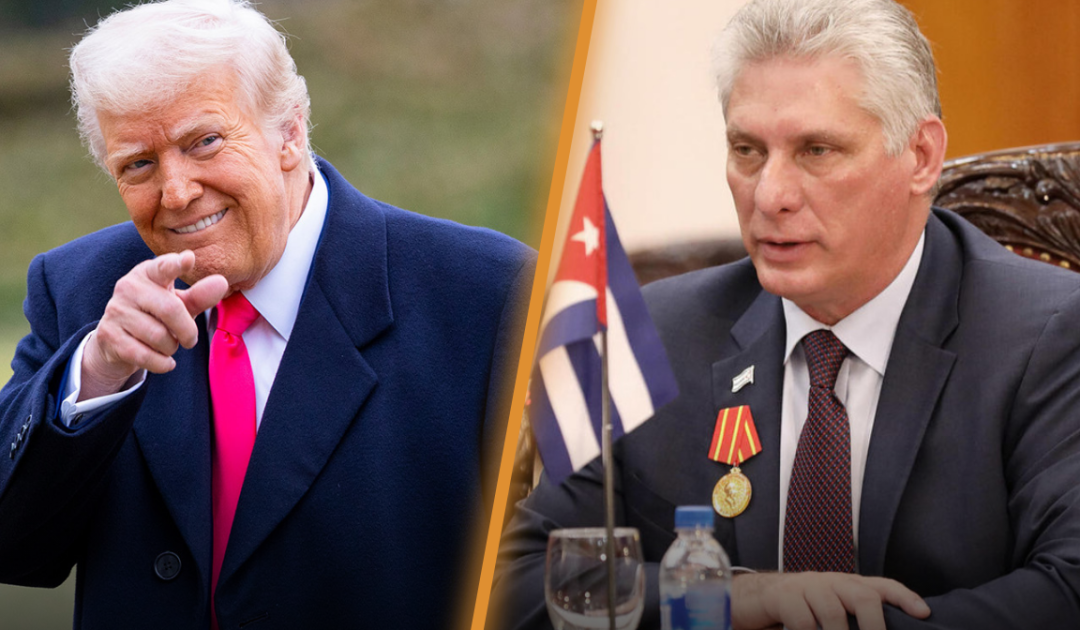
Cuba Didn’t FAFO: The Regime Folded WITHOUT Any Pressure
March 16, 2026
WATCH: Before the Pressure Even Started, Cuba Folded
On this episode of The Patriot Perspective, we focused on a major shift in the Western Hemisphere: Cuba’s decision to negotiate with the United States after President Donald Trump made clear that he was willing to escalate pressure on the regime.
The central point of the discussion was simple. Cuba did not move toward negotiations because conditions improved.
Cuba moved because the regime understood that Trump was serious and because the country is already in an extremely weak position.
There may not have been direct military pressure on Havana at the moment, but the episode argued that a regime does not need American troops on its shores to feel cornered.
It only needs to see that its economic lifelines are shrinking, its allies are weakening, and its own people are growing more frustrated.
The conversation began with Cuba’s internal condition. The country is already facing severe economic problems, including blackouts, energy shortages, food rationing, deteriorating infrastructure, and limited access to basic necessities.
Those are not abstract economic indicators. Those are daily failures that affect whether people can keep the lights on, get hot water, or find enough food and medicine.
The episode made the case that those weaknesses have left the Cuban government with very little room for error.
A regime that cannot provide stability at home becomes much more vulnerable when outside pressure increases.
That is where Venezuela entered the discussion. For years, Cuba relied heavily on Venezuela as a major partner, particularly for oil and broader economic support.
That relationship helped keep Havana afloat even while the domestic economy continued to deteriorate.
Now, according to the argument laid out in the episode, Trump’s broader regional strategy has changed that equation.
As Venezuela loses strength and as the United States gains more leverage over trade in the region, Cuba has lost one of its most important external supports.
That was one of the most important points in the episode. Cuba did not fold in isolation. Cuba folded after watching the regional environment shift against it.
The discussion also emphasized the deeper failure of the Cuban system itself.
Cuba is geographically well-positioned, rich in tourism potential, close to the United States, and naturally capable of serving as a major Caribbean economic hub. Yet despite those advantages, the country remains trapped in chronic decline.
The argument presented was that this failure is the product of a corrupt and repressive government that controls resources through a state-connected elite while ordinary Cubans deal with scarcity and stagnation.
When a country with that much potential remains in visible decline, the problem is not geography. The problem is governance.
The episode then widened into a broader strategic point.
Trump’s interest in Cuba is not only about Cuba itself. It is about reasserting American strength in its own hemisphere and reducing the influence of hostile or destabilizing regimes close to U.S. territory.
Under that framework, Cuba becomes part of a larger effort to reshape the balance of power in the region and to prevent anti-American governments from maintaining a foothold near the United States.
The episode closed with a broader conclusion about deterrence. Trump’s rhetoric, the argument went, is effective because adversaries increasingly believe that he is willing to follow through.
Cuba’s move toward negotiation was framed as proof that even a regime that has survived for decades can reconsider its position when it sees that the cost of resistance may keep rising.
As we concluded, Cuba folded not because the pressure was overwhelming in a single dramatic moment, but because the regime saw its weakness, its isolation, and realized that Trump was not bluffing.
The Patriot Perspective has recently switched its main platform from Rumble to YouTube, and we would greatly appreciate it if our old subscribers wouldsubscribe to us there.[HERE]
‘Prerequisite to ending wars is the uprooting of the Ayatollah regime,’ Says Retired Israeli Ambassador
March 16, 2026
Image: Wikimedia Commons (Department of Defense Photo, 2 March 2026)
Many individuals and lawmakers on both sides of the aisle are saying that President Donald Trump promised there would be no new wars. Yet, for the past two weeks, the U.S. and its ally Israel have targeted around 15,000 sites within Iran.
It is true that during his November 2024 election night victory speech, Trump stated, “I’m not going to start a war. I’m going to stop wars.” Two months later, during his inaugural speech, he reiterated, “We will measure our success not only by the battles we win but also by the wars that we end – and perhaps most importantly, the wars we never get into.”
Then, on February 28, 2026, the U.S. launched a major military campaign against Iran known as Operation Epic Fury. This has stirred up quite a commotion among his MAGA supporters and Republican lawmakers. Even well-known podcaster Joe Rogan has chimed in, asserting that Trump supporters ‘feel betrayed’ by the ‘insane’ war in Iran.
Are they overlooking the underlying reasons, the rationale behind Trump’s decision-making, perhaps?
The Gateway Pundit spoke to Yoram Ettinger, a retired Israeli ambassador and former Minister for Congressional Affairs at Israel’s Embassy in Washington, D.C., who said, “Yes, they are.”
He explained, “The prerequisite to ending wars is the uprooting of the Ayatollah regime.”
Since 1979, he said, the Iranian regime has been “a chief epicenter of anti-U.S. terrorism, civil wars, drug trafficking and money laundering in the Middle East, Africa, Latin America, and U.S. soil.”
Ettinger argued that “refraining from regime change in Iran would severely erode the U.S. posture of deterrence.” However, a change in regime would dismantle and reject the Ayatollah’s ideology across educational, constitutional, political, and military domains.
Not achieving a comprehensive regime change would, in Ettenger’s opinion, encourage China in the Pacific Basin, Latin America, Africa, and the Middle East; Russia in the Baltic region and Eastern Europe; and Turkey in pursuing President Recep Tayyip Erdoğan’s ambition to revive the Ottoman Empire. He contended that all these factors would “erode” the condition of the U.S. economy, as well as national and homeland security.
Furthermore, he believes that “Trump understands that abandoning the goal of overthrowing the regime would undermine the Abraham Accords, making Muslim nations less inclined to engage.”
These joint normalization agreements, which were established between Israel and a number of Arab countries—including the United Arab Emirates, Bahrain, Sudan, and Morocco—were facilitated by the Trump administration during his first term in office in 2020.
Most critically, Ettinger contended that “neglecting the U.S. commitment to dismantling the Iranian regime would lead to the emergence of the first- ever apocalyptic nuclear power, inflicting devastating consequences on humanity that would far exceed the highest costs previously associated with regime change.”
JUST IN: President Trump Announces White House Chief of Staff Susie Wiles Diagnosed with Breast Cancer
March 16, 2026
President Trump on Monday announced White House Chief of Staff Susie Wiles has been diagnosed with early stage breast cancer.
Trump said Susie Wiles will immediately begin treatment and will be working full time at the White House.
“Susie Wiles is an incredible Chief of Staff, a great person, and one of the strongest people I know but, unfortunately, she has been diagnosed with early stage breast cancer, and has decided to take on this challenge, IMMEDIATELY, as opposed to waiting,” Trump said on Truth Social.
“She has a fantastic medical team, and her prognosis is excellent! During the treatment period, she will be spending virtually full time at the White House, which makes me, as President, very happy!” Trump said.
“Her Strength and her Commitment to continue doing the job she loves, and does so well, while undergoing treatment, tells you everything you need to know about her,” Trump said.
“Susie, as one of my closest and most important advisors, is tough and deeply committed to serving the American People. She will soon be better than ever! Melania and I are with her in every way, and we look forward to working with Susie on the many big and wonderful things that are happening for the benefit of our Country!” Trump said.
In November 2024, Trump named Susie Wiles as his Chief of Staff.
Susie Wiles serves as Trump’s 2024 campaign manager.
She is the first woman to serve as a White House Chief of Staff.
“Susie Wiles just helped me achieve one of the greatest political victories in American history, and was an integral part of both my 2016 and 2020 successful campaigns,” Trump said in a statement in November 2024.
“Susie is tough, smart, innovative and is universally admired and respected. Susie will continue to work tirelessly to Make America Great Again,” Trump said.
“It is a well deserved honor to have Susie as the first-ever female Chief of Staff in United States history. I have no doubt that she will make our country proud,” Trump said.
We use technologies like cookies to store and/or access device information. We do this to improve browsing experience and to show (non-) personalized ads. Consenting to these technologies will allow us to process data such as browsing behavior or unique IDs on this site. Not consenting or withdrawing consent, may adversely affect certain features and functions.
Functional
Always active
The technical storage or access is strictly necessary for the legitimate purpose of enabling the use of a specific service explicitly requested by the subscriber or user, or for the sole purpose of carrying out the transmission of a communication over an electronic communications network.
Preferences
The technical storage or access is necessary for the legitimate purpose of storing preferences that are not requested by the subscriber or user.
Statistics
The technical storage or access that is used exclusively for statistical purposes.The technical storage or access that is used exclusively for anonymous statistical purposes. Without a subpoena, voluntary compliance on the part of your Internet Service Provider, or additional records from a third party, information stored or retrieved for this purpose alone cannot usually be used to identify you.
Marketing
The technical storage or access is required to create user profiles to send advertising, or to track the user on a website or across several websites for similar marketing purposes.