The most brutal loss the US men’s team defeating Canada in overtime at the Olympics in February.
The US men’s hockey team won its first gold medal in in 46 years!
President Donald Trump spoke from the White House to the U.S. Olympic men’s hockey team Sunday after their thrilling 2-1 overtime victory over Canada to win the gold medal in Milan, Italy.
Wild smartphone video shows the raucous team in the locker room being addressed by Trump over a phone held by FBI Director Kash Patel.
While he repeatedly praised the whole team, Trump singled out Connor Hellebuyck several times for praise, saying he wants to shake his hand.
In the midst of congratulating the team, Trump asked them if they want to come to the State of the Union address on Tuesday, saying he can arrange a “military plane or something” to get the team to D.C. The team enthusiastically accepted and asked if they can be picked up in Miami Tuesday morning.
Patel told Trump, “I got it, Boss, I got it… I’m f***ing on it” and he is “driving the bus” to get them to D.C.
Assessing Iran’s Ability to Hold the World’s Oil Supply Hostage
March 15, 2026
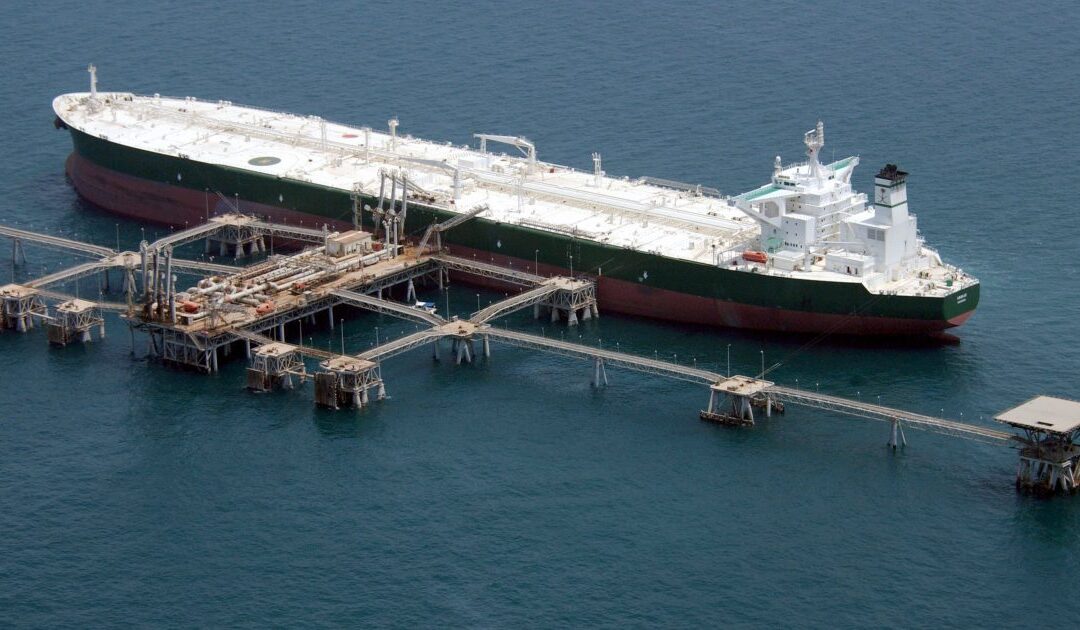
Commercial oil tanker Abqaiq readies itself to receive oil at the Mina al-Bakr Oil Terminal (MABOT). U.S. Navy photo by Photographer’s Mate 2nd Class Andrew M. Meyers. Public domain, via Wikimedia Commons.
Iran’s Foreign Minister Abbas Araghchi stated on March 14, 2026, that the Strait of Hormuz is open to all countries except the United States and Israel, describing it as closed only to “tankers and ships belonging to our enemies, to those who are attacking us and their allies.”
The statement came immediately after U.S. strikes on Kharg Island, Iran’s main oil export hub. The regime derives most of its revenue from oil exports.
Iran earned $65.8 billion from oil, petroleum products, and gas exports in the last fiscal year, while total government revenues were projected at around $45 billion, meaning oil export earnings alone exceed the entire state budget.
Iran sells about 80 percent of its oil to China. Beijing depends on discounted Iranian crude to reduce manufacturing costs. Iranian crude has traded at around $8 per barrel below Brent.
This discount helps lower production costs at a time when export volumes are at record highs but profit margins have collapsed.
The share of loss-making Chinese manufacturers has doubled since 2018, and producer prices have fallen continuously for more than three years.
While Iran attempts to hold the world’s oil supply hostage, the war is also restricting Iran’s ability to export oil. Iran has sent at least 11.7 million barrels of crude oil through the Strait of Hormuz since the war began on February 28, all destined for China.
However, shipments of approximately 1.22 million barrels per day are significantly lower than pre-war levels. Iran had exported 2.16 million barrels per day in February, the highest level since July 2018.
Iran’s only alternative export outlet, the Jask facility on the Sea of Oman, which bypasses the Strait entirely, has rarely been used. Loading a single Very Large Crude Carrier can take up to 10 days there, compared to one or two days at Kharg Island, making it logistically marginal.
The U.S. struck more than 90 military targets on Kharg Island, destroying naval mine storage facilities and missile storage bunkers, but deliberately preserved the oil infrastructure.
President Trump wrote on Truth Social, “For reasons of decency, I have chosen NOT to wipe out the Oil Infrastructure on the island.” Trump added, “However, should Iran, or anyone else, do anything to interfere with the Free and Safe Passage of Ships through the Strait of Hormuz, I will immediately reconsider this decision.”
Kharg Island processes 90 percent of Iran’s crude exports. A CIA document from 1984 described the facilities as “the most vital in Iran’s oil system, and their continued operation is essential to Iran’s economic well-being.”
Although some people want to believe that Iran is in a position of advantage, it would be extremely easy for President Trump to crash Iran’s economy and take a chunk of China’s economy with it.
Iran’s social-media propaganda accounts are claiming that the IRGC will allow safe passage for tankers whose oil was paid for in Chinese yuan. Accounts supporting the regime are portraying this as the death knell of the petrodollar and claiming that America’s economic power is collapsing.
However, the yuan proposal is largely propaganda and de-dollarization signaling. Iran floated the idea, China’s own analysts warned against it, no country has formally agreed to the condition, and the few ships that have actually passed did not price their cargo in yuan.
The U.S. 5th Fleet, based in Bahrain, is already conducting operations against Iranian threats in the area. At the same time, Iranian missile and drone strike volumes are down 92 percent since the conflict began.
A JINSA report from March 5 stated that approximately 75 percent of launchers were destroyed. Analysts attribute the decline to U.S. and Israeli strikes on launch infrastructure, underground facilities at Esfahan and Ahvaz, airbases, and production sites.
The drone picture, however, is different. Iran’s production capacity before the war was reportedly about 10,000 units per month, leading analysts to believe that Iran could sustain drone harassment in the Strait of Hormuz for months.
However, it is unlikely that Iran is still operating at pre-war production levels. CENTCOM confirmed that it continues to strike Iran’s industrial base, including factories and weapons warehouses.
Even before the war, Iran faced its most severe energy crisis in decades, with frequent power outages and disruptions to natural gas supplies. In summer 2024, Iran’s electricity shortage was estimated at 14,000 megawatts, equivalent to roughly twice the total electricity production of Azerbaijan.
The 12-day war in June 2025 damaged oil storage sites, refineries, and power stations. A year earlier, Israel blew up two major Iranian gas pipelines, disrupting supplies that provide roughly 70 percent of the country’s energy. More than 86 percent of Iran’s electricity comes from gas-fired plants, leaving the country dangerously exposed.
Even before the latest attacks, shortages of natural gas forced authorities to burn mazut, a cheap and highly polluting heavy fuel oil, to keep power plants running.
The initial U.S. and Israeli strikes on February 28 targeted Iranian oil refineries and export terminals alongside military sites, hitting Iran’s own production capacity in the opening hours.
By March 5, the combined U.S.-Israeli force had advanced to a second phase specifically targeting Iranian defense-industrial assets, including missile and drone production facilities.
The IDF issued evacuation warnings for the Abbas Abad Industrial Zone and Shenzar Industrial Zone in Pakdasht, Tehran Province, both key defense-manufacturing areas.
While America-haters are celebrating the IRGC taking such a staunch position against the United States and Israel, the threat has limited practical effect on its stated targets.
The United States imports only about 0.5 million barrels per day from the Persian Gulf, roughly 7 percent of total U.S. crude imports and about 2 percent of overall petroleum consumption, with the vast majority coming from Canada and Mexico.
Israel does not import Persian Gulf crude and has no Israeli-flagged commercial vessels transiting the strait. Nearly all Hormuz oil flows to Asia. China accounts for approximately 38 percent, with India, South Korea, and Japan taking most of the remainder.
In a further blow to Iran’s attempted global oil blockade, Saudi Arabia converted the East-West Pipeline to full capacity on March 11 in response to the Hormuz closure.
Saudi Aramco CEO Amin Nasser confirmed the pipeline will reach its maximum capacity of seven million barrels per day within days, and ship-tracking data shows 27 very large crude carriers heading to Yanbu, with 11 already waiting to load. Yanbu exports have surged to 2.47 million barrels per day, a 330 percent increase over pre-war levels. (S&P Global, March 10, 2026)
The pipeline is a genuine strategic asset but does not eliminate Iran’s leverage over Gulf energy. Saudi Arabia exported 6.3 million barrels per day of crude last year, while the Yanbu facility can handle only about 4.5 million barrels per day, leaving a significant gap.
The shift to the Red Sea creates a new vulnerability, as oil bound for Asia must pass through the Bab el-Mandeb, the strait the Houthis made largely impassable in 2023. So far, however, the Houthis have remained out of the conflict. (Middle East Eye)
The pipeline moves crude, not refined products, and Iran’s drone strikes forced Aramco’s Ras Tanura refinery, Saudi Arabia’s largest at 550,000 barrels per day, offline on March 2, leaving refined fuels stranded regardless of pipeline capacity.
Iraq, Kuwait, Qatar, and Bahrain have no bypass options at all. Iraq’s southern output has fallen roughly 70 percent, from 4.3 million to 1.3 million barrels per day, and Kuwait has begun shutting in production as storage fills with no export route available.
The United States and Israel will continue targeting Iran’s drone and missile launch sites as well as its manufacturing facilities in order to reduce the threat to international shipping. At the same time, Iran’s own exports are declining and could be driven to near zero should President Trump decide to destroy all of the refineries and ports.
Meanwhile, some countries will find ways to bypass Iranian blockades. Furthermore, holding the world hostage is not endearing Iran to its neighbors. Despite its massive propaganda machine, Iran is unlikely to garner international support for its defense.
On the whole, the U.S. position appears much stronger than Iran’s, whose position is growing weaker each day.
Interior Secretary Doug Burgum on Securing Billions of Dollars in Energy Deals – “They all Want to Have Energy Security. They See the US as a Reliable Partner” (VIDEO)
March 15, 2026
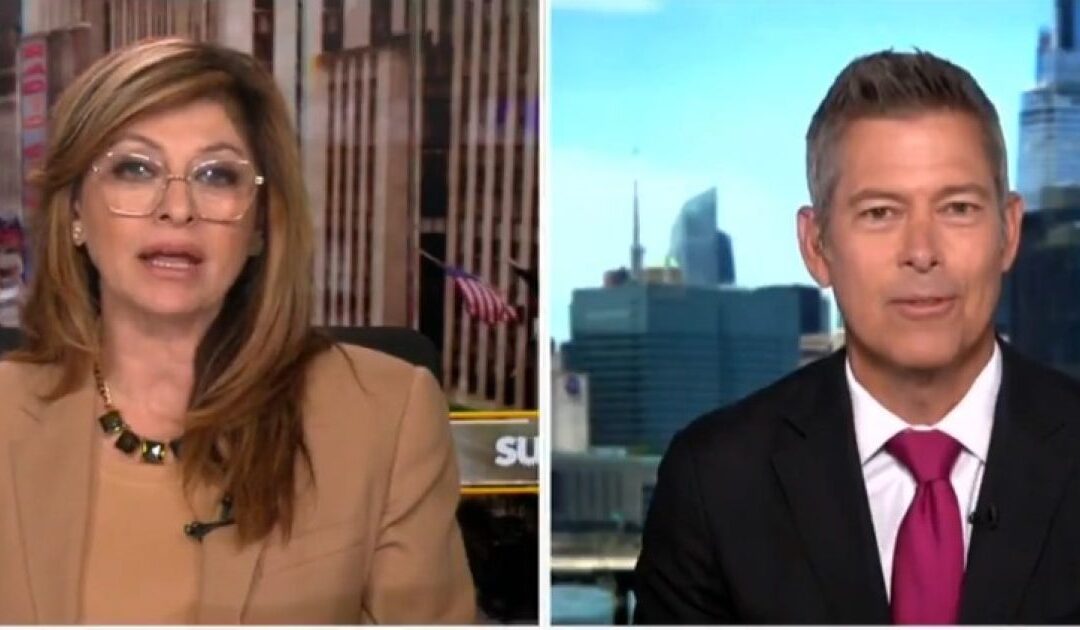
Interior Secretary Doug Burgum was on “Sunday Morning Futures” with host Maria Bartiromo to discuss billions of dollars in energy deals that were secured.
“Joining me now from in this Sunday Morning Futures exclusive, live from Japan for talks about energy security with Indo-Pacific allies is the US Interior Secretary Doug Burgum, who has just locked up some 57 billion dollars in some 20 new deals with Asian partners around energy security,” Bartiromo said.
“Let me ask you about the Strait of Hormuz. Will Japan send ships to the Middle East to join this fight and stop Iran from holding up the Strait of Hormuz?” Bartiromo asked.
“Those discussions will lead to who eventually wants to participate in a task force to ensure freedom of navigation,” Burgum said.
“Certainly, there is a motivation for countries. Japan itself, I mean, this is a country of 120 million people. 93 percent of the oil that they receive comes through the Strait of Hormuz,” Burgum continued.
“There is a deep, vested interest in these countries participating,” Burgum said.
“I know that you’ve got a huge update to share with us. How many deals have you done? Is it 56 billion dollars in total? And what specifically are these deals about?” Bartiromo asked.
“I think we had one more after the conference closing. We went from 56 billion to 57 billion over 22 deals,” Burgum said.
“This conference was planned months ago, completely independent of anything going on in the Middle East, because this is President Trump’s energy dominance policy. It’s about the fact that we need to sell energy to our friends and allies so they don’t have to buy from adversaries,” Burgum explained.
“They all want to have energy security. They see the US a reliable partner. They see us now as the number one oil producer, number one gas producer,” Burgum continued.
“Are these largely private sector deals?” Bartiromo asked.
“Are you expecting that the US will be selling oil and gas to Japan?” Bartiromo asked.
“Yes, Japan wants to buy more energy from the US,” Burgum said.
Transportation Secretary Sean Duffy on Partial Government Shutdown Affecting Airport Travel (VIDEO)
March 15, 2026
Transportation Secretary Sean Duffy was on “Sunday Morning Futures” with host Maria Bartiromo to talk about how the partial government shutdown is affecting airport travel. Many TSA agents have quit and others have called off, which has made wait times at airports last potentially for hours.
“Can you give us the impact of this 30-day shutdown of the Department of Homeland Security?” Bartiromo asked.
“As you mentioned, TSA agents have missed a partial payment. They just missed a full payment. These are men and women who don’t make a lot of money, and so some of them are making choices to go, you know, whether they are driving Uber or you know, waiting tables. They have to put food on their family’s table,” Duffy said.
“These places where this is happening, you are seeing really long lines, whether they are one hour, three to four hour lines at airports,” Duffy continued.
“You can thank a Democrat who cares more about making sure that the 15 million people that they let into this country under Joe Biden, that we don’t have ICE that can actually look across the country, find those radical elements who have come into the country, by the way, without being vetted, find them and deport them,” Duffy continued.
“Open up DHS, and then have a negotiation, have a conversation, but in the process, don’t hold America hostage to just get what you want,” Duffy said of Democrat leaders.
“I wanna get your take on the long-term impact of this?” Bartiromo asked.
“There are long-term impacts to the employees that work for the Department of Homeland Security, the employees at TSA. Are they, those who left the job, are they coming back? What are you going to do in terms of the work force?” Bartiromo asked.
“First of all, three hundred TSA agents have quit. The number of call outs are double what they were before,” Duffy said.
“We want a smooth aviation system and aviation is split up between Homeland Security and us at the FAA and DOT, and it all has to work together to make your flying experience better,” Duffy explained.
“If you stand in line for again, for multiple hours, you might make a choice not to fly,” Duffy said.
“What are you doing to ensure that we’ve got safe situation to fly, while also trying to cut back and deal with the reality of a lot fewer people on the job?” Bartiromo asked.
“The line is long because they have less people and it takes longer to actually screen them, so it’s not impacting safety and security at the airport, it’s just your time at the airport,” Duffy explained.
Secretary Duffy called out the Democrats and said their motive to shut down DHS was to get ICE agents to take off their masks. This would allow the left to dox and harass agents and their families.
“Going back to Democrats. You know what they really want? They want to make sure ICE agents take off their masks. Why? So, they can dox them, they can harass them, they can go to their house, to their children, to their spouses,” Duffy said.
Kayleigh McEnany Lays Out the Money Trail — Obama and Biden Showered Iran With Billions While Tehran Built Its Nuclear Program
March 15, 2026
Screenshot: Fox News
The Left and their media allies want Americans to forget how the Iranian regime was empowered in the first place.
But former White House Press Secretary Kayleigh McEnanyrecently walked viewers through the timeline, and the receipts, showing how the Obama-Biden foreign policy machine sent billions to the world’s leading state sponsor of terrorism.
McEnany recently walked viewers through what she described as a troubling financial trail that began with the Obama administration’s controversial nuclear agreement with Iran, the Joint Comprehensive Plan of Action.
McEnany’s breakdown begins with the 2015 Iran nuclear deal, where Barack Obamapromised Americans that sanctions relief would not strengthen the radical regime in Tehran.
Speaking in 2015 while defending the deal, Obama acknowledged that Iran would gain access to tens of billions of dollars in previously frozen assets.
“It is true that if Iran lives up to its commitments, it will gain access to roughly $56 billion of its own money, revenue frozen overseas by other countries,” Obama said at the time.
“Our best analysts expect the bulk of this revenue to go into spending that improves the economy and benefits the lives of the Iranian people.”
But the controversy only intensified a year later.
In January 2016, the Obama administration secretly airlifted $400 million in cash to Iran, reportedly delivered in pallets of foreign currency. The transfer happened the same day Iran released several detained Americans, raising immediate questions about whether the payment functioned as leverage or ransom.
CNN itself acknowledged the timing sparked outrage and speculation that the payment and hostage release were linked.
At the time, administration officials denied any quid pro quo.
The story did not end with the $400 million.
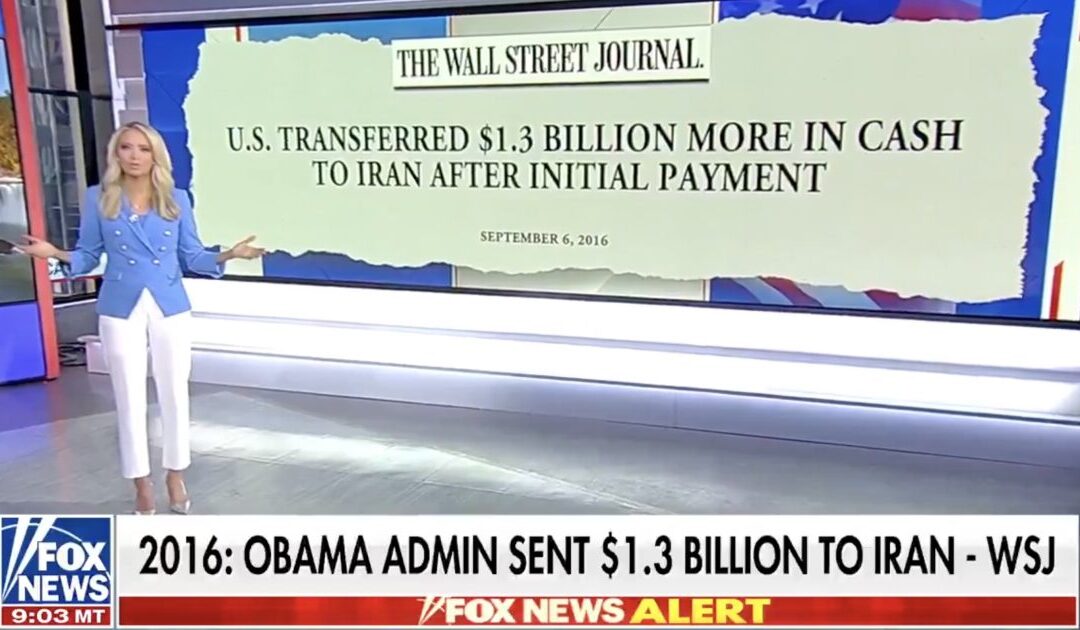
Within weeks, reports revealed the United States also transferred additional payments totaling about $1.3 billion in interest, bringing the total settlement to roughly $1.7 billionconnected to a decades-old arms dispute dating back to before the 1979 Iranian revolution.
McEnany summarized the situation bluntly:
“$400 million was just the tip of the iceberg… the Obama White House sent three different payments to Iran totaling $1.3 billion.”
When confronted about the payments during a CNN interview, then-Deputy Secretary of State Antony Blinkeninsisted the arrangement had nothing to do with hostage negotiations.
“No,” Blinken said when asked whether the money was a quid pro quo. “Absolutely.”
Fast-forward to 2023, and the controversy returned under the Biden administration.
The White House approved access to $6 billion in frozen Iranian money, claiming it was restricted to humanitarian purposes.
State Department spokesman Matthew Millerdefended the move, saying the funds technically belonged to Iran.
“Even as we allowed them to have access to this humanitarian funding… we have made clear that we will continue to hold them accountable.”
But Iran’s leadership didn’t see any restrictions.
Iranian President Ebrahim Raisiopenly declared the regime would spend the money however it wanted.
“This money belongs to the Islamic Republic of Iran… and naturally we will decide to spend it wherever we need it.”
However, Blinkin admitted that Iran “has unfortunately always used and focused its funds on supporting terrorism.”
While billions flowed into Tehran over the years, Iran continued expanding its nuclear program and strengthening its military capabilities.
McEnany noted that the situation finally changed when President Donald Trumptook a dramatically different approach, abandoning Obama’s nuclear deal and authorizing aggressive action against Iran’s nuclear ambitions.
According to Trump allies, the contrast couldn’t be clearer.
For years, the Obama-Biden foreign policy establishment sent pallets of cash and billions in sanctions reliefto Tehran while promising the regime would moderate.
Instead, Iran expanded its influence across the Middle East and pushed forward with its nuclear program.
WATCH:
BREAKING: Barack Hussein Obama and Joe Biden have been EXPOSED for putting the entire world at risk due to propping up Iran
KAYLEIGH MCENANY: “A $400 million cash transfer was FLOWN out to Iran…400 million was just the tip of the iceberg. One month later, the Wall Street… pic.twitter.com/ewk5RZwklL
We use technologies like cookies to store and/or access device information. We do this to improve browsing experience and to show (non-) personalized ads. Consenting to these technologies will allow us to process data such as browsing behavior or unique IDs on this site. Not consenting or withdrawing consent, may adversely affect certain features and functions.
Functional
Always active
The technical storage or access is strictly necessary for the legitimate purpose of enabling the use of a specific service explicitly requested by the subscriber or user, or for the sole purpose of carrying out the transmission of a communication over an electronic communications network.
Preferences
The technical storage or access is necessary for the legitimate purpose of storing preferences that are not requested by the subscriber or user.
Statistics
The technical storage or access that is used exclusively for statistical purposes.The technical storage or access that is used exclusively for anonymous statistical purposes. Without a subpoena, voluntary compliance on the part of your Internet Service Provider, or additional records from a third party, information stored or retrieved for this purpose alone cannot usually be used to identify you.
Marketing
The technical storage or access is required to create user profiles to send advertising, or to track the user on a website or across several websites for similar marketing purposes.



CONGRATS BOYS pic.twitter.com/f6prT4POZ2






 BREAKING: Barack Hussein Obama and Joe Biden have been EXPOSED for putting the entire world at risk due to propping up Iran