German President Calls Trump’s Iran War “Illegal” and a “Disastrous Mistake”

German President Calls Trump’s Iran War “Illegal” and a “Disastrous Mistake”

German President Calls Trump’s Iran War “Illegal” and a “Disastrous Mistake”
March 24, 2026

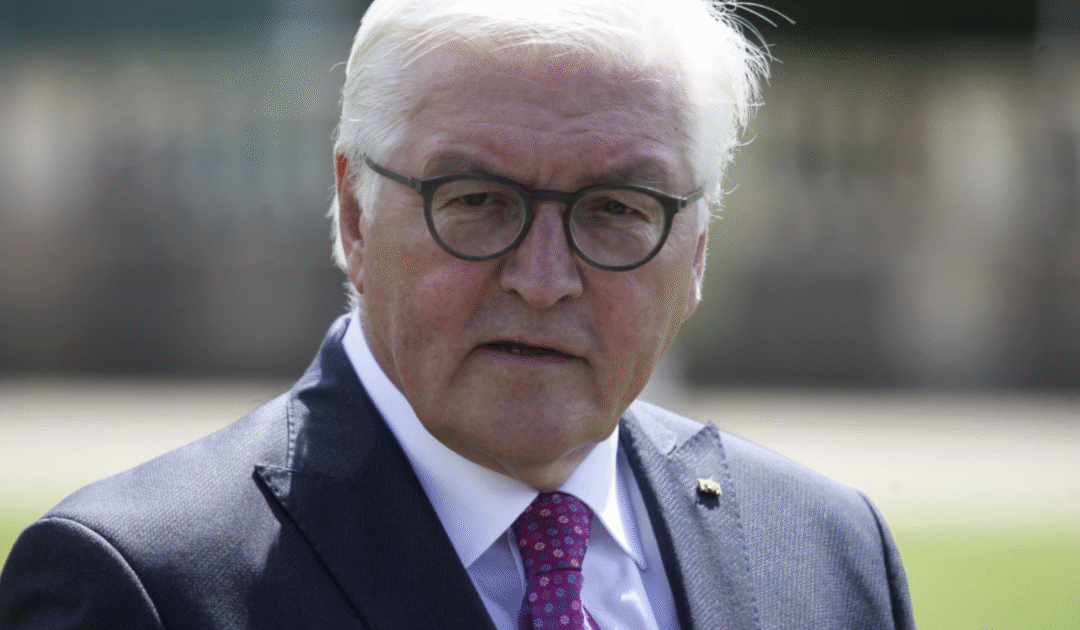
German President Frank-Walter Steinmeier via pxhere

A sharp and unusually public rift has opened in transatlantic relations, as German President Frank-Walter Steinmeier delivered a blunt critique of the ongoing war with Iran, marking one of the most direct European challenges to American leadership in recent years. His remarks have ignited debate not only about the conflict itself, but about Europe’s future path in a rapidly shifting global order.

Speaking before diplomats in Berlin, Steinmeier, a member of the Social Democratic Party (SDP), described the war as a “politically disastrous mistake,” arguing that it represents a fundamental break from established norms. His tone stood out in a continent where many leaders have chosen more cautious language.

“Our foreign policy does not become more convincing just because we do not call a breach of international law a breach of international law,” Steinmeier said. He added that, in his view, the war is “contrary to international law.”

The German president went further, questioning the justification for the conflict. He argued that claims of an imminent Iranian threat to U.S. targets “did not hold water,” framing the war as avoidable rather than inevitable.

Steinmeier’s intervention is significant not because of his formal powers—which are largely ceremonial—but because of the signal it sends within Germany’s political establishment. His comments reflect growing unease across Europe as the consequences of the conflict ripple outward.

At the same time, the response from Berlin has been far from unified. Chancellor Friedrich Merz has taken a more cautious approach, avoiding explicit legal judgments while acknowledging that the war raises “major questions” about Europe’s security.

This divergence highlights a broader tension within Europe: how to balance traditional alliances with an increasingly independent strategic outlook. While some leaders remain aligned with Washington, others are beginning to openly question the costs of that alignment.

From a national-conservative perspective, the episode underscores a deeper problem—Europe’s long-standing dependence on external powers for its security and strategic direction. For decades, many European governments have relied heavily on the United States, often at the expense of their own sovereignty.

Now, voices like Steinmeier’s are calling for a recalibration. He argued that Germany must reduce its reliance on the U.S., particularly in defense and technology—areas he described as central to national power.

“Germany has to apply the lessons learned from excessive dependencies,” he said, referencing the country’s earlier reliance on Russian energy. The implication is clear: dependence, whether on Moscow or Washington, carries risks.

This shift is already being felt in economic terms. Trade patterns between Germany and the United States have come under strain, with tariffs and policy disagreements reshaping long-standing relationships.

At the same time, China has re-emerged as Germany’s leading trading partner, highlighting the complexity of Europe’s global positioning. For critics of globalization, this raises further questions about whether Europe is merely swapping one dependency for another.

Steinmeier also pointed to the technological domain as a critical battleground. He warned that Europe’s reliance on U.S.-based technology companies leaves it vulnerable, both economically and politically.

“Europe as a technology hub has talent, markets, opportunities,” he said, urging the continent to build its own capabilities rather than depend on external providers. This call aligns with a broader push among European leaders for greater digital sovereignty.

The backdrop to all of this is the war with Iran itself, which has entered a volatile phase with global consequences. Energy markets have been shaken, supply chains disrupted, and security concerns heightened across multiple regions.

For many in Europe, the conflict is not just a distant geopolitical event but a direct economic and strategic challenge. Rising energy costs and instability in key trade routes have brought the realities of global conflict closer to home.

Yet the debate unfolding in Berlin is about more than the war. It reflects a growing recognition that Europe must define its own path rather than simply follow the lead of larger powers.

Steinmeier drew a striking comparison to Germany’s break with Russia following the 2022 invasion of Ukraine. He suggested that relations with the United States may now be entering a similarly irreversible phase.

“Just as there will be no going back in relations with Russia, there will be no going back in transatlantic relations to before January 20, 2025,” he said, referring to the start of President Donald Trump’s second term.

Such language would have been unthinkable just a few years ago. It reflects the extent to which global alliances are being re-evaluated in light of shifting priorities and pressures.

Importantly, Steinmeier stopped short of directly criticizing Israel, focusing his remarks instead on broader strategic and legal concerns. This careful positioning reflects the delicate balance European leaders are attempting to maintain.

Within Germany, the president’s comments are likely to intensify domestic debate. The governing coalition itself is divided, with center-left voices more critical of the war than their conservative counterparts.

Across Europe, similar divisions are emerging. Some governments emphasize solidarity with traditional allies, while others prioritize national interests and economic stability.

From a populist perspective, this moment reinforces a key argument: that nations must retain the ability to make independent decisions based on their own interests, rather than relying on external frameworks or assumptions.

The calls for greater autonomy in defense and technology are part of a broader shift toward reasserting national control. Whether this leads to a more cohesive Europe or further fragmentation remains to be seen.

What is clear is that the war in Iran has accelerated existing trends. It has exposed vulnerabilities, tested alliances, and forced governments to confront difficult questions about their future direction.

For Germany, the challenge now is translating rhetoric into policy. Reducing dependency on the United States will require significant investment and political will—neither of which can be taken for granted.

For Europe as a whole, the stakes are even higher. The continent stands at a crossroads between continued reliance on global structures and a more self-directed path rooted in sovereignty.

As the conflict continues, the debate sparked by Steinmeier’s remarks is unlikely to fade. Instead, it may mark the beginning of a broader reassessment of Europe’s place in the world.

In that sense, the significance of his speech extends beyond immediate politics. It signals a shift in mindset—one that both supporters and critics will be watching closely in the months and years ahead.

The post German President Calls Trump’s Iran War “Illegal” and a “Disastrous Mistake” appeared first on The Gateway Pundit.

Go to Source
Author: Robert Semonsen

Mystery Drones Swarm U.S. Military Bases  (VIDEO)

Mystery Drones Swarm U.S. Military Bases (VIDEO)

Mystery Drones Swarm U.S. Military Bases (VIDEO)
March 24, 2026

Image depicting drones flying over Barksdale Air Force Base with a host discussing military technology and surveillance issues.

Mysterious drones are hovering over America’s most sensitive military sites, and no one in Washington seems willing to give you a straight answer.

Today on Stinchfield, we dig into alarming reports out of Barksdale Air Force Base, home to our B-52 bombers, where highly advanced drones have been spotted in restricted airspace. These are not hobbyists. These are sophisticated, coordinated, and potentially hostile.

So the obvious question is this. Why are they still flying? Why hasn’t the military taken them down? And who is behind them?


At one point, the threat was so serious that personnel at Barksdale were ordered to shelter in place. That alone should send chills down your spine. If the Pentagon knows what these are, they are not telling you. If they do not know, that may be even worse.

We also break down the Air Canada crash at LaGuardia, where the focus is now shifting toward the air traffic controller. Was this human error, system failure, or something deeper inside an aviation system already under strain?

And then, the story the media does not want to touch. The brutal murder of a Loyola University student allegedly at the hands of an illegal alien.

The reaction from Democrats is not just weak, it is disgraceful. Silence, deflection, and excuses while American families are left shattered.

This is about national security, accountability, and the truth they hope you never demand.

The post Mystery Drones Swarm U.S. Military Bases (VIDEO) appeared first on The Gateway Pundit.

Go to Source
Author: Grant Stinchfield

Newly Released Documents Reveal Judges Beryl Howell and Boasberg Secretly Worked with Jack Smith to Bring Charges Against President Trump

Newly Released Documents Reveal Judges Beryl Howell and Boasberg Secretly Worked with Jack Smith to Bring Charges Against President Trump

Newly Released Documents Reveal Judges Beryl Howell and Boasberg Secretly Worked with Jack Smith to Bring Charges Against President Trump
March 24, 2026

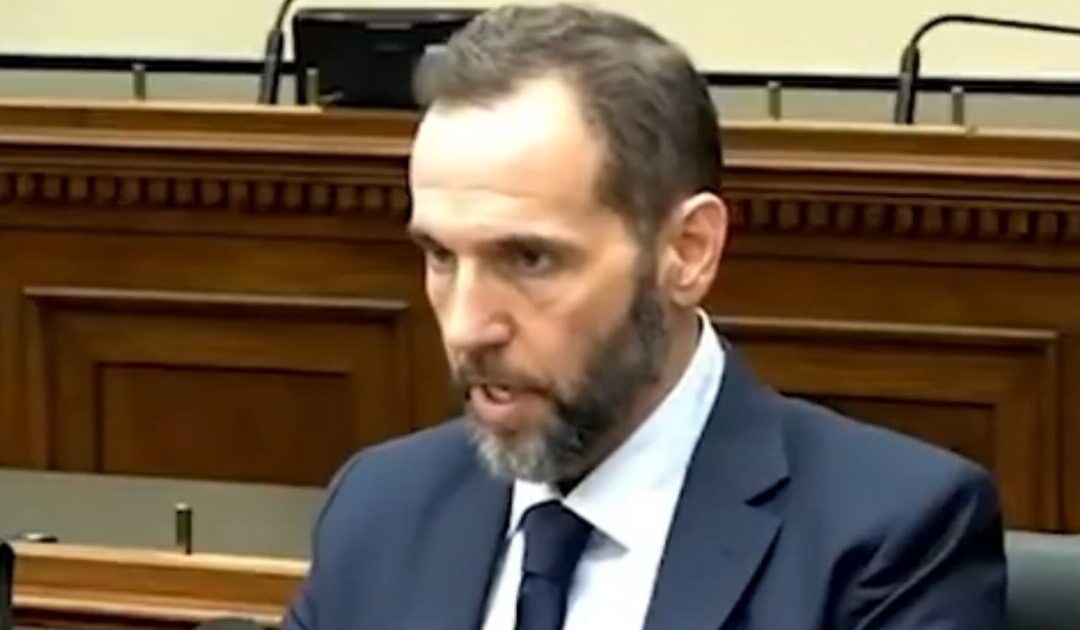
Senate Judiciary Chairman Chuck Grassley on Tuesday released Jack Smith subpoenas of FBI Director Kash Patel’s phone records.

“Jack Smith subpoenaed Verizon for roughly TWO YEARS’ worth of FBI Director Kash Patel’s private records, including his text and call logs, residential address and credit card number,” the Senate Judiciary Committee said on Tuesday.

“The records include a wish list created by Smith’s team naming 14 members of Congress for whom they wanted to seek tolling data,” Grassley said.

“Some of those members are senators on this very Committee,” Senator Grassley said.

Last month it was reported that Joe Biden’s FBI obtained phone records of Kash Patel and Susie Wiles back in 2022 and 2023 as part of Jack Smith’s investigation into classified documents lawfully stored at Trump’s Mar-a-Lago estate.

“It is outrageous and deeply alarming that the previous FBI leadership secretly subpoenaed my own phone records — along with those of now White House chief of staff Susie Wiles — using flimsy pretexts and burying the entire process in prohibited case files designed to evade all oversight,” Kash Patel said to Fox News.

Kash Patel fired at least 10 of the FBI officials involved in secretly subpoenaing his phone records.

The newly released documents reveal Judges Boasberg and Beryl Howell (both Obama appointees) secretly worked with then-Special Counsel Jack Smith to bring charges against President Trump.

Jack Smith indicted Trump on 37 federal counts in Miami in June 2023 for lawfully storing presidential records at his Mar-a-Lago estate which was protected by Secret Service agents.

Trump was charged with 31 counts under the Espionage Act of willful retention of national defense information and 6 other process crimes stemming from his conversations with his lawyer.

Judge Aileen Cannon, a Trump appointee, dismissed Jack Smith’s classified documents case in 2024.

Cannon dismissed Jack Smith’s case based on both unconstitutional elements: The appointment by US Attorney Merrick Garland and the unlimited funding given to Jack Smith – both without the approval of Congress.

The post Newly Released Documents Reveal Judges Beryl Howell and Boasberg Secretly Worked with Jack Smith to Bring Charges Against President Trump appeared first on The Gateway Pundit.

Go to Source
Author: Cristina Laila

WATCH LIVE: President Trump Participates in Ceremony to Swear in Markwayne Mullin as DHS Secretary – 1:30 PM ET

WATCH LIVE: President Trump Participates in Ceremony to Swear in Markwayne Mullin as DHS Secretary – 1:30 PM ET

WATCH LIVE: President Trump Participates in Ceremony to Swear in Markwayne Mullin as DHS Secretary – 1:30 PM ET
March 24, 2026

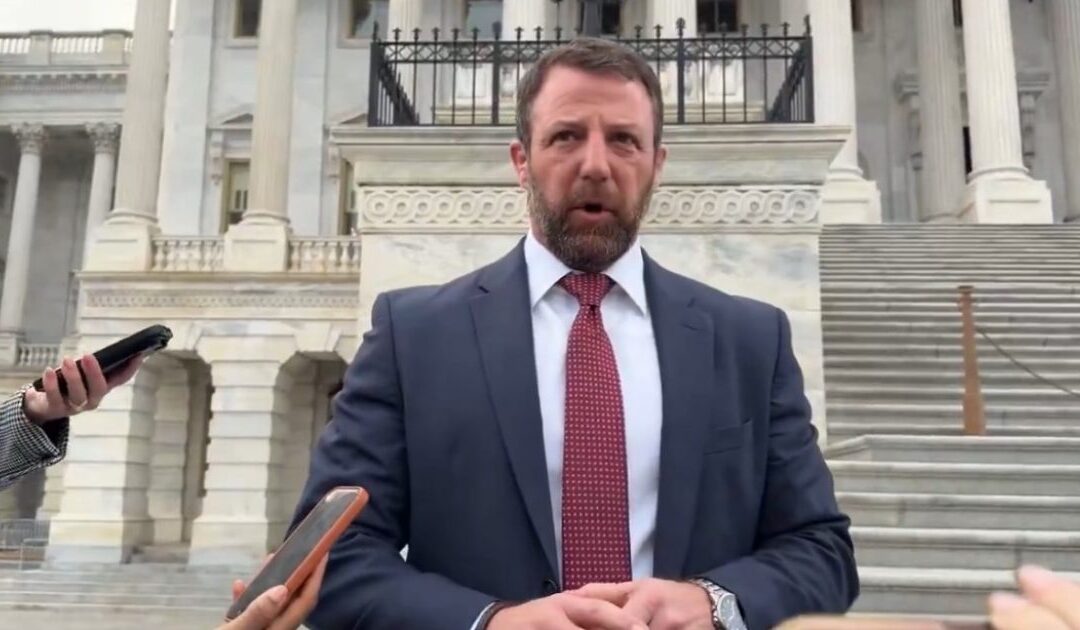
Markwayne Mullin

President Trump will participate in the swearing-in ceremony for former Senator Markwayne Mullin (R-OK) to serve as Homeland Security Secretary this afternoon. 

Mullin submitted his resignation from the US Senate on Monday after the Senate voted to confirm him as DHS Chief.

The Senate voted 54-45 to confirm Mullin to replace former DHS Secretary Kristi Noem.

JUST IN: Senate Votes 54-45 to Confirm Markwayne Mullin as DHS Chief – One Republican Votes No (VIDEO)

Trump fired Noem earlier this month and immediately announced that Mullin would become the next Secretary of Homeland Security.

The then-Senator accepted the nomination, saying he looks forward to "carrying out President Trump’s mission alongside the department’s many capable agencies and the thousands of patriots who keep us safe every day," in a statement on X:

As a kid from Westville, it has been the greatest honor and privilege to serve the people of Oklahoma for the past thirteen years in both the House and Senate.

I am grateful to President Trump for nominating me to lead the U.S. Department of Homeland Security. I look forward to earning the support of my colleagues in the Senate and carrying out President Trump’s mission alongside the department’s many capable agencies and the thousands of patriots who keep us safe every day.

President Trump ran on restoring law and order, and he quickly delivered the most secure U.S. border in American history. I look forward to supporting @POTUS’ mission to safeguard the American people and defend the homeland.

Mullin is set to be sworn in during an Oval Office ceremony at 1:30 PM ET, and he is expected to take questions alongside President Trump about Homeland Security's mission under the new leadership.

Watch live below:

The post WATCH LIVE: President Trump Participates in Ceremony to Swear in Markwayne Mullin as DHS Secretary – 1:30 PM ET appeared first on The Gateway Pundit.

Go to Source
Author: Jordan Conradson

Ron DeSantis Says He’d Have Swept GOP Primary Without Trump, Opens Door to Running in 2028 (VIDEO)

Ron DeSantis Says He’d Have Swept GOP Primary Without Trump, Opens Door to Running in 2028 (VIDEO)

Ron DeSantis Says He’d Have Swept GOP Primary Without Trump, Opens Door to Running in 2028 (VIDEO)
March 24, 2026

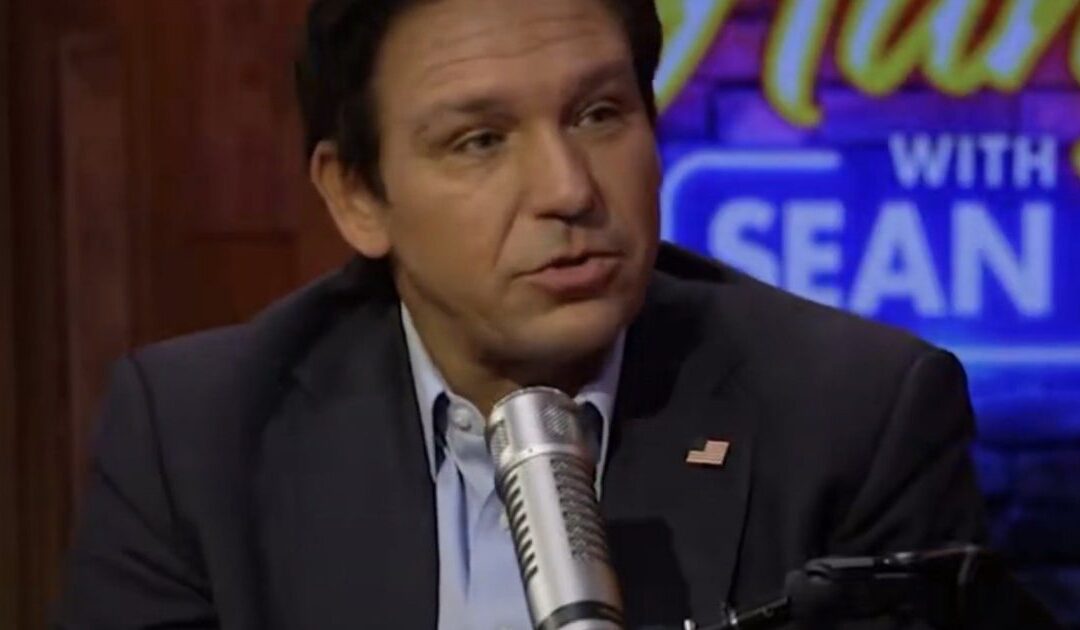
Ron DeSantis during an interview on Sean Hannity’s podcast.

Florida Gov. Ron DeSantis is signaling he may not be done with presidential politics and is making clear he believes the 2024 race would have looked very different without Donald Trump.

In a recent interview with Fox News host Sean Hannity, DeSantis declined to rule out a 2028 White House bid.

“We’ll see,” the 47-year-old governor said when asked directly whether he would run again.

DeSantis, who is term-limited and will leave office in January 2027, will exit the governor’s mansion roughly a year before the next Republican primary season begins.

His 2024 campaign ended early after a second-place finish in the Iowa caucuses, where Trump beat him by around 30 points.

Yet DeSantis argued the outcome was largely dictated by Trump’s presence in the race.

“In 2024, like in Iowa, the people that voted for Trump. If he wasn’t running, I would’ve gotten like 90 percent of those people,” DeSantis said during an appearance on the the Hang Out with Sean Hannity podcast.

“They were conservative voters, right? They didn’t want the non-conservative, they wanted me,” he added.

“The timing didn’t work out, obviously, for that.”

Watch the clip below:

After winning the 2018 gubernatorial race by under half a percentage point, DeSantis’s first term in office was so successful that he won re-election in 2022 by around 20 points.

However, polling for the 2028 Republican primary suggests a different landscape is already taking shape.

The race currently appears to be a two-horse battle between Vice President J.D. Vance and Secretary of State Marco Rubio.

According to the latest RealClearPolitics polling average, Vance remains way out in front with around 46 percent support.

Another candidate in the mix is President Trump’s son, Donald Trump Jr., although it remains unclear whether he will even put his name forward.

DeSantis, meanwhile, is polling in the single digits.

Despite those numbers, DeSantis appears to be keeping the door open and making the case that under different circumstances, he may already have been the man in the Oval Office.

The post Ron DeSantis Says He’d Have Swept GOP Primary Without Trump, Opens Door to Running in 2028 (VIDEO) appeared first on The Gateway Pundit.

Go to Source
Author: Ben Kew