Saudi Arabia Expels Iranian Diplomats Over Aggression Against Kingdom
March 22, 2026
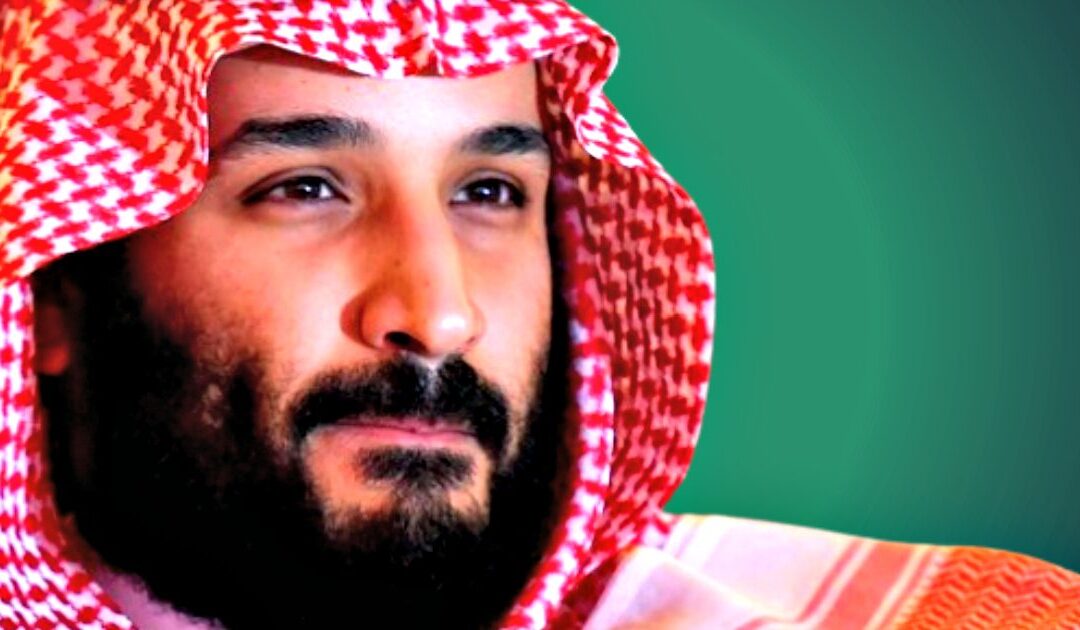
Saudi Crown Prince Mohammed bin Salman
Saudis have had enough of Iran’s strikes.
The Iranian strategy of firing its missiles against the Gulf countries because of their collaboration with the US-Israeli strikes threatens turning these neighboring states against the mullahs’ regime.
In the case of Saudi Arabia, the threats of military action from Riyadh have evolved into the expulsion of Iranian diplomats over the aggression against the Kingdom.
Saudi Arabia announced the expulsion of Iranian military attachés and embassy staff, declaring them persona non grata and ordering them to leave the Kingdom within 24 hours, the Ministry of Foreign Affairs said Saturday. https://t.co/vi2i1srTzH
“The Saudi Ministry of Foreign Affairs renewed the Kingdom of Saudi Arabia’s unequivocal condemnation of the blatant Iranian attacks against the Kingdom, the states of the Gulf Cooperation Council (GCC), and a number of Arab and Islamic countries.
[…] Reaffirming the ministry’s statement issued on 9th March 2026, […] the Kingdom of Saudi Arabia has notified the military attaché of the Embassy of the Islamic Republic of Iran to the Kingdom, the assistant military attaché, and three members of the mission staff to leave the Kingdom, and has declared them personae non gratae. They are required to depart the Kingdom within 24 hours.”
Iranian missile launch – Wiki Commons
The Saudi Press Agency (SPA) stated that the continued targeting by Iran ‘constitutes a flagrant violation of all relevant international conventions, the principles of good neighborliness and respect for states’ sovereignty, the Beijing Agreement, and United Nations Security Council Resolution 2817’.
“Saudi authorities warned that Tehran’s actions risk further escalation and could have lasting consequences for bilateral relations.
‘The kingdom will not hesitate to take all necessary measures to preserve its sovereignty, safeguard its security, and protect its territory, airspace, citizens, residents, and resources’, the Foreign Ministry said, citing Article 51 of the United Nations Charter, which recognizes the right to self-defense.
Since the start of the conflict involving the United States and Israel against Iran on February 28, Saudi Arabia, like other Gulf countries, has faced repeated missile and drone attacks, most of which have been intercepted by its air defense systems.”
NBC’s Kristen Welker Tries to Get Bessent with Gotcha Question Over Trump’s Harsh Mueller Death Post, But Fails Miserably (VIDEO)
March 22, 2026
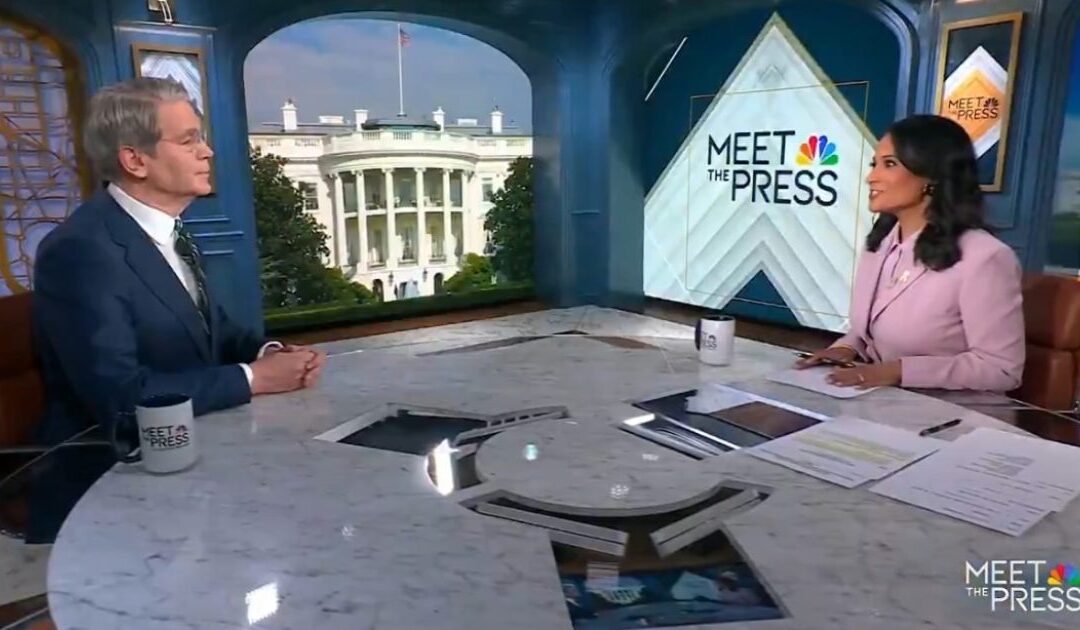
Treasury Secretary Scott Bessent appeared on NBC’s “Meet the Press” to discuss the Trump Administration’s oil sanctions amid the ongoing conflict with Iran.
At one point, Kristen Welker tried to get Bessent to condemn Trump’s social media post celebrating Mueller’s death.
Former special counsel Robert Mueller passed away on Friday.
He was 81 years old. The cause of death is not known at this time.
The New York Times previously reported that Mueller was diagnosed with Parkinson’s four years ago and has had difficulty speaking in recent months.
“Robert Mueller just died. Good, I’m glad he’s dead. He can no longer hurt innocent people! President DONALD J. TRUMP” Trump said.
Kristen Welker tried to get Bessent with a ‘gotcha’ question about Trump’s ruthless social media post on Mueller, but it failed.
“Do you think it’s appropriate for the president of the United States to celebrate the death of an American citizen, someone who is a Bronze Star, Purple Heart recipient and who served in Vietnam?” Kristen Welker asked Bessent.
Bessent pushed back and didn’t take the bait.
“Given what was done to Trump and his family, it’s impossible to understand what he went through,” Bessent said.
“I think we should have a little empathy for what has been done to Trump and his family,” Bessent said as Kristen Welker repeatedly pushed back.
“I watched the look in his eye. Neither one of us can understand what has been done to him and his family,” he said.
WATCH:
Robert Mueller served as a special counsel from May 2017 to March 2019. He indicted more than 30 people, including Trump campaign officials.
President Trump is right. Mueller hurt many innocent people.
Mueller harassed President Trump and his associates with a fishing expedition based on a phony, Hillary Clinton-funded dossier.
Here is a list of just a few of the innocent Americans Mueller hunted down:
Former Trump campaign manager Paul Manafort was indicted on conspiracy, FARA, and money laundering charges.
Former Trump campaign advisor George Papadopoulos was charged with making false statements to the feds.
Trump’s former National Security Advisor, General Mike Flynn, was indicted on making false statements to the feds after he was ambushed by FBI agents.
Trump’s former lawyer, Michael Cohen, was charged with making false statements to Congress.
Former campaign advisor Roger Stone was indicted on witness tampering charges and false statements.
After ruining countless lives, Mueller submitted his final report on his investigation into ‘Trump-Russia collusion’ and concluded that President Trump never conspired with Vladimir Putin during the 2016 election.
Trump Torches Democrats as ‘America’s Greatest Enemy’ After ‘The Death of Iran’
March 22, 2026
Screencap of Twitter/X video.
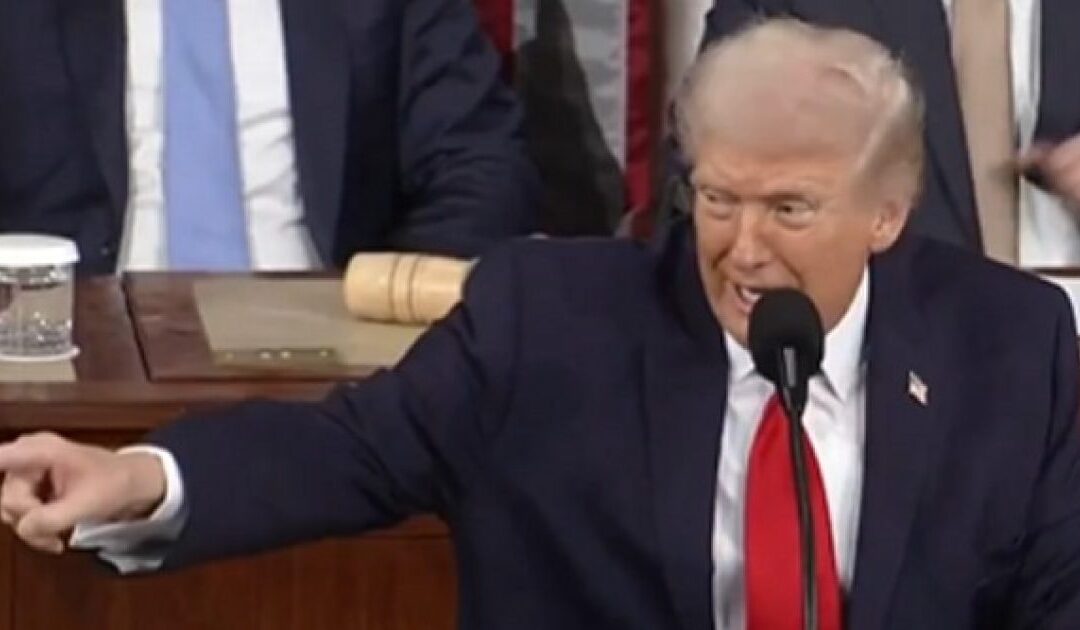
President Donald Trump took to Truth Social on Sunday to brand the “highly incompetent” Democrat Party as America’s greatest enemy following the “death of Iran.”
The statement came hours after Trump issued a direct ultimatum to Iran on Saturday night, demanding the regime fully open the Strait of Hormuz without threats within 48 hours or face devastating military strikes on its power plants.
The president wrote:
Now with the death of Iran, the greatest enemy America has is the Radical Left, Highly Incompetent, Democrat Party! Thank you for your attention to this matter. President DJT
Earlier in the day, Trump blasted the Democrats for holding up Department of Homeland Security funding, which is causing TSA officers to go without pay.
Their tantrum has caused absolute chaos in airports, with hours-long lines and nearly 400 TSA officers quitting.
Senate Democrats are actively blocking the SAVE America Act, legislation that would require proof of citizenship to register to vote in federal elections.
The bill passed the House earlier this year with strong Republican support, but Democrats have vowed to filibuster it, claiming it amounts to voter suppression.
The president vowed on Saturday afternoon that if they continued their petulant holdup, he would deploy ICE agents to airports to handle security and detain illegal aliens while they’re at it.
Trump wrote:
The Radical Left Democrats have hurt so many people with their vicious and uncaring ways. What they have done to the Department of Homeland Security, our fantastic TSA Officers, and, most importantly, the great people of our Country, is an absolute disgrace. If the Democrats do not allow for Just and Proper Security at our Airports, and elsewhere throughout our Country, ICE will do the job far better than ever done before!
The Fascist Democrats will never protect America, but the Republicans will. Just like the Radical Left allowed millions of Criminals to pour into our Country through their ridiculous and dangerous Open Border Policy, the Republicans closed it all down, and we now have the Strongest Border in American History. Likewise, I look forward to moving ICE in on Monday, and have already told them to, “GET READY.” NO MORE WAITING, NO MORE GAMES! President DONALD J. TRUMP
Cuban Regime Insists They Are ‘Prepared’ to Repel U.S. Invasion as Blackouts Grip Collapsing Communist State (VIDEO)
March 22, 2026
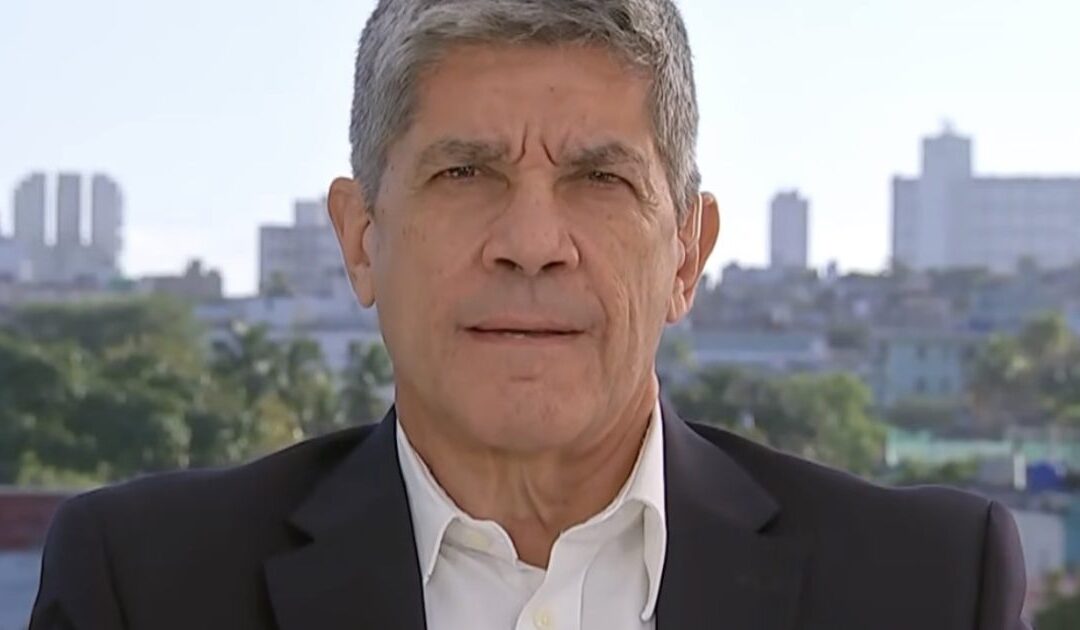
Cuba’s Deputy Foreign Minister during an interview on NBC’s Meet THe Press.
Cuba’s communist government says its military is preparing to fend off a possible military invasion as President Donald Trump escalates economic pressure on the island.
The comments were made by Cuba’s Deputy Foreign Minister Carlos Fernandez de Cossio during an interview on NBC’s Meet the Press.
“Our military is always prepared,” he said. “And in fact it is preparing these days for the possibility of military aggression.”
“We would be naive if we would not do that. But we truly hope that it doesn’t occur.”
The comments come as the Trump administration tightens sanctions, including a de facto fuel blockade that has left the island struggling to maintain basic energy supply.
Cuba has suffered repeated nationwide blackouts in recent months, including a full grid collapse last week and another major outage reported Saturday.
“It is very severe,” de Cossio said of the fuel shortages.
STRATEGIC PRESSURE: After the U.S. cut off Venezuelan oil shipments to Cuba, the island is now facing SEVERE fuel shortages and rolling blackouts.
He went on to express hope that the “boycott that the United States has been imposing does not last and cannot be sustained forever.”
Despite the worsening situation, Cuban officials ruled out any political concessions.
“The nature of the Cuban government… [is] not part of the negotiation,” De Cossio said.
The regime has released a small number of political prisoners and floated limited economic openings, but U.S. officials have dismissed those moves as insufficient.
Cuban authorities also made clear that President Miguel Díaz-Canel will remain in power.
While insisting the country is “not in a state of collapse,” De Cossio acknowledged the growing strain as fuel shortages, blackouts and economic pressure continue to mount.
“We’re being as creative as possible,” he insisted.
Earlier this week, Trump said he expected to have the “honor” of liberating the island from its communist regime.
“It’s a failed nation. They have no money, they have no oil, they have no nothing. They have nice land. They have nice landscape, you know? It’s a beautiful island. I think they have great people.”
”I think Cuba is, in its whole way, with, you know, tourism and everything else, it’s a beautiful island, great weather.”
”I do believe I’ll be the honor of— having the honor of taking Cuba. That’d be good honor, that’s a big honor.”
Trump on Cuba:
I do believe I’ll have the honor of taking Cuba. That would be good. That’s a big honor.
China’s People’s Liberation Army Watching and Learning from the U.S.-Iran Conflict
March 22, 2026
China’s People’s Liberation Army (PLA) has been watching and learning from the U.S.-Iran conflict. (Photo by Xinhua/Cheng Min)
China is studying the U.S.-Israeli war against Iran as part of a long-standing pattern of learning from American conflicts to reshape its own military strategy. Just as the 1991 Gulf War exposed the power of high-tech networked warfare and triggered decades of People’s Liberation Army (PLA) modernization, the Iran war is now being analyzed for insights into AI-driven targeting, multi-domain operations, and real-time intelligence integration.
China Military Bugle, a PLA-affiliated outlet, published five lessons from the war for domestic military audiences, an unusual public statement that serves simultaneously as a critique of the U.S., a warning against complacency within PLA ranks, and a signal to the rest of the world not to underestimate Chinese resolve.
The first lesson, labeled ‘Deadliest threat: the enemy within,’ reflects the U.S. and Israeli ability to neutralize high-value targets early in the conflict through human intelligence. Taiwan defense analyst Cheng-Yu Wu, a policy analyst at Taiwan’s Institute for National Defense and Security Research, said the efficiency of the Mossad and CIA proved the depth of infiltration within the Iranian regime.
According to Wu, this fact ‘definitely terrifies China’ because even with Chinese-exported surveillance equipment and techniques in place, the U.S. and Israel found a way to circumvent Iran’s monitoring systems. The lesson reinforces Beijing’s longstanding concern about internal security and the limits of technological surveillance.
The second lesson, ‘Costliest miscalculation: blind faith in peace,’ addresses Iran’s failure to anticipate military action while negotiations were ongoing. Oman-mediated talks had given Tehran the impression that non-military options still existed, but the U.S. launched strikes regardless. Yun Sun, Director of the China Program at the Stimson Center, said the implied message to PLA forces is a hardline position on the U.S. and a criticism of what Chinese commentary calls the American ‘fake promise of peace.’ The PLA is using this lesson to indoctrinate its own armed forces about the need to remain on a war footing and not to trust U.S. diplomatic engagement.
The third lesson, ‘Coldest reality: the logic of superior firepower,’ is the operational core. In the opening 48 hours of Operation Epic Fury, the U.S. deployed B-2 stealth bombers against hardened underground facilities, fired Tomahawk cruise missiles from destroyers in the Arabian Sea, and used a new autonomous drone called LUCAS in combat for the first time. LUCAS is a $35,000 one-way suicide drone reverse-engineered from Iran’s own Shahed design.
The introduction of low-cost, mass-producible attack drones alongside precision missiles is not a tactical footnote for PLA planners. China reached the same doctrinal conclusion years ago and is now watching the U.S. arrive at the same logic and act on it at scale.
The fourth lesson, ‘Cruelest paradox: the illusion of victory,’ addresses the internal political problem authoritarian regimes face in modern warfare. Ruling elites in such systems need to maintain a narrative of inevitable victory to sustain legitimacy. Chinese commentary suggests the PLA may be starting to recognize that propaganda cannot compensate for real military disadvantages against a power like the United States. The fifth lesson, ‘Ultimate reliance: self-reliance,’ draws the conclusion that technological independence is non-negotiable. Iran’s dependence on external support, including Chinese-supplied systems, left it exposed in ways Beijing intends to avoid.
Iran’s air defense network incorporates Chinese and Russian components, and that network has been systematically dismantled in the conflict. The failure modes are of direct interest to PLA engineers: which radar nodes were hit first, how American electronic warfare degraded the command network, and how quickly suppression sequencing worked. Iran is functioning as a live stress test of equipment and doctrine that China shares.
China spent decades helping Iran design its drone fleet and supplied critical guidance and engine system components while, according to unofficial sources, combining PLA space surveillance and navigation satellite architecture to guide Iran’s ballistic missile and drone strikes. The battlefield performance of those systems under American attack is now feeding directly into Chinese defense engineering.
China’s broader military philosophy, known as ‘Systems Destruction Warfare Strategy,’ does not aim to destroy individual American or Israeli weapons platforms, but to disrupt the network connecting U.S. forces. The Iran conflict is reinforcing this direction. The key focus is not individual weapons but how the United States fights wars as a system: integrating satellites, AI tools, intelligence networks, and precision strikes to identify and eliminate high-value targets.
China is observing surveillance patterns, command-and-control responses, missile defense operations, and the timing of strikes to reconstruct U.S. operational behavior for application in a future Indo-Pacific conflict.
The decapitation question has particular relevance for Taiwan. A PLA Navy-affiliated journal published in November outlined how precision strikes on Taipei’s leadership structure could force rapid capitulation. The Iran conflict is now complicating that calculation. Chinese analysts observe that the removal of a large portion of Iran’s top political and military leadership, including the supreme leader, has not collapsed the regime. Iran’s governance structure, succession mechanisms, and geographic depth have allowed it to absorb those losses and continue fighting.
Max Lo, executive director of the Taiwan International Strategic Study Society, stated that ‘the lesson from Tehran is that decapitation is not the end of the war but the beginning of a much more chaotic one.’ Beijing’s takeaway is that decapitation strikes are one component of a broader campaign, not a decisive strategy on their own. In a Taiwan scenario, Chinese planners would treat such strikes as supporting actions within a larger amphibious operation.
The ability of the PLA to fully process these lessons is complicated by an ongoing leadership crisis. A report from the Center for Strategic and International Studies estimates that more than half of PLA leadership has been affected by Xi Jinping’s purges. Of the 47 individuals who have held three-star positions or above since 2022, 41 have reportedly been removed, including those purged after retirement. Only 11 of 52 key positions are currently occupied. This leadership vacuum exists at the moment the PLA most needs experienced officers to analyze and integrate what it is observing.
Irrespective of the outcome of the Iran war, China will have extracted more from several weeks of American combat operations than it could have gained through any other means, without spending a dollar on the conflict itself.
We use technologies like cookies to store and/or access device information. We do this to improve browsing experience and to show (non-) personalized ads. Consenting to these technologies will allow us to process data such as browsing behavior or unique IDs on this site. Not consenting or withdrawing consent, may adversely affect certain features and functions.
Functional
Always active
The technical storage or access is strictly necessary for the legitimate purpose of enabling the use of a specific service explicitly requested by the subscriber or user, or for the sole purpose of carrying out the transmission of a communication over an electronic communications network.
Preferences
The technical storage or access is necessary for the legitimate purpose of storing preferences that are not requested by the subscriber or user.
Statistics
The technical storage or access that is used exclusively for statistical purposes.The technical storage or access that is used exclusively for anonymous statistical purposes. Without a subpoena, voluntary compliance on the part of your Internet Service Provider, or additional records from a third party, information stored or retrieved for this purpose alone cannot usually be used to identify you.
Marketing
The technical storage or access is required to create user profiles to send advertising, or to track the user on a website or across several websites for similar marketing purposes.



 STRATEGIC PRESSURE: After the U.S. cut off Venezuelan oil shipments to Cuba, the island is now facing SEVERE fuel shortages and rolling blackouts.