BREAKING: Two CIA Officers Killed in Fiery Car Crash After Drug Lab Raid in Mexico
April 21, 2026
Two US Embassy officials were among four people killed in a fiery car crash in Chihuahua, Mexico, over the weekend after a raid on a massive drug lab.
The New York Times later reported that the two US officials were CIA officers. Their identities have not been publicly released.
According to CBS and the Associated Press, two Mexican officials were in the vehicle with the CIA officers when it veered off a road, went down a ravine, and exploded in a rural, mountainous area in Northern Mexico.
The CIA officials were not a part of the drug lab raid. According to reports, the US officials were part of a ‘training.’
US Ambassador to Mexico, Ronald Johnson, released a statement on the tragic deaths.
“We are deeply saddened by the tragic loss of two U.S. Embassy personnel, the Director of Chihuahua’s State Investigation Agency (AEI), and an AEI officer in this accident. We honor their dedication and tireless efforts to confront one of the greatest challenges of our time. Our thoughts and prayers are with them and their loved ones,” Johnson said.
“This tragedy is a solemn reminder of the risks faced by those Mexican and U.S. officials who are dedicated to protecting our communities. It strengthens our resolve to continue their mission and advance our shared commitment to security and justice, to protect our people,” he said.
We are deeply saddened by the tragic loss of two U.S. Embassy personnel, the Director of Chihuahua’s State Investigation Agency (AEI), and an AEI officer in this accident. We honor their dedication and tireless efforts to confront one of the greatest challenges of our time. Our…
Mexican President Claudia Sheinbaum demanded answers after the deadly crash. She said she was unaware of a joint operation with US officials and Mexican officials.
Four people, including two American embassy workers, were killed in a car accident following a major drug raid in northern Mexico, prosecutors said Sunday.
On Friday and Saturday, six clandestine synthetic drug labs were raided in Morelos, in the northern state of Chihuahua, after a three-month investigation, state prosecutor César Jáuregui told reporters.
Jáuregui initially said the accident happened while the officers were returning from the drug raids, but after Mexican President Claudia Sheinbaum said she was unaware of any U.S. participation in the operations, the prosecutor later said the Americans weren’t involved in those operations.
“It was not an operation that the security cabinet was aware of,” Sheinbaum told journalists on Monday, according to The Associated Press. “We were not informed; it was a decision by the Chihuahua government.”
Sheinbaum said she would demand an explanation and noted any such collaboration would need to be approved by the federal government, “as established by the Constitution,” the AP reported.
Alabama Tragedy: 10-Year-Old Girl Found Stabbed to Death Inside Home Minutes After Missing Report Filed, Juvenile Charged with Her Murder
April 21, 2026
A ten-year-old girl was found dead inside a residence in Piedmont, Alabama, late Friday night, just minutes after her family reported her missing.
Another juvenile has been taken into custody and charged with the murder of the child, Aliceanna Bigbee.
Piedmont Police Department officers responded to a call about a missing child shortly before 11 p.m.
They arrived at the home and tragically discovered Katheryn inside less than an hour later.
On Tuesday, it was reported that the little girl was stabbed to death.
Calhoun County Corner Pat Brown says Katheryn Aliceanna Bigbee was stabbed multiple times.
Authorities responded to Bigbee’s home Friday night, April 17, just before 11 p.m., Chief Nathan Johnson says his department got a call about a missing child. Officers responded to a home in the Asberry church area where they say they found Bigbee inside the home.
Chief Johnson says first responders treated her at the scene. She was then taken to a hospital and later pronounced dead. Johnson says another juvenile was taken into custody and is being charged with murder.
“When the parents were alerted by some noise and they got up to see what the noise was, the child wasn’t in the bedroom, and that’s what led to the missing person’s call,” said Johnson.
“I couldn’t imagine coming home to some news like that, you know it would just break my heart, and I feel for the family that’s going through what they’re going through right now, and we’re praying for them,” said Adrian Fitten of Piedmont.
Piedmont Police Chief Nathan Johnson addressed the incident in a statement, saying officers “tragically discovered a deceased juvenile inside the home.”
Following a swift investigation, another juvenile was taken into custody and formally charged with murder.
Due to the ages of both the victim and the suspect, authorities have withheld additional details, including the suspect’s name, exact age, gender, and any relationship to Katheryn.
Katheryn’s family is devastated.
Blake Trammell, who is in a relationship with Katheryn’s mother, shared an emotional post on Facebook:
“Our family has been torn to pieces, and we have lost the most amazing, sweetest little girl. She was a light in any room she walked into. I cannot express the pain, guilt, and emptiness that has come from all of this. We don’t have answers, only more questions.”
A GoFundMe has been launched to support the family with funeral and final expenses.
Katheryn was a beloved student at Piedmont Elementary School.
The school released a statement saying, “We are heartbroken to share the loss of one of our precious students, Katheryn Bigbee. Our entire Piedmont Elementary School family is grieving as we remember a sweet little girl who brought smiles, kindness, and a bright light to our halls each day. Katheryn had a joyful, spunky personality that made her truly special. She was an enthusiastic reader and will be remembered for the happiness she shared so freely.”
The Gateway Pundit will continue monitoring for any updates.
China Caught Sending a Nasty “Gift” to Iran on Massive Cargo Ship Trying to Run Strait of Hormuz Blockade – Trump Responds (VIDEO)
April 21, 2026
The MV Touska vessel. Credit: US Central Command
America’s most powerful enemy has been caught red-handed sending a disturbing “gift” to Iran while peace with the Islamist theocracy remains so tenuous.
As TGP’s Kristinn Taylor reported, U.S. seized an in-bound Iranian flagged cargo ship on Sunday in the Gulf of Oman that tried to run the blockade established last week by Trump following a short term ceasefire agreement in order to pressure the regime into agreeing to Trump’s terms for peace.
Trump said in a Truth Social post Sunday that the Navy stopped the ship by “blowing a hole in the engine room” and that Marines were in control of the ship.
Trump announced the seizure of the Iranian cargo ship in a post to Truth Social:
Today, an Iranian-flagged cargo ship named TOUSKA, nearly 900 feet long and weighing almost as much as an aircraft carrier, tried to get past our Naval Blockade, and it did not go well for them. The U.S. Navy Guided Missile Destroyer USS SPRUANCE intercepted the TOUSKA in the Gulf of Oman, and gave them fair warning to stop. The Iranian crew refused to listen, so our Navy ship stopped them right in their tracks by blowing a hole in the engine room.
Right now, U.S. Marines have custody of the vessel. The TOUSKA is under U.S. Treasury Sanctions because of their prior history of illegal activity. We have full custody of the ship, and are seeing what’s on board! President DONALD J. TRUMP
The Touska has been under U.S. and European sanctions. Now, the Washington Post reveals the massive ship was travelling from China.
Reuters also reports a very alarming detail: the Touska is loaded with dual-use chemicals used to manufacture ballistic missiles. The Washington Post has confirmed this detail as well.
Yes, China was not only helping Iran evade sanctions but also hand them weapons to kill out soldiers!
WATCH:
CHINA JUST GOT CAUGHT RED-HANDED
The ship boarded by US Marines “was up to no good. The Touska was traveling from CHINA. The Washington Post says it was loaded with dual-use chemicals used to manufacture ballistic missiles.”
Trump spoke out about the disturbing development during an interview this morning on CNBC’s “Squawk Box.”
“We caught a ship yesterday that had some things on it that wasn’t very nice. A gift from China perhaps, I don’t know,” Trump told “Squawk Box” host Joe Kernan.
“I was a little surprised, because I have a very good relationship and I thought I had an understanding with President Xi,” he added. “But that’s alright. That’s the way war goes.”
HOLY SMOKES. President Trump reveals he caught CHINA possibly trying to give Iran a “gift” during the ceasefire
“I thought I had an understanding with President Xi — but that’s alright. That’s the way WAR goes!”
Trump Increasing U.S. Rare Earth Independence While Cutting China’s Access
April 21, 2026
President Trump is working to cut China out of U.S. rare-earth supply chains while simultaneously blocking Chinese access to rare earths from Latin America. Photo courtesy of the United States Geological Survey.
China has established itself as a rare-earth leader with a near monopoly. President Trump has taken numerous steps to break China’s grip, including a rare-earth deal with Kazakhstan and increased investment in Canada to strengthen U.S. independence. Now, U.S. interventions under Trump in Latin America are also reducing China’s access to rare earths, extending the competition into the Western Hemisphere.
China controls approximately 70% of rare-earth mining and 90% of refining. Tim Johnson, a technical advisor to REalloys (NASDAQ: $ALOY) and a ten-year veteran in the field of rare earth minerals, told The Gateway Pundit, “100% of all production today relies on some Chinese nexus, whether or not that’s technology, procurement of equipment, supplies, or reagents.”
China did not always hold this position. After U.S. prospectors discovered rare earths at Mountain Pass, California, in 1949, China sent delegations to study the technology in the 1980s and 1990s, replicated and improved it using cheap electricity, and built a domestic industry that was both lucrative and environmentally destructive. Chinese state media compared the industry at its worst to drug trafficking.
Beijing imposed export quotas in the 1990s and launched what it internally called a “secret war” of consolidation starting in 2011, reducing hundreds of firms to six state-backed giants. After losing a WTO challenge in 2014, China shifted from controlling output volume to controlling which firms could operate, creating a more durable form of dominance. Today, Chinese state-backed monopolies control roughly 89% of global refining and nearly every stage of the high-performance magnet supply chain.
China escalated further in April 2025 when the Ministry of Commerce imposed national-security-based export licenses on seven elements, including dysprosium and terbium. Export volumes fell sharply, forcing U.S. and European manufacturers to cut production. Prices in Europe rose to as much as six times those inside China.
On October 9, 2025, Beijing expanded controls across the entire supply chain, applying extraterritorial rules to transactions between third countries and restricting exports to companies linked to foreign militaries. Beginning December 1, 2025, military-related applications were effectively cut off.
The defense implications are significant. Heavy rare earths such as dysprosium and terbium are essential for precision-guided munitions, hypersonic weapons, and advanced aircraft systems. Gadolinium and terbium are used in stealth coatings on platforms including the F-35 and B-21 Raider. These materials also play a critical role in submarine sonar systems and nuclear propulsion.
The Trump administration has moved on multiple fronts to break that grip by securing supply agreements with Kazakhstan and Canada, investing in domestic production, and locking in Latin American supply chains. The most significant recent step is the nearly $3 billion acquisition by Trump administration-backed USA Rare Earth of Brazil’s Serra Verde Group, owner of the Pela Ema mine and processing plant.
Serra Verde is the only large-scale producer of the four key magnetic rare earths, neodymium, praseodymium, dysprosium, and terbium, outside of Asia, and its output is expected to represent more than half of all non-China heavy rare earth supply by 2027. The deal is backed by $565 million in U.S. International Development Finance Corporation financing and includes a 15-year output agreement, positioning the combined entity to generate between $550 million and $650 million in EBITDA by the end of 2027.
Serra Verde has reduced China’s access by renegotiating its offtake agreements so they expire at the end of 2026, with future contracts expected to shift to processors in the United States, Australia, Estonia, France, and Malaysia.
The Serra Verde deal is part of a broader Latin American strategy. At the February 2026 Critical Minerals Ministerial, hosted by Secretary Rubio with participation from 54 countries, the United States signed eleven new bilateral frameworks with countries including Argentina, Ecuador, Paraguay, and Peru. The Inter-American Development Bank provided a $100 million loan toward a $2.5 billion lithium project in Argentina, and its president, Ilan Goldfajn, stated that regional governments are now focused on building their own processing capacity rather than exporting raw materials to Asia.
This shift aligns with the Trump administration’s 2025 National Security Strategy, which explicitly calls for U.S. control over critical mineral access in the Western Hemisphere and prioritizes strengthening regional supply chains to reduce outside influence.
REalloys is among the companies building a fully independent North American supply chain, describing a system designed without any Chinese components. Processing is conducted in Saskatchewan, Canada, using infrastructure capable of handling radioactive materials, while final metallization and magnet production take place in the United States.
The company sources materials from Kazakhstan and recycled inputs and has signed agreements with firms operating in Greenland and Japan. Its focus is on heavy rare earths, which are essential for advanced military and high-temperature industrial applications. Johnson stated that REalloys expects to become the largest producer of heavy rare earths in the Western Hemisphere by early 2027, targeting approximately 7% of global demand by 2030.
“To be 1% reliant on China is to be 100% reliant on China,” Johnson said, emphasizing that even indirect dependencies can create strategic vulnerabilities.
He credited the Trump administration with forcing change across the industry by ending tolerance for Chinese sourcing and accelerating domestic and allied production capacity.
The expansion into Latin America, combined with investments in Canada, Greenland, and domestic production, signals a long-term effort to build a fully independent supply chain. By securing Brazil’s Serra Verde and establishing regional agreements across the hemisphere, the United States is not only reducing its dependence on China but also actively limiting Beijing’s access to critical mineral resources.
Russian Forces Have Conquered 80 Settlements This Year, and Are Advancing on the Slavyansk-Kramatorsk Fortress Belt, the Last Ukrainian Bastion in Donetsk
April 21, 2026
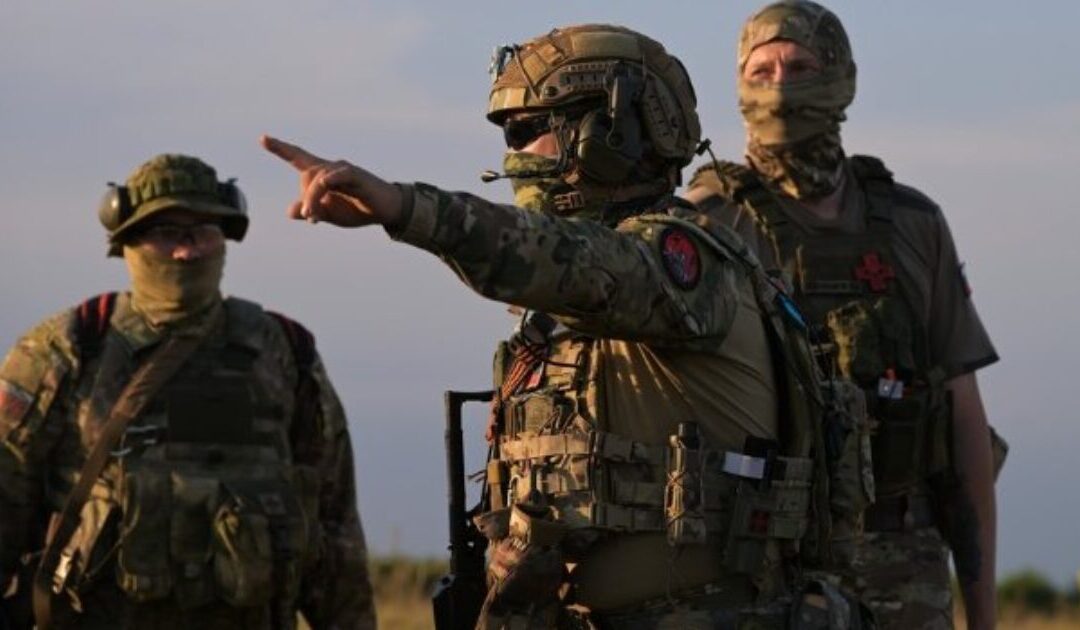
Russian forces advance towards the Slavyansk-Kramatorsk agglomeration
The final battle for Donetsk is approaching.
While the world’s attention is fixated in the military confrontations in thew Middle East, the Russia-Ukraine war plows on, as brutal as ever.
In its fifth year, the conflict seems somewhat less intense, but while Ukrainian forces did claim some victories on the ground, the Russian advance towards fulfilling its goals in the war is ongoing.
Top General Valery Gerasimov announced that Russian forces have conquered 656 square miles of territory in Ukraine this year, and are in the process of advancing on the Slavyansk- Kramatorsk fortress belt in Donetsk – the last bastion held by Kiev in the region that’s the cradle of this war.
General Gerasimov presents state awards to distinguished servicemen — ‘Army is moving toward Slavyansk & Kramatorsk, all Donetsk lands’ pic.twitter.com/z1t3pnADLd
“Russia has since its 2022 invasion been seeking to take the whole of the Donbas area in eastern Ukraine, where Kyiv’s forces have been pushed back towards a line of cities in grinding fighting.”
Kiev also announced days ago that it had regained control of nearly 50 square km of its territory in March.
Watch: Russian FAB-3000 bomb attack in Konstantinovka.
“’Since the beginning of this year, a total of 80 settlements and more than 1,700 square kilometers of territory have come under our control’, Valery Gerasimov, Chief of the General Staff of the Russian Armed Forces, said in footage released by the defense ministry on Tuesday.
[…] Gerasimov said Russia’s Southern Grouping of forces was attacking the Donetsk fortress belt comprising the cities of Sloviansk, Kramatorsk and Konstantinovka, and that Russian forces were about 7 to 12 km (4.3 to 7.5 miles) from Sloviansk and Kramatorsk.”
While the advance of the Eastern Donetsk takes place, the Russians are also advancing in the north, creating a ‘buffer zone’ in Sumy and Kharkov regions.
We use technologies like cookies to store and/or access device information. We do this to improve browsing experience and to show (non-) personalized ads. Consenting to these technologies will allow us to process data such as browsing behavior or unique IDs on this site. Not consenting or withdrawing consent, may adversely affect certain features and functions.
Functional
Always active
The technical storage or access is strictly necessary for the legitimate purpose of enabling the use of a specific service explicitly requested by the subscriber or user, or for the sole purpose of carrying out the transmission of a communication over an electronic communications network.
Preferences
The technical storage or access is necessary for the legitimate purpose of storing preferences that are not requested by the subscriber or user.
Statistics
The technical storage or access that is used exclusively for statistical purposes.The technical storage or access that is used exclusively for anonymous statistical purposes. Without a subpoena, voluntary compliance on the part of your Internet Service Provider, or additional records from a third party, information stored or retrieved for this purpose alone cannot usually be used to identify you.
Marketing
The technical storage or access is required to create user profiles to send advertising, or to track the user on a website or across several websites for similar marketing purposes.





 CHINA JUST GOT CAUGHT RED-HANDED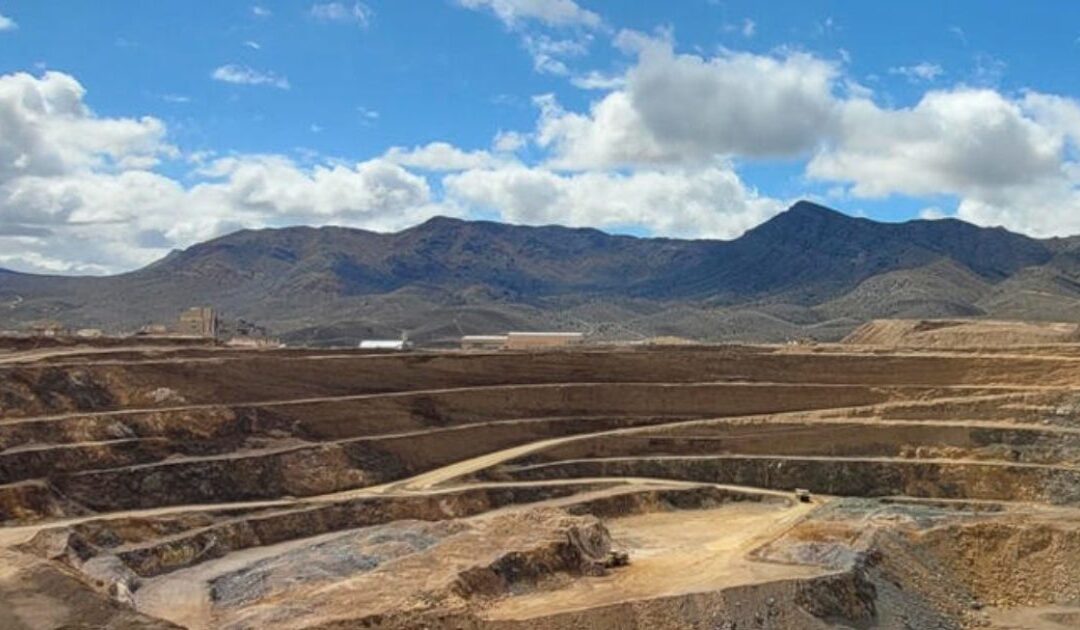

 drone
drone