New Book Reveals Jeff Bezos Told President Trump Buying Washington Post Was His ‘Worst Investment’ and ‘People There Are Terrible’
June 18, 2026
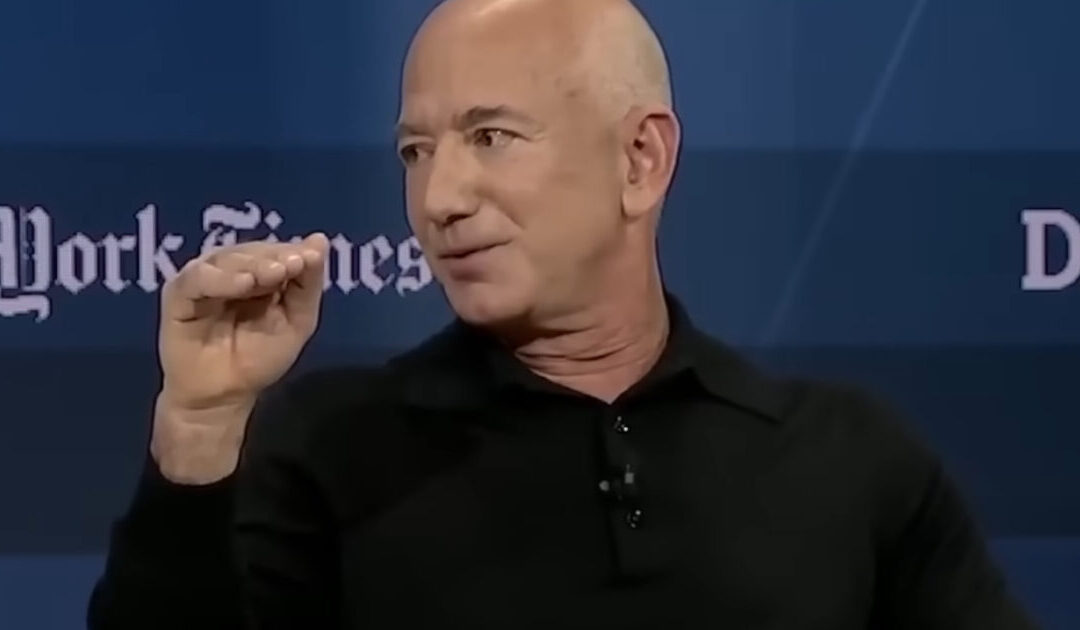
Jeff Bezos / New York Times Book Summit
According to a new book by New York Times journalists Jonathan Swan and Maggie Haberman, “Regime Change: Inside the Imperial Presidency of Donald Trump,” Amazon founder Jeff Bezos is not thrilled with his decision to buy The Washington Post.
Bezos bought The Post, and some related assets, in 2013 from the Graham family for $250 million.
More than a decade later, the book claims he told President Trump, during a dinner in December 2024, that it was ‘his worst investment.’
Further, in an excerpt obtained by The New York Post, he told Trump, “The people there are terrible.”
“They don’t listen. My other companies, they listen,” Bezos said, focusing his ire at the business side of the publication after losing more than $100 million that year.
About two months after the dinner, Bezos ordered the Washington Post’s opinion pages to promote “two pillars: personal liberties and free markets” — as subscribers peeled off in protest of the paper withholding its endorsement from Democratic presidential nominee Kamala Harris.
The Gateway Pundit reported that Bezos cut dozens of jobs in 2025, yet despite the aggressive staff cuts, the paper continues to hemorrhage cash.
Following the cuts, Bezos also announced that the opinion pages would focus on promoting “personal liberties and free markets,” a departure from the far-left bent of the publication.
In addition to the losses in 2025, the paper also lost roughly $100 million in 2024 and $77 million in 2023.
Last week, the paper was hit with a class-action lawsuit alleging that the newspaper secretly used readers’ personal data to charge different subscription prices.
CourtHouse News reports that the lawsuit accuses the Bezos-owned outlet of creating “pricing profiles” based on subscribers’ reading habits, demographics, browsing activity, and other personal information.
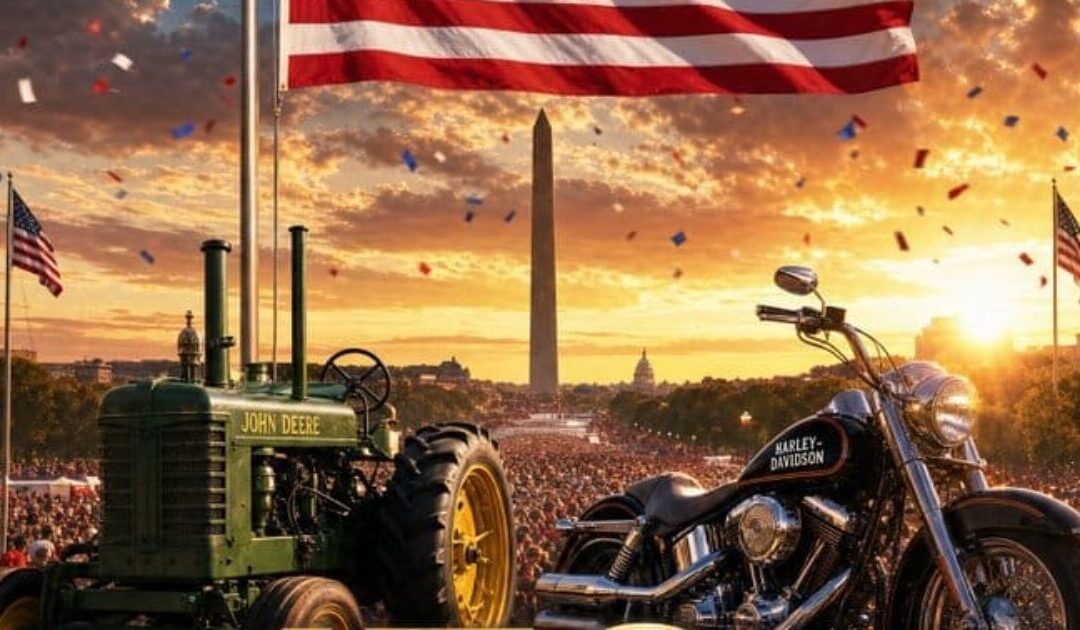
New look at Freedom 250’s Great American State Fair set up on the National Mall where all 56 states & territories will have exhibits pic.twitter.com/57Hk6LsC66
NEW: Supreme Court UNANIMOUSLY Votes to Weaken Law Used to Prosecute and Convict Hunter Biden
June 18, 2026
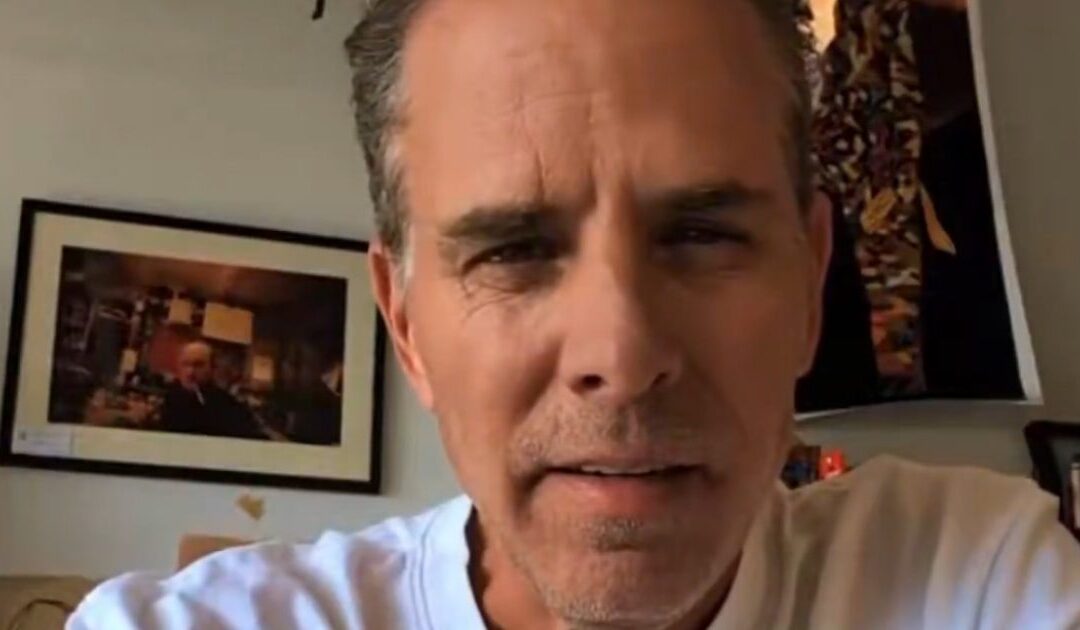
Hunter Biden
The U.S. Supreme Court today weakened a law that was used to prosecute Joe Biden’s ne’er-do-well son, Hunter Biden.
In a unanimous opinion authored by Justice Neil Gorsuch, the Court ruled that the prosecution of a man named Ali Danial Hemani violated his Second Amendment rights.
Hemani is a dual citizen of the United States and Pakistan who lives in Texas. He was accused of breaking a law that bars an unlawful drug user from possessing firearms.
This is a felony that can result in a sentence of up to 15 years in prison.
Hemani was a user of marijuana when the FBI found a handgun at his Texas home in 2022. He admitted to smoking it every other day.
It’s important to note that while today’s ruling narrows the scope of the law, it DOES NOT strike it down in its entirety.
The ruling from the Supreme Court is narrow, since the justices did not strike down the law at the center of the case in its entirety. Instead, the high court said the government cannot automatically disarm a person who uses marijuana a few times a week. Justice Neil Gorsuch authored the majority opinion for the court.
The government, he wrote, “asks us to conclude that anyone who regularly uses marijuana is categorically violent and dangerous without any further showing. All based on little more than its current say-so, one at odds with its own regulatory actions. And affording the government that kind of ‘broad power to designate any group as dangerous and thereby disqualify its members from having a gun’ would risk allowing it to ‘quickly swallow’ the Second Amendment.”
The Supreme Court’s decision does not address efforts to ban drug addicts or those presently intoxicated from having firearms, Gorsuch wrote. He also said it does not impact other federal firearms restrictions, including those that disarm convicted felons, or prosecutions that involve proof that a defendant’s drug use renders him dangerous.
Multiple outlets note that this is the same law under which Hunter was prosecuted and convicted for purchasing a firearm while addicted to crack cocaine.
His dad later pardoned him in December 2024.
The ruling also marks a loss for the Trump Administration, since the DOJ claimed in filings with the Court that the Second Amendment allows Congress to restrict gun possession by so-called habitual drug users.
Radical gun-grabbing groups such as the Brady Center for Preventing Gun Violence and the Giffords Law Center to Prevent Gun Violence joined the Trump Administration.
But on the other hand, the far-left American Civil Liberties Union (ACLU) signed on as co-counsel representing Hemani. He was also supported by the National Rifle Association (NRA).
Politics does occasionally make strange bedfellows.
New York Knicks Will Be First NBA Champions to Visit Trump White House
June 18, 2026
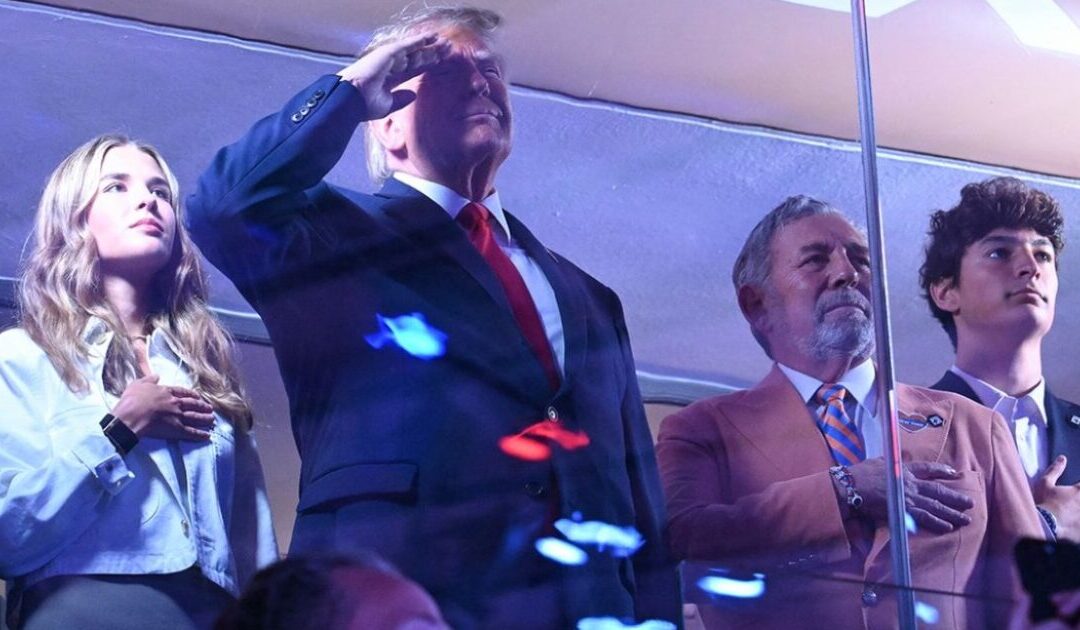
Trump Madison Square Garden NBA Finals Game 3
As The Gateway Pundit previously reported, the New York Knicks ended a 53-year championship drought on Saturday night, defeating the San Antonio Spurs in Game 5 of the NBA Finals to claim the Larry O’Brien Trophy.
President Trump attended Game 3 of the NBA Finals at Madison Square Garden, the first sitting President to attend an NBA Finals game.
“USA! USA! USA!” chants erupted throughout the stadium as President Trump arrived.
Now, the Knicks will be returning the support and, according to Knicks owner James Dolan, the team will go to the White House to celebrate with the president, the first NBA team to do so under Trump.
Dolan said in an interview on WFAN, “We just did receive an invitation from the White House, which we accepted.”
“We still have to figure out the details, et cetera, but yes, of course. Look, I invited the president to come down for the game. He is a friend. I’ve known him for 30 years and I’m very proud to bring the team to the White House.”
During President Trump’s two terms in office, visits with NBA champs have been difficult.
in 2017, the President withdrew an invitation to the Golden State Warriors after Stephen Curry and others expressed reluctance.
In 2018 and 2019, the Warriors and Toronto Raptors either declined or were not invited.
In 2020, the LA Lakers won amid COVID lockdowns and skipped the visit.
Under Joe Biden, the Milwaukee Bucks visited in 2021, as did the Warriors in 2022 and the Boston Celtics in 2024. In 2023, the Denver Nuggets declined due to “scheduling issues.”
In 2025, with President Trump back in the White House, the Oklahoma City Thunder cited a “timing issue” for passing on the visit.
Nigeria’s Christians Declare ‘Black Sunday’ as Murders and Kidnappings Continue
June 18, 2026
Christians are often slaughtered in their beds during attacks on villages across Nigeria’s Middle Belt. Photo courtesy of Paul, a local journalist.
On June 17, a local Nigerian journalist sent the following message to The Gateway Pundit: “A trail of blood across rural communities in Nigeria’s Middle Belt has left dozens dead and countless others injured. In the span of a single night, communities across the region were once again plunged into mourning.
On June 10, 2026, two village security watchmen were killed while on patrol in an attack that sources suspect involved the use of drones and night-vision goggles. They were given a mass burial on June 15.
A few hours after returning from the burial on June 16, suspected Fulani herdsmen attacked Angwan Magaji in Kamaru Ward, Kauru Local Government Area, Kaduna State. According to a security report released by the Irigwe Youth Movement, nine people were killed and eleven others injured. The dead included men, women, and children. Among the victims were four-year-old Moses Daddy, five-year-old Sunday Elkan, five-year-old Esther Kefas, and six-year-old Happy Friday. Survivors included children as young as four and seven years old, along with elderly residents in their seventies.
That same night, in Dantanko, an Irigwe community in Miango District of Bassa Local Government Area, Plateau State, 48-year-old Emmanuel Gara, a father of four, was reportedly shot and killed behind his home by armed men described by witnesses as Fulani gunmen speaking Fulfulde.
Hours earlier, five people were killed at a mining site in Gero Village, Gyel District, Jos South Local Government Area. The attack occurred shortly after armed Fulani terrorists struck the National Institute for Policy and Strategic Studies (NIPSS) in Vom, killing three security personnel.
While these attacks were ongoing, a prominent Christian district leader from Gwande District in Bokkos was ambushed and killed by suspected Fulani herdsmen while returning home from a traditional council meeting.”
On the same day, a local team sent a series of screenshots tracking the abduction of eight Christians as they traveled home from a Christian conference. Their vehicle could be seen following the route toward their destination before stopping after they reportedly came under the control of kidnappers. The route then diverged into more remote terrain before the signal eventually disappeared.
The fate of these victims can be predicted based on interviews with former kidnapping victims. Captives are often tortured and forced to contact their families to demand ransom payments. Many survivors report being beaten repeatedly and denied food and water for days at a time while in captivity.
Tragically, this latest wave of violence came during the same week that the Christian Association of Nigeria (CAN), the country’s largest umbrella organization representing Christian denominations, declared Sunday, June 14, 2026, a nationwide “Black Sunday” to mourn victims of terrorism, banditry, kidnapping, and violent attacks across Nigeria. The observance marked the culmination of a three-day national mourning and prayer period from June 12 to June 14 and called on churches throughout the country to wear black and dedicate services to prayer for victims and their families.
The declaration came at the conclusion of CAN’s National Church Denominational Leadership Summit, where church leaders officially designated June 14 as Black Sunday and called attention to the worsening security crisis affecting millions of Nigerians. The observance was not tied to a single incident but reflected years of violence affecting Christian communities and other Nigerians across the country.
According to CAN President Archbishop Daniel Okoh, Black Sunday honored “the countless victims of insecurity, men, women, children, clergy, farmers, students, and entire communities whose lives have been shattered by violence, kidnapping, terrorism, banditry, and bloodshed.”
The three-day mourning period coincided with Nigeria’s Democracy Day on June 12. “As we mark this solemn Black Sunday, we are mindful that our period of mourning coincided with the celebration of Democracy Day on June 12,” Okoh said. “Democracy is founded on the sanctity and dignity of human life, the rule of law, justice and the protection of citizens.”
In a communiqué issued at the conclusion of the summit, CAN declared June 12 as the commencement of a three-day period of national mourning and designated June 14 as Black Sunday “in honour of victims of violence and in solidarity with families affected by insecurity.”
Okoh emphasized that the observance was also a call to action. “Today, we are not only mourning, we are speaking with one voice,” he said. “Our nation is bleeding and the church cannot remain silent while innocent lives are lost and families live in fear.”
CAN urged the Federal Government to declare a state of emergency on insecurity, accelerate the implementation of state police and the decentralization of security, secure the unconditional release of kidnapped victims, and ensure justice for those responsible for attacks.
CAN warned of a growing wave of killings, beheadings, kidnappings, forced displacement, and the continued captivity of Christian schoolchildren and teachers. The organization specifically cited insecurity in Oyo, Ogun, Kwara, and Kogi states, while highlighting persistent violence in Benue, Plateau, Southern Kaduna, and other regions.
The declaration came nearly one year after the massacre in Yelwata, Benue State, where an estimated 100 to 200 people were killed and thousands displaced during an attack on a predominantly Christian community. Many of the victims were internally displaced persons sheltering at a Catholic mission. The attack drew international condemnation, including concern from Pope Leo XIV, and became one of the deadliest attacks on Christians in Nigeria in recent years.
During the June 14 observance, Bishop Wilfred Anagbe of Makurdi accused government officials of denying what he described as a genocide against Christians and of refusing to acknowledge the scale of the violence. At the same time, the Federal High Court in Abuja continued proceedings involving alleged terrorism suspects connected to some of the attacks.
CAN stressed that Black Sunday was not only a memorial but also a call for government action, urging authorities to confront the ongoing security crisis.
Additional reporting and local documentation provided further details about attacks that occurred between June 10 and June 16 across Nigeria’s Middle Belt.
On June 11, Toma Chuwang, 55, was killed while working at a mining site near Bangai village. On June 12, another Christian resident was killed during an attack on Torok village. These incidents were documented by local human-rights advocates and regional Christian reporting networks.
Violence escalated further on June 16. In Angwan Magaji, an Irigwe community in Kamaru Ward, Kauru Local Government Area of Kaduna State, gunmen attacked at approximately 1:00 a.m., killing at least nine people and wounding eleven others. The victims included children as young as four and five years old, as well as 51-year-old Jerry Doctor. Some victims were reportedly hacked with machetes while sleeping. Amnesty International condemned the attack and criticized the lack of an effective security response.
That same day, five Christians were killed at a mining site in the Gero area of Gyel village, Jos South Local Government Area, Plateau State. The attack followed a similar assault on June 8 that killed 36-year-old Shedrack Dalyop and injured another Christian.
Also on June 16, Channels Television reported another major assault in Plateau State that left 13 people dead and dozens injured. Community leaders described the violence as part of a broader campaign of displacement targeting predominantly Christian farming communities.
During the same period, heavily armed gunmen attacked the National Institute for Policy and Strategic Studies (NIPSS) in Kuru, Plateau State. The Plateau State Police Command confirmed that three security personnel were killed while defending the facility.
The deadliest violence of the period occurred in Benue State between June 8 and June 14, when a wave of six attacks on predominantly Christian communities left at least 218 people dead and more than 6,000 displaced. Islamic Fulani militants were suspected of carrying out the attacks. The worst violence occurred on June 13 in Yelwata, where a displacement camp housing approximately 400 people was attacked. According to reports, soldiers initially resisted the assault but later withdrew to a nearby market area where internally displaced persons had taken shelter in storage facilities. Witnesses reported that militants shouting “Allahu Akbar” set buildings on fire and attacked civilians with guns and machetes. Approximately 200 people were killed and five others injured in the attack. Earlier that same day, six civilians and three soldiers were killed in separate incidents.
Earlier attacks in the same wave of violence included the killing of two farmers in Udei village and the murder of two women working farmland near Tse Ivokor village on June 11. On June 12, Amos Uorayev, an internally displaced person and Protection Volunteer with the Foundation for Justice Development and Peace, was ambushed and killed alongside four other youths while attempting to recover bodies from a previous attack.
CAN’s declaration of Black Sunday came as international concern over the violence continues to grow. On June 8, a panel of five UN Special Rapporteurs warned the Nigerian government about a broader pattern of violence disproportionately affecting Christian communities, including abductions, forced conversions, and sexual violence targeting women and girls.
According to Open Doors’ 2026 World Watch List, 3,490 of the 4,849 Christians killed worldwide for their faith between October 2024 and September 2025 were Nigerians. In May 2026, the U.S. Commission on International Religious Freedom identified militant Fulani as a nonstate violator of religious freedom, finding that Fulani militant violence caused more deaths than attacks by organized insurgent groups or criminal gangs.
As churches across Nigeria marked Black Sunday, Christian leaders argued that the latest killings, kidnappings, and mass displacement demonstrate that the crisis continues unabated.
We use technologies like cookies to store and/or access device information. We do this to improve browsing experience and to show (non-) personalized ads. Consenting to these technologies will allow us to process data such as browsing behavior or unique IDs on this site. Not consenting or withdrawing consent, may adversely affect certain features and functions.
Functional
Always active
The technical storage or access is strictly necessary for the legitimate purpose of enabling the use of a specific service explicitly requested by the subscriber or user, or for the sole purpose of carrying out the transmission of a communication over an electronic communications network.
Preferences
The technical storage or access is necessary for the legitimate purpose of storing preferences that are not requested by the subscriber or user.
Statistics
The technical storage or access that is used exclusively for statistical purposes.The technical storage or access that is used exclusively for anonymous statistical purposes. Without a subpoena, voluntary compliance on the part of your Internet Service Provider, or additional records from a third party, information stored or retrieved for this purpose alone cannot usually be used to identify you.
Marketing
The technical storage or access is required to create user profiles to send advertising, or to track the user on a website or across several websites for similar marketing purposes.

 Freedom 250 presents the Great American State Fair