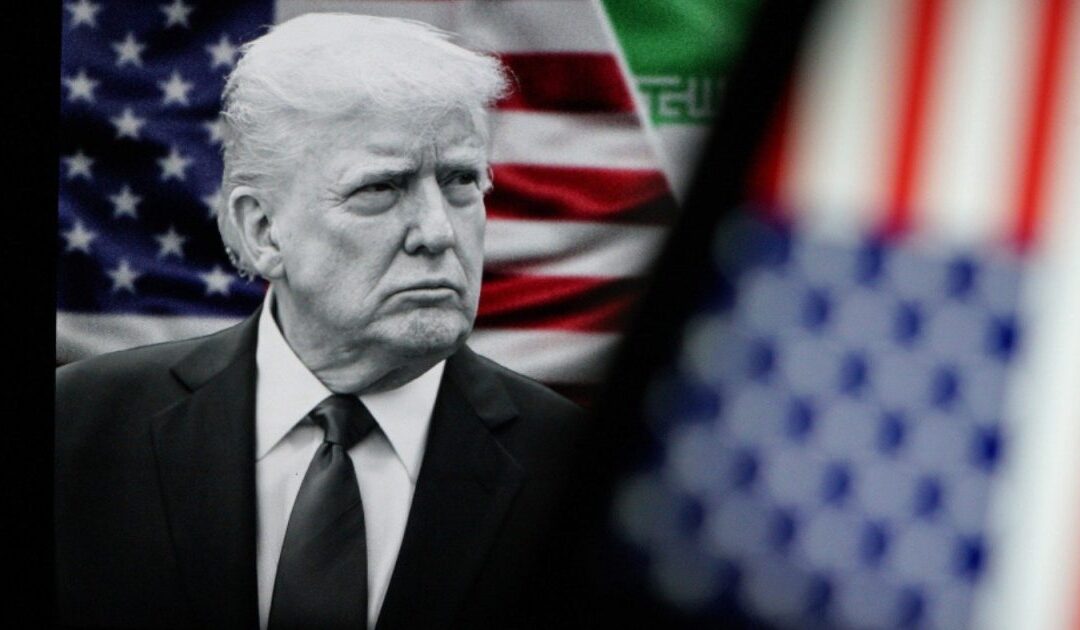
JUST IN: US and Iran Officially Sign Memorandum of Understanding After Moving Friday Signing Ceremony to Wednesday

JUST IN: US and Iran Officially Sign Memorandum of Understanding After Moving Friday Signing Ceremony to Wednesday

JUST IN: US and Iran Officially Sign Memorandum of Understanding After Moving Friday Signing Ceremony to Wednesday
June 17, 2026

The memorandum of understanding between the United States and Iran has officially been signed and is now in effect.

Under the agreement, the Strait of Hormuz has been fully opened, and the US will now provide sanctions relief through the termination of all sanctions and “waivers for the export of Iranian crude oil, petroleum products, and derivatives, and all associated services, including banking transactions, insurances, transportation, etc.” The US will also “make fully available for use the frozen or restricted funds and assets of the Islamic Republic of Iran,” according to the memorandum.

Iran has agreed that it will not procure or develop nuclear weapons.

Trump noted earlier that if Iran does not honor the agreement, “we’ll probably go back to bombing them until they honor it.”

Axios reported earlier that the US and Iran were discussing moving the official signing of the memorandum to a remote signing on Wednesday, as opposed to Friday in Switzerland.

This comes after President Trump, Vice President JD Vance, and Speaker of the Iranian Parliament Mohammad-Bagher Ghalibaf signed the memorandum on Sunday. Accounts of the signing differ, with one diplomat from one of the mediating countries claiming it never happened, but US officials and others saying it did. A source familiar with the signing said this was a “second signing.”

Axios’s Barak Ravid posted a follow-up minutes ago on X, confirming that the memorandum has been officially signed and is taking effect immediately.

Trump held a press conference at the G7 Summit, where he and US officials read the 14 points of his memorandum of understanding with Iran aloud to the press.

WATCH LIVE: President Trump to Address Iran Agreement During Press Conference Before Departing G7 Summit

Per CNN, the official text of the 14-point agreement is as follows:

1 — The United States of America and the Islamic Republic of Iran and their allies in the current war are signing this MOU to declare the immediate and permanent termination of military operations on all fronts, including in Lebanon, and undertake from now on not to initiate any war or any military operation against each other, and to refrain from the threat or use of force against each other, and ensuring the territorial integrity and sovereignty of Lebanon. The final deal will confirm the permanent termination of the war on all fronts, including in Lebanon and other provisions of this paragraph.

2 — The United States of America and the Islamic Republic of Iran undertake to respect each other’s sovereignty and territorial integrity and to refrain from interfering in each other’s internal affairs.

3 — The United States of America and the Islamic Republic of Iran commit to negotiating and achieving the final deal in maximum 60 days, extendable with mutual consent.

4 — immediately upon the signing of this MOU, the United States of America will begin the removal of its naval blockade and any disturbances or impediments against the Islamic Republic of Iran, and will fully end the naval blockade within 30 days. During this period, the traffic of vessels will be in proportion to the numbers of pre-war traffic being restored by the Islamic Republic of Iran. The United States of America further undertakes to remove its forces from the proximity of the Islamic Republic of Iran within 30 days after the final deal.

5 — Upon the signing of this MOU, the Islamic Republic of Iran will make arrangements using its best efforts for the safe passage of commercial vessels with no charge, for 60 days only, from the Persian Gulf to the Sea of Oman and vice versa. The traffic of commercial vessels will immediately start, and considering the need for removing the technical and military obstacles and demining by the Islamic Republic of Iran will be instated within 30 days. The Islamic Republic of Iran will conduct dialog with the Sultanate of Oman to define the future administration and maritime services in the Strait of Hormuz in discussion with other Persian Gulf littoral states in line with the applicable international law and the sovereign rights of coastal states of the Strait of Hormuz.

6 — The United States of America undertakes with regional partners to develop a definitive, mutually agreed plan with at least USD 300 billion for the reconstruction and economic development of the Islamic Republic of Iran. The mechanism for the implementation of this plan will be finalized as part of a final deal within 60 days. All required licenses, waivers, and permissions needed for the relevant financial transactions will be granted by the United States of America.

7 — The United States of America undertakes to terminate all types of sanctions against the Islamic Republic of Iran, including the United Nations Security Council resolutions,
IAEA Board of Governors resolutions, all unilateral US sanctions, primary and secondary in an agreed upon schedule as part of the final deal. The Islamic Republic of Iran and the United States of America acknowledge the critical importance of the sanctions termination issue above mentioned, and expressed their intentions to immediately address these issues in the negotiations in order to achieve mutual agreement on them.

8 — The Islamic Republic of Iran reaffirms that it shall not procure or develop nuclear weapons. The United States of America and the Islamic Republic of Iran have agreed to resolve the disposition of stockpile enriched material pursuant to a mechanism that will be mutually agreed upon in accordance with the schedule mentioned in paragraph seven with the minimum methodology to be down blended on site under the supervision of the IAEA. The two parties also agreed to discuss the issue of enrichment and other mutually agreed matters related to the Islamic Republic of Iran’s nuclear needs, based on a satisfactory framework being agreed upon in the final deal. The final deal will confirm the provisions of this paragraph and the Islamic Republic of Iran acknowledge the critical importance of the nuclear issues above missions. They express their intention to immediately address these issues in the negotiations in order to achieve mutual agreement on them.

9 — Pending the final deal, the United States of America and the Islamic Republic of Iran agree to maintain the status quo. The Islamic Republic of Iran will maintain the current status quo of its nuclear program, and the United States of America will not impose any new sanctions and will not deploy additional forces in the region.

10 — The United States of America undertakes that immediately upon the signing of this MOU and until the termination of sanctions, US Department of Treasury will issue waivers for the export of Iranian crude oil, petroleum products, and derivatives, and all associated services, including banking transactions, insurances, transportation, etc.

11 — The United States of America undertakes to make fully available for use the frozen or restricted funds and assets of the Islamic Republic of Iran upon the implementation of this MOU. The United States of America and the Islamic Republic of Iran will mutually agree on the procedures related to the release of these funds during negotiations. Such funds, whether obtaining the original account or transfer, shall be made fully usable for payment to any ultimate beneficiary designed by the Central Bank, excuse me, ultimate beneficiary designated by the Central Bank of the Islamic Republic of Iran. The United States of America undertakes to issue all necessary licenses and authorizations accordingly.

12 — The United States of America and the Islamic Republic of Iran agree that an executive mechanism will be established to monitor the successful implementation of this MOU and the future compliance of the final deal.

13 — After signing this MOU, and subject to the beginning of the implementation of paragraphs 1, 4, 5, 10, and 11 of this MOU, and the continuing implementation of these measures, the United States of America and the Islamic Republic of Iran will start negotiations regarding the final deal exclusively on the other paragraphs.

14 — The final deal will be endorsed by a binding UNSC resolution.

The post JUST IN: US and Iran Officially Sign Memorandum of Understanding After Moving Friday Signing Ceremony to Wednesday appeared first on The Gateway Pundit.

Go to Source
Author: Jordan Conradson
EU Parliament Backs Hardline Immigration Bill Paving the Way for Mass Deportations as ‘Send Them Back’ Chants Shake Brussels

EU Parliament Backs Hardline Immigration Bill Paving the Way for Mass Deportations as ‘Send Them Back’ Chants Shake Brussels

EU Parliament Backs Hardline Immigration Bill Paving the Way for Mass Deportations as ‘Send Them Back’ Chants Shake Brussels
June 17, 2026

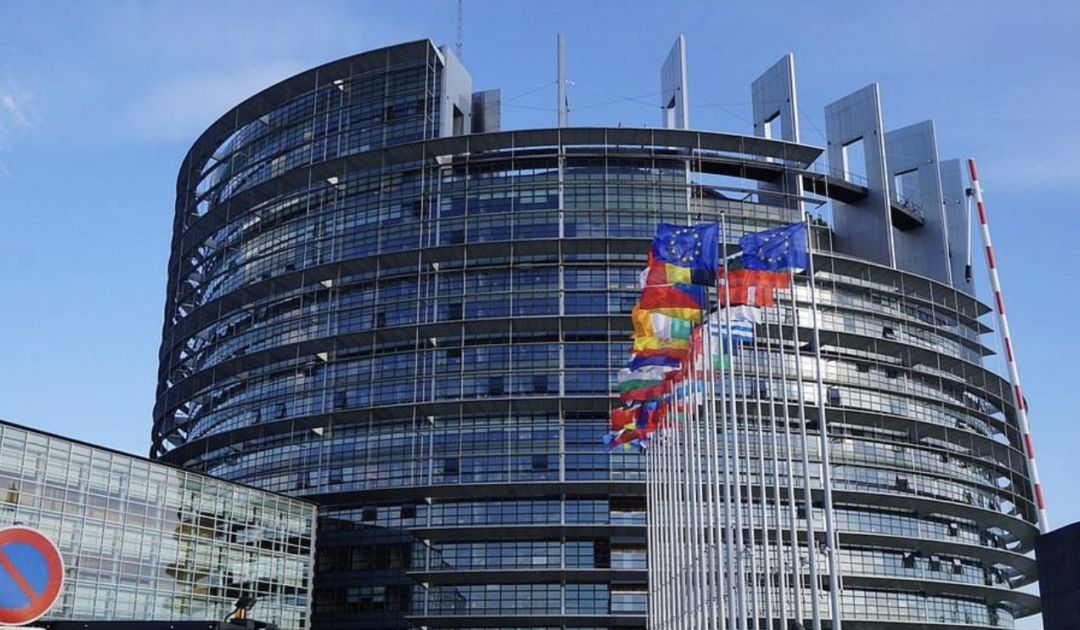
European Parliament in Strasbourg via getarchive

The European Parliament has approved a tough new deportation law, deemed the ‘strictest ever,’ aimed at removing illegal migrants faster, signaling that Europe’s failed open-borders era could be finally being forced into retreat.

The return regulation passed by 418 votes to 218, with 30 abstentions. Once formally approved by the Council, it will create a harder EU-wide framework for deporting migrants who have no legal right to remain in Europe.

The vote produced a charged scene inside the chamber. Supporters applauded, while MEPs on the right chanted “send them back”—a phrase that summed up the demand now rising across Europe’s streets, ballot boxes and parliaments.

Left-wing lawmakers answered with chants of “shame on you.” But for millions of Europeans, the real shame is not deportation but that illegal migrants have been allowed to stay for years after being ordered to leave.

Only around 20 percent of people ordered to leave the EU are actually removed.

The new law is designed to end the EU’s farcical deportation system. It imposes tougher cooperation duties, expands detention powers, strengthens entry bans, allows return hubs outside the EU, and makes it harder for rejected migrants to disappear into another member state.

At the center of the package are return hubs in non-EU countries. These facilities would allow member states to transfer rejected asylum seekers and irregular migrants outside the bloc through agreements with third countries.

The hubs could serve as transit sites for people awaiting return to their countries of origin. They could also hold migrants for longer periods when their home countries refuse to cooperate or when immediate removal is not possible.

Unaccompanied minors would be exempt from transfer to the hubs. Families with children, however, could still be moved under the framework—a point that enraged NGOs and left-globalist, pro-migration politicians.

For supporters of the law, return hubs are not radical. What was radical was allowing Europe to become a permanent holding zone for people who had no right to stay.
The law would require migrants facing removal to actively cooperate with authorities. They would have to provide documents, share information and remain available for deportation.

Non-cooperation could lead to detention. That is essential because the old system rewarded obstruction, lost paperwork, false identities and disappearance.

The regulation would also allow detention for much longer periods. Illegal migrants awaiting removal could be held for up to two years, with further extensions in certain cases and stronger rules for those considered security risks.

That marks a major shift away from Brussels’ old weakness. For years, Europe issued orders without consequences, deadlines without enforcement and warnings without removals.

The law also strengthens mutual recognition of return decisions across the EU. A deportation order issued in one member state would become easier to enforce in another.

That provision targets one of the biggest loopholes in the Schengen system. Rejected migrants should not be able to evade deportation simply by moving from one European country to another.

Entry bans would become tougher as well. In most cases, they could rise from five years to ten years, while security-risk migrants could face even harsher exclusions.

The regulation also gives authorities stronger powers to find irregular migrants and gather evidence for removal. Officials would be able to search a migrant’s residence or other relevant premises.

NGOs and activists have compared that provision to US-style immigration raids. But the law-and-order answer is simple: if the state cannot locate illegal migrants, seize documents or verify identity, deportation becomes a meaningless fantasy.

The law would also end the automatic suspension of deportations whenever a legal challenge is filed. Courts would instead decide case by case whether a removal order should be paused.

That change strikes at one of the most abused parts of the system. Appeals have too often become delay weapons, allowing rejected migrants to remain in Europe long after their claims failed.

The vote confirmed the rise of a new right-leaning migration majority in the European Parliament. The European People’s Party joined with the European Conservatives and Reformists, Patriots for Europe, Europe of Sovereign Nations and some liberals from Renew Europe to pass the measure.

The EPP still publicly rejects formal alliances with parties it considers too hardline. But on deportations, it increasingly depends on those same parties to pass the policies voters actually want.

That is the political truth Brussels can no longer hide. The parties once mocked as too harsh on migration are now shaping the agenda because the establishment’s soft-border model collapsed.

Socialists and left-wing MEPs largely opposed the law. Ana Catarina Mendes, vice-president of the Socialists and Democrats group, warned that the regulation risks normalizing practices that would once have been “unthinkable” in the EU.

But the truly unthinkable thing for ordinary Europeans was watching their governments lose control of who lives inside their countries. Illegal migration, failed asylum enforcement, strained services, rising crime fears and official excuses have created a continental revolt.

The return regulation is not full remigration. It does not yet reverse the damage of decades of mass immigration, failed integration and weak deportations.
But it is a step toward the principle Europe should never have abandoned: those with no right to stay must leave.

Brussels is now being forced to speak in terms it spent years treating as taboo — detention, deportation, searches, third-country hubs, entry bans and compulsory cooperation. That shift did not come from NGOs, judges or bureaucrats; it came from citizens who refused to be ignored.

The real test will be enforcement. Europe has passed migration rules before, only to watch them collapse under litigation, activist pressure, bureaucratic cowardice and political betrayal.

This time, voters will judge the EU by planes in the air, removals completed and borders restored—not by speeches, conferences or paper reforms.

The post EU Parliament Backs Hardline Immigration Bill Paving the Way for Mass Deportations as ‘Send Them Back’ Chants Shake Brussels appeared first on The Gateway Pundit.

Go to Source
Author: Robert Semonsen

Air Force Identifies Eight Crew Members Killed in B-52 Bomber Crash

Air Force Identifies Eight Crew Members Killed in B-52 Bomber Crash

Air Force Identifies Eight Crew Members Killed in B-52 Bomber Crash
June 17, 2026

Group portrait of eight military personnel in uniform, showcasing diverse roles and backgrounds, with American flags in the background.
Eight service members who died in B-52 bomber crash at Edwards Air Force Base

The Air Force on Wednesday released the names of the eight crew members killed in Monday’s B-52 bomber crash in California.

The reason for the crash is unclear, however, based on statements from a fallen crew member’s widow, there was likely a mechanical issue.

Eight crew members died after a B-52 bomber crashed at Edwards Air Force Base in California on Monday.

Edwards Air Force Base is located in Southern California in Kern County.

The crash happened at 11:20 am local time.

The names of the crew members were released on Wednesday following a 24-hour waiting period after all next of kin notifications were completed, in accordance with Department of War policy, the Air Force said.

The fallen Team Edwards members are:

– Col. Gregory Watson, 53, weapon systems officer, Boeing (Air Force reservist, assigned 10th Air Force, Naval Air Station Joint Reserve Base Fort Worth, Fort Worth, Texas), Shreveport, La.
– Lt. Col. Gabriel Estrella, 40, weapon systems officer, Air Force Operational Test and Evaluation Center, Detachment 5, Edwards AFB, Calif.
– Retired Lt. Col. Miles Middleton, 50, pilot, Boeing, Tehachapi, Calif.
– Maj. Alexander Davis, 34, weapon systems officer, 419th Flight Test Squadron, Lancaster, Calif.
– Maj. Robert Dee, 40, pilot, 419th Flight Test Squadron, Edwards AFB, Calif.
– Maj. Brad Hovey, 35, pilot, 419th Flight Test Squadron, Edwards AFB, Calif.
– Jeromy Smith, 32, flight test engineer, 419th Flight Test Squadron, Rosamond, Calif.
– Christopher Rischar, 41, flight test engineer, JT4 contractor, Lancaster, Calif.

Fox News reported:

The Cold War-era bomber crashed shortly after takeoff around 11:20 a.m. local time Monday at Edwards Air Force Base in Kern County, California, Fox News Digital previously reported.

The crew was conducting a routine test mission to support the Air Force’s sweeping modernization program for the B-52 fleet, which includes evaluating a new radar system, upgraded avionics and new Rolls-Royce engines designed to keep the bomber operational into the 2050s.

As the Air Force pauses flight test operations at the base, the investigation is expected to focus heavily on the aircraft’s takeoff, looking for potential engine failures or controllability issues.

The probe will also likely examine maintenance records, especially after Smith’s widow told local outlet KTLA the plane was experiencing issues on the Friday before the fatal crash, causing the flight to be delayed.

The post Air Force Identifies Eight Crew Members Killed in B-52 Bomber Crash appeared first on The Gateway Pundit.

Go to Source
Author: Cristina Laila

Al Gore Hit with Major Reality Check After Making this Wild Boast About ‘Climate Change’ During Interview Touting His Infamous Propaganda Film (VIDEO)

Al Gore Hit with Major Reality Check After Making this Wild Boast About ‘Climate Change’ During Interview Touting His Infamous Propaganda Film (VIDEO)

Al Gore Hit with Major Reality Check After Making this Wild Boast About ‘Climate Change’ During Interview Touting His Infamous Propaganda Film (VIDEO)
June 17, 2026

Al Gore makes a wild boast about climate change during an ABC interview. Credit: ABC screenshot

Former Vice-President Al Gore emerged out of hiding to tout his so-called ‘prescience’ regarding global warming and it quickly backfired.

On Wednesday, Gore sat down with ABC ‘News’ to reflect on the 20th anniversary of his environmental propaganda film “An Inconvenient Truth” and the current state of the planet.

As TGP readers know, Gore made a series of wild predictions about global warming in the film and in public that have not come to fruition. These included announcing in 2006 that the Arctic sea ice would completely disappear in ten years.

It’s now 2026, and plenty of Arctic ice remains.

But Gore remains unencumbered by facts. During the interview, Gore boasted that the scientists were “dead right” regarding all of the predictions about the warming of the planet.

This caused the interviewer to inquire what was wrong with his ‘documentary.’

“If scientists were dead right, why has so much been made about this documentary and what was wrong?” the interviewer asked.

“Uh, well, they cherry-picked a few little…About how many years the Arctic is ice-free, the snows of Mount Kilimanjaro,” Gore replied. “The main elements the scientific community has confirmed are right.”

The ABC host, of course, quickly agreed with Gore.

WATCH:

X users, though, busted out the receipts showing how big a lie Gore told.

Some of the predictions by scientists and Gore that failed to come to fruition included: no more snow on Mount Kilimanjaro within a decade, Glacier National Park in Montana disappearing, dramatic sea level rise, and Arctic-free summers.

LOOK:

Text summarizing climate change predictions and outcomes regarding glaciers in Kilimanjaro and Glacier National Park, highlighting discrepancies between claims and actual developments.
Credit: Grok/Stev Guest X
Text discussing Arctic sea ice decline, summer ice conditions, and criticisms related to climate change impacts on weather events and wildlife.
Credit; Grok/Steve Guest X

Here’s more:

The post Al Gore Hit with Major Reality Check After Making this Wild Boast About ‘Climate Change’ During Interview Touting His Infamous Propaganda Film (VIDEO) appeared first on The Gateway Pundit.

Go to Source
Author: Cullen Linebarger

Britain’s Rape Gang Scandal Inquiry Report: A National Reckoning and Warning for America

Britain’s Rape Gang Scandal Inquiry Report: A National Reckoning and Warning for America

Britain’s Rape Gang Scandal Inquiry Report: A National Reckoning and Warning for America
June 17, 2026

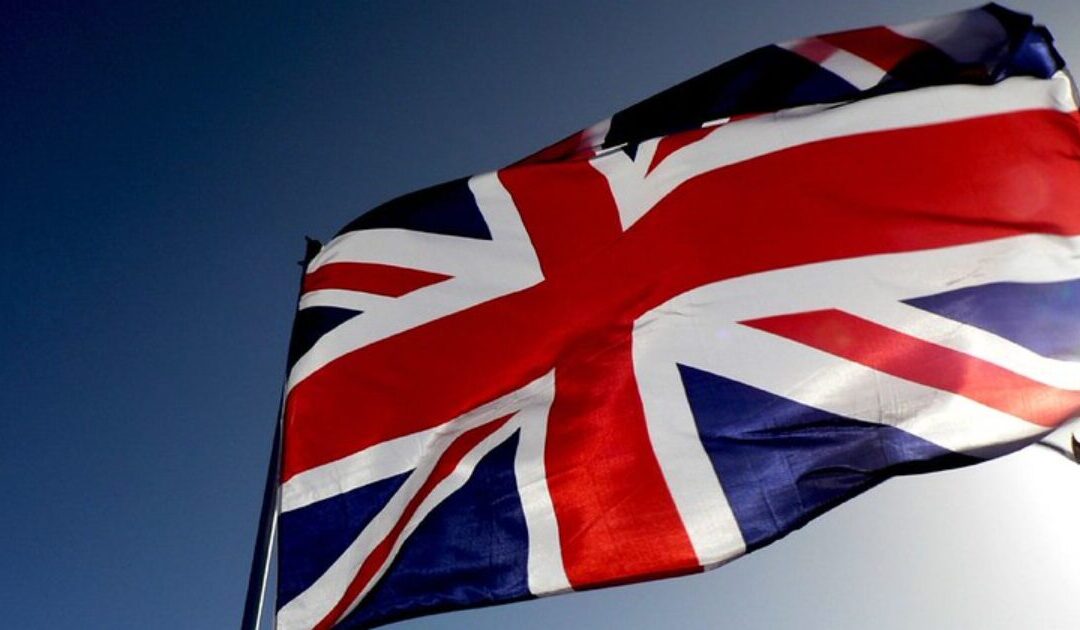
British flag waving against a clear blue sky, symbolizing the United Kingdom's national identity and heritage.

The 219-page Rape Gang Inquiry Report, released on June 16, 2026, was led by Reform UK MP Rupert Lowe and survivor advocate Sammy Woodhouse. Funded by more than 20,000 British supporters, this investigation reveals a major failure in child protection. It documents the systematic grooming, rape, trafficking, and abuse of at least 250,000 vulnerable White British girls by mostly Muslim Pakistani gangs throughout the UK.

The report’s main finding is clear. Organized groups, with 87-95% of convicted offenders having Muslim names, mostly of Pakistani background, targeted girls as young as 11 from unstable homes and care systems. Groomers used gifts, alcohol, drugs, and attention to lure victims, then took them to various locations for repeated abuse. They filmed the abuse for blackmail, trafficked victims, used pregnancies for control, forced conversions, and treated the girls inhumanely. These patterns appeared in at least 149 local authority districts, nearly 40% of the UK, showing the problem was widespread and had been happening since the 1950s.

Survivor stories, such as “Chloe’s”—who was abused by hundreds of mainly Pakistani Muslim men, trafficked across the country, forcibly converted, and left with lifelong trauma and a child born from rape—are at the heart of the report. Parents and whistleblowers also described the horror: girls missing for days, 13-year-olds with STIs, and repeated failures by institutions.

The report shows that institutions failed completely. Police ignored reports, destroyed evidence, released offenders, and treated victims as “prostitutes.” Social services put children in places where they were trafficked, worked against protective parents, and punished whistleblowers.

The NHS treated injuries and pregnancies, but sent girls back to their abusers.

Schools and taxi licensing also helped these networks operate. The main reason for these failures was a deep fear of being called racist or Islamophobic. Efforts to keep “community cohesion” and win votes from Muslim communities were put ahead of child safety.

The Labour Party blocked investigations and hid ethnicity data, while the Conservatives did not enforce proper record-keeping. Even London’s leadership under Sadiq Khan denied the problem, despite evidence from the Metropolitan Police.

The report does not hold back in its analysis of demographics, culture, and religion. Honor-shame traditions led to non-Muslim girls being seen as sexual property. The report points to eight aspects of Islamic theology—such as supremacism, al-walā’ wa-l-barā’ (hostility toward non-Muslims), male dominance, no set age of consent, fitna, sex slavery teachings, and dhimmitude—as reinforcing these attitudes. The report says these issues must be discussed openly.

The report offers clear recommendations for the future. It calls for a Childhood Sexual Protection Act to establish key principles:

  • Victim-First Justice: National Independent Sexual Violence Advisers, trauma-informed courts, and statutory weight for victim statements.
  • Zero-Tolerance Sentencing: Life imprisonment with minimum 50-year tariffs for ringleaders and 25 years for participants; aggravating factors for religious/racial motivation, trafficking, and organised networks; cumulative (not concurrent) sentences; and a public referendum on the death penalty for the worst cases.
  • Cultural and Demographic Realism: Mandatory recording of offender ethnicity and religion; open examination of patterns without political censorship.
  • Deportation and Border Security: Automatic removal of foreign and dual-national offenders and complicit family members; visa restrictions on high-risk countries.
  • Family Empowerment: Place protective families (especially fathers) at the heart of safeguarding, with penalties for authorities who undermine them.
  • Institutional Accountability: Liability for officials paralysed by racism fears; compensation schemes funded by negligent parties and perpetrator assets.
  • Prevention: Dedicated taskforces, overseas victim recovery, closure of complicit institutions, and multi-agency overhaul.

This is not just a British issue; it is a serious warning for America. As the US faces challenges with border security, migration, and cultural integration, Britain’s experience shows the dangers when political correctness clashes with demographic realities.

Multicultural policies brought in honour-shame traditions that led to abuse of local girls. Leaders in both the UK and US need to put child protection ahead of political interests.

The Rape Gang Inquiry Report is a call to action. The full testimonies should be released, and civil and criminal cases must follow. For Americans, the report highlights the need for secure borders, strong expectations for integration, and a firm defense of Western values. Britain’s daughters deserved better, and so do America’s.

The post Britain’s Rape Gang Scandal Inquiry Report: A National Reckoning and Warning for America appeared first on The Gateway Pundit.

Go to Source
Author: Peter McIlvenna