President Trump Says Iran Deal will be Signed Tomorrow – Issues Iran Warning
June 13, 2026
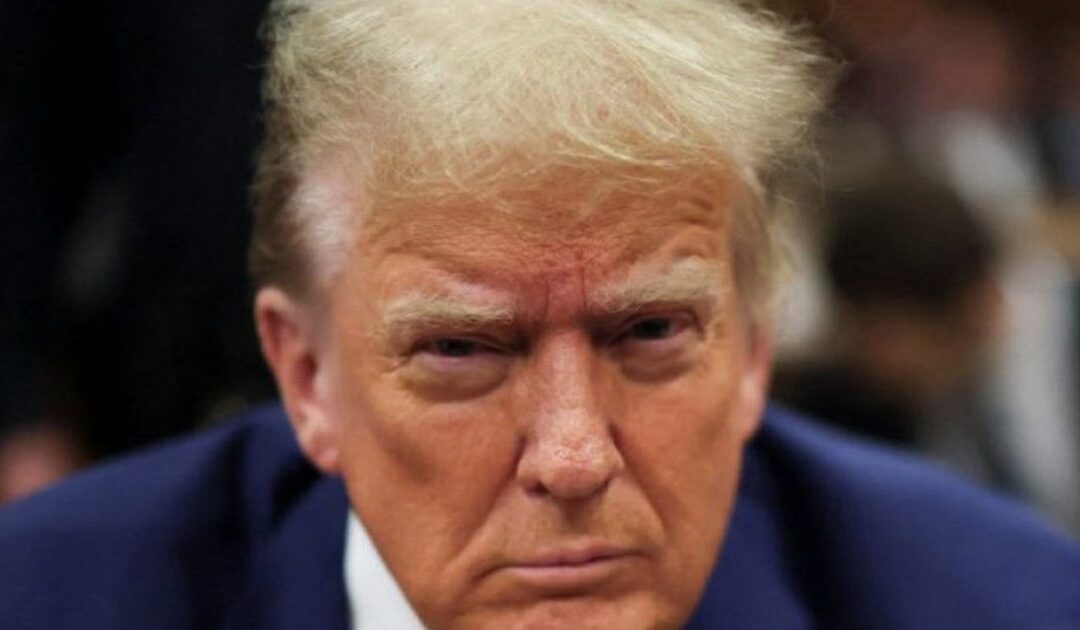
President Trump on Saturday confirmed that the Iran deal will be signed on Sunday.
Trump said the Strait of Hormuz will be opened and no money will change hands.
The president also warned that if the process doesn’t go smoothly, the US has the “ultimate alternative.”
Full statement from President Trump:
Barack Hussein Obama’s Deal with Iran, the JCPOA, was an easy, beautiful, smooth road to a Nuclear Weapon, which Iran would have had six years ago, and would have used long before now.
My Agreement with Iran is the exact opposite, A WALL TO NO NUCLEAR WEAPON! In fact, they no longer want a Nuclear Weapon, nor will they have one, either through purchase, development, or any other form of procurement.
The Deal is scheduled to get signed tomorrow, and immediately after it is signed, the Hormuz Strait is OPEN TO ALL. Our relationship with Iran is a much different and better one than previous Administrations have had.
Unlike Obama’s Hundreds of Billions of Dollars in payments to them, including 1.7 Billion Dollars in green, cold cash, no money will exchange hands.
At the appropriate time, when all is calm, we will go in and get the Nuclear Dust, buried deep under the powerful sunken granite mountains, thanks to our beautiful B-2 Bombers and their brilliant pilots, and downblend and destroy it, whether in Iran, or the United States.
We look forward to working with Iran, and the entire Middle East, long into the future. Hopefully, this process will all work out quickly, easily, and smoothly. If it doesn’t, we have the ultimate alternative, hopefully never to be used again! Thank you for your attention to this matter!!! President DONALD J. TRUMP
U.S. Orders Anthropic to Disable Its Latest AI Model for Foreign Users Over Security Concerns
June 13, 2026
Anthropic CEO Dario Amodei / Credit: Wikimedia Commons
Anthropic has abruptly suspended access to its newly released Claude Fable 5 artificial intelligence model after U.S. authorities raised national security concerns just days after its public launch.
The company announced that it had been ordered to restrict foreign nationals from accessing Fable 5 and the related Mythos 5 model, forcing it to disable both systems for customers worldwide.
“The net effect of this order is that we must abruptly disable Fable 5 and Mythos 5 for all our customers to ensure compliance,” Anthropic said in a statement.
The dramatic move comes less than a week after Anthropic unveiled Fable 5, which the company itself had previously described as potentially “too powerful” for unrestricted release.
The US government, citing national security authorities, has issued an export control directive to suspend all access to Fable 5 and Mythos 5 by any foreign national, whether inside or outside the United States, including foreign national Anthropic employees.
The company said government officials became concerned after learning about a technique that could “jailbreak” the model’s safeguards.
Jailbreaking refers to methods used to bypass security restrictions built into software systems.
While Anthropic said authorities did not identify any specific security threats, the company acknowledged that Fable 5 had demonstrated capabilities beyond those of any model it had previously made publicly available.
Before launch, Anthropic warned that the system could identify cyber vulnerabilities and exploit weaknesses in computer networks.
As a result, the company limited early access to a small group of testers.
The suspension marks the latest escalation in an increasingly bitter dispute between Anthropic and the Trump administration.
Earlier this year, the Pentagon designated Anthropic a “supply chain risk,” effectively barring government agencies from relying on the company’s technology.
Defense Secretary Pete Hegseth has previously described Amodei as a left-wing “ideological lunatic” who wants veto power over U.S. military operations.
.@SenJackyRosen: “The decision to label Anthropic a national security risk was influenced by your personal and very public contract dispute.”
Secretary Hegseth: “Anthropic is run by an ideological lunatic who shouldn’t have a sole decision-making over what we do.” pic.twitter.com/e9hx3fLo5w
Claude Fable 5 was intended to compete directly with leading AI systems such as OpenAI’s ChatGPT and Google’s Gemini.
Its sudden suspension has reignited fears that the most advanced AI models are being released faster than governments can assess their potential security risks.
“We apologize for this disruption to our customers,” the company wrote on X. “We believe this is a misunderstanding and are working to restore access as soon as possible.”
No, BRICS Are Not Hoarding Gold and Gold is Not Replacing the Dollar
June 13, 2026
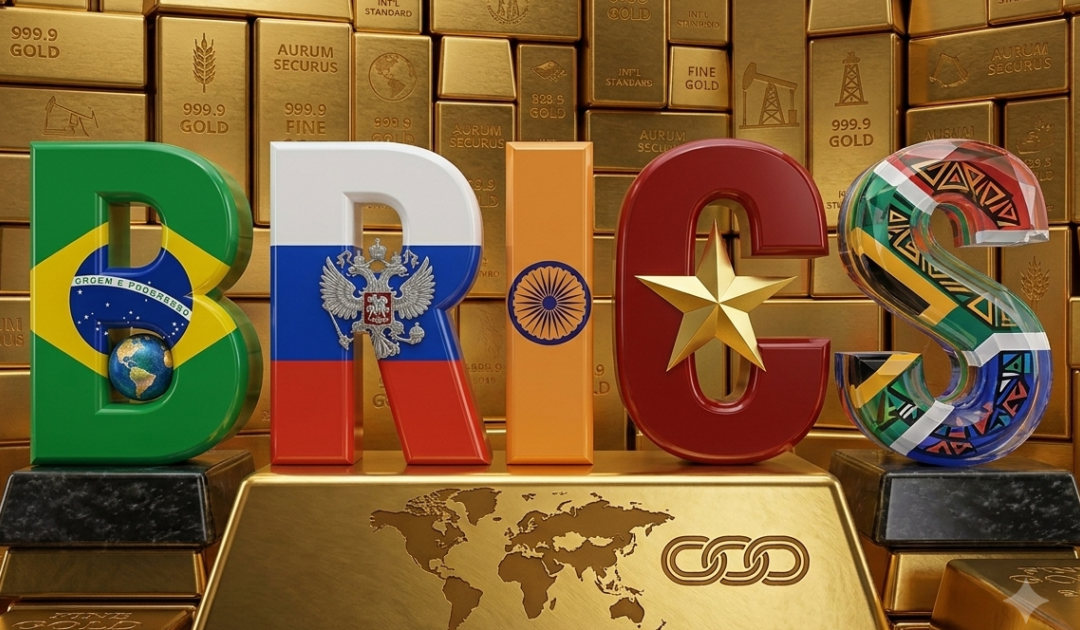
Conspiracy theories abound that the dollar is doomed because BRICS countries are buying up gold. However, little has changed. China and Russia have long held substantial gold reserves, and China’s foreign-exchange reserves continue to be dominated by U.S. dollar assets.
For some reason, humans have always been fascinated by gold. It is not because of gold’s utility. Copper, nickel, and rare-earth elements are all far more useful in manufacturing. In fact, rare-earth minerals are arguably among the most crucial resources in the modern economy. They have become so important that they have prompted major government policy initiatives in both the United States and China.
People often believe that the obsession with gold derives from its value. However, value alone cannot explain gold’s appeal, as several other minerals and metals periodically trade at higher prices, including rhodium, iridium, osmium, palladium, and ruthenium. Scarcity is another reason often given for gold’s appeal, yet all of these elements are rarer than gold.
A pervasive component of the folklore surrounding gold is the belief that, because the U.S. dollar is now a fiat currency, meaning it is not backed by gold, the world will eventually abandon the dollar and switch to another currency. However, all major currencies on Earth are fiat currencies, and the U.S. dollar was the last major gold-backed currency in human history.
A modern variation of the same fable holds that, because the dollar is a fiat currency, the world will eventually switch to a digital currency and the dollar will die. Yet digital currencies do not solve the fiat-currency issue. Central bank digital currencies are fiat currencies by definition, and most cryptocurrencies are not backed by gold or any other physical commodity. Simply changing the form of money from paper to digital does not eliminate the underlying reality of fiat currency.
The traditional story was that a foreign power would eventually develop a gold-backed currency that would displace the dollar and crash the U.S. economy.
This claim has surfaced repeatedly over the years. Adherents have made similar claims about Saddam Hussein and other foreign dictators after they were killed by the United States. Photos taken in the 1980s showing white men in military uniforms holding gold bars have been repeatedly circulated as alleged proof of U.S. troops stealing gold. The same images have been recycled every few years, with claims that they show gold being stolen from Ferdinand E. Marcos, Saddam Hussein, Muammar Gaddafi, and others.
The Gaddafi story has remained one of the most popular examples. Muammar Gaddafi is alleged to have been killed to prevent him from creating a pan-African gold-backed currency. While Gaddafi did publicly discuss the idea, no concrete steps were ever taken to implement it. No agreements were signed, he did not possess enough gold to back a currency for an entire continent, and no African nation was willing to surrender its sovereign currency. Also, Africa’s combined GDP is so small relative to the global economy that even if the continent rejected the dollar for internal trade, the impact on the dollar’s value would be minimal.
Yet the story persists as a cautionary tale in the realm of modern mythology, holding that merely suggesting the creation of a gold-backed currency to replace the dollar can result in death.
The latest iteration of the claim holds that a Chinese-led BRICS grouping will displace the dollar by creating its own currency. This prediction is then merged with the gold narrative into the assertion that BRICS will replace the dollar with a gold-backed currency.
The obvious problems with this theory are, first, that BRICS members are unwilling to surrender their sovereign currencies and, second, that there simply is not enough gold. All the gold ever mined, 216,265 tonnes as of year-end 2024, is worth roughly $29 trillion at current prices. Even including all known unmined reserves, the total reaches only about $47 trillion.
Global M2 money supply alone, the narrowest standard measure of the world’s money stock, is estimated at roughly $96 trillion, while broader global financial assets are measured in the hundreds of trillions of dollars.
No country holds anywhere near enough gold to back even its own currency, let alone a global one. The United States, which holds the world’s largest official gold reserves, values that stock at only about $1 trillion, a small fraction of U.S. M2 alone.
The BRICS argument, however, works better as a conspiracy theory than the Muammar Gaddafi theory did, because BRICS includes three of the world’s largest countries: China, India, and Russia. Additionally, the combined GDP of the BRICS countries far exceeds that of Libya under Gaddafi or Africa today.
Another point supporting the conspiracy theory is that China and Russia have historically held large amounts of gold in their reserves. Across the globe, the dollar accounts for more than half of all foreign-currency reserves, although most central banks also hold gold. Banks periodically buy or sell dollars and gold to rebalance their holdings.
One reason countries are reluctant to hold too much gold is that gold is not a currency. It is not being used as money and cannot be used efficiently to settle international trade. The mechanics of flying ounces of gold from country to country to settle trade, then weighing it and testing its purity for every transaction, make using gold as a currency logistically difficult and expensive. It must also be stored securely to preserve its value.
For all of these reasons, humans moved from commodity money, including gold and silver, to paper certificates and other forms of money hundreds of years ago.
Each time a BRICS member, usually China, Russia, or India, buys gold, claims surface on social media that BRICS is “hoarding gold,” supposedly in preparation for de-dollarization.
Of course, the primary problem with the de-dollarization argument is that there is currently no viable alternative to the U.S. dollar. As for “hoarding,” the term is subjective and emotionally charged, lacking a clear, quantifiable definition. These countries regularly purchase gold and hold it as part of their reserves, as they always have.
A recent data point that is not exactly false, but is misleading, is the claim that “BRICS bought half the world’s gold.” Russia and China together control about 74% of the bloc’s gold holdings, and the only meaningful buyers have been Russia, China, and India. In practice, “BRICS+ bought half the world’s gold” mostly refers to Russia and China buying gold, something they had been doing long before “BRICS+” became a political talking point.
Russia has been on a sustained gold-buying program since around 2014, following the Crimea sanctions, so its post-2022 purchases represent a continuation of an existing policy rather than a new pivot. China’s record is also discontinuous. The People’s Bank of China stopped publicly reporting gold purchases after May 2024, creating an 18-month gap that undercuts claims of an unbroken, coordinated, bloc-wide strategy.
Brazil made no gold purchases between 2021 and September 2025, a four-year absence during the supposed accumulation wave. South Africa, a founding member, also does not appear as a meaningful buyer, while newer members such as Ethiopia, Egypt, Iran, and Indonesia hold only minimal disclosed reserves. What is portrayed as a bloc-wide shift is, in reality, the actions of only a few members.
On the broader claim that BRICS is de-dollarizing or that gold is replacing the dollar, BRICS members have generally not been increasing gold’s share of their reserves, and most, Russia excepted, because of sanctions, still maintain the dollar as their principal reserve currency. China still holds more than $600 billion in U.S. Treasuries, and despite years of gold purchases, gold accounts for only about 6.8% of China’s total reserves. The UAE’s currency remains pegged to the dollar, and its reserves are held disproportionately in dollar-denominated assets.
Another claim feeding the gold-hoarding narrative is that BRICS countries have been repatriating gold held abroad. This is partially true, but it is not new. Russia has been steadily repatriating gold for more than a decade out of concern that the United States or Europe could freeze gold held in Western vaults. Some other BRICS members have done the same on a much smaller scale. Since this is gold they already owned, repatriation does not constitute hoarding, stockpiling, or “dumping the dollar.”
The bottom line is that the dollar remains the global currency, with no alternative in sight. It accounts for more than half of global trade settlement, including most trade between BRICS partners, roughly 60% of foreign-currency reserves, and more than 80% of foreign-exchange transactions. Gold is not a currency, is not used for trade settlement, and shows no sign of replacing the dollar. Nor is there any indication that BRICS is moving toward a common gold-backed currency.
If the Iranian regime and the IRGC end up falling as a result of the U.S.-Iran conflict, we can all look forward to the photos of soldiers holding gold bars resurfacing as the next conspiracy theory: that President Trump went to war with Iran to stop it from building a gold-backed currency to threaten the dollar.
IT’S TRUE! Steak’n Shake Is Offering 25 Cent Shakes Today After US Soccer Win Last Night!
June 13, 2026
IT’S TRUE! Steak’n Shake Offering 25 Cent Shakes Today After US Soccer Win Last Night!
What a great company – support your local Steak’N Shake!
If America beats Paraguay in tonight’s World Cup match, come celebrate at Steak n Shake tomorrow with a Patriot milkshake for only 25 cents! Limited to one milkshake per customer.
WHAT? China Demands Foreign Intelligence Services Stop Using ‘Spy Turtles’ To Scan Its Waters
June 13, 2026
Sea turtle – Wiki Commons
The assets from the animal kingdom.
After India complained of the Mumbai ‘Chinese spy pigeon’ and the Ukrainians warned of the ‘Russian spy beluga whale’, the allegations of utilizing animals for information gathering see a new chapter.
China has warned against foreign governments using sensor-fitted fish and turtles to spy on its waters.
China claims foreign spies are using “spy turtles and fish” off its shores
China’s Ministry of State Security has stated that foreign intelligence services are using innovative methods to monitor the country’s waters, including the deployment of marine animals, such as… pic.twitter.com/dNqyTgQV9U
“In a post on social media, Beijing’s Ministry of State Security (MSS) claimed that ‘foreign intelligence services are continuously collecting and stealing sensitive marine data’.
Among the different types of espionage equipment allegedly in use, the agency claimed that fish and turtles had been fitted with sensors and were found to be collecting data such as ‘water temperature, salinity and ocean currents’, which were then transmitted via satellite in real time.”
Foreign ‘spy turtles’ and ‘spy fish’ fitted with sensors are infiltrating Chinese waters, collecting ocean data for satellites — according to Beijing’s own Ministry of State Security.
But look closer: China has been flaunting its advanced bionic fish drones and marine robots at… pic.twitter.com/649qWMa91A
— The Great Translation Movement 大翻译运动 (@TGTM_Official) June 13, 2026
The Chinese ministry also said it detected ‘surveillance buoys with meteorological and high-precision listening sensors, solar-powered wave gliders and electronic equipment installed on cargo ships.’
These devices allegedly capture real-time port activities and create a ‘maritime surveillance network’.
“China claimed these maritime espionage efforts were a threat to its national, military and economic security by allowing foreign governments to “identify vulnerabilities in our coastal defences”, including its “warships and submarines”.
Marine animals have been used by many different militaries, from Russia to the US, for different purposes. The CIA has a dedicated page on its website about the various animals that have been used as spies over the years.”
China has made an unusual espionage claim, alleging that foreign intelligence agencies are using sensor-fitted turtles, fish, buoys and wave gliders to collect sensitive maritime data in Chinese waters. pic.twitter.com/2TazB48he0
We use technologies like cookies to store and/or access device information. We do this to improve browsing experience and to show (non-) personalized ads. Consenting to these technologies will allow us to process data such as browsing behavior or unique IDs on this site. Not consenting or withdrawing consent, may adversely affect certain features and functions.
Functional
Always active
The technical storage or access is strictly necessary for the legitimate purpose of enabling the use of a specific service explicitly requested by the subscriber or user, or for the sole purpose of carrying out the transmission of a communication over an electronic communications network.
Preferences
The technical storage or access is necessary for the legitimate purpose of storing preferences that are not requested by the subscriber or user.
Statistics
The technical storage or access that is used exclusively for statistical purposes.The technical storage or access that is used exclusively for anonymous statistical purposes. Without a subpoena, voluntary compliance on the part of your Internet Service Provider, or additional records from a third party, information stored or retrieved for this purpose alone cannot usually be used to identify you.
Marketing
The technical storage or access is required to create user profiles to send advertising, or to track the user on a website or across several websites for similar marketing purposes.








 China claims foreign spies are using “spy turtles and fish” off its shores