
Neither Russia Nor Iran Are Fans of the Chinese Yuan

Neither Russia Nor Iran Are Fans of the Chinese Yuan

Neither Russia Nor Iran Are Fans of the Chinese Yuan
June 8, 2026

Leaders Xi Jinping, Vladimir Putin, and Ali Khamenei with currency symbols for the yuan, ruble, and rial, representing global economic power dynamics.
Even two of the world’s most heavily sanctioned countries, Russia and Iran, have not abandoned the dollar by choice and remain unwilling to embrace the yuan as an alternative.

The latest round of “the dollar is dying” doomsday prophecies has been fueled by the war in Ukraine and the conflict with Iran. The arguments typically run as follows: Russia and Iran have abandoned the dollar in favor of the Chinese yuan; the yuan is gold-backed, giving it intrinsic value the dollar lacks; the ruble is recovering and performing well; U.S. debt and inflation have fatally undermined confidence in the dollar; and a sweeping global shift away from the dollar and the SWIFT payment system is already underway.

Each of these claims is either false, grossly overstated, or presented without the context necessary to understand the data being cited.

The foundation of the dollar-is-dying argument rests on Russia and Iran’s use of the yuan for trade settlements. What this framing omits is that neither country chose the yuan.

Both were locked out of the dollar system by sanctions and had no alternative. Russia never agreed to 100 percent yuan trade with China.

Bilateral settlements were split between rubles and yuan, with no exclusive yuan arrangement ever announced or implemented.

The deeper reality is that Russia never abandoned its preference for dollars. Putin imposed strict capital controls requiring 43 major exporting firms to deposit no less than 80 percent of their foreign currency earnings with Russian banks and sell at least 90 percent of those proceeds on the domestic market within two weeks.

Additional measures banned individuals from purchasing foreign currency cash, limited withdrawals, and restricted transfers abroad. All of these policies were intended to increase the US dollar reserves in the central bank.

Russia has since stated openly that it wants sanctions lifted so it can return to dollar-based transactions, an implicit admission that the yuan arrangement failed.

Prior to the U.S.-Israeli military campaign that began February 28, 2026, Iran was exporting approximately 1.4 to 1.6 million barrels of oil per day, almost entirely to China, with payments handled in yuan not by preference but because sanctions blocked dollar transactions entirely. The arrangement served China’s interest in internationalizing the renminbi far more than it served Iran.

Iran’s much-publicized yuan toll demand for Strait of Hormuz transit has effectively failed, with only two documented vessels making such payments, and that requirement itself reflects the same sanctions-driven logic. Iran cannot move dollars through SWIFT and must rely on China’s CIPS network.

Following the ceasefire and a U.S. naval blockade imposed April 13, Iran’s seaborne petroleum exports collapsed to just three percent of the February baseline by May, with crude exports reaching absolute zero and export revenues falling below $200 million, according to FDD analysis. Iran is not receiving meaningful export income in any currency, rendering any discussion of its currency preferences academic.

Reports of the ruble’s alleged recovery are similarly misleading. The official exchange rate, roughly 73 to 74 rubles per dollar, is sustained almost entirely through state intervention. These measures include mandatory foreign-currency conversion requirements on Russian exporters, capital controls that prevent ruble outflows, restrictions on foreign withdrawals and transfers, and domestic interest rates held between 15 and 21 percent to support the currency.

Even with these stringent government controls, the exchange rate is largely theoretical. Since June 2024, dollar and euro trading has been halted on the Moscow Exchange, and sanctions have driven a 96 percent collapse in ruble-denominated foreign exchange volumes.

No major bank, airport kiosk, or currency exchange anywhere in the world routinely accepts or trades rubles. Even Russia’s BRICS partners are unwilling to settle trade in rubles.

A currency that cannot be freely exchanged anywhere outside its own borders has no meaningful international value, regardless of what any official rate claims.

Another odd claim that resurfaces every few months is that the yuan, or the offshore yuan, is gold-backed. Neither claim is true. The yuan is a fiat currency. China has never announced, implemented, or credibly proposed a gold-backed yuan.

There is no convertibility mechanism linking the yuan to gold at any fixed rate. While this claim is common in de-dollarization commentary, there is no supporting documentation from any official Chinese source.

The petroyuan futures contract launched in 2018 is settled in yuan, not gold, and has failed to displace the dollar in oil markets. Seven years after launch, according to SWIFT’s own RMB Tracker, the yuan accounted for just 2.73 percent of global SWIFT payments in December 2025, ranking sixth among world currencies, compared to 48 percent for the dollar and 24 percent for the euro. The yuan’s share of global foreign exchange reserves stood at 1.93 percent as of the third quarter of 2025, per IMF COFER data.

Saudi Arabia, whose participation would be decisive for any genuine petroyuan challenge, has made no confirmed commitment to invoice oil in yuan, with Riyadh continuing to price the bulk of its crude in dollars.

Russia’s top economic negotiator Kirill Dmitriev stated in February 2026 that the U.S. will eventually lift sanctions, and an internal Kremlin memo explicitly sought restoration of dollar settlement for Russian energy transactions on the grounds that dollar integration would stabilize Russia’s balance of payments and its foreign exchange markets.

A country enthusiastically embracing de-dollarization does not draft memos requesting a return to the dollar.

Beyond the Russia and Iran cases, the broader de-dollarization thesis fails on structural grounds. The euro was the most credible challenger the dollar has ever faced.

It was backed by a large unified economy, deep capital markets, stable institutions, and widespread adoption. Even so, it peaked at roughly 28 percent of global reserves and has been declining ever since.

Moreover, that peak did not represent true global internationalization. Much of the euro’s growth came from its adoption within the eurozone itself. The currency still plays only a limited role in trade with North America, South America, Asia, and much of Africa.

If the most structurally sound alternative could not displace the dollar, the yuan faces a far steeper climb. The yuan is not freely convertible.

Any currency seeking reserve status must be freely tradable, meaning foreign holders can move it in and out without restriction. China maintains strict capital controls. No country accumulates reserves in a currency it cannot freely liquidate. This single structural fact disqualifies the yuan as a near-term dollar replacement regardless of bilateral trade volumes.

There is also no viable alternative payment infrastructure. SWIFT processes roughly 40 million messages daily. China’s alternative, CIPS, handles a fraction of that volume and lacks the legal framework, correspondent banking relationships, and liquidity depth that SWIFT has built over decades.

Russia’s SPFS system is essentially domestic. U.S. Treasury markets remain the only bond market deep enough to absorb sovereign-scale transactions without moving prices, which is why countries hold dollar reserves in the first place. Reserves must be deployable at scale and on short notice. No alternative market currently offers that.

BRICS summits have produced years of de-dollarization rhetoric and no concrete mechanism. The 2023 Johannesburg summit, widely reported as a milestone, produced no binding currency agreements.

No BRICS common currency exists. No gold-backed BRICS monetary instrument has been issued. Nor have BRICS members shown any willingness to adopt a yuan-based trade and financial system that would effectively place China at the center of their economies.

Finally, even where non-dollar trade settlements occur, the dollar remains the unit of account. When Russia sells oil to India in rupees, or China pays for Iranian crude in yuan, the reference price for that oil is still denominated in dollars.

The dollar’s role as the global pricing standard persists even when it is not the direct medium of exchange. Commodity markets, oil, gold, and grain are priced in dollars globally. That pricing function is the deepest form of dollar dominance, and it has not meaningfully eroded.

What de-dollarization advocates most frequently cite as proof of the dollar’s imminent decline is U.S. national debt.

The argument sounds intuitive: America owes more than its entire annual GDP, interest payments are consuming an ever-larger share of federal revenue, and eventually the world will lose confidence and switch to something else.

What this argument fundamentally misunderstands is the role U.S. Treasury debt actually plays in the global financial system.

U.S. government debt is not a vulnerability undermining the dollar. It is the mechanism through which dollar dominance operates. Since the end of the Bretton Woods gold standard in 1971, U.S. Treasury debt has functioned as the world’s reserve asset, replacing gold as the instrument against which every major currency is ultimately measured and held. Every central bank that accumulates reserves accumulates Treasuries.

Every sovereign wealth fund seeking a safe store of value buys Treasuries. China, despite years of de-dollarization rhetoric, holds approximately $750 billion in U.S. Treasuries. Japan holds over $1 trillion.

The very debt that now exceeds U.S. GDP, and which critics cite as proof of dollar weakness, is the asset the entire world depends on for financial stability.

Every country carries debt and every major currency experiences inflation. These are not uniquely American conditions. What is uniquely American is the combination of liquidity, convertibility, legal infrastructure, Treasury market depth, and universal acceptance that no other currency or sovereign debt market currently rivals.

The post Neither Russia Nor Iran Are Fans of the Chinese Yuan appeared first on The Gateway Pundit.

Go to Source
Author: Antonio Graceffo
NEW: “Rigged Election!” – Trump Responds to Nithya Raman’s Impossible Comeback in LA Mayor’s Race

NEW: “Rigged Election!” – Trump Responds to Nithya Raman’s Impossible Comeback in LA Mayor’s Race

NEW: “Rigged Election!” – Trump Responds to Nithya Raman’s Impossible Comeback in LA Mayor’s Race
June 8, 2026

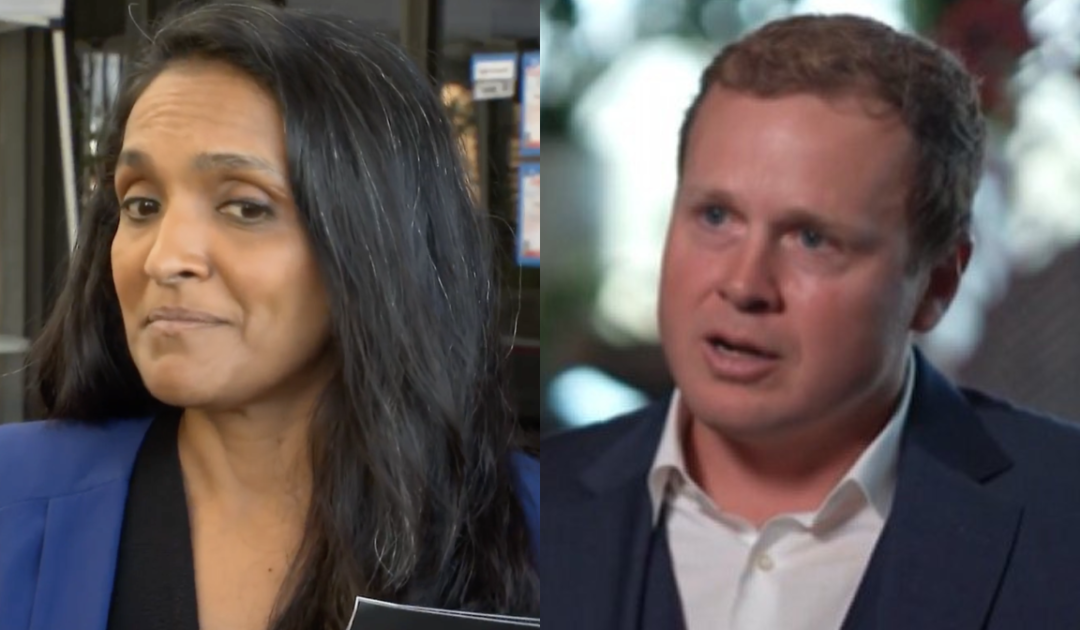
Two professionals engaged in a discussion, one with long dark hair in a blue blazer and the other in a suit, highlighting a dynamic conversation.

President Trump blasted the Los Angeles Mayor election on Monday after Democratic City Councilwoman Nithya Raman overtook highly popular Republican Spencer Pratt in the ongoing total vote count, which remains ongoing six days after the election. 

As The Gateway Pundit reported on Sunday, Nithya Raman was projected to advance to a runoff election with incumbent Mayor Karen Bass after another fraudulent vote result dump gave her a lead over Spencer Pratt.

BREAKING: Rigged Election Buries LA Mayoral Candidate Spencer Pratt in Latest Ballot Dump – Democrat Nithya Raman Projected to Win (VIDEO)

Raman came back from a roughly 40,000-vote deficit after Los Angeles spent five days counting the late mail-in ballots received after Election Day. With an estimated 146,000 ballots remaining to count, Raman now leads Pratt by more than 3,000 votes.

Pratt dominated with mail-in ballots received by election day, but those received after election day have heavily favored the Democrats. Where did these votes come from? How can anybody trust these results?

Trump responded to the impossible results coming in after election day, writing, "No way this could have happened. Rigged Election!"

Trump told reporters last week in the Oval Office, "You see what's happening in California. They're rigging the election!"

Trump later went off on NBC's Kristen Welker over the rigged California election during a bombshell sit-down interview. "“Do you think it’s appropriate that they have an election, and five days later, they’re nowhere close to picking a winner?" Trump said of the outrageous vote-counting process. "You’re either crooked, or you’re stupid!"

“Your elections are crooked, and you’re crooked, and meet the press is crooked, and so is ABC and CBS and CNN,” Trump added before storming off the set. 

First Assistant US Attorney for the Central District of California Bill Essayli announced on Friday that his office is conducting “multiple election fraud investigations” with the FBI and a “comprehensive audit of California’s voter rolls” with the DOJ’s Civil Rights Division.

Essayli further revealed on Sunday that California allows voters to use as proof of identity either a gym membership card, an employer ID card, a credit or debit card, a prescription drug label, or an Insurance card, which California provides to illegal aliens.

"We also have serious concerns about how California maintains its voter rolls. There are open questions about whether the state is promptly removing deceased voters, people who have moved, and individuals convicted of disqualifying felonies," Essayli said, suggesting that the results may come under scrutiny.

Assistant US Attorney Robert Renner was also seen observing the ballot processing center in LA County on Friday and reportedly asking questions about the process.

The Gateway Pundit will continue to provide updates on the California elections and investigations into the fraud. 

The post NEW: “Rigged Election!” – Trump Responds to Nithya Raman’s Impossible Comeback in LA Mayor’s Race appeared first on The Gateway Pundit.

Go to Source
Author: Jordan Conradson

Disgraced, Jobless Leftist ‘News’ Veteran Scott Pelley Breaks Down in Tears, Compares ‘60 Minutes’ Shake-Up to a ‘Massacre’ and Claims His TV ‘Family’ Was ‘Murdered’

Disgraced, Jobless Leftist ‘News’ Veteran Scott Pelley Breaks Down in Tears, Compares ‘60 Minutes’ Shake-Up to a ‘Massacre’ and Claims His TV ‘Family’ Was ‘Murdered’

Disgraced, Jobless Leftist ‘News’ Veteran Scott Pelley Breaks Down in Tears, Compares ‘60 Minutes’ Shake-Up to a ‘Massacre’ and Claims His TV ‘Family’ Was ‘Murdered’
June 8, 2026

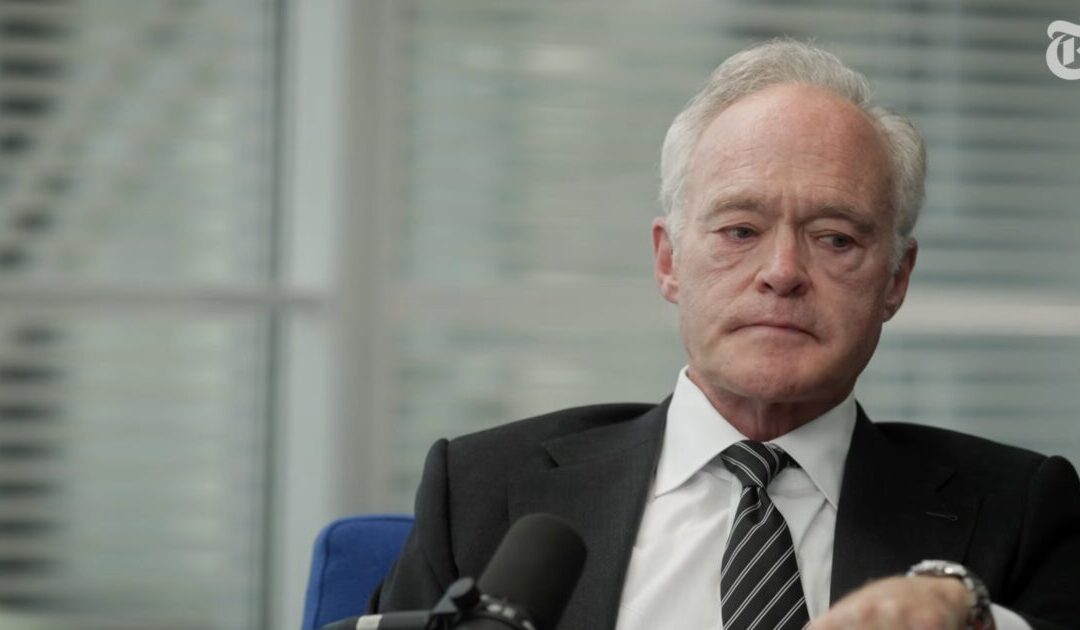
Business professional in a suit sitting in an office setting, appearing contemplative during an interview with a microphone in front.
Scott Pelley appears emotional during an interview with The New York Times as he discusses his departure from CBS News and the controversy surrounding recent changes at “60 Minutes.” (Credit: The New York Times screenshot)

The 68-year-old former “60 Minutes” correspondent, axed from CBS News after nearly four decades of far-left activism masquerading as journalism, sobbed uncontrollably through a New York Times interview this week.

Scott Pelley literally broke down in tears during a desperate, sob-filled interview with the far-left New York Times, crying over his recent firing from CBS News after nearly four decades at the network.

But instead of showing an ounce of humility, the unhinged ex-anchor doubled down on the exact same hysterical tirade that got him axed in the first place.

As The Gateway Pundit previously reported, “Black Thursday,” as Pelley described it, marked the beginning of the purge when new CBS News editor-in-chief Bari Weiss, the former New York Times writer who famously walked away from that paper’s radical leftward lurch, fired the far-left executive producer and multiple anti-Trump correspondents at the once-venerable newsmagazine.

The old guard was stunned when Weiss replaced the longtime executive producer with Nick Bilton, a tech journalist with zero traditional broadcast experience, as part of a long-overdue effort to inject actual viewpoint diversity and restore public trust after years of embarrassing anti-Trump bias and the disastrous Kamala Harris interview that triggered a major lawsuit.

Pelley, never one to go quietly, hijacked Bilton’s first staff meeting with a performative meltdown. He accused Weiss of “murdering 60 Minutes,” declared she “does not love this place,” and sneered that the new boss had “slender qualifications.”

Days later, CBS terminated his contract for cause. Bilton’s letter was brutal but accurate: Pelley had shown “remarkable incivility and contempt,” staged a “performative display of hostility,” and demonstrated zero interest in contributing to the future success of the show.

Now the jobless news veteran is playing the victim in the New York Times. He conceded that calling it the “murder” of the show itself was hyperbolic, only to immediately double down and claim it was actually the staff that Bari Weiss had murdered.

Pelley wept as he described the firings of his “family” in the “Black Thursday massacre.” This is the same man who spent decades at a show that repeatedly targeted President Trump and conservatives with loaded, one-sided reporting while giving Democrats the softest of softballs.

New York Post reported:

“No one saw the Black Thursday massacre coming,” Pelley told the paper of the network laying off senior staff, including executive producer Tanya Simon.

“The night before, Tanya and I were at the Emmy Awards, and we won two Emmys. Within hours, all of those people have been wiped out, and one-third of our correspondents have been fired,” he said.

“My colleagues and I have worked together 10, 20, 30 years. We travel together. We dine together. We go into literal combat together,” Pelley continued.

“So, these bonds are pretty tight, and when somebody wipes out, murders, a large number of your family members, people are desperate for some explanation, and as you and I sit here today, there still has been none,” he said.

[…]

After comparing it to being “like your spouse being murdered,” he said, “I am not emotional about this because I have lost this job. I’ve done it for a long time. I’ve had the greatest experiences. But the people I leave behind, treated in this way? That breaks my heart, and it’s going to take me a long time to get over it.”

Below are some of the worst moments from Pelley’s NYT sitdown via Newsbusters:

The interview began on an insensitive and jarring note as Pelley said the upheaval at CBS News was “like your spouse was murdered” and, through misty eyes, asserted this isn’t “about me” and “I’m fine,” but “these people that I left behind…who are still trapped.” This, he insisted, was “the depth of my devotion.”

Pelley explained “no one saw the Black Thursday massacre coming” in which executive producer Tanya Simon, her deputy, other staff members, and correspondents Sharyn Alfonsi and Cecilia Vega were fired.

He said it triggered “dismay” and “shock” to see colleagues he went to war with were laid off. Pelley actually compared it to “when somebody wipes out, murders a large number of your family members, people are hurt and shocked in disbelief and just desperate for some explanation.”

Again, how insensitive to those who’ve actually experienced that heartbreaking scenario. At least Pelley’s colleagues are still alive, and he has his sailboat.

To Garcia-Navarro’s credit, she asked him to explain why he ignored previous overtures from Bilton to talk instead of blow himself up in front of the entire staff:

As for why he unleashed such anger at his bosses, he called it “fate” and broke down in tears when saying “newsrooms are sort of like the military” and have “life-threatening job[s]” with “very strong bonds” that demand “people…go to war zones when…pregnant.”

He added Bari Weiss, Nick Bilton, and their lieutenants “have never felt that” in their lives:

[…]

Pelley closed with what he hopes Paramount Skydance executives do in the future to end this Weiss tenure in which “there is a thumb on the scale for” Donald Trump’s GOP and “there’s a subtle political bias that I’ve never seen” before at the network.


The post Disgraced, Jobless Leftist ‘News’ Veteran Scott Pelley Breaks Down in Tears, Compares ‘60 Minutes’ Shake-Up to a ‘Massacre’ and Claims His TV ‘Family’ Was ‘Murdered’ appeared first on The Gateway Pundit.

Go to Source
Author: Jim Hᴏft

Nick Shirley Tracks Down a ‘126-Year-Old California Voter’ With Record of 51 Elections — What He Found Raises Serious Questions About State Voter Rolls

Nick Shirley Tracks Down a ‘126-Year-Old California Voter’ With Record of 51 Elections — What He Found Raises Serious Questions About State Voter Rolls

Nick Shirley Tracks Down a ‘126-Year-Old California Voter’ With Record of 51 Elections — What He Found Raises Serious Questions About State Voter Rolls
June 8, 2026

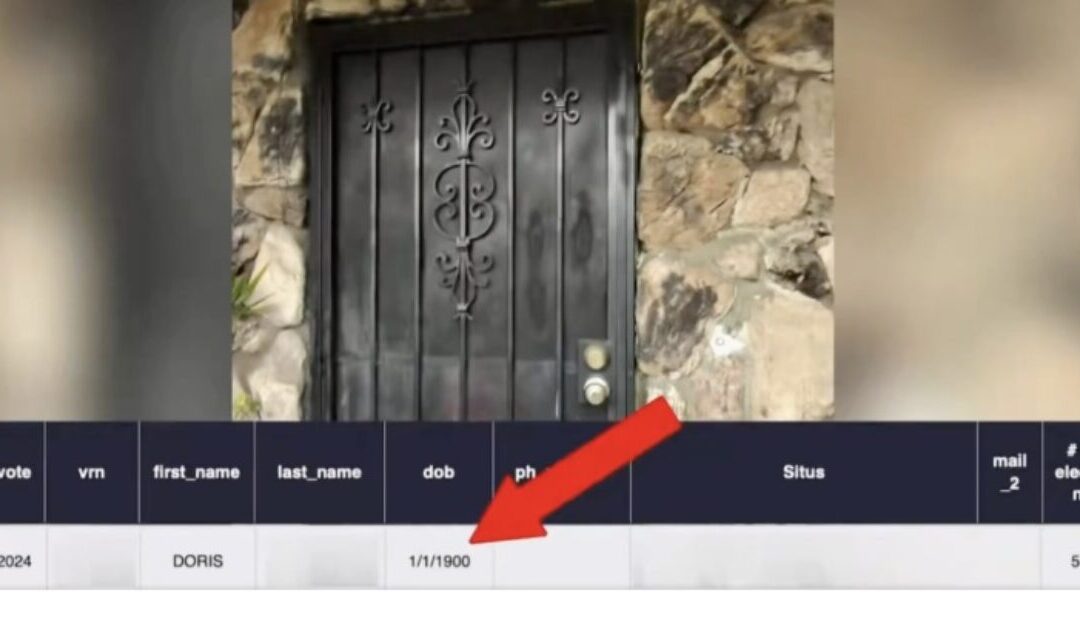
Black decorative door with intricate design next to a stone wall, featuring a table displaying voting information and personal details.
Screenshot

This is the Democrat Party’s idea of “secure” elections in their one-party utopia.

Investigative reporter Nick Shirley — the same journalist whose explosive February 2026 video we reported on here at The Gateway Pundit — knocking on doors and exposing the rotting corpse of the state’s Democrat-controlled election system, and the latest clip is pure fire.

Meet Doris. She lives in California. According to the California Secretary of State’s own voter rolls, she is 126 years old and has cast ballots in 51 elections.

There’s just one small problem.

Doris is not 126 years old. She was born in 1940. That makes her roughly 86 years old. She’s never voted in 51 elections. And when Nick Shirley showed up at her door to ask about it, she was stunned.

Nick Shirley and his team went straight to the address listed on the official rolls to confirm what the Democrat-run bureaucracy is hiding.

Here’s the exchange caught on camera:

Nick Shirley: “Are you Doris?”

Doris: “Yes.”

Nick Shirley: “Hello, Doris.”

Doris: “Yes.”

Nick Shirley: “How are you doing?”

Doris: “I’m good.”

Nick Shirley: “We’re just going through the voting rolls here, and we’re just confirming anybody who’s above the age of 100 years old. And right here it says you’re 126 years old.”

Doris: “No, you got the wrong house.”

Nick Shirley: “Are you Doris?”

Doris: “Yeah, but you got the wrong house. I’m Doris, but you got the wrong place. That’s the wrong information, all that stuff. No, no, uh-uh, that’s wrong.”

Nick Shirley: “Oh, here, I can show you if you’d like.”

Doris: “No, uh-uh, it’s just that it’s wrong.”

Nick Shirley: “How come you think here in California they’re just messing up on all these voting rolls here?”

Doris: “I don’t know, because I don’t know what you’re talking about.”

Nick Shirley: “Yeah, it says you voted in 51 elections, Doris.”

Doris: “No, not me.”

Nick Shirley: “Really?”

Doris: “I’m not 100-some years old.”

Nick Shirley: “I know, I just want to make sure you’re not 126 years old.”

Doris: “I’m not.”

Nick Shirley: “Yeah, it really does say you’re 126 years old here.”

Doris: “No, who did this? You’d be 126. That don’t even make sense.”

Nick Shirley: “I know, that’s what the Secretary of State says.”

Doris: “Well, the Secretary of State is wrong… Well, I’ll put it like this: I was born in 1940, so you figure that out.”

WATCH:

The post Nick Shirley Tracks Down a ‘126-Year-Old California Voter’ With Record of 51 Elections — What He Found Raises Serious Questions About State Voter Rolls appeared first on The Gateway Pundit.

Go to Source
Author: Jim Hᴏft

OUTRAGE! HelloFresh Goes Full Pride Month Cringe With Crude ‘BOTTOMSUP’ Discount Code—Grindr Jumps Into Comments

OUTRAGE! HelloFresh Goes Full Pride Month Cringe With Crude ‘BOTTOMSUP’ Discount Code—Grindr Jumps Into Comments

OUTRAGE! HelloFresh Goes Full Pride Month Cringe With Crude ‘BOTTOMSUP’ Discount Code—Grindr Jumps Into Comments
June 8, 2026

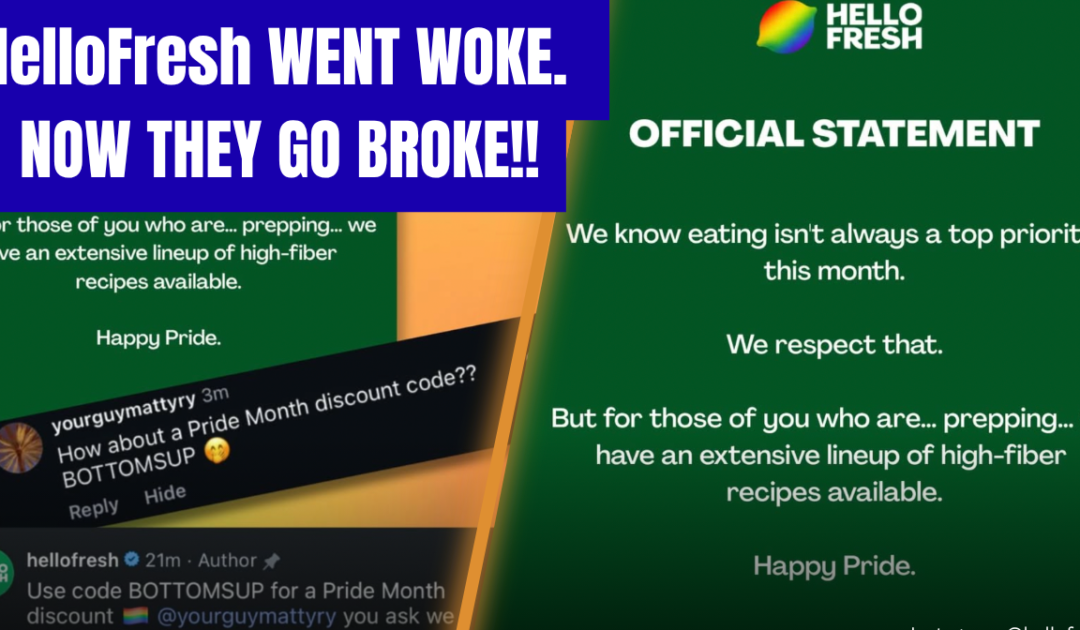
HelloFresh promotional image featuring an official statement about Pride Month, highlighting high-fiber recipes and a discount code, alongside social media interactions.
Screenshot/Instagram @hellofresh.

Another major brand has decided customers no longer deserve normal marketing.

HelloFresh, the meal-kit company that built its name delivering dinner boxes to American families, posted a bizarre Pride Month “official statement” on Instagram. The graphic began like a normal woke corporate Pride post, but quickly turned into adult innuendo. 

The company wrote that “eating isn’t always a top priority” during Pride Month, then promoted “high-fiber recipes” for those who are “prepping.”

The joke was not subtle. It was a sexualized Pride Month joke wrapped in the language of a meal-kit advertisement.

Then it got worse.

One user asked HelloFresh for a Pride Month discount code called “BOTTOMSUP.” HelloFresh responded by telling the user to “Use code BOTTOMSUP” for a Pride Month discount, adding, “you ask we deliver. Literally.”


View this post on Instagram


Yes, a company that sells weekly dinner boxes to ordinary households decided Pride Month was the right time to make a crude sexual joke in its official comment section.

Even Grindr jumped into the comments. Grindr describes itself as the world’s largest “social networking” app for gay, bi, trans, and queer people.

Instead of walking the post back, HelloFresh appeared to double down. The company reposted the same graphic with the caption, “the comments cooked,” showing that the reaction was part of the point.

This is not the first time HelloFresh has leaned into Pride and DEI branding. The company has promoted “FreshPride,” its LGBTQQIP2SAA+ employee resource group, and said in 2025 that inclusion is part of its culture year-round. 

Its Pride Month programming included virtual drag bingo, employee panels, and other events.

In 2022, HelloFresh described FreshPride Berlin as part of its DE&I efforts and highlighted events including Drag Queen Bingo and a company truck at Berlin’s LGBTQIA+ Pride festival.

There is a major difference between recognizing Pride Month (as most woke companies have done for years) and turning a family-facing food brand into a crude social media joke. 

Customers are not signing up for HelloFresh to get sexual innuendo from a corporate Instagram account. They are paying for food.

The timing also makes the post even stranger. HelloFresh reported roughly €6.76 billion in 2025 revenue, a 9% decline in constant currency and an 11.8% decline in reported currency. The company also said customer retention and conversions were still being weighed down by prior issues.

At a time when HelloFresh should be focused on food quality, pricing, and keeping customers, its social media team is apparently trying to impress Instagram with jokes that sound more like a Grindr ad than a dinner service.

Corporate America keeps pretending woke branding is only about kindness, tolerance, and representation. But too often, this is where it goes. 

A basic consumer product becomes an activist billboard. A brand that serves families decides adult innuendo is now an official marketing strategy.

No serious brand would use a religious holiday to make crude jokes about what customers are doing in bed. But under the banner of Pride Month, normal standards suddenly disappear.

HelloFresh can post whatever it wants. Customers can also decide that dinner should come from a company focused on food, not sexualized corporate signaling.

For years, Americans have been told conservative backlash against woke branding is exaggerated. Then a meal-kit company posts a Pride Month “high-fiber” joke, plays along with a “BOTTOMSUP” discount code, celebrates the comments, and gets a nod from Grindr.

HelloFresh has been contacted for comment. This article will be updated if a response is received.

The post OUTRAGE! HelloFresh Goes Full Pride Month Cringe With Crude ‘BOTTOMSUP’ Discount Code—Grindr Jumps Into Comments appeared first on The Gateway Pundit.

Go to Source
Author: Gregory Lyakhov