Can a Republic Survive Without Trust?
Guest post by Linda Brickman
A Republic is not held together by laws alone. It is held together by something harder to see and harder to replace — the belief shared among millions of citizens who have never met, that the system they live under is honest, that its rules apply equally, and that those who administer it can be trusted to do so faithfully.
When that belief holds, democracy functions. When it erodes, everything else becomes harder. The question before us today is not simply whether trust has declined — it has — but whether that decline might carry within it the seeds of something unexpectedly valuable.
Part 1. The Importance of Trust and Why it Matters.
Can a Republic Survive Without Trust?
Every society depends upon certain foundations.
Some are visible:
- Laws.
- Courts.
- Elections.
- Legislatures.
- Government institutions.
Others are invisible:
- Respect.
- Confidence.
- Credibility.
And perhaps most important of all:
Trust.
Trust is the quiet force that allows millions of people who have never met each other to live under the same system of government, follow the same laws, accept election outcomes, and believe that public institutions are acting within their lawful authority.
When trust exists, people rarely think about it.
When trust begins to disappear, people think about little else.
Over the past several years, Americans have witnessed growing debates surrounding elections, public health policies, education, immigration, government spending, censorship, and the role of public institutions.
Plus, Americans have witnessed an unprecedented flow of public disclosures, whistleblower discoveries, and documentation raising questions about government programs, practices, and policies, creating additional doubt in our institutions, our elected leaders, and in our government bureaucracies.
So, regardless of where individuals stand on those issues, one reality has become increasingly difficult to ignore:
Public confidence in many institutions has declined.
For some citizens, that loss of confidence produced frustration.
For others, it produced skepticism.
But for many Americans, it produced something else entirely: Involvement.
Citizens who once assumed others were paying attention began paying attention themselves.
People who had never attended public meetings began attending them.
Voters who had never read election statutes began reading them.
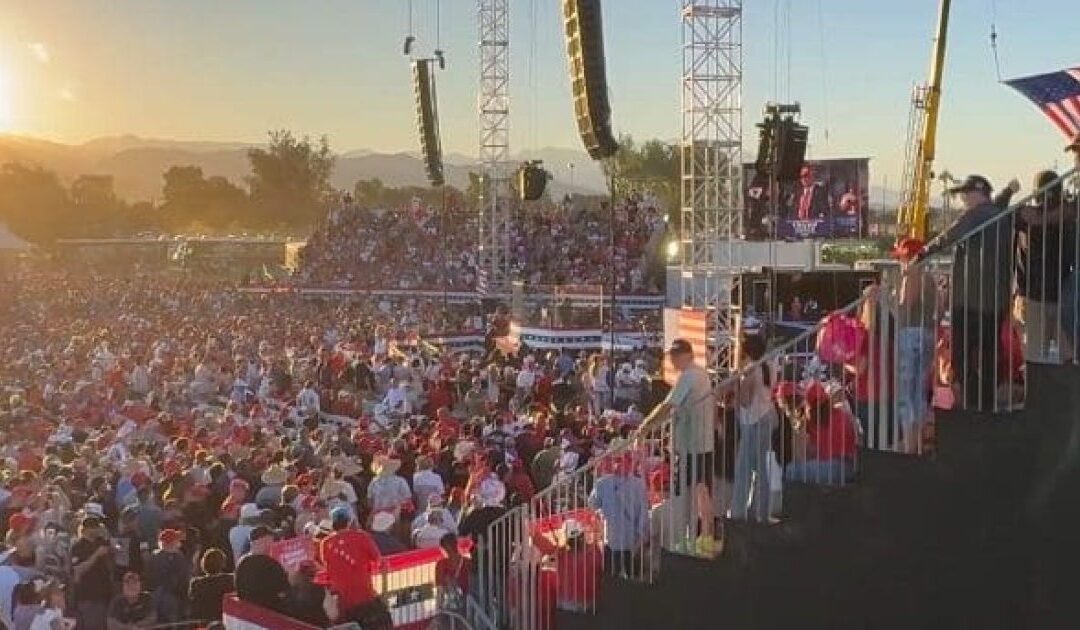
Ordinary citizens who had never imagined becoming politically active began asking questions, requesting records, volunteering, researching issues, attending town halls, showing up for hearings to ask questions and voice their concerns, going to political rallies, and participating in ways they never had before.
Something changed.
The question is not whether trust has been challenged.
The question is what happens next.
Can a Republic function without trust?
And if trust has been weakened, how is it restored?
Part 2. What Happens When Trust Begins to Erode?
Trust is often taken for granted … until it begins to disappear.
When citizens trust their institutions, they rarely spend much time thinking about them. They assume elections will be administered fairly. They assume laws will be applied equally. They assume public officials are acting within their authority. They assume someone else is watching the process.
Trust allows society to function efficiently because most people do not feel the need to verify every decision, every policy, or every action taken on their behalf; or even consider holding elected officials accountable for their actions or inactions.
But when trust begins to erode, something changes.
Questions that were once ignored become impossible to avoid.
Citizens begin asking how decisions are made.
They begin examining policies that previously received little public attention.
They start attending meetings, reading reports, reviewing public records, and seeking information for themselves.
In some cases, declining trust can lead to frustration, division, and disengagement.
But it can also produce something positive.
Engagement.
Throughout American history, periods of public skepticism have often been followed by increased citizen involvement. People become more informed. More active. More determined to understand the institutions that affect their lives.
The result is often greater public scrutiny, increased accountability, and a renewed interest in civic participation.
In recent years, many Americans have experienced exactly that transformation.
Citizens who once relied upon others to monitor government actions have increasingly chosen to become involved themselves.
They are:
- Attending meetings.
- Volunteering.
- Researching issues.
- Watching procedures.
- Asking questions.
Not because they trust more … But because they trust less.
And that may be one of the most important developments of the last several years.
Part 3. What Has Changed Since 2020?
One of the most common questions citizens ask today is simple:
Has anything actually changed?
For some, the answer is NO!
For others, the answer is NOT ENOUGH!
But viewed objectively, one significant change is difficult to ignore:
The citizens have changed.
Across Arizona and throughout the nation, ordinary citizens who previously paid little attention to government processes became increasingly engaged in public affairs.
People who had never attended a Board of Supervisors or local School Board meeting began attending.
Citizens who had never read election statutes or ballot propositions began studying them.
Voters who once assumed others were watching the process began watching it themselves.
Grassroots organizations expanded.
Citizen volunteers increased.
Formal Public Records Requests became more common.
Public meetings drew larger audiences.
Election procedures, government spending, public policies, and administrative decisions received greater scrutiny than many had seen in decades.
Whether one views these developments positively or negatively, the increase in citizen involvement is undeniable.
Something changed … People changed!
People became less willing to simply accept information at face value and more willing to conduct their own research, ask their own questions, and reach their own conclusions.
And that shift has not been limited to elections.
It has extended into discussions involving education, public health, government spending, immigration, public records, and countless other issues affecting daily life.
In many ways, the most important development since 2020 may not be found in a law, a court ruling, or an election procedure.
It may be found in the growing number of citizens who have chosen to become active participants rather than passive observers.
Regardless of political affiliation, an informed and engaged citizenry remains one of the strongest safeguards of any Constitutional Republic … But for decades, We the People forgot that important condition.
Part 4. Where Did Citizens Focus Their Attention?
As citizens became more involved, their attention naturally turned toward the institutions and processes that most directly affected public confidence.
Elections became one of the primary areas of focus.
For many Americans, elections represent the most visible expression of self-government. Citizens may disagree on policies, candidates, and outcomes, but confidence in the election process itself remains essential to maintaining public trust.
As public scrutiny increased, citizens began paying closer attention to election administration than ever before.
- They attended election-related meetings.
- They volunteered as observers.
- They studied election statutes and procedures.
- They reviewed public records.
- They followed court cases.
They learned the responsibilities of officials and agencies that many had never heard of before.
In Arizona, many citizens became familiar with positions such as County Recorder, Board of Supervisors, Secretary of State, and Election Director. Questions that once remained largely within government offices became topics of public discussion.
Citizens sought to better understand who was responsible for voter registration, ballot processing, polling locations, election technology, tabulation procedures, public records, and election oversight.
As these discussions unfolded, disagreements inevitably followed.
Officials, agencies, elected leaders, courts, media organizations, advocacy groups, and citizens often reached different conclusions regarding election administration and public policy.
Yet despite those disagreements, one development remained consistent.
The public was paying attention.
Whether motivated by concern, curiosity, skepticism, or civic responsibility, increasing numbers of citizens chose to become participants in the process rather than observers from the sidelines.
That level of engagement has become one of the defining characteristics of the years since 2020.
Part 5. The Search for Transparency
As citizens became more engaged, many began asking a simple question:
How can public confidence be strengthened?
For some, the answer was greater transparency.
For others, it was stronger oversight.
Still others focused on clearer laws, improved procedures, better communication, or increased accountability.
Regardless of the specific solution proposed, the underlying objective remained remarkably consistent:
Restore Public Confidence!
In Arizona and across the nation, citizens, elected officials, election administrators, advocacy groups, legislators, courts, and grassroots organizations have spent the past several years debating how best to achieve that goal.
New laws have been proposed.
Some have been adopted.
Others have been challenged in court.
Administrative procedures have been reviewed.
Responsibilities and authorities have been examined.
Public records have been requested.
Public meetings have drawn larger audiences.
Court rulings have clarified certain areas of responsibility while leaving other questions open for continued discussion.
These developments have not eliminated disagreements.
Nor have they produced universal consensus.
In many respects, the debates continue today.
Yet the process itself reflects something important.
Citizens are no longer standing on the sidelines waiting for others to protect the integrity of public institutions.
They are participating directly in the discussion.
They are asking questions.
Seeking answers.
Reviewing facts.
Examining procedures.
Holding public officials accountable.
And demanding greater transparency from the institutions that serve them.
Whether one agrees with every proposal, every lawsuit, every policy change, or every public official is ultimately beside the point.
The larger story is that citizens have become invested in the process itself.
That investment may prove to be one of the most significant safeguards of public confidence moving forward.
Transparency does not guarantee trust.
But without transparency, trust becomes far more difficult to earn.
Conclusion
Can a Republic Survive Without Trust?
Perhaps for a time.
But no Republic can thrive for long if its citizens lose confidence in the institutions that govern it – and no Republic can restore it without the active participation of its citizens.
Trust is not a luxury.
It is one of the essential foundations upon which self-government rests.
Without trust …
- Suspicion grows.
- Division deepens.
- Confidence declines.
And citizens begin questioning whether the systems designed to serve them are functioning as intended.
Yet the story of the past several years is not simply a story about declining trust.
It is also a story about renewed engagement.
Across Arizona and throughout the nation, citizens who once assumed others were paying attention, chose to become involved themselves.
- They attended meetings.
- Studied issues.
- Requested records.
- Volunteered.
- Asked questions.
- And demanded answers.
And became active participants in the civic process.
That is Not Cynicism. That is Citizenship.
That engagement has not solved every problem.
Nor has it eliminated every disagreement.
But it has demonstrated something important.
The strength of a Constitutional Republic does not ultimately rest in government buildings, elected officials, political parties, or public institutions alone.
It rests in the citizens themselves.
- An informed citizenry.
- An engaged citizenry.
- A citizenry willing to remain involved long after Election Day has passed.
Trust cannot be demanded.
It cannot be legislated.
It cannot be mandated by press release, campaign slogan, or government decree.
Trust must be earned.
And it is earned through transparency, accountability, participation, and time.
Perhaps that is the greatest reason for optimism as we look toward the future.
Not because every question has been answered.
Not because every disagreement has been resolved.
But because more citizens are paying attention than ever before.
Trust cannot be demanded or decreed. It is earned — slowly, through transparency, accountability, and consistency over time.
But it can be lost quickly. And once lost, it is extraordinarily difficult to rebuild.
The citizens of Arizona and throughout the Nation, understand that now in a way they did not a decade ago. That understanding — hard-won, and still very much alive — may be the most important civic development of our time.
When citizens remain informed, engaged, and committed to the principles of self-government, a Constitutional Republic retains its ability to move forward.
A Republic does not survive because of its institutions alone.
It survives because its citizens refuse to stop believing it can.
© 2026 Linda Brickman. All Right Reserved.
The post Can a Republic Survive Without Trust? appeared first on The Gateway Pundit.