New Disease Grips Hollywood – Pratt Derangement Syndrome (VIDEO)
June 1, 2026
The Los Angeles establishment is in full panic mode. With the election just hours away, reality television star Spencer Pratt is surging, and suddenly, the Hollywood elite are doing everything they can to stop him.
Actors, influencers, activists, and the same political machine that helped turn Los Angeles into a city plagued by crime, homelessness, and urban decay have been dispatched to destroy his candidacy.
But here’s the question nobody is asking: Why do they hate Spencer Pratt so much? Most of his critics can’t even explain it.
They’ve simply been conditioned to reject anyone who challenges the leftist status quo. Independent thought is no longer welcome in Hollywood. Obedience is.
The same crowd that watched Los Angeles spiral into chaos without objection now wants voters to believe Spencer Pratt is the real threat.
Today, we break down what Pratt’s rise says about a city fed up with failed leadership and whether voters are finally ready to reject the political and cultural elites who have run Los Angeles into the ground.
Plus, the battle over immigration enforcement continues to rage. At Delaney Hall in New Jersey, federal authorities are housing individuals accused or convicted of serious crimes while activists, street protesters, and rioters gather outside demanding their release.
Despite claims they’re concerned about conditions inside the facility, these anarchists aren’t interested in reforming detention conditions at all.
Their goal is simple: open the doors and let everyone out.
(VIDEO) “Damn Right” – LA Mayor Karen Bass Vows to Lead Resistance Against Immigration Agents During World Cup
June 1, 2026
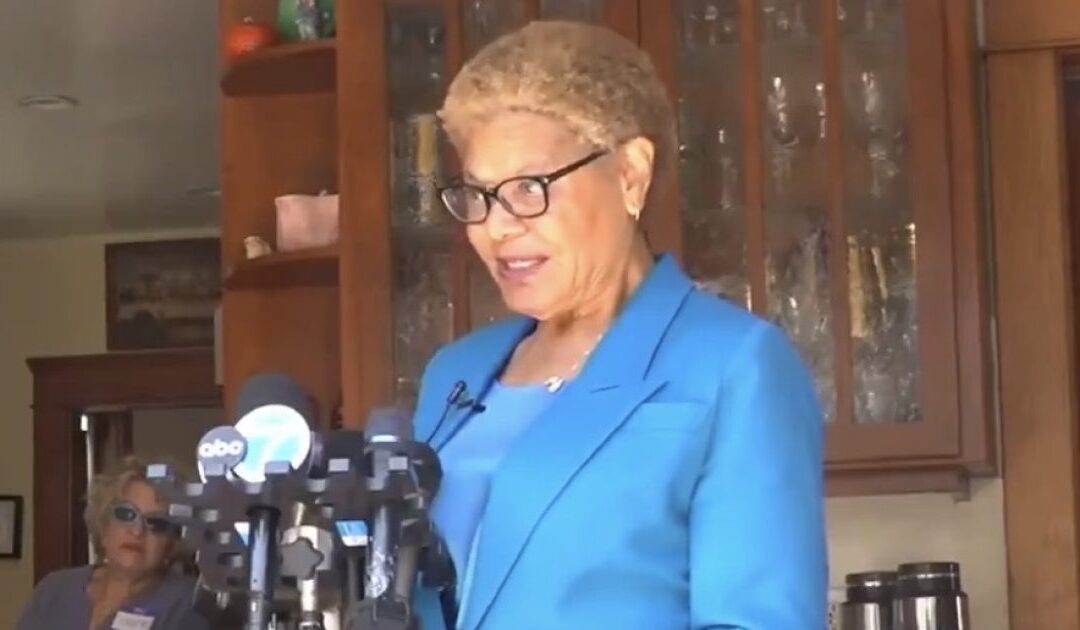
LA Mayor Karen Bass
Los Angeles Mayor Karen Bass is promising to lead a resistance against federal immigration agents during the 2026 FIFA World Cup.
Los Angeles is set to host eight World Cup matches, including the US Men’s National Team’s opening match next Friday.
Homeland Security Investigations (HSI), Immigration and Customs Enforcement (ICE), and US Customs and Border Protection (CBP) agents will be working alongside the FBI and local police to manage crowds and stop crimes such as human trafficking and drug smuggling.
Homeland Security Secretary Markwayne Mullin stated in a recent video posted to ICE’s official X account that agents will “be out there every day” during the World Cup matches.
They will play a pivotal role in combatting human trafficking as well as stopping counterfeit merchandise and counterfeit ticket sales. pic.twitter.com/KNcxnZdaSx
— U.S. Immigration and Customs Enforcement (@ICEgov) May 19, 2026
But Karen Bass threatened that her city would “resist again” following last year’s violent riots against immigration agents in Los Angeles.
“Our community resisted before, and our community will resist again, regardless of the World Cup,” she said, vowing to lead an uprising on behalf of illegal aliens.
“I will be there standing in support of Angelenos, regardless of who they are, why they’re here, when they came here. It doesn’t matter to me. You’re an Angelino.”
WATCH:
Bass: Our community resisted before, and our community will resist again, regardless of the World Cup. And I will be there standing in support of Angelenos, regardless of who they are, why they’re here, when they came here. It doesn’t matter to me. You’re an Angelino.
On X, Bass doubled down on her comments, sharing the clip and writing “Damn right.”
Trump’s Beautification Campaign Will Bring Civility Into Washington, DC
June 1, 2026
(Official White House Photo by Daniel Torok)
The President – through his Department of Interior – has made a concerted effort to revitalize much of Washington’s long neglected fountains, public parks, and other architectural displays.
Beyond just the ballroom and triumphal arch, these smaller renovation projects store dignity upon a city that has in recent decades been victimized by bureaucratic malaise and has thus fallen into disrepair.
One such example, newly reopened, is the Columbus fountain right outside Union Station. Union Station of course serves as the gateway to America’s capital city.
Alas, for so many years, the first sight recent arrivals had of the imperial city was a crumbling fountain, often spray-painted with profanities, and doubling as a homeless shelter for drug addicted vagrants.
The stunning clash of the Beaux-Arts features of Union Station, one of Washington’s architectural marvels, with the dilapidated fountain just outside – and the grime it attracted – stood as a symbol of the city’s ruling class’s almost intentional disregard for the wellbeing of ordinary citizens.
Recent videos capture this sight’s restoration – as well as the awe experienced by giddy onlookers.
One such video that went viral on social media in recent days depicted an enthusiastic resident of Washington, DC expressing her sheer joy over the gleaming sight of the renovation – the late spring sun glistened off the white marble and illuminated the aquamarine water, a radiant display that could have been transported from Greece or Rome.
What is remarkably tragic about the whole thing is that this display, which is relatively cheap to upkeep (and only took a few short weeks to completely renovate), had been non-functional for not just a few months, or even years, but nearly two decades.
And it is not as though this was simply a side fountain in some forgotten corner of the city – this was the greeting fountain serving as the whole country’s first taste of their capitol. Doubtless many a lawmaker passed by this fountain, in some cases multiple times a week, over multiple terms, and said and did nothing about it.
Why? Not because they failed to notice it (that, they most certainly did), but because its decay – a stand-in for the nation – bought into the “managed decline philosophy” on which most of Washington, DC has governed for at least a generation – up until Donald Trump and the MAGA movement was thrust into power.
What is even more remarkable is that amid everything else going on, Donald Trump has enough time to tend to what other presidents might deem “small” or “trivial” matters.
The upkeep further speaks to one of the President’s most special talents: his attention to detail. That attention drives his decisions on everything, from grand-scale domestic endeavors like constructing a ballroom to fortifying our elections, to the strategy that helps decide questions of war and peace.
Now, to the critic, this might appear like a vanity project – something that is consuming time and money that we do not have. That is not so.
For reasons both practical and political, the renovation projects being done in Washington are essential features of the President’s larger program to make America great again.
Practically, these fountains are there – and thus, they will consume taxpayer dollars no matter what. With the restorations, instead of spending money to disperse homeless encampments and drive away crime, that money is being put to a purpose that will serve the public – and create a safe and clean space for visitors to inhabit on the eve of the 250th anniversary of American nationhood.
More importantly, however, are the political or symbolic reasons for doing this: a dilapidated capital is a bad look for any country. In the modern world, optics matter.
But it is a terrible look for a country that is not only the richest empire in the history of mankind but is currently arguably at its peak in terms of wealth and power.
Thus, to be first greeted with a visual fitted for a third world country is not only an optical monstrosity, but is more damningly an indictment on and telltale that the country’s leadership is not serving the interests of its people. This is especially so in the United States: a country with vast resources that should theoretically be able to implement a quick fix on any domestic problem, particularly one right in its own backyard. In short, it is a visual reification of a country gone decadent.
More sinisterly, it is a manifestation of political power at its worst. By design, these countries have been chosen to fall into disrepair because it degrades the visual constitution of the city at large.
Combined with the brutalist structures that hulk over the landscape like behemoths, degradation is tantamount to demoralization, and serves as a subtle psychological weapon against the inhabitants, who see no progress being made over years and years, and thus adopt a stance of learned helplessness with respect to government functions generally.
When President Trump’s administration came in and fixed it, not only did they leave a beautiful, working fountain behind, but they also made a statement that is sure to rankle the Washington establishment.
Namely, that what the establishment has long attempted to telegraph to the American people by not maintaining its public fountains and other displays – that it is impossible to get anything done with state power, so it’s not even worth the try – proved to be a complete and total myth.
It is the same thing as saying “decline is a choice” – Americans have long been psy-oped into believing debasement is a law of nature, rather than a concerted decision of free and autonomous decisionmakers.
Much like the open border and the lack of transparency in election systems, simply because things are this way does not mean they have to be this way. For so long did Americans believe that to be true, because that was the only reality they ever knew. Donald Trump is saying, loudly, “not so!”
The fountains, the ballrooms, the triumphal arch – these are living testimony to how government can serve the citizen in a way that exalts, rather than demoralizes, showcasing how institutions once properly ordered can be used to create order out of chaos, and civility from the cultural deconstruction that has long been the status quo during the Obama and Biden administrations.
In a word, President Trump’s efforts represent a vote of confidence in civilization, which is something that all Americans should be able to celebrate.
Colombia Enters High-Stakes Runoff Between Hardline Security Candidate and Petro-Aligned Left
June 1, 2026
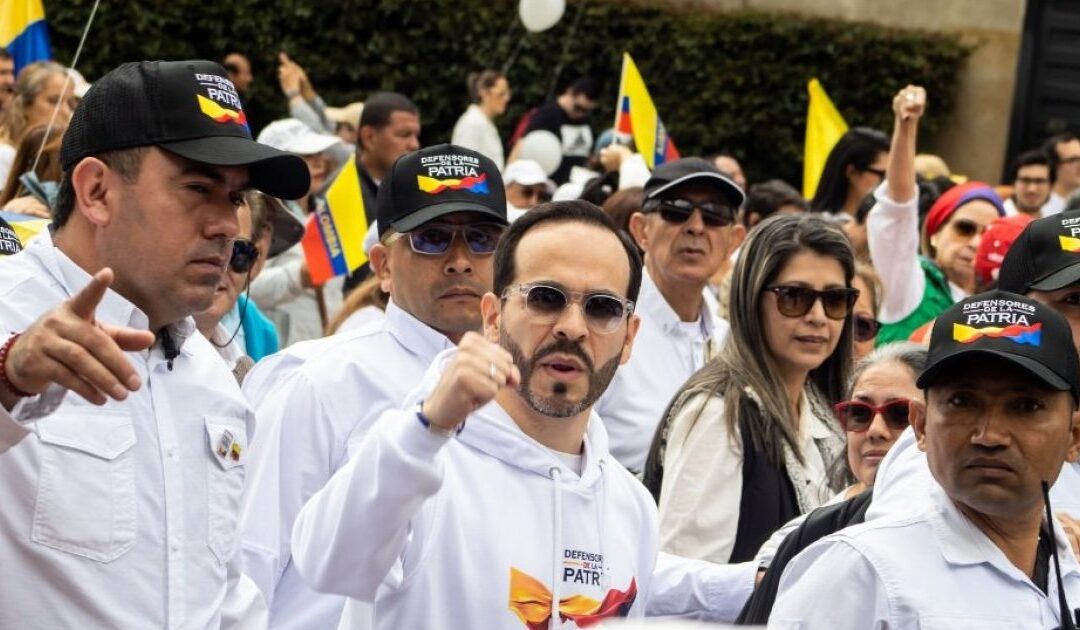
With nearly all votes counted, right-wing outsider Abelardo de la Espriella and left-wing senator Iván Cepeda emerged as the two finalists, setting up a stark ideological confrontation between a hardline security agenda and a continued peace-and-reform strategy.
#ColombiaElections Right-wing presidential candidate Abelardo de la Espriella outperformed expectations in Colombia’s first-round election, finishing ahead of the left-wing candidate despite polling deficits leading up to the vote. He has campaigned on a tough anti-crime platform… pic.twitter.com/qeSBAg0tOi
— Gateway Hispanic (@GatewayHispanic) June 1, 2026
Colombia is heading into a decisive presidential runoff on June 21 after a tightly contested first round that highlighted deep political polarization, rising insecurity, and growing debate over the direction of the country under outgoing President Gustavo Petro.
Violence Shadows the Campaign
The electoral season has unfolded under unusual levels of political tension and violence.
According to Colombia’s electoral observation authorities, at least 63 incidents of violence—including threats, attacks on campaign offices, vandalism of political materials, and targeted intimidation—were recorded across 21 departments during the campaign period affecting multiple presidential teams, including those of De la Espriella and Cepeda.
In addition, reports from regional media indicate that members of campaign teams have been killed or threatened in separate incidents, prompting increased security measures for candidates and forcing several rallies to be held under heavy protection.
The wave of violence has reinforced concerns that armed groups and criminal organizations are attempting to influence or destabilize the electoral process, a recurring issue in Colombia’s modern democratic history.
Abelardo de la Espriella: Hardline Security Outsider
Abelardo de la Espriella, a 47-year-old lawyer and businessman, enters the runoff as one of the most unconventional candidates in recent Colombian politics.
With no prior elected experience, he built his public profile as a high-profile criminal defense attorney and media personality before entering politics. His campaign has surged on a platform centered almost exclusively on security.
¡Vamos a derrotar la tiranía y el absolutismo!
Pasamos a segunda vuelta gracias a los más de 10 millones de colombianos que respondieron al rugido.
¡En 21 días haremos historia!
Los espero en el cubo de cristal del Malecón del Río, para celebrar juntos esta victoria.
— Abelardo De La Espriella (@ABDELAESPRIELLA) May 31, 2026
De la Espriella proposes a major expansion of state coercive power, including the construction of large-scale prisons, intensified military operations against armed groups, and an end to ongoing peace negotiations with criminal organizations.
Enhorabuena, amigo Abelardo @ABDELAESPRIELLA, por tu gran victoria en primera vuelta de las elecciones presidenciales en Colombia.
Los colombianos tienen en la firmeza y valentía del tigre una oportunidad histórica para que su nación recupere la libertad, la prosperidad y la… pic.twitter.com/mwNsQsqlwc
He has also framed his campaign as a response to what he describes as institutional weakness and policy failures in the fight against drug trafficking and illegal armed groups. His rhetoric has drawn strong support from voters frustrated by persistent violence, but also criticism from human rights advocates who warn of potential democratic and civil liberties risks.
During the campaign, De la Espriella also claimed to have received intelligence warnings about potential assassination attempts, underscoring the heightened security climate surrounding the election.
Iván Cepeda: Continuity of Peace and Reform
Iván Cepeda, a longtime senator and «human-rights advocate», represents the continuity wing of Colombia’s current governing coalition.
Closely aligned with President Gustavo Petro, Cepeda supports ongoing negotiations with armed groups as part of a broader “total peace” strategy aimed at reducing conflict through dialogue and reintegration rather than purely military solutions.
His platform emphasizes structural reforms, including expanded social programs, rural development, and efforts to reduce inequality—issues he argues are the root causes of Colombia’s decades-long internal conflict.
Supporters see him as a defender of long-term peacebuilding and institutional reform. Critics argue that previous negotiation efforts have failed to significantly reduce violence and have allowed armed groups to reorganize and expand.
Petro’s Legacy at the Center of the Election
The election was further overshadowed by controversy after President Gustavo Petro wrote on social media that he did not accept the preliminary vote count (preconteo), arguing that only the official scrutiny process conducted by electoral authorities would determine the final result.
El llamado conteo transmitido no tiene fuerza vinculante. sus datos no son norma pública. Como presidente no acepto los resultados del preconteo de la firma privada de los hermanos Bautista, porque debiendo estar quietos los algoritmos del software de conteo y escrutinios, en la…
Although President Gustavo Petro is constitutionally barred from seeking re-election, his administration remains central to the political debate shaping the runoff.
Petro’s government pursued ambitious reforms in healthcare, labor policy, and environmental regulation, while also prioritizing «peace negotiations» with multiple armed groups. However, his tenure has been marked by persistent security challenges, political polarization, and criticism over the effectiveness of his “total peace” strategy.
The election is widely interpreted as a referendum on whether Colombia should continue Petro’s reform-oriented approach or shift toward a more forceful security-first model.
A Battle for the Political Center
With both candidates mobilizing their bases, the outcome is likely to depend on centrist and undecided voters who did not strongly align with either camp in the first round.
Turnout is expected to play a decisive role, especially given that participation in the first round was lower than anticipated for an election of this magnitude.
Economic concerns, security conditions, corruption, and trust in state institutions are expected to dominate the final weeks of campaigning.
A Defining Moment for Colombia
The runoff between De la Espriella and Cepeda reflects a broader struggle over how Colombia should confront long-standing challenges: armed conflict, inequality, and institutional weakness.
The result will determine not only the country’s political direction but also its approach to peace and security at a time when violence continues to shape public life.
For many voters, the choice is not simply ideological—but a question of which path offers greater stability in an uncertain moment.
Missing Scientist and Nuclear Lab Employee Found DEAD in New Mexico Forest as the Shocking Circumstances Surrounding Her Disappearance are Revealed
June 1, 2026
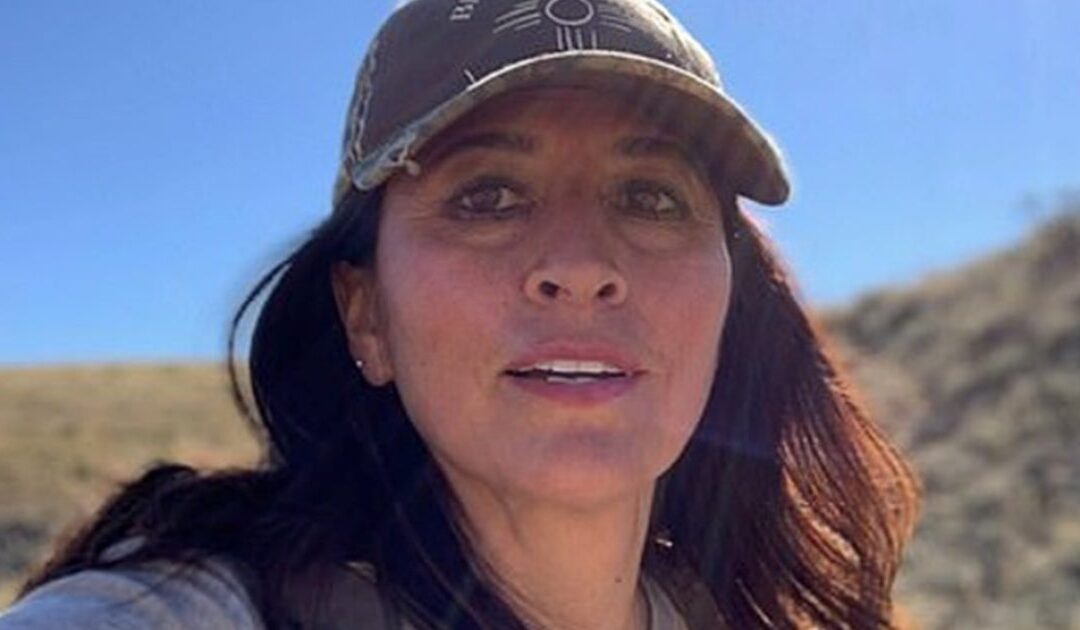
Missing nuclear scientist Melissa Casias was discovered dead last week after disappearing almost a year ago in mysterious circumstances. Credit: Melissa Casias Facebook
A missing scientist has been discovered dead in a New Mexico forest, but that is just the beginning of a more harrowing and stunning story.
As The Daily Mail reported on Monday, New Mexico State Police announced that they identified the remains of 54-year-old Melissa Casias, a scientist and nuclear lab employee, who worked as an administrative assistant at the Los Alamos National Laboratory (LANL). The Office of the Medical Investigator in New Mexico has not yet determined the cause of her death.
Casias was last seen alive on June 26, 2025. Her body was found in the McGaffey Ridge area of the Carson National Forest.
This is about six miles from the last place Casias was seen walking before being declared missing.
It’s unknown how long Casias’s body was in the forest before it was found. But it’s surprising it took this long because this is a part of a US Forest Service restoration project where crews have been working consistently since December 2025.
Casia’s disappearance and death are also quite alarming. The Mail notes that she previously left ALL RECORDS from her phones (she had more than one), left her identification behind, and vanished last June.
Sounds like something straight out of a spy thriller. What was going on?
Casias vanished after dropping off her husband, another LANL employee, at the facility that June morning, approximately 70 miles from their home. That was when Casias’s behavior allegedly became unusual, as she claimed she would need to return home after forgetting the badge needed to access the nuclear lab.
According to her husband, Mark, a superintendent at the lab, Casias had the security badge with her when she dropped him off that morning, as she would have needed the badge to get past the security checkpoints.
When Casias arrived in Ranchos de Taos, the couple’s daughter, Sierra, reportedly told investigators that her mother visited the teen’s place of work to drop off a sandwich and then said she planned to work from home after forgetting the badge needed to access the nuclear lab.
The wife and mother then wiped all records from her phones before leaving them and her identification behind and walking out of her home in Ranchos de Taos.
Here is a surveillance screenshot of Casias walking alone in New Mexico after dropping off her husband at work at the Los Alamos National Laboratory:
Melissa Casias Credit: GoFundMe
Former FBI Assistant Director Chris Swecker told the Daily Mail in March that he thought Casia’s disappearance was part of a bigger pattern involving individuals who had access to top-secret government research.
Swecker theorized that Casias’s work at LANL made her a target for abduction. The reason is that an administrative assistant often has access to the same sensitive files as their superiors.
“In a classified lab, or just a high clearance lab, they would basically be in the know on what’s going on,” Swecker explained. “And it wouldn’t be the first time their administrative assistant has been targeted.”
As The Gateway Pundit has reported, a troubling pattern drew scrutiny after the mysterious deaths of scientists tied to America’s most sensitive space and defense programs. Up to 11 have been discovered missing or dead.
In fact, prominent UFO researcher, Ancient Aliens personality, and bestselling author David Wilcock was found dead last month in an apparent suicide outside his home in Boulder County, Colorado.
He had just TWO DAYS earlier posted a video, warning about how it’s ‘scary’ that ‘scientists are going missing,’ and that he was not suicidal.
The FBI under Director Kash Patel has launched a major investigation into the mysterious deaths and disappearances of at least 11 high-level U.S. scientists with access to classified information in nuclear, aerospace, propulsion, missile technology, and UAP-related programs.
President Donald Trump has publicly stated the White House is looking into the cases, describing the string of incidents as highly suspicious.
We use technologies like cookies to store and/or access device information. We do this to improve browsing experience and to show (non-) personalized ads. Consenting to these technologies will allow us to process data such as browsing behavior or unique IDs on this site. Not consenting or withdrawing consent, may adversely affect certain features and functions.
Functional
Always active
The technical storage or access is strictly necessary for the legitimate purpose of enabling the use of a specific service explicitly requested by the subscriber or user, or for the sole purpose of carrying out the transmission of a communication over an electronic communications network.
Preferences
The technical storage or access is necessary for the legitimate purpose of storing preferences that are not requested by the subscriber or user.
Statistics
The technical storage or access that is used exclusively for statistical purposes.The technical storage or access that is used exclusively for anonymous statistical purposes. Without a subpoena, voluntary compliance on the part of your Internet Service Provider, or additional records from a third party, information stored or retrieved for this purpose alone cannot usually be used to identify you.
Marketing
The technical storage or access is required to create user profiles to send advertising, or to track the user on a website or across several websites for similar marketing purposes.




 (@Santi_ABASCAL)