

Belgium: 9 Migrant Teens Walk Free After Being Found Guilty of Repeated Gang-Raping 14-Year-Old Belgian Schoolgirl

Belgium: 9 Migrant Teens Walk Free After Being Found Guilty of Repeated Gang-Raping 14-Year-Old Belgian Schoolgirl

Belgium: 9 Migrant Teens Walk Free After Being Found Guilty of Repeated Gang-Raping 14-Year-Old Belgian Schoolgirl
June 1, 2026

Empty Forest via FreeImagesLive

In a verdict that has ignited righteous fury across Belgium and beyond, nine migrant minors from cultures alien to Western Civilization have been convicted of the repeated gang rape of a 14-year-old Belgian girl in Kortrijk will serve no prison time whatsoever.

Instead, according to reports from the Belgian press, youth court handed down slaps on the wrist—probation, community service, and counseling—exposing once again how globalist immigration policies and a broken justice system prioritize offenders over the safety of native, law-abiding citizens.

The attacks, which unfolded in a secluded forest during the 2024 Easter holidays, have left the victim’s life in ruins, while the perpetrators, many from North African and Somali backgrounds, face little more than a brief interruption to their routines.

The horror began in early April 2024 in Kabouterbos, a wooded patch squeezed between the E17 highway and a decaying social housing estate in Kortrijk. The girl’s then-16-year-old boyfriend lured her there under false pretenses, only for his group of migrant friends to ambush and gang rape her.

What followed was not a one-off crime but a calculated nightmare repeated over four days, with the victim being coerced into returning twice more for further violations by the same pack.

Court records confirm the assaults occurred between April 2 and April 6. The girl endured at least two rapes and multiple other sexual abuses during three separate incidents. Smartphones captured the depravity, with footage gleefully circulated on Snapchat among the group, turning the young teenage girl’s private trauma into public spectacle.

A source close to the investigation described the exploitation in stark terms: “The girl was loaned out and raped several times and in different ways.” This was no impulsive act but a systematic betrayal, enabled by the boyfriend’s repeated deceptions and the complicity of his circle.

After the third ordeal, the terrified 14-year-old finally summoned the courage to report the crimes to police. Investigators quickly identified 11 suspects, all male and aged 11 to 16 at the time. One boy, just 11 years old, was deemed too young for juvenile court proceedings. Another suspect was cleared after deeper scrutiny, leaving nine to face justice.

Those nine appeared before the juvenile court and were unanimously found guilty of rape, as reported by VRT on Friday. Seven received a mere 30 hours of mandatory community service each, a token penalty that mocks the severity of their brutal crimes.

The former boyfriend, identified as the instigator, received two years of strict conditional release. He must adhere to a guidance program focused on sexuality and relationships, maintain school attendance, and observe a complete contact ban with the victim.

Though briefly held in a closed institution after the initial complaint, he will not return there unless he violates his terms. Another youth was ordered into the identical sexuality and relationships program.

A third faces mandatory drug treatment as part of his lenient disposition. None will see the inside of a detention facility, despite the premeditated and repeated nature of the violence. The victim’s lawyer, Elise Standaert, painted a harrowing picture of the toll on her client during the marathon court session that stretched an entire day.

“It was extremely traumatic for her to see all the suspects again,” Standaert said. “Her daily life has been completely destroyed; she is no longer the same teenager she was back then.” Standaert continued, her voice underscoring the human cost: “She has gone through hell multiple times and will carry this trauma with her for the rest of her life.”

The girl has been provisionally awarded €15,000 in damages, a mere pittance, with a court-appointed expert tasked to assess further compensation for her shattered existence. Even the boyfriend’s own defense counsel, Thomas Vandemeulebroucke, acknowledged the gravity while attempting to soften his client’s role.

“He didn’t mean to lure her along, it originated from a certain group dynamic,” Vandemeulebroucke claimed. “My client deeply regrets what happened.”

Vandemeulebroucke also highlighted the family background, noting the parents were “wealthy people who have tried to give their son a good upbringing.”

He added a broader societal observation: “The parents don’t understand how this could happen. It also strikes me that suspects of such crimes are becoming younger and younger. That is very disturbing.”

One defense attorney for a suspect of Somali origin, Kelly Decaluwé, expressed unprecedented shock after 15 years in practice. “These are horrible facts,” she stated.

“The question is how it is possible that these children have lost all sense of norms. What should we do with this? How are we going to solve this?”Decaluwé framed the case as a challenge for the entire nation: “It is a question that should be asked not only to the juvenile judge but also to society as a whole. I have not yet experienced such facts in my 15-year career.”

Local authorities were quick to voice dismay when the allegations first surfaced. Kortrijk Mayor Vincent Van Quickenborne described the acts as “crappy” with “no words” to capture their horror.

Speaking both as a politician and “as a father of three young children,” he admitted awareness of the investigation but offered little beyond words of condemnation.The initial response to the crimes saw ten migrant minors arrested.

Four were placed under house arrest, while six were detained in a young offenders’ institution. Three of those detained were later released on conditional bail following early hearings, foreshadowing the ultimate leniency.

This case is not an isolated tragedy but a predictable outcome of unchecked mass immigration and multicultural experiments that have strained Belgian communities to the breaking point. Neighborhoods like the rundown social housing area near Kabouterbos have become flashpoints where cultural clashes erupt into violence against vulnerable locals.

Ordinary Belgians have long warned that open-border policies import wholly incompatible values and cultures, eroding the safety net that once protected daughters, sisters, and schoolgirls. Yet globalist elites in Brussels and beyond continue to push the same failed agenda, shielding offenders while native victims pay the price.

The lenient verdict underscores a deeper rot in Europe’s justice systems: juvenile courts, designed for minor mischief, now handle barbaric felonies with kid gloves. When perpetrators hail from migrant backgrounds, the instinct seems to be understanding and reintegration rather than decisive punishment.

Public outrage is mounting, fueled by the realization that Belgian sovereignty and cultural cohesion are being sacrificed at the altar of diversity and multiculturalism. Families in Kortrijk and across Flanders are asking the hard questions: How many more girls must suffer before immigration policies are reversed and borders are secured?

The victim’s ordeal, from ambush in the Gnome Forest to retraumatization in court, symbolizes the quiet desperation of a nation under demographic siege. Her trauma is permanent while the perpetrators’ minor inconvenience is temporary.

As details of the Snapchat videos and “loaned out” exploitation circulate, Belgians are confronting the uncomfortable truth: this is what unvetted migration from distant cultures looks like in practice.

Politicians like Mayor Van Quickenborne express shock, yet few dare link the crime wave to the very policies they champion.

This disconnect between rulers and the ruled is precisely why right-wing populist, immigration restrictionist voices, and those in favor of remigration are rising across the continent. For the 14-year-old girl and her family, justice remains elusive. A €15,000 payout and expert evaluation cannot restore innocence stolen in broad daylight by those who should never have been in Belgium to begin with.

The post Belgium: 9 Migrant Teens Walk Free After Being Found Guilty of Repeated Gang-Raping 14-Year-Old Belgian Schoolgirl appeared first on The Gateway Pundit.

Go to Source
Author: Robert Semonsen
The Myth of Socialism: USA Standard of Living Higher Than Europe; Wages, Taxes, Crime, and Services

The Myth of Socialism: USA Standard of Living Higher Than Europe; Wages, Taxes, Crime, and Services

The Myth of Socialism: USA Standard of Living Higher Than Europe; Wages, Taxes, Crime, and Services
June 1, 2026

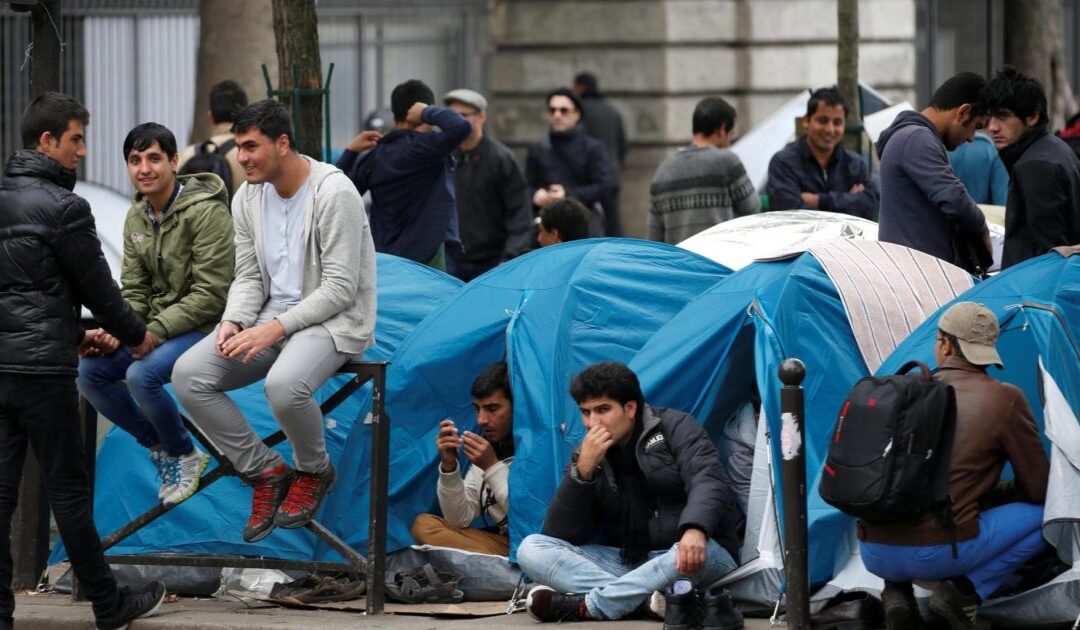
Group of young men sitting and standing near blue tents in an urban setting, highlighting homelessness and refugee challenges.
Most Europeans earn less than Americans and pay higher taxes. Meanwhile, despite widespread social programs, a large percentage of the population remains poor by U.S. standards. Photo courtesy of Inside Europe / Vladan Lausevic.


Many people believe Europe has a higher standard of living than the United States. This belief is typically based on several commonly cited arguments, including crime, social welfare systems, healthcare, and transportation infrastructure.

Comparisons between Europe and the United States often focus heavily on government-provided benefits while paying less attention to differences in income, taxation, purchasing power, housing affordability, employment opportunities, and consumer choice. Europe is also frequently discussed as a single entity despite significant differences between countries.

Europe consists of between 44 and 50 countries, depending on the definition used. The most common geographic definition counts 44 sovereign states, while broader definitions that include microstates and transcontinental countries such as Russia and Turkey, as well as countries like Armenia, Azerbaijan, and Georgia, place the total closer to 50.

As an example of how economically diverse Europe is, the richest country, Luxembourg, has a GDP per capita, or average income, of about $140,000 to $160,000 per year, while the poorest country, Moldova, has a GDP per capita of about $8,000 to $10,000.

Supporters of the European model point to universal healthcare, social welfare programs, public transportation, and lower crime rates as evidence of a superior standard of living. These comparisons often overlook higher wages in the United States, lower taxes, larger homes, higher rates of vehicle ownership, and the tradeoffs and advantages associated with different approaches to healthcare and transportation.

Crime is another frequent point of comparison. Many Europeans falsely believe school shootings are a major cause of death in the United States. At the same time, they ignore the fact that parts of Europe are extremely unsafe and that much of Europe has higher levels of theft, pickpocketing, muggings, home invasions, and other categories of crime. Furthermore, European cities that have allowed waves of migrants and asylum seekers from North Africa and Africa have seen sexual crimes and rape increase dramatically.

Healthcare is also central to the debate. Europe is often praised for universal coverage, but wait times in many countries are extremely long, and patients frequently require prior authorization before accessing specialists or advanced treatments. Quality also varies dramatically between countries. At the same time, the majority of Americans are covered through employer-sponsored plans, government programs such as Medicare and Medicaid, or private insurance.

Social welfare systems and transportation infrastructure are also commonly cited as European advantages. Supporters highlight government benefits and extensive public transportation networks.

Europe, however, has created a welfare class of people, largely migrants, who live on government benefits. This has more or less bankrupted the welfare system in many countries, causing taxes to increase and benefits to decrease while also creating a generation of disgruntled migrants who are now responsible for much of the crime.

The highly touted public transportation system is better in most European cities than in U.S. cities, but for long-distance travel the United States still ranks higher. Europeans who claim transportation is cheaper in Europe are actually referring to the out-of-pocket cost per traveler, which is reduced through government subsidies funded by taxpayers.

Claims that the United States should have high-speed rail or more passenger rail often ignore the geographic reality of the country. The United States has a much lower population density than Europe, averaging approximately 98 people per square mile (38 people per square kilometer) compared to 186–194 people per square mile (72–75 people per square kilometer) in Europe. A train from New York to California would take days while passing through large areas with relatively small populations.

As an example, a round-trip plane ticket from New York to Los Angeles can cost as little as $200 on a discount travel site, whereas a train ticket from Paris to Moscow, roughly the same distance, would cost around $450. The flight to Los Angeles takes about 5 hours and 40 minutes, while the train journey takes approximately 38 to 40 hours.

The following sections examine crime, wages and taxes, healthcare, social welfare systems, and transportation infrastructure as measures of standard of living in Europe and the United States.

While the U.S. homicide rate is higher than Europe’s, the data across other crime categories produces a different comparison. School shootings killed 18 people in 2024 across 39 incidents. Homicides in 40 major American cities fell 44% from their 2021 peak, with robberies down 23% and residential burglaries down 17%.

The EU recorded 5.26 million theft offenses and 1.2 million burglaries in 2024, with rape up 150% since 2014 and sexual violence up 94% over the same period. Germany recorded 29,014 knife-related criminal offenses in 2024, an average of 79 per day, while knife crime in England and Wales rose 87% over a decade. In the UK, over 50% of home burglaries occur while occupants are inside, compared to 28% in the United States (This is the Second Amendment at work. Burglars are afraid of armed homeowners in the US).

Italy recorded 2.38 million total crimes in 2024, the fourth consecutive annual increase, with street robberies in Florence up 56% and Rome up 24% compared to pre-pandemic levels. The U.S. national burglary rate of 229 per 100,000 is below Denmark’s 602, Belgium’s 410, and Sweden’s 337.

The wage comparison consistently favors the United States. Among the seven largest developed economies, the United States had the highest average wage by a significant margin in 2024 at $82,933 per year, compared to Germany at $69,433, the UK at $63,691, France at $60,608, Spain $54,564, and Italy at $51,019.

The gap widens further at the low end. Bulgaria’s average monthly net salary stands at €850 (~$935), Romania at €945 (~$1,040), and Hungary at €980 (~$1,078), all below the U.S. federal poverty guideline of $15,060 annually for a single person. When Europeans make blanket claims about Europe having a higher standard of living, they often forget that Europe includes nearly twice as many countries as the European Union. Beyond the EU members, Moldova averages $507 per month, Albania $528, and Serbia $822.

Most consumer products are more expensive in Europe because of the value-added tax (VAT), which averages 21.9%. VAT differs from U.S. sales tax in that it is applied at every stage of production, while the average U.S. sales tax of 7.5% is a single tax applied at the point of sale. Across Europe, VAT rates range from 16% in Luxembourg to 27% in Hungary.

Across Europe, income tax rates are also high. The average American salary of $89,000, or approximately €75,000, would place a worker in a 40–50% tax bracket in most European countries.

Unemployment is much higher in Europe. As of early 2026, the EU unemployment rate stood at 5.9% and the euro area rate at 6.2%, compared to 4.4% in the United States as of February 2026. Italy’s unemployment rate was 6.5% in December 2024, while Spain’s stood at 11.4%. Youth unemployment among 25-to-29-year-olds was even higher, reaching 15.2% in Spain and 18.8% in Italy as of late 2025.

The housing situation in Europe reflects a combination of lower wages, higher taxes, and constrained land use. According to Eurostat, the average age at which Europeans left their parental home was 26.2 in 2024, compared to 30.1 in Italy and 30.0 in Spain. Across the EU, 49% of adults aged 18–34 still lived with their parents, including 50% in Italy, 54% in Greece, and 64% in Croatia. Spain’s housing affordability crisis has become so severe that Bankinter and Caixabank Research concluded that “renting is no longer a viable option for domestic demand,” with affordability ratios exceeding 50% of income in major cities.

Home prices are proportionally higher in Europe, where most people live in apartments and only the very wealthy own a multi-story home with a basement, attic, and a small amount of land, as many Americans do. Measured as the number of years of average salary required to purchase the average home, the ratio is approximately 5 years’ salary for the average home in the United States, compared to 8 years’ salary in England, 10 in Italy, and 14 in Portugal, rising to 23 in Lisbon.

As bad as Europe’s unemployment numbers are, the reality is even worse. Unemployment statistics count only working-age adults who are employed or actively seeking work. Anyone on welfare, disability, or who has stopped looking for a job is excluded, which is why a country can report low unemployment while supporting large numbers of non-working adults through the state. The employment-to-population ratio shows that across the EU, about 30% of working-age adults are not working, with the figure rising to around 40% in countries such as Italy and Spain.

The non-working population in Europe lives on government benefits, creating a larger dependency ratio for a population with a shrinking workforce and declining birth rates. By contrast, in the United States, 12.3% of the population received SNAP (food stamps) in fiscal year 2024, while about 21% received some form of welfare.

Despite a lifetime of paying higher taxes, Europeans receive less from state pensions than Americans receive from Social Security. The Social Security Administration reports the average monthly retirement benefit for January 2026 at $2,071. This is only one component of American retirement income, as most working Americans also accumulate private savings through 401(k) plans, IRAs, and employer pension plans. European state pensions, by contrast, are typically the primary or sole source of retirement income. As of 2023, the average gross annual old-age pension in the EU was €17,321 (about $19,050), equal to approximately €1,443 (about $1,587) per month, according to Eurostat.

The gap between American and European retirees widens sharply when private savings are included. According to the Federal Reserve’s Survey of Consumer Finances, Americans aged 65–74 have average retirement savings of $609,230, with a median of $200,000. Empower’s March 2026 data places average U.S. retirement savings across all age groups at $547,840, with Americans in their 60s averaging more than $1.2 million. Retirees in wealthier European countries such as Switzerland and Germany typically hold private savings of €50,000–€150,000 (about $55,000–$165,000), while retirees in Spain and Portugal generally hold between €100,000 and €200,000 (about $110,000–$220,000).

Healthcare is another area where myths abound. The belief that Americans are broadly uninsured is not supported by federal data. According to the U.S. Census Bureau, 92% of Americans, roughly 310 million people, had health insurance coverage in 2024, with employer-sponsored plans covering 53.8% of the population, Medicare 19.1%, and Medicaid 17.8%. The uninsured population is concentrated among working-age adults, particularly in states that did not expand Medicaid. While this represents a genuine policy gap, it falls far short of the widespread lack of coverage often portrayed in popular narratives.

Care quality can be poor and wait times long in much of Europe. The FDA typically approves new drugs faster than Europe’s EMA. For cancer drugs approved between 2010 and 2020, the median gap was 227 days, meaning European patients waited roughly seven and a half months longer to access the same treatments. OECD data show that Poland, Hungary, and Slovenia report wait times of six months to more than a year for elective procedures such as hip replacements.

Germany, the Netherlands, and Switzerland generally have specialist wait times competitive with the United States. European healthcare is not a single system, ranging from the relatively efficient German model to strained public systems in Southern and Eastern Europe.

Discussions comparing U.S. and European transportation infrastructure often ignore several crucial factors, including the fact that Americans, with higher incomes and lower taxes, can more easily afford cars. Given the geography and population density of the United States, private vehicle ownership is more practical than extending passenger rail into sparsely populated rural areas.

The United States has 860 vehicles per 1,000 people, compared to 600–700 per 1,000 in most Western European countries. Americans also travel substantially more, driving an average of 13,662 miles annually.

On infrastructure scale, the United States leads by every major measure. The U.S. road network totals 4.2 million miles, according to the Bureau of Transportation Statistics and Statista. The entire EU road network totals roughly 5.6 million kilometers (3.5 million miles), meaning the United States, with about 45% of Europe’s population, has more miles of road than Europe. The U.S. rail network totals 224,000 miles (360,000 kilometers), more than twice Europe’s 94,000 miles (151,000 kilometers).

Europe has roughly 12,000 airfields total including all airstrips and heliports, but only 500–600 airports handling scheduled commercial flights, per OurAirports via Voyeglobal. Against the US figure of 15,873.

Europe has extensive high-speed rail, while the United States has almost none, largely because high-speed passenger rail does not make economic sense given the country’s size and population density. The combination of private cars, buses, conventional rail, and air travel serves Americans without the billions of dollars that would be required to build high-speed rail systems with limited ridership.

Where America far outpaces Europe is in freight rail. The Association of American Railroads reports that freight rail accounts for roughly 40% of U.S. long-distance freight volume by ton-miles, more than any other mode of transportation, while producing just 0.5% of total U.S. greenhouse gas emissions. This more efficient transportation system is another reason many consumer goods are cheaper in the United States than in Europe.

One of the many reasons Americans prefer to drive is that it costs essentially the same for one person, two people, or an entire family to travel by car, whereas rail requires individual tickets for each passenger. Europeans often respond that discounted family rail tickets are available.

However, European passenger rail fares appear cheaper largely because of government subsidies. The cost is not lower; it is shifted to taxpayers. Low fares in countries such as Poland, Latvia, and Hungary are made possible through government support and public-service models in which ticket prices primarily cover operating costs rather than reflect the true market cost of travel.

The travel breadth data further undermines the claim of European superiority. According to European Commission and Eurostat data, 37% of EU citizens, nearly 190 million people, have never been outside their own country, with the trend most pronounced in Italy, Spain, and Poland.

Lower wages, higher taxes, higher prices, smaller homes, and less convenient travel undermine claims that the standard of living in Europe is higher than in the United States.

The post The Myth of Socialism: USA Standard of Living Higher Than Europe; Wages, Taxes, Crime, and Services appeared first on The Gateway Pundit.

Go to Source
Author: Antonio Graceffo

The Caitlin Clark Reality TV Is Drama and Comedy

The Caitlin Clark Reality TV Is Drama and Comedy

The Caitlin Clark Reality TV Is Drama and Comedy
June 1, 2026

The Caitlin Clark Reality TV Is a Drama and a Comedy

As noted yesterday, this is the story of a young girl from Iowa who grows up to become the greatest female athlete of her generation and the greatest women’s basketball player ever.  She sets every possible scoring record and most assist records in NCAA history and takes her Iowa team singlehandedly to greatness.

Her fan base grew to unheard of heights.  According to Nielsen ratings and Grok, the most-watched women’s game ever was the 2024 National Championship – South Carolina def. Iowa (18.9 million viewers on ABC/ESPN). This remains the record and was the most-watched basketball game (men’s or women’s, college or pro) since 2019. It peaked at ~24 million.

This is what Clark brought with her to the failing WNBA, a women’s basketball league subsidized by the NBA.  How has the league welcomed her?

The worst league in sports history proved why no one watched their games before Caitlin Clark arrived and why they will never make a profit (they are funded by the NBA).

They had their golden goose, and they cooked it.  To date, rather than provide officiating that was fair and protected Clark, the league allowed women in the league to pull, push, hit, poke, hammer, and totally abuse Clark.  The beatings and abuse took their toll.  No one could have put up with what Clark endured.

Watching Clark’s games in the WNBA was not fun.  Fans found themselves yelling at the refs and the league throughout her games.  Clark was hammered and no foul.  Clark complained and she received a technical foul.  The WNBA is a bad joke.

Unfortunately, the WNBA has been horrible to her since her arrival, constantly trying to downplay her greatness and compare girls without her talent or records to her.

The feedback from Saturday’s game in Portland is amazing.  Up till then, Clark was in the top five in the league in scoring, assists, and 3’s.

Then in Saturday’s night in a game in Portland, Clark had 3 assists and one bucket early on, and her team was up 8 – 2 about 2 and a half minutes into the game.  Clark accounted for all of her team’s points.  So what did her coach do?  She benched Clark.

Clark only played half the game after that.  Her coach next put in 21 different lineups, and the team lost.  The other team beat them by nearly 20 points!

Before benching Clark, the coach yelled at her, then had another player replace her.  It was clear that Clark was complaining about the refs calling her for fouls that weren’t fouls.  Her coach wouldn’t complain with the refs for bogus calls; she bitched at Clark instead.

The comedy continued as the replacement fouled out in 10 minutes.

About this time, the biggest ball hog on the team, Kelcy Mitchell, drove for another bucket and missed (Mitchell never passes and always shoots).  The ball was stuck behind the backboard.

Fans have had enough.

What a mess this reality TV program has become.

The post The Caitlin Clark Reality TV Is Drama and Comedy appeared first on The Gateway Pundit.

Go to Source
Author: Joe Hoft

Sec. Pete Hegseth Slashes $5.1 BILLION In Wasteful Pentagon Contracts Identified By DOGE: “That’s With a ‘B’”

Sec. Pete Hegseth Slashes $5.1 BILLION In Wasteful Pentagon Contracts Identified By DOGE: “That’s With a ‘B’”

Sec. Pete Hegseth Slashes $5.1 BILLION In Wasteful Pentagon Contracts Identified By DOGE: “That’s With a ‘B’”
June 1, 2026

Man in a blue suit speaking about $5.1 billion in Department of Defense contracts, seated in an office setting with visible furniture.
Screenshot

The Deep State’s endless gravy train just collided with a massive brick wall.

In a direct and no-nonsense video announcement, Hegseth revealed the Department of War is immediately terminating $5.1 BILLION — yes, BILLION with a capital B — in wasteful contracts for consulting, nonessential services, DEI, climate nonsense, and duplicative IT work.

According to Hegseth, one of the largest savings comes from contracts awarded through the Defense Health Agency to consulting giants, including Accenture, Deloitte, Booz Allen, and other firms.

Those cuts alone are expected to save taxpayers approximately $1.8 billion.

Another $1.4 billion will be saved by eliminating a software reseller contract tied to enterprise cloud IT services.

Hegseth also highlighted a staggering $500 million Navy contract dedicated to what he characterized as bureaucratic “business process consulting.”

The Defense Secretary noted that funds previously directed toward highly paid consultants could instead be used to improve healthcare services for active-duty military personnel and their families.

Another $500 million in savings comes from the elimination of a DARPA IT help desk contract that Hegseth said duplicated services already being provided by the Defense Information Systems Agency workforce.

Hegseth also announced the termination of 11 additional contracts tied to Diversity, Equity, and Inclusion (DEI), climate programs, COVID-19 response initiatives, and other activities deemed nonessential by the administration.

Pete Hegseth: “Right now, we’re directing the termination of $5.1 billion in DoD contracts. Not million—that’s with a “B.” $5.1 billion in DoD contracts for ancillary things like consulting and other nonessential services.

So, here are a few examples: DHA contracts for consulting services from Accenture, Deloitte, Booz Allen, and other firms. They’re going to save the department $1.8 billion.

How about a software reseller contract for enterprise cloud IT services, saving the department $1.4 billion? A $500 million Navy contract for business process consulting. Again, process. Lots of process. Lots of consultants.

For administrative offices in the Bureau of Medicine. By the way, we need this money to spend on better healthcare for our warfighters and their families instead of paying $500-an-hour business process consultants. That’s a lot of consulting.

How about this? A DARPA contract for IT help desk services that are completely duplicative of services already provided by our DISA workforce, saving the department another $500 million.

We’re also terminating, on the DEI front, 11 more contracts for DEI, climate, COVID-19 response, and related nonessential activities across the department.

We are committed to rooting out DEI, root and branch, throughout this department, and we found 11 more contracts. We’re going to keep looking.

So that’s $5.1 billion in DoD contracts we’re getting rid of.

On top of that, in support of the president’s priorities to stop federal funding for academic institutions that tolerate antisemitism and support divisive DEI programs, this week DoD is also pausing over $500 million in funding to Northwestern University and Cornell University.

And that’s on top of the $70 million in funding we’ve already paused at Columbia, Penn, Brown, and Princeton over the last few weeks.

As if any of these institutions need more government money at all.

So, if you’re keeping score at home, today’s cuts bring our running total to nearly $6 billion in wasteful spending over the first six weeks of the DoD-DOGE effort here at the Defense Department.

Their job is to go out and find the stuff that we can get rid of and then flow back into—drive back into—warfighting capabilities here at the Defense Department.

So, we want to thank our friends at DOGE. We want to thank all the folks here that have contributed to this effort.”

WATCH:

The post Sec. Pete Hegseth Slashes $5.1 BILLION In Wasteful Pentagon Contracts Identified By DOGE: “That’s With a ‘B’” appeared first on The Gateway Pundit.

Go to Source
Author: Jim Hᴏft

HERE WE GO: Burned Mail-In Ballots Found in Los Angeles Drop Box DAYS BEFORE Mayoral Election

HERE WE GO: Burned Mail-In Ballots Found in Los Angeles Drop Box DAYS BEFORE Mayoral Election

HERE WE GO: Burned Mail-In Ballots Found in Los Angeles Drop Box DAYS BEFORE Mayoral Election
June 1, 2026

A voting sign with an American flag, indicating the location for voters to cast their ballots during an election.
Credit: Tony Webster

Los Angeles County election officials are investigating after mail-in ballots were found damaged by fire inside an official ballot drop box just days before LA’s highly anticipated June 2 mayoral election.

The incident was discovered Sunday morning in downtown Los Angeles when election workers were collecting ballots from a drop box outside the county Department of Public Social Services building in the Civic Center area. 

According to county officials, multiple vote-by-mail ballots appeared to have sustained fire-related damage inside the official drop box.

Authorities are also reviewing a separate act of election-related vandalism at a vote center located at Cesar E. Chavez Park in Long Beach. 

In a news release, County officials said the Long Beach incident did not stop voting operations at the site, but the timing of both incidents raises serious concerns about the security of California’s election system as voters head into the final stretch before Election Day.

Los Angeles County Registrar-Recorder/County Clerk Dean Logan said his office is working with law enforcement and other partners to review both incidents and determine whether any voters were affected.

“Our responsibility is to protect voters and ensure every eligible voter has the opportunity to cast a ballot,” Logan said in a statement.

Officials said voters whose ballots may have been damaged in the drop box fire will be contacted directly and given options, including replacement ballots if necessary.

The county has not yet released the number of damaged ballots, the identity of any suspect, or the cause of the fire. A police report was filed with the Los Angeles Police Department, according to the registrar’s office.

The incident comes as California continues to rely heavily on vote-by-mail ballots and ballot drop boxes. State election officials mailed ballots to active registered voters for the June 2 primary, and voters are allowed to return ballots by mail, at official drop boxes, county elections offices, polling places, or vote centers. 

Drop boxes are supposed to provide a secure and convenient option for voters, but incidents like this show the obvious vulnerability of leaving ballots in public collection boxes for extended periods.

This is not the first time Los Angeles County has dealt with fire damage involving a ballot drop box. In 2020, a ballot box outside the Baldwin Park Library caught fire in a suspected arson incident, forcing firefighters to cut open the box and leaving numerous ballots damaged.

Election officials routinely tell voters that mail-in voting and drop boxes are safe and secure. Yet voters are now watching another incident unfold in America’s largest county, where ballots were reportedly burned inside an official drop box shortly before a statewide election.

The post HERE WE GO: Burned Mail-In Ballots Found in Los Angeles Drop Box DAYS BEFORE Mayoral Election appeared first on The Gateway Pundit.

Go to Source
Author: Gregory Lyakhov