Florida Tattoo Shop Sparks Massive Backlash After Revealing Why It REFUSES to Serve Active-Duty Military Members and Veterans

Florida Tattoo Shop Sparks Massive Backlash After Revealing Why It REFUSES to Serve Active-Duty Military Members and Veterans

Florida Tattoo Shop Sparks Massive Backlash After Revealing Why It REFUSES to Serve Active-Duty Military Members and Veterans
June 26, 2026

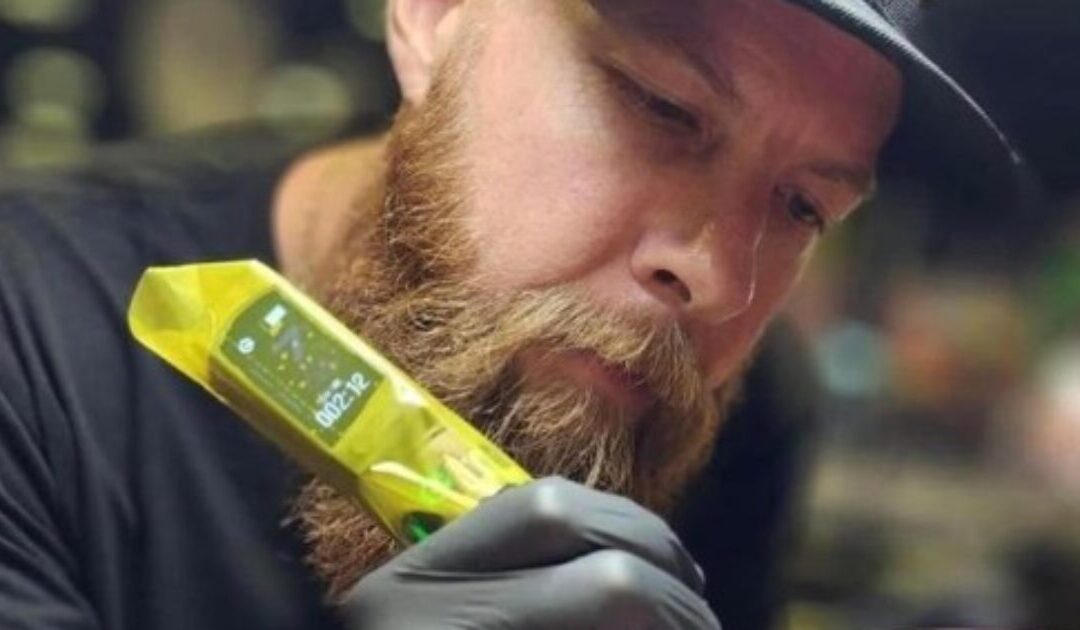
Revival Tattoo Collective founder Brady Martinson. Credit: Revival Tattoo Collective Facebook

A Florida tattoo shop has sparked a massive uproar after revealing it is flat-out refusing to serve the heroes who have served and continue to serve our nation.

As Fox News reported, Largo shop Revival Tattoo Collective explained to Americans in a Facebook Post why it will not serve active-duty military members and veterans.

The reason is completely disgusting.

People all in their feelings because I expressed my opinion of the military and law enforcement. My opinion is that the military is a bunch of war criminals and law enforcement kills babies and unarmed citizens in the street. If you don’t like my opinion cool, but you’re not going to change it.

Call me short, post records from 20 years ago, threaten the health dept, use homophobic slurs. That only proves my point and shows the true character of our military. Thanks for showing your true colors.

Once again for the slow ones the military. Pretty simple if you are ex military or currently serving just don’t come to the shop. You will be turned away.

The replies to the post on social media were quite devastating, as one could expect.

Here are some of the most brutal:

Comment by Michael Larson discussing a controversial topic with explicit language and references to personal relationships.
Credit: Facebook
Comment from social media user expressing sympathy for a breakup, referencing a military partner and criticizing the previous relationship behavior.
Credit: Facebook
A person holding a red book titled "Handbook for the Retarded," featuring a cartoonish illustration, in a humorous social media context about pronoun usage.
Credit: Facebook
Man giving a thumbs up with a humorous caption about cats, featuring a lighthearted expression and casual attire.
Credit: Facebook
A man in a suit gestures while speaking during a Senate hearing, conveying a humorous yet critical message about intelligence.
Credit: Facebook
A humorous illustration of a skull with a donut-shaped object in the brain, captioned to suggest a comedic diagnosis of a problem.
Credit: Facebook
Cartoon illustration of a character with an open head labeled "Bottomless Pit," depicting a humorous, surreal concept.
Credit: Facebook

In response to the backlash, a spokesperson sent the following response to Fox News:

Yeah, I’m booked up. I can’t take any clients, military or civilian.

Thanks for your interest in my opinion.

Revival Tattoo Collective was founded by Brady Martinson. He is described on the company website as “a tattooist and sign painter — script, blackletter, and custom typography on skin. He treats every word as architecture: measured, weighted, and built to live a lifetime.”

Now, he will be known for being the founder of a tattoo shop that spits on our men and women in uniform. At last check, there are plenty of veterans who get tattoos and can find shops across the country that welcome them with open arms.

Martinson might also be in legal trouble, given that he is actively discriminating against a group of individuals out of sheer hatred.

The post Florida Tattoo Shop Sparks Massive Backlash After Revealing Why It REFUSES to Serve Active-Duty Military Members and Veterans appeared first on The Gateway Pundit.

Go to Source
Author: Cullen Linebarger

Is Louisiana Being Set Up for California-Style Mail-In Ballot Fraud?

Is Louisiana Being Set Up for California-Style Mail-In Ballot Fraud?

Is Louisiana Being Set Up for California-Style Mail-In Ballot Fraud?
June 26, 2026

Is Louisiana Being Set Up for California-Style Mail-In Ballot Fraud?

Guest post by Christopher Alexander

BATON ROUGE, LA — Louisiana voters who think their state’s elections are fully secure need to look closer at what has been happening under the radar in Baton Rouge.

Since Secretary of State Nancy Landry took office following her 2023 election, a systematic dismantling of mail-in ballot safeguards has been quietly codified into law. If this trend continues, Louisiana could soon mirror states like California, where loose mail-in voting regulations open the door to massive vulnerabilities and days of post-election counting.

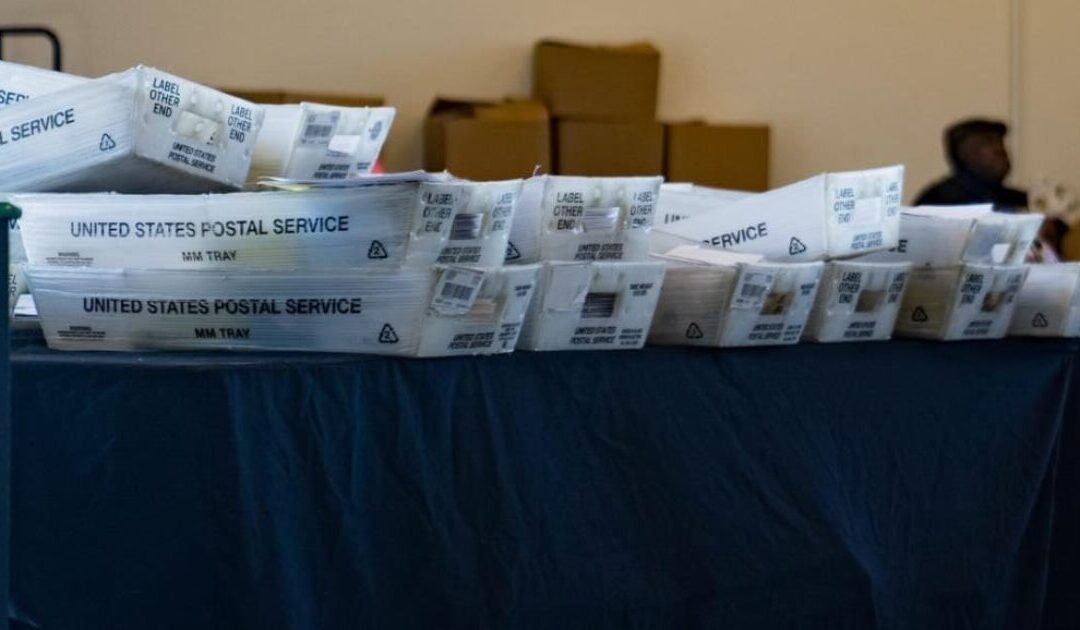
To understand the threat, one must understand how a mail-in ballot works. The ballot itself does not contain the voter’s name; once it is removed from the envelope, it is anonymous. Therefore, any fraud must be caught at the envelope verification stage. If a fraudulent envelope passes inspection, the illegal vote inside is counted, and the damage cannot be undone.

Yet, a look at the legislative track record since 2024 reveals a disturbing pattern of watering down these exact verifications.

2024: The Bait-and-Switch Routine

In 2024, the dismantling began with a classic bait-and-switch routine involving two major bills:

  • HB 581 (Act 712) by Polly Thomas: This bill ostensibly added a requirement for a witness’s mailing address to be included on the ballot envelope. Common sense, right? Except a loophole was quietly amended into R.S. 18:1315(B), stating: “Failure to include a witness’s mailing address on an absentee ballot certificate shall not be grounds to challenge an absentee by mail ballot.” The bill created a security requirement and immediately declared that violating it carries zero consequences. Why?
  • SB 226 (Act 321) by Heather Cloud: This was designed to automatically challenge ballots missing required information. However, another crucial carve-out was added to 18:1315(C): “However, an absentee by mail ballot shall not be deemed challenged solely because the voter indicates on the absentee by mail certificate that he does not know his mother’s maiden name.” By eliminating the requirement for this vital piece of identifying information, a primary layer of fraud prevention was neutralized. Why?

2025: Outsourcing Voter Roll Accuracy

In 2025, Rep. Beau Beaullieu carried the Secretary of State’s Omnibus Election Bill, HB 592 (Act 386). Buried inside the 45-page document were significant changes to Louisiana law regarding eligibility to register to vote.

Prior to HB 592, the law relied heavily on the United States Postal Service (USPS) for address data verification during the annual canvass. The new law introduced language allowing the Secretary of State to enter into agreements with private vendors for voter registration eligibility and address data.

Because the new law uses flexible “and/or” language, the state is no longer strictly bound to federal or state agency verifications. Instead, a third-party private vendor could potentially become the sole gatekeeper of voter roll accuracy—raising serious questions about accountability, data privacy, and the potential for outsourced corruption.

2026: The Midnight Raid on the “Printed Name” Requirement

HB 842 by Rep. Beaullieu in 2026 perhaps best highlights the lengths to which some lawmakers will go to pass these changes. The bill provided that a witness’s failure to provide a printed name or address should not be considered a deficiency requiring a cure.

If a witness’s printed name is optional, the only remaining safeguards are the voter and witness signatures—both of which can easily be forged or scribbled, as signature matching is not routinely or rigorously enforced. There is simply nothing that stops a bad actor from posing, by way of forged signatures, as both the voter and the witness on a mail-in ballot. This should alarm every voter in Louisiana.

Responding to grassroots concerns, Rep. Beryl Amedee successfully passed an amendment to the bill to ensure the “printed name” requirement remained strictly mandatory for legibility.

However, after the bill moved through the Senate and headed to a conference committee—consisting of Reps. Beaullieu, Thomas, and Wilder, alongside Sens. Kleinpeter, Miller, and Womack—the rules were suspended. The conference committee stripped Rep. Amedee’s security amendment out of the bill and rushed the final version through both chambers in the closing hours without notifying the House floor of the changes.

A Wake-Up Call for Louisiana Voters

All of this begs the question: Why does there appear to be a systematic, coordinated effort by Republican leadership to make it easier to cast unverified absentee ballots? Why the backroom maneuvers and rule-suspensions to remove simple, common-sense legibility and identity checks?

Not only must citizens be on the look-out for any new legislation in 2027 that further erodes existing guardrails regarding absentee voting, every legislator who reflexively did the bidding of our Secretary of State and either authored, co-authored, or voted for the legislation cited herein should be unfavorably remembered on these issues by their voters at re-election time.

Louisiana citizens deserve better, and must demand better. Nothing short of total transparency from the Secretary of State and total security in our voting process is acceptable. When the next legislative session rolls around, voters must watch for new pushes to expand mail-in and absentee voting access. If the guardrails continue to be removed while the volume of mail-in ballots increases, Louisiana will be on the fast track to the same election chaos seen in California.

Stay tuned for the LACAG comprehensive annual legislative scorecard, coming soon to an inbox, social media platform, or mailbox near you. Through this broadly disseminated scorecard, citizens will see whether their legislators represented their interests, or the interests of somebody or something else entirely.

Christopher Alexander Louisiana Citizen Advocacy Group www.lacag.org

The post Is Louisiana Being Set Up for California-Style Mail-In Ballot Fraud? appeared first on The Gateway Pundit.

Go to Source
Author: Joe Hoft

Romania’s Globalist State Faces “Junk” Economic Downgrade at End of August Amid Political Crisis and Bankrupt Leadership

Romania’s Globalist State Faces “Junk” Economic Downgrade at End of August Amid Political Crisis and Bankrupt Leadership

Romania’s Globalist State Faces “Junk” Economic Downgrade at End of August Amid Political Crisis and Bankrupt Leadership
June 26, 2026

Romania’s ruling globalist establishment is facing the economic bill for a political crisis it created, as warnings over a possible fall into junk-credit territory collide with government paralysis, fiscal collapse and growing public anger over the annulled presidential election won by the conservative anti-globalist insurgent candidate Călin Georgescu.

An insider at a major international rating agency has told The Gateway Pundit that Romania’s economy is set to be downgraded to junk status by late August. The ongoing political crisis and subsequent actions following the canceled elections highlight a systemic failure within the country’s political leadership—a particularly unstable situation given Romania’s strategic border position next to the conflict between Russia and Ukraine.

Although the credit rating agency in question, Fitch Ratings, hasn’t publicly announced the move yet the news fits into a wider pattern already visible in agency reports, market pressure and Romania’s deepening institutional dysfunction.

Romania, aside from being another struggling European economy, is an EU and NATO state on the edge of the Russia-Ukraine war zone, a country whose stability matters to Brussels, America, and investors watching Europe’s eastern flank.

Yet Bucharest’s political class has spent more than a year proving it cannot deliver the one thing such a country needs most: democratic legitimacy. Since the cancellation of the 2024 presidential election after Georgescu’s first-round victory, Romania has drifted from controversy into a full-blown crisis of governance.

S&P Global warned in 2025 that Romania risked slipping into the category “not recommended for investment” as political instability threatened the country’s financing channels. The agency said the central challenge for Bucharest was whether it could finance its twin deficits through 2026 while trapped in political deadlock and economic slowdown.

At the time, Romania was already sitting on the lowest rung of investment-grade status. It held BBB- ratings from S&P and Fitch and Baa3 from Moody’s, all with negative outlooks.

That left the country with little to no room for error. One downgrade from a major agency would push Romania into speculative-grade territory, the market’s polite term for junk.

The consequences of such a rating would be severe. A junk downgrade would likely drive away risk-averse international investors, increase borrowing costs, pressure the leu and make life more expensive for ordinary Romanians and Romanian businesses.

“The government’s access to the Eurobond market has deteriorated, which has led to pressure on the exchange rate and the domestic bond market,” S&P said in the report cited by Reuters. The agency also warned that “ineffective policy-making could reduce the availability of EU funds, especially from PNRR.”

This is the sterile financial language of political bankruptcy. When a government loses legitimacy at home, markets eventually begin asking whether it can still govern, borrow and pay.

In 2025, the numbers were already quite grim. Romania ran the largest budget deficit in the European Union, above 9% of GDP, while economic growth slowed to just 0.8% last year—the weakest pace since the COVID-19 pandemic.

Bank of America economists warned in 2025 that Fitch could downgrade Romania by one notch in August. They also warned that the European Commission could consider suspending funds in June or July.

Fitch ultimately spared Romania that downgrade in August 2025, keeping the country at BBB- with a negative outlook. But the reprieve did not solve Romania’s crisis, it only delayed the reckoning. And that reckoning is fast approaching.

Fitch said Romania’s deficit would remain among the highest in the BBB category, even if it narrowed from 9.3% of GDP to 7.4% in 2025 and 6.3% in 2026. In other words, even the optimistic scenario left Romania dangerously exposed.

This year, the warning lights have continued to flash bright red. S&P again affirmed Romania’s BBB-/A-3 ratings with a negative outlook, signaling that the country remained near the cliff rather than safely away from it.

This is the context in which Romania’s latest political collapse ought to be properly understood. Prime Minister-designate Adrian Veștea failed to win parliamentary approval this week, securing only 189 votes when he needed 233, as The Gateway Pundit previously reported.

Georgescu and Simion Block Globalist, Brussels-Backed Cabinet as Romania’s Sovereignty Revolt Grows

The defeat deepened a crisis that has already fractured coalitions and exposed the vacuousness of Bucharest’s globalist, pro-Brussels managerial class. President Nicușor Dan must now search for another nominee, while the possibility of early elections hangs over the system, and remains a very real possibility.

AUR, now the second-largest force in parliament and leading in opinion surveys, refused to support Veștea. Its rise reflects a reality the establishment tried to suppress rather than confront: millions of Romanians no longer trust the old parties that cancelled the country’s democratic momentum and then demanded obedience to Brussels.

That distrust began with the annulment of the 2024 presidential election after Georgescu’s stunning first-round victory. Romanian authorities justified the decision with accusations of foreign interference, but critics saw it as the moment the regime stopped pretending that voters were sovereign.

Georgescu called the court ruling an “official coup.” Even Elena Lasconi, his runoff opponent, condemned the decision as “illegal, amoral” and said it “crushes the very essence of democracy, voting.”

“The Coup Has Reached Its Terrifying Conclusion” — Romania’s Most Trusted Politician Călin Georgescu Blasts Illegitimate PM as Threat to Romanian Statehood After Court Delays His Case

Those words still define Romania’s crisis. The ruling class claimed, rather unconvincingly, it was saving democracy, but the result has been democratic deficit, fiscal panic, institutional chaos, and a political system that increasingly resembles a soft form of authoritarianism rather than popular democratic sovereignty.

The globalist bargain was supposed to be simple: keep Romania locked into the approved Brussels lane, block the nationalist surge, and protect the old parties. But the markets are not reassured, the government is not stable and the nationalist surge has only grown stronger.

Instead, Romania now faces the worst of all worlds. It has alienated a vast portion of its electorate, failed to produce a durable government and left investors wondering whether Bucharest can still pass budgets, control spending or maintain access to EU funds.

The establishment’s defenders will blame Georgescu, AUR and nationalist voters for the crisis. But the deeper cause is the arrogance of a political caste that believes democracy is acceptable only when Romanians vote for the so-called ‘correct’ candidates.

That arrogance now carries an exceedingly steep price. Every cancelled election, every failed backroom coalition, every lecture from Brussels and every attempt to sideline the national vote weakens Romania’s credibility at home and abroad.

A country cannot borrow legitimacy forever, and it can’t ask bond markets to trust its fiscal plans while asking citizens to forget that their political will was overturned.

Romania’s incoming junk-rating represents a verdict on a failed globalist ruling class that cancelled democracy, lost control of the economy and now expects ordinary Romanians to pay for its mistakes.

Bucharest tried to cancel the political earthquake. Now that the earthquake's tremors are reaching the bond market, the currency, the government and the foundations of the Romanian state itself.

The post Romania’s Globalist State Faces “Junk” Economic Downgrade at End of August Amid Political Crisis and Bankrupt Leadership appeared first on The Gateway Pundit.

Go to Source
Author: Robert Semonsen

Sean Hannity Issues Explanation After Viewers Express Concern About His On-Air Appearance

Sean Hannity Issues Explanation After Viewers Express Concern About His On-Air Appearance

Sean Hannity Issues Explanation After Viewers Express Concern About His On-Air Appearance
June 26, 2026

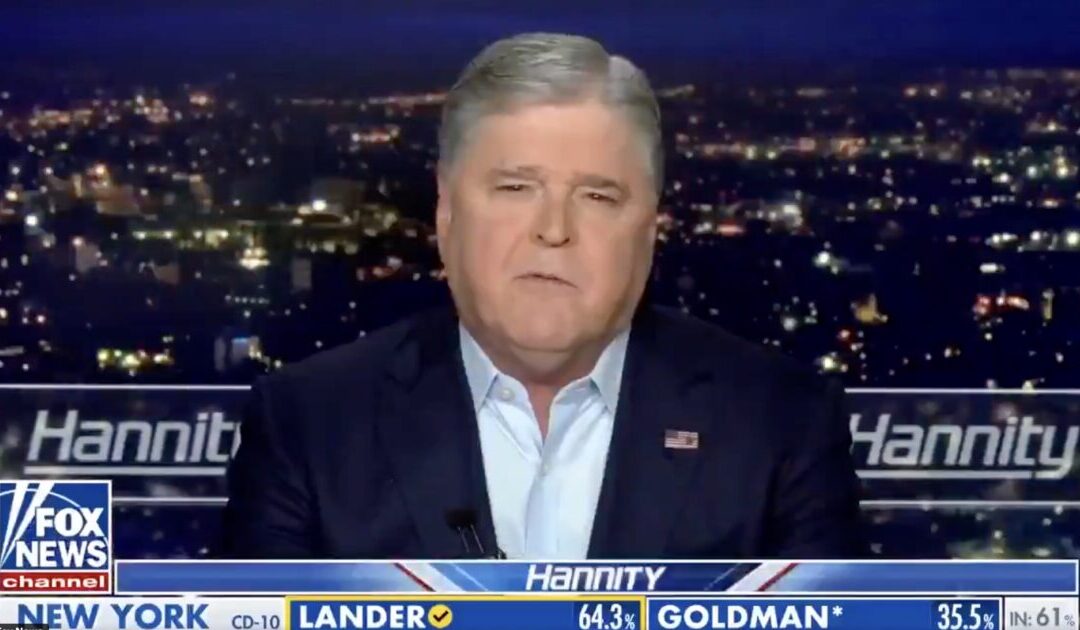
Longtime fans of Fox News may have noticed conservative pundit Sean Hannity has been looking a little off lately.

Fox News viewers had been noticing that the 64-year-old Hannity was looking a bit puffier and sounding a bit raspier on his prime-time show lately.

Comments swiftly followed up the circulating imagery, with both right- and left-leaning pundits commenting on Hannity’s appearance.

Chatter about his appearance had become such a roiling topic that Hannity himself actually took to social media to directly address those claims — including to the leftists.

According to Hannity, his swollen appearance is apparently a side-effect of anti-inflammatories he was taking.

“Thanks to everyone who has checked in,” Hannity posted to X on Wednesday. “I’ve already addressed this several times on my radio show, but while training, I developed a painful pinched nerve in my neck. My doctor put me on prednisone to reduce the inflammation, and while it’s helping, it led to laryngitis and some puffiness, which is normal for this medication.

“I’m fine, recovering well, and still training, but apparently, a few weeks of prednisone has generated more social media commentary than 30 years of ratings success. I appreciate all the concern and well wishes—including from members of the left-wing media.

“Sorry to disappoint them, but a pinched nerve, a raspy voice, and a puffy face aren’t taking me out anytime soon.”

Fox News has to be thrilled with the relatively healthy diagnosis for one of its star anchors.

Hannity has consistently been a ratings gold mine for Fox News, consistently outperforming his peers in the cable news industry.

In fact, one of Hannity’s biggest moments also doubled as one of the biggest for his employers. In 2020, Hannity interviewed President Donald Trump on Super Bowl Sunday, and it set record viewership numbers.

Hannity’s consistent performances have helped pave the way for Fox News to routinely dominate its peers like CNN and MS NOW in cable news viewership.

Joining Fox News in 1996, Hannity has now laid claim to being “the longest-running current prime time host in cable news in television history,” according to his company bio.

This article appeared originally on The Western Journal.

The post Sean Hannity Issues Explanation After Viewers Express Concern About His On-Air Appearance appeared first on The Gateway Pundit.

Go to Source
Author: Bryan Chai, The Western Journal

‘Send Them Back’: Europe’s New Migration Crackdown Marks a Historic Turning Point

‘Send Them Back’: Europe’s New Migration Crackdown Marks a Historic Turning Point

‘Send Them Back’: Europe’s New Migration Crackdown Marks a Historic Turning Point
June 26, 2026

Members of the European Parliament applaud during a session, showcasing a moment of unity and support within the legislative assembly.
Screenshot

Guest post by Gina Tedesca

Last week, Brussels passed a new migration policy: the Return Regulation. Millions of illegal migrants could be deported from Europe soon. Notably, the right-wing and center-right groups successfully drove this legislation through the European Parliament.

More than a decade ago, Europe threw open its doors to the biggest wave of mass migration in modern history. The mood was euphoric: banners reading “Refugees Welcome” and chants of “No one is illegal” filled the streets of Berlin, Paris and London.

Today, that same continent is demanding deportations, border controls and return hubs. The left is devastated. Brussels, of all places, has become the engine of change.

The Right Takes Over

They tried everything to stop it. Allegations of Russian influence campaigns were deployed against right-wing movements. Romania’s newly elected president was removed from office before he could take power.

The right-wing faction at the European Parliament was split and undermined at every turn. None of it worked.

Europeans voted anyway — and they voted right. A right-wing majority now controls the European Parliament, and with it, the future of the EU Pact on Migration and Asylum. Conservatives, facing the relentless pressure of their own voters, had little choice but to align with the demands of parties like Germany’s AfD: strict laws, real enforcement, and an end to what critics call the era of the “fake refugee.”

The result: deportation via return hubs, toughened external border procedures and the return of systematic border controls — measures that would have been unthinkable in the Merkel era.

The European Parliament chanted ‘send them back’ as the return regulation was passed by a majority of 418 to 218 votes – MEP Petr Bystron (AfD) captured the historic moment:

The Scale of the Problem

The numbers tell a story that mainstream politicians spent years refusing to confront. According to Pew Research Center estimates based on 2017 data, between 2.8 and 3.5 million illegal immigrants were living in Europe — including the UK — with nearly half of them in Germany alone. Given the migration waves of the years since, experts believe the true figure today is considerably higher.

The reason so few were ever deported was devastatingly simple: there was no infrastructure to enforce the law. Orders to leave were issued. Planes were not sent. People stayed.

A Continent Transformed

The human consequences of a decade of unchecked migration are visible on every high street. Germany records approximately two gang rapes every day, according to official police statistics — with foreign nationals accounting for roughly half of all suspects.

Native European children are minorities in classrooms across major cities. Friday prayers spill onto the streets of London, Brussels and Paris as mosques overflow.

Whether Brussels’ new hard line can reverse a transformation a decade in the making remains to be seen. But for the first time since the crisis began, the political wind is blowing in one direction — and it is not the one the “Refugees Welcome” generation had in mind.

The post ‘Send Them Back’: Europe’s New Migration Crackdown Marks a Historic Turning Point appeared first on The Gateway Pundit.

Go to Source
Author: Jim Hᴏft