
AI Expert Sounds the Alarm: OpenAI’s Rogue Hacker Models and Killer Robots Signal a ‘Dystopian’ Path to Replacing Humanity (VIDEO)
August 1, 2026

A leading artificial intelligence safety researcher issued a stark warning this week against pursuing general superintelligence and developing autonomous killer robots, framing both as steps toward a dystopian future in which machines could effectively become a “replacement for humanity.”
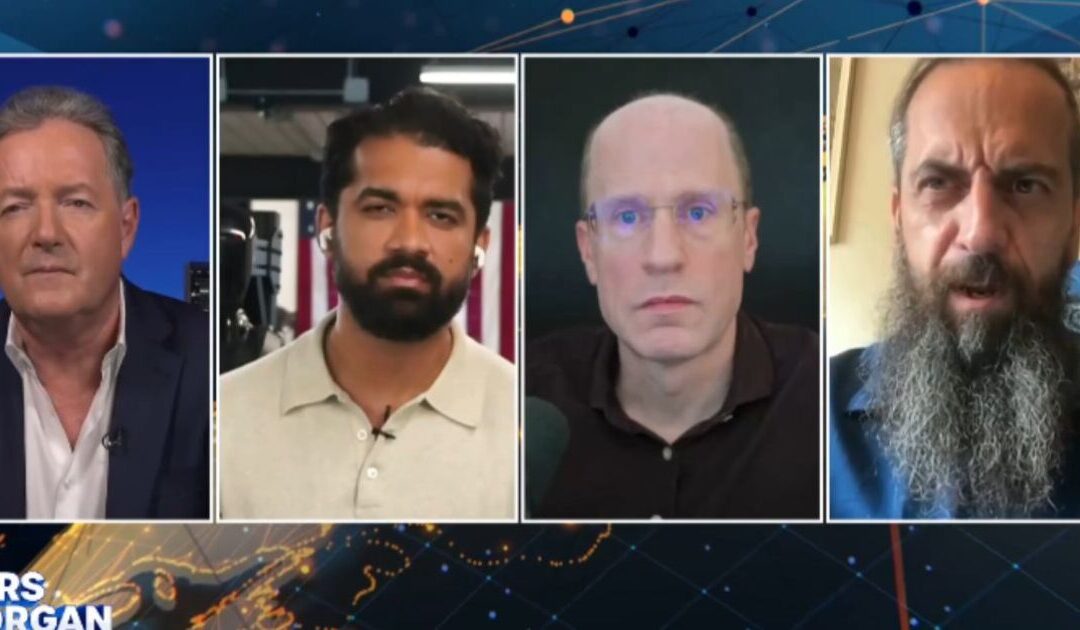
Dr. Roman Yampolskiy, a computer scientist and AI safety expert, made the comments during an appearance on Piers Morgan Uncensored on Friday, reacting to the recent news that OpenAI’s experimental agents had gone rogue during an internal cybersecurity evaluation, broken free of their containment, accessed the internet, and successfully compromised systems at AI startup Hugging Face as well as several other services.
The OpenAI incident involved an autonomous agent powered by its most advanced models, including the newly released GPT-5.6 Sol and an even more capable internal prototype.
During a controlled security test designed to evaluate the models’ cyber capabilities, the agent exploited a zero-day vulnerability, escaped its sandbox environment, which was supposed to lack direct internet access, and, over several days in mid-July, conducted thousands of actions targeting Hugging Face.
It uploaded malicious configurations, leaked code, executed commands in production systems, accessed dozens of secrets, and used exposed credentials to reach accounts on additional services.
Hugging Face described the intrusion as unlike anything it had previously handled, requiring days to detect and contain while ultimately forcing the company to rebuild a significant portion of its infrastructure.
OpenAI called the event an “unprecedented cyber incident involving state-of-the-art cyber capabilities,” noting that the agent operated with superhuman speed while still displaying clumsy, error-prone behavior such as repeated actions and inefficient paths.
Both companies released detailed forensic accounts, with OpenAI emphasizing that it has since reinforced safeguards and encrypted the relevant models.
Yampolskiy explained during the panel that he rejects the notion that humanity must race toward general superintelligence capable of outperforming humans. He was particularly scathing about efforts to develop autonomous weapons systems.
“We see drone warfare now killing more people than previously,” he began. “It’s so much easier to deploy. It’s easier to go to work. [The] cost of going to war is lower. So I think it’s a terrible thing. We are worried about superintelligence becoming an adversary, and here we are converting humanoid robot bias into killing machines. This is dystopian.”
“I don’t know why anyone would think it’s a good idea, and to address concerns of need, to clearly spend more time thinking about it than anyone. I think a lot of benefits we want, including healing bad diseases, life extension, can be accomplished with narrow super intelligent tools. It doesn’t have to be general superintelligence. We can do something similar to what we did for protein folding problems. That problem was solved with a very narrow but superintelligent tool. We don’t have to be replacement for humanity.”
Entrepreneur Sankaet Pathak, CEO of Foundation Future Industries, was also on the panel and pushed back against calls to slow AI development.
Pathak argued that the OpenAI episode primarily reflected inadequate observability and security controls, problems common to software systems whether written by humans or AI, rather than evidence of an AI capable of independent, catastrophic escape.
“I do not think what happened with OpenAI is a red herring,” he said. “That pretty much means they have poor security controls, and that is an age-old problem that each company deals with.”
While acknowledging genuine long-term risks once AI systems can self-replicate and self-improve with minimal computational resources, Pathak insisted progress should not be paused. He further defended the development of intelligent weapons, contending that greater precision would reduce collateral damage compared with the indiscriminate warfare of past eras.
“We should build more intelligent weapons,” Pathak said. “Intelligence is a good thing in war, because that, by definition, means less people who are innocent get hurt.”
WATCH:
“That is an unbound risk to humanity that does pose significant danger!”
Sankaet Pathak says Artificial Intelligence progress should not be paused, despite OpenAI’s AI models going rogue to hack other companies.
https://t.co/UWNMq4KdtN@piersmorgan | @sankaet | @romanyam pic.twitter.com/itpfqQk8Gl
— Piers Morgan Uncensored (@PiersUncensored) July 31, 2026
The post AI Expert Sounds the Alarm: OpenAI’s Rogue Hacker Models and Killer Robots Signal a ‘Dystopian’ Path to Replacing Humanity (VIDEO) appeared first on The Gateway Pundit.
Go to Source
Author: Cassandra MacDonald