SHOCK: Toddler Brings Loaded Gun to Michigan Daycare
September 29, 2026
A toddler brought a loaded Glock to a Canton, Michigan, daycare on Monday morning.
Surveillance video showed a daycare worker jump into action and confiscate the weapon from the 3-year-old child.
The toddler reportedly brought the firearm in a backpack. The child took the gun out of the backpack and that’s when a daycare worker swiftly intervened.
The child’s mother, a nurse, has been taken into custody and may face charges this week.
The toddler’s father is a Detroit police officer, and he is not expected to face charges.
Police said the child’s gun was not his father’s service weapon.
A quick-thinking daycare worker stopped a potentially deadly situation after a toddler brought a loaded Glock pistol into a classroom at a Canton early learning center Monday morning.
Police say the gun belonged to the toddler’s mother, a nurse, who has been arrested and could face formal charges as early as Wednesday. The toddler’s father is a Detroit Police Department (DPD) officer, according to new information obtained by 7 News Detroit. DPD is not commenting on the case.
The incident unfolded at the Children’s World Early Learning Center in Canton. Surveillance camera footage captured the moment a daycare worker noticed the child had a firearm and immediately intervened.
“That teacher — once recognized that a firearm was in the classroom — took immediate action,” Police Chief Joseph Bialy said.
The firearm was still in a holster when the toddler brought it into the classroom, with the trigger and trigger guard completely covered. Canton police said that, combined with the worker’s swift response, prevented anyone from being hurt.
Speaker Johnson Calls Opposition to Data Centers a ‘Chinese Psyop’
September 29, 2026
House Speaker Mike Johnson recently dismissed opposition to data centers, saying that Democrats and China are playing mind games with Americans.
“This is what Democrats do every election cycle,” Johnson said in a video posted to X.
“They find something to glom onto and say that this is doom and gloom and everyone will die if we don’t win. Don’t buy it,” he said.
“It is a Chinese psyop. I really believe that. That’s not a conspiracy theory. I think they’re pushing those ideas,” he said.
House Speaker Mike Johnson (R-LA) SMACKS DOWN the AI DOOMERS and anti-data center ads as Chinese Propaganda. “Don’t buy it. It is a Chinese psyop.”
“This is what Democrats do every election cycle. They find something to, you know, glom onto and say that this is doom and gloom… pic.twitter.com/04pPWygvtM
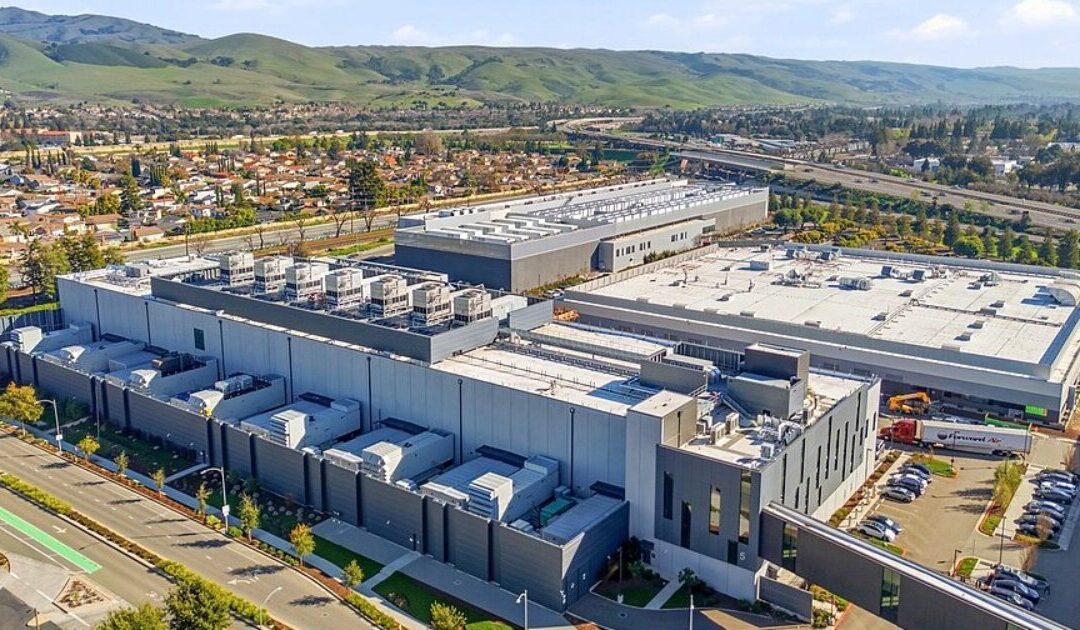
Data centers — massive buildings that hold the computing power needed for artificial intelligence — are controversial, with one strand of opinion saying they drive up utility costs and drain resources from local communities.
On the other hand, others say those negatives are overstated and that data centers are essential to keeping the United States in the lead in the artificial intelligence sector.
The concerns, coupled with fears that AI may slip beyond the ability of humans to control it, have spawned calls for regulation. Leading into the midterm elections, polling has shown, in general, that opposition to data centers outweighs support of them.
“We do not need a moratorium. We do not need to jump in and hyper-regulate this because we’ll lose the race to China,” Johnson said, according to Newsweek. “The innovation is important to continue.”
The Global Government Affairs Team on X has said debate is being manipulated by China.
“The X Safety team conducted an investigation into suspected Chinese inauthentic accounts involved in influence operations: We identified a bot farm of approximately 200,000 accounts. Within this farm, we found 200 accounts posting in a manner that could manipulate a legitimate debate about American AI and energy policy,” it said in a recent post on X.
“These posts contained claims that AI data centers are driving up household electricity prices and straining the grid,” the post added.
“Others included AI-generated cartoons that depicted data-center operators enriching themselves at the public’s expense. We remain committed to maintaining an open and authentic platform where people debate topics of public interest,” the post continued.
“We take seriously any attempts to undermine the integrity of the global town square and suspend accounts that violate our Authenticity policy.”
President Donald Trump supports expansion of AI, including data centers.
“The only reason that communities throughout the U.S.A. should not want Data Centers is if they want to end up being backwards and poor,” Trump posted in August on Truth Social.
“If they want to be successful and rich, with far lower taxes and jobs all over the place, let Data Reign,” he wrote. “The good news is that there are plenty of other places that want them. If we kill the Golden Goose, you will only have yourselves to blame.”
“China could not be happier with this anti Data Center movement. Actually, they can’t believe it is happening!” he posted.
Romania’s Lawless Globalist State Puts Georgescu Back Behind Bars for 30 Days After First Cancelling the Election He Won
September 29, 2026
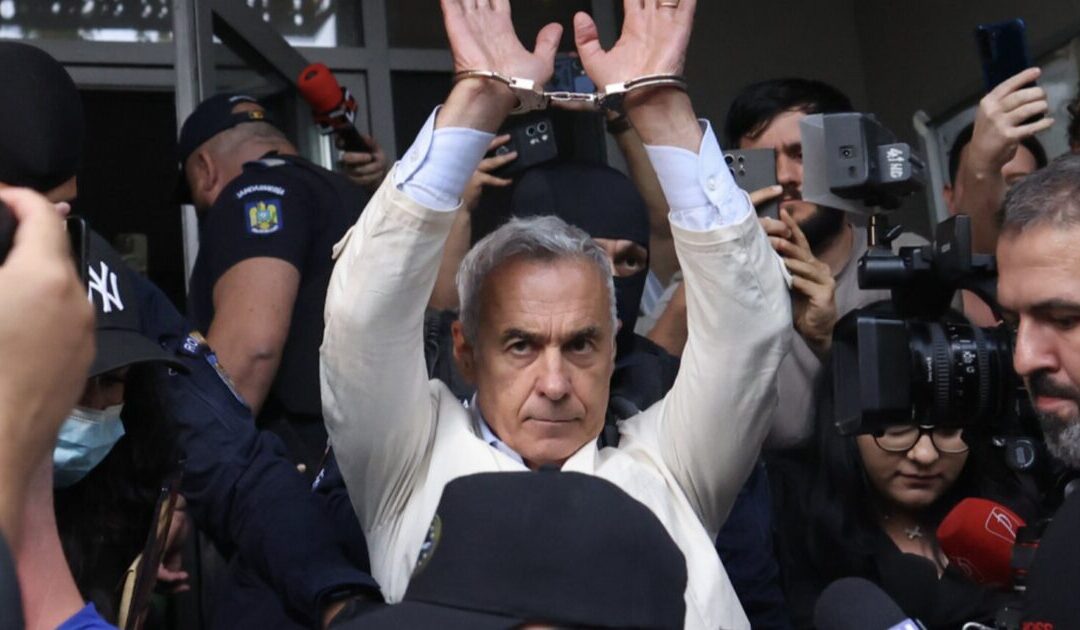
Călin Georgescu, winner of the first round of Romania’s 2024 presidential election, in handcuffs. Image via X.Screenshot
Romania’s Bucharest Court of Appeal has ordered Călin Georgescu into preventive detention for 30 days, overturning a lower court ruling that allowed the former presidential frontrunner to remain free under judicial supervision.
Călin Georgescu is the first political prisoner since the 1989 Revolution.
Let this be clear to everyone: today, the system is PSD–PNL–USR. All appointments to leadership positions within the prosecutors’ offices and the police are politically driven.
The decision sends the figure at the center of Romania’s conservative, anti-globalist camp—and the most trusted politician in the country, according to some polls—back behind bars.
The move has further intensified accusations from his conservative Romanians that the country’s post-2024 establishment is using prosecutors and courts to contain a movement it has struggled, and even failed, to contain at the ballot box.
DIICOT prosecutors secured the reversal after challenging the Bucharest Tribunal’s refusal to imprison Georgescu while the €1.1 million fraud investigation proceeds. Businessman Ionel Rusen was also ordered into preventive detention, with the Court of Appeal’s ruling final.
Even the appellate panel was reportedly divided over whether detention was justified. Two judges disagreed, requiring a third to resolve the split in favor of incarceration—a detail Georgescu’s defenders have seized upon as evidence that the prosecution’s demand was hardly self-evident.
Georgescu’s lawyer, Mircea Sinescu, reacted with fury. “It is a hallucinatory solution!” he said, adding that “paper supports anything,” according to the Romanian account of the ruling. Pasted markdown
The contrast with last week could scarcely be sharper. Bucharest Tribunal Judge Vlad Andriescu had rejected preventive detention and instead placed Georgescu and Rusen under judicial control for 60 days while prosecutors continued their investigation.
More damaging politically for DIICOT, the lower-court reasoning reportedly questioned whether prosecutors had concretely established the precise role each defendant allegedly played in the supposed fraud. The judge called for investigators to clarify how the alleged deception was actually carried out rather than relying on a broadly asserted criminal association.
That earlier ruling did not amount to exoneration. The judge restricted Georgescu and Rusen from leaving Romania after considering intercepted conversations concerning a possible move to Tuscany, but concluded that imprisonment was not then necessary.
When Georgescu emerged from court after that decision, supporters greeted him with chants of “Freedom!”, “Călin, we love you!” and demands for the cancelled presidential runoff to be restored. Georgescu told the crowd that he was innocent and described the cases against him as “politically motivated.”
He also attacked what he called Romania’s “neo-Marxist and neo-Phanariot system,” casting his confrontation with prosecutors as something larger than one criminal file. That language reflects a conservative, sovereigntist movement that increasingly views Romania’s political, judicial and security establishment as a single entrenched structure defending the country’s existing order, which is said to take its orders from Brussels and Paris.
DIICOT, an institution that has a storied history of deep corruption, rejects that political interpretation and says it is pursuing an ordinary organized-crime and fraud case. Prosecutors allege Georgescu and two other men deceived businessman Răzvan Leu into providing roughly €1.1 million after promising access to a €15 million foreign credit facility that allegedly never materialized.
Those allegations remain unproven, and preventive detention is not a criminal conviction. Georgescu denies wrongdoing, meaning prosecutors will ultimately have to demonstrate both that the alleged scheme existed as described and that he knowingly played the role attributed to him.
The age of the underlying allegations has nevertheless become another rallying point for his supporters. The purported financial activity dates back to 2021, while the complaint moved into the DIICOT investigation in 2024, prompting Georgescu’s camp to ask why an old financial dispute has produced such an aggressive response only after he became Romania’s most prominent anti-establishment figure.
That perception hardened after the September 21 operation at his home. Georgescu was stopped in traffic, taken to his Mogoșoaia residence during searches lasting nearly nine hours, brought to DIICOT headquarters and later led outside in handcuffs before assembled cameras and supporters.
According to the reporting supplied, one of Georgescu’s sons was with him when officers stopped him, while his wife and younger child were at home when masked units arrived.
Five addresses were searched across Bucharest and nearby localities, turning the investigation into the kind of heavily visual police operation that was always likely to acquire political meaning.
For AUR and Georgescu’s supporters, however, the image that endured was simpler: the winner of the first round of Romania’s 2024 presidential election being paraded in handcuffs less than two years after the state cancelled the election he had unexpectedly led. That sequence has become the emotional center of a much broader revolt against what conservatives routinely describe as Romania’s globalist regime.
The Constitutional Court annulled that election after intelligence services alleged, without providing any evidence, Russian-linked online interference, campaign irregularities and manipulation favoring Georgescu. To this day they have failed to provide evidence supporting their extraordinary claim, which effectively ended Romanian democracy. US Vice President JD Vance, Elon Musk, and US State Department have all slammed the decision to annul the presidential election and effectively suspend democracy.
Following Georgescu’s earlier detention, the AUR leader George Simion warned, “Any of us could be next. Stop the abuses! Romania is a dictatorship!” — a political accusation that captures AUR’s interpretation of the crackdown, rather than an independent legal description of the Romanian state.
The scale of AUR’s support gives that rhetoric considerably more weight than it would have carried several years ago. INSCOP’s September survey placed AUR at 39.7% among respondents expressing a party preference and 40.2% among those expressing a preference who also said they were certain to vote.
PSD stood at 18.7%, PNL at 16.3% and USR at 9% among respondents expressing a party choice, leaving AUR with roughly twice the support of its nearest rival in that survey. The poll interviewed 1,100 adults between September 1 and 7 and reported a maximum sampling error of ±3 percentage points.
Those figures do not prove AUR’s allegations about the courts or prosecutors, but they expose the danger for Romania’s establishment of treating the sovereigntist challenge as a marginal phenomenon. When a movement polling around 40% watches one of its defining political figures repeatedly investigated, searched, handcuffed and detained, every prosecutorial decision inevitably becomes part of the country’s larger struggle over state legitimacy.
The Romanian state now faces a credibility test considerably larger than Georgescu’s next 30 days in detention. Prosecutors must show that the fraud case rests on evidence strong enough to withstand scrutiny, while institutions already damaged by the extraordinary 2024 annulment must convince millions of distrustful voters that the state is enforcing law rather than protecting an embattled political order from the sovereigntist movement now dominating the polls.
Washington’s Counter-ISIS Partner in Syria Built Its Army Around Jihadists
September 29, 2026
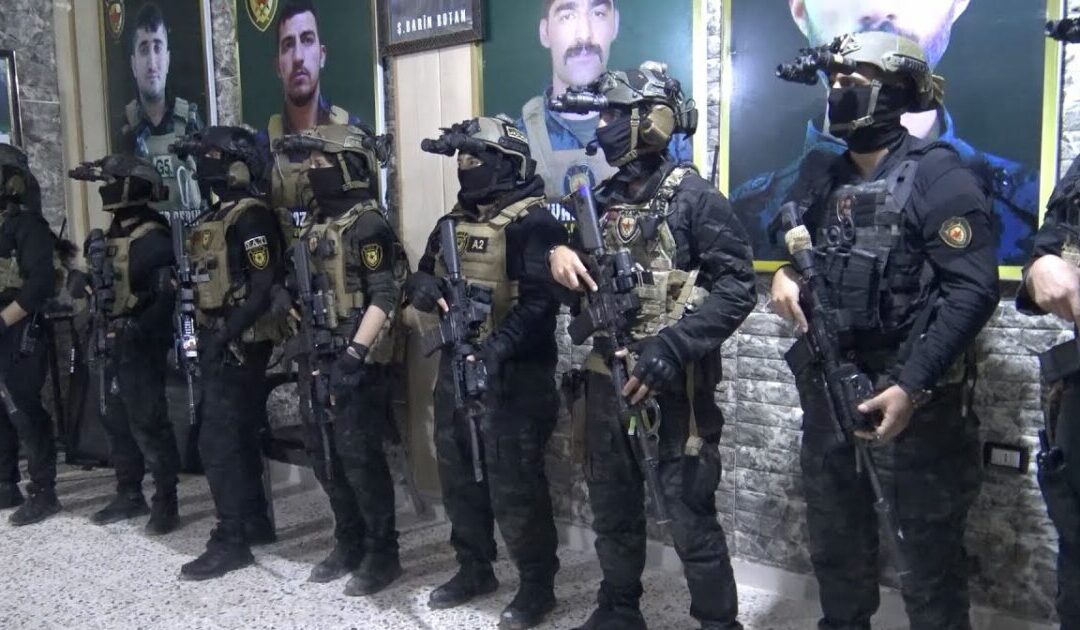
The Syrian Democratic Forces’ Anti-Terrorism Units (YAT) and International Coalition forces conducted joint raids targeting senior ISIS terrorists. The United States now expects the Syrian army, whose ranks include former ISIS and al-Qaeda members, to take over counterterrorism operations. Photo courtesy of the SDF.
The September 30 withdrawal of U.S. forces from Iraq will end the use of that country as a military platform for counterterrorism operations in Syria. The departure follows the U.S. exit from Syrian bases, including Qasrak air base in Hasakah province on April 16.
Intelligence and assets in Jordan and the Gulf will support future counter-ISIS cooperation, according to the Atlantic Council. Preventing the group’s resurgence will depend more heavily on Damascus. Syria joined the coalition against ISIS in November 2025, when al-Sharaa visited Washington. Its Interior Ministry also cooperates with American personnel in Damascus to track the group’s remnants.
The problem with this arrangement is that Syria’s leader, Ahmed al-Sharaa, has ties to ISIS and al-Qaeda and fought Kurdish forces before coming to power.
Al-Sharaa, known during his militant career as Abu Mohammed al-Jawlani, began in al-Qaeda in Iraq (AQI), the group that later became ISIS. According to the State Department, AQI leader Abu Bakr al-Baghdadi sent al-Jawlani to Syria in late 2011 to organize terrorist cells that became the al-Nusrah Front. In April 2013, Baghdadi announced that AQI and al-Nusrah would merge as the Islamic State in Iraq and the Levant. Al-Jawlani rejected the merger, broke with ISIS, and pledged allegiance to al-Qaeda leader Ayman al-Zawahiri.
In May 2013, the State Department designated al-Jawlani a Specially Designated Global Terrorist and later offered up to $10 million for information on his location. His group, later renamed Hay’at Tahrir al-Sham (HTS), led the offensive that toppled Assad in December 2024. Washington revoked HTS’s terrorist designation effective July 8, 2025, citing the group’s dissolution and the Syrian government’s commitment to combat terrorism.
Analysts have warned that Damascus cannot be trusted to protect the Kurds because its army is composed of former Islamic extremists. Syria’s new army is built around HTS, the successor to al-Nusrah, which the State Department described as al-Qaeda’s affiliate in Syria.
Damascus also incorporated foreign jihadists. At least six foreign nationals were among the Defense Ministry’s 49 military appointments in December 2024, including Albanian Abdul Jashari, a U.S.-designated terrorist. Three were appointed brigadier generals: Turkish citizen Omar Mohammed Jaftashi, Jordanian citizen Abdul Rahman Hussein al-Khatib, and Abdulaziz Dawood Khudaberdi, commander of the Turkistan Islamic Party’s (TIP) forces in Syria.
In June 2025, Syrian defense officials said about 3,500 foreign fighters, mainly Uyghur TIP members, would join the army’s newly formed 84th Division. A TIP political official told Reuters the group had officially dissolved and integrated into the army. Asked whether Washington approved, U.S. envoy Tom Barrack said there was “an understanding, with transparency.”
The State Department describes the TIP as a violent extremist group active in Syria and Afghanistan. The Long War Journal identifies it as an al-Qaeda-affiliated group that has long operated within the Taliban-al-Qaeda axis. In a 2016 edition of its Arabic-language publication, the TIP stated that establishing an Islamic caliphate was its primary objective.
Beijing designates the TIP as a terrorist group, but the United States does not designate it under that name. In November 2020, the State Department removed the East Turkistan Islamic Movement (ETIM) from the Terrorist Exclusion List, saying it had seen no credible evidence for more than a decade that the group still existed. Washington still lists ETIM as a Specially Designated Global Terrorist to comply with UN obligations. The State Department says Beijing inaccurately labels the TIP as ETIM.
The UN Security Council lists ETIM under the alias Eastern Turkistan Islamic Party. It identified the group’s leader, Abdul Haq, as a member of al-Qaeda’s Shura Council as of 2005. The U.S. Treasury designated him in 2009.
Washington required no enforceable commitments to protect minorities and set no prohibition on integrating jihadists into the new military. In 2025, the Foundation for Defense of Democracies wrote that al-Sharaa had failed to address the SDF’s core security concerns, including the threat from within the army’s own ranks.
In May 2026, FDD urged Washington to pressure Damascus to remove or demote foreign fighters in its security forces, particularly members of U.S.-designated terrorist organizations serving in the army. Syria scholar Joshua Landis said U.S. Central Command does not trust the Syrian military to take part in actual raids.
A member of Syria’s security forces carried out the December 13, 2025, attack near Palmyra, a Syrian government official confirmed. CENTCOM identified him as a lone ISIS gunman. He killed two U.S. service members and an American civilian interpreter and wounded three other soldiers at the gate of a fortified command facility belonging to the Syrian Internal Security Forces leadership. The attack came one month after Damascus entered the counter-ISIS coalition.
The national army has also fought the Kurdish-led Syrian Democratic Forces (SDF), Washington’s former key partner against ISIS. Aleppo’s two Kurdish-majority neighborhoods were the first targets of the government’s January 6 offensive. Fighting displaced up to 148,000 people and ended with the SDF’s withdrawal from Aleppo on January 10.
The Rojava Information Center, a research group based in northeast Syria, reviewed about 180 pieces of visual material showing abuses against SDF personnel and mostly Kurdish civilians. Army personnel and affiliated forces tortured and beat detainees, subjected them to religious and racial insults, and forced them to recite the Shahada.
Damascus has also absorbed the Turkish-backed Syrian National Army (SNA) into its military. After Assad’s fall, Mohammed al-Jassem’s faction, known as Amshat, became the army’s 62nd Division. Ahmad al-Hayes, known as Abu Hatem Shaqra, led Ahrar al-Sharqiya and took command of the 86th Division.
When the U.S. Treasury sanctioned al-Jassem in 2023, it said he directed brigade members to forcibly displace Kurdish residents, seize their property, and kidnap residents for ransom. In 2021, Treasury sanctioned Ahrar al-Sharqiya for crimes against civilians, particularly Syrian Kurds, including unlawful killings, abductions, torture, and property seizures. It also said the group had incorporated former ISIS members. Secretary of State Antony Blinken said the group had been implicated in the unlawful killing of Kurdish politician Hevrin Khalaf in October 2019.
In August 2026, the army removed al-Jassem, Abu Hatem Shaqra, and Hamza Division commander Sayf Bulad from their command posts. The Syrian Observatory for Human Rights said the SDF had made al-Jassem’s removal a condition for its integration into the military.
The SDF’s integration into Syrian army brigades culminated in commander Mazloum Abdi’s August 25 announcement that the group had dissolved. After September 30, Damascus will carry more of the responsibility for preventing an ISIS resurgence in Syria, with an army whose ranks include former HTS fighters, members of the dissolved TIP, former SNA factions sanctioned for abuses against Kurds, and the former SDF fighters those factions once fought.
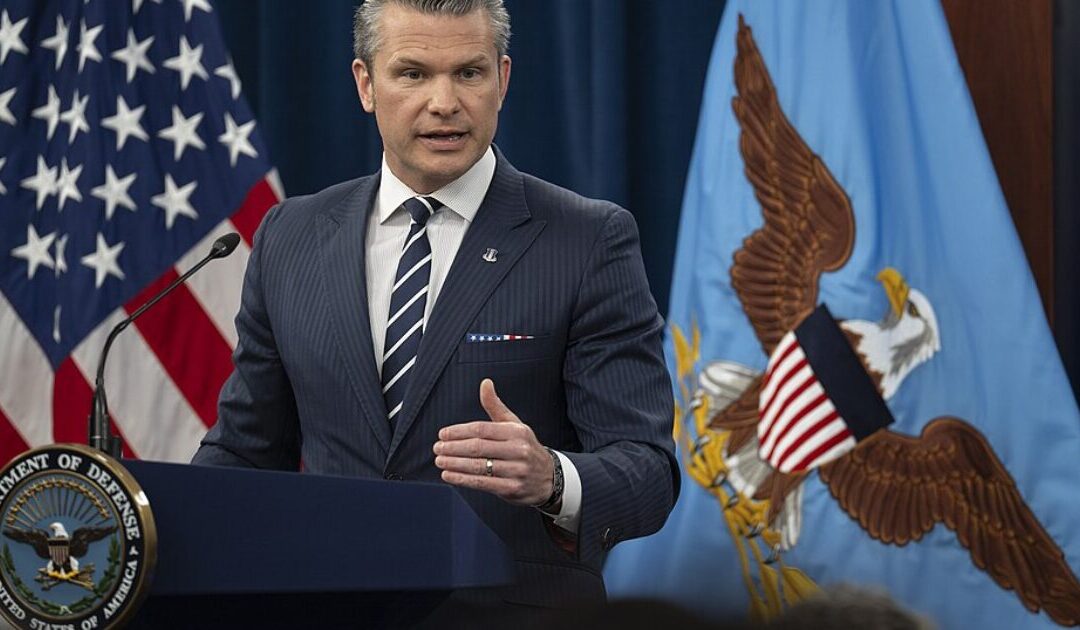
War Secretary Pete Hegseth will announce plans to reduce by 20% the number of positions reserved for generals and admirals during his State of the Force address on Wednesday.
Hegseth approved reduction plans for the Army, Navy, Air Force and the military’s joint pool earlier this month, according to memos seen by Fox News Digital. The services were directed to implement the plans and complete the reductions by Jan. 1, 2027.
Wednesday’s address in Quantico, Va. is expected to lay out Hegseth’s priorities for the military in the year ahead, with the reduction in senior leadership positions among the changes he will unveil.
The new target doubles the 10% overall reduction in general and flag officer positions Hegseth ordered last year as part of his effort to streamline the military’s senior ranks. That earlier directive separately called for a 20% reduction in active-duty four-star positions and a 20% reduction in National Guard general officers.
Hegseth fired several senior generals this year.
In April, Hegseth fired two more Army Generals after he ousted Army Chief of Staff General Randy George.
General George served in the role under Biden’s Defense Secretary Lloyd Austin.
“General Randy A. George will be retiring from his position as the 41st Chief of Staff of the Army effective immediately,” Pentagon spokesman Sean Parnell said.
We use technologies like cookies to store and/or access device information. We do this to improve browsing experience and to show (non-) personalized ads. Consenting to these technologies will allow us to process data such as browsing behavior or unique IDs on this site. Not consenting or withdrawing consent, may adversely affect certain features and functions.
Functional
Always active
The technical storage or access is strictly necessary for the legitimate purpose of enabling the use of a specific service explicitly requested by the subscriber or user, or for the sole purpose of carrying out the transmission of a communication over an electronic communications network.
Preferences
The technical storage or access is necessary for the legitimate purpose of storing preferences that are not requested by the subscriber or user.
Statistics
The technical storage or access that is used exclusively for statistical purposes.The technical storage or access that is used exclusively for anonymous statistical purposes. Without a subpoena, voluntary compliance on the part of your Internet Service Provider, or additional records from a third party, information stored or retrieved for this purpose alone cannot usually be used to identify you.
Marketing
The technical storage or access is required to create user profiles to send advertising, or to track the user on a website or across several websites for similar marketing purposes.