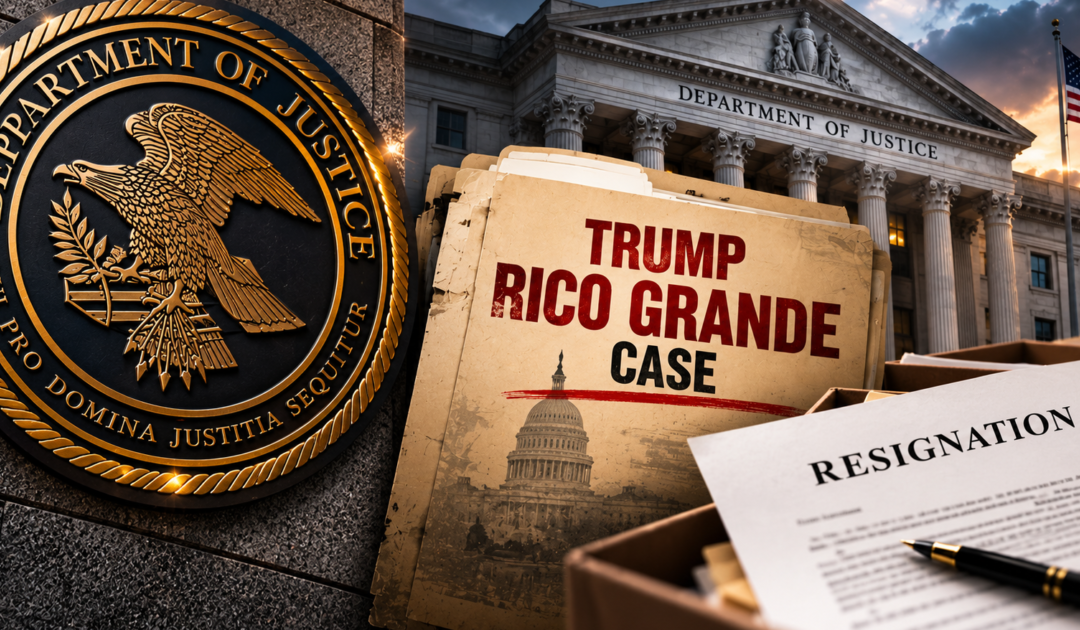
Attorney Kurt Olsen Resigns from RICO Grande Case – Will Remain at DOJ
September 29, 2026
Attorney Kurt Olsen has reportedly resigned from the “RICO Grande” case that the Department of Justice has been pursuing in the Southern District of Florida, as reported by the Associated Press.
The AP cites a source “on the condition of anonymity to discuss personnel matters,” but The Gateway Pundit, through another source, can confirm the resignation and adds that Olsen will remain employed at the Department of Justice, something that was not immediately clear in the AP’s reporting.
In a post on X, former federal employee Clay Parikh wrote that he was contacted by a writer for Reuters seeking an accuracy review for an upcoming article discussing Olsen’s involvement in Puerto Rico, where ODNI was given access to the voting system after coordination through DOJ and the FBI. DHS was later briefed on the findings.
A screenshot in the post suggests that Reuters will portray Olsen’s assignment in the Southern District of Florida as resulting from his failure to provide evidence of foreign interference from the Puerto Rico systems.
FAKE NEWS ALERT!
Reuters is about to put out an article with multiple inaccuracies. Written with obvious bias. As I was internal to the Federal government during the time mentioned and am still under NDAs, I cannot disclose too much. Just follow the thread in the comments. pic.twitter.com/zz09vd7xUU
However, according to our source, the source utilized by the outlet may have leaked confidential information, and any potential rebuttal would require violating ongoing non-disclosure agreements.
During the 2024 election cycle, Puerto Rico’s voting system had significant problems. According to contemporary reporting from the AP:
The problem stemmed from a software issue that caused machines supplied by Dominion Voting Systems to incorrectly calculate vote totals, said Jessika Padilla Rivera, the commission’s interim president.
While no one is contesting the results from the June 2 primary that correctly identify the winners, machine-reported vote counts were lower than the paper ones in some cases, and some machines reversed certain totals or reported zero votes for some candidates.
These issues led to Puerto Rico canceling the contract with the vendor and replacing the system after 70% of polling sites failed to transmit data electronically in the 2024 election cycle.
Olsen’s resignation marks the third significant resignation this month after Joe DiGenova resigned from the same case earlier this month, followed by the resignation of his wife, who was reportedly investigating 2020 election fraud.
Following his resignation, NBC News interviewed DiGenova, who said that things “were going smoothly” with the investigation. NBC reported that Washington had “assembled prosecutors to work alongside DiGenova in his effort.”
DiGenova maintained that things were “going along smoothly.”
“I want to underscore that we were following the principles of federal prosecution all along the way, and we did that. We were moving smartly, and I underscore we were moving smartly, and then things, you know, got where they got,” diGenova said.
Calling the team of the Southern District of Florida “superb,” diGenova said that “if they are allowed to do their jobs, they will succeed supremely.”
“The people in the U.S. Attorney’s Office in Florida who are running this case have done a phenomenal job under the worst of circumstances,” diGenova said. “There’s just no doubt there weren’t sufficient resources.”
Asked about whether he’d sidelined anyone who was sent in from DOJ headquarters, diGenova said, “As a courtesy to the department — and let me underscore, as a courtesy to the department — I am not going to discuss that.”
Marco Rubio Says Americans Will Soon Be Able to Apply for First Passport Entirely Online Through America.gov — “No Printing Forms, No Drugstore Hostage Photo, No Appointment, No Line”
September 29, 2026
Screenshot
For years, the federal government treated a basic American document like a scavenger hunt. Print the form. Drive to the drugstore. Sit under fluorescent lights for a “hostage photo.” Book an appointment. Stand in line. Hand a stack of paper to a middleman. Then wait.
Secretary of State Marco Rubio just told the country that era is ending.
At Tuesday’s launch of President Trump’s new America.gov portal in Washington, Rubio announced that Americans will be able to apply for a first U.S. passport entirely online instead of burning a workday on a 1970s process. The goal, he said, is that by the end of 2027 most Americans can apply for a passport or passport card on America.gov, with real-time status and an estimated delivery date.
“No printing forms, no drugstore hostage photo, no appointment, no line, no middleman that you’re paying to do something that should be available to you,” Rubio said. “You tell America.gov what you’re trying to do and it walks you through every single step.”
According to Fox News, Rubio laid out the problem in plain English: if you need your first passport today, you start on the State Department site, “There’s a lot of information up there, but if you actually want to apply, that is where the maze starts.”
The Gateway Pundit previewed this exact fight last week. Citizens chasing a passport, a benefit, or a simple answer have been bounced from .gov to .gov like pinballs. Trump is flipping the model. The bureaucracy is being forced to serve the public.
President Trump signed an executive order Tuesday establishing America.gov as the “unified digital front door” of the federal government. The White House order is explicit: super intelligence used on the site must be accurate, reliable, and transparent. Trump said anyone who has used Grok, Gemini, or ChatGPT will understand the interface instantly.
This is not a press-release gimmick. The America.gov “coming soon” page already walks through a first-time passport flow: confirm identity, upload a photo from a phone or computer, pick a book or card, pay, and watch the application move — with a confirmation number and an estimated window.
Renewals were already moving online. The State Department opened online passport renewal in 2024 and has processed millions that way. The breakthrough Tuesday is first-time applicants — the people who still get marched to an acceptance facility like it’s 1998.
Rubio previewed the photo fight back in July at the Patriot Passport launch. He joked that CVS and Walgreens would hate it. Good. Americans should not have to pay a retail chain for a picture their own phone can take while a government system verifies the image in real time.
WATCH:
Secretary of State @SecRubio announced Tuesday that the Trump administration is preparing to move the first-time U.S. passport application process online through the newly launched https://t.co/moFt3CH2lA portal, eliminating many of the paper forms, appointments, passport-photo…
On the delivery itself, he was just as blunt: new U.S. passports will no longer show up in beat-up postal envelopes. They will arrive in elegant gold-and-white packaging.
“For something as important and dignified as the U.S. passport, it will arrive the way you would expect it to.”
WATCH:
EPIC! Secretary Rubio just announced ALL NEW US passports will NO LONGER arrive in trashy beat up mail
Instead, he’s sending passports in elegant gold and white packaging
“For something as important and dignified as the US passport, it will arrive the way you would expect it… pic.twitter.com/R6Blw6IXC4
Arkansas Governor Sarah Huckabee Sanders Sparks Massive Conservative Uproar After Releasing This Politically Correct Anti-Welfare Ad (VIDEO)
September 29, 2026
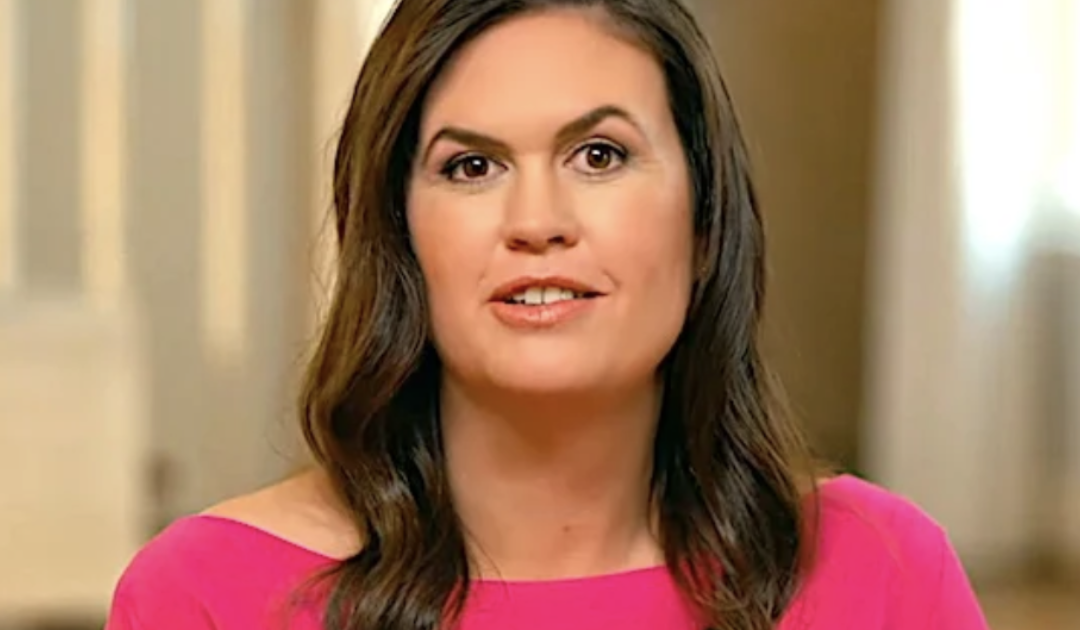
Sarah Huckabee Sanders (Video screenshot)
One of the GOP’s most prominent elected governors has created a conservative social media firestorm after releasing what she thought was a basic ad targeting welfare recipients.
As Fox News reported, Arkansas Governor Sarah Huckabee Sanders released a campaign ad on Monday that showcased a young White male named “Brad” as the perfect example of someone who leeches off the government.
The ad shows an unkempt “Brad” spending his time playing video games and stuffing himself with cheese puffs while not bothering to look for employment.
“Meet Brad,” Huckabee Sanders says at the start of the ad. “Brad has turned relaxing into a full-time profession.”
“But you actually work hard. You pay taxes to cover welfare for guys like Brad who just choose not to work.”
Huckabee Sanders goes on to brag that this is why she launched a welfare-to-work program. She says this has resulted in more people from Arkansas working than before.
“Even Brad,” she adds as the ad cuts to a now-clean-cut “Brad” in a shirt and tie.
WATCH:
You pay taxes to cover welfare for people who just choose not to work. That’s why I launched a welfare-to-work requirement.
If you’re young, healthy, and get government assistance, you should work, go to school, or volunteer. pic.twitter.com/M83nxNMdry
Conservatives across the board exploded over Huckabee Sanders for portraying a politically correct target to promote her reelection campaign.
This is an insane ad! Who thought this was a good idea?
Attack young white men for being screwed over by society. I love that. Why would you want to have a base of voters when you can give the Democrats every single demographic.
You would never see Republicans make a campaign ad like this about black people addicted to EBT cards and Section 8 housing, that’s why I can’t take it seriously. Young white men are the one group it’s easy to kick down at and scapegoat, but they don’t receive government welfare.…
Men must actively vote against her. Young men aren’t working because the colleges and companies have refused to accept them for work or degrees. To further imply they’re the ones on the government dime is just rubbing salt in the wound that society has already just made. pic.twitter.com/fF0BpkF59H
Many X users were quick to point out that young white men actually use far less welfare compared to other demographic groups. These include Black and Hispanic households.
Hi Sarah,
Did you know that 42% of ALL BLACK HOUSEHOLDS are on some form welfare?
Yes, FORTY-TWO PERCENT.
Did you know 36% of ALL HISPANIC HOUSEHOLDS are on welfare?
I BADLY want Republicans to win every race in the country — but “Brad” here is not the problem and the ad should be re-worked. pic.twitter.com/KTasuLDAx4
Grok also notes that Black households have the highest SNAP participation rate in Arkansas.
No. Black or African American households have the highest SNAP participation rate in Arkansas, at 22%, compared with 8% for White households and 10% for Hispanic households (ACS 2020-24). Whites form the largest share of recipients due to population size, but rates are lower. White males do not…
Huckabee Sanders fired back at her conservative critics and stood by the ad:
“Some critics online don’t like my welfare work requirement ad,” she said. “Next thing you know, they’ll say I should have used cookies instead of cheese balls.
“If you are able-bodied, you should not collect welfare simply because you choose not to work. Period.”
Some critics online don’t like my welfare work requirement ad. Next thing you know they’ll say I should have used cookies instead of cheese balls. If you are able-bodied you should not collect welfare simply because you choose not to work. Period. WATCH-> https://t.co/W9BAjVRkSA
We all know that if Huckabee Sanders used a Black person in her ad, she would get dragged over the coals by the corporate media. Thus, the White man must be mocked instead.
Syrian Kurds Face Uncertain Future as U.S. Military Presence Recedes and SDF Dissolves
September 29, 2026
The U.S. withdrawal from Syria and Iraq leaves Syrian Kurds exposed to attacks and the loss of autonomy. Photo courtesy of the Rojava Information Center.
The United States is scheduled to withdraw its remaining forces from Iraq by September 30, 2026, under a 2024 agreement between Washington and Baghdad to end the coalition mission against the Islamic State. U.S. troops left bases across most of Iraq last year but maintained a presence in the semi-autonomous Kurdistan Region. From there, they provided air support, training, and weapons to Kurdish Peshmerga forces fighting ISIS. The Erbil air base served as the main center for intelligence support to the Peshmerga.
U.S. and British air defenses also protected Erbil, the Kurdistan Region’s capital, from drones launched by Iran-backed militias. U.S. forces struck militia sites in response to attacks.
The withdrawal also affects Syrian Kurds, who have relied on coalition operations based in Iraq for support against ISIS. Under a September 2024 joint statement, the coalition could continue its mission against ISIS in Syria from a platform in Iraq until September 2026. The Kurdistan Region hosts coalition sites used for training, logistics, and air operations against ISIS remnants.
U.S. forces have already withdrawn from their remaining bases in Syria. They left al-Tanf Garrison on February 11. At the time, CENTCOM commander Adm. Brad Cooper said U.S. forces “remain poised to respond to any ISIS threats that arise in the region.” The last convoy left Qasrak air base in Hasakah province on April 16.
In Iraq, a U.S. military official told AP that most of the hundreds of troops still in the north would redeploy to Jordan and other countries in the region. Air defense systems would also be removed. According to the Atlantic Council, counter-ISIS cooperation after the withdrawal will rely on intelligence and assets based in Jordan and the Gulf. Damascus will have to take on more responsibility for preventing an ISIS resurgence.
American personnel also work with Syria’s Interior Ministry in Damascus to track ISIS remnants. That cooperation raises questions because the government is led by Ahmed al-Sharaa, whom the State Department designated a terrorist in 2013 when he led al-Qaeda’s Syrian affiliate, the al-Nusrah Front.
His new army is built around fighters from his former group, Hay’at Tahrir al-Sham. In December 2024, the Defense Ministry gave military ranks to foreign jihadists, including a U.S.-designated terrorist. In 2025, it absorbed about 3,500 foreign fighters from the Turkistan Islamic Party, which the State Department describes as a violent extremist group. The army also incorporated Turkish-backed factions that the U.S. Treasury sanctioned for crimes against Syrian Kurds.
In November 2025, during al-Sharaa’s visit to Washington, Damascus formally joined the U.S.-led coalition against ISIS. On December 13, a gunman near Palmyra killed two U.S. soldiers and an American civilian interpreter and wounded three other soldiers. CENTCOM described the attacker as a lone ISIS gunman. A Syrian government official confirmed that he was a member of the government’s security forces.
The shooting took place at the gate of a fortified command facility used by Syrian Internal Security Forces leaders, whose forces fall under the Interior Ministry.
As Washington deepened its cooperation with Damascus, it moved away from the Kurdish-led Syrian Democratic Forces (SDF), which had protected Rojava, the semi-autonomous Kurdish region in northeastern Syria. In January 2026, U.S. Special Envoy Tom Barrack said the SDF’s role as the primary ground force against ISIS had largely expired. The House of Commons Library notes that the United States backed the SDF’s integration into the Syrian state.
Unlike Iraq’s Kurds, whose autonomous region is recognized by Iraq’s constitution, Syrian Kurds have no constitutional guarantee of autonomy. Damascus rejected their demand for similar autonomy and initially insisted that SDF fighters join the Syrian army as individuals rather than as a unit.
That shift came amid fighting between Damascus and the SDF. In January, government forces launched an offensive that began in two Kurdish-majority neighborhoods of Aleppo. As many as 148,000 people were displaced before the fighting stopped. The SDF and Damascus then agreed to integrate Kurdish fighters into state forces in phases.
Iraqi Kurdish leaders also advocated for Kurds across the border. In March, Patriotic Union of Kurdistan President Bafel Talabani met with Barrack and Abdi to discuss constitutional protections for Syria’s communities, even though the PUK has no governing role in Syria.
On August 25, SDF commander Mazloum Abdi announced the group’s dissolution in a televised speech from the presidential palace in Damascus. He said his forces had been integrated into Syrian army brigades.
Abdi now serves as an adviser to al-Sharaa. Questions about command and deployment remain unresolved, including the fate of the all-female Women’s Protection Units (YPJ), which fought ISIS in the northeast. According to AP, Syria’s current military authorities, most of whom came from Islamist insurgent groups, oppose women in combat.
Without U.S. backing to deter the Syrian state, Kurdish institutions continue to be dismantled. Kurds who once managed their own security, schools, and local councils now answer to a central government with no sympathy for Kurdish identity.
Kurdish discontent with integration grew in September. Anger rose after a Kurdish former SDF fighter who had joined the Syrian army under the integration agreement was abducted and killed by a group of Arab men in Hasakah.
Fuel prices added to the tension. The SDF had heavily subsidized fuel, and those subsidies ended when the central government took control. After Damascus raised gasoline prices by about 30 percent and diesel by 40 percent, demonstrators blocked a highway near Tal Tamr, stranding hundreds of oil tankers. Experts speculate that the anger over fuel prices could become a real obstacle to integration.
Turkey has a larger military role in Syria than the United States. In June 2025, Turkish Defense Minister Yaşar Güler confirmed that more than 20,000 Turkish troops had no immediate plans to leave Syria. Turkey’s defense ministry began training the Syrian army that September under defense agreements with Damascus.
Ankara has long claimed, contrary to Washington’s assessment, that the SDF was dominated by Kurds aligned with the PKK, which waged an insurgency against Turkey from 1984 to 2025. In August 2025, Turkish Foreign Minister Hakan Fidan visited Damascus to press the government to cancel its talks with the SDF. The Middle East Forum wrote that Ankara appears to set the parameters of al-Sharaa’s approach to the Kurdish question.
Turkey has also attacked Kurdish-held areas directly. During Turkey’s 2019 invasion of northeastern Syria, Zau Seng, a Kachin medic with the U.S.-based Free Burma Rangers (FBR), was killed in a mortar strike near Tal Tamr. The group’s founder, David Eubank, blamed Turkish and Turkish-backed forces.
In October 2023, Fidan declared that all PKK and YPG infrastructure and energy facilities in Syria were legitimate targets. Human Rights Watch reported that Turkish strikes on water and power stations in Kurdish-held areas cut off water and electricity for millions of people.
Turkey backs the Syrian National Army (SNA), which fought Kurdish forces alongside Turkish troops. The U.S. Treasury found that one SNA faction, Ahrar al-Sharqiya, had committed crimes against civilians, particularly Kurds, and had integrated former ISIS members into its ranks. Human Rights Watch called a January 2025 drone strike by Turkish-backed forces on a Kurdish Red Crescent ambulance an apparent war crime.
In March 2025, a drone attack by Turkey or Turkish-backed factions near Kobani killed ten members of one Kurdish family: seven children, their 18-year-old sister, and their parents.
The September 30 withdrawal closes the U.S. military platform next to northeastern Syria. Syrian Kurds face the loss of that support without an independent army and amid threats from ISIS, Turkey, Turkish-backed militias, and their own government in Damascus.
Rep. Anna Paulina Luna Threatens US Entry Ban on Germany’s Anti-Democratic AfD-Ban Advocates
September 29, 2026
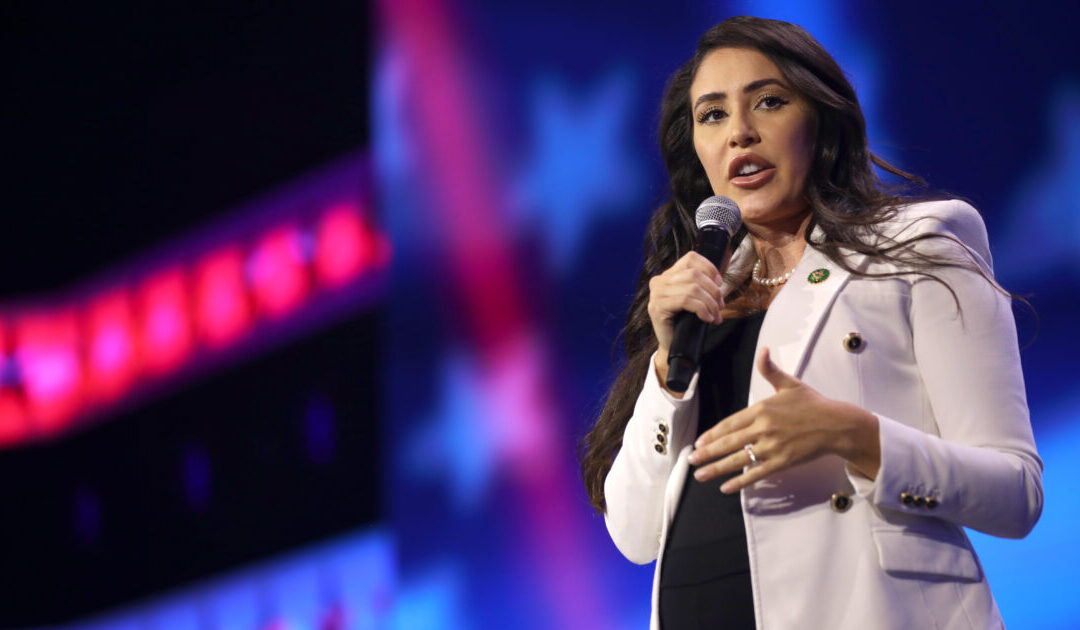
Credit: Gage Skidmore / Flickr
Attempts by Germany’s increasingly unpopular globalist government to ban Alternative for Germany (AfD), now the country’s most popular party, have reached Washington and drawn a response from Congress.
Republican Rep. Anna Paulina Luna, according to reports from Germany’s mainstream press, has warned lawmakers in Thuringia that she will press the Trump administration to consider U.S. travel restrictions against politicians who support an AfD ban.
Luna’s intervention comes as the Thuringian state parliament prepares for a September 30 public hearing on the far-left, anti-European Die Linke’s motion calling on the state government to push Berlin and other German states toward formal AfD prohibition proceedings.
The hearing is set to unfold in three public sessions and will be streamed by the parliament.
The spectacle, for critics of the proposed ban, raises a basic question that Germany’s political class can no longer avoid: how far should a democratic state go in trying to remove a large opposition party from electoral competition?
Luna’s statements put that question at the center of the dispute rather than treating a ban as an ordinary procedural matter.
“A free state governed by the rule of law may certainly take decisive action against its actual enemies,” Luna wrote. But, she argued, criticism of a government cannot simply be equated with hostility toward the constitution, adding: “The state may punish perpetrators, but not thoughts or opinions.” Pasted markdown
Luna said the material available publicly does not provide “convincing evidence” for banning the AfD as an entire political party. She argued that opponents appear, in her view, to be trying to eliminate an “unwelcome competitor” through institutions rather than defeating it at the ballot box. Pasted markdown
It’s worth noting that the German Constitutional Court says objectionable or even anti-constitutional ideas are not enough by themselves; a party must actively and systematically seek to undermine the free democratic order, and there must be concrete indications that its efforts could have some prospect of success
Only the Bundestag, Bundesrat or federal government may bring a party-ban application, and only the Constitutional Court can order dissolution. Thuringia therefore cannot simply vote the AfD out of existence; the Left Party’s proposal seeks to push the process upward into Germany’s federal institutions.
Luna made clear that she wants German lawmakers to know the controversy could carry consequences in America.. “Should you ban the AfD, I will speak with Minister Rubio” and seek entry restrictions against the lawmakers who initiated or supported the effort, she wrote.
Luna sits firmly inside the MAGA wing of the Republican Party and has cultivated contacts with AfD figures. She has previously met party representatives in Washington and has repeatedly spoken publicly against efforts to isolate the AfD from normal political competition.
The Thuringian AfD welcomed her statements. Deputy parliamentary leader Daniel Haseloff said the central issue remains whether proponents of prohibition can produce hard evidence rather than political labels, asking: “Where is the reliable evidence for a systematic plan by the AfD to abolish the free democratic basic order?”
“Keywords and baseless suspicions do not replace this proof,” Haseloff added. His caucus portrayed Luna’s letter as evidence that Germany’s ban debate is beginning to attract scrutiny well beyond the country’s borders.
Katharina König-Preuß, a lawmaker for the anti-democratic, extremist Die Linke party, condemned Luna’s proposed travel restrictions, claiming them as outside intimidation of elected German legislators. She said parliamentarians must decide according to the constitution, facts and conscience, not according to whether a foreign government might later impose personal consequences.
Her radical left-globalist faction has contacted Germany’s Foreign Office, the president of the Thuringian parliament and the U.S. Consulate General over Luna’s intervention. König-Preuß said the Left would not allow the warning to alter its position on the hearing or the proposed ban initiative.
The hearing itself is set to feature sharply opposed voices, including legal and political specialists, comedian and declared AfD opponent Hape Kerkeling, and former domestic intelligence chief Hans-Georg Maaßen. That unusual mix reflects how far the issue has moved beyond a narrow constitutional-law debate and into Germany’s broader political culture war.
Underlying the entire dispute is the AfD’s rapid growth and its challenge to Germany’s post-Merkel consensus on mass migration, national sovereignty, left-liberal cultural hegemony, and European integration. The party advocates tighter borders, more deportations and a policy it describes as “remigration,” making immigration one of the clearest dividing lines between the AfD and Germany’s globalist establishment political parties.
That electoral growth is precisely why the prohibition debate carries significant political weight. Opponents of a ban argue that removing a party, the most popular party in the country, with a massive base through judicial proceedings risks turning a constitutional safeguard into a substitute for political competition, while supporters counter that popularity does not exempt any organization from Article 21 of the Basic Law.
The Constitutional Court’s own precedent captures that tension. In its 2017 judgment against the National Democratic Party of Germany (NPD) party, it stressed both the exceptional nature of party prohibition and the need for concrete, weighty evidence that a party is actively fighting the democratic order rather than merely expressing objectionable views.
Luna appears to have seized on exactly that distinction. Her argument is that an opposition party’s electoral success and harsh criticism of government policy cannot themselves substitute for evidence satisfying the court’s constitutional test, while the marginal, anti-democratic, far-left extremist Die Linke party maintains that the AfD’s conduct and ideology justify putting that question before Germany’s institutions.
The battle therefore now runs on two tracks: a German constitutional fight over whether an AfD prohibition should even be initiated, and a transatlantic political fight over what such a move would say about Western democratic competition.
Luna’s primary message is that banning a major opposition party should require extraordinary evidence, and the Republican’s MAGA wing intends to make sure the people pursuing that course face international scrutiny as well.
We use technologies like cookies to store and/or access device information. We do this to improve browsing experience and to show (non-) personalized ads. Consenting to these technologies will allow us to process data such as browsing behavior or unique IDs on this site. Not consenting or withdrawing consent, may adversely affect certain features and functions.
Functional
Always active
The technical storage or access is strictly necessary for the legitimate purpose of enabling the use of a specific service explicitly requested by the subscriber or user, or for the sole purpose of carrying out the transmission of a communication over an electronic communications network.
Preferences
The technical storage or access is necessary for the legitimate purpose of storing preferences that are not requested by the subscriber or user.
Statistics
The technical storage or access that is used exclusively for statistical purposes.The technical storage or access that is used exclusively for anonymous statistical purposes. Without a subpoena, voluntary compliance on the part of your Internet Service Provider, or additional records from a third party, information stored or retrieved for this purpose alone cannot usually be used to identify you.
Marketing
The technical storage or access is required to create user profiles to send advertising, or to track the user on a website or across several websites for similar marketing purposes.


FAKE NEWS ALERT!
in the comments. pic.twitter.com/zz09vd7xUU


 (@realJennaEllis)