
Iranian Design, Chinese Parts, North Korean Labor: How Russia Builds Its Drones

Iranian Design, Chinese Parts, North Korean Labor: How Russia Builds Its Drones

Iranian Design, Chinese Parts, North Korean Labor: How Russia Builds Its Drones
October 17, 2026

Russia’s Garpiya drone series includes long-range attack and export variants. Photo courtesy of the U.S. Army’s ODIN.

Russia builds the Iranian-designed Geran drones it launches nightly at Ukrainian cities using Chinese engines, chips, and raw materials, along with North Korean labor. The supply chain now runs both ways. Russia also ships components and upgraded designs back to Iran for use against U.S. forces.

Growing production has enabled larger attacks. Russia launched almost 6,900 drones at Ukraine in September, including more than 3,600 Shaheds, bringing total Shahed launches since the 2022 invasion to almost 50,000, Commander-in-Chief Oleksandr Syrskyi reported on October 2. The Ukrainian Air Force reported destroying 2,722 Shahed-131/136 drones and 1,935 Shahed-238 jet drones that month. On September 6–7 alone, Russia launched 810 Shahed-type and decoy drones.

The attacks also exploit a cost imbalance. Open-source estimates put a Geran-2 at $20,000 to $50,000, compared with a historical average of about $4 million for a Patriot PAC-3 MSE interceptor. In May, the U.S. Army sought proposals for a Patriot interceptor costing less than $1 million to improve the economics of defending against drones and other threats. twz.com

Iran initially supplied Russia with complete Shahed drones and components, then helped establish domestic production through Sahara Thunder’s procurement network. In late 2022, Russian executives agreed to pay Iran $1.7 billion, partly in gold bars, to establish the Alabuga drone plant in Tatarstan. Russia’s push to produce 1,000 drones daily relies heavily on Iranian technical assistance. Annual capacity is estimated at more than 36,000 Gerans, while a planned carbon-fiber expansion at Alabuga could add about 28,000 airframes annually.

Chinese companies supply engines, microchips, and other Shahed components to Iran and Russia in disregard of U.S. sanctions. Xiamen Victory Technology sells Limbach L550 engines used in the Shahed-136. Conflict Armament Research documented a “discernible increase” in Chinese-made Shahed components, while Chinese customs data show hundreds of containers of dual-use goods, including engines, chips, fiber-optic cable and gyroscopes, shipped to Russia and Iran.

Chinese technology also powers Russia’s newest models. The Geran-4 jet drone, used in combat since May 2026, runs on a Chinese Telefly TF-TJ2000A turbojet. A Chinese state company also supplied Rosatom with raw materials for Geran airframes.

Western components reach these factories through China. A Treasury investigation found that nearly all American and European parts in these drones passed through authorized distributors to retailers in mainland China or Hong Kong, then to Iran or Russia. Payments typically went through Hong Kong shell companies.

On May 8, Treasury’s Office of Foreign Assets Control sanctioned 10 individuals and companies across the Middle East, Asia and Eastern Europe for helping Iran’s military obtain weapons and materials for Shahed drones and ballistic missiles. Targets included China-based Yushita Shanghai International Trade Co., which facilitated purchases for Iran’s technology acquisition center, and Iran-based Pishgam Electronic Safeh Company, which procured thousands of servomotors of the type recovered in downed Shahed-136 drones, according to Treasury.

Alabuga also relies on foreign recruits to staff its assembly lines. The Alabuga Start program recruited women aged 18 to 22 from Uganda, Kenya, Rwanda, Nigeria and other countries with promises of work-study opportunities, a 2024 AP investigation found. About 90 percent of the foreign women recruited through the program worked on drones, according to David Albright, an expert cited by AP. Workers described long hours, surveillance, lower pay than promised and exposure to harmful chemicals.

North Korea supplies additional labor. As many as 25,000 North Koreans work at the Alabuga drone plant, according to the Multilateral Sanctions Monitoring Team’s September 16 report. Pyongyang has promoted sending workers to Alabuga’s Geran-2 production lines since 2025. Released with a joint statement by the team’s 11 member states, the report estimates that 35,600 to 101,280 North Koreans work abroad, nearly all in China and Russia, including 15,000 to 30,000 in Russia at the end of 2025.

Russia disguises the workers as students to circumvent the UN ban on North Korean labor abroad. Of more than 36,400 visas it issued to North Koreans in 2025, 35,800, or about 98 percent, were student visas. Each worker in Russia earns an average of about $7,500 annually, with wages up to five times higher than in China. Pyongyang confiscates 80 to 90 percent of those wages. The overseas labor program generated an estimated $450 million to $800 million in 2025, helping fund North Korea’s nuclear and missile programs.

The arrangement could also strengthen North Korea’s drone program. A separate Ukrainian military intelligence estimate cited by Victor Cha of the Center for Strategic and International Studies and Joseph Kim of the Bush Institute put the number assigned to Alabuga at up to 12,000. The authors warned that returning technicians could bring valuable mass-production experience.

During the Iran war, Russia has shipped drone components, ammunition, and TNT to Iran across the Caspian Sea. Iran has used Russian-enhanced Shaheds and Russian targeting intelligence against U.S. forces, according to U.S. intelligence officials.

The post Iranian Design, Chinese Parts, North Korean Labor: How Russia Builds Its Drones appeared first on The Gateway Pundit.

Go to Source
Author: Antonio Graceffo
Internet Goes Wild with Memes After Texas GOP Cong. Candidate Brandon Herrera Catches His Dem Opponent Making This HILARIOUS Blunder While Trying to Shame Him During Debate (VIDEO)

Internet Goes Wild with Memes After Texas GOP Cong. Candidate Brandon Herrera Catches His Dem Opponent Making This HILARIOUS Blunder While Trying to Shame Him During Debate (VIDEO)

Internet Goes Wild with Memes After Texas GOP Cong. Candidate Brandon Herrera Catches His Dem Opponent Making This HILARIOUS Blunder While Trying to Shame Him During Debate (VIDEO)
October 17, 2026

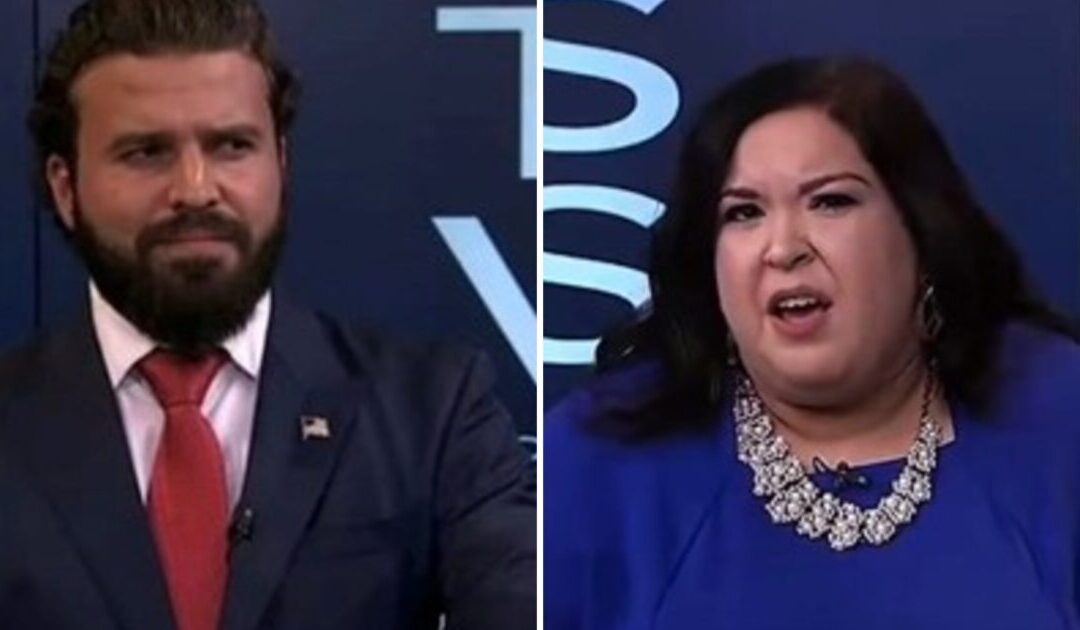
Texas GOP congressional candidate Brandon Herrera caught his democrat opponent, Katy Padilla Stout, in an embarrassing misspeak during their debate this week. Credit: News 4 (WOAI) San Antonio
YouTube Screenshot

The Internet went into frenzy earlier this week after a portly Texas Democrat congressional candidate faceplanted embarrassingly during a debate while trying to attack her GOP opponent.

As Texas Public Radio reported, Republican Brandon Herrera and Democrat Katy Padilla Stout faced off Tuesday night in a nasty debate for the Texas 23rd Congressional District.

They clashed over several important issues, including the Uvalde school shooting, border security, and rural health care. The most important moment, however, came when Stout decided to attack Herrera, a prominent gun rights activist and YouTuber, over what she viewed as sexist and cruel content in his videos.

This backfired spectacularly when Stout inadvertently slammed Herrera for making fun of Nazis, which the Republican was quick to pounce on.

“And here I thought making fun of Nazis was a good thing,” he quipped.

LOL!

WATCH:

STOUT: He made millions of dollars after making jokes online, making fun of nazis, and making fun of veteran suicide…Making fun of all these things we know he does not need to be doing.

HERRERA: And here I thought making fun of Nazis was a good thing. My grandfather was a Silver Star recipient from the Korean War…I watched him wither in the VA system before he died.

And I got to see how badly we were failing the veterans of this country. I have family with a proud history of military service.

Me and my business partners have raised over a million dollars for veterans’ charities…That is something we deeply, deeply care about.

STOUT: I apologize, I did misspeak. He chooses to goose step on YouTube for clicks and bait and money so that he can promote that type of ideology.

He chooses to shame women, call children sexually explicit comments, and he wants to represent us in office.

Herrera later posted his thoughts on the debate.

“The debate tonight was great,” Herrera wrote. “It was fun to watch my opponent realize on live television that lying and slandering me isn’t a substitution for a platform.”

X users responded to Herrera’s moment and resounding debate victory by flooding his timeline with some provocative memes.

Many poked fun at Stout’s figure while referring to her rampant campaign spending on cookies and other types of unhealthy food.

The post Internet Goes Wild with Memes After Texas GOP Cong. Candidate Brandon Herrera Catches His Dem Opponent Making This HILARIOUS Blunder While Trying to Shame Him During Debate (VIDEO) appeared first on The Gateway Pundit.

Go to Source
Author: Cullen Linebarger

WATCH: Michelle Tafoya CRUSHES Wacky Peggy Flanagan During Minnesota Senate Debate After Hearing Leftist’s RIDICULOUS Response to Massive Somali Fraud Scandal

WATCH: Michelle Tafoya CRUSHES Wacky Peggy Flanagan During Minnesota Senate Debate After Hearing Leftist’s RIDICULOUS Response to Massive Somali Fraud Scandal

WATCH: Michelle Tafoya CRUSHES Wacky Peggy Flanagan During Minnesota Senate Debate After Hearing Leftist’s RIDICULOUS Response to Massive Somali Fraud Scandal
October 17, 2026

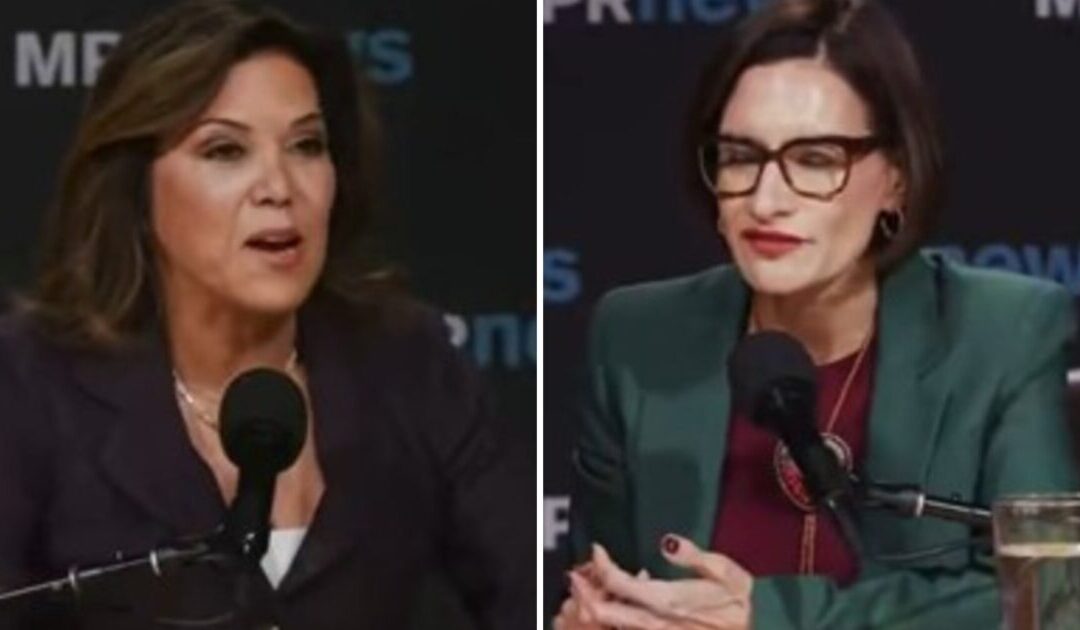
Minnesota GOP candidate Michelle Tafoya crushes Democrat nominee Peggy Flanagan in their debate on Friday. Credit: screenshot

One of the key figures in the largest fraud scandal in Minnesota history was taken to the woodshed in a critical Senate debate on Friday by her feisty Republican opponent.

As KARE 11 News reported, wacky DFL Lt. Gov. Peggy Flanagan and Republican Michele Tafoya faced off in their only scheduled debate on Friday in St. Paul. This comes as Flanagan holds a surprisingly small lead in the polls.

The two candidates attacked each other on a whole host of issues, including the war in Iran, immigration, fraud, health care, abortion, and the Supreme Court.

The moment of the debate, however, came when Flanagan was asked twice if she took responsibility for the massive Somali fraud scandal that happened on her watch.

According to a top prosecutor, the amount of fraud reached $9 billion. More than 90% of the people charged in the major fraud cases announced are of Somali descent.

Astoundingly, Flanagan not only claimed that Walz alone bore responsibility for the scandal but also took credit for several of his so-called ‘accomplishments.’

Tafoya quickly obliterated Flanagan’s response.

WATCH:

MODERATOR: Do you have any ownership of the fraud that occurred over the last two terms of this administration?

FLANAGAN: The governor has been very clear that the buck stops with him. He’s the one who had oversight here.

I’ve led on issues like paid family and medical leave, national leading child tax credit, making sure that kids get breakfast and lunch at school…

TAFOYA: Listen, I am going to Washington to be an equal opportunity pain in the a** to any corrupt career politician…I note that my opponent here has mentioned Donald Trump’s name, I don’t know how many times, I’ve lost count.

Peggy, Donald Trump is not on the ballot; you and I are on the ballot. And only one of us let $9 billion walk out the door due to fraud.

To suggest that she is going to be a fraud czar all of a sudden, talk about changing tacks when it becomes politically expedient!

My goodness, she was second in charge in this state, and she’s just going to point her finger at Governor Tim Walz when she demanded it would be the Walz-Flanagan Administration? When she demanded to be in the room where everything happens?

But suddenly, she has nothing to do with this? My goodness, sell it to someone else.

This was not the only time Tafoya put Flanagan on the coals. Here’s what happened earlier in the debate after Flanagan whined about Minnesota losing access to publicly funded programs.

TAFOYA: It is rich to hear my opponent talk about lost access to programs when under her watch, Minnesota saw billions, and billions, and billions of fraud dollars walk out the door while Medicaid was gutted, while Feeding Our Future was gutted, while these programs for autistic kids were gutted.

And she’s talking about access? All of that money left the state…This historic fraud happened under her watch, and suddenly she’s looking out for Medicaid and SNAP?

Sell it to someone else!

The post WATCH: Michelle Tafoya CRUSHES Wacky Peggy Flanagan During Minnesota Senate Debate After Hearing Leftist’s RIDICULOUS Response to Massive Somali Fraud Scandal appeared first on The Gateway Pundit.

Go to Source
Author: Cullen Linebarger

Here Is Who President Trump Reportedly Wanted to Hire as White House Press Secretary Before Settling On Katie Zacharia

Here Is Who President Trump Reportedly Wanted to Hire as White House Press Secretary Before Settling On Katie Zacharia

Here Is Who President Trump Reportedly Wanted to Hire as White House Press Secretary Before Settling On Katie Zacharia
October 17, 2026

Credit: Gage Skidmore/Flickr

More details are emerging from the fallout over Katie Zacharia’s ouster as White House Press Secretary, including that she was reportedly not President Trump’s first choice for the job.

As The Gateway Pundit’s Jordan Conradson reported, Zacharia told Fox’s Peter Doocy that she was “transitioning out” of the new role after only five days on the job.

The New York Times claimed that Zacharia had been “fired,” but Zacharia confirmed to The Gateway Pundit that she had not been.

Zacharia previously came under fire after a very shaky performance at her first and only press briefing on Tuesday, during which she appeared quite nervous and consistently failed to make eye contact with reporters.

The news only grew worse when America learned that Zacharia had been passing herself off as an attorney and lawyer despite never having passed the bar exam, which is required to practice law in this country.

Now, Axios reports that Trump did not have Zacharia as his first choice for the role. Instead, he wanted to hire former Fox News host Maria Bartiromo but was turned down.

As TGP readers know, Bartiromo parted ways with Fox News after leaking internal texts to the White House showing that the network told staff to stop amplifying so-called ‘election conspiracies’ from Trump.

From Axios:

Before hiring Zacharia, Trump wanted to hire former Fox News host Maria Bartiromo, two administration sources said, but she signaled she was not going to take the job.

“She’s no longer on air, but she’s still on the Fox payroll & the taxpayers can’t compete with that,” said one source.

Axios noted that conservative CNN commentator Scott Jennings was in contention for the job before Trump ultimately offered it to Zacharia.

Other details revealed by the outlet include the fact that Trump was “blindsided” when he learned that Zacharia was not an attorney, as he had stated on Truth Social when announcing her hire.

Zacharia’s hiring was also a Trump decision alone, one furthered along with the strong input of his personal assistant, Natalie Harp.

Don’t expect a new hire anytime soon. Trump told Fox News’s Peter Doocy on Friday that he is in “no rush” to name a replacement for the press secretary.

The post Here Is Who President Trump Reportedly Wanted to Hire as White House Press Secretary Before Settling On Katie Zacharia appeared first on The Gateway Pundit.

Go to Source
Author: Cullen Linebarger

55 Years at the UN: How China Uses the Posts It Holds to Further Its Policy Goals

55 Years at the UN: How China Uses the Posts It Holds to Further Its Policy Goals

55 Years at the UN: How China Uses the Posts It Holds to Further Its Policy Goals
October 17, 2026

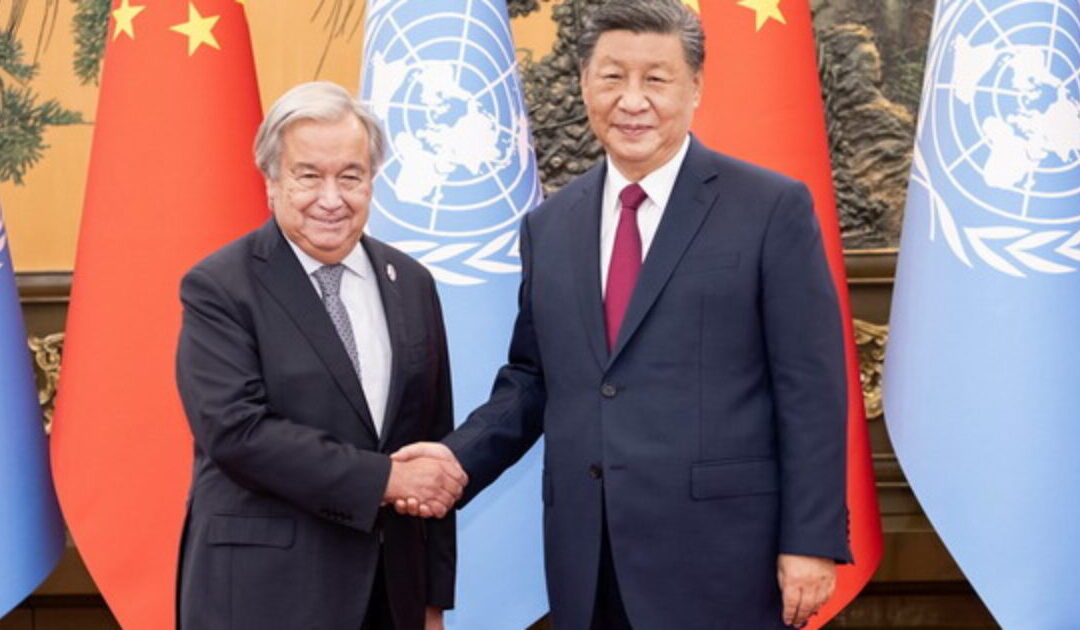
Beijing seeks greater influence over global institutions to advance Chinese state interests at the expense of their international mandates. Photo courtesy of the Consulate General of the People’s Republic of China in New York.


October 25 marks the 55th anniversary of the People’s Republic of China taking China’s seat at the United Nations. On that date in 1971, General Assembly Resolution 2758 transferred the seat from the Republic of China government in Taipei to Beijing. Beijing cites the resolution in support of its claim to Taiwan.

Chinese state media has linked the anniversary to Xi Jinping’s Global Governance Initiative (GGI), which calls for giving China and developing countries more say in international institutions. During UN meetings in September, Chinese Vice President Han Zheng presented the initiative as evidence of China’s commitment to the UN’s central role and described the anniversary as a new starting point for expanding China-UN cooperation.

China also plans to host a global governance forum this autumn in the Xiong’an New Area in Hebei to advance the initiative. Beijing’s record in the UN posts it already holds shows how it would use that greater influence.

In 2020, Chinese nationals headed four UN specialized agencies: the Food and Agriculture Organization (FAO), the International Telecommunication Union (ITU), the International Civil Aviation Organization (ICAO), and the UN Industrial Development Organization, according to the U.S.-China Economic and Security Review Commission. Beijing’s candidate also sought to lead the World Intellectual Property Organization that year but lost to Singapore’s Daren Tang.

China’s Qu Dongyu won 168 of 182 votes for a second term as FAO director-general, running through July 2027. As of April 2026, another Chinese national, Li Junhua, headed the UN Department of Economic and Social Affairs.

Chinese officials have used their UN positions to serve Beijing’s interests. Wu Hongbo, who led that department from 2012 to 2017, blocked Uyghur activist Dolkun Isa from attending a UN forum. He later told Chinese state television, “We have to strongly defend the motherland’s interests,” according to testimony before the commission. UN standards of conduct, however, state that international civil servants “should not seek nor should they accept instructions from any Government.”

Taiwan has been a frequent target. Under Secretary-General Fang Liu, ICAO stopped inviting Taiwan to its assembly. In January 2020, as COVID-19 spread, the agency blocked Twitter users who criticized Taiwan’s exclusion, including congressional staffers. The State Department called the practice “outrageous, unacceptable, and not befitting of a UN organization.”

At the ITU, Secretary-General Houlin Zhao aligned the agency with Beijing’s commercial agenda. During the 2017 Belt and Road Forum, the ITU signed an agreement with China’s Ministry of Industry and Information Technology to help participating countries build communications networks. In 2019, amid U.S. security concerns about Huawei, Zhao said, “So far, we have not come across any evidence pointing at security concerns of the equipment.”

Outside the UN system, Chinese nationals have also held international leadership posts while retaining positions in China’s government. Meng Hongwei remained China’s vice minister of public security while serving as Interpol president. In 2018, he disappeared during a trip to China, and Beijing announced he was under investigation for bribery. Interpol accepted his resignation halfway through his four-year term. In November 2025, Interpol elected Wang Yong as its vice president for Asia. Wang concurrently serves as political commissar of the Chinese Ministry of Public Security’s International Cooperation Bureau.

China can also secure results through votes. In August 2022, the UN human rights office reported that abuses against Uyghurs and other Muslim groups in Xinjiang may constitute crimes against humanity. On October 6, the UN Human Rights Council voted 19 to 17, with 11 abstentions, against even debating the report.

Beijing’s influence also extends to the World Health Organization. Taiwan attended the World Health Assembly as an observer from 2009 to 2016, until China blocked its participation after Taiwan’s 2016 presidential election. In May 2020, Secretary of State Mike Pompeo said Director-General Tedros Adhanom Ghebreyesus had “every legal power and precedent” to invite Taiwan but declined “under pressure from China.”

In his May 18, 2020, letter to Tedros, President Donald Trump cited “the World Health Organization’s alarming lack of independence from the People’s Republic of China.” Announcing on May 29 that the United States would terminate its relationship with the WHO, he noted that China paid $40 million annually, compared with roughly $450 million from the United States. Executive Order 14155, issued in January 2025, similarly stated that China had three times the U.S. population but contributed nearly 90 percent less.

Beijing has also bought its influence cheaply across the wider UN system. China is assessed 20 percent of the UN’s regular budget, second only to the United States at 22 percent. In 2024, it was the second-to-last country to pay its assessment in full, ahead only of North Korea. In July 2026, a UN official reported that China owed $428 million on the regular budget and $65 million for peacekeeping. China finally paid its regular-budget dues in full in early September.

The Global Governance Initiative calls for ending the dominance of a few countries over global governance. Yet Beijing’s record over 55 years at the UN shows how it uses its influence: to exclude Taiwan, shield Xinjiang from investigation, and advance Chinese commercial and security interests. Beijing appears to want to replace the dominance of “a few countries” with its own.

The post 55 Years at the UN: How China Uses the Posts It Holds to Further Its Policy Goals appeared first on The Gateway Pundit.

Go to Source
Author: Antonio Graceffo
Proposed Natural Gas Pipeline Expansion Forecast to Lower Energy Bills in Massachusetts

Proposed Natural Gas Pipeline Expansion Forecast to Lower Energy Bills in Massachusetts

Proposed Natural Gas Pipeline Expansion Forecast to Lower Energy Bills in Massachusetts
October 17, 2026

https://commons.wikimedia.org/wiki/File:Massachusetts_quarter,_reverse_side,_2000.jpg

This story originally was published by Real Clear Wire

By Kevin Mooney

Massachusetts could pivot in the direction of affordable and reliable energy by expanding on existing natural gas capacity, according to a new study that says ratepayers could save $367 million per winter. Since many of those same ratepayers are also voters, that’s a figure that should pique their interest.

The Fiscal Alliance Foundation, a nonprofit headquartered in Boston, highlights the benefits of “Project Beacon” in its study released just ahead of the state’s gubernatorial election. The projected savings for homeowners and businesses are enormous. But Massachusetts ratepayers, in particular those who can vote, must pressure political figures to make a clean break with current policies.

What better time than the upcoming elections to do exactly that? The foundation’s study makes a compelling case that Massachusetts could get out in front of some nasty winters if it moves now to address its lack of energy infrastructure. As it is, Bay Staters already pay the fifth-highest electricity prices in the United States at 25 cents per kilowatt-hour (kWh) with natural gas supplying more than 65 percent of their state’s electricity in a typical year.

Massachusetts residents can’t change their geology, but they can tap into their neighbors; Project Beacon could make nearby resources readily available at greater capacity.

Enbridge, a Canadian-owned gas pipeline company, announced its intention to launch Project Beacon back in May. If approved, the project would upgrade the existing Algonquin pipeline system, which carries natural gas from New Jersey into Massachusetts. Always on Energy Research, which performed the analysis for the foundation’s study, examined seven winters from 2019–20 through 2025–26 and found that Project Beacon could have saved Massachusetts ratepayers an average of $367 million per winter during those periods. Moreover, the findings break down how Project Beacon would benefit households and businesses. Individual ratepayers would save about $95 per winter, commercial customers about $792 per winter, and industrial customers nearly $4,600 per winter.

Pipeline Policy Stance a Key Test in Governor’s Race

So, the question becomes: Will the political class in Massachusetts listen? There are reasons to be hopeful and reasons to be cynical.  Gov. Maura Healey, a Democrat running for a second term, appears to have had an epiphany. She suddenly favors an “all-of-the-above” approach to energy that would theoretically include natural gas pipelines. But voters need to remember that during her time as attorney general, Healey was all in with opposing natural gas pipelines. So where is she now?

Project Beacon clearly puts her all-of-the-above pledge to the test, and so far, she remains noncommittal. The same is not true of Mike Minogue, her Republican gubernatorial opponent. The businessman and military veteran expresses support for natural gas pipelines on his campaign website.

Yet, Paul Diego Craney, the executive director of the foundation, insists both candidates fully explain their respective takes on Project Beacon ahead of the election.

“The people of Massachusetts deserve to know where both candidates stand on a project that will have a direct impact on what families and businesses pay to keep the lights and heat on,” Craney said in a press statement. “Governor Healey and Mike Minogue should each tell voters whether they will commit to moving Project Beacon forward. Whoever takes the oath in January will inherit the same pipeline constraints and the same affordability problem. This study gives the next administration a concrete opportunity to do something about both.”

Expensive Double-Whammy

Embracing Project Beacon would also mean making a clean break with anti-energy policies that have held sway in Massachusetts up until now. Always on Energy Research is part of another study titled “Blue States, High Rates” that delves into how blue state policies overloaded with renewable mandates and expensive regulations drive up energy costs. Massachusetts, for example, is part of the Regional Greenhouse Gas Initiative (RGGI), a multistate climate initiative based on “cap and trade” regulations and carbon taxes. The study, done in partnership with the Institute for Energy Research, points out that Massachusetts is the only New England state operating a state-only emissions cap on electric-generator emissions, in addition to being a founding member of RGGI. That’s an expensive double-whammy and a warning to other states.

Pennsylvania would be one that comes to mind.

That’s where Gov. Josh Shapiro, another Democrat up for re-election this November, withdrew his state from RGGI after encountering stiff opposition from industry and labor groups. But as an alternative, Shapiro has proposed his own state-level cap and trade plan known as the Pennsylvania Climate Emissions Reduction Act, or PACER. If the elections were to go south for the Republicans in the Keystone State, Shapiro could possibly push PACER through the state legislature and rejoin RGGI. That’s a worst-case scenario for the cause of affordable and reliable energy.

Conversely, if Massachusetts were to suddenly embrace a natural gas pipeline plan that lowers energy prices it could set an example that reverberates with other RGGI participants. The concept of “blue states, high rates” is a catchy phrase that could catch on.

Hello Bay State voters and ratepayers. Are you all paying attention?!


Kevin Mooney is a senior investigative researcher with Restoration News and author of Climate Porn: How and Why Anti-Population Zealots Fabricate Science, while Targeting American Capitalism, Freedom, and Independence

This article was originally published by RealClearEnergy and made available via RealClearWire.


The post Proposed Natural Gas Pipeline Expansion Forecast to Lower Energy Bills in Massachusetts appeared first on The Gateway Pundit.

Go to Source
Author: Guest Contributor