Florida Issues NO-BOND ARREST WARRANT for Communist Dictator Raúl Castro, 95, on First-Degree Murder Conspiracy Charge Over Killing of Four Americans
October 19, 2026
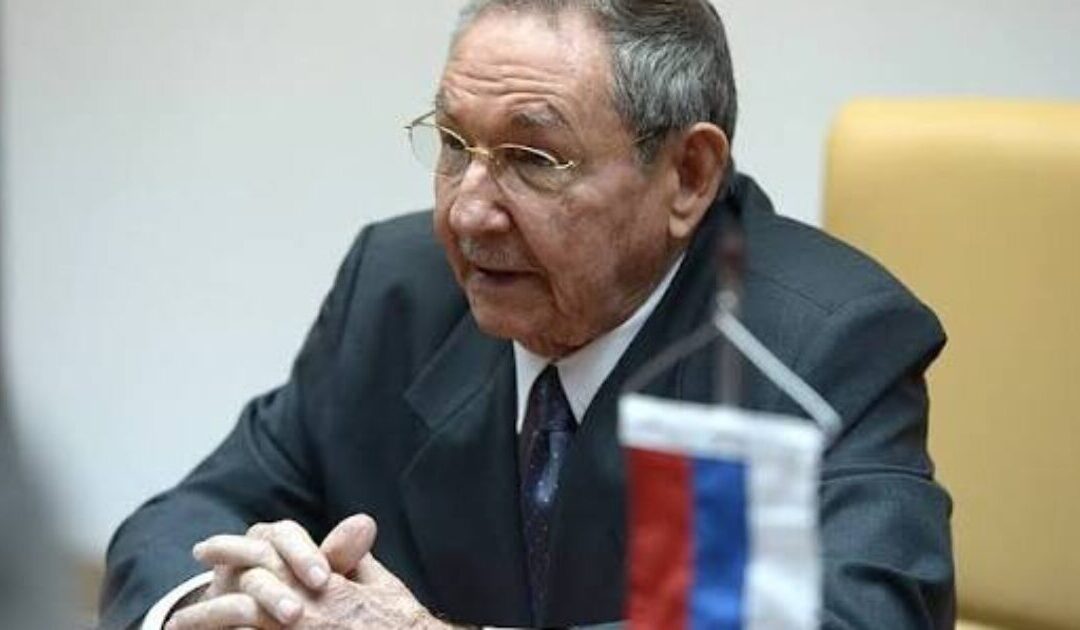
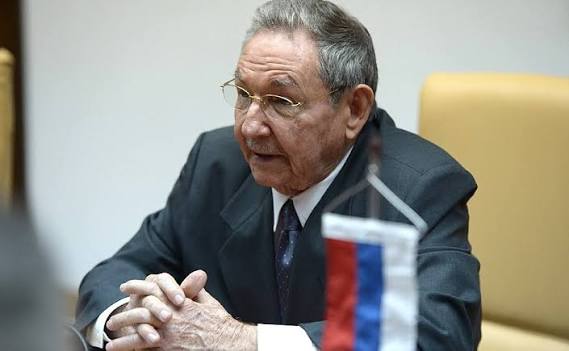
Cuban dictator Raúl Castro
Florida is coming after communist Cuban dictator Raúl Castro, and this time, the 95-year-old brother of Fidel Castro is facing a state arrest warrant in connection with the deaths of four men nearly three decades ago.
A Miami-Dade County judge has issued a NO-BOND arrest warrant for Castro on a state charge of conspiracy to commit first-degree murder, stemming from the February 24, 1996, shootdown of two unarmed civilian aircraft operated by the Miami-based humanitarian organization Brothers to the Rescue.
The warrant was signed Friday, October 16, following an investigation by the Florida Department of Law Enforcement. It comes as Florida Attorney General James Uthmeier intensifies efforts to hold the former Cuban leader accountable for the deadly attack.
According to the arrest warrant obtained by Fox News Digital, a judge found probable cause to believe Castro participated in a conspiracy that led to the killing of four men aboard the civilian aircraft.
The victims were:
Carlos Costa
Pablo Morales
Mario de la Peña
Armando Alejandre Jr.
The four men were killed when Cuban fighter jets shot down two Brothers to the Rescue aircraft over international waters during a humanitarian mission.
For their families and Miami’s Cuban exile community, the tragedy has remained an open wound for 30 years.
Now, Florida is pursuing another avenue for justice.
The state warrant is particularly significant because it represents a separate criminal proceeding from the federal indictment already brought against Castro earlier this year.
Unlike the federal case, this prosecution is being pursued under Florida law.
And the warrant comes with NO BOND.
According to local reporting, Florida authorities also intend to seek Castro’s extradition if he is arrested outside the state.
According to the Miami Herald’s reporting, investigators allege that Cuban intelligence operatives working inside Florida infiltrated Brothers to the Rescue and transmitted sensitive information about its operations to Havana.
The affidavit alleges that the operatives monitored Naval Air Station Key West and supplied flight information to Cuban authorities.
Investigators also allege that members of the Cuban spy network were instructed not to board Brothers to the Rescue flights during a period surrounding the attack.
On February 24, 1996, Cuban military jets shot down the two civilian aircraft.
Three American citizens and one lawful permanent resident were killed.
U.S. investigators contend that the operation involved a coordinated conspiracy reaching into the highest levels of Cuba’s communist government.
Castro, who served as head of Cuba’s armed forces at the time, is now accused of participating in that conspiracy.
The Castro government maintained that the aircraft violated Cuban airspace. However, the United States and a United Nations investigation concluded that the planes were shot down over international waters.
WATCH:
BREAKING: An ARREST WARRANT has just been issued against communist former Cuban leader RAUL CASTRO, 95-year-old brother of Fidel Castro
This is STATE CHARGE, conspiracy to commit first degree M*RDER
FLORIDA FAFO!
A FL judge found probable cause to believe he committed the crime in connection for the downing of a plane
Four men from Miami were killed: Carlos Costa, Pablo Morales, Mario de la Peña and Armando Alejandre Jr.
They were flying humanitarian missions to search for Cuban rafters lost at sea
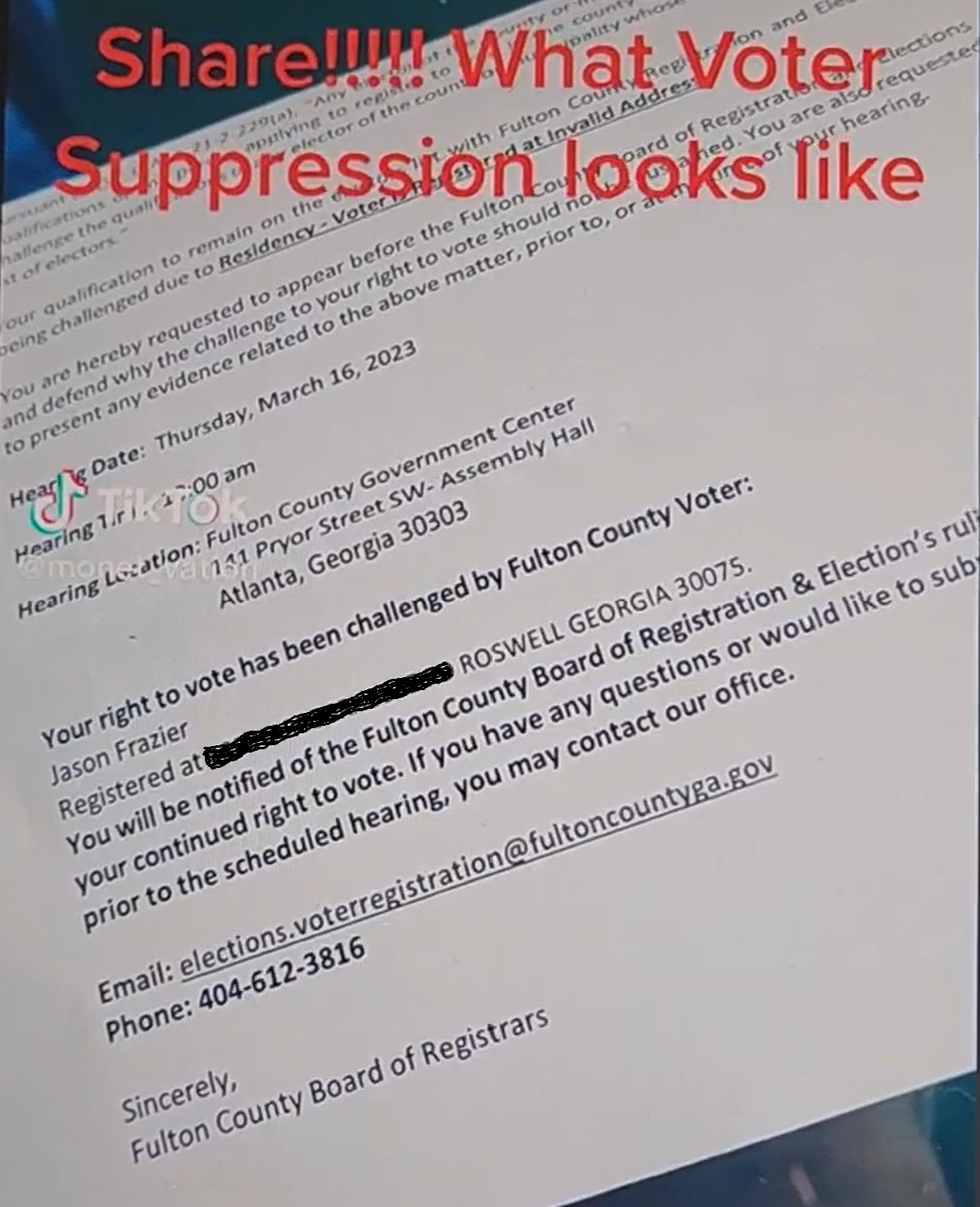
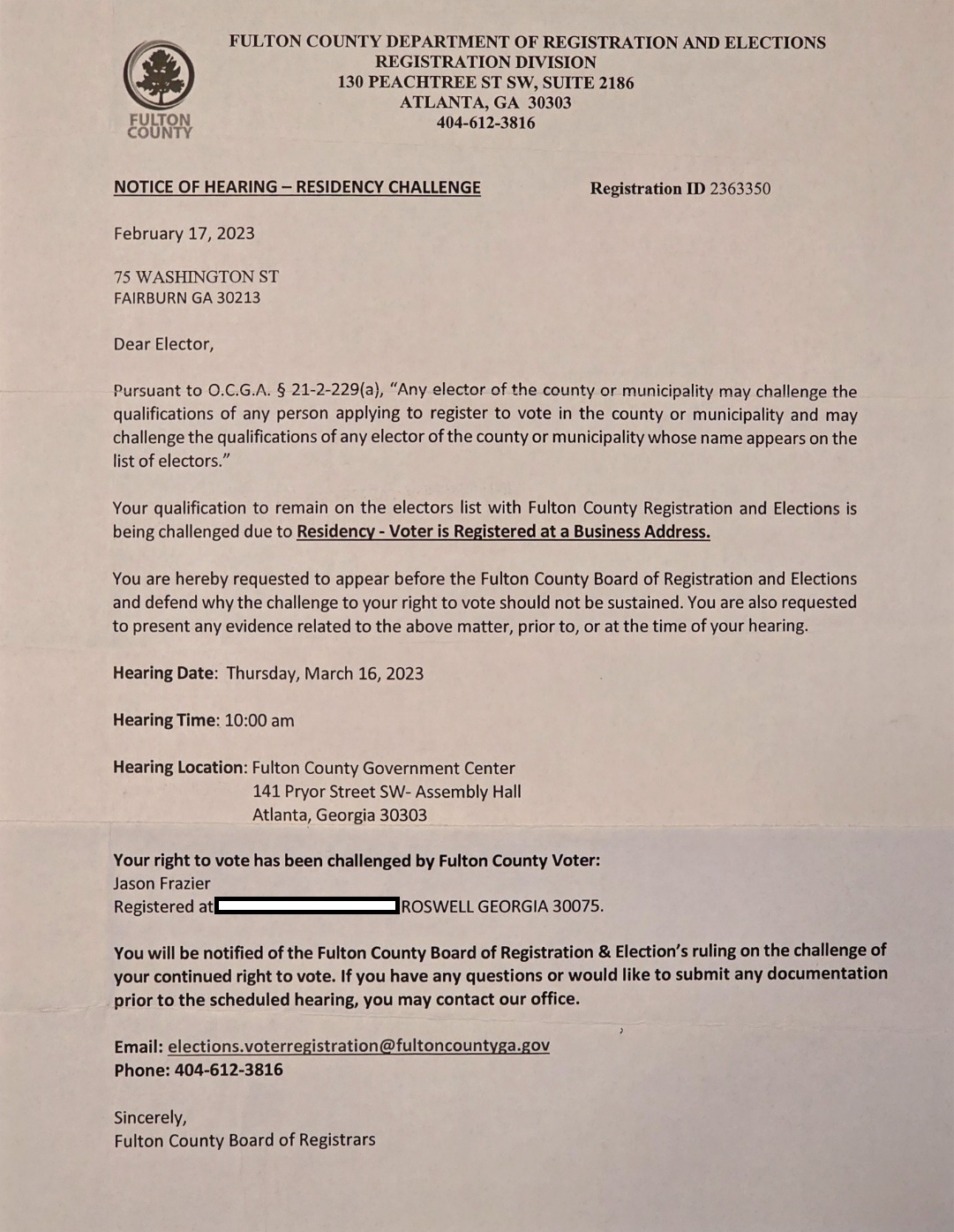
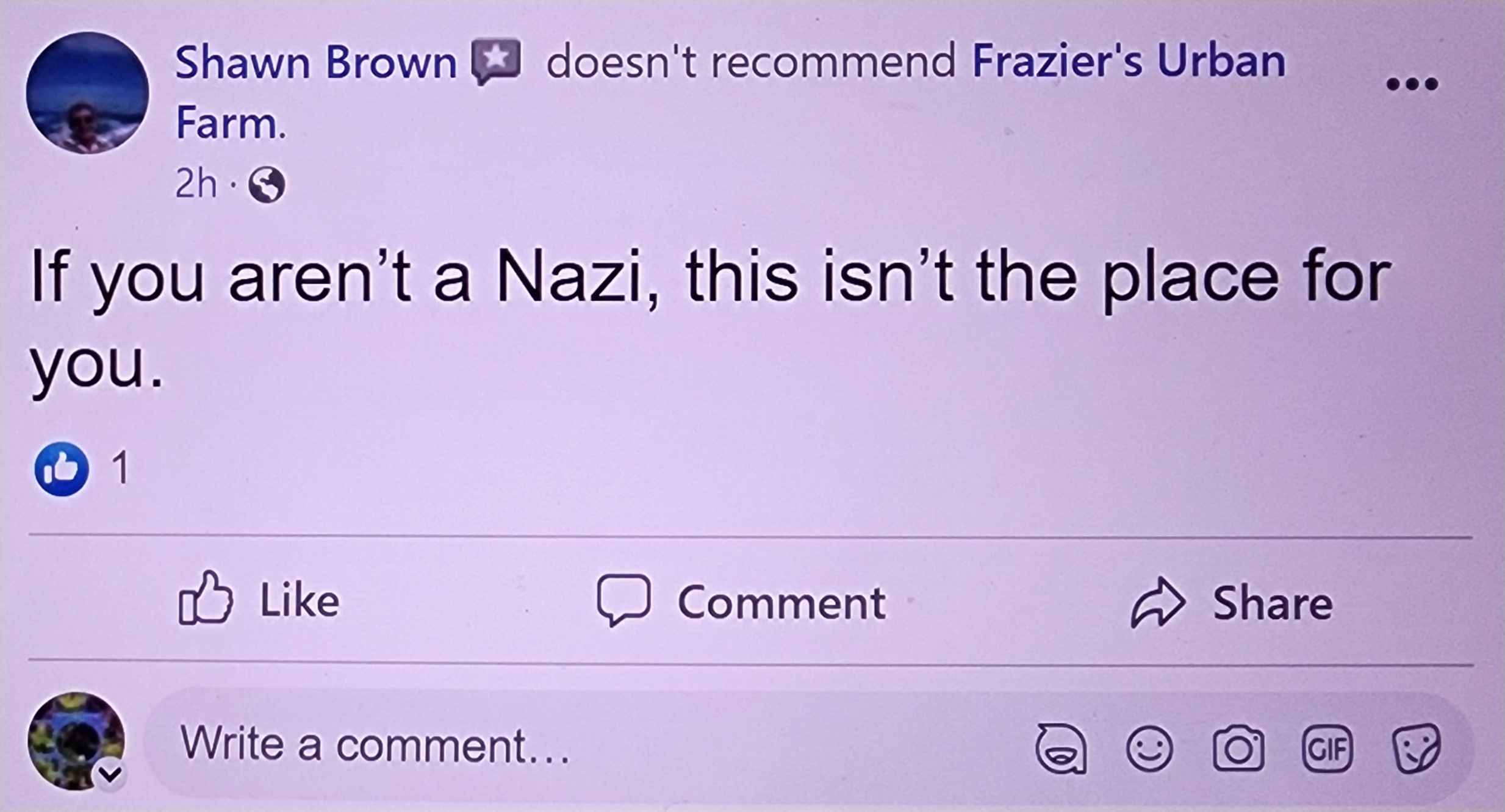
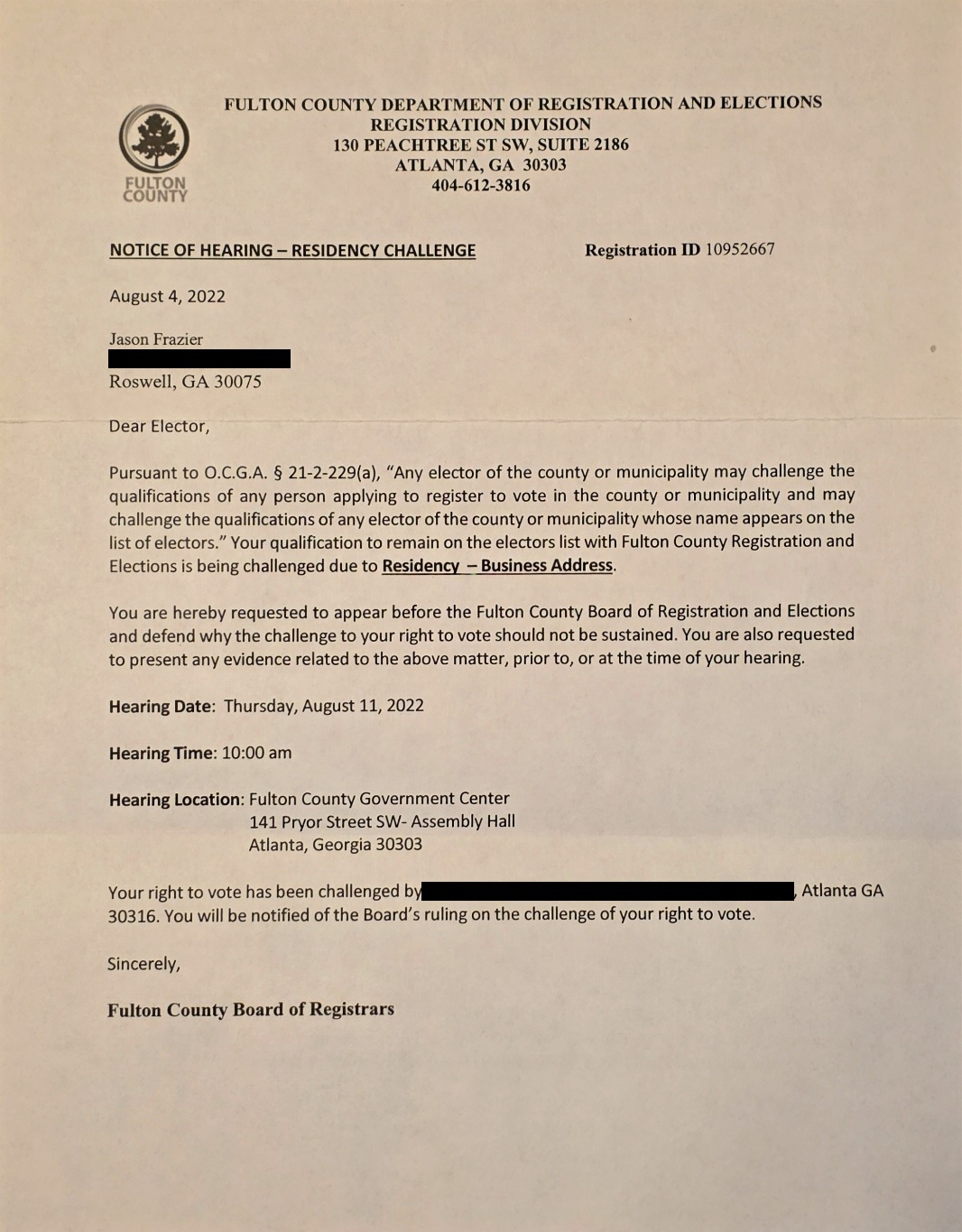
A recent Georgia State Election Board (SEB) meeting revealed that the Fulton County Board of Registrations and Elections (BRE) doxed citizens who submitted challenges to invalid voter registrations. Jason Frazier, a county resident, originally requested Fulton County to make simple address corrections to invalid registrations. Instead, the county forced him to challenge the registrations and forced challengers to appear at a hearing after sending them letters stating in bold:
“Your right to vote has been challenged by Jason Frazier registered at [address] Roswell Ga. 30075.”
Frazier challenged invalid registrations for reasons such as deceased voter, invalid address, or registration at a P.O. Box, which is legal only for a mailing address. He also provided twoletters showing the county sent P.O Box registrants challenge hearing notices addressed to “elector” without the P.O. Box number. Thatmade it impossible to route the notice to the voter. SEB Vice Chair, Janelle King, while visibly upset by Frazier’s testimony, stated: “This is doxing. I mean, giving someone’s name and address of the person who challenged while leaving off who’s being challenged is doxing. You can’t tell me it’s not.”
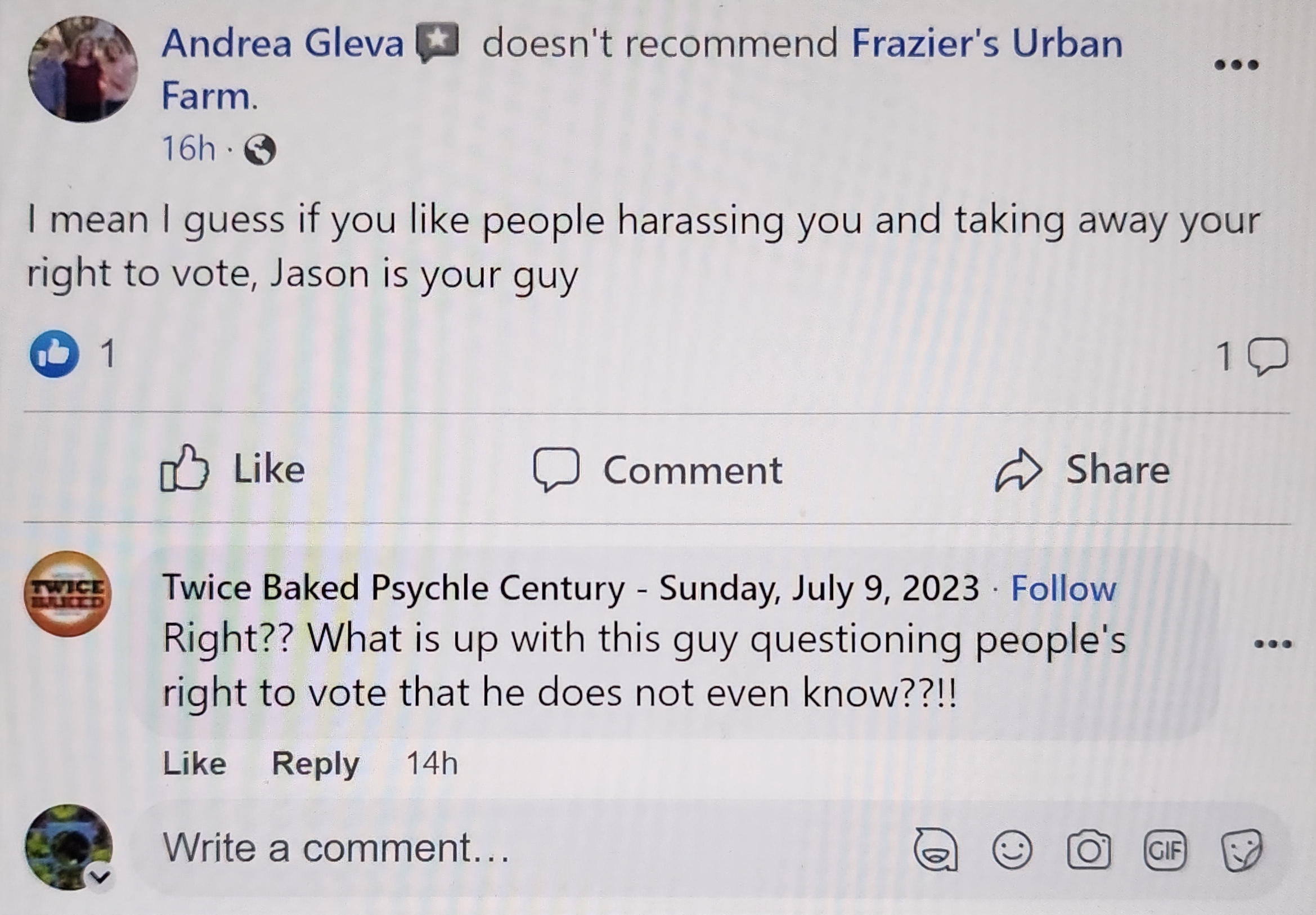
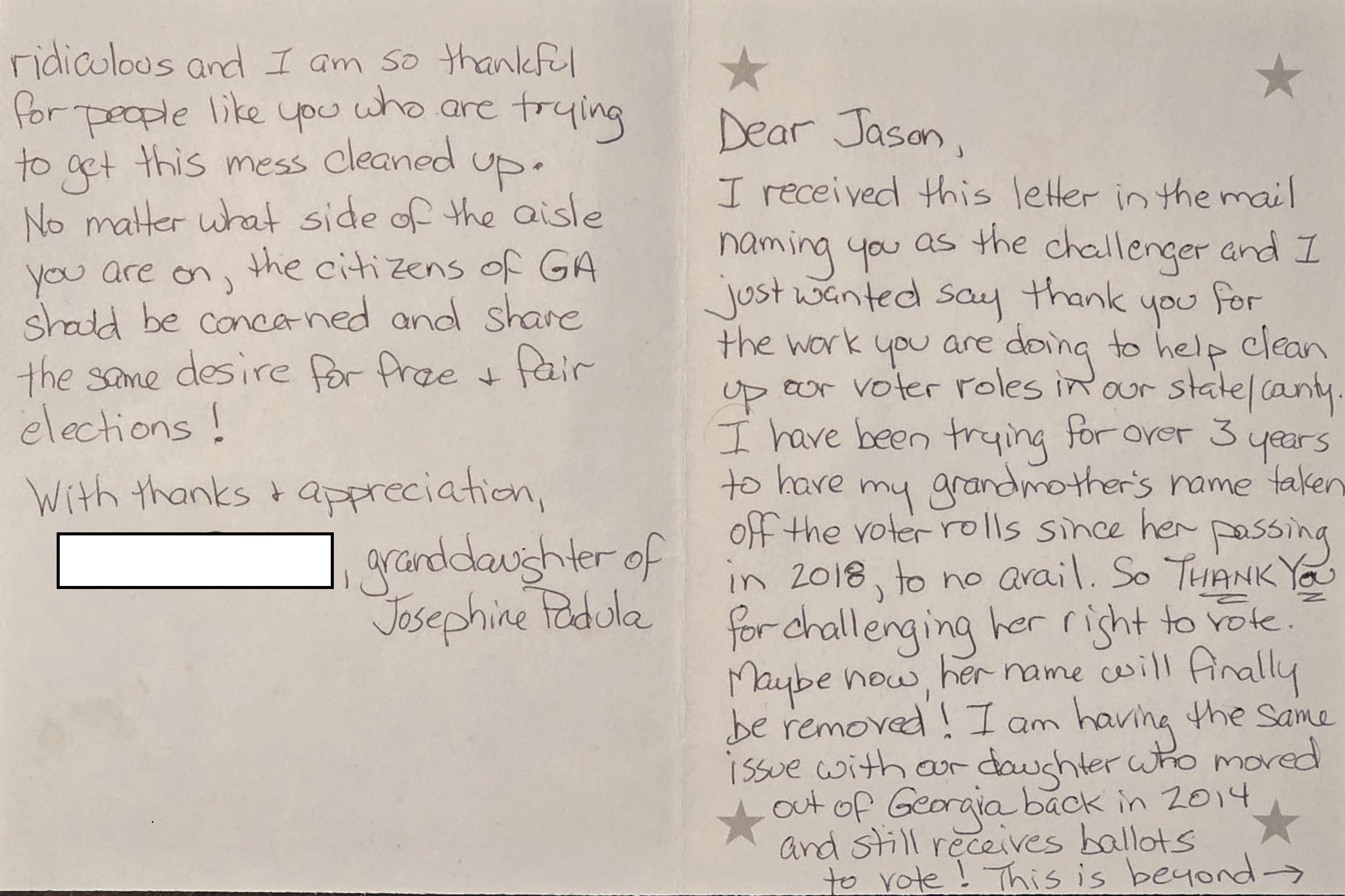
As a result of the doxing, Frazier was victimized byhundreds ofnasty socialmedia comments and over a dozen distorted news stories even though his challenges were correct and the county failed to do its job of removing invalid registrations from the voter rolls. At other times, affected individuals thanked him for his help removing invalid registrations or fixing their registrations, because they could not get comparable help from the county. The doxing led to Frazier’s own registration being challenged in retaliation on grounds he lived at a commercial address. Despite having the capability to quickly verify that he lives in a house, Fulton County set up an unnecessary challenge hearing against Frazier.
Although a Senate sponsored anti-doxing law failed to pass the House last year, Fulton’s actions appear to violate Georgia’s current reckless endangerment law prohibiting any act that: “endangers the bodily safety of another person by consciously disregarding a substantial and unjustifiable risk…”O.C.G.A. § 16-5-60 Mr. Frazier also contends that the county’s unnecessary retaliatory challenge hearingfurther violates 1965 federal Voting Rights Act laws that prohibit any “…attempt to intimidate, threaten, or coerce any person for voting…”52 USC 10307(b)as well as 1993 voter intimidation laws that can fine or imprison: “A person, including an election official, who in any election for Federal office… knowingly and willfully … attempts to intimidate, threaten, or coerce, any person for ..voting”52 USC 20511(1)(A).
Registration manager Kathryn Glenn admitted at the SEB hearing that someone in her office sent the letters that were mailed during the tenure of previous manager Shamira Marshall who now works for the Secretary of State. Fulton Attorney Karen Pachuta would not let Glenn explain why the notices were sent in such an inappropriate manner. Vice Chair King, stated she would open a complaint to find out.
(Note that the raid on Fulton County by the FBI earlier this year was reported but the results from that investigation have not been reported to date.)
WAYNE ROOT: I Don’t Mean to Be Rude, But…If You’re Not Voting for Trump and the GOP in Midterms, You’re Either a Communist, Radical Muslim, Delusional, Easily Brainwashed, or Dumb as a Doorknob
October 19, 2026
By Wayne Allyn Root
I hear people grumbling that they’re staying home for the midterms because they’re disappointed in President Trump, and/or the GOP Congress.
I hear others saying they will vote Democrat as a protest vote against high gas prices.
Can I be blunt?
You are either fools, idiots, brainwashed, gaslighted, or dumb as a fu***king doorknob.
No, Trump isn’t perfect, but what’s that famous saying? “Never let the perfect get in the way of the good.” And let me tell you…
Trump is DAMN good!
Trump is the best we’ve ever had…and I promise you, the best we’ll ever again get. He fights every day to make America great again. And who is he up against?
The whole damn world…
The Deep State, DC Swamp, CIA, globalists, communists, the entire Democrat Party, every Democrat in Congress, the establishment of both parties, a ton of RINOS in the House and Senate, almost every judge in America, the entire federal government, government employee unions, and 22 million government employees, the Federal Reserve, the entire mainstream media, the entire social media, the entire education system (the teachers unions, public school teachers and college professors), Hollywood, Madison Ave., the United Nations, World Health Organization, and throw in the governments and spy agencies of every other country in the world- with the exception of Israel and Argentina.
Trump fights all of them every day, 24 hours a day, and still look at what he has delivered…
Trump gave you the largest tax cuts in history.
Trump gave you $43 billion in larger tax refunds this year- the largest increase in history.
He gave you no tax on tips- if you work in the service industry.
He gave you no tax on OT- if you’re a blue-collar worker.
He gave you no tax on Social Security- if you’re a senior.
He gave you $1000 tax refunds- if you’re on Obamacare.
He gave you $90 Medicare refund checks- mine just arrived in the mail a few days ago.
He gave every child born in America in the past year a savings account courtesy of the government.
He cut everyone’s prescription drug costs dramatically.
And now he’s promising (if the GOP House and Senate are re-elected) a $5000 per person bonus, which adds up to a $10,000 bonus if you’re a couple!!
And you’re not happy? You want to stay home and let Democrats win?
But wait, I’m just getting started…
Trump secured the border like never before in history.
Trump not only deported, or forced self-deportation of three million illegal aliens, but most importantly, he kicked hundreds of thousands of serious, violent, illegal alien felons out of the country. That might save the life of your child or spouse one day!
As a result of that, Trump reduced violent crime and murder to the lowest levels in 100 years.
You’re not happy about that?
Trump literally ended DEI at every company in America- which means now you get hired based on your talent, not the color of your skin.
You’re not happy about that?
Now here comes a controversial one- Trump fought a war to prevent Iran (the world’s worst terrorist sponsor) from getting nukes- and whether you approve, or not, years from now we may all look back in history and see that Trump prevented World War 3, or the world being held hostage by Iran, or nuclear Armageddon, and saved tens of millions of lives lost- and all you sacrificed was a temporary rise in gas prices.
And even if you hate the Iran war- Trump never put boots on the ground, and in a 9-month war, we’ve lost 21 American soldiers- more Americans are shot and killed every weekend in one city run by Democrats- Chicago.
Are you outraged over all the deaths from the war being fought on the streets of Democrat-controlled Chicago?
And as far as the economy…
Yes, there is inflation. Yes, prices are high. Yes, I know millions of working-class and middle-class Americans are hurting because of high prices for gas, groceries, health insurance, and energy bills.
But 90% of those high prices were caused by Joe Biden and dumb, destructive, suicidal Democrat policies…
*Like climate change idiocy…
*Green New Deal lunacy…
*Open borders insanity…
*Hundreds of billions of your taxpayer dollars spent on illegal aliens…
*And trillions of your taxpayer dollars stolen by Democrats and their Somali pals with fake charities, fake NGOs, fake learning centers (with no students), fake hospices (with no patients), and $2 billion to Stacey Abrams’ company with zero sales and $100 in the bank.
But separate from all that, let’s take a deep dive into the Trump economy…
History proves it’s possible to have raging inflation and high prices, at the same time as a booming economy. Guess what?
We have it right now!
Stocks are at all-time highs.
US corporate profits- the highest in history.
GDP- estimated by the Fed at a rip-roaring, booming 5% in the 3rd Quarter.
Manufacturing- US industrial production is growing at the fastest pace in years.
Jobs Claims are the lowest in 57 years.
Blue-collar jobs are booming.
US poverty rate- the lowest in modern history.
US household incomes- the highest in modern history.
Even with high prices- American paychecks are beating inflation under Trump.
The US is now the world’s top exporter and producer of oil and gas.
If you add all of that together and you still believe the Trump economy is bad…
You’ve been gaslighted and brainwashed like never before in history.
But hey, forget about all of the good economic news above.
Forget about all of the remarkable achievements of President Trump listed above.
Forget about the $10,000 per couple bonus you’ll get if the GOP wins.
Forget that the radical, extreme Democrat candidates stand for communism, Sharia Law, face coverings for women, forced vaccines, allowing boys to play girls’ sports, and encouraging your son to change into a girl.
All you need to know is…
If you re-elect a GOP House and Senate, we will deport Ilhan Omar back to Somalia.
That, my friends, is like hitting the lottery!
It’s worth voting GOP just to watch Ilhan Omar boarding the US government plane in handcuffs and leg irons, while President Trump waves goodbye from the runway.
That, my friends, is what I call “the American Dream.”
So…
I don’t mean to be rude, but…
If you’re not voting for Trump and the GOP in these midterms, you’re either a communist, radical Muslim, delusional, easily brainwashed, or dumb as a doorknob.
ABOUT THE AUTHOR: Wayne Allyn Root is a CEO, businessman, best-selling author, and national conservative TV and radio host, who has interviewed President Trump 17 times. Watch Wayne’s TV shows on Real Americas Voice TV- “America Speaks” weeknights and “America’s Top Ten Countdown” on weekends- and his daily video podcast “WAR Zone Live presented by The Gateway Pundit” daily at 4:30 PM ET/1:30 PM Pacific at TheGatewayPundit.com. His website is ROOTforAmerica.com. Read Wayne’s latest fun book, “How Illegal Immigrants Have Made America Great.” It’s 100+ blank pages. The joke is on Democrats!
Suspicious Phone Call Triggers Law Enforcement Investigation and Traffic Delays at President Donald J. Trump International Airport – Just Hours Before Trump’s Departure
October 19, 2026
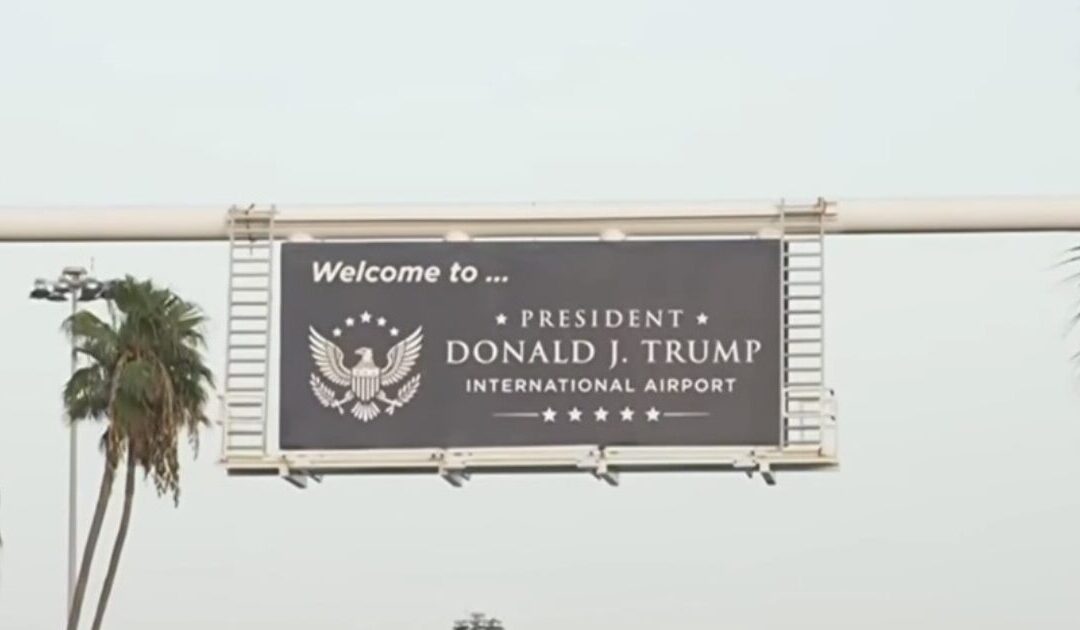
New signs direct drivers to President Donald J. Trump International Airport
A suspicious phone call set off a major law enforcement response Sunday afternoon at President Donald J. Trump International Airport in West Palm Beach, Florida, forcing the Palm Beach County Sheriff’s Office (PBSO) to slow traffic into the terminal as a precaution and leaving travelers facing potential delays.
The Palm Beach County Sheriff’s Office (PBSO) confirmed that authorities investigated a bomb threat at the airport. Fortunately, no explosive device was found.
Airport officials posted the alert on X around 1:23 p.m.: “Law enforcement is investigating a suspicious phone call. As a precaution, PBSO has slowed traffic entering the terminal. Travelers may experience delays. If you see something, say something. Report suspicious activity to law enforcement. Thanks for your patience & cooperation.”
Law enforcement is investigating a suspicious phone call. As a precaution, PBSO has slowed traffic entering the terminal. Travelers may experience delays.
If you see something, say something. Report suspicious activity to law enforcement.
Thanks for your patience & cooperation.
— President Donald J. Trump International Airport (@fly_DJT) October 18, 2026
According to WPTV, a witness reported that vehicle access to the arrivals and departures area had been blocked.
Some frustrated passengers reportedly abandoned their vehicles along Belvedere Boulevard and began walking toward the terminal, apparently fearing they would miss their flights.
Meanwhile, WPBF 25 News confirmed a significant police presence, with deputies redirecting motorists around the airport.
The timing was particularly concerning.
President Trump had been spending the weekend in South Florida and was reportedly expected to fly back to Washington later Sunday.
However, authorities have not publicly established that the bomb threat specifically targeted Trump or was connected to his scheduled departure. There has also been no publicly confirmed identification of the caller.
By approximately 2:34 p.m., airport officials announced that access roads had reopened and normal operations had resumed.
The scare occurred while President Trump was in the West Palm Beach area and hours before he was scheduled to depart the airport for Washington, D.C. The airport, formerly Palm Beach International (PBI), was officially renamed President Donald J. Trump International Airport earlier this year after legislation signed by Florida Governor Ron DeSantis. The three-letter code is now DJT.
From Louisiana’s Job Sites to the Top of the Music Charts: How “May God Bless America” Became an Unlikely Patriotic Anthem Ahead of the Midterms
October 19, 2026
Guest post by Parker Sigg and LJ Fino | Real America’s Voice & Real America’s Music
There are moments in American history when a song becomes more than music. It becomes a reflection of the times, a declaration of conviction, and a reminder of what a nation stands for.
As America approaches the 2026 midterm elections, an unlikely voice has emerged from the heart of Louisiana with a message rooted in faith, patriotism, and the belief that America’s greatest days are still worth fighting for.
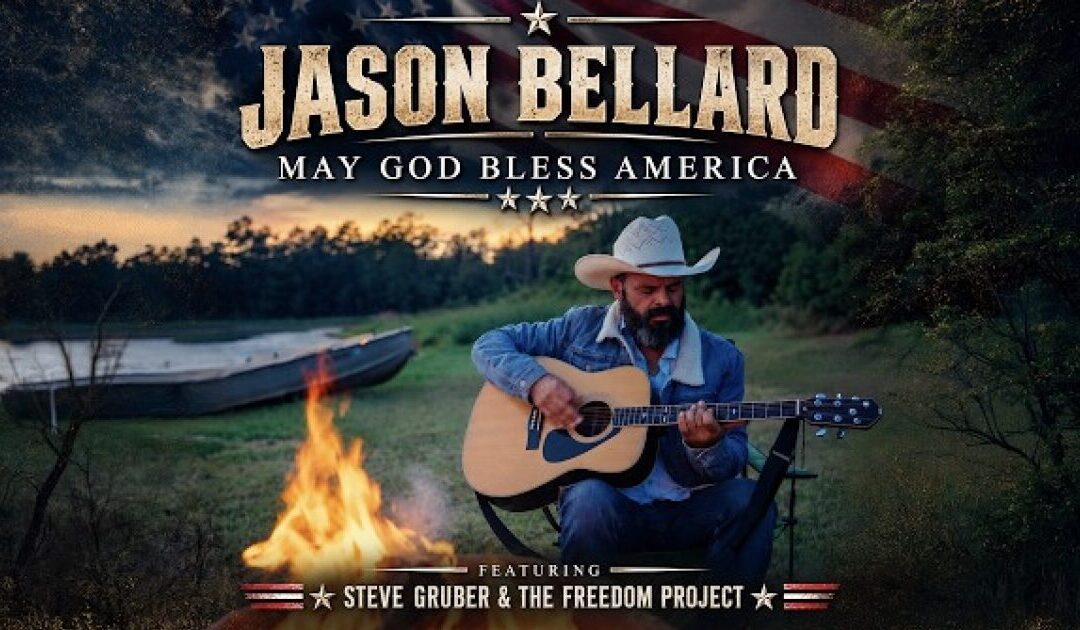
His name is Jason Bellard.
He’s not a Washington politician. He’s not a professional political commentator. And he’s certainly not someone who spent his career navigating the entertainment industry or chasing the national spotlight.
Jason is an everyday, hardworking American employed by Mangrum’s Air Conditioning in Westlake, Louisiana. He gets up, goes to work, and earns his living the same way millions of Americans do every day.
But behind that blue-collar exterior is a man with extraordinary musical talent, a deep love for his country, and a remarkable story about how the changing world around him transformed his understanding of faith, politics, and personal responsibility.
That transformation inspired his new song, “May God Bless America,” a collaboration with nationally syndicated broadcaster and Real America’s Voice host Steve Gruber and The Freedom Project, released through Real America’s Music.
And now this unlikely collaboration is finding itself competing on the national music charts alongside some of the industry’s biggest stars.
On October 17, the song occupied the No. 3 position on the U.S. iTunes songs chart reported by Soundcharts, directly behind Zach Bryan and Lana Del Rey at No. 2 and Olivia Rodrigo and Chappell Roan at No. 1.
Think about that for a moment.
A Louisiana HVAC worker, a conservative broadcaster, and a patriotic musical collaboration occupying the same commercial stage as some of the biggest names in contemporary entertainment.
It’s a remarkable illustration of how music can elevate voices far beyond the traditional centers of cultural influence.
And the timing, just weeks before the midterm elections, makes the story all the more significant.
From the Sidelines to Finding His Voice
Perhaps the most powerful part of Jason’s story isn’t the song itself. It’s the journey that led him to write it.
For much of his life, Jason wasn’t particularly interested in politics. Like many Americans, he focused on his work, his family, and his faith rather than the daily political battles unfolding in Washington.
He also once believed that politics and faith were two separate worlds that shouldn’t necessarily intersect.
But as the national conversation surrounding religious freedom, family values, the upbringing of children, and the future of American culture intensified, his perspective began to change.
What once seemed like distant political disagreements started to feel deeply personal.
Jason began wrestling with a question that many Christians have confronted throughout history: At what point does remaining silent conflict with the responsibility to stand by your convictions?
He increasingly came to view the country’s cultural divisions through the lens of his Christian faith. To him, these debates were no longer simply about Republicans versus Democrats or the outcome of a particular election. They raised fundamental questions about morality, conscience, and what he viewed as an ongoing struggle between good and evil.
As Parker Sigg, Vice President of Real America’s Voice, explains:
“Jason represents something incredibly powerful about this country. He’s not a political operative or somebody who spent his life following every move in Washington. He’s a hardworking American who went through a genuine transformation in how he viewed the world. He once believed politics and faith should remain separate, but as he watched the cultural battles unfolding across America, he came to believe that the principles guiding his faith could no longer be separated from the future he wanted for his country.”
That transformation is the foundation of “May God Bless America.”
Jason didn’t set out to become a political personality. He found himself confronting questions about the future of his country and decided to express his beliefs in the most authentic way he knew.
He wrote a song.
Steve Gruber, The Freedom Project, and a Collaboration With a Purpose
What began as Jason’s personal expression of faith and patriotism grew into something larger through his collaboration with Steve Gruber and The Freedom Project.
Gruber, a nationally recognized conservative talk-radio personality and host on Real America’s Voice, has spent years discussing the political and cultural issues shaping the nation.
His involvement in “May God Bless America” represents a natural extension of those conversations into the world of music.
Rather than simply discussing the importance of faith, national identity, and civic responsibility from behind a microphone, Gruber joined Bellard and The Freedom Project in bringing those themes to life through a song.
The Freedom Project’s participation helped turn Jason’s original message into a broader musical collaboration, connecting his blue-collar perspective with an established national media platform.
And importantly, the heart of the project remains the authenticity of the man who inspired it.
Jason’s story is not one manufactured in a boardroom or assembled by a team of consultants.
It’s a deeply personal expression of his beliefs.
“What makes this collaboration so meaningful is the combination of people involved,” Sigg says. “You’ve got Jason, an everyday American with an extraordinary God-given talent, alongside Steve Gruber, someone who has spent years giving a voice to the issues that matter deeply to millions of Americans. Together with The Freedom Project, they’ve created something that brings those worlds together through music.”
Their collaboration also speaks to a broader opportunity for independent artists: partnerships that allow authentic stories to reach audiences without abandoning the beliefs or experiences that inspired them.
An Unlikely Music Industry Showdown
There is another dimension to this story that deserves attention.
For years, some of the most recognizable names in the entertainment industry have openly expressed their political and cultural beliefs.
Olivia Rodrigo has publicly advocated for reproductive rights and supported Kamala Harris during the 2024 presidential campaign. Chappell Roan has championed LGBTQ+ causes and expressed progressive views, while also criticizing aspects of both major political parties.
Both artists have built enormous audiences and achieved significant commercial success.
Now, sharing space with their music on the U.S. iTunes chart is a patriotic, faith-centered recording led by a man who works in the air-conditioning business in Louisiana.
The contrast is striking.
This isn’t a claim that these artists are personally feuding with Jason Bellard. It is a genuine competition for attention and listeners in the same music marketplace, between performers representing very different backgrounds and cultural perspectives.
LJ Fino, President of Real America’s Music, sees the song’s success as part of a much larger cultural battle taking place within the music industry.
“Look at who we’re competing with. You’ve got Olivia Rodrigo and Chappell Roan, two massive names in the industry who have been very public about their political views. Then you’ve got Jason Bellard, an HVAC worker from Louisiana, teaming up with Steve Gruber and The Freedom Project, and their song is right there on the same charts. That’s an incredible story, regardless of which side of the political spectrum you’re on.”
For decades, major recording labels, entertainment executives, and commercial radio programmers played a central role in determining which artists could reach national audiences.
Today, digital distribution has made that landscape more accessible.
Independent musicians can release their work directly to listeners, and audience interest can translate into meaningful commercial visibility.
That is precisely the kind of opportunity Real America’s Music was created to support.
“One of the reasons we launched Real America’s Music was to create opportunities for artists and messages that don’t necessarily fit the traditional entertainment-industry mold,” Fino adds. “We’re seeing firsthand that a blue-collar guy with a powerful story can compete for attention in the exact same marketplace as global superstars. And that’s something worth celebrating.”
It is a reminder that musical talent and meaningful artistic expression can emerge from anywhere.
Even an air-conditioning shop in Westlake, Louisiana.
An Anthem Born From Conviction
“May God Bless America” isn’t a conventional patriotic song.
It doesn’t simply celebrate the American flag or the familiar symbols of national pride.
Instead, its lyrics confront the difficult questions that Jason believes Americans must be willing to discuss.
The song addresses faith in public life, cultural disagreements surrounding families and children, and the consequences of remaining silent when deeply held principles are challenged.
It also references Charlie Kirk, connecting the music to the broader debates over religious conviction, political expression, and the direction of American culture.
At its center is an appeal to God for healing, forgiveness, and guidance.
But another message is woven throughout the music: faith should inspire action rather than become an excuse for passivity.
Stephen K. Bannon, host of War Room, captured the significance of the song and its connection to everyday Americans:
“More than a song, ‘May God Bless America’ is an anthem to the pain and toughness of the working class in our great Country.”
Bannon’s words speak directly to the story behind the music. Jason Bellard isn’t singing about the American working class from a distance. He is part of it. His experiences, convictions, and everyday life are woven into the song itself.
The familiar saying that God works through willing hands captures much of the philosophy behind the song.
For Jason, faith is not simply something to profess on Sunday morning. It should shape how people live, treat others, raise their families, and participate in the world around them.
“What I find especially compelling about Jason is that his message comes from a place of conviction rather than political ambition,” Sigg says. “He wasn’t looking for a spotlight. He saw things happening around him that challenged his understanding of right and wrong, and he felt compelled to express what was in his heart. That kind of authenticity is difficult to manufacture.”
The result is a song that Jason hopes will speak to Americans who share his concerns and values.
For those listeners, it may become an anthem of perseverance and a reminder not to take the country’s freedoms for granted.
Why the Timing Matters: America Approaches the Midterms
The song’s rise comes at a particularly consequential moment.
On November 3, Americans will head to the polls for the 2026 midterm elections, determining the composition of Congress and deciding numerous state and local contests.
Those elections will influence the country’s direction on issues ranging from the economy and education to immigration, religious liberty, and federal policy.
But beyond the political rallies, campaign advertisements, and headlines is a broader conversation about what Americans believe their country represents.
For Jason, that conversation is inseparable from his faith.
He sees America’s freedoms as blessings accompanied by responsibilities.
His song reflects the belief that maintaining those freedoms requires people to remain involved in their families, communities, and civic institutions.
“We often talk about America’s future as though it is something decided exclusively in Washington,” Sigg says. “But this country has always been shaped by ordinary people who care deeply about their communities and their families. Jason’s story is a powerful example of what happens when someone decides that their voice matters and finds the courage to use it.”
The approaching midterms offer Americans across the political spectrum an opportunity to consider the issues, examine candidates’ records, and participate in the democratic process.
And while elections determine who holds political power, the culture of a nation is shaped every day by the people who live in it.
Music has always been part of how those people express their convictions.
America Is a Blessing — and a Responsibility
For generations, Americans have invoked God’s blessings during moments of celebration, national tragedy, uncertainty, and renewal.
That tradition is woven deeply into the country’s religious and cultural history.
But gratitude and responsibility go hand in hand.
To believe America is blessed is not to suggest that the nation is perfect, that its leaders are beyond criticism, or that its citizens will always agree.
It is to recognize the freedoms and opportunities that generations of Americans have worked, sacrificed, and sometimes died to preserve.
For people of faith, it can also mean accepting the responsibility to live according to the principles they profess.
That message runs through Jason’s song.
There is a difference between hoping the future will be better and participating in the work necessary to make it better.
Faith can inspire service. Conviction can inspire courage. And gratitude can inspire a deeper commitment to one’s family, community, and country.
Those principles remain important regardless of who occupies the White House or controls Congress.
More Than a Song
At Real America’s Music, our mission is to provide a platform for artists whose work reflects stories, values, and experiences that aren’t always represented in mainstream entertainment.
Jason Bellard embodies that mission.
His story isn’t about fame.
It isn’t about having a famous last name, a record deal, or a team of political consultants behind him.
It’s about an American worker who experienced a fundamental shift in how he understood his place in the world and decided to put that experience into words and music.
With Steve Gruber and The Freedom Project joining him, that personal message has found a place in a much larger national conversation.
And the song’s presence on the same chart as Olivia Rodrigo, Chappell Roan, and other global stars adds another chapter to an already remarkable story.
“What makes this project special to me is the fact that Jason is the real deal,” Sigg says. “He’s the guy working hard every day, providing for his family, and watching what’s happening to the country he loves. He has an incredible God-given talent, but it’s the sincerity behind that talent that makes this song different. He represents the Americans whose stories deserve to be heard, whether they have a million followers or none at all.”
As America approaches another major election, “May God Bless America” invites listeners to reflect on questions that extend far beyond one campaign.
What kind of country do we want to leave the next generation?
What responsibilities do we have to our families and communities?
How should faith and conscience inform our engagement with public life?
And what does it mean to be grateful for the freedoms we have inherited?
Jason Bellard doesn’t pretend to have all the answers.
But he has chosen to share his convictions through music, and with Steve Gruber and The Freedom Project, those convictions are reaching an audience well beyond the place where the song began.
There is something powerful about the idea that a man working an ordinary job in Louisiana can find his voice and contribute to a national conversation.
And perhaps that is the greatest significance of “May God Bless America.”
Its message is not just about the country we have inherited, but about the responsibility every generation carries for the country it will leave behind.
May God bless America. And may we never take that blessing for granted.
WATCH:
Parker Sigg is Vice President of Real America’s Voice. LJ Fino is President of Real America’s Music. “May God Bless America,” performed by Jason Bellard, Steve Gruber and The Freedom Project, is available through Real America’s Music.
Biden-Appointed Judge REFUSES to Recuse Herself from Trump Golf Course Case After DOJ Accuses Her of Bias — Defends Angry Outburst Against Administration Lawyers
October 19, 2026
Judge Ana Reyes / Wikimedia Commons
U.S. District Judge Ana C. Reyes, a Biden appointee, has flatly refused to step aside from the ongoing lawsuit seeking to block President Trump’s renovation of Washington, D.C.’s East Potomac Golf Course.
In a 13-page memorandum opinion issued October 18, Reyes denied the Department of Justice’s motion to disqualify her for bias, arguing that government lawyers “omitted context” behind her furious October 12 outburst and ignored her repeated earlier praise of DOJ counsel.
As The Gateway Pundit previously reported, Reyes, a foreign-born Biden judge, erupted at Trump administration attorneys during an emergency hearing after the National Park Service removed more than 400 trees from the course over the Columbus Day holiday weekend.
She declared she was “furious,” that the government’s actions had “cost the government all of its credibility,” and that “ignorance is not an excuse,” before issuing a temporary restraining order halting further tree cutting. She later extended the block through at least October 26.
In her denial of the recusal motion (filed by Associate Attorney General Stanley Woodward), Reyes laid out the government’s claims side-by-side with what she called “the record.” She noted that she had, for months, declined nearly a dozen requests from the D.C.
Preservation League and other plaintiffs to restrain the government, repeatedly credited DOJ lawyers’ representations, and refused to presume bad faith.
Early in the case she had praised a government brief as “one of the more exceptional government briefs I have seen in three years on the bench,” calling the writing “spectacular” and the analysis “spot on.”
Transcript excerpts she quoted include statements such as “you know I have an immense amount of respect for you. I think at every single hearing I have said that I think you’re doing an excellent job,” “I have 1,000 percent faith in you,” and descriptions of counsel as a “terrific advocate.”
What changed, Reyes wrote, was not sudden bias but the government’s own conduct: a decision to remove over 500 healthy, non-invasive trees, with notice delivered at 4:55 p.m. on the Friday of a holiday weekend that work would begin within 15 hours.
Nearly 430 trees were cut in a single day before a rain delay stopped further work.
Plaintiffs then sought a TRO, which the court granted. Reyes acknowledged she was “furious” and “beyond disappointed” at the October 12 hearing but cited D.C. Circuit precedent that judges in hard-fought, controversial cases may use strong words without automatically requiring disqualification.
She concluded the government had not met the “heavy burden” under 28 U.S.C. § 455(a) and Supreme Court standards in Liteky to show deep-seated favoritism or antagonism making fair judgment impossible.
Reyes also pushed back on claims she had hamstrung legitimate maintenance from the outset, noting that before October 11 the court had not barred any government action at East Potomac, including tree removal.
She framed her earlier restraint as consistent with separation-of-powers principles, quoting her own prior statements that federal courts should not tell the Executive what to do absent an obvious violation of law.
The government, she said, created the emergency that necessitated the holiday-weekend hearing by insisting tree felling would resume Monday weather permitting.
The opinion denies the motion and keeps the case before Reyes. The underlying dispute centers on the Trump administration’s plans, announced after the president toured the site with Interior Secretary Doug Burgum and golf architect Tom Fazio, to transform the aging public course into a championship-level facility open to the public and capable of hosting major events.
Activist plaintiffs have sought to block the work through claims under environmental and historic-preservation statutes.
We use technologies like cookies to store and/or access device information. We do this to improve browsing experience and to show (non-) personalized ads. Consenting to these technologies will allow us to process data such as browsing behavior or unique IDs on this site. Not consenting or withdrawing consent, may adversely affect certain features and functions.
Functional
Always active
The technical storage or access is strictly necessary for the legitimate purpose of enabling the use of a specific service explicitly requested by the subscriber or user, or for the sole purpose of carrying out the transmission of a communication over an electronic communications network.
Preferences
The technical storage or access is necessary for the legitimate purpose of storing preferences that are not requested by the subscriber or user.
Statistics
The technical storage or access that is used exclusively for statistical purposes.The technical storage or access that is used exclusively for anonymous statistical purposes. Without a subpoena, voluntary compliance on the part of your Internet Service Provider, or additional records from a third party, information stored or retrieved for this purpose alone cannot usually be used to identify you.
Marketing
The technical storage or access is required to create user profiles to send advertising, or to track the user on a website or across several websites for similar marketing purposes.

BREAKING: An ARREST WARRANT has just been issued against communist former Cuban leader RAUL CASTRO, 95-year-old brother of Fidel Castro