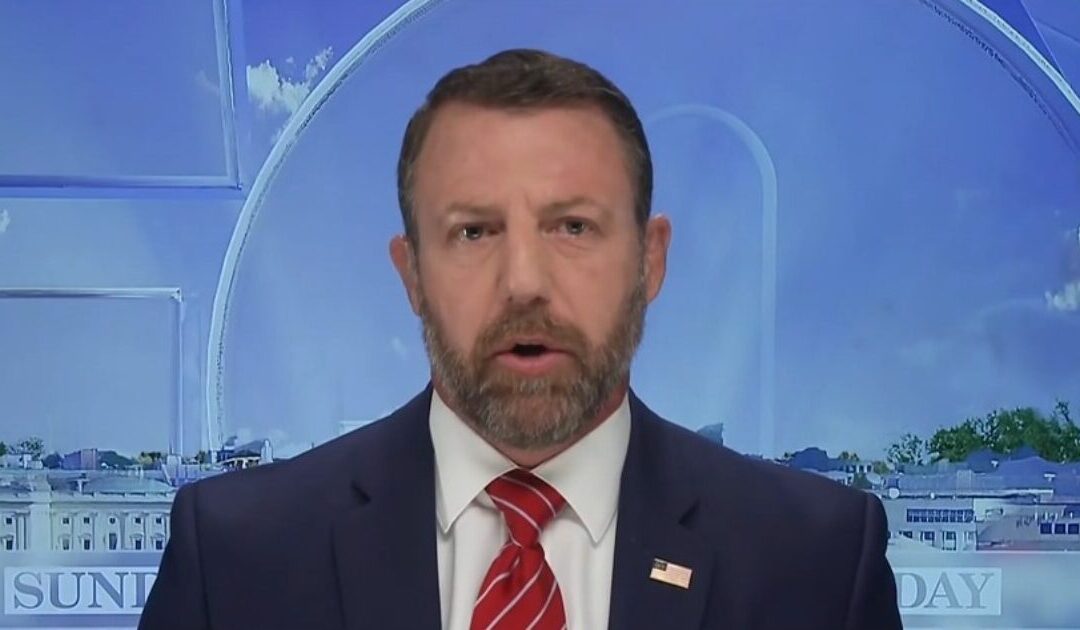

JUST IN: Judge Declines to Block Trump’s Executive Order Ending Birth Tourism

JUST IN: Judge Declines to Block Trump’s Executive Order Ending Birth Tourism

JUST IN: Judge Declines to Block Trump’s Executive Order Ending Birth Tourism
August 28, 2026

A federal judge on Friday declined to block President Trump’s Executive Order ending “birth tourism.”

The other order bans birthright tourism, the practice by which people travel to the United States solely for the purpose of giving birth to a child on our soil.

President Trump, earlier this month, signed two executive orders on birthright citizenship and birth tourism, following the Supreme Court’s ruling against the Trump Administration’s executive order ending birthright citizenship.

During the Oval Office signing, Trump decried the “very, very unfortunate” Supreme Court decision, adding, “So we’re making adjustments because it’s very unfair.”

“This was done right after the Civil War. This was for the babies of slaves, and what’s happening now, people are building businesses around it,” Trump said. “Wealthy people are building businesses around birthright citizenship. That’s not the way it was supposed to work. It’s a disgrace. They’re buying their way in, and we’re not going to let it happen.”

US District Judge Deborah Boardman, a Biden appointee, declined to block President Trump’s revised executive order.

Reuters reported:

A federal judge on Friday declined to immediately block U.S. President Donald Trump’s newest executive order limiting the number of people ​eligible for birthright citizenship, even as she sharply questioned its viability after the U.S. Supreme ‌Court rejected his previous effort to do so.

U.S. District Judge Deborah Boardman in Greenbelt, Maryland, rejected a request for a temporary restraining order sought by immigrant rights advocates who had last year secured a ruling from her blocking the Trump ​administration from enforcing his initial 2025 executive order curtailing birthright citizenship.

Read President Trump’s revised Executive Order on birth tourism here:

By the authority vested in me as President by the Constitution and the laws of the United States of America, it is hereby ordered:

Section 1. Purpose. United States citizenship is among the greatest inheritances the Nation can bestow. It embodies a sacred bond between the American people and the Nation in which they live, and carries profound rights, privileges, and responsibilities reflective of the enduring allegiance of citizens to the United States and our Constitution. Citizenship is not a commodity to be acquired through calculated exploitation and evasion of the immigration laws, such as by entering the United States on a nonimmigrant visa for the purpose of giving birth within the Nation’s borders.

Birth tourism operators use deceptive advertisements and inducements to entice foreign nationals to travel to the United States for the purpose of giving birth on American soil. They promise citizenship; access to public benefits; and short-term stays in specialized facilities, hotels, or rentals, but often fail to deliver on these promises. These operators coach their clients to misrepresent the purpose and duration of their travel to consular and border officials to obtain visas authorizing entry into the United States. Failure to appropriately combat these schemes has resulted in thriving industries around the world that profit by enabling the evasion of American immigration laws to obtain citizenship and other immigration benefits for foreign visitors, and the exploitation of the women who travel here for purposes of giving birth.

The immigration laws of the United States establish discrete categories of temporary nonimmigrant visas to allow foreign visitors into the United States for study, exchange, temporary employment, tourism, and other transitory activities that are now exploited by birth tourism operators. Participants in birth tourism schemes abuse these categories to establish a permanent foothold in the United States by securing the advantage of citizenship for their children and then potentially for themselves.

Birth tourism, defined in section 3 of this order, undermines the integrity of the Nation’s immigration system by enabling foreign nationals to exploit their temporary admission to obtain permanent immigration-related benefits. Birth tourism also diverts limited consular inspection and enforcement resources away from legitimate visa applicants, erodes public confidence in the faithful enforcement of the immigration laws, and impairs the executive branch’s ability to protect the national security.

The United States has a compelling interest in ensuring that each visa category is used only for the purpose for which it was established. Foreign nationals seeking temporary admission into the United States must adhere to the purposes for which the Congress has authorized their temporary admission, and cannot be permitted to circumvent the immigration laws in an attempt to vest themselves and their children with lasting benefits that are irreconcilable with their nonimmigrant status.

It is therefore the policy of the United States to promote the integrity of its immigration system, to ensure that nonimmigrant visa classifications are used only for their lawful and intended purposes, and to prevent the exploitation of those classifications by persons engaging in birth tourism.

Sec. 2. Authorities. Pursuant to section 301 of title 3, United States Code, the authority granted to the President under section 215(a) of the Immigration and Nationality Act, 8 U.S.C. 1185(a), is hereby delegated to the Secretary of State and the Secretary of Homeland Security to the extent necessary to implement this order, including the authority to issue or adopt rules, policies, operational guidance, or other guidance to carry out this order.

Sec. 3. Definition. For purposes of this order, “birth tourism” is defined as:

(a) the entry of any foreign national into the United States via a nonimmigrant visa for the purpose of giving birth on American soil; or

(b) any effort by any foreign national to facilitate the entry of any foreign national into the United States via a nonimmigrant visa for the purpose of giving birth on American soil.

Sec. 4. Scope and Implementation. (a) The Secretary of State and the Secretary of Homeland Security shall take such actions and update any rules, policies, operational guidance, or other guidance as necessary to effectuate the policy set forth in this order. Such actions may include, within the Secretaries’ respective discretion and authority, appropriate action to prevent the entry into the United States of, or the granting of any visa or other travel authorization to, any alien entering or attempting to enter the United States for the purpose of engaging in birth tourism; revoking the visa or travel authorization and permanently barring entry of any alien who enters or attempts to enter the United States for the purpose of engaging in birth tourism; denial of entry to, or removal of, any alien who previously engaged or plans to engage in birth tourism; or other appropriate action against entities, organizations, or individuals, within or outside of the United States, responsible for facilitating or enabling birth tourism in any manner.

(b) All other relevant executive departments and agencies shall provide such records and information as are necessary for the Secretary of State and the Secretary of Homeland Security to implement the terms of this order and the rules, policies, operational guidance, or other guidance issued pursuant to it, subject to applicable law.

Sec. 5. Exemptions. Notwithstanding the restrictions imposed by this order, the Secretary of State or the Secretary of Homeland Security may exempt a foreign national from actions taken pursuant to this order on humanitarian grounds or when the foreign national’s entry is in the national interest, as determined by the Secretary of State or the Secretary of Homeland Security.

Sec. 6. General Provisions. (a) Nothing in this order shall be construed to impair or otherwise affect:

(i) the authority granted by law to an executive department or agency, or the head thereof; or

(ii) the functions of the Director of the Office of Management and Budget relating to budgetary, administrative, or legislative proposals.

(b) This order shall be implemented consistent with applicable law and subject to the availability of appropriations.

(c) This order is not intended to, and does not, create any right or benefit, substantive or procedural, enforceable at law or in equity by any party against the United States, its departments, agencies, or entities, its officers, employees, or agents, or any other person.

(d) If any provision of this order, or the application of any provision to any person or circumstances, is held to be invalid, the remainder of this order and the application of any of its other provisions to any other persons or circumstances shall not be affected thereby.

(e) The costs for publication of this order shall be borne by the Department of Homeland Security.

The post JUST IN: Judge Declines to Block Trump’s Executive Order Ending Birth Tourism appeared first on The Gateway Pundit.

Go to Source
Author: Cristina Laila

TDS ERUPTS at 63rd Anniversary of MLK March — Protester Admits She Knows NO ONE Facing Voter Suppression, Complains About Weak Turnout — Trump “Inmate 8647” Statue Paraded Through DC

TDS ERUPTS at 63rd Anniversary of MLK March — Protester Admits She Knows NO ONE Facing Voter Suppression, Complains About Weak Turnout — Trump “Inmate 8647” Statue Paraded Through DC

TDS ERUPTS at 63rd Anniversary of MLK March — Protester Admits She Knows NO ONE Facing Voter Suppression, Complains About Weak Turnout — Trump “Inmate 8647” Statue Paraded Through DC
August 28, 2026

Sixty-three years after Dr. Martin Luther King Jr. stood on the steps of the Lincoln Memorial and called the nation to character, not color, the modern Democrat Party returned to the National Mall with a very different message: Trump is a criminal, Republicans are Jim Crow, and the U.S. Postal Service is the latest rigging machine.

The event, billed as “March on Washington 2026: Defend the Vote,” was co-chaired by Rev. Al Sharpton, Martin Luther King III, and Arndrea Waters King and co-convened by Sharpton’s National Action Network and the Drum Major Institute.

Far-left demonstrators descended on Washington with profanity-laced signs, smearing President Trump with vile accusations, attacking Republicans, and claiming Trump plans to rig the November midterms using the U.S. Postal Service.

Organizers promised a historic mobilization. What showed up was several thousand people, union members, students, members of Black Greek-letter organizations, and attendees of all ages who traveled from across the country, a fraction of the quarter-million who packed this same ground in 1963.

Even some of the people who made the trip noticed.

This reporter interviewed one protester at the 63rd anniversary of the March on Washington. She did not know of anyone facing voter suppression, because, she said, “she lives in a blue state.”

Even though it “doesn’t affect her,” she “knows they are closing black voting precincts to make black people stand in line for hours.”

She was also disappointed over the lack of turnout at the event.

That is the entire Democrat “voting rights” argument in one conversation: no personal example, no name, no precinct, no county, just the talking point, repeated as fact, while the crowd that was supposed to prove a national emergency looked thin even to the people standing in it.

If you wanted a picture of where this movement actually is, you did not need the speeches. You needed the props.

A man pushed around a Trump statue dressed in an orange jumpsuit with a sign that read “INMATE 8647.”

This is not civil rights. This is not 1963. This is Trump Derangement Syndrome in costume.

As The Gateway Pundit previously reported, Senate Democrats established an “Election Security Task Force” while openly accusing Trump and his supporters of planning to “rig” the 2026 midterms.

The Gateway Pundit also reported earlier this week that Trump’s election-integrity order directed the Postal Service to adopt uniform safeguards for federal ballot mail, including official Election Mail markings, unique tracking barcodes, and state-submitted lists of voters receiving mail-in ballots.

In other words, Democrats are portraying ballot tracking and voter-eligibility safeguards as an attempt to “rig” an election.

Obama-appointed Judge Indira Talwani has since issued another temporary order blocking parts of Trump’s mail-ballot directive while a new legal challenge proceeds, as The Gateway Pundit reported.

The post TDS ERUPTS at 63rd Anniversary of MLK March — Protester Admits She Knows NO ONE Facing Voter Suppression, Complains About Weak Turnout — Trump “Inmate 8647” Statue Paraded Through DC appeared first on The Gateway Pundit.

Go to Source
Author: Myles Morell

Why Myanmar’s Opposition and Civilians Need Starlink

Why Myanmar’s Opposition and Civilians Need Starlink

Why Myanmar’s Opposition and Civilians Need Starlink
August 28, 2026

Free Burma Rangers (FBR) and other relief organizations use Starlink internet to communicate with their families and the outside world. Photo by Antonio Graceffo.

“If our Starlink doesn’t work, we will be in darkness, sir. Please help us,” pleaded Louis, a resistance soldier in Burma.

Starlink is essential in Myanmar (Burma) because the military controls or disrupts much of the country’s telecommunications infrastructure. Resistance forces need it to coordinate units, share intelligence, operate drones, warn of attacks, and evacuate wounded soldiers. Resistance governments use it to administer territory, communicate with local authorities, provide public services, document abuses, and remain connected to the outside world.

Civilians rely on Starlink satellite internet service for emergency warnings, news, education, business, and contact with family members. Humanitarian workers use it to locate displaced people, assess needs, coordinate deliveries, transfer funds, communicate with medical teams, and confirm that aid reaches its intended recipients.

Reporters and correspondents need Starlink to communicate with sources, verify information, send photos and videos, file reports, and document military attacks and human rights abuses. Without it, much of what happens in resistance-controlled areas could go unreported.

Since the February 2021 coup, Myanmar’s military has systematically dismantled the country’s conventional telecommunications network. Cell towers and fiber lines in contested regions have been shut down or destroyed as a counterinsurgency tool. According to a civil society statement coordinated by the Myanmar Internet Project, conventional telecommunications are now nonexistent in roughly 80 of Myanmar’s 330 townships, leaving about 13.3 million people dependent on low-Earth-orbit satellite service. For most, that means Starlink. It is their only connection to the outside world.

With no internet, cell phone service, or electricity, schools in Burma rely on solar power, storage batteries, generators, and Starlink to conduct lessons. Photo by Antonio Graceffo.

That connection is now at risk, not because of Myanmar’s junta, but because of a policy change originating in the United States.

SpaceX revised the international-use terms of its Roam Unlimited plan this summer. Under the updated Starlink policy, a terminal used outside its registered country for more than 30 consecutive days must be re-registered in the country where it is being used, upgraded to a Priority plan, or returned home. The rule took effect for existing customers on August 17, 2026, and applies globally. However, because Starlink is not licensed in Myanmar, nearly every terminal there is registered in another country. None of the three options is realistic for a school, clinic, or displaced family operating in a civil war.

The effects of ending Global Roam for existing customers are already being felt. Reports from Arakan State documented terminals, including those with properly registered accounts, being marked “Region Restricted” and shut down beginning in early June. Along the Thailand-Myanmar border, service cutoffs beginning July 2 left residents of the Three Pagodas Pass area without working terminals within a day.

In Karenni State, the Interim Executive Council (IEC), a provisional administration run by resistance authorities, reported that Starlink was requiring users to register terminals with government-issued identity documents. Many people in a war zone cannot meet this requirement.

Myanmar’s nationally recognized identity document is the National Registration Card (NRC), issued through the civil-registration offices of the same military government these populations are fighting. Obtaining one requires visiting a junta-controlled office, which may be unsafe, inaccessible, or nonexistent in resistance-held territory.

Passport ownership is also low in Myanmar, and most residents have never held one. Any Priority plan requiring passport verification to localize an account would therefore be unavailable to most users. Many Starlink users are internally displaced people who fled fighting, sometimes across several townships, leaving their documents behind or losing them when their homes were destroyed.

Most schools cannot afford many books, making access to online reading materials crucial. Photo by Antonio Graceffo.

Resistance administrations, including the Interim Executive Council (IEC), Karen National Union (KNU), and National Unity Government (NUG), issue their own documents. However, SpaceX may not recognize them as government-issued identification because the company has no formal relationship with these parallel administrations.

The Myanmar Internet Project’s statement describes emergency groups and hospitals using Starlink to coordinate frontline ambulance pickups and provide remote surgical and obstetric consultations. Community networks use it to broadcast real-time warnings of incoming airstrikes. The Karen National Union and Karenni State Interim Executive Council use it to provide education, healthcare, and government services in areas outside junta control.

Citing 2026 figures from the National Unity Government’s Ministry of Education, the statement identifies 5,963 community-based schools and 75 virtual schools educating nearly one million students in conflict-affected areas. These schools depend on the satellite connection now under threat. Independent media and human rights monitors also use Starlink to send evidence of war crimes to United Nations investigators.

The military consequences could also be significant. Resistance drone units have become an important factor in what the London School of Economics calls one of the world’s largest drone conflicts. A Karenni resistance drone unit operating from a jungle compound relies on Starlink because no other internet service reaches the site. Solar chargers and generators keep the system running.

For millions of Burmese, Starlink provides their only glimpse of the outside world and a temporary escape from life at war. Photo by Antonio Graceffo.

The restrictions were intended to prevent criminal networks in Myanmar’s scam compounds from using Starlink to defraud victims overseas. SpaceX said it disabled more than 2,500 terminals near suspected scam centers, including the KK Park compound along the Thai border. However, the restrictions extended far beyond these compounds. The nationwide 30-day roaming limit also affects terminals used by clinics, schools, and displaced families, including users in Magway, Sagaing, and Rakhine states, far from documented scam operations.

More than 300 organizations have called for targeted enforcement based on the verified locations of scam compounds, while restoring service elsewhere. They also offered to help verify legitimate users. This approach would target criminal networks without cutting off the people least able to bear the consequences. A trafficking operation may be able to relocate its equipment or find another connection. A rural hospital, displaced school, or family waiting for emergency information often cannot.

Antonio Graceffo files stories for The Gateway Pundit from war zones in Burma using Starlink.

The post Why Myanmar’s Opposition and Civilians Need Starlink appeared first on The Gateway Pundit.

Go to Source
Author: Antonio Graceffo

US Threatens the UK: Increase Defense Spending, or Lose Support for Sovereignty Over the Falkland Islands

US Threatens the UK: Increase Defense Spending, or Lose Support for Sovereignty Over the Falkland Islands

US Threatens the UK: Increase Defense Spending, or Lose Support for Sovereignty Over the Falkland Islands
August 28, 2026

UK’s Andy Burnham has entered the Donald J. Trump pressure zone – Wiki Commons

European territories in the Western Hemisphere are not safe anymore.

Today, The Telegraph has issued a bombshell report (picked up by several other outlets by now) that reveals that the US is threatening to oppose Britain’s sovereignty over the Falkland Islands unless Andy Burnham increases the UK defense spending.

The proposal is reportedly among measures being prepared at the Pentagon to force NATO nations to fulfill their 5 percent of the GDP defense spending pledge.

The Telegraph reported:

“A senior US official told The Telegraph that Britain was likely to receive ‘special attention’ in Washington’s review of its allies’ commitment to Nato, which will examine whether member nations have credible paths toward the target.

Officials in Washington believe that while Britain has the potential to be a leading defense partner, the defense investment plan, announced by Sir Keir Starmer in June, was not enough of a ‘step in the right direction’.

‘I would expect the UK to receive special attention because it has so much potential’, the official said of the review. ‘We will therefore continue efforts to incentivize and enable the UK to step up in a major way’.”

LBC reported:

“On the question of the Falklands, the official told The Telegraph: ‘I can say that they [conversations] are candid and nothing is being ruled out as far as options for encouraging the sort of burden-sharing that we seek’.

The island’s sovereignty has long been a contentious political issue – with Argentina maintaining that it should control the South Atlantic territory.

Britain and Argentina fought the 1982 Falklands War over the islands – with Argentina defeated but never dropping their claim.”

Read more:

New British PM Burnham Will Reportedly Abandon ‘Net Zero’ Nonsense, and Will NOT Ignore North Sea Oil and Gas – Promised Trump a Pragmatic Approach to Fossil Fuels

The post US Threatens the UK: Increase Defense Spending, or Lose Support for Sovereignty Over the Falkland Islands appeared first on The Gateway Pundit.

Go to Source
Author: Paul Serran

Russia’s Cheap, Jet-Powered Banderol Missile-Drone Is Straining Ukraine’s Air Defenses

Russia’s Cheap, Jet-Powered Banderol Missile-Drone Is Straining Ukraine’s Air Defenses

Russia’s Cheap, Jet-Powered Banderol Missile-Drone Is Straining Ukraine’s Air Defenses
August 28, 2026

Russia’s low-cost, jet-powered Banderol missile-drone combines speed and maneuverability, making it difficult to intercept. Photo: Russian Orion UAV carrying Banderol missiles. Courtesy of Russian media.

Russia is increasingly using jet-powered Banderol loitering munitions against Ukraine. Faster and more maneuverable than conventional Shahed drones, they are harder for basic air defenses to intercept but cheap enough to launch in large numbers. Although Patriot interceptors can destroy them, using a $4 million missile against a Banderol costing $50,000–$150,000 creates a devastating cost-exchange ratio favoring Russia, even when Ukraine shoots down most of the incoming weapons.

Russian forces have escalated their use of the S8000 Banderol cruise missile-drone against Ukrainian cities in recent weeks. On Aug. 19, a Banderol struck the National Police headquarters in Zhytomyr. Police initially reported two officers killed and at least 20 injured. Interior Minister Ivan Vyhivskyi later identified the officers as Capt. Artem Zubchuk and Lt. Col. Yuliia Yevdokymova and raised the number injured to more than 40. Subsequent reports put the toll at three killed and more than 40 wounded.

The following night, Ukrainian air defenses shot down two Banderols targeting Kyiv, though Russia fired more at targets in Kyiv Oblast later that day. Russian forces have also used Banderols in combined strikes on Brovary, outside the capital. According to Ukraine’s presidential envoy for sanctions policy, Vladyslav Vlasiuk, the weapon is now used in roughly 80% of attacks on Odesa’s infrastructure.

The Banderol, officially designated the S8000, is manufactured by the Kronshtadt Group, a sanctioned Russian defense contractor that also produces the Orion (Inokhodets) reconnaissance drone. Ukrainian officials and Western analysts describe the weapon as a hybrid combining a drone’s airframe and control systems with a cruise missile’s flight profile and warhead.

Defense Express has reported an unconfirmed sighting of the airframe at Russia’s Kapustin Yar proving ground in late 2024. Ukraine’s HUR/GUR first disclosed the weapon’s existence in April 2025. On April 26, Russian state media briefly showed the missile, or a mockup, during then-Deputy Chairman of the Russian Security Council Dmitry Medvedev’s visit to Kapustin Yar. The GUR published a full technical breakdown on May 12, 2025.

The Banderol measures approximately 5 meters long, with a retractable 2.2-meter wingspan and a 30-centimeter body diameter. Its fuselage reportedly incorporates stealth-shaping elements and visually resembles the American AGM-158C Long-Range Anti-Ship Missile (LRASM). However, Defense Express argues that Russia adapted the shape for inexpensive mass production rather than the precision-strike role for which the LRASM was designed.

According to the GUR’s original disclosure, Kronshtadt kept the airframe cheap and simple by limiting launches to low-speed carriers such as drones and helicopters. As a result, it did not need to withstand the stress of being launched from a high-speed aircraft.

The original 2025 Banderol cruises at roughly 520–560 km/h, reaches a maximum speed of 650 km/h, and has a range of about 500 kilometers with a fuel reserve of 50–65 kilograms. Its 114.3-kilogram OFBCH-150 warhead contains 49.5 kilograms of high-explosive fragmentation material, specifically octogen (HMX) mixed with aluminum powder. It is not a thermobaric charge, as sometimes claimed.

In July 2026, Ukrainian intelligence disclosed that Russia had begun serial production of an upgraded variant that one GUR representative said differed significantly from the original. The 2026 model carries a larger warhead weighing roughly 150 kilograms but sacrifices range for payload, flying 350–450 kilometers at 550–600 km/h. Development of the Banderol reportedly began in 2021.

The Banderol differs from conventional cruise missiles in its maneuverability. According to the GUR, it can make a U-turn within a 2.5-kilometer radius, tighter than standard Russian cruise missiles such as the Kh-101, 3M-14, 9M727, and Kh-69. By comparison, the Kh-69 carries a warhead of up to 680 pounds, or roughly 308 kilograms, more than twice the Banderol’s payload.

For navigation, the Banderol uses satellite guidance and a Kometa-M8 CRPA antenna, an eight-channel GLONASS/GPS receiver manufactured by JSC VNIIR-Progress. The system is also used in Shahed-type drones and Russia’s UMPK glide-bomb kits. Unverified reports suggest Russia may have upgraded some Banderols with the more robust Kometa-M12.

Defense trade outlet Army Recognition argues that the Banderol is more accurately classified as a cruise missile flying directly to satellite-designated coordinates than as a conventional loitering munition that circles an area searching for a target.

The Banderol was originally launched exclusively from Orion/Inokhodets drones. Until recently, the drone had to become airborne before firing, providing a launch signature that could give Ukrainian air defenses advance warning. Kronshtadt has also adapted the missile for Mi-28N attack helicopters.

In late July 2026, Ukrainian intelligence said the helicopter integration and a new ground-based launcher were operational, eliminating the need to launch an aircraft first. However, independent defense outlets have cautioned that evidence of the ground launcher is limited to circulated imagery. Its operational readiness, production numbers, and combat performance remain unverified.

On July 12, 2026, Russian state media officially acknowledged the Banderol by name for the first time, airing footage of an Inokhodets carrying the missile. The drone had an enlarged nose housing the Aktsent-SM satellite communications system. Long War Journal noted that Banderol-equipped Inokhodets drones have their multispectral targeting systems removed, preventing them from simultaneously conducting reconnaissance missions.

Cost is central to the threat. A 2025-model Banderol is estimated to cost between $49,500 (€42,500) and $148,500 (€127,500), comparable to Russia’s Iranian-designed Shahed drones and far below the roughly $798,000 (€685,000) cost of a conventional Kh-101 cruise missile. The conversions use the European Central Bank reference rate of €1 to $1.1643 on Aug. 28, 2026.

Much of the savings comes from foreign commercial components. The missile is powered by a Swiwin SW800Pro-A95 turbojet, an 8.5-kilogram Chinese engine producing roughly 80 kilograms of thrust. Designed for model aircraft, it sells commercially for about $16,000.

Ukraine’s War & Sanctions portal has documented more than 20 other foreign components and roughly two dozen microchips from about 30 companies in the United States, China, Japan, Switzerland, South Korea, and Australia. These include Japanese Murata batteries, South Korean Dynamixel MX-64AR servos, an Australian RF Design telemetry module or Chinese copy, and an American Maxim Integrated Products radio-frequency amplifier.

Many of these components are obtained through Chip and Dip, a Russian distributor sanctioned by the United States and Ukraine but not by Japan, Australia, Switzerland, Canada, or the European Union. Defense Express notes that closing this gap is difficult because many of the parts are commercially available or have dual uses.

Russia’s use of the Banderol has increased sharply in 2026. The Ukrainian Air Force recorded 16 strikes involving the missile between mid-May and mid-July, following none since September 2025. This included five Banderols fired in a single barrage on July 16.

Ukrainian electronic-warfare specialist Serhii “Flash” Beskrestnov said Russia plans to produce 120 Banderols per month in 2026, though it likely had not reached that rate by mid-July.

The Banderol is especially dangerous because it creates a mismatch for Ukrainian air defenses. Mobile fire teams equipped with ground-mounted machine guns can intercept slower, propeller-driven Shahed-type drones but cannot track jet-powered targets. When the Banderol first appeared, Beskrestnov said countering it would require systems capable of tracking fast-moving targets, such as the Gepard.

Using multimillion-dollar interceptors from Patriot, SAMP/T, or IRIS-T systems against a comparatively cheap Banderol is also economically unsustainable, according to Ukrainian analysts. Although inexpensive Ukrainian interceptor drones can increasingly destroy Shaheds, the Banderol’s speed and maneuverability require systems such as the Gepard, Skynex, and Mistral, as well as MANPADS or fighter aircraft. Ukraine would otherwise reserve these assets for conventional cruise missiles.

Kyiv Independent aviation analyst Anatolii Khrapchynskyi has suggested that Russia may be using Banderols to occupy these higher-value air-defense systems during combined mass strikes.

Ukraine has responded with improvised and purpose-built countermeasures. In July 2026, the 121st Territorial Defense Brigade shot down a Banderol with a Bofors L70 40 mm autocannon, a Swedish anti-aircraft gun designed in the late 1940s. The interception demonstrated that older gun systems equipped to track targets can still destroy the missile.

In August 2026, former Ukrainian Defense Minister Mykhailo Fedorov confirmed that a domestically produced jet-powered interceptor drone was undergoing combat testing. Capable of exceeding 600 km/h, it was designed to counter jet-powered Russian weapons such as the Banderol and jet-powered Geran variants.

The post Russia’s Cheap, Jet-Powered Banderol Missile-Drone Is Straining Ukraine’s Air Defenses appeared first on The Gateway Pundit.

Go to Source
Author: Antonio Graceffo

U.S. Military Uses Lasers to Shoot Down Mexican Cartel Drones at Southern Border

U.S. Military Uses Lasers to Shoot Down Mexican Cartel Drones at Southern Border

U.S. Military Uses Lasers to Shoot Down Mexican Cartel Drones at Southern Border
August 28, 2026

U.S. military forces used a laser system to knock three Mexican drug cartel drones out of the sky at the southern border earlier this week.

The operation took place during the overnight hours Tuesday and into Wednesday, according to U.S. Northern Command.

The task force behind the operation said troops used the Army Multipurpose High Energy Laser, or AMP-HEL, against the three drones.

In a post on X, U.S. Northern Command shared a still image from Joint Task Force Southern Border of the laser being deployed.

The military said it was determined the drones were hostile and posed a threat to U.S. troops, as well as Customs and Border Protection personnel on the ground.

Maj. Gen. Curtis Taylor, the task force’s commander, praised the technology and the operation.

“The successful defeat of these adversarial drones is a direct testament to the readiness, vigilance, and technological edge of the JTF,” Taylor said in a statement.

“Cartel networks are increasingly employing unmanned aircraft systems to facilitate illicit human-smuggling and actively spy on our personnel and law enforcement partners,” he added.

Taylor also made it clear that U.S. military and border patrol personnel would not tolerate being surveilled by hostile paramilitary groups.

“By integrating layered countermeasures alongside advanced directed-energy capabilities like this laser system, we have made it clear that we will not tolerate hostile surveillance,” Taylor said.

Per the task force commander, the Mexican government offered its assistance.

“We also greatly appreciate the support of our Mexican Army partners as we work together to combat this threat to the border region,” he said.

Defense News reported earlier this year that the U.S. military was readying itself to use the AMP-HEL system domestically.

“As drone warfare spreads beyond distant conflicts, laser weapons are an increasingly attractive domestic countermeasure,” the outlet’s Jared Keller wrote.

“While kinetic interceptors and electronic warfare may be considered suitable for chaotic battlefields, their potential for collateral effects makes them far too risky for consistent domestic applications,” he added in his report.

Keller concluded, “And even if collateral damage wasn’t a concern, expending expensive missiles on the 1,000 cartel-operated drones that cross the border with Mexico monthly is economically unsustainable, especially for a Pentagon that’s already rapidly burning through munitions as part of Operation Epic Fury against Iran.”

This article appeared originally on The Western Journal.

The post U.S. Military Uses Lasers to Shoot Down Mexican Cartel Drones at Southern Border appeared first on The Gateway Pundit.

Go to Source
Author: Johnathan Jones, The Western Journal