Syria Foils Hezbollah-Linked Plot Against Homs Oil Refinery
November 5, 2026

Syria’s General Intelligence Service announced on Nov. 3 that it had foiled a Hezbollah-linked cell’s plot to attack the Homs oil refinery, one of the country’s two refineries. In a statement on X, the service said the “preemptive security operation,” conducted with the Internal Security Forces, led to the arrest of two suspects, identified only by the initials M.S. and B.Sh. Authorities also seized explosive devices prepared for the attack. The statement did not specify when or where the arrests took place.
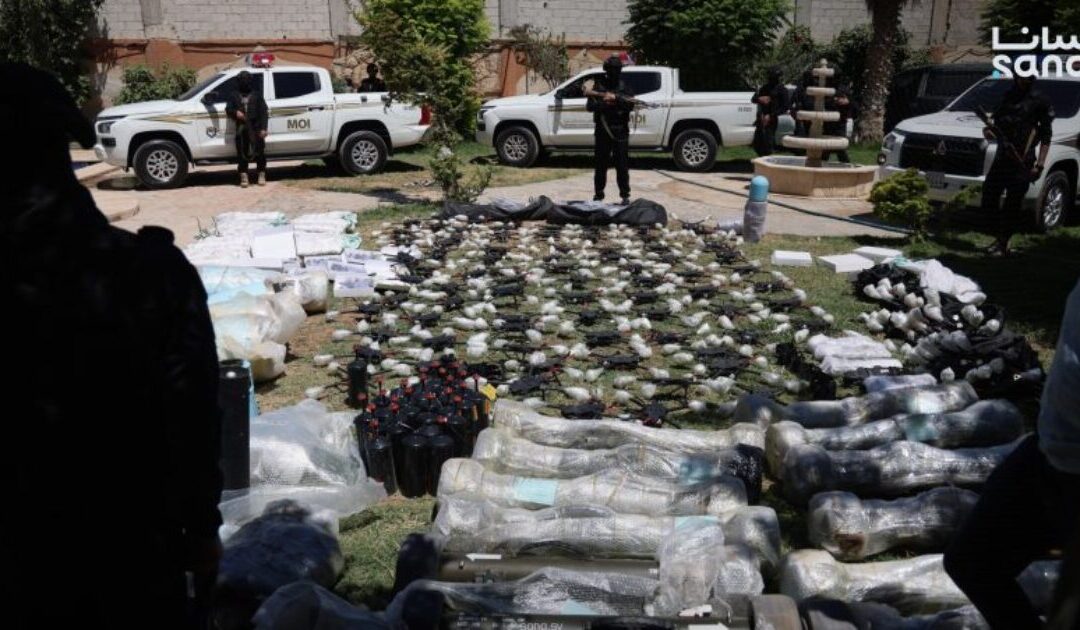
The announcement came two days after an intelligence source told SANA, Syria’s state news agency, that authorities had stopped a plot against the refinery. At the time, authorities did not reveal who was behind it. Images released by the Internal Security Forces alongside the Nov. 3 announcement showed weapons and equipment seized along with the explosives.
Established in 1959, the Homs refinery and the coastal Baniyas refinery supply petroleum products to Syria’s domestic market. According to Asharq Al-Awsat, the Homs facility has four atmospheric distillation units, two of which are undergoing maintenance and commissioning. Once all four are operating, the refinery is expected to produce 60,000 to 70,000 barrels of petroleum products per day.
The plot follows other incidents at Syrian energy facilities this fall. On Sept. 30, the Syrian Electricity Company said a gas pipeline explosion at the Tishreen station in rural Damascus took the Deir Ali, Nasiriya and Tishreen power stations offline. On Oct. 15, the Syrian Petroleum Company reported damage to the Baniyas–Homs pipeline near Hadida, a village in western Homs province, that caused a fuel leak. State media described the incident as part of a series of attacks on energy infrastructure.
Hezbollah issued a statement the Hezbollah issued a statement on Nov. 3 denying any connection to the plot. The group said it “has no presence or affiliations on Syrian territory,” categorically denied any link to the detainees and urged Syrian authorities to watch for attempts to “stir up tension and sow discord” between Lebanon and Syria.
Hezbollah issued a similar denial in July, after Syrian customs officers at the al-Tanf crossing with Iraq found long-range missiles, rockets and drones hidden in an oil tanker truck that authorities said was bound for the group. Hezbollah dismissed the accusation as “fabricated narratives” with no basis in fact.
The Nov. 3 announcement came a day after Syrian Foreign Minister Asaad al-Shaibani met in Damascus with a Lebanese government delegation led by Deputy Prime Minister Tarek Mitri to discuss border security and control. The delegation included Labor Minister Mohammad Haidar, the first Hezbollah-nominated minister to visit Syria since Assad’s fall. Haidar described his attendance as “ministerial work that has nothing to do with any partisan background.”
Hezbollah fought alongside Assad’s forces during the civil war, and its relations with Damascus have deteriorated since his overthrow in December 2024. Syrian authorities have since reported a series of cases involving alleged Hezbollah links.
On Jan. 26, security forces intercepted a shipment near Qusayr on the Lebanese border containing nine Konkurs anti-tank guided missiles, 68 RPG rounds and two 107mm rockets. On April 11, they foiled an attack on a religious figure near a Maronite church in Damascus’s Bab Touma district, defused an explosive device and arrested five cell members whom investigators linked to Hezbollah. On April 19, they dismantled a cell allegedly preparing cross-border rocket attacks from southern Syria into Israel.
On May 5, the Interior Ministry announced the arrest of 11 alleged Hezbollah-linked militants in raids across five governorates. The ministry said the cell had entered Syria after receiving “intensive specialized training in Lebanon” and was planning “targeted assassinations” of senior government officials. In late September, security forces arrested three members of what authorities described as a Hezbollah-linked cell in the Yarmouk River basin and dismantled the rocket launchers in their possession.
Hezbollah’s remaining networks in Syria are linked to former Assad-regime insurgents and weapons smuggling into Lebanon. The group has also drawn funding from captagon production and trafficking, supplementing financial support from Iran. In a March 2025 CTC Sentinel analysis, Aaron Zelin of the Combating Terrorism Center at West Point concluded, “It would be foolish to count Iran and Hezbollah out.” He said the group was likely to continue confronting the new Syrian government along the Lebanese border.
The United States has pressed Damascus to act against Hezbollah. On July 8, the State Department began the process of rescinding Syria’s designation as a state sponsor of terrorism. On July 22, Secretary of State Marco Rubio said, “Hezbollah is an enemy of the Syrian government and is trying to undermine it,” and urged Damascus to seal its border with Lebanon to stop weapons from reaching the group.
The post Syria Foils Hezbollah-Linked Plot Against Homs Oil Refinery appeared first on The Gateway Pundit.
Go to Source
Author: Antonio Graceffo