
Three Ways Dishonest Pollsters Rig the Math (and the One Question They’ll Never Ask!)
August 1, 2026

Three Ways Dishonest Pollsters Rig the Math (and the One Question They’ll Never Ask!)
By Jack Gleason
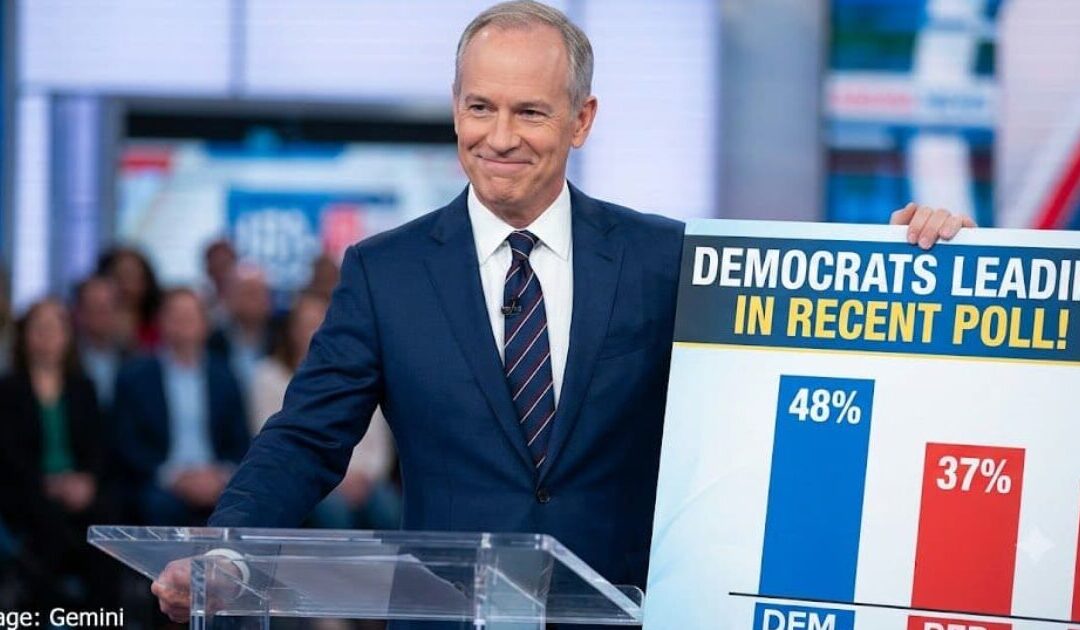
With all the political polls flooding our TV screens and smartphones, it’s practically impossible to separate truth from blatant fabrication. Every election cycle a familiar narrative plays out across corporate media. Months before Election Day, we are told conservative candidates are trailing by double digits, common-sense reforms are falling flat, and progressive momentum is declared “inevitable.”
Many good people just give up, saying, “I don’t follow politics anymore”—and go along with whatever their social circles or the nightly news tell them. This is by design.
These “scientific” polls are presented as a neutral calculation of the public mood. But to anyone who understands campaign strategy, they represent something far more dangerous: a deliberate attempt to shape reality – they are manipulating public behavior rather than measuring it.
The Illusion of Defeat
This is blatant psychological warfare designed to achieve three specific outcomes:
- Voter demoralization: Convincing working-class and conservative voters that their ballots won’t matter tricks them into sitting out. Analysts estimate persistent “suppression polls” knock 2% to 5% off conservative turnout—more than enough to flip close elections.
- Strangle challenger fundraising: It signals to grassroots donors that any donations are “wasted money,” depriving outsider campaigns of critical operational funds.
- Induce social silencing: Everyday citizens feel isolated in their beliefs, hesitating to share their values with friends, family, or neighbors.
This becomes a self-fulfilling prophecy: skewed polls lead to diminished turnout, which in turn produces the exact loss the media predicted.
Media Polls Have Been Dead Wrong Before
If you think corporate polls are always right, look at recent history:
- The 2020 Presidential Race: Major network polls had Donald Trump trailing Joe Biden by 17% in Wisconsin right before the election. On Election Day, the actual margin was under 1%.
- The 2022 Midterm Narrative: Leading up to election night, predictions swung wildly—first claiming Democrats would easily hold Congress, then hyping a fake “mega-wave” to set up a narrative of conservative failure when tight races went to overtime.
- The 2024 Senate Races: Outlets consistently showed conservative challengers trailing by double digits in key states, only for those races to come down to razor-thin margins.
These aren’t simple math errors. They are systemic attempts to convince voters that the fight is lost before they even vote. If the 2% to 5% “suppression effect” was removed, many of these races would have gone the other way.
How Pollsters Skew the Results
A dishonest pollster doesn’t need to make up numbers—they simply adjust their methodology:
- Tricky Questions: A biased poll asks: “Do you support common-sense gun safety regulations to reduce violent crime?” Almost anyone says yes to “safety.” But reframe it neutrally—“Do you support or oppose restricting constitutional Second Amendment rights?”—and the numbers flip. Using loaded words for leftist positions while framing conservative values harshly routinely tilts responses by 5% to 12%.
- Sample Selection & Summer Slumps: Pollsters employ rigged weighting models. By interviewing too many voters in dense liberal cities and ignoring rural areas, media polls undercount independent and conservative voters. This gets even worse during the summer months, when working-class families and rural conservatives disconnect for vacation or harvest seasons, creating a “differential nonresponse bias.”
- Multiple-Choice Traps: Standard polls force voters into pre-packaged ideological buckets. When pollsters instead ask open-ended questions—letting voters speak in their own words—economic anxiety, public safety, and government corruption blow away the media’s approved themes.
There is an honest alternative. Outfits like The Trafalgar Group proved that you can get accurate numbers by bypassing traditional traps. Instead of tedious 20-minute phone questionnaires, they deploy ultra-short 3-minute surveys across digital texts, apps, and calls. To defeat social silencing honest pollsters don’t ask people who they are voting for—they ask: “Who do you think your neighbors are voting for?”
This single question unlocks hidden voters who are hesitant to speak honestly to a pollster.

Polls, Election Night, and Late-Count Swings
The ultimate test of any poll is Election Day, yet poll predictions frequently collapse when the votes are counted. Consider the primary election for Mayor of Los Angeles. On Election Night, the initial numbers told a clear story:
- Populist challenger Spencer Pratt held second place at 25.8%, positioning him to advance to the runoff.
- Incumbent Karen Bass sat in first place at 34.3%.
- Progressive candidate Nithya Raman sat in a distant third at 22.1%—she actually conceded on Election Night.
Yet over several days, as late absentee ballots were processed behind closed doors, tens of thousands of late votes swung mysteriously:
- Raman enjoyed a 7-point surge to 29.0% (247,781 votes), jumping into second place.
- Bass saw her Election Night lead plummet by nearly 9 percentage points from 34.3%.
- Pratt fell to 25.5% (217,977 votes), eliminating him from the runoff.
Whether caused by structural counting flaws or vote-counting shenanigans, the result is identical: public trust is shattered. When election rules allow unchecked mail-in ballots, you end up with mathematical anomalies—districts reporting impossible turnouts like 95% or casting more ballots than registered voters.
CHECK THE RECEIPTS: How to Spot a Suppression Poll
The Urban Bias: Check the Cross-Tabs – the demographic breakdown behind the poll’s final headline numbers—showing how many men, women, urban, or rural voters were questioned. If a statewide poll’s cross-tabs sample 10% more urban voters than the state’s actual turnout history, it’s a suppression poll.
The Push Question: If the prompt starts with “Given that Candidate X supports [negative media phrasing]…” it’s a push-poll, not honest research.
The Hidden Data: Fake polls hide their full scripts and raw results, honest pollsters like RMG Research and Cygnal release everything.
Why the “Un-Campaign” Beats the Pollsters
When everyday citizens treat corporate polling as absolute truth, they hand victory to establishment insiders without a fight.
This is why upstart candidates are using a new approach. The Un-Campaign Blueprint shows that real political reform happens when regular citizens—small business owners, teachers, farmers, and community leaders—step up to run for public office.
While polling tricks target big national races, their psychological fallout trickles down to local communities where conservatives may decide to sit out. When an underdog conservative decides to run, the establishment’s first weapon is “You aren’t in the polls, so why bother?”
Candidates can overcome that tactic by executing three simple operational rules:
- Ignore the Fake Polls: Treat them as messaging tools built to influence behavior, not scientific forecasts.
- Bypass “Chase the Vote” Door-Knocking: Un-Campaign candidates don’t need to waste time chasing unlikely voters. By shifting to a strategy of “Feeds Over Flyers,” outsiders can dominate hyper-local social media, short-form video, and digital town halls. Take a page from groups like Turning Point USA: “chase the ballot.” Organize local ride-to-the-polls drives for seniors and working folks, and focus on urgent, super-local issues that motivate the people who actually turn out: active Conservatives, demoralized Democrats, and swing Independents.
- The 5-Point Rule: If corporate media claims an outsider candidate is down by 10 points, assume the real race is within 2 points—and double down on digital outreach and ballot chasing.
Conservatives, get involved. Political races aren’t decided by statistical models built in newsroom ivory towers; they’re decided by the people who show up. When regular citizens take back the political process from professional politicos, these fake polls are just ignored.
Next time you see a headline claiming an outsider candidate can’t win, don’t leave an angry comment. Find an Un-Campaign candidate fighting for your community, share their content online, help them get their message in front of the voters who matter, and give a neighbor a ride to the polls.
Since 2009, Jack Gleason has been a conservative, common-sense, political consultant at the municipal, state, House, Senate and presidential level. If you have story ideas or comments his email is JackGleason9@protonmail.comand his always-free Substack is jackgleason.substack.com.
The post Three Ways Dishonest Pollsters Rig the Math (and the One Question They’ll Never Ask!) appeared first on The Gateway Pundit.
Go to Source
Author: Joe Hoft