Federal Judge Temporarily Blocks Trump’s Firing of CIA Officers Involved in DEI Programs
February 19, 2025
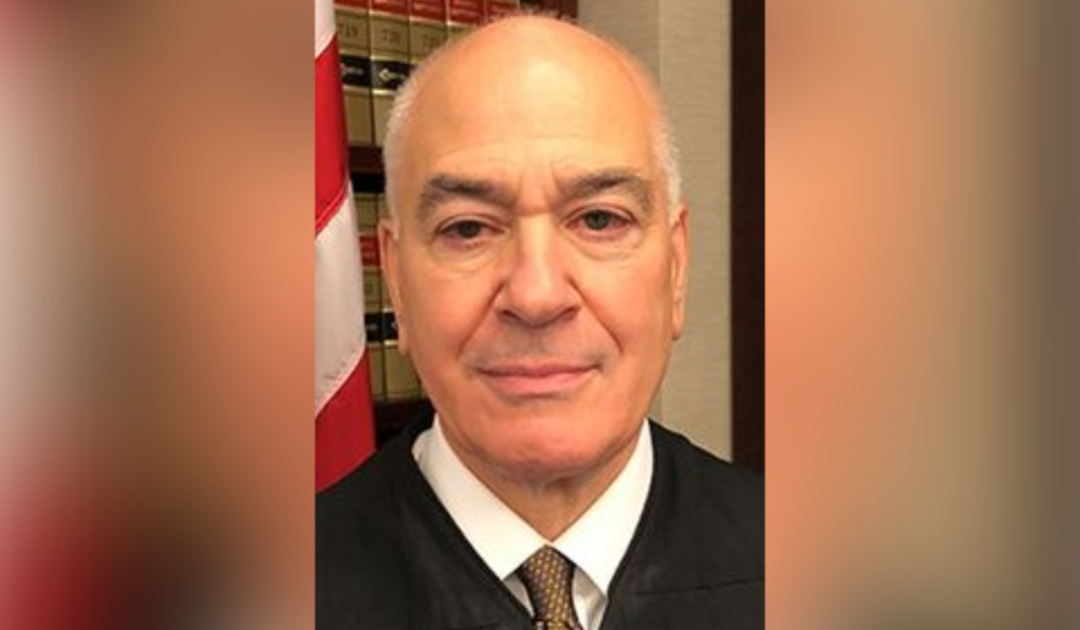
Judge Anthony J. Trenga (Ballotpedia)
Judge Anthony J. Trenga, an appointee of George W. Bush, has temporarily blocked President Trump’s move to clean house in the intelligence community—specifically targeting agents involved in Diversity, Equity, and Inclusion (DEI) initiatives that have compromised national security in favor of leftist ideology.
This ruling comes after a group of anonymous intelligence officers, who had been temporarily reassigned to roles implementing controversial Diversity, Equity, Inclusion, and Accessibility (DEIA) programs, have filed a lawsuit against the U.S. Office of the Director of National Intelligence (ODNI) and the CIA.
The lawsuit, filed in the U.S. District Court for the Eastern District of Virginia, names ODNI, the CIA, and their respective heads—Director of National Intelligence Tulsi Gabbard and CIA Director John Ratcliffe—as defendants.
The plaintiffs, identified as “John Does 1-6” and “Jane Does 1-5,” claim they are being unfairly targeted simply for their prior assignments to DEIA programs.
However, conservatives see it differently. President Trump’s Executive Order 14151, signed on his first day back in office, decisively dismantled DEIA offices across the federal government, branding them “illegal and immoral.”
The order made it clear that radical left-wing hiring practices, which prioritized identity over merit, had no place in a serious government, especially in agencies tasked with protecting American national security.
According to the lawsuit, the plaintiffs claim they were placed on administrative leave “without cause” and fear imminent termination.
They argue that the ODNI and CIA’s actions violate the Administrative Procedure Act (APA) and the First and Fifth Amendments, essentially accusing the Trump administration of purging government agencies based on assumed political beliefs.
However, the reality is that these DEIA assignments were nothing more than a bureaucratic extension of the far-left’s identity politics agenda, which has infiltrated every corner of government—including national security agencies.
Many of these so-called intelligence officers were not dedicated to protecting America’s security but were instead focused on enforcing radical leftist policies that prioritized “equity” over competence.
However, on Tuesday, Judge Anthony J. Trenga granted an administrative stay, ensuring that the plaintiffs will remain on administrative leave with full pay and benefits until the court rules further on the matter.
The judge also set a timeline for legal proceedings, requiring the government to submit its response by February 20 and allowing plaintiffs to reply by February 21. A full hearing on the TRO is scheduled for Monday, February 24, 2025.
A lawyer for the intelligence officials, all of whom were identified by pseudonyms in the lawsuit, welcomed the ruling.
“We’re very gratified by the judge deciding to do an administrative stay for a week, basically, while the government answered some of his questions,” attorney Kevin Carroll said.
Carroll said his clients began getting messages over the weekend to report Tuesday to a visitor center with their official identification, a request he said typically signals a looming dismissal. He said the employees received notices specifying Trump’s executive order ending diversity, equity and inclusion programs as the reason.
“They say this is to comply with the executive order, which is really dumb because the executive order talks about ending DEI functions. It doesn’t say you have to fire DEI personnel. And nobody is hired into the CIA to be a DEI guy. It’s a rotational duty, like you have in the Army or anywhere else,” Carroll said. “So, they can simply just reassign these people back to being an analyst or scientist or case officer, whatever they did before instead of firing them. It’s arbitrary and capricious.”
[…]
“The paperwork from the CIA is relying solely on this subsection of the National Security Act, which says the director can do whatever he wants, which the Supreme Court has made clear applies only to national security,” the attorney said.
Failed Presidential Candidate Kamala Harris Signs with Hollywood Talent Agency
February 19, 2025
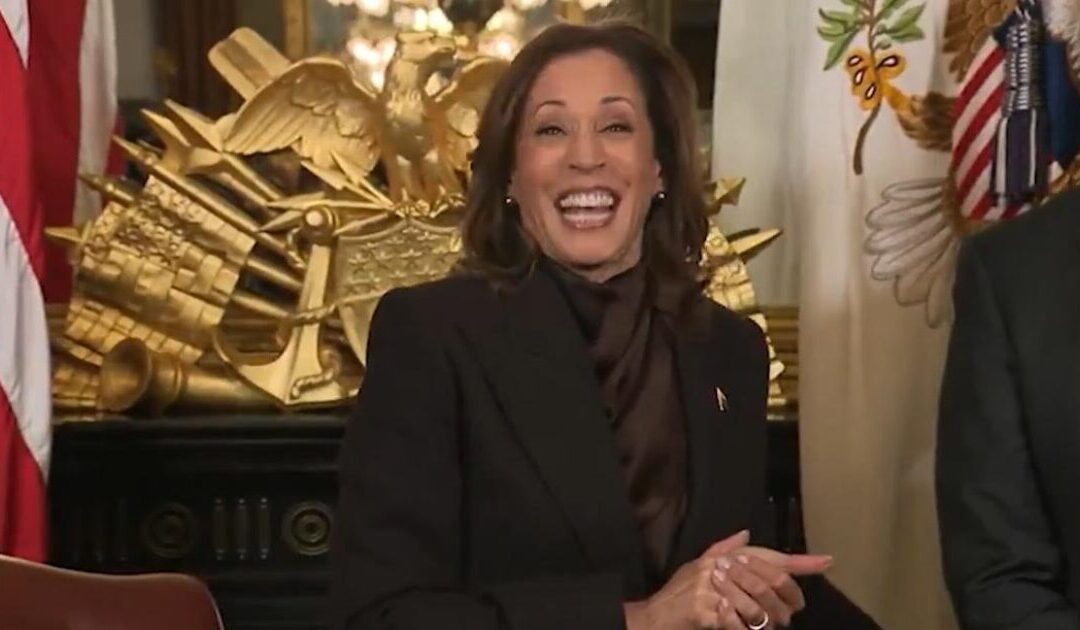
Kamala Harris
Kamala Harris has signed with a Hollywood talent agency after losing her presidential bid to President Donald Trump.
The Creative Artists Agency (CAA) announced on Tuesday that it will represent Harris “in all areas, focusing on speaking engagements and publishing.”
The CAA also represents Michelle Obama, Barack Obama, and Joe Biden.
“CAA will work closely with Harris on her post-White House initiatives, creating strategic opportunities that expand her platform in support of the issues she has championed throughout her decades-long career in public service,” the talent agency said in a statement.
Harris was previously represented by the Los Angeles-based agency while serving as a California senator.
The agency is very liberal and frequently pushes for DEI hiring.
“It is also our goal to lead the way in diversity, advocating with marketplace buyers for talent from historically underrepresented groups – and for the cultural and commercial value of inclusion. CAA continues to increase the diversity of our talent roster and our employees, and always will,” the CAA’s website states.
There have been rumblings that Harris may run for California governor.
A recent Emerson College Polling/Inside California Politics/The Hill poll found that if she entered the race, she would be the frontrunner.
“If Vice President Harris enters the Democratic Primary, she would start as the clear favorite,” said Spencer Kimball, executive director of Emerson College Polling. “Without Harris in the race, the primary is wide open.”
When asked about her plans, Harris said, “I have been home for two weeks and three days. My plans are to be in touch with my community, to be in touch with the leaders and figure out what I can do to support them.”
Trump, Musk Expose Media Lies, Bureaucratic Corruption, and Biden’s Failures in Hannity’s Bombshell Interview: Here Are Some of the Key Takeaways
February 19, 2025
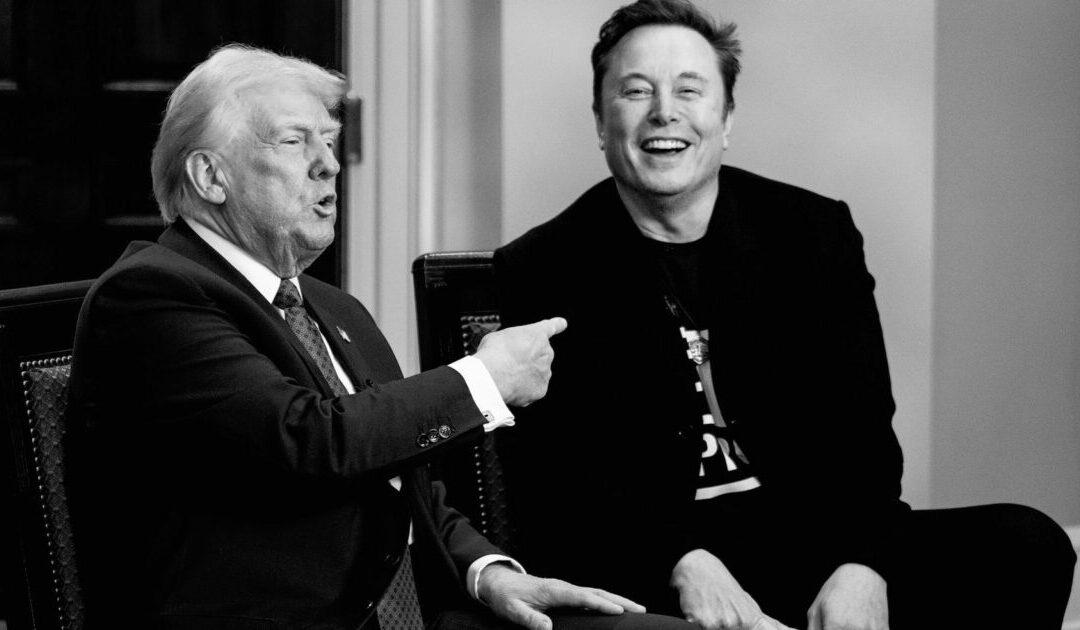
Credit: Elon Musk / X
In a must-watch pre-recorded interview on Hannity, President Donald Trump and Elon Musk, the man behind the DOGE team, brutally attacked the mainstream media, the entrenched Washington bureaucracy, and the Biden administration’s incompetence.
The conversation, which touched on everything from Trump’s lawsuit against Twitter to Musk’s behind-the-scenes work ensuring executive orders are enforced, revealed shocking insights into the corruption festering in Washington and the elites’ desperate attempts to undermine Trump’s leadership.
Credit: Elon Musk / X
Musk Settles with Trump: A $10 Million Agreement Over Twitter Ban Post-January 6th
Sean Hannity kicked off the interview with a bombshell revelation—Trump had successfully sued Twitter (before Musk’s ownership) and secured a $10 million settlement.
The Gateway Pundit previously reported that President Trump filed a class-action lawsuit against Facebook CEO Mark Zuckerberg and Twitter CEO Jack Dorsey in July 2021 after the social media giant suspended his account permanently due to the “risk of further incitement of violence.”
According to the lawsuit, Section 230 of the Communications Decency Act, which states that online service providers like Twitter cannot be held responsible for content posted by others, is unconstitutional.
During the interview, Musk revealed he agreed to settle the lawsuit, agreeing to pay $10 million.
Sean Hannity:
“I got to start with this. [Mus] is working for free with DOGE. He’s put a lot of his life on hold. [Trump], you sued Twitter a number of years ago. You just made him pay you $10 million?
President Donald Trump:
“That’s right. I sued long before he had it. They really did a number on me. I sued, and they had to pay a $10 million settlement.”
Sean Hannity:
“[Musk], you’re okay with that?”
Elon Musk:
“I left it up to the lawyers and the team running Twitter. I said, ‘You guys do what you think makes sense.’”
Sean Hannity:
“I think it’s funny.”
President Donald Trump:
“I think it’s a very low… I was looking to get much more money than that.”
Sean Hannity:
“You gave him a discount in the lawsuit?”
President Donald Trump:
“He got a big discount. I don’t think he even knows about it.”
Musk: ‘I Love the President’
Musk, who has been vilified by the radical left ever since aligning with Trump, did not mince words about his admiration for the 45th president. “I love the President. I think President Trump is a good man,” Musk said.
He also called out the media’s endless smear campaign against Trump, calling it “outrageous.”
“At this point, I spent a lot of time with the President, and not once have I seen him do something that was mean or cruel or wrong. Not once,” Musk said.
The Assassination Attempt That Sealed Musk’s Endorsement
Musk admitted that the assassination attempt on Trump pushed him to endorse him even faster. “I was going to do it anyway, but that was a precipitating event,” Musk revealed.
Elon Musk endorsed President Trump roughly 30 minutes after he was shot in an assassination attempt during a rally in Butler, Pennsylvania.
“I fully endorse President Trump and hope for his rapid recovery,” he wrote, adding, “Last time America had a candidate this tough was Theodore Roosevelt.”
Musk Takes on the Deep State: ‘We’re Living in a Bureaucracy, Not a Democracy’
Musk also revealed one of his most critical roles in the Trump administration—ensuring that executive orders are actually followed through. The billionaire explained how the federal bureaucracy actively works to thwart the will of the American people.
One particularly damning example Musk provided was Biden’s refusal to cut taxpayer funding for luxury migrant hotels, despite Trump’s executive order demanding an end to the program.
Sean Hannity: “President, with your indulgence, I’m convinced that people only know a little bit about Elon. I don’t think they know everything about Elon, because as I studied and prepared for this interview, I learned a lot about you that I didn’t know. I think people will think about Tesla, Democrats are demonizing you and trying to make the country hate you.
I just want people to understand you a little bit better and the person that you’ve gotten to know and have now put a lot of trust in. Let’s go over a little bit of your bio, starting with PayPal and how you became involved in Tesla and SpaceX and Neuralink and all these.”
Elon Musk: “I think the way you think of me is like, I’m a technologist, and I try to make technologies that improve the world and make life better. You can show your shirt. Yeah, and that’s why my T-shirt says tech support, because I’m here to provide the President with technology support. Now, that may seem like, well, is that a silly thing?
But actually, it’s a very important thing because the President will make these executive orders, which are very sensible and good for the country, but then they don’t get implemented.
If you take, for example, all the funding for the migrant hotels, the President issued an executive order. Hey, we need to stop taking taxpayer money and paying for luxury hotels for illegal immigrants, which makes no sense.
Obviously, people do not want their tax dollars going to fund high-end hotels for illegals. And yet they were still doing that even as late as last week.
We went in there and we were like, ‘This is a violation of the presidential executive order. It needs to stop.’
So what we’re doing here is one of the biggest functions of the DOE’s team is just making sure that the presidential executive orders are actually carried out.
I just want to point out this is a very important thing because the president is the elected representative of the people, so he’s representing the will of the people.
If the bureaucracy is fighting the will of the people and preventing the President from implementing what the people want, then what we live in is a bureaucracy and not a democracy.”
Trump and Musk Confront Media Hypocrisy
As Musk’s relationship with Trump grows stronger, the left has spiraled into hysteria.
Hannity pointed out the extensive challenges Trump and Musk have faced from the media, suggesting that despite heavy scrutiny and opposition, the media have failed to diminish their influence or divide them.
Sean Hannity:
“You’re both aware, you have to be keenly aware, that the media and the punditry class—not that… I think you’ve proven they have no power anymore because they threw everything they had at you, and they didn’t win.
That was the New York Times, Washington Post, three networks, every late-night comedy show, two cable channels. They threw everything: lawfare, weaponization. Now I see they want you two to start… they want a divorce. They want you two to start dating each other. President Elon Musk, for example. You do know that they’re doing that to you?”
President Donald Trump: “Oh, I see it all the time. They tried it, then they stopped. They have many different things of hatred. Actually, Elon called me. He said, ‘You know they’re trying to drive us apart.’ I said, ‘Absolutely.’
They said, ‘We have breaking news. Donald Trump has ceded control of the presidency to Elon Musk, President Musk will be attending a cabinet meeting tonight at eight o’clock.’
I said, ‘It’s just so obvious. They’re so bad at it.’ I used to think they were good at it. They’re actually bad at it because if they were good at it, I’d never be President. Because I think nobody in history has ever gotten more bad publicity than me.
I could do the greatest things. I get 98% bad publicity. I could do outside of you and a few of your very good friends. It’s the craziest thing. But you know what I have learned, Elon? The people are smart. They get it.”
Elon Musk: “Yeah, they do, actually.”
President Donald Trump: “They get it. They really see what’s happening.”
The Media’s Obsession with Destroying Trump and Musk
The interview also revealed just how deeply entrenched Trump Derangement Syndrome runs among the left. Musk described an incident where he mentioned Trump’s name at a Los Angeles party, only to be met with an immediate, irrational meltdown from attendees.
“It was like they got shot with a dart in the jugular that contained like methamphetamine and rabies. They’re like, ‘Why?’ I’m like, ‘What is wrong? Guys, you just can’t have a normal conversation.’ It’s like they become completely irrational,” Musk joked.
The billionaire also shared how, prior to endorsing Trump, he was adored by the left for his electric vehicles and space innovations. “Now, not so much,” he quipped, pointing out how Democrats’ hatred for Trump has blinded them to reason.
Rescuing Stranded U.S. Astronauts Abandoned by Biden
Musk and Trump exposed how Biden’s administration essentially abandoned American astronauts in space for political reasons. The astronauts were supposed to be in orbit for just eight days, yet they were left stranded for nearly 300 days.
Musk confirmed that, at Trump’s request, his team is now working on an accelerated rescue mission to bring them home.
Trump’s Plan to Cut Washington’s Corruption
Trump laid out a clear vision for how his administration, with Musk’s help, is dismantling waste, fraud, and abuse in Washington. He described how government contracts go unchecked, allowing billions in taxpayer money to be wasted.
Trump:
“We have contracts that go on forever, and they’ve been going for years. They’re supposed to end in three months, or five months, or two years, or something, and they go on forever…
They’re finding things far worse than that. They’re finding billions, and it will be hundreds of billions of dollars worth of fraud.
I say, waste and abuse, but fraud, waste, and abuse. [Musk] doing an amazing job. He attracts a young, very smart type of person. I call them high-IQ individuals, and they are. They have very high IQs. When they go in to see the people and talk to these people, the people think they’re going to pull it over. They don’t. These guys are smart, and they love the country.
Final Thoughts: The Most Consequential Presidency in History
As the interview wrapped up, Hannity made a bold claim—Trump’s second term could be the most consequential presidency in American history.
Hannity echoed Newt Gingrich’s belief that Trump’s presidency presents a rare opportunity to dismantle the bloated bureaucracy and enact transformational change.
Musk reinforced this idea, noting that winning the election is only the first step, but the real challenge is fixing the broken system.
Trump doubled down, blasting the media as “horrible people” and accusing them of arrogance, dishonesty, and bias. He pointed to MSNBC, CNN, and CBS as particularly bad actors, alleging they manipulate interviews to protect figures like Kamala Harris.
Trump also exposed the wasteful government spending process, explaining how bureaucrats rubber-stamp inflated bills instead of negotiating, leading to massive financial losses.
Hannity quipped that Trump’s methods resemble “The Art of the Deal,” but Trump insisted it’s more about “caring and competence.”
Musk reinforced the idea that either competence or caring alone would improve government efficiency, arguing that the Biden administration lacked both.
Hannity wrapped up by listing Biden’s lies—from denying his cognitive decline to falsely claiming the border was secure—accusing the administration of systematically deceiving the American people.
Musk called it outright deception, declaring, “They flat-out lied. That was insane.”
You can watch the full interview below:
FULL INTERVIEW: President Trump and Elon Musk on Fox News with Sean Hannity – 2/18/25 #DOGE
Elon Musk has just announced that he will discuss with President Trump about giving American taxpayers a DOGE Dividend, a tax refund check sent to every taxpayer. pic.twitter.com/4ZaZcMIakl
Europe’s Self-Inflicted Irrelevance: Why the Paris Summit Is a Sideshow
Today, the great and the good of Europe are gathering in Paris for yet another emergency summit, this time to discuss Ukraine and “security in Europe.” The spectacle will be grand, the rhetoric will be lofty, and the statements will be full of self-importance. But make no mistake – this meeting is little more than a diplomatic mirage. Europe has been sidelined from serious strategic decision-making because it has long refused to be a serious player in defense and security. The real discussions about Ukraine’s future aren’t happening in Paris; they will take place in Saudi Arabia, where the United States and Russia will engage in actual negotiations that determine the trajectory of the war. Europe has been reduced to bystander, offering commentary while others make the real moves. This is the logical outcome of decades of strategic neglect and delusions of moral leadership without the hard power to back it up.
For years, European leaders have clung to the fantasy that they could shape global affairs through soft power, economic leverage, and moral posturing. Meanwhile, they have gutted their militaries, outsourced their security to the United States, and hoped that history had somehow moved beyond the need for deterrence. The result? When war returned to the continent, they found themselves utterly unprepared. NATO’s European members have scrambled to rearm since Russia’s invasion of Ukraine, but their efforts remain lackluster. Germany, despite its grand proclamations of a “Zeitenwende” (historical turning point), is still struggling to meet even its own modest defense targets. France, despite having one of the most capable European militaries, lacks the resources to lead continent-wide efforts. The United Kingdom, under successive governments, has allowed its military capabilities to erode, leaving it struggling to project power beyond token gestures.
The numbers tell the story of a continent that simply refuses to take its own security seriously. In 2022, the European Union’s total defense spending was just 1.3% of GDP. Some countries, like Ireland, spent as little as 0.2%. Meanwhile, Russia has ramped up its defense spending by over 40% in 2024, surpassing the combined military budgets of all European nations. China, too, continues its meteoric rise in military spending, further cementing its status as a global power capable of shaping security dynamics far beyond its borders. Europe, by contrast, remains fragmented, underfunded, and strategically incoherent.
This is why the U.S.-Russia talks in Saudi Arabia are happening without European leaders at the table. Washington and Moscow know that Europe – despite all its declarations of unity and resolve – simply does not matter in the high-stakes diplomacy that will determine Ukraine’s fate. The war in Ukraine has underscored Europe’s dependence on American military might, as European states deplete their own stockpiles to send weapons to Kyiv, only to beg Washington for replacements. The uncomfortable truth is that without American support, Europe’s ability to sustain Ukraine’s war effort would collapse almost immediately. And if the U.S. were to shift its focus elsewhere – say, to Taiwan – Europe would be left exposed.
The exclusion of Europe from these negotiations should serve as a wake-up call, but there is little reason to believe that it will be. The Paris summit itself is already plagued by internal divisions, with several EU states voicing frustration at being excluded from the Elysee Palace talks. Italy’s Giorgia Meloni has openly criticized the selective invitations, highlighting just how fractured Europe remains. Far from projecting strength, the gathering in Paris is yet another reminder that the continent cannot even coordinate among itself, let alone influence the broader global order.
Even if European leaders were given a seat at the table in Saudi Arabia, what exactly would they bring to the negotiations? They have no unified military strategy, no credible deterrence posture, and no leverage beyond empty diplomatic statements. Worse still, European capitals remain divided on fundamental questions about Ukraine’s future. Some leaders, like Emmanuel Macron, flirt with the idea of sending Western troops to Ukraine in a desperate bid to remain relevant. Others, like Germany’s Olaf Scholz, continue to drag their feet on military aid while wringing their hands over the supposed risks of escalation. Such incoherence makes Europe not only a weak actor but a liability in serious strategic discussions.
The only way for Europe to reclaim its place in global security decision-making is to fundamentally rethink its approach to defense. This means abandoning the illusion that the world can be shaped through international law and goodwill alone. It requires acknowledging that power still matters, and that military strength – not moral rhetoric – is what ultimately guarantees security. The European Union must transition from being a loose economic bloc with fragmented defense capabilities into a genuinely capable security actor. This will require a radical shift in priorities: sustained investment in defense industries, deeper military integration among member states, and a willingness to act decisively without waiting for Washington’s approval.
There are signs that some European nations understand this. Poland has embarked on an ambitious military buildup, recognizing that the threats it faces require hard power solutions. The Baltic states have taken proactive steps to bolster their defenses, understanding that deterrence is their best insurance policy against Russian aggression. But these efforts remain the exception rather than the rule. The broader European project is still hamstrung by an unwillingness to make the necessary sacrifices for security.
The Paris summit will conclude with the usual platitudes about “European unity” and “standing with Ukraine.” Leaders will shake hands, pose for photos, and issue carefully worded statements meant to project strength. But behind the scenes, the reality is clear: Europe is a geopolitical spectator, not a player. And as the real negotiations unfold in Saudi Arabia without them, European leaders have only themselves to blame.
If Europe wants to matter, it must change. It must invest in real military capabilities, not just paper commitments. It must build a credible deterrent that does not depend on the goodwill of Washington. And it must be prepared to act, rather than endlessly debate. Until then, summits like the one in Paris will remain exactly what they are today – a sideshow to the real events shaping the future of global security.
Andrew Latham, Ph.D., a tenured professor at Macalester College in Saint Paul, Minnesota. He is also a Senior Washington Fellow with the Institute for Peace and Diplomacy in Ottawa and a non-resident fellow with DefensePriorities, a think tank in Washington, DC.
This article was originally published by RealClearDefense and made available via RealClearWire.
We use technologies like cookies to store and/or access device information. We do this to improve browsing experience and to show (non-) personalized ads. Consenting to these technologies will allow us to process data such as browsing behavior or unique IDs on this site. Not consenting or withdrawing consent, may adversely affect certain features and functions.
Functional
Always active
The technical storage or access is strictly necessary for the legitimate purpose of enabling the use of a specific service explicitly requested by the subscriber or user, or for the sole purpose of carrying out the transmission of a communication over an electronic communications network.
Preferences
The technical storage or access is necessary for the legitimate purpose of storing preferences that are not requested by the subscriber or user.
Statistics
The technical storage or access that is used exclusively for statistical purposes.The technical storage or access that is used exclusively for anonymous statistical purposes. Without a subpoena, voluntary compliance on the part of your Internet Service Provider, or additional records from a third party, information stored or retrieved for this purpose alone cannot usually be used to identify you.
Marketing
The technical storage or access is required to create user profiles to send advertising, or to track the user on a website or across several websites for similar marketing purposes.