Trump Announces He Is Considering Giving 20% of DOGE Savings to Taxpaying Americans – And Slash National Debt

Trump Announces He Is Considering Giving 20% of DOGE Savings to Taxpaying Americans – And Slash National Debt

Trump Announces He Is Considering Giving 20% of DOGE Savings to Taxpaying Americans – And Slash National Debt
February 20, 2025

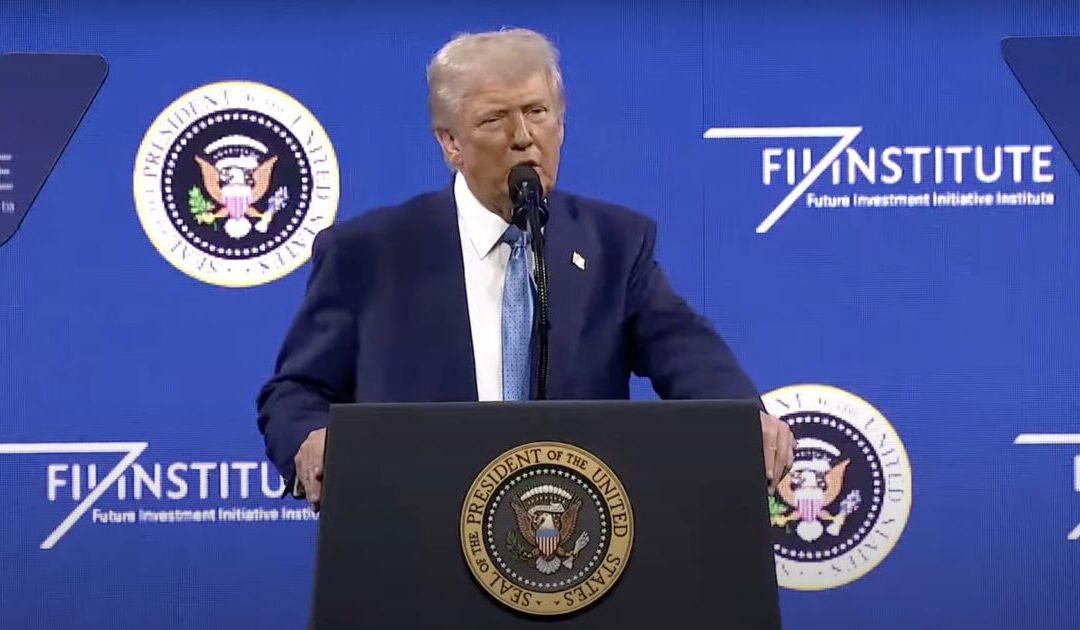
President Donald Trump delivered a keynote address at the Future Investment Initiative (FII) PRIORITY Summit in Miami Beach

President Donald Trump is wasting no time proving that his second term will be a game-changer for America.

Trump revealed on Tuesday that he’s seriously considering a proposal to give 20% to every American taxpayer, funded entirely by the massive savings the Department of Government Efficiency (DOGE) has accumulated.

And another 20% of DOGE’s savings could go straight to paying down the federal government’s bloated debt.

The idea first hit the X platform when Elon Musk, Trump’s right-hand man in this efficiency revolution, responded that he’d “check with the president” about the proposal first floated by James Fishback of Azoria Partners.

Fishback explained the idea as follows:

Few in America knew precisely what to expect from DOGE. The early perceived turbulence around leadership, the uncertainty around legal structure, and the lack of precedent for such a bold initiative created a sense of “show me” with DOGE. Just a month into President Trump’s second term, DOGE is delivering. Full stop.

With DOGE reportedly achieving $1 billion in savings per day, President Trump has an opportunity to work with Congress to take DOGE one step further and deliver what we at Azoria call the “DOGE Dividend,” a tax refund check to be sent after the expiration of DOGE in July 2026 funded exclusively with a portion of the total savings delivered by DOGE.

Here’s how President Trump’s DOGE Dividend works:

DOGE is targeting $2 trillion in total savings.

  • Take 20% of DOGE’s total savings ($400 billion) and return it to the ~79 million U.S. households that will be net payers of federal income tax4 in CY 2025 as a tax-refund check called the “DOGE Dividend.”
  • $400 billion in DOGE-driven savings *divided by* 79 million tax-paying households = $5,000 “DOGE Dividend” check per tax-paying household.

Trump mentioned the idea on Wednesday at a high-profile meeting of global financiers and tech executives hosted by Saudi Arabia’s sovereign wealth fund in Miami.

Trump:
“There’s even under consideration a new concept where we give 20% of the DOGE savings to American citizens, and 20% goes to paying down debt because the numbers are incredible, Elon.

So many billions of dollars, billions, hundreds of billions. We’re thinking about giving 20% back to the American citizens and 20% down to pay back debt and pay down debt, which is—if you look at value, if it were a real estate balance sheet, the debt is tiny, but we still want to pay it down. It doesn’t matter.

We don’t look at it as a piece of real estate. It’s America. We’re going to get it down through intelligence, hard work, and—as Elon said—a word called ‘caring.’ You have to care.

By doing this, Americans will tell us where there’s waste. They’ll be reporting it themselves. They participate in the process of saving money. So many of the men and women in this room, as an example, pay tremendous amounts of taxes.

Here are just a few examples of where your money was going before I came along. These are just taken at random. Oh, they’re much worse examples than this. I was just looking at them before the speech, and I can tell you, they were much worse.

There are some that are horrible, but I don’t want to really say them because they’re very, very embarrassing to people. Very, very embarrassing.”

WATCH:

The post Trump Announces He Is Considering Giving 20% of DOGE Savings to Taxpaying Americans – And Slash National Debt appeared first on The Gateway Pundit.

Go to Source
Author: Jim Hᴏft
Committed to Preserving National Security, Trump Designates Cartels as Terrorist Organizations

Committed to Preserving National Security, Trump Designates Cartels as Terrorist Organizations

Committed to Preserving National Security, Trump Designates Cartels as Terrorist Organizations
February 20, 2025

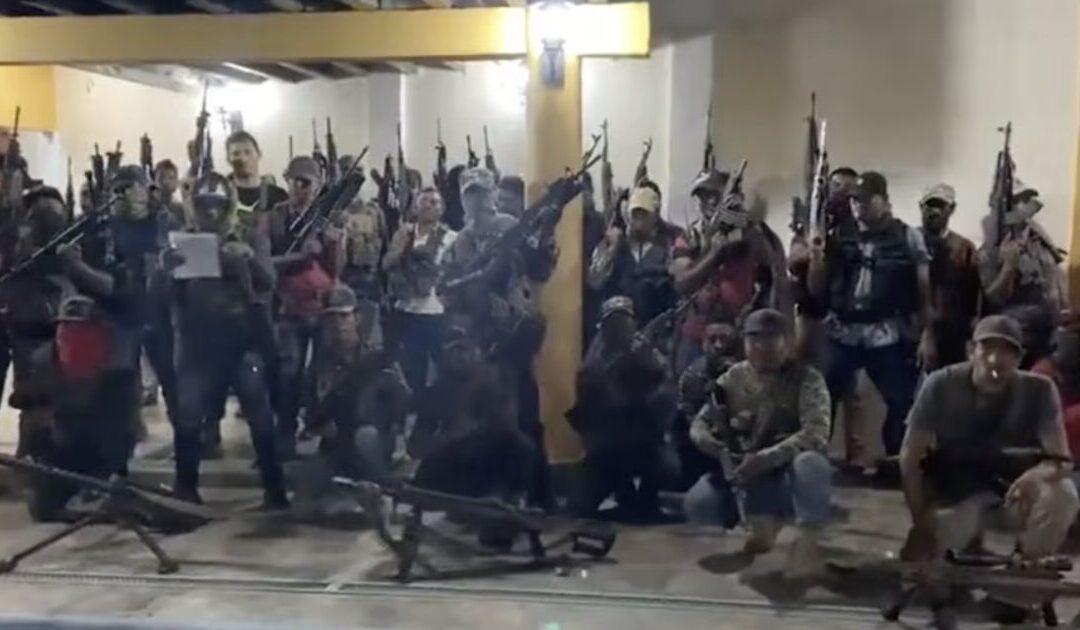
Members of the drug cartel, La Familia Michoacana, courtesy of El Pais

The Trump administration is formally designating eight Latin American crime organizations as “foreign terrorist organizations,” intensifying pressure on cartels operating in the U.S. and anyone aiding them.

The Biden administration, by contrast, allowed cartels to flood U.S. streets with fentanyl and permitted thousands of criminals and gang members to enter the country undetected due to open border policies.

Additionally, under Biden, the U.S. continued to provide trade advantages and financial investments to Mexico, despite the Mexican government’s refusal to curb illegal immigration or confront the drug cartels.

With this new designation, along with threats of tariffs on Mexico, Canada, and Europe, and the potential withdrawal of U.S. support for NATO, Ukraine, and European defense, Trump is signaling that the United States will no longer write checks for the rest of the world without expecting something in return.

In the case of Mexico, Trump is making it clear that the U.S. will not continue supporting Mexico’s economy unless the country takes responsibility for reclaiming control from the cartels.

In the early weeks of Trump’s second term, on January 27, 2025, U.S. Border Patrol agents exchanged gunfire with suspected Mexican cartel members near the U.S.-Mexico border in the Rio Grande Valley.

The incident highlights the ongoing dangers stemming from the weak Biden presidency, as well as the challenges faced by the Trump administration in its efforts to ramp up border security.

Shots were fired from the Mexican side, prompting Border Patrol agents to return fire and request backup. Fortunately, no injuries were reported on either side.

According to the Department of Homeland Security, the cartel members were attempting to smuggle a group across the river but did not make it onto U.S. soil.

In response, Texas Governor Greg Abbott deployed an additional 400 Texas National Guard members to strengthen security in the region, known for cartel activity and human smuggling.

Latin American drug cartels are responsible for a wide array of violent and destabilizing crimes that affect not only their home countries but also the United States and beyond.

These criminal organizations engage in drug trafficking, human smuggling, extortion, money laundering, kidnapping, and, in many cases, orchestrating brutal acts of violence such as assassinations, terrorism, and public intimidation.

Their operations fuel widespread insecurity, with cities and entire regions under their control, and they contribute to the global drug epidemic, including the surge in fentanyl overdoses.

President Trump’s decision to designate these cartels as terrorist organizations is, therefore, a justified recognition of their violent tactics and their disruption of international stability.

These actions align with the characteristics of terrorism, defined not only by violent acts but by their intention to create fear and achieve political or economic goals through force.

By designating cartels as Foreign Terrorist Organizations (FTOs), the U.S. federal government gains additional tools to combat their activities.

This designation allows for the use of more aggressive counterterrorism measures, such as asset freezes, sanctions on cartel leaders, and expanded authority to target those who support these organizations.

It also paves the way for increased cooperation with international law enforcement, facilitating efforts to dismantle the cartels’ operations and undermine their financial networks.

The designation could empower federal agencies like the Department of Homeland Security and the FBI to pursue these groups with greater authority, making it harder for them to operate with impunity both in the U.S. and abroad.

This strategic move marks a significant shift in U.S. policy towards treating cartels as national security threats rather than just criminal enterprises.

The international cartels and transnational organizations specifically mentioned in Trump’s January 20, 2025, executive order include Tren de Aragua in Venezuela, MS-13 in El Salvador, and six Mexican drug cartels, all designated as Foreign Terrorist Organizations (FTOs) or Specially Designated Global Terrorists (SDGTs).

This designation, while unusual as it is typically reserved for groups like al-Qaida or ISIS, is justified by the Trump administration based on the growing threat these groups pose to U.S. national security, foreign policy, and the economy.

The cartels are not just criminal enterprises; they are described as having international connections to foreign terror organizations and hostile governments, employing tactics akin to insurgency and asymmetric warfare, and infiltrating governments across the Western Hemisphere.

These groups engage in violent campaigns that destabilize countries and flood the U.S. with drugs, violent criminals, and gangs, directly endangering national security.

The executive order aims to eliminate these organizations’ presence and their control over illicit activities affecting U.S. security.

It establishes a national emergency and directs federal agencies, including the State Department and Department of Homeland Security, to take measures such as asset freezes, sanctions, and deportation processes to dismantle these groups’ operations.

The executive order reflects a broader U.S. policy to counter the growing power of transnational organizations and protect American territory.

By designating drug cartels as terrorist organizations, the U.S. gains expanded authority to use counterterrorism measures, significantly strengthening efforts to combat their global influence.

While existing tools like criminal charges and sanctions are already in place, the terrorist designation introduces new avenues, particularly through “material support” prosecutions.

Under U.S. law, providing any form of material support to a terrorist group—such as money, weapons, lodging, false documents, or even something as simple as a phone card—becomes a crime.

This broadens the scope of prosecutions, allowing authorities to target not just cartel members, but also street gangs involved in narcotics distribution and anyone offering financial or logistical support to these organizations.

The designation could also have broader implications. U.S. companies operating in Mexico could face penalties if they are found to be doing business with entities linked to cartels.

Additionally, migrants paying smugglers with cartel ties could face legal repercussions, potentially preventing them from entering the U.S. While the designation could fuel debates about the possibility of unilateral military action, the U.S. president already has authority for military strikes.

rHowever, military action in Mexico would be a significant escalation, and Mexico has clearly stated its opposition to such interventions.

The post Committed to Preserving National Security, Trump Designates Cartels as Terrorist Organizations appeared first on The Gateway Pundit.

Go to Source
Author: Antonio Graceffo

REVEALED: Bank of America Not Only Targets and Debanks Conservatives But Also Has Deep Ties and Exposure with the Chinese Communist Party

REVEALED: Bank of America Not Only Targets and Debanks Conservatives But Also Has Deep Ties and Exposure with the Chinese Communist Party

REVEALED: Bank of America Not Only Targets and Debanks Conservatives But Also Has Deep Ties and Exposure with the Chinese Communist Party
February 20, 2025

The Gateway Pundit has uncovered alarming evidence of Bank of America’s extensive ties to the Chinese Communist Party (CCP).

Through its investments, board member connections, and collaborations with CCP-linked organizations, one of America’s largest banks appears to have placed profits above national security, raising serious questions about foreign influence.

Bank of America’s entanglement with the CCP dates back to 2005, when it invested $3 billion in China Construction Bank (CCB), the second-largest bank in China at the time.

This unprecedented investment, which marked the largest-ever foreign financial deal in China, signaled a willingness to align with CCP interests to gain access to the lucrative Chinese market.

While Bank of America sold its stake in 2013, it remains one of only eight U.S. banks permitted to locally incorporate in China, a privilege granted only with CCP approval.

The connections extend to Bank of America’s leadership. Maria Zuber and Lionel L. Nowell III, two board members, also serve on the board of Textron, an aviation company with deep operations in China.

Textron partnered with AVIC, a Chinese state-owned defense conglomerate sanctioned by the U.S. Treasury for aiding the People’s Liberation Army.

Reports suggest that Textron’s aircraft designs were copied by Chinese companies, further underscoring the risks of such partnerships.

Arnold Donald, another Bank of America board member, oversaw Carnival Corporation’s 2015 partnership with China State Shipbuilding Corporation (CSSC), a CCP-controlled entity.

This deal was financed by China’s sovereign wealth fund and aimed to produce cruise ships in China. Even at the time, CSSC’s role in Xi Jinping’s military-civil fusion strategy was well known, but the partnership proceeded nonetheless.

Denise Ramos, another board member, also serves on the board of Raytheon, a major U.S. defense contractor that remains heavily reliant on Chinese suppliers.

In June 2023, Raytheon’s CEO admitted that the company could not decouple from China, and it was revealed that Raytheon had subcontracted with Dahua, a sanctioned Chinese tech company, as recently as December 2023.

Pierre de Weck, a senior advisor to private equity firm General Atlantic, also serves on Bank of America’s board.

Since de Weck joined General Atlantic in 2015, the firm has heavily invested in controversial Chinese companies, including Bytedance, the parent company of TikTok; Shein, which faces allegations of forced labor; and WuXi Biologics, a company involved in dual-use biological research and flagged by U.S. lawmakers as a security risk.

Bank of America has also financially supported organizations promoting CCP-aligned narratives.

In 2021, the bank donated $1 million to Asian Americans Advancing Justice (AAAJ), a group that has criticized U.S. efforts to combat CCP espionage and actively opposed the Justice Department’s “China Initiative.”

Stewart Kwoh, AAAJ’s founder and a longtime partner of Bank of America, has direct ties to CCP-linked initiatives, including working with the Chinese Consulate in Los Angeles.

Such deep entanglements with the CCP may explain why the Bank of America is so hostile to conservatives.

Last year, a coalition of 15 attorney generals sent a scathing letter to CEO Brian Moynihan accusing the bank of discriminating against people based on their religious and political beliefs.

“Your discriminatory behavior is a serious threat to free speech and religious freedom, is potentially illegal, and is causing political and regulatory backlash,” the letter sent stated.

“Your bank needs to be transparent with and assure us, its shareholders, and others that it will not continue to de-bank customers for their speech or religious exercise.”

Attorneys General of More Than a Dozen States Allege Bank of America is ‘De-Banking’ Conservatives

Among the most prominent conservatives targeted by Bank of America is John Eastman, who had his bank accounts closed at the same time a left-wing judge in California disbarred him over his efforts to expose massive fraud that tainted the results of the 2020 presidential election.

Last month, President Trump called out the bank for their discriminatory practices, leading to a formal response from the company on social media.

“Bank of America serves more than 70 million clients and we welcome conservatives,” the bank said in a statement.

”We would never close accounts for political reasons and don’t have a political litmus test.”

If you are a conservative looking for a bank that aligns with your values, Bank of America may not be the right choice for you.

The post REVEALED: Bank of America Not Only Targets and Debanks Conservatives But Also Has Deep Ties and Exposure with the Chinese Communist Party appeared first on The Gateway Pundit.

Go to Source
Author: Ben Kew

Appeals Court Says Trump Can’t End Birthright Citizenship — Battle Likely Heading to Supreme Court

Appeals Court Says Trump Can’t End Birthright Citizenship — Battle Likely Heading to Supreme Court

Appeals Court Says Trump Can’t End Birthright Citizenship — Battle Likely Heading to Supreme Court
February 20, 2025

The 9th US Circuit Court of Appeals has ruled that President Donald Trump cannot end birthright citizenship with his executive order, likely setting up a battle about the issue in the Supreme Court.

The Justice Department had filed an emergency request for the court to lift a Seattle judge’s freeze on the policy, but the appeals court denied it on Wednesday.

CNN reports:

The 9th Circuit panel – made up of a Trump appointee, a Jimmy Carter appointee and a George W. Bush appointee – said that a closer review of the case will move forward in its court, with arguments slated for June.

The case before the San Francisco-based appeals court is one of several major legal challenges to the policy and the first to get the weigh-in by an appellate panel.

In filings, the Justice Department said that the birthright citizenship executive order was “an integral part of President Trump’s broader effort to repair the United States’ immigration system and to address the ongoing crisis at the southern border.”

The court said the decision was made because the appeal was not likely to succeed on the dispute’s merits.

The lawsuit against the order was brought by four state’s Democratic attorneys general.

“This is not a case about ‘immigration,” the lawsuit states. “It is about citizenship rights that the Fourteenth Amendment and federal statute intentionally and explicitly place beyond the President’s authority to condition or deny.”

Under Trump’s day-one order, a baby born in the United States would not have automatic citizenship unless one of the parents is a citizen or green card holder.

The order states:

It is the policy of the United States that no department or agency of the United States government shall issue documents recognizing United States citizenship, or accept documents issued by State, local, or other governments or authorities purporting to recognize United States citizenship, to persons: (1) when that person’s mother was unlawfully present in the United States and the person’s father was not a United States citizen or lawful permanent resident at the time of said person’s birth, or (2) when that person’s mother’s presence in the United States was lawful but temporary, and the person’s father was not a United States citizen or lawful permanent resident at the time of said person’s birth.

“On a prospective basis, the federal government will not recognize automatic birthright citizenship for children of illegal aliens born in the United States,” a Trump official explained on a call with reporters about the orders.

The post Appeals Court Says Trump Can’t End Birthright Citizenship — Battle Likely Heading to Supreme Court appeared first on The Gateway Pundit.

Go to Source
Author: Cassandra MacDonald

DHS Secretary Kristi Noem Has Reportedly Warned Employees That She Will Polygraph Them to Find Leakers

DHS Secretary Kristi Noem Has Reportedly Warned Employees That She Will Polygraph Them to Find Leakers

DHS Secretary Kristi Noem Has Reportedly Warned Employees That She Will Polygraph Them to Find Leakers
February 20, 2025

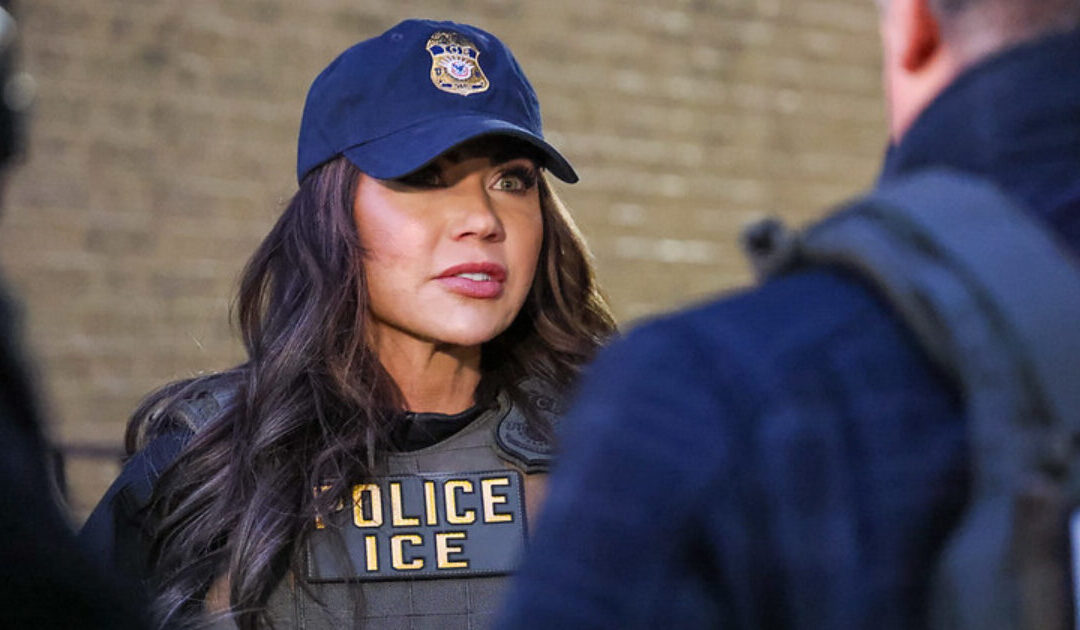
Secretary of Homeland Security Kristi Noem (Credit: U.S. Immigration and Customs Enforcement)

Department of Homeland Security Secretary Kristi Noem has reportedly warned employees that she will polygraph them to find leakers.

Leakers in the department have reportedly foiled plans for several deportation actions.

According to a report from Bloomberg News on Tuesday:

Noem last week issued an internal directive that all polygraphs the Department of Homeland Security administers must include a question about unauthorized communications with media and nonprofit organizations, according to a memo described to Bloomberg Government by two people without authorization to speak publicly.

Noem cited the “deleterious effects” of leaks on border and interior immigration enforcement and said DHS components that have polygraph programs may use them to assess whether personnel can have initial or continued access to classified information, and whether they’re eligible to hold a sensitive position.

“DHS is a national security agency,” spokesperson Tricia McLaughlin said in an email to Bloomberg Government. “As such, it should and will polygraph personnel.”

The Trump administration had set a goal of  1,200 to 1,500 arrests of illegal aliens per day, but fewer than 600 a day were arrested during the first 13 days of February.

U.S. Immigration and Customs Enforcement had been publishing the numbers daily but will now shift to a monthly report to conserve resources.

Mediaite noted, “Noem posted to X in mid-February, ‘The FBI is so corrupt. We will work with any and every agency to stop leaks and prosecute these crooked deep state agents to the fullest extent of the law.’ Her post was in response to an LA Times article titled, ‘Leaked document says ‘large scale’ immigration enforcement action coming soon to LA.’”

The post DHS Secretary Kristi Noem Has Reportedly Warned Employees That She Will Polygraph Them to Find Leakers appeared first on The Gateway Pundit.

Go to Source
Author: Cassandra MacDonald