Interpol Leads Major Cybercrime Bust in Africa: 1,209 Arrests and $97 Million Recovered
August 24, 2025
via Flickr
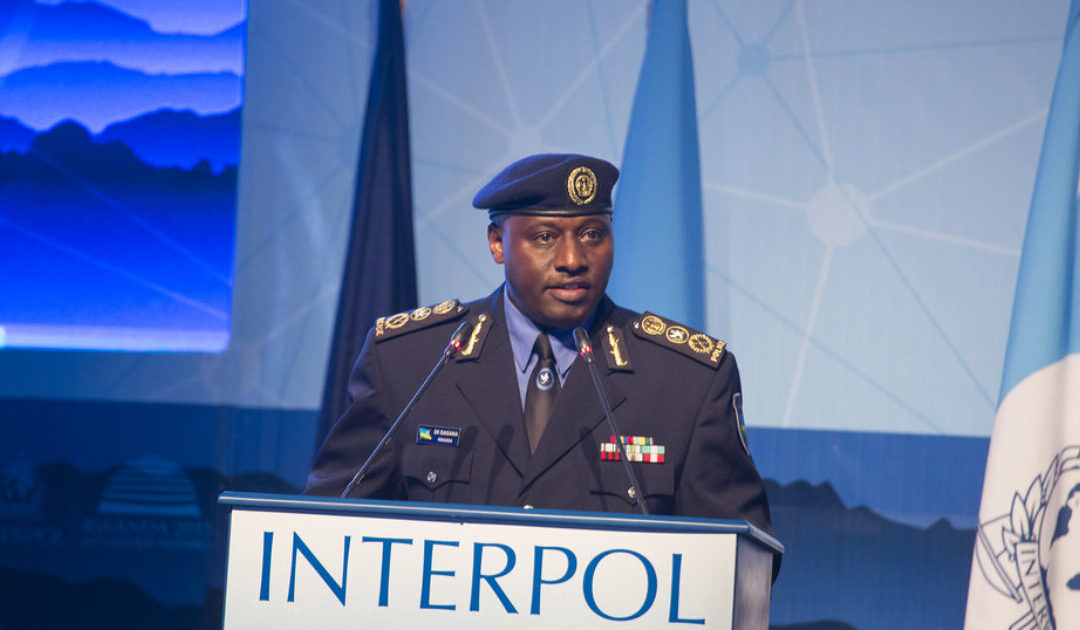
A major international operation coordinated by Interpol has resulted in significant arrests and asset recoveries across Africa.
Known as Operation Serengeti 2.0, the effort spanned from June to August 2025 and involved law enforcement from 18 African nations along with the United Kingdom.
The operation focused on combating various forms of cybercrime that have impacted thousands of individuals worldwide.
Authorities arrested 1,209 suspects during the operation and recovered approximately $97.4 million in illicit funds.
Nearly 88,000 victims were identified as targets of these schemes, with investigators dismantling 11,432 malicious infrastructures used in the crimes.
These actions highlight the extensive reach of organized cybercriminal networks operating in the region.
The crimes targeted included inheritance scams, ransomware attacks, and business email compromise operations. Inheritance scams, despite being among the oldest online frauds, continue to generate substantial revenue for criminal groups.
Ransomware and email compromises have been identified as rising threats in Africa, according to Interpol’s assessments.
In Angola, law enforcement shut down 25 illegal cryptocurrency mining facilities run by 60 Chinese nationals.
Equipment valued at over $37 million was seized, and the government intends to repurpose it for electricity distribution in underserved communities.
This action addressed unauthorized blockchain activities that strained local resources.
Zambian authorities disrupted a fraudulent cryptocurrency investment scheme that defrauded more than 65,000 victims of an estimated $300 million.
The scammers used aggressive advertising to lure investors into downloading apps for supposed high-yield returns, leading to 15 arrests and the seizure of domains, phone numbers, and bank accounts.
The investigation also uncovered a potential human trafficking ring and confiscated 372 forged passports from multiple countries.
In Côte d’Ivoire, officials dismantled a cross-border inheritance scam that originated in Germany and caused $1.6 million in losses to victims. The primary suspect was arrested, with assets such as electronics, jewelry, cash, vehicles, and documents recovered.
The operation received support from private sector partners including Kaspersky, Group-IB, Fortinet, and others, enhancing investigative capabilities.
Funding came from the UK’s Foreign, Commonwealth and Development Office, under the framework of the African Joint Operation against Cybercrime.
Pre-operation workshops trained investigators in tools for open-source intelligence, cryptocurrency tracking, and ransomware analysis.
This follows the inaugural Operation Serengeti in 2024, which led to over 1,000 arrests and assisted 35,000 victims.
Each successive effort builds on prior successes by improving information sharing and skills among participants.
Interpol’s Secretary General noted that growing contributions strengthen global networks and deliver tangible results for victims.
Participating countries included Angola, Benin, Cameroon, Chad, Côte d’Ivoire, Democratic Republic of Congo, Gabon, Ghana, Kenya, Mauritius, Nigeria, Rwanda, Senegal, South Africa, Seychelles, Tanzania, Zambia, and Zimbabwe.
The operation underscores the importance of international collaboration in tackling cybercrimes that cross borders. Such initiatives aim to protect vulnerable populations from evolving digital threats.
How Congress Can Implement President Trump’s Election Reform Movement and Usher in Hand-marked, Hand-counted Paper Ballots at the Precinct Level
August 24, 2025
Screenshot: The White House
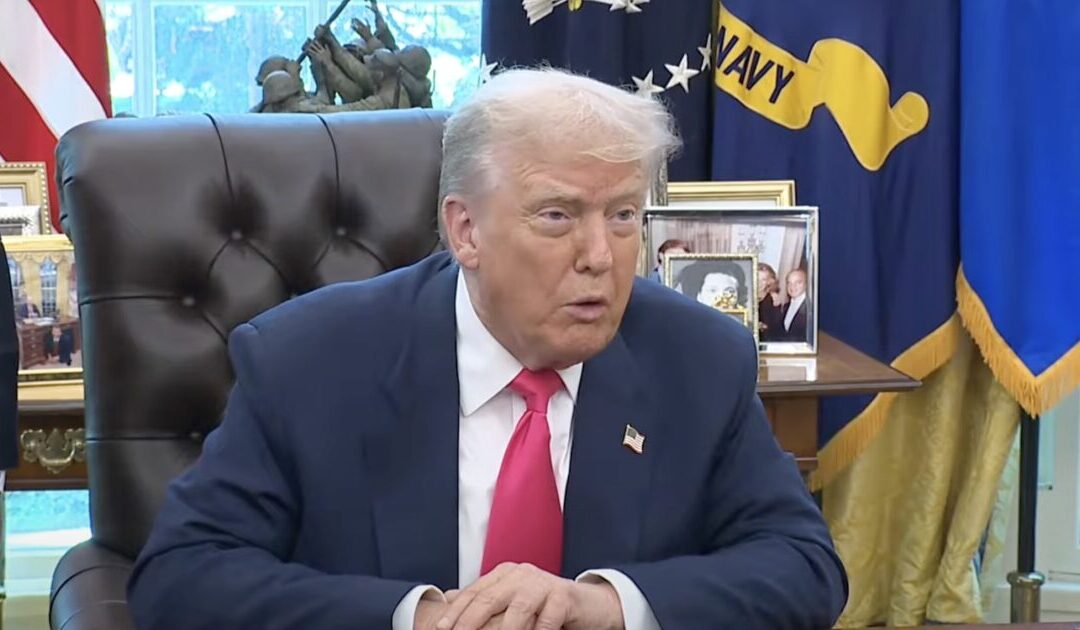
Last week, President Trump declared that he is leading “a movement to get rid of mail-in ballots” and “highly ‘inaccurate,’ very expensive, and seriously controversial voting machines,” claiming that they cost ten times more than “accurate and sophisticated watermark paper.”
President Trump then made a controversial claim: “the States are merely an ‘agent’ for the Federal Government in counting and tabulating the votes” and that “they must do what the Federal Government…tells them…to do.”
Anti-federalists would shockingly align with Voting ‘Rights’ NGOs, who seem to suffer from Trump Derangement Syndrome quite often, and cry out “the state legislatures were prescribed this authority!”
This is of course in reference to Article 1 Section 4, generally called the Elections Clause. And while that is fundamentally correct, it is also only one of two aspects to the Elections Clause and omits that the U.S. Congress still preempts the states’ legislatures.
Art. 1, Sec 4 states:
The Times, Places and Manner of holding Elections for Senators and Representatives, shall be prescribed in each State by the Legislature thereof; but the Congress may at any time by Law make or alter such Regulations, except as to the Places of [choosing] Senators.
Using Congress’s authority under the Elections Clause, there is a simple way that they can restore faith in the elections, streamline their efficiency while bolstering their effectiveness, and ensure the American people that their voice is being heard, at least in federal elections.
The Precedent
In the 1932 case Smiley v. Holm, arguments were heard on whether the state legislature of Minnesota had the authority to redistrict the state without the approval of the governor based on the Elections Clause. In his opinion,Chief Justice Hughes outlined several of the authorities that were entrusted to the state legislatures, but also that the U.S. Congress has the ability to “supplement” or “substitute” its own regulations:
The subject-matter is the ‘times, places and manner of holding elections for senators and representatives.’ It cannot be doubted that these comprehensive words embrace authority to provide a complete code for congressional elections, not only as to times and places, but in relation to notices, registration, supervision of voting, protection of voters, prevention of fraud and corrupt practices, counting of votes, duties of inspectors and canvassers, and making and publication of election returns…
…The phrase ‘such regulations’ plainly refers to regulations of the same general character that the legislature of the State is authorized to prescribe with respect to congressional elections. In exercising this power, the Congress may supplement these state regulations or may substitute its own. It may impose additional penalties for the violation of the state laws or provide independent sanctions. It ‘has a general supervisory power over the whole subject.’
In 1997, the Supreme Court upheld this ‘supervisory power’ in Foster v. Love. Justice Souter was joined by Justices Scalia, Kennedy, and Thomas in the opinion that:
The [Elections] Clause is a default provision; it invests the States with responsibility for the mechanics of congressional elections but only so far as Congress declines to pre-empt state legislative choices. Thus, it is well settled that the Elections Clause grants Congress ‘the power to override state regulations’ by establishing uniform rules for federal elections, binding on the States. ‘The regulations made by Congress are paramount to those made by the State legislature; and if they conflict therewith, the latter so far as the conflict extends, ceases to be operative.’
In a 2021 Washington Law Review by Eliza Sweren-Becker and Michael Waldman titled, “The Meaning, History, and Importance of the Elections Clause,” the authors described the Elections Clause as:
“…a provision of extraordinary, if often latent power. Nowhere else in the original Constitution is Congress given explicit authority to “alter” state laws even absent a conflicting federal statute. It is also one of the few places in the Constitution where states are given an explicit instruction to act – in this case, to ensure the continuation of the federal legislature.”
The Public
Faith in our elections is plummeting. Recent polling shows that public trust in the integrity of our elections has fallen off significantly. In an article from Ryan Shandler, a Georgia Tech Professor of Cybersecurity and International Relations, he writes:
Nearly half of Americans, both Democrats and Republicans, question whether elections are conducted fairly. Some voters accept election results only when their side wins. The problem isn’t just political polarization – it’s a creeping erosion of trust in the machinery of democracy itself.
Commentators blame ideological tribalism, misinformation campaigns and partisan echo chambers for this crisis of trust. But these explanations miss a critical piece of the puzzle: a growing unease with the digital infrastructure that now underpins nearly every aspect of how Americans vote.
In a July 2024 poll from Rasmussen Reports/Heartland Institute, 62% of likely voters are concerned cheating would affect the outcome of the 2024 election, with 37% “very concerned” and only 15% “not at all concerned.”
Another Rasmussen Reports poll from November 18th, 2024, following the 2024 Presidential Election, 65% of voters “believe disputes over election results should be investigated fully, including the use of forensic ballot audits” and that “59% say federal election laws should require the use of paper ballots.”
Matt Blaze, the McDevitt Chair of Computer Science and Law at Georgetown University, just this month called voting machines “unreliable,” “the hardest technical problem in computer science that [he’s] ever encountered bar none” and said that “we don’t know how to build complex software…in ways that actually assure us that they do what we intend them to do.”
Election machines must go. Period.
Here’s some clips of Georgetown Professor Matt Blaze during the most recent DefCon Voting Village 2025:
First, US Elections are the “hardest technical problem in computer science that [he’s] ever encountered bar none.”
The solution is simple. Pass a bill that requires states to separate their state and local elections from federal elections. The bill should include requirements to count the federal ballots under public live-stream at the precinct level.
Volunteers consisting of members from all parties involved from within the community can assist with the counting, under quality live-stream supervision. This would limit the possible number of ballots with 100% turnout to around 2,000 ballots with, at most, three races on them: US House, Senate, and President.
The Tuesday next after the 1st Monday in November, in every even numbered year, is established as the day for the election, in each of the States and Territories of the United States, of Representatives and Delegates to the Congress commencing on the 3d day of January next thereafter.
Several state constitutions, like Florida for example (Art. VI, § 5), reaffirm the federal mandate, while others hold their local and state elections on different days throughout the year.
Still, Congress can pass a law that requires states to use a separate ballot for federal elections, which will never be more than three choices (perhaps four in extenuating circumstances where two Senators are eligible due to a resignation or death).
One of the most parroted talking points from hand-counted paper ballot critics is the complexity of the election, sometimes having dozens of races on a single ballot.
With this streamlined approach, the excuses ushered in by paper-ballot critics are moot. At least for the federal races. And let’s face it: election night coverage focuses primarily on the President, the Senate, and Congress. Gubernatorial races are often second to those three federal offices.
The argument that this creates an increased burden on election officials at the local level also falls flat. It can be conducted simultaneously with state and local elections, however, separating the elections would help ensure more educated voters are engaged in the governments that affect them the most: local government.
How often does a voter show up to vote for, say, President Trump or Joe Biden, and then ends up filling in bubbles for anyone with the corresponding D or R next to their name in alignment with their top-of-ticket picks?
When PACs, Super PACs, and fundraising platforms like ActBlue and WinRed amplify name recognition without delivering substantive knowledge, a cloud of influence descends. This disconnect between visibility and understanding undermines democratic accountability: well-funded candidates and organizations can dominate the airwaves and shape perceptions, yet voters often cast ballots in a fog of unfamiliarity.
The result? Voters may inadvertently endorse candidates whose policies and records remain opaque, making the ballot less a tool of informed self-government and more a reflection of campaign spending and partisan inertia.
This is also one of the most significant underlying reasons establishment politicians and bureaucrats will dismiss this idea but they’ll do it under the masquerade of ‘it makes the election officials jobs more difficult and their job is already really stressful!’
Whether or not Congress can pass laws requiring state and local races to also utilize hand-marked paper ballots hand-counted at the precinct level is debatable. However, given the turn out numbers historically, the separation of federal from state elections would further ease the burden on local election offices.
Traditionally, federal elections garner turnout around 60-67% when a presidential race is on the ballot. This number drops off to 40-50% for midterm elections for the U.S. House and Senate. However, the largest drop off comes with local elections. According to Ballotpedia, turnout for these elections range from 8-20%.
In this moment of deepening mistrust in American elections, it is imperative that Congress acts boldly to restore confidence and safeguard the integrity of our republic. President Trump’s proposal to eliminate voting machines in favor of hand-marked, publicly hand-counted paper ballots offers a pathway toward transparent, citizen-powered elections that leave no room for doubt or digital manipulation.
By separating federal ballots, requiring live-streamed precinct-level counts, and involving volunteers from across the political spectrum, voters can reclaim control of the electoral process for the people themselves—not for companies, code, or partisan vendors. No technical fix or incremental audit can restore the sense of trust that only honest, visible tabulation can provide.
With Congress’s clear constitutional authority to regulate federal elections, passing such a law is not only feasible but just and vital. Now is the time to reject obscured automation, reaffirm the voice of the American people, and secure elections with the simple, time-tested tools of our republic: paper, pen, and public counting.
A growing number of Republicans and independents are abandoning New York City—not physically, but strategically.
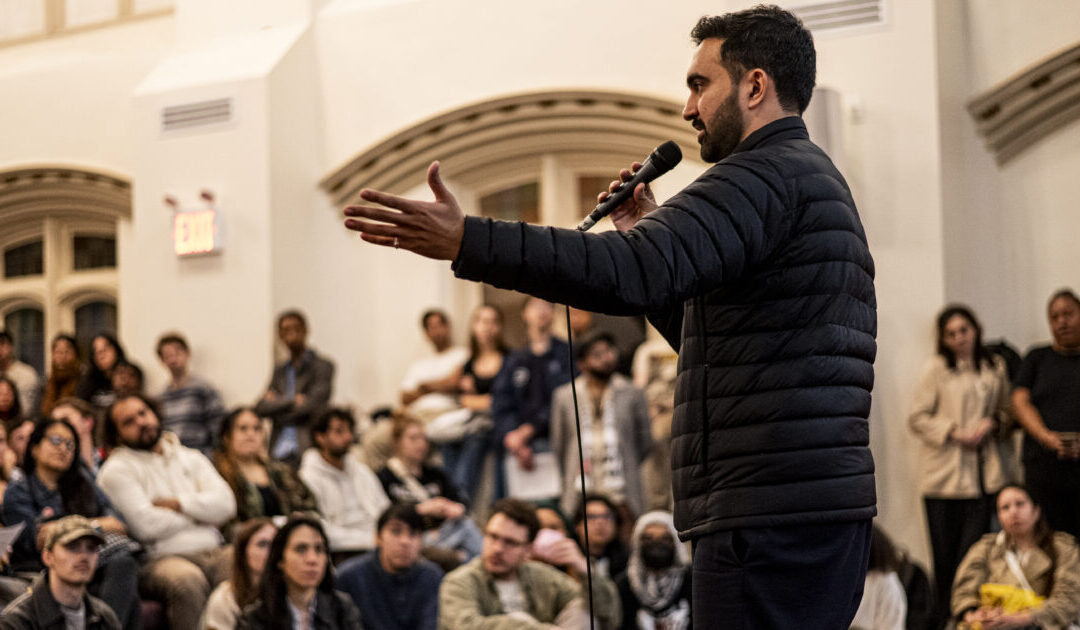
They have convinced themselves that the city is already lost, and that self-identified socialist Zohran Mamdani is guaranteed to win the mayoral election.
That conclusion is unsupported by the facts.
There is no polling showing Mamdani anywhere near 50%. He is not dominating across all five boroughs. His base of support is narrow and ideologically extreme.
WATCH: Zohran Mamdani’s Crime Policy EXPOSED; New York City In Danger
Mamdani’s lead is the product of apathy and division, not momentum or consensus. The race remains entirely competitive, but only if conservatives and moderate independents start acting like they want to win.
I spoke directly with Brandon Straka, founder of the WalkAway movement and the only conservative candidate consistently engaging with voters across the city.
“Republicans, independents, and moderates are not far off from taking back New York. But they have to come together. They have to act like they want it,” Straka said.
Tonight a close friend asked me if I think Mamdani will win.
It was just the 2 of us, and I can tell him anything. So I could easily have answered “yes”.
In that moment I truly realized that I know for sure that I don’t believe he will.
Straka is not campaigning to raise his own profile or secure a future appointment. He is running for one reason: to defeat Zohran Mamdani and prevent the city from being handed over to a radical agenda.
He has led rallies throughout the summer and continues to organize new ones. While other candidates spend time attacking one another or pursuing social media relevance, Straka is focused on the one mission that matters—blocking Mamdani’s path to City Hall.
Mamdani’s campaign is not powered by a majority vision. His ideology reflects the failed experiments of the Soviet Union, not the values of a functioning democracy.
His platform supports the defunding of the NYPD, wealth redistribution through state seizure, massive government expansion, and housing mandates that would destroy New York’s job market and drive out investment.
He has partnered with anti-Israel organizations and publicly aligned with activist groups that vilify law enforcement and undermine public safety. His candidacy does not represent progress—it represents regression on every front.
The most urgent threat to the city is not Mamdani’s policy platform or even his level of support. The greatest threat is the fractured state of his opposition.
Conservative and moderate voters are divided across multiple symbolic candidacies. As a result, Mamdani could seize control of the city with less than one-third of the total vote. He does not need a majority to win. He only needs the anti-Mamdani vote to remain splintered and indecisive.
This election will not be decided by ideology; instead, it will be decided by turnout and organization.
Brandon Straka and I are aligned in the same mission: to ensure that Zohran Mamdani does not become mayor of New York City.
But success requires more than conviction. It requires the voters who understand the stakes to unify behind one viable alternative. It requires campaign volunteers, in-person canvassing, voter registration drives, and sustained public pressure.
Mamdani can be defeated—but only if his opposition operates as one unified movement, not as scattered protest votes.
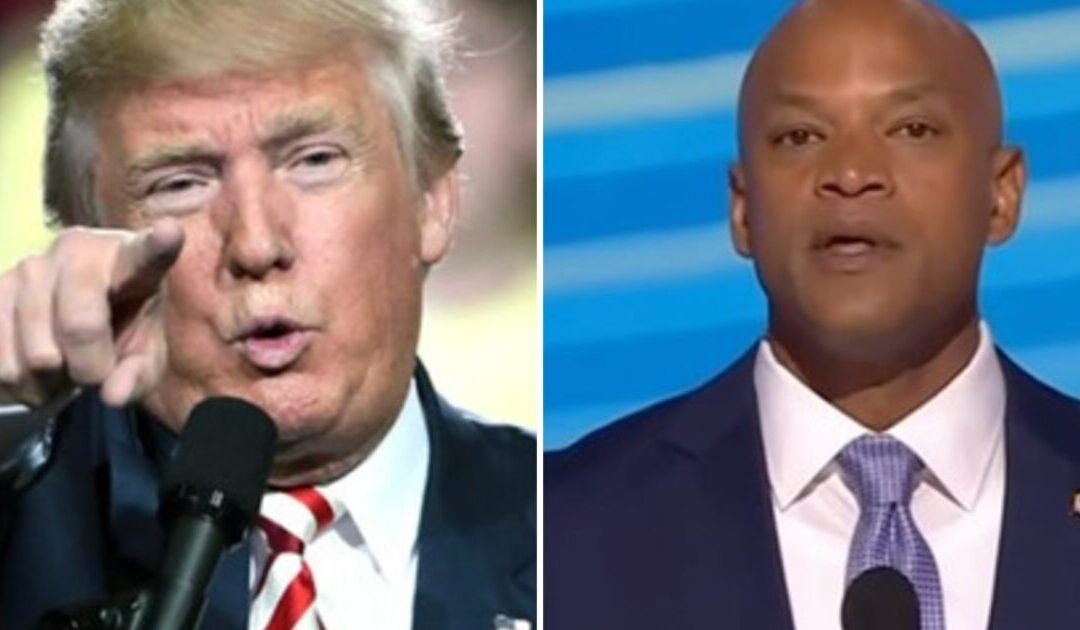
President Trump OBLITERATES Wes Moore After the Maryland Governor Challenges Him to “Walk Our Streets” – Then He Asks an Important Question About Moore’s Army Service
August 24, 2025
Credits; Gage Skidmore/Flickr and Screenshot of Wes Moore via CBS News YouTube Channel
Far-left Maryland Governor Wes Moore forgot one of the most important lessons in life earlier last week: when you come at the king, you best not miss. Now, he is paying the price and may have to answer some VERY uncomfortable questions about his background.
On Thursday, Moore slammed President Trump for constantly criticizing Baltimore’s notoriously high crime rate and told him to shut up. He went on to say that if Trump actually walked Baltimore’s streets, he would see that it’s “one of the greatest cities in the United States of America.”
“Donald Trump, if you are not willing to walk our communities, keep our name out of your mouth!” Moore exclaims in the video. Because if you were willing to visit…If you actually were willing to walk our streets and not just talk about us from the Oval Office, you would see what we see: one of the greatest cities in the United States of America.
WATCH:
If President Trump were to walk our streets, stand with our people, and visit our community, he would see what I see: . pic.twitter.com/yipidTBTLK
Trump went absolutely nuclear on Moore Sunday morning, slamming the Maryland governor’s disgusting tone and record on crime. Trump went on to say that he’d be willing to send in troops just like he did in DC and LA.
The president then threatened to cut off funds for the Key Bridge collapse.
“Governor Wes Moore of Maryland has asked, in a rather nasty and provocative tone, that I ‘walk the streets of Maryland’ with him. I assume he is talking about out of control, crime ridden, Baltimore?” Trump wrote. “As President, I would much prefer that he clean up this Crime disaster before I go there for a ‘walk.” Wes Moore’s record on Crime is a very bad one, unless he fudges his figures on crime like many of the other “Blue States” are doing.”
“But if Wes Moore needs help, like Gavin Newscum did in L.A., I will send in the “troops,” which is being done in nearby DC, and quickly clean up the Crime,” Trump added. “After only one week, there is NO CRIME AND NO MURDER IN DC! When it is like that in Baltimore, I will proudly “walk the streets” with the failing, because of Crime, Governor of Maryland.”
“P.S. Baltimore is ranked the 4th WORST CITY IN THE NATION IN CRIME & MURDER. Stop talking and get to work, Wes. I’ll then see you on the streets!!! Also, I gave Wes Moore a lot of money to fix his demolished bridge. I will now have to rethink that decision??? Thank you for your attention to this matter. MAKE AMERICA GREAT AGAIN! President DJT
But Trump was not done. In a subsequent post, he asked an uncomfortable question about Moore’s military service.
Last year, it was revealed that Moore falsely claimed to have received a Bronze Star while serving in the Army. He made the claim while applying for a 2006 White House fellowship application, though he later said this was an “honest mistake.”
Trump rightfully did not buy this, though.
“Did Wes Moore, the Governor of Maryland, lie about getting a Bronze Star?” Trump asked.
This is an important question that is likely to come up again because Moore is rumored to be considering running for the 2028 Democratic Presidential nomination. We all remember what happened to John Kerry over two decades ago when questions emerged about his military service.
“You are Becoming Part of the Issue…You are The Antithesis of What We Fought for Four Years” – Alina Habba Goes Off on Thom Tillis and Chuck Grassley for Cowardly Blocking Her Senate Confirmation (VIDEO)
August 24, 2025
Credit: Fox News Screenshot
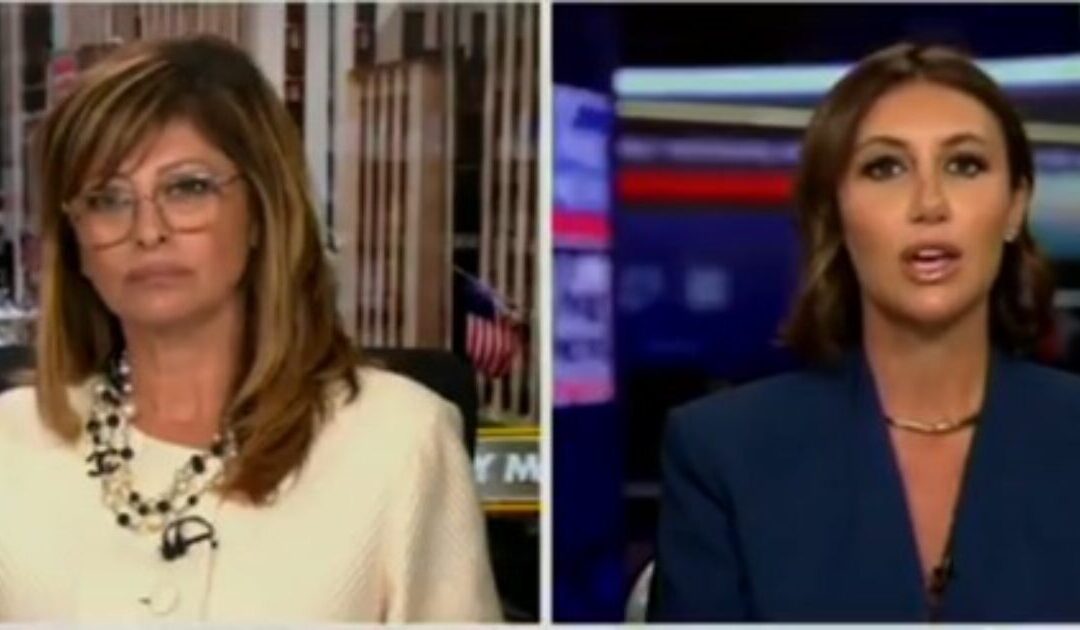
Alina Habba, President Trump’s nominee for US Attorney of New Jersey, did not mince words on the absolutely cowardly Republicans blocking her nomination during an interview on Sunday.
As The Gateway Pundit reported, US District Judge Matthew Brann, an Obama appointee, said Alina Habba is “not lawfully holding the Office of US Attorney” of New Jersey.
The Pennsylvania-based federal judge oversaw a challenge to Habba’s authority because the judges in New Jersey had a conflict of interest after they ousted her from her position as interim US Attorney last month. Last month, a group of federal judges declined to extend Habba’s term as interim US Attorney of New Jersey after Democrat Minority Leader Hakeem Jeffries launched a pressure campaign to oust her.
Habba revealed that Senate Judiciary Chairman Chuck Grassley is trying to block her confirmation in the Senate by holding up the ‘blue slip’ tradition. This custom defers the judicial nominations to the home state senators. Habba slammed Grassley for not ending the practice.
“Sunday Morning Futures” host Maria Bartiromo asked Habba about not only Grassley’s obstinacy but also disgraced North Carolina RINO Senator Thom Tillis’s refusal to support her. Habba said she was unsurprised and went off on the two for being part of the problem.
WATCH:
BREAKING: Acting US Attorney Alina Habba just SLAMMED Thom Tillis and Chuck Grassley for blocking her confirmation
“I would say to Sen. Tillis and Sen. Grassley: YOU are becoming part of the issue. YOU are becoming part of the antithesis of what we fought for FOUR YEARS!”… pic.twitter.com/T5diuwqElG
BARTIROMO: What do you want to say about Senator Thom Tillis, a member of the Senate Judiciary Committee, who has stated publicly that if Senator Grassley tried moving a district judge or a U.S. attorney through the Judiciary Committee without a blue slip, he would oppose that nominee! That means we would have the votes to pass a nomination like Habba’s out of committee because he would vote no along with the Democrats.
HABBA: It’s not surprising. They’re looking at this as they need to get along to go along, but they’re not looking at what this does.
The President was rightfully voted in by a majority of Americans, and he is entitled to pick his U.S. attorneys, his DOJ officials, and his judges so that we can continue the agenda that the American public voted for, which is to get rid of crime.
The truth is, it has nothing to do with the work that we’re doing. It has nothing to do with the crime that we’re stopping. It has to do with trying to prevent President Trump from continuing his agenda, and it has to stop.
I would say to Sen. Tillis and Sen. Grassley: You are becoming part of the issue. You are becoming part of the antithesis of what we fought for four years.
We use technologies like cookies to store and/or access device information. We do this to improve browsing experience and to show (non-) personalized ads. Consenting to these technologies will allow us to process data such as browsing behavior or unique IDs on this site. Not consenting or withdrawing consent, may adversely affect certain features and functions.
Functional
Always active
The technical storage or access is strictly necessary for the legitimate purpose of enabling the use of a specific service explicitly requested by the subscriber or user, or for the sole purpose of carrying out the transmission of a communication over an electronic communications network.
Preferences
The technical storage or access is necessary for the legitimate purpose of storing preferences that are not requested by the subscriber or user.
Statistics
The technical storage or access that is used exclusively for statistical purposes.The technical storage or access that is used exclusively for anonymous statistical purposes. Without a subpoena, voluntary compliance on the part of your Internet Service Provider, or additional records from a third party, information stored or retrieved for this purpose alone cannot usually be used to identify you.
Marketing
The technical storage or access is required to create user profiles to send advertising, or to track the user on a website or across several websites for similar marketing purposes.