Anti-ICE Singer Bad Bunny Reportedly Planning to Wear a Dress at Super Bowl Halftime Show to ‘Honor Queer Icons’
January 24, 2026
Bad Bunny, the anti-Trump, anti-ICE, Puerto Rican rapper, whose real name is Benito Antonio Martínez Ocasio, is reportedly planning to wear a dress to “honor queer icons” during his Super Bowl halftime performance.
The artist has a history of wearing skirts, dresses, and other bizarre costumes.
According to a Radar Online report, Ocasio will wear the dress at the NFL’s biggest game of the year to “honor Puerto Rican queer icons and generations of drag, resistance and cultural rebellion.”
The report states:
“He loves controversy. He lives to push envelopes,” confided a stylist involved in the Spanish-speaking rapper’s top-secret fittings.
“He is 100 percent going to wear a dress. A political thunderbolt disguised as couture.”
Another glam-team source said: “He’s not playing it safe. The NFL has no idea what’s coming. Zero.”
While critics are already clutching their pearls, a pal said: “Let them complain. The dress is already being sewn.”
The artist headlining the event had already drawn extreme backlash from conservatives due to his aggressive pushing of leftist propaganda.
Bad Bunny has been vocal about his disdain for efforts to protect Americans through U.S. Immigration and Customs Enforcement (ICE) enforcement and declared in an interview that he would not tour the United States out of fear that ICE agents would arrest his fans outside his shows.
He also posted a video earlier this year, cursing at ICE agents in Puerto Rico.
To his critics, he sneered, “You have four months” to learn Spanish.
WATCH:
Bad Bunny speaks about his Super Bowl performance in Spanish at end of SNL monologue:
Secretary of the Department of Homeland Security Kristi Noem has confirmed that ICE agents will be present at the Super Bowl in February.
“We’ll be all over that place. We are going to enforce the law. You shouldn’t be coming to the Super Bowl unless you are a law-abiding American citizen,” Noem said.
Rogue FBI Agent Resigns After Trying to Harass ICE Officer Who Killed Renee Good in Self-Defense
January 24, 2026
Renee Nicole Good blocking ICE agents before she was shot at a demonstration protecting criminal illegal aliens.
A rogue FBI agent who tried to harass the ICE officer who killed a woman in self-defense has resigned from the bureau.
Tracee Mergen has departed her role as a supervisor in the FBI’s Minneapolis field office after launching a civil rights inquiry into ICE agent Jonathan Ross over the killing of far-left activist Renee Good.
MS Now had the details on her resignation, which was politically motivated:
Meanwhile, Tracee Mergen, an FBI supervisor in the Minneapolis field office who oversees fraud and public corruption cases, resigned in frustration over the handling by Justice Department leadership of the Good shooting investigation and the pivot of the original search warrant subject, according to two of the sources.
Mergen is said to be frustrated as well with the Trump administration’s decision to treat protesters in Minnesota as possible domestic terrorists and conduct mass arrests of people peaceably protesting, according to two people familiar with her decision.
Footage of the incident showed how, after refusing to follow his instructions, Good tried to run over Ross with her vehicle.
Ross, a federal officer who was carrying out his duties detaining illegal aliens, responded by shooting Good in a blatant act of self-defense.
Such investigations would seek to determine whether Ross used “excessive force” and, if so, potentially charge him with a crime.
ALERT: The acting FBI supervisor of the Public Corruption Squad in the Minneapolis field office, Tracee Mergen, resigned last week in part over the investigation of the fatal shooting of Renee Goodhttps://t.co/EwmCN1tbyb
It has since been revealed that Ross suffered internal bleeding in the torso because of Good’s attempts to run him over.
Patriots around the country have since raised over $1 million for Ross and his wife because of the pain and suffering they must now endure.
As crazed leftists sought revenge, Ross was doxxed online, while federal agents were seen removing items from his home, as his family has reportedly gone into hiding.
Meanwhile, the Department of Justice has launched a criminal investigation into Good’s widow for her alleged role in the events that led to her partner’s untimely death.
BREAKING: Minnesota Governor Tim Walz Rages Against Federal Agents After Deadly Shooting, Calls for White House to Pull ICE from the State – Ignores That Suspect Was Armed with a Gun
January 24, 2026
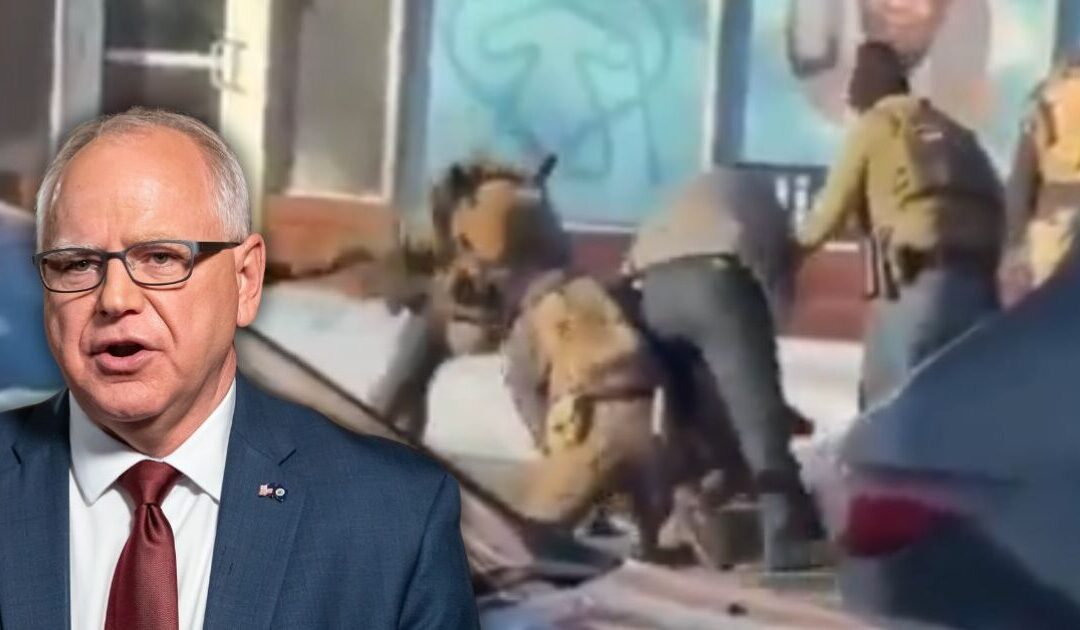
In yet another example of left-wing politicians siding with criminals over law enforcement, Minnesota Governor Tim Walz took to X on Saturday to blast federal agents following a shooting of an armed suspect in his state.
Walz, the failed 2024 Democratic vice presidential candidate, called the event “horrific” and “sickening,” and said he spoke to the White House after the incident.
I just spoke with the White House after another horrific shooting by federal agents this morning. Minnesota has had it. This is sickening.
The President must end this operation. Pull the thousands of violent, untrained officers out of Minnesota. Now.
I just spoke with the White House after another horrific shooting by federal agents this morning. Minnesota has had it. This is sickening. The President must end this operation.
Pull the thousands of violent, untrained officers out of Minnesota. Now.
Walz conveniently omitted that the suspect was armed with a gun and posed a direct threat to the agents, who he is seen resisting in witness footage.
Shortly after the shooting, Melugin posted a photo of a gun that was recovered from the suspect.
The incident occurred in front of Glam Doll Donuts on Saturday morning.
BREAKING: Multiple law enforcement sources tell me there has just been a Border Patrol involved shooting in Minneapolis near 26th Street & Nicollet Ave. with Border Patrol shooting a person. I’m told the person is “down” and medics are working on them. No details yet on who it…
“Multiple law enforcement sources tell me there has just been a Border Patrol involved shooting in Minneapolis near 26th Street & Nicollet Ave. with Border Patrol shooting a person,” Melugin wrote in a post on X. “I’m told the person is “down” and medics are working on them. No details yet on who it was or what led up to the shooting.”
BREAKING: Reports of ICE-involved shooting near Glam Doll Donuts in Minneapolis, Minnesota pic.twitter.com/fAqaAH3JyW
It is unclear if the suspect was an American citizen or an illegal alien, or how the incident began.
Crime Watch Minneapolis posted information from the police scanner, which included, “Male shot multiple, including 3 times in the chest.”
South Minneapolis – SHOOTING involving ICE. CPR was in progress.
26th and Nicollet Ave
Male shot multiple, including 3 times in the chest.
Multiple EMS rigs were initially dispatched.
09:05 pic.twitter.com/c0prom8qso
BREAKING: ICE Involved Shooting in Minneapolis – Armed Suspect Down (VIDEO)
January 24, 2026
ICE agents were involved in a shooting in South Minneapolis on Saturday afternoon.
The city has been facing extreme protests against ICE, which intensified after an agent fatally shot Renee Nicole Good, a protester who was plowing into him with her vehicle.
Multiple law enforcement sources confirmed to Fox News’ Bill Melugin that agents shot a person near 26th Street and Nicollet Avenue, leaving the individual “down” with medics rushing to provide aid.
The incident occurred in front of Glam Doll Donuts.
BREAKING: Multiple law enforcement sources tell me there has just been a Border Patrol involved shooting in Minneapolis near 26th Street & Nicollet Ave. with Border Patrol shooting a person. I’m told the person is “down” and medics are working on them. No details yet on who it…
“Multiple law enforcement sources tell me there has just been a Border Patrol involved shooting in Minneapolis near 26th Street & Nicollet Ave. with Border Patrol shooting a person,” Melugin wrote in a post on X. “I’m told the person is “down” and medics are working on them. No details yet on who it was or what led up to the shooting.”
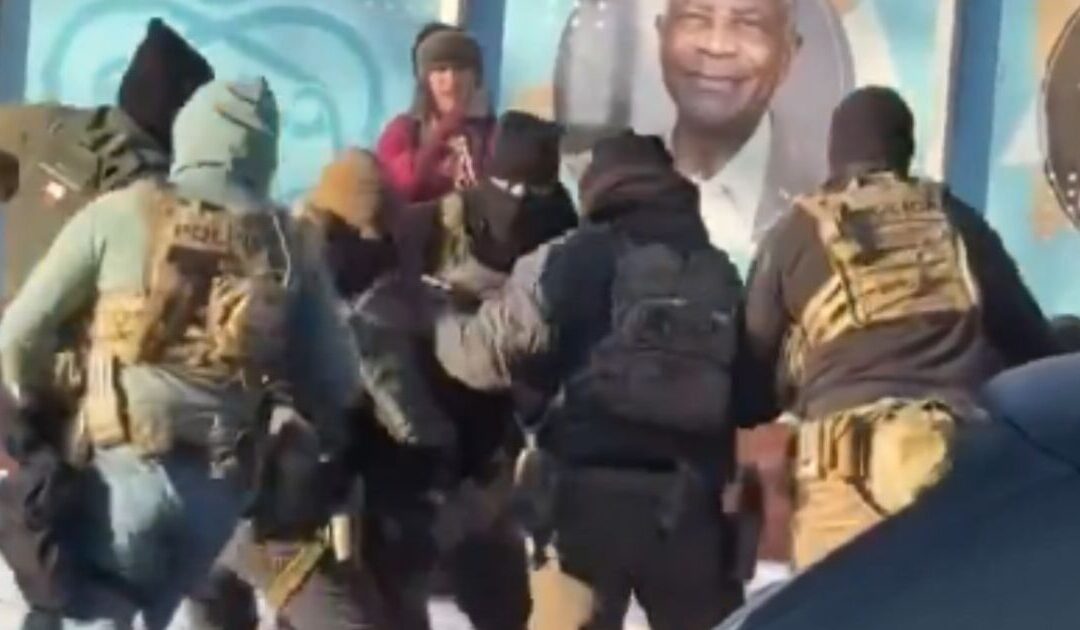
Eyewitness video footage captured a group of federal agents in tactical gear engaging in a physical struggle with several individuals atop a vehicle in a snowy parking lot.
Shouts of “They’re doing too much, man,” can be heard before gunfire erupts, with bystanders exclaiming “Oh shit!” and “Did they f-cking kill that guy?”
BREAKING: Reports of ICE-involved shooting near Glam Doll Donuts in Minneapolis, Minnesota pic.twitter.com/fAqaAH3JyW
The video depicts agents subduing suspects, followed by apparent shots being fired.
It is unclear if the suspect was an American citizen or an illegal alien, or how the incident began.
Crime Watch Minneapolis posted information from the police scanner, which included, “Male shot multiple, including 3 times in the chest.”
South Minneapolis – SHOOTING involving ICE. CPR was in progress.
26th and Nicollet Ave
Male shot multiple, including 3 times in the chest.
Multiple EMS rigs were initially dispatched.
09:05 pic.twitter.com/c0prom8qso
Independent journalist Nick Sortor, who is on the ground in Minneapolis, has posted that the suspect was an illegal alien, but The Gateway Pundit has not yet been able to independently verify this information.
BREAKING UPDATE: The illegal alien who was shot by Border Patrol in the Minneapolis area was armed with a gun and attempted to PULL IT on agents as he was being apprehended
Sounds like he was doing EXACTLY what Tim Walz suggested he do.
How Trump Plans to Recover Billions Venezuela Owes the US
January 24, 2026
Photo courtesy of the U.S. Embassy in Venezuela.
Venezuela owes American oil companies an estimated $10–12 billion in international arbitration awards stemming from Hugo Chávez’s 2007 nationalization of the country’s oil industry. That year, Chávez ordered foreign firms to convert their holdings into joint ventures in which the state-owned oil company PDVSA would hold at least a 60 percent stake or leave the country altogether.
Several U.S. companies, including ConocoPhillips, refused to surrender majority control and had their assets expropriated by PDVSA, including major projects at Corocoro, Hamaca, and Petrozuata. Venezuela failed to pay market-rate compensation and, in many cases, did not negotiate in good faith. Arbitration panels later found that the seizures constituted unlawful expropriations or violations of Venezuela’s treaty obligations.
As a result, the companies filed claims with the World Bank’s International Centre for Settlement of Investment Disputes, which arbitrates disputes between foreign investors and sovereign governments. In 2019, ICSID ruled in favor of ConocoPhillips, awarding $8.7 billion in damages for the seizure of its three oil projects. Venezuela sought annulment of the award but failed in January 2025, when ICSID upheld the ruling. With accrued interest, approximately $8.37 billion remains owed.
ExxonMobil was awarded $1.6 billion in 2014 for the expropriation of its Cerro Negro project, followed by an additional $77 million award in 2023. U.S. courts enforced the ExxonMobil judgment in September 2025.
U.S. courts have repeatedly ruled that Venezuela’s state oil company is legally indistinguishable from the regime itself. In the Crystallex case, a U.S. District Court in Delaware determined that PDVSA functions as the alter ego of the Venezuelan government, making its U.S.-based assets, including CITGO, subject to seizure to satisfy creditor claims.
A U.S. Court of Appeals later upheld a 2018 ruling permitting the seizure of CITGO to enforce a $1.4 billion arbitration award. The U.S. Court of Appeals for the D.C. Circuit separately confirmed Venezuela’s liability for the 2010 expropriation of U.S. company assets.
Beyond arbitration enforcement, Venezuela also faces extensive exposure under U.S. contract law. Most Venezuelan sovereign and PDVSA bonds are governed by New York law and are subject to the jurisdiction of the U.S. District Court for the Southern District of New York, which imposes a six-year statute of limitations on claims.
As bondholders and arbitration creditors pursue recovery, senior U.S. officials have openly characterized the nationalizations as theft. Vice President Vance stated that Venezuela’s stolen oil must be returned, while President Trump described the seizures as one of the largest thefts of American property in U.S. history.
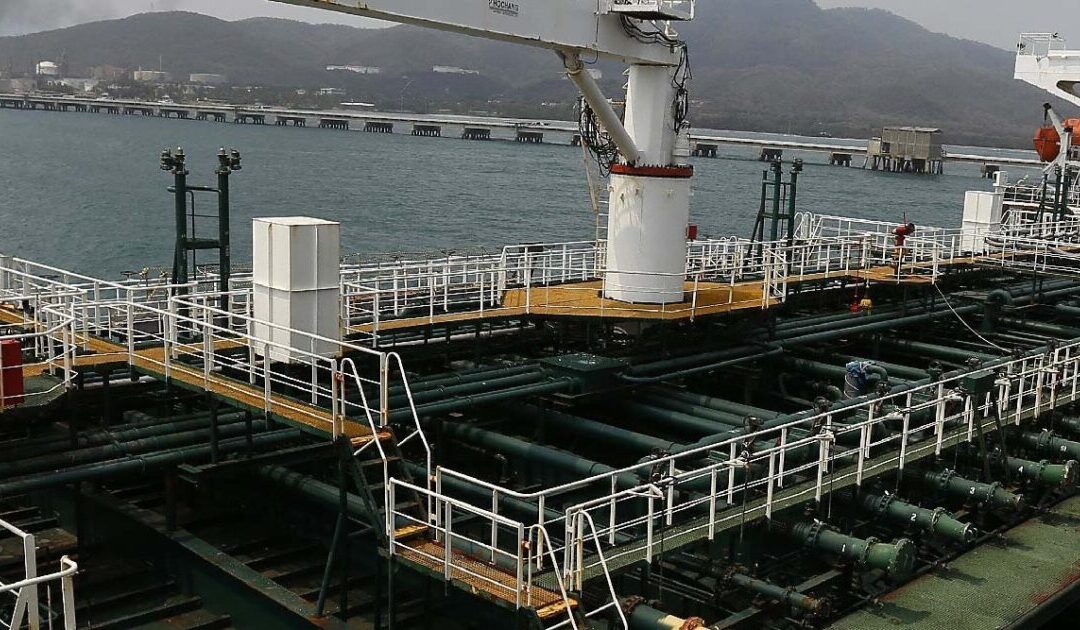
Following the removal of Maduro on January 3, 2026, President Trump signed Executive Order 14373 on January 9, declaring a national emergency to safeguard Venezuelan oil revenues. The order exempts funds held in U.S. Treasury Foreign Government Deposit Funds from judicial proceedings, blocking creditor seizures and placing oil revenues under U.S. control. It authorizes the Department of Energy to sell seized or turned-over Venezuelan crude, with initial targets of 30–50 million barrels, while Treasury maintains sanctions but issues licenses allowing exports to the U.S. Gulf Coast to ensure proceeds bypass sanctioned individuals.
Trump stated that Venezuela would turn over up to 50 million barrels of oil to the United States as partial repayment. The first sale, valued at approximately $500 million, was completed in mid-January 2026. Reports indicate that proceeds were routed into offshore accounts, including at least one in Qatar, rather than being held solely in U.S. Treasury accounts. Venezuela reportedly received about $300 million through local banks, while the bulk of the funds remains under U.S. control.
The administration argues that routing Venezuelan oil revenues into offshore accounts protects the funds from creditor seizures while allowing the executive branch to control allocation for debt repayment, infrastructure reconstruction, and humanitarian aid. Qatar has emerged as a key location for these accounts due to its role as a neutral financial hub with strong U.S. ties and its ability to facilitate transactions outside direct U.S. jurisdiction.
Critics argue that the structure is unconstitutional, citing Article I, Section 9 of the Constitution, which grants Congress control over spending, and warning that offshore accounts lack the transparency required when U.S. resources are involved. To date, however, no court has ruled on the legality of the arrangement.
The executive order invokes national-security authorities under the International Emergency Economic Powers Act, asserting that the funds serve public sovereign purposes. Supporters counter that the approach mirrors past U.S. handling of frozen assets from Iraq and Afghanistan, where presidents exercised broad discretion over foreign assets as part of foreign-policy and national-security decision-making.
The administration is pressuring U.S. oil companies to reinvest in Venezuela as a condition for recovering arbitration and bond claims, effectively prioritizing U.S. creditors in any restructuring. President Trump has argued that Venezuelan oil production could be restored within 18 months with U.S. support, calling on companies to invest an estimated $100–180 billion of their own capital to rebuild infrastructure, modernize extraction, and raise output from roughly 800,000 barrels per day to historical levels exceeding 3 million barrels per day.
ExxonMobil and ConocoPhillips are in discussions but have signaled they will not commit new capital without restitution for past losses. Halliburton and SLB are expected to supply equipment for refinery rehabilitation.
Despite these efforts, major firms remain cautious, with Exxon describing Venezuela as effectively uninvestable due to political instability and low oil prices. Caracas has introduced a new oil bill offering improved contract terms to attract foreign investors, though it stops short of fully enabling the administration’s plan. The proposed model shifts toward Production Sharing Agreements, allowing U.S. companies to recover costs and profits through a share of output while Venezuela retains sovereignty and receives royalties, taxes, and revenue shares. Proceeds from oil sales are held in U.S.-controlled accounts, with distributions expected to prioritize repayment to U.S. creditors, infrastructure rebuilding in Venezuela, and returns for participating companies.
For the United States, offshore accounts allow the administration to prioritize repayment to American creditors while potentially expanding global oil supply. Increased Venezuelan production would give U.S. companies access to the world’s largest proven oil reserves, boost American energy firms, and could lower global oil prices and U.S. gasoline costs. The strategy would enable repayment of billions owed to U.S. investors, generate jobs across the U.S. energy sector, and reduce Chinese and Russian influence in Latin America.
For Venezuela, the funds are intended to support economic recovery, with the first $300 million already disbursed for local needs. U.S. investment could revive a collapsed oil industry, generate employment, restore fiscal revenues, and address humanitarian shortfalls. Proponents argue that post-Maduro political stability, combined with debt restructuring and U.S. oversight, could attract additional foreign capital, stabilize the bolívar, modernize refineries and the electricity grid, and raise living standards while limiting corruption that plagued prior regimes.
We use technologies like cookies to store and/or access device information. We do this to improve browsing experience and to show (non-) personalized ads. Consenting to these technologies will allow us to process data such as browsing behavior or unique IDs on this site. Not consenting or withdrawing consent, may adversely affect certain features and functions.
Functional
Always active
The technical storage or access is strictly necessary for the legitimate purpose of enabling the use of a specific service explicitly requested by the subscriber or user, or for the sole purpose of carrying out the transmission of a communication over an electronic communications network.
Preferences
The technical storage or access is necessary for the legitimate purpose of storing preferences that are not requested by the subscriber or user.
Statistics
The technical storage or access that is used exclusively for statistical purposes.The technical storage or access that is used exclusively for anonymous statistical purposes. Without a subpoena, voluntary compliance on the part of your Internet Service Provider, or additional records from a third party, information stored or retrieved for this purpose alone cannot usually be used to identify you.
Marketing
The technical storage or access is required to create user profiles to send advertising, or to track the user on a website or across several websites for similar marketing purposes.