Trump’s China Trade War Deepens Beijing’s Economic Vulnerability – Implications for a Taiwan War

Trump’s China Trade War Deepens Beijing’s Economic Vulnerability – Implications for a Taiwan War

Trump’s China Trade War Deepens Beijing’s Economic Vulnerability – Implications for a Taiwan War
February 26, 2026
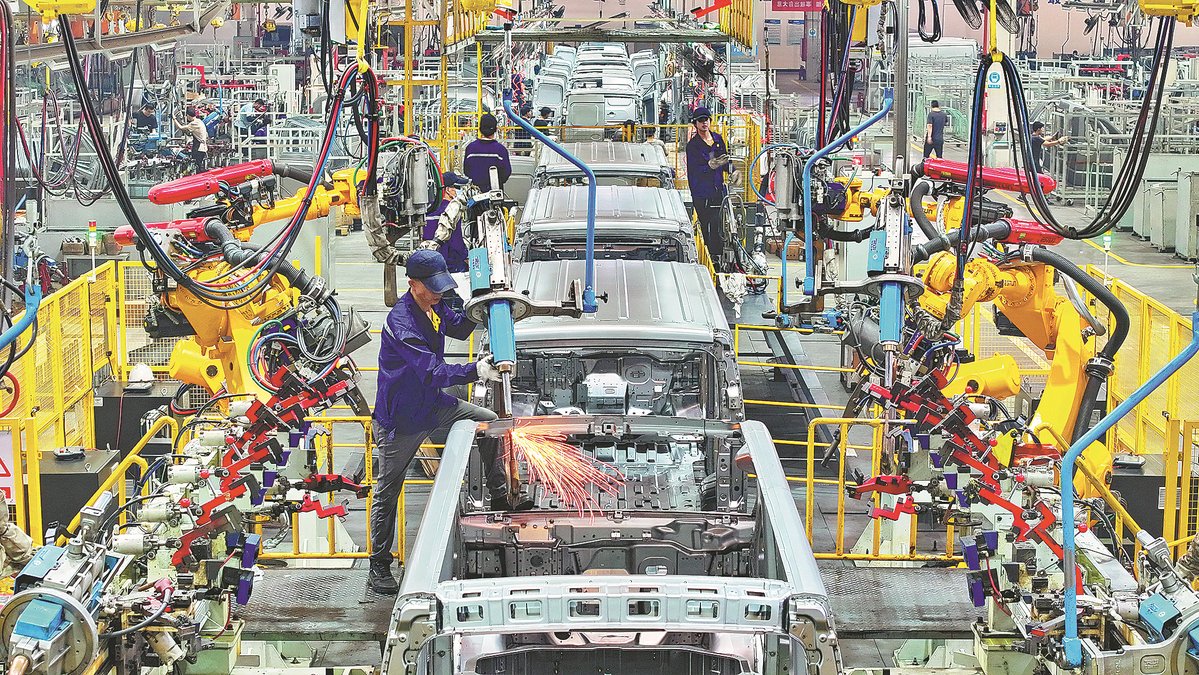
Automotive assembly line featuring workers and robotic arms engaged in vehicle manufacturing with sparks flying from welding operations.
Photo courtesy of China Daily

As of February 2026, U.S. tariffs have significantly slowed China’s economic growth without collapsing its export sector.

Direct exports to the United States fell roughly 20 percent in 2025, but China offset much of that loss by redirecting trade, reaching a record $1.2 trillion trade surplus by early 2026.

Exports surged to ASEAN by 13 percent, Africa by 26 percent, and Latin America by 7 percent, cushioning the blow from the U.S. market.

Some goods continue to be routed through intermediary countries such as Vietnam and Mexico to avoid China-origin tariffs, a practice Washington is increasingly targeting.

The more meaningful damage is visible in growth and profitability. Economists estimate that cumulative U.S. tariff actions since 2025 have reduced China’s annual GDP growth rate by approximately 1.5 percentage points, or 150 basis points.

This refers to a direct reduction in the headline growth rate. For example, if baseline growth had been 6 percent, a 1.5 percentage point drag lowers it to about 4.5 percent.

Current projections place China’s 2026 GDP growth between 4.5 and 4.8 percent, below the long-standing 5 percent-plus targets and reflective of cooling industrial momentum.

During the peak of the 2025 emergency tariffs, the drag was estimated at 2.5 to 3 percentage points, pushing growth toward 4 percent.

After the February 20, 2026 Supreme Court ruling struck down the IEEPA-based emergency tariffs and replaced them with a 15 percent Section 122 global surcharge effective February 24, the drag moderated to roughly 1.5 percentage points.

Despite record trade volumes, structural weaknesses are deepening. To remain competitive under tariff pressure, Chinese factories have cut prices aggressively, contributing to persistent producer price deflation and squeezing manufacturing profits.

Low-margin final assembly operations are shifting abroad to avoid the China-origin label, contributing to gradual manufacturing hollowing. Meanwhile, foreign direct investment remains weak as companies delay long-term commitments amid trade uncertainty.

In sum, U.S. tariffs have not crushed China’s export machine, but they have reduced growth, compressed profits, and intensified structural strain.

Beijing has preserved trade volume through diversification, yet the quality and profitability of that trade have declined, leaving the economy more vulnerable even as surplus figures reach record highs.

The idea that the trade war deepens China’s economic vulnerability and influences the likelihood of a Taiwan conflict has become central to 2026 geopolitical analysis.

Although Beijing has pivoted toward a “fortress economy” strategy, cracks have emerged. China enters 2026 grappling with a fragile property sector, high youth unemployment, and massive local government debt.

The trade war compounds these pressures by constraining the export engine Beijing relies on to offset weak domestic demand.

The “Silicon Shield” theory holds that Taiwan’s dominance in advanced semiconductor manufacturing, producing roughly 92 percent of the world’s most advanced chips, makes war prohibitively costly for China. In 2026, however, that assumption is being tested by competing pressures.

Economists estimate that even a limited conflict or blockade in the Taiwan Strait could trigger between $2 trillion and $10 trillion in global economic losses. Beijing understands that such a shock could destabilize its economy and strain the social contract tied to rising living standards.

At the same time, U.S. Commerce Secretary Howard Lutnick has pressed to bring 40 percent of Taiwan’s semiconductor supply chain to the United States by 2029.

While intended to reduce American exposure, some analysts argue that decreasing global dependence on Taiwan could unintentionally weaken the very “Silicon Shield” that has helped deter conflict.

The relationship between economic vulnerability and the risk of war is a double-edged sword. One school of thought argues economic deterrence: Beijing’s fragility makes a full-scale invasion unlikely in 2026.

The CCP’s legitimacy is tied to economic stability, and a war triggering near-total embargoes and disrupting roughly 20 percent of GDP tied to exports could generate domestic unrest threatening party control.

The opposing view is the “cornered tiger” risk. If trade war pressures and technology decoupling continue degrading China’s industrial base, Beijing may conclude time is not on its side.

If leaders believe the United States will eventually achieve escalation dominance or permanently alter Taiwan’s status through policy shifts, they may choose to act while they still perceive relative military parity.

A complicating factor is the Trump administration’s more transactional posture, at times framing Taiwan within broader trade negotiations.

This has created strategic anxiety in Taipei, even as Washington has approved record $11 billion arms packages for the island.

High tariffs have reduced China’s growth and contributed to capital flight, while potentially lowering the likelihood of war due to CCP concerns about economic destabilization.

Conversely, technology decoupling has restricted China’s access to advanced AI and high-end semiconductors, which could increase the risk of conflict if Beijing believes its window of opportunity is narrowing.

Ultimately, while the trade war has made China more economically vulnerable, it has also increased geopolitical unpredictability.

The post Trump’s China Trade War Deepens Beijing’s Economic Vulnerability – Implications for a Taiwan War appeared first on The Gateway Pundit.

Go to Source
Author: Antonio Graceffo
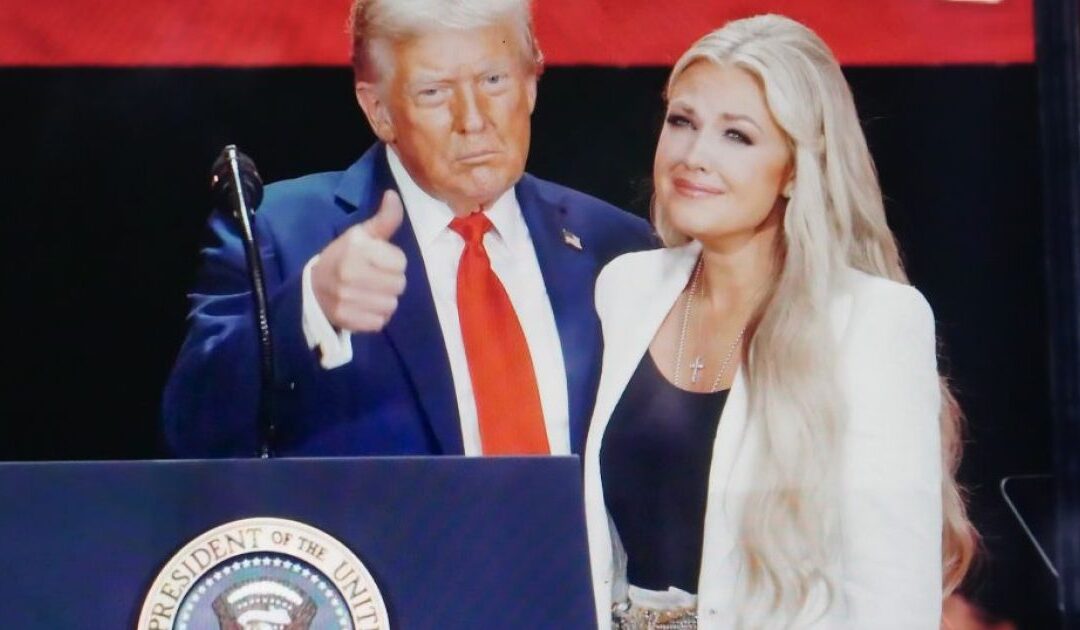
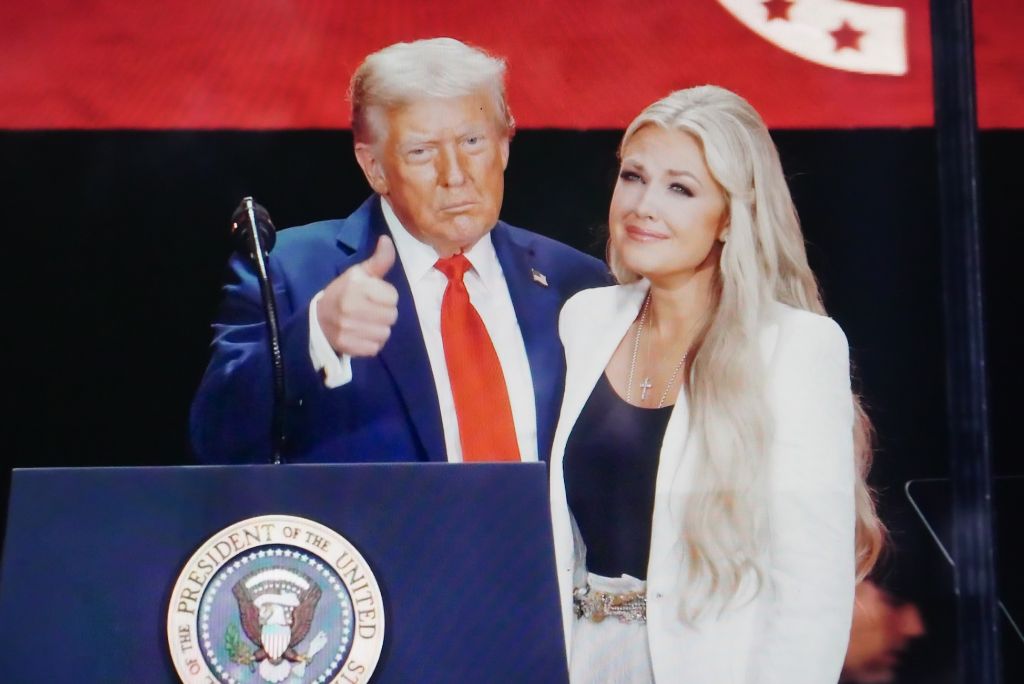
Trump Honors Erika Kirk at the 2026 State of the Union and Introduces Her as the Widow of Charlie Kirk, “Martyr of Freedom”

Trump Honors Erika Kirk at the 2026 State of the Union and Introduces Her as the Widow of Charlie Kirk, “Martyr of Freedom”

Trump Honors Erika Kirk at the 2026 State of the Union and Introduces Her as the Widow of Charlie Kirk, “Martyr of Freedom”
February 26, 2026

Go to Source
Author: Gateway Hispanic

Focus Group Member on Democrats at SOTU: ‘They Gave a Middle Finger to the Oath of Office They Took’ (VIDEO)

Focus Group Member on Democrats at SOTU: ‘They Gave a Middle Finger to the Oath of Office They Took’ (VIDEO)

Focus Group Member on Democrats at SOTU: ‘They Gave a Middle Finger to the Oath of Office They Took’ (VIDEO)
February 26, 2026

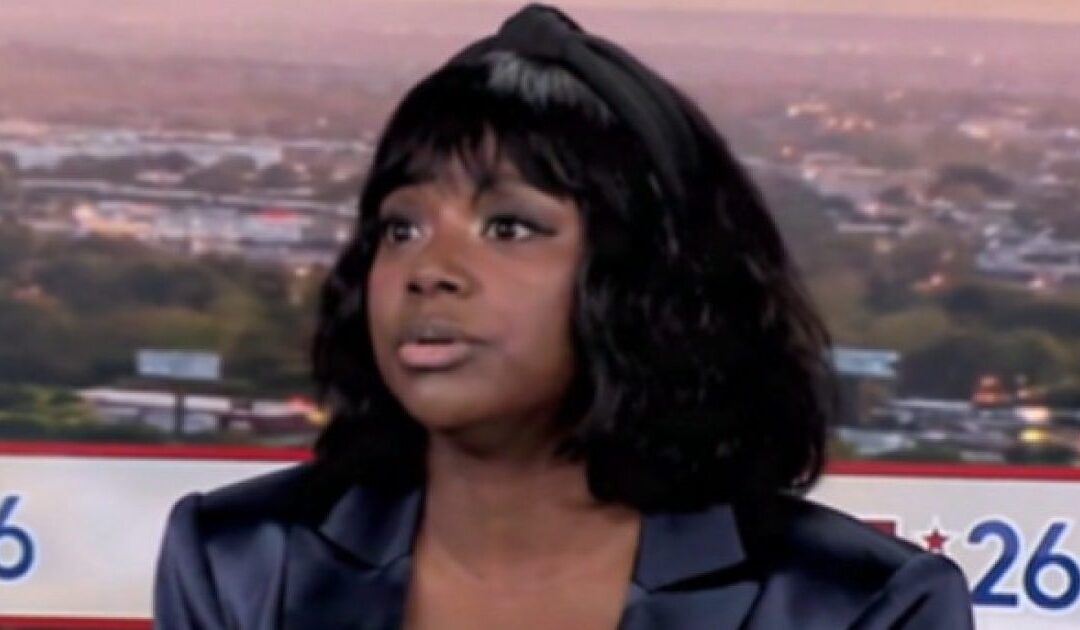
Screencap of Twitter/X video.

Today on the Will Cain Show, a focus group made up of voters of varying backgrounds reacted to Trump’s State of the Union address.

One member, a young woman named Ajua Mason, who is a Republican, reacted to the behavior of Democrats during the speech by saying that they “gave a middle finger to the oath of office that they took.”

It’s really a perfect description of what the Democrats did. It was a disgusting display on multiple levels.

Transcript via Real Clear Politics:

WILL CAIN, FOX NEWS HOST: Democrats, but do you think there’s anything deeper to the fact that they would not stand in that moment when they were describing the job of an American congressman?

TAMMY WOODARD, REPUBLICAN VOTER: I do. I think it’s shameful that they wouldn’t stand. I mean, what is their job but to represent us and our interests first above anything else? And to not be able to just stand for that, it’s, it’s just wrong. It doesn’t make them look good.

AJUA MASON, REPUBLICAN VOTER: The way I viewed it last night watching it is that they gave a middle finger to the oath of office that they, that they took. In fact, their new oath of office is oppose Trump on anything, on any situation. The one thing that they seem to want to come together on is to oppose Trump. Trump could find a cure for cancer and they would, they would find a reason to disagree with it.

CAIN: Yeah.

MASON: And I don’t know if that is just their strategy to get them through the midterm or whatever, but I think that if, if it’s just about opposing Trump, I don’t think that the people that elected them sent them there to do that. Number one, it is about the American people first. You got to take care of home. You got to take care of your family before you can take care of, or try to help to take care of someone else’s.

Here’s the video:

Perfectly stated.

Democrats should listen to this young woman. She has more common sense than all of them combined.

The post Focus Group Member on Democrats at SOTU: ‘They Gave a Middle Finger to the Oath of Office They Took’ (VIDEO) appeared first on The Gateway Pundit.

Go to Source
Author: Mike LaChance

Sen. Mike Lee BLASTS RINOs After Thune Admits Senate Republicans “NOT UNIFIED” on Talking Filibuster to Pass SAVE Act

Sen. Mike Lee BLASTS RINOs After Thune Admits Senate Republicans “NOT UNIFIED” on Talking Filibuster to Pass SAVE Act

Sen. Mike Lee BLASTS RINOs After Thune Admits Senate Republicans “NOT UNIFIED” on Talking Filibuster to Pass SAVE Act
February 25, 2026

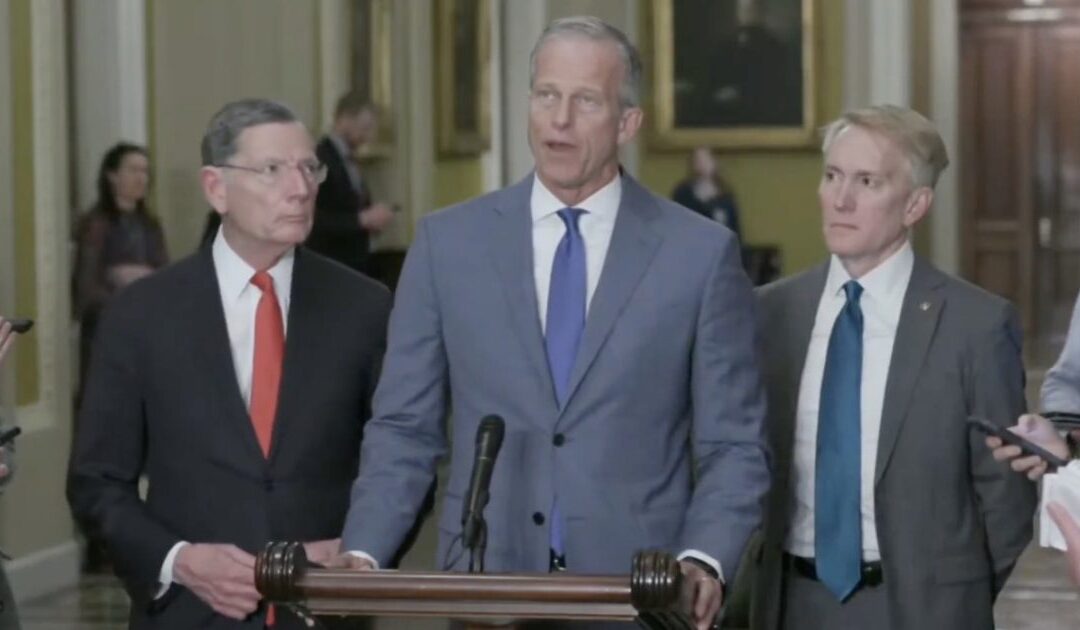
Senators John Thune, Wyoming, and others speak at a press conference in the U.S. Capitol, addressing key legislative issues.

The Republican establishment is at it again, and the grassroots are losing patience.

Despite a mandate from the American people to secure our elections, Senate Majority Leader John Thune (R-SD) admitted on Wednesday that the Republican conference is “not unified” on using the talking filibuster to force a vote on the SAVE Act.

And one senator isn’t taking the disunity lightly.

Sen. Mike Lee (R-UT) immediately blasted members of his own party for what he implied was silent obstruction of one of the GOP’s top election integrity priorities, calling on reluctant Republicans to stop hiding behind closed doors and make their opposition public.

Speaking to reporters amid the ongoing government shutdown, Thune acknowledged that Republicans currently lack the internal cohesion necessary to execute a procedural maneuver as aggressive as a talking filibuster to muscle the SAVE Act through the Senate.

Thune warned that pursuing such a strategy would require near-perfect unity across all 50 Republican senators to repeatedly table Democrat amendments.

He also emphasized that leadership is prioritizing reopening DHS before committing to the legislative brawl that a filibuster showdown over election law would almost certainly trigger.

JOHN THUNE:
There are a couple of things about that. One is, once we get on—if we were to go down that path—it’s very hard to pivot and get back to opening up the government. I frankly think we ought to.

We need to make sure the DHS, TSA, Coast Guard, FEMA—all those agencies—are funded. And so I’m hopeful there will be a breakthrough on that. That’s going to require some, obviously, cooperation from the Democrats, which we haven’t seen a lot of so far. But we want to get to the SAVE Act.

We also, as I mentioned, have got a housing bill that we can pivot back and forth to if we get a deal to open up the government. That’s harder to do once you’re in the throes of a talking filibuster. The talking filibuster issue is one on which there is not certainly a unified Republican conference and there would have to be.

If you go down that path, you’re talking about the need to table what are going to be numerous amendments and an ability to keep 50 Republicans unified pretty much on every single vote. And there isn’t support for doing that at this point.

As I’ve said, and we will, we will get on it, and we will have a vote on the SAVE Act. The context of that, the process in which we consider it, is still an open question, but one that we’re having conversations about. But clearly, there is not a unified position, at least among Republicans in the Senate.”

A reporter pressed Thune on whether the SAVE Act could ultimately be subject to the Senate’s 60-vote threshold:

Reporter: “But it sounds like that might be subject to a 60-vote threshold — is that what you’re saying?”
Thune: “I think that’s obviously a variable possibility.”

WATCH:

Senator Mike Lee (R-UT) didn’t hold back. Taking to X, Lee called out his colleagues for their cowardice and demanded that those blocking the SAVE Act to come forward and make their case.

“Not unified on using the talking filibuster to pass the SAVE America Act? It’s time to *get* unified.

We can’t afford the consequences of inaction.

GOP senators who aren’t supportive should identify themselves & make their case—rather than silently stalling.”

It can be recalled that Lee announced that he had secured 50 Senators to support the motion to proceed on the House-passed version of the SAVE Act (Safeguard American Voter Eligibility Act).  Senator Lee laid out the exact roadmap to bypass the obstructionist swamp and get this bill across the finish line.

The strategy? The Talking Filibuster, which requires lawmakers to stand, speak, and publicly defend their obstruction.

It’s time for the “silent stallers” to listen to Senator Lee: Identify yourselves or get out of the way.

The post Sen. Mike Lee BLASTS RINOs After Thune Admits Senate Republicans “NOT UNIFIED” on Talking Filibuster to Pass SAVE Act appeared first on The Gateway Pundit.

Go to Source
Author: Jim Hᴏft

Greg Gutfeld Rips Ilhan Omar Over Her Behavior During Trump’s SOTU Speech: ‘She Repulses Me’ (VIDEO)

Greg Gutfeld Rips Ilhan Omar Over Her Behavior During Trump’s SOTU Speech: ‘She Repulses Me’ (VIDEO)

Greg Gutfeld Rips Ilhan Omar Over Her Behavior During Trump’s SOTU Speech: ‘She Repulses Me’ (VIDEO)
February 25, 2026

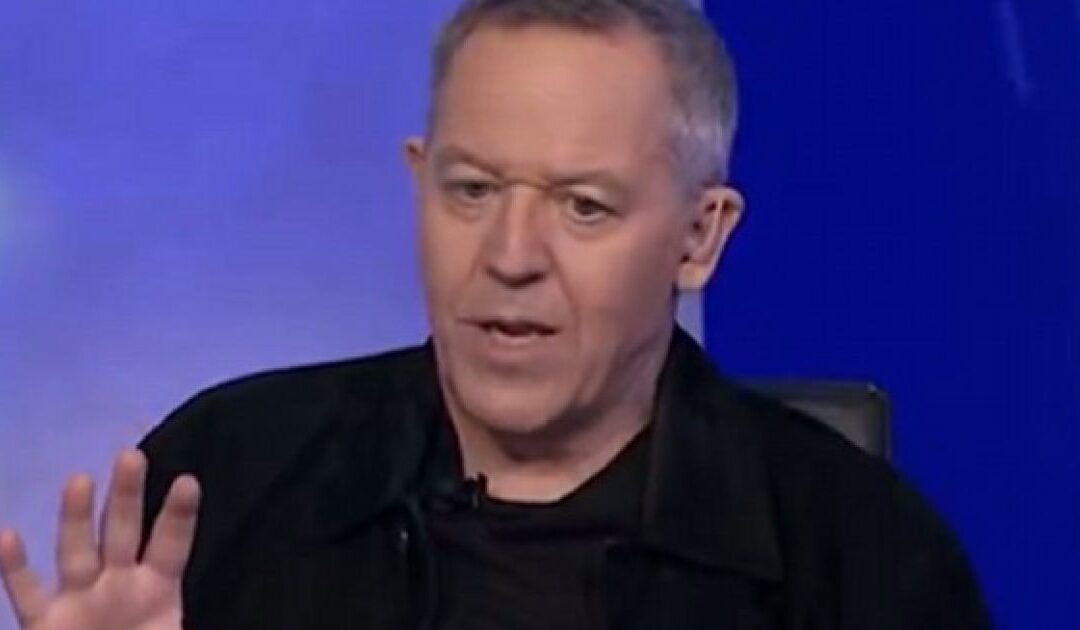
Screencap of Twitter/X video.

During The Five on FOX News today, host Greg Gutfeld tore into Rep. Ilhan Omar over her unhinged behavior during Trump’s State of the Union address last night.

He began the segment by talking about all of the disgusting behavior of Democrats but eventually zeroed in on Omar, saying ‘She Repulses me.’

Gutfeld pointed out that Omar is lucky to be in America at all, and that she really has no right to walk around being constantly angry at the country that has shown her such hospitality. Greg spoke for millions of people here.

Meaww News reports:

On Fox News’ ‘The Five’, Gutfeld strongly criticized Omar, saying, “I had to point out Ilhan Omar. She repulses me, and I’m trying to find out why, because she’s not unattractive.”

He went on to question her behavior, gestures, and public statements. He claimed they reflect anger and negativity.

“She has an unusual amount and kind of anger. She has no right to that level of rage in the United States of America, the country who gave her corrupt a** a new life. It’s not like she’s a homeless Vietnam vet who can’t get services and should be enraged at the government. She should be kissing the ground she walks on instead of spitting on it,” he stated…

“And her anger also reminds me of the radical who, given power, would destroy you. She would show no mercy for you if you were below her,” he expressed, adding, “The look on her face is somebody who would step on your neck instead of giving you a hand.”

“And that is not the kind of person we should have in our leadership. It’s not the type of person we should have in this country, and if we find out that she screwed up on her immigration stuff, she’s got to go,” Gutfeld stressed.

Watch the video below:

Everyone was pretty much grossed out by Ilhan Omar’s behavior. More and more, people are starting to ask the same question. Why is she even here?

She clearly hates America, our culture and our history. So why does she stay here?

The post Greg Gutfeld Rips Ilhan Omar Over Her Behavior During Trump’s SOTU Speech: ‘She Repulses Me’ (VIDEO) appeared first on The Gateway Pundit.

Go to Source
Author: Mike LaChance