Closing the Strait of Hormuz: Tehran’s Actions Match the Definition of Terrorism

Closing the Strait of Hormuz: Tehran’s Actions Match the Definition of Terrorism

Closing the Strait of Hormuz: Tehran’s Actions Match the Definition of Terrorism
March 19, 2026

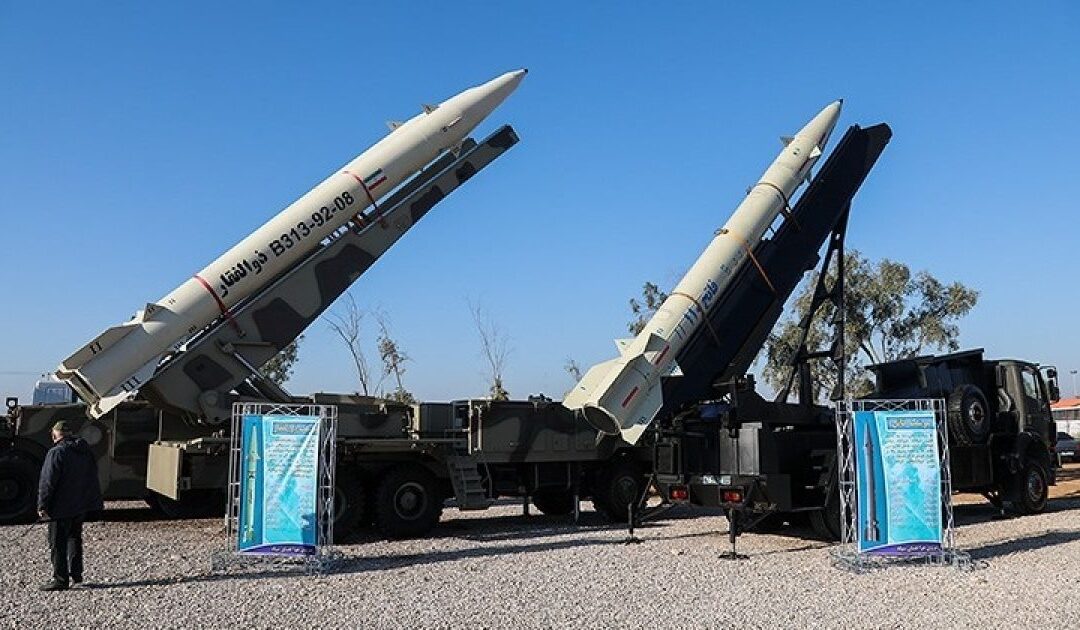
Military missiles displayed on launch vehicles at an outdoor exhibition under a clear blue sky, showcasing advanced defense technology.
Exhibition of military equipment of the Islamic Revolutionary Guard Corps Aerospace Force. Photo: Tasnim News Agency, CC BY 4.0, via Wikimedia Commons.

Since the U.S.-Israeli strikes on Iran began, Iran has been holding the world’s oil supply hostage in the Strait of Hormuz and has been launching missile and drone strikes on its neighbors. While critics argue that this is a response to the allied strikes on Iran, these attacks are directed at countries other than the United States and Israel, which by definition matches the definition of terrorism.

Closing or threatening the strait does not hurt the United States or Israel. The U.S. is energy-independent, and Israel does not depend on the strait. The countries harmed are European nations, as well as Japan, South Korea, the Philippines, and developing economies across Asia and Africa that import the majority of their energy through that chokepoint. Those countries have no involvement in the U.S.-Israeli operation against Iran whatsoever. Iran is holding their economies hostage to coerce a political outcome that benefits Tehran.

That is state-sponsored terrorism under the Academic Consensus Definition, the most widely accepted framework, consistent with definitions used by the U.S. State Department, the United Nations Security Council under Resolution 1566 (2004), and the European Union under its Council Framework Decision on Combating Terrorism (2002/475/JHA), updated by EU Directive 2017/541.

All of these define terrorism as criminal acts against civilians or uninvolved parties committed with the intent to intimidate a population or compel a government or international organization to act or abstain from acting.

In a war, a country launches attacks and counterattacks against the country it is fighting. In terrorism, a country launches attacks against other countries in the hope of bringing about a negotiated solution that provides benefits to Tehran and leaves the regime in a position to close down the strait or sponsor the Houthis to do the same in the Red Sea any time it wishes.

Critics of the U.S. actions against Iran claim that the Trump administration failed to demonstrate that the United States was under an imminent threat of attack from Iran. However, Iran’s threat to the United States was real, documented, and had been building for years before the U.S. and Israel launched Operation Epic Fury on February 28, 2026. The threat operated on three levels: an active proxy network killing Americans on a continuous basis, a proven missile and drone arsenal that Iran had already used in combat, and a nuclear program advancing toward weaponization with inspectors blocked from monitoring it.

The most immediate and lethal threat came from Iran’s proxies. Hezbollah, Hamas, Kata’ib Hezbollah, the Houthis, and affiliated militias across Iraq and Syria had been killing Americans for years. Between October 2023 and November 2024 alone, Iran and its proxies conducted more than 180 attacks against U.S. forces in the Middle East, wounding more than 180 service members.

In January 2024, Kata’ib Hezbollah killed three Army Reserve soldiers from Georgia and wounded 34 others in a drone strike on Tower 22, a U.S. logistics base in Jordan, the highest death toll for U.S. troops in the region in at least a decade.

In March 2023, an Iranian drone killed an American contractor and wounded five U.S. service members at a coalition base in Syria. On October 7, 2023, Iran-backed Hamas killed 46 Americans and kidnapped at least 12 more. The Department of War had previously documented that Iranian-backed militias killed at least 608 U.S. troops in Iraq between 2003 and 2011, roughly one in six American combat fatalities during that period. What changed in the decade before Epic Fury was the weapons. EFPs and IEDs gave way to drones, rockets, and ballistic missiles.

Iran fired direct ballistic missile and drone strikes at Israel in April and October 2024, penetrating regional air defenses. U.S. officials stated Iran was producing 100 missiles per month, with the goal of ramping production to the point where the volume of incoming projectiles would overwhelm defensive systems. Israel calculated that Iran aimed to expand its ballistic missile inventory capable of reaching Israel from roughly 2,000 to 10,000, a threshold at which interception becomes unreliable.

China was supplying propellants, guidance systems, and missile components to sustain and accelerate that buildup. Iranian-supplied drones had also been used in Yemen, Iraq, Syria, and by Russia against Ukraine, demonstrating both the scale of production and Iran’s willingness to transfer weapons to active combat theaters.

The nuclear program added a longer-range dimension. By February 2025, Iran’s breakout time, the period required to produce enough fissile material for a weapon, had fallen from more than one year under the JCPOA to one week or less. Iran had accumulated 440 kilograms of uranium enriched to 60 percent purity by early 2026, enough for up to 10 weapons if further enriched to the 90 percent weapons-grade threshold. The Institute for Science and International Security calculated that Iran could have converted that stockpile into weapons-grade uranium for nine nuclear weapons in three weeks at the Fordow facility alone, with the first quantity achievable in two to three days. Iran had no civilian justification for producing 60 percent enriched uranium at that volume.

Diplomacy had also collapsed. Khamenei rejected nuclear talks in early 2025, restricted IAEA inspectors, and announced a new hardened enrichment facility. The IAEA could not verify the status or location of Iran’s enriched uranium stockpile because Iran had withdrawn the designation of experienced inspectors in a move the agency described as political and contrary to the intent of the safeguards framework.

The nuclear threat would have compounded everything else. Iran’s calculation, visible in the pattern of its investments, was to rebuild its nuclear program behind the cover of an expanded missile arsenal, using missile volume to deter another strike while centrifuges spun. A nuclear-armed Iran would have made its proxy network and missile forces effectively untouchable. The U.S. acted before that window closed.

Critics argued the administration did not demonstrate imminence under international law. However, Secretary of State Rubio offered a different framing: Israel was going to strike Iran regardless, and when it did, Iran would target U.S. assets, making a preemptive U.S. strike justified on those grounds. The administration offered multiple justifications at different times, which critics noted undermined the legal case even where the underlying threat data was solid.

The threat record stands on its own. Iran had killed Americans continuously through proxies, had fired ballistic missiles directly at a U.S. ally, was producing missiles at scale with Chinese assistance, had blocked international nuclear inspections, and had accumulated enough near-weapons-grade uranium for multiple bombs. Whether that constitutes legal imminence is a question of international law. Whether it constitutes a serious and compounding threat to American forces and interests is not in dispute.

The post Closing the Strait of Hormuz: Tehran’s Actions Match the Definition of Terrorism appeared first on The Gateway Pundit.

Go to Source
Author: Antonio Graceffo

NATO Allies? Denmark Prepared to Destroy Greenland’s Airfields & Sabotage Key Infrastructure Amid Fears of US Takeover

NATO Allies? Denmark Prepared to Destroy Greenland’s Airfields & Sabotage Key Infrastructure Amid Fears of US Takeover

NATO Allies? Denmark Prepared to Destroy Greenland’s Airfields & Sabotage Key Infrastructure Amid Fears of US Takeover

March 19, 2026

A dramatic and previously classified standoff between two founding NATO allies has come to light, revealing that Denmark spent the early weeks of this year preparing for a potential American military seizure of Greenland.

New reporting from Danish media indicates that what the public was told was a routine “Arctic Endurance” exercise was, in fact, a desperate defensive posture. 

Faced with the reality of a superpower willing to act unilaterally to secure its interests, Danish officials were forced to confront a chilling truth: in the modern era, national sovereignty is only as strong as a country’s willingness to defend it.

According to defense and intelligence sources cited by Danish broadcaster DR, the crisis peaked in January. High-level officials in Copenhagen concluded that repeated statements from the Trump administration regarding the acquisition of Greenland could no longer be dismissed as mere rhetoric.


The atmosphere within the Danish Ministry of Defense was reportedly one of “emergency,” with one source drawing an extraordinary historical parallel to April 1940—the month Nazi Germany launched its occupation of Denmark.

Behind the scenes, the Danish response was swift and calculated. Under the cover of a military drill, elite units were deployed to the island with a grim “scorched-earth” directive. 

Sources confirm the troops were equipped with explosives specifically intended to sabotage key infrastructure, including the runways at Nuuk and Kangerlussuaq, to deny any invading force immediate operational use of the territory.

Recognizing that Denmark could not stand alone against a determined United States, Copenhagen moved to “internationalize” the cost of any American move.

By quietly embedding French, German, Norwegian, and Swedish forces into the Greenland theater, Denmark ensured that any attempt to seize the island would trigger a broader European confrontation. 

This strategic maneuver was designed to force Washington to weigh the benefits of Greenland against the total collapse of the Western security architecture.

“It was a real deployment, not an exercise,” one military official told DR. “We had to take every scenario seriously, especially after seeing how decisively Washington acted in places like Venezuela.”

For many analysts, the Greenland standoff serves as a post-mortem for the post-Cold War “liberal order.” The episode highlights a growing shift toward national conservatism, where strategic self-interest and border integrity override the vague promises of international alliances.

“Alliances built on shared rhetoric can fracture the moment national interests collide,” noted one security critic. “Denmark learned the hard way that a nation that relies solely on others for its protection is a nation in name only.”

The immediate tension appeared to break on January 21, when a “framework” agreement was announced between Washington and NATO leadership. 

Shortly thereafter, the alliance launched “Arctic Sentry,” a regional mission that saw Danish and American forces return to operating side by side.

However, the scars of the standoff remain. The fact that a NATO member seriously contemplated blowing up its own infrastructure to keep out an “ally” underscores a new, more cynical era of global politics.

The post NATO Allies? Denmark Prepared to Destroy Greenland’s Airfields & Sabotage Key Infrastructure Amid Fears of US Takeover appeared first on The Gateway Pundit.

Go to Source
Author: Robert Semonsen

WATCH: No-Nonsense Judge TORCHES Violent Teen Robber and Gives Him a Harsh Sentence, Causing Thug’s Family to Completely Lose It

WATCH: No-Nonsense Judge TORCHES Violent Teen Robber and Gives Him a Harsh Sentence, Causing Thug’s Family to Completely Lose It

WATCH: No-Nonsense Judge TORCHES Violent Teen Robber and Gives Him a Harsh Sentence, Causing Thug’s Family to Completely Lose It
March 19, 2026

Judge Raquel West delivers a harsh sentence to a teen robber. Credit:
KFDM YouTube
screenshot

A violent thug and his family were left in shock after a Texas judge tore into him and delivered a just punishment for his horrific crime.

As KFDM reported on Tuesday, 18-year-old Caden Fontenette of Port Arthur faced sentencing last week for his October 10 robbery of a convenience store. Fontenette and two other youths held up and assaulted a clerk at the Bulldog Convenience Store in Nederland that morning while brandishing guns.

Mugshot of a young man wearing an orange prison uniform, displaying a serious expression against a neutral background.
Caden Fontenette Credit: Jefferson County Sheriff’s Office

This shocking crime comes as Port Arthur experiences an epidemic of violent crime.

252nd Criminal District Court Judge Raquel West, who was presiding over the sentencing, knew that a slap on the wrist would not cut it and decided that the only way to teach Fontenette a lesson was to give him a truly harsh, deserved punishment.

Before sentencing him, the judge noted how even state’s attorneys were previously coddling youthful criminals committing similar crimes. She then showed empathy for Fontenette’s victims while blasting the truly wicked nature of his crime.

Judge West went on to torch Fontenette for fighting others in jail, a perfect example of his lack of remorse and maturity.

After this, she sentenced Fontenette to 25 years behind bars, a decision that left his stunned family in hysterics and tears.

They had to be removed from the courtroom before West could finish explaining why she delivered such a lengthy sentence.

WATCH:

WEST: Mr. Fontenette, there was a time some years ago there wasn’t really a question. Everyone, State’s Attorneys, were recommending youthful offenders probation. Give everybody an opportunity. Things have just changed in such an incredibly dangerous way, with young people doing what I just saw you do on that screen.

I cannot imagine the fear that person had that was working in that store. Just trying to go to work, make a living and go home.

And he has three people come in and not just grab a quick something and run out, but terrorize him for quite some time, pulling him around, yanking him around, putting guns in his face. All three of you.

In addition…The jail incident reports show you apparently like to fight and jump on people, which is what has been happening in the jail.

So it makes it very difficult for me to go, “This is somebody that’s going to get out and behave, who can follow the rules,” because you can’t even follow the rules in jail.

The pre-sentence report shows you’re at a high-risk level. That tells me that after they looked at everything, you don’t, unfortunately, have a good likelihood of being successful if I were to put you on probation.

We’re tired of it, and there’s gotta be something done…I’m going to find you guilty of aggravated robbery. I’m going to sentence you to a term of 25 years in an institutional division.

(Family cries and is escorted out of the courtroom)

As The Daily Mail notes, Judge West explained to Fontenette that while the sentence was brutal, he still had enough time to turn his life around.

“Mr. Fontenette, I understand that this is harsh, and I know you believe that this is harsh, but I think that this is necessary,” West stated. “You’re still going to be young, and you can make your life better.”

“That’s going to be up to you.”

KFDM notes that Fontenette must serve at least half of his sentence before he’s eligible for parole.

The post WATCH: No-Nonsense Judge TORCHES Violent Teen Robber and Gives Him a Harsh Sentence, Causing Thug’s Family to Completely Lose It appeared first on The Gateway Pundit.

Go to Source
Author: Cullen Linebarger

“Occupied Homeland,” a Film Inspired by Iranian Regime Massacres

“Occupied Homeland,” a Film Inspired by Iranian Regime Massacres

“Occupied Homeland,” a Film Inspired by Iranian Regime Massacres
March 19, 2026

Protests featuring flags, smoke, and clashes between demonstrators and police in a tense urban setting.
The 2022 Woman, Life, Freedom movement marked a turning point when Iranians became more unified against the regime. The 2026 protests were the beginning of a new revolution.

On Friday, February 20, anti-regime journalist Morad Vaisi went live on YouTube and read the names, ages, and cities of 1,044 Iranian children killed by the Islamic Republic during the 2026 uprising. It took him 4 hours and 18 minutes to read them all.

Morad Vaisi, also spelled Veisi, is a senior Iran analyst at Iran International, where he hosts the program Politics with Morad Vaisi. He previously worked as a journalist and editor at Radio Farda, specializing in IRGC affairs and the office of Khamenei. Radio Farda is the Iranian branch of the U.S. government-funded Radio Free Europe/Radio Liberty, which provides factual, objective, and professional journalism.

Iran International is a London-based anti-regime media outlet funded by Saudi Arabia.  In 2022, the Iranian regime labeled it a “terrorist organization” after it extensively covered nationwide anti-government protests. In 2023, the network was forced to leave its London offices following a significant escalation in state-backed threats from Iran. Iran’s Armed Forces combat command warned that “certain institutions and countries” supporting Iran International were now part of its “target bank.”

In an interview with The Gateway Pundit, filmmaker Saghar Erica Kasraie, a naturalized U.S. citizen and Christian convert, explained how Morad Vaisi inspired her to make her film Occupied Homeland.

“When the protest movement, when the revolution reignited, he devoted his entire platform to naming every single person that died in this conflict. And he’s become an icon now for us. And we gave him a very special thank you at the very end. I saw that at the end of the film.”

Professional portrait of a man in a black suit and patterned tie, showcasing a confident expression against a neutral background.
Exiled journalist Morad Vaisi, a senior political analyst at Iran International, has become an inspiration for anti-regime protesters in Iran. Photo courtesy of Iran Revolutionary Report via X.

The film opens with Iranians sitting in an apartment, listening to the reading of names and debating Iran’s future. According to Kasraie, some of the actors were afraid to say what they really felt or to read the script as written.

The regime has institutionalized the doctrine of Velayat-e Faqih, which holds that the Supreme Leader rules as God’s representative on earth. As a result, any criticism of the regime is seen as blasphemy. “They were afraid of insulting Islam or seeming like it was an Islamophobic film,” she said. This fear extends not only to reprisals by the Islamic regime but also to censorship and deplatforming in the liberal West, where criticism of Iran’s regime is often labeled as Islamophobia.

“And so, unfortunately, it didn’t pan out the way he hoped, but I think we’ve gotten the message across,” Kasraie said.

She went on to explain that the regime built a military structure to protect itself from the people of Iran. Describing the Islamic Republic, she said it began as a movement to protect Islam and evolved into a system backed by a dedicated military force, the Islamic Revolutionary Guard Corps (IRGC). The IRGC was established as a parallel military to the regular army, the Artesh, because Khomeini did not trust the existing military to be ideologically loyal.

“It’s called the Islamic Revolutionary Guard Corps. They’re protecting Islam, not protecting the country, not protecting the people. And it’s not actually protecting Islam, it’s protecting their version of Islam,” she said.

Kasraie added that when Khomeini rose to power, he emphasized ideology over nationalism, saying he was not seeking nationalism but Islamism as a way of life and politics.

In the film, the actors discuss various options for Iran, including the extent to which they should rely on the United States. In the end, the option most of them agree is the best way forward is for Prince Reza Pahlavi, son of the late shah, to return and head a transitional government until elections can be held. Kasraie said she believes this view reflects the majority opinion in Iran.

“For the last 47 years, we have had a very fractured opposition. We had leftists, we had Marxists, we had Islamic Marxists, we had monarchists, we had Republicans, and they all fight each other instead of focusing on the goal, which is regime change. And because of that fracture, it has been very hard for our diaspora to get behind the Iranian people’s struggle for freedom.”

Colorful mural featuring a portrait of a woman with the phrase "Jin Jiyan Azadî," symbolizing women's rights and freedom.
Mahsa Amini, a young Kurdish woman, became the face of the revolution after she was arrested by the morality police for not wearing her hijab properly and died in custody. Her death sparked the Woman, Life, Freedom movement, often expressed in Kurdish as “Jin, Jiyan, Azadi” to honor her ethnic identity. Photo by Herzi Pinki, CC BY-SA 4.0 https://creativecommons.org/licenses/by-sa/4.0, via Wikimedia Commons.

Kasraie identified the 2022 Woman, Life, Freedom movement as a turning point that galvanized the resistance. Mahsa Amini died on September 16, 2022, after being arrested by the morality police for an improper hijab, sparking nationwide protests that spread to all 31 provinces.

Estimates of the death toll vary. The United Nations reported approximately 500 killed, while human rights groups placed the number higher. Iran Human Rights documented at least 469 deaths by December 2022, and HRANA recorded over 500, including 47 minors. More than 14,000 people were arrested, and at least seven were executed in connection with the protests. The regime’s own figure of around 200 deaths is widely considered an undercount.

The movement’s slogan, “Woman, Life, Freedom,” originates from the Kurdish phrase “Jin, Jiyan, Azadi,” reflecting Amini’s Kurdish identity and her Kurdish name, Jina. Kasraie said that prior to the protests, opposition groups had been divided and “distracted by the infighting,” but afterward, Iranians around the world began to unite. She recalled that when Justin Bieber tweeted Mahsa Amini’s name, “with one hashtag, all eyes came on Iran,” helping to spark global attention and energize the movement. The hashtag was retweeted 270 million times, setting a new record on X.

After 2022, amid bridge-building between the Iranian diaspora and anti-regime groups, support for Reza Pahlavi grew. Kasraie said that Reza Pahlavi is a name known to Iranians across the globe, regardless of ideological or religious differences, because he represents a dynasty associated with positive memories for many Iranians.

Portrait of a middle-aged man with gray hair wearing a suit and tie, smiling confidently against a colorful abstract background.
Reza Pahlavi, the son of the former shah, is the most likely person to head an interim Iranian government until elections can be held. Photo courtesy of Wikipedia.

“Reza Pahlavi is a name that every Iranian across the globe, despite our ideological and religious backgrounds, knows because he represents a dynasty that has pleasant memories for the Iranian people.”

Responding to Western critics who argue that Pahlavi cannot lead and that an opposition figure should emerge organically from inside Iran, Kasraie said such expectations ignore the realities on the ground.

“Are you crazy? If anyone inside rose up and said, yes, I will lead this transition, they will die. The regime will kill them.” She added, “We’re talking about a police state. We’re talking about a theocracy. We’re talking about a force that’s so evil that is willing to shoot a child in the head for just being outside.”

She made it clear, however, that the diaspora will not decide Iran’s future. She said that the Iranian people will ultimately choose their leader at the ballot box, a point she believes is understood in the West.

She reiterated that, despite Western media claims to the contrary, the prince has significant support inside the country. “People inside Iran are asking. They wrote his name on the walls. They came to the streets with his pictures. They chanted his name in the thousands, in the streets. The slogans were ‘long live the king.’ They say his name. I mean, there’s many slogans I could share with you which wouldn’t make sense in English, but the most important one is ‘long live the king. This is our last battle. Pahlavi will return.’”

She concluded with a reference to her film Occupied Homeland, saying “the reason we ended the film with the voice of an Iranian girl from inside Iran is because we want the world to know that the Iranian people are asking for Reza Pahlavi.”

The post “Occupied Homeland,” a Film Inspired by Iranian Regime Massacres appeared first on The Gateway Pundit.

Go to Source
Author: Antonio Graceffo

WATCH: War Sec Pete Hegseth Asked How US Plans to Denuclearize Iran While Avoiding Forever War and Why Pentagon Requested $200 Billion from White House to Supplement Iran War

WATCH: War Sec Pete Hegseth Asked How US Plans to Denuclearize Iran While Avoiding Forever War and Why Pentagon Requested $200 Billion from White House to Supplement Iran War

WATCH: War Sec Pete Hegseth Asked How US Plans to Denuclearize Iran While Avoiding Forever War and Why Pentagon Requested $200 Billion from White House to Supplement Iran War
March 19, 2026

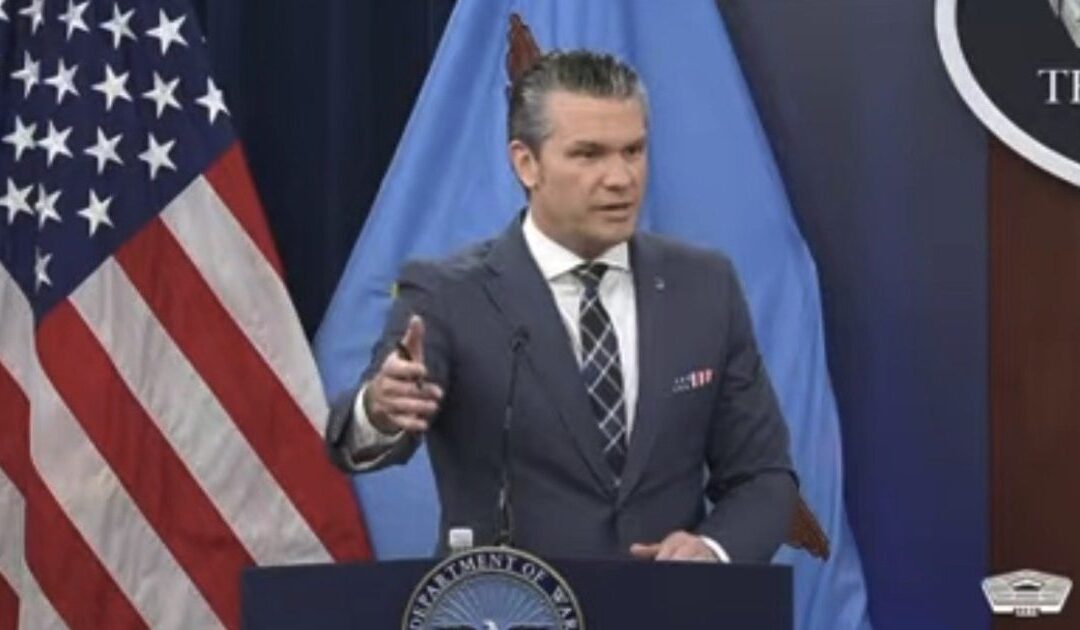
War Secretary Pete Hegseth responded to questions on how the US was going to prevent a “forever war” in the quest to denuclearize Iran and why the Pentagon asked for an additional $200 billion to fund the war. 

The Pentagon has asked the White House to approve a $200 billion supplemental package to continue the war, though it must be approved by Congress.

Per the Washington Post:

The Pentagon has asked the White House to approve a more than $200 billion request to Congress to fund the war in Iran, according to a senior administration official, in an enormous new ask that is almost certain to run into resistance from lawmakers opposed to the conflict.

That number would far surpass the costs of the administration’s massive airstrike campaign to date and instead seek to urgently increase production of critical weaponry expended as U.S. and Israeli forces have struck thousands of targets over the past three weeks, according to three other people familiar with the matter, who confirmed that the Defense Department is seeking packages of that size.

It remains unclear how much the White House will ultimately ask congressional lawmakers to approve. Some White House officials do not think the Pentagon’s request has a realistic shot of being approved in Congress, the senior administration official said. The Pentagon has floated several different proposed funding requests over the past two weeks, according to the official and three other people familiar with the matter.

The cost of the war in Iran has rapidly grown, exceeding $11 billion in the first week alone, according to multiple officials. Shortly after the joint U.S.-Israeli campaign began late last month, the Trump administration started preparing an additional funding request to help cover the costs, a process often required to ensure the military can maintain its readiness to defend against threats around the world even during wartime.

The Daily Caller’s Reagan Reese pressed Hegseth on the funding request and the question of “How do you denuclearize the country while also avoiding this, you know, forever war?”

Hegseth presented the Trump Administration’s justifications for the war, but he did not answer specifically how the war would come to an end. He only reiterated the Trump Administration’s position that Iran was continuing their nuclear and ballistic missile development after the US launched Operation Midnight Hammer, destroying three Iranian nuclear facilities last Summer.

As for the $200 billion request, he said, “I think that number could move, obviously,” adding “It takes money to kill bad guys, so we’re going back to Congress and our folks there to ensure that we’re properly funded for what’s been done, for what we may have to do in the future.”

He further compared President Trump’s stewardship of the money to that of former President Joe Biden. Trump, he said, is still working to “rebuild the military,” but the US is “still dealing with the environment that Joe Biden created, which was, which was depleting those stockholds and not sending them to our own military, but to Ukraine,” he said.

WATCH:

Reese: The Vice President has often emphasized that the goal of this war is to do denuclearize Iran while also avoiding a larger quagmire. I know that you touched on this. I’d like you to expand on how do you do that? How do you denuclearize the country while also avoiding this, you know, forever war? And then there was a report last night that the Pentagon asked the White House for $200 billion for Iran war supplemental. Can you confirm this and can you explain why a package this large is necessary?

Hegseth: Well, first of all, none of this would have been possible without Midnight Hammer, without that audacious mission, with very clear goals that did obliterate their ability to enrich and the capabilities they have in those facilities. So, it created the conditions for Iran to step forward and say, “Okay, you can reach out and touch us like that in our nuclear ambitions, you can see that we’re still trying to do this. Let’s make a deal.”

And President Trump put our two best folks on it, Steve and Steve and Jared, and they worked diligently, earnestly— I watched it— to try to pursue that deal. And ultimately, I think the whole time, Iran sort of said, “Well, we’ll talk as we build more missiles and as we build more UAVs, and we create this conventional umbrella so that, if we chose to, we could try to reconstitute the program,” and sort of naively thinking that President Trump wouldn’t do something about it. And that’s why, as Secretary Rubio has said and I’ve said, it’s the conventional umbrella that was growing, and growing, and growing that was meant to protect that nuclear capability. So, you have to address both what happened with Midnight Hammer and what happened with that as well.

As far as $200 billion, I think that number could move, obviously. It takes money to kill bad guys, so we’re going back to Congress and our folks there to ensure that we’re properly funded for what’s been done, for what we may have to do in the future, ensure that our ammunition is— everything’s refilled, and not just refilled, but above and beyond. I mean, President Trump, as he said, rebuilt the military in his first term, didn’t think he’d use it as dynamically in his second, but he had. So, thank goodness he did that. And an investment like this is meant to say, “Hey, we’ll replace anything that was spent, and now that we’re reviving our defense industrial base and rebuilding the arsenal of freedom and cutting deals, like our great deputy secretaries here is doing, long lead times on exquisite munitions, we’re going to be refilled faster than anyone imagined.”

And I think, you know, we’re also still dealing with the environment that Joe Biden created, which was, which was depleting those stockholds and not sending them to our own military, but to Ukraine, which is— every time we reach back and look at any sort of a challenge we have, it goes back to “Well, send it to Ukraine.” Ultimately, we think this should be these— these munitions are better spent in our own interests at this point, and this kind of funding bill is going to ensure that we’re properly funded going forward.

The post WATCH: War Sec Pete Hegseth Asked How US Plans to Denuclearize Iran While Avoiding Forever War and Why Pentagon Requested $200 Billion from White House to Supplement Iran War appeared first on The Gateway Pundit.

Go to Source
Author: Jordan Conradson