Liberals Claiming They Are “Fleeing Trump’s America” in for a Rude Awakening

Liberals Claiming They Are “Fleeing Trump’s America” in for a Rude Awakening

Liberals Claiming They Are “Fleeing Trump’s America” in for a Rude Awakening
March 17, 2026

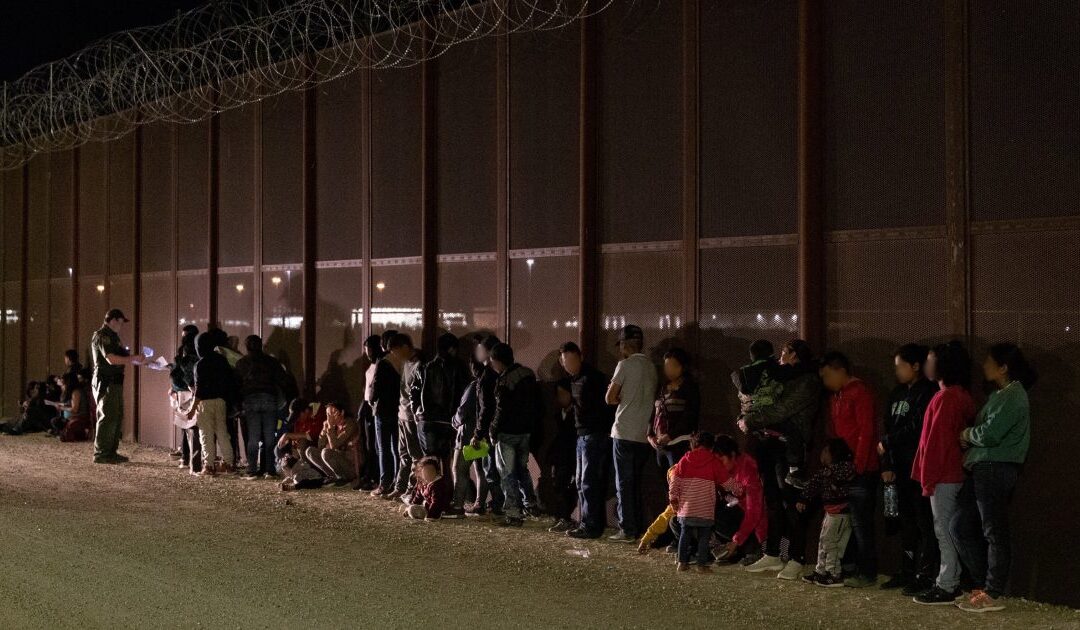
A line of people waits near a border wall at night, with a border patrol agent checking documents under artificial lighting.
Liberals claiming they want to leave America because of immigration enforcement do not realize immigration is enforced everywhere else, and often more strictly. U.S. Customs and Border Protection, Public domain, via Wikimedia Commons.

When President Trump won the election in 2016, many liberals and celebrities said they would leave the US.

They called the country a dictatorship and pronounced the death of democracy because their preferred candidate did not win. Of course, very few of them left, and millions of migrants tried to enter, because America is the greatest country on earth.

The same happened when he won reelection in the 2024 election. In addition to their previous reasons for leaving, they added that the election was stolen, even though four years earlier they claimed an election cannot be stolen.

In 2025 and 2026 they are all clamoring about fleeing because they want open borders, free welfare for illegals, and they oppose ICE deportations.

This is ironic since ICE deportations are designed to get people out of the country, and these people oppose the deportations but are ready to self-deport.

If they could just encourage their illegal friends to use the Trump self-deportation app, there would be much less chaos on US streets.

They also want to leave because of voter ID requirements that they claim will be the death of democracy, the same democracy they declared dead in 2016 but which had apparently recovered in 2020, despite the fact that it was the most contested and controversial election in history.

If liberals truly want to escape their homeland, the good news is that the way has been paved for them. The State Department has reduced the fee for renouncing U.S. citizenship from $2,350 to $450, an 80 percent decrease.

Now Queers for Palestine, pink-hairs for Iran, and the “I stand with Maduro… Afghanistan or Yemen” crowd have the option of teaching the Trump administration a lesson by renouncing their citizenship and going to live under those wonderful regimes.

People who believe they would be freer in Iran, richer in the People’s Republic of Canada, or safer in migrant-infested Western Europe can leave for just $450.

Liberals claim no one can afford the $130 cost of a U.S. passport, every ten years, required for voter identification, so that financial burden will be removed from them.

Maybe conservatives should set up a GoFundMe for those too poor to renounce citizenship and call it the Liberal Relocation Fund.

Trump has made it easier for them, but if they did leave, they would be in for a rude awakening.

The first problem one would encounter if they renounced their citizenship is that they would become stateless, and they would have no right of residency in the US.

They would have to find some other country willing to take them. But if they entered another country and were rejected, that country would likely deport them to the United States as the country of their former citizenship and last legal origin.

So not only would they be stuck in the US, but they would be a stateless alien with no legal status, subject to detention or deportation.

The US has the authority to deport illegal aliens to third countries willing to accept them, and ironically that may be exactly what this person was seeking all along, a country willing to take them.

If Canada refuses to accept them, the list of such countries is bleak, beginning with El Salvador and followed by Guatemala, Honduras, Uganda, Belize, and Paraguay.

For those planning to “flee” the United States without renouncing their citizenship, they will discover that no country on earth has open borders.

All require visas, residency permits, and work permits for foreigners to live and work there. The socialist utopias of Cuba, Canada, and Scandinavia provide socialized or free medical care only to citizens and legal long-term residents, and many other countries extend those benefits only to citizens.

The same liberals who call Republicans Nazis for not extending welfare benefits to illegal aliens will find that other countries apply the same restrictions to foreigners who arrive without legal status.

Overstaying a visa or working without authorization can result in detention and deportation.

Immigration is also not simply a matter of showing up. More than half of the world’s countries naturalize only a few hundred people per year.

Even wealthy, developed nations impose years-long residency requirements, language tests, financial self-sufficiency thresholds, and background checks before granting permanent status, let alone citizenship.

Europe has been broadly tightening immigration policies. Restrictions on skilled worker visas, tougher rules on citizenship-by-ancestry programs, and rollbacks of golden visa schemes are narrowing the legal avenues Americans can use to live there.

Companies in the EU must first prove they were unable to find a local candidate before sponsoring a foreign worker, making job sponsorship for Americans competitive and difficult.

Health insurance is typically mandatory just to obtain a visa. As of October 12, 2025, U.S. citizens entering any of 29 European countries go through the EU’s Entry and Exit System, which collects biometric data including fingerprints, facial images, and passport details. Americans may stay no more than 90 days in any 180-day period without a visa.

Many countries in Asia, including Japan, China, Taiwan, Singapore, and the countries of the Middle East, accept immigrants only as temporary guest workers and are highly restrictive on naturalization.

China naturalizes exceptionally few people: the 2010 census found only 1,448 naturalized persons in a country of 1.34 billion, with no clearly defined eligibility criteria and broad discretionary authority exercised by state officials.

Japan granted citizenship to roughly 8,800 people in 2024, the majority of them ethnic Koreans and Chinese with long-established community ties, with no fixed screening criteria, no appeals process, and no dual citizenship permitted.

Qatar limits eligibility to individuals with substantial investment or exceptional talent, and even then the process can span several decades, with foreigners generally unable to pass citizenship to their children.

Saudi Arabia requires at least ten consecutive years of lawful residence, fluency in Arabic, and good conduct, with naturalization still rarely granted. Brunei, Indonesia, Malaysia, Myanmar, and Singapore all prohibit dual citizenship outright.

Thailand is often cited as a retirement destination, but the details are more restrictive than advertised.

The standard one-year retirement visa requires 800,000 baht, roughly $22,000, deposited in a Thai bank account and renewed annually, with mandatory 90-day address check-ins with immigration authorities.

Working of any kind, including online work, is technically illegal on the visa, and fines accrue immediately for missed reporting deadlines.

Before leaving Thailand, retirees must obtain a re-entry permit or the visa is automatically canceled.

Funds must originate from abroad, and immigration officers verify international transfer codes on bank statements. Staying 180 days or more per year may also trigger Thai tax obligations under rules that are now being enforced more strictly.

Nearly all countries require voter ID, 176 countries and jurisdictions as of 2021, including 46 of 47 European nations, along with visas, residency permits, and work permits for foreigners.

By the standard American liberals apply to the United States, democracy is dead everywhere. Protesting those laws would be restricted or illegal in more than 100 countries, and noncitizens in those countries have even fewer protections than citizens.

While the way would be plagued with difficulties, conservatives should not only applaud the courage of liberals who want to flee the US but also help them do so.

The post Liberals Claiming They Are “Fleeing Trump’s America” in for a Rude Awakening appeared first on The Gateway Pundit.

Go to Source
Author: Antonio Graceffo

WATCH: Ecuador Launches Anti-Drug Operations With US Logistical Support – Colombia’s Petro Says Ecuadorean Air Force Is Striking Cartel and Guerilla Camps Across the Border

WATCH: Ecuador Launches Anti-Drug Operations With US Logistical Support – Colombia’s Petro Says Ecuadorean Air Force Is Striking Cartel and Guerilla Camps Across the Border

WATCH: Ecuador Launches Anti-Drug Operations With US Logistical Support – Colombia’s Petro Says Ecuadorean Air Force Is Striking Cartel and Guerilla Camps Across the Border
March 17, 2026

Screengrab Social Media/X

The Shield of the Americas is in action.

Ten days have passed since Donald J. Trump gathered conservative, patriotic Latin American leaders in Doral, Florida, for the Shield of the Americas summit, and we are already seeing action on the ground.

Yesterday (16), Ecuador began two weeks of operations against the cartels with support from the US, in a joint show of strength.

CBS News reported:

“Ecuador’s President Daniel Noboa, one of Trump’s staunchest allies on the continent, has spent the past two years targeting cocaine traffickers, but the rates of associated crimes including murders, disappearances and extortion have not fallen.

Interior Minister John Reimberg had announced on Tuesday a ‘very strong offensive’ to begin Sunday in areas worst affected by drug-related violence.”

Leaders from various American countries gather for the Shield of the Americas summit in Doral 2026, showcasing national flags and promoting regional cooperation.

Read: SHIELD OF THE AMERICAS: Trump Gathers Latin American Conservative Leaders, Vows To Use Military Against Cartels, Urges Others To Do the Same

Curfews have been imposed in the coastal provinces of Guayas, Los Ríos, Santo Domingo, and El Oro during the operation.

“’We’re at war,’ Reimberg said. ‘Don’t take any risks, don’t go out, stay home. To the mafias: your time is up. Nothing can stop us’.

[…] Around 35,000 soldiers will be deployed along with armored cars and helicopters, according to images and video released by authorities.”

It’s estimated that 70 percent of the drugs produced by Colombia and Peru are shipped through Ecuador.

Watch:

Read more:

RIGHT THING: Kast Sworn in as President of Chile, Ecuador’s Noboa Launches Offensive Against Cartels, and Paraguay Approves Defense Agreement Allowing US Military Presence

The post WATCH: Ecuador Launches Anti-Drug Operations With US Logistical Support – Colombia’s Petro Says Ecuadorean Air Force Is Striking Cartel and Guerilla Camps Across the Border appeared first on The Gateway Pundit.

Go to Source
Author: Paul Serran

How China Funds Iran: Oil, Sanctions Evasion, and the Shadow Banking Network

How China Funds Iran: Oil, Sanctions Evasion, and the Shadow Banking Network

How China Funds Iran: Oil, Sanctions Evasion, and the Shadow Banking Network
March 17, 2026

Exterior view of the Bank of Kunlun building featuring the bank's logo and colors inspired by the Iranian flag.
China is financing the Iranian regime through a variety of means, including a shadow banking system that avoids international financial networks, with the Bank of Kunlun operating as a conduit for China-Iran trade.

China and Iran have built a broad strategic partnership over several decades, encompassing economic, diplomatic, and security cooperation, much of which runs counter to U.S. foreign policy interests.

The U.S.-China Economic and Security Review Commission has identified the two countries as part of an informal “Axis of Autocracy” alongside Russia and North Korea, a grouping united by a shared interest in challenging U.S. global leadership and reshaping the international order to favor authoritarian governance.

China views Iran as a partner in balancing U.S. influence in the Middle East and as a supplier of discounted energy. Iran depends on China for export revenue and diplomatic cover. The relationship is asymmetric: Iran needs China far more than China needs Iran. Beijing maintains competing relationships with Saudi Arabia and the UAE, each of which accounted for $108 billion in two-way trade with China in 2025, compared to $41.2 billion with Iran, including unreported oil imports, giving Beijing reason to limit how openly it supports Tehran.

The formal foundation of the relationship is a 25-year comprehensive strategic partnership agreement signed in 2021, covering economic, security, and technological cooperation. China pledged up to $400 billion in investment over the life of the agreement, though little has been actualized due to Chinese companies’ reluctance to risk sanctions exposure. A Wall Street Journal investigation in October 2025 reported that a Chinese state-owned enterprise, Sinosure, may have secretly facilitated up to $8.4 billion in investment in 2024 through an oil-for-infrastructure arrangement.

China is Iran’s largest trading partner and the primary buyer of its oil, purchasing roughly 90 percent of Iran’s exported crude, often at a discount of $8 to $10 per barrel below the global benchmark. In 2025, China imported approximately 1.4 million barrels per day of Iranian oil, representing about 12 percent of its total crude imports.

Chinese customs authorities do not officially report these imports; instead, they falsely attribute the oil’s origin to Malaysia, Oman, and the UAE. The true value of Iranian crude exports to China in 2025 was approximately $31.2 billion, comprising more than 75 percent of total bilateral trade when added to the $9.96 billion in officially reported trade.

Oil revenue from China accounts for roughly 45 percent of Iran’s government budget. That revenue funds Iran’s regional activities, including support for Hezbollah, Hamas, Palestinian Islamic Jihad, the Houthis, and other Iran-aligned militia groups.

Iran’s oil reaches China through a shadow fleet of aging tankers that obscure their activity by sailing under foreign flags, disabling tracking transponders, spoofing their GPS locations, and conducting ship-to-ship transfers at sea. The oil is then processed by a network of independent “teapot” refineries in China that operate largely outside the international financial system.

Payment is facilitated through front companies and small regional banks using false addresses and fake invoices, often routed through Hong Kong, with proceeds laundered into the global financial system through the financial arms of Iranian oil companies, local money exchanges, and front companies affiliated with Iran’s Ministry of Defense. Offshore accounts under Chinese jurisdiction are used in part to finance the Islamic Revolutionary Guards Corps, Hezbollah, Hamas, Palestinian Islamic Jihad, the Houthis, and other Iran-aligned groups.

As of November 2025, 366 China- and Hong Kong-based entities were on the U.S. Treasury’s Specially Designated Nationals list for Iran-related sanctions violations. More than 100 Chinese and Hong Kong entities have been added to the Commerce Department’s Entity List for assisting Iran’s export control evasion over the past eight years.

UN sanctions on Iran, lifted under the 2015 Joint Comprehensive Plan of Action, were reimposed in September 2025 after France, Germany, and the United Kingdom invoked a snapback mechanism citing Iran’s failure to meet its commitments. China, which had been a party to the JCPOA, opposed the snapback.

China has also supported Iran’s integration into alternative multilateral institutions, backing its entry into the Shanghai Cooperation Organization in 2023 and BRICS in 2024. These memberships bring Iran into closer alignment with China and Russia and help insulate it from Western pressure. Following U.S. and Israeli strikes on Iran beginning in late February 2026, BRICS issued a statement expressing concern but took no position on the strikes, reflecting the limits of the group’s cohesion.

China’s financial support for Iran is reinforced by its diplomatic protection at the United Nations. When France, Germany, and the United Kingdom triggered the JCPOA snapback mechanism in August 2025, citing Iran’s sustained non-performance of its nuclear commitments, China and Russia blocked the reimposition of UN sanctions, arguing that the snapback had not been legally activated and that the Security Council no longer had a mandate to consider Iran’s nuclear file.

After the sanctions were nonetheless reimposed on September 27, 2025, Beijing continued to obstruct enforcement. In March 2026, China and Russia blocked the U.S.-drafted Security Council programme of work because it included a briefing on the 1737 Sanctions Committee, whose authority both countries refuse to recognize.

This diplomatic cover renders multilateral enforcement mechanisms functionally inoperable, leaving unilateral U.S. action as the primary tool for constraining the relationship. The tens of billions of dollars in annual oil revenue that China provides fund not only Iran’s government but its proxy network, including Hamas, the Houthis, and Hezbollah, which are destabilizing the Middle East.

Severing or seriously disrupting that financial and technological lifeline through sanctions pressure on Chinese banks, refineries, and shell companies, and through enforcement action against the shadow fleet.

The post How China Funds Iran: Oil, Sanctions Evasion, and the Shadow Banking Network appeared first on The Gateway Pundit.

Go to Source
Author: Antonio Graceffo

Marco Rubio Sends Powerful 2025 Easter Message Urging Nations to Respect the Christian Faith and Proclaim Christ as King

Marco Rubio Sends Powerful 2025 Easter Message Urging Nations to Respect the Christian Faith and Proclaim Christ as King

Marco Rubio Sends Powerful 2025 Easter Message Urging Nations to Respect the Christian Faith and Proclaim Christ as King
March 17, 2026

Go to Source
Author: Gateway Hispanic

Final Top Iranian Leaders Are Wiped Out As Trump Boasts “US-Israeli Strategy Against Iran Is Working”

Final Top Iranian Leaders Are Wiped Out As Trump Boasts “US-Israeli Strategy Against Iran Is Working”

Final Top Iranian Leaders Are Wiped Out As Trump Boasts “US-Israeli Strategy Against Iran Is Working”
March 17, 2026

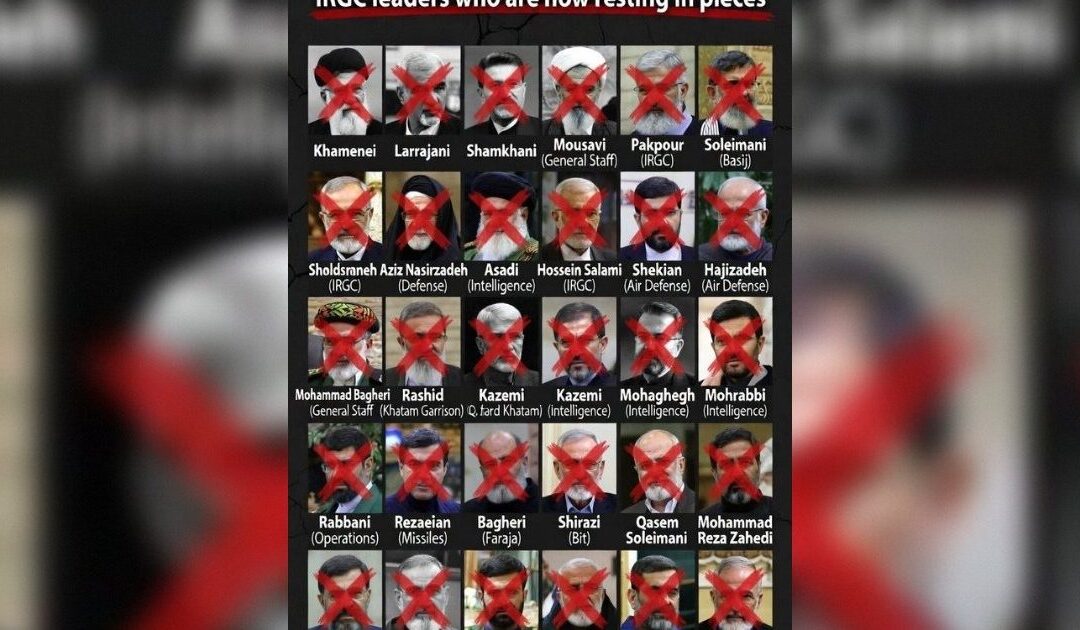
List of IRGC leaders marked as deceased, featuring crossed-out images and names, highlighting significant military figures in Iran.

The most unlikely source reports that the US-Israeli Strategy against Iran is working, while overnight, we learned that more top Iranian leaders are no longer a threat.  Yesterday, Middle East … Read more

The post Final Top Iranian Leaders Are Wiped Out As Trump Boasts “US-Israeli Strategy Against Iran Is Working” appeared first on The Gateway Pundit.

Go to Source
Author: Joe Hoft