FT Report: France and Italy Quietly Seek Deal With Iran to Safeguard Shipping Through Hormuz

FT Report: France and Italy Quietly Seek Deal With Iran to Safeguard Shipping Through Hormuz

FT Report: France and Italy Quietly Seek Deal With Iran to Safeguard Shipping Through Hormuz
March 13, 2026

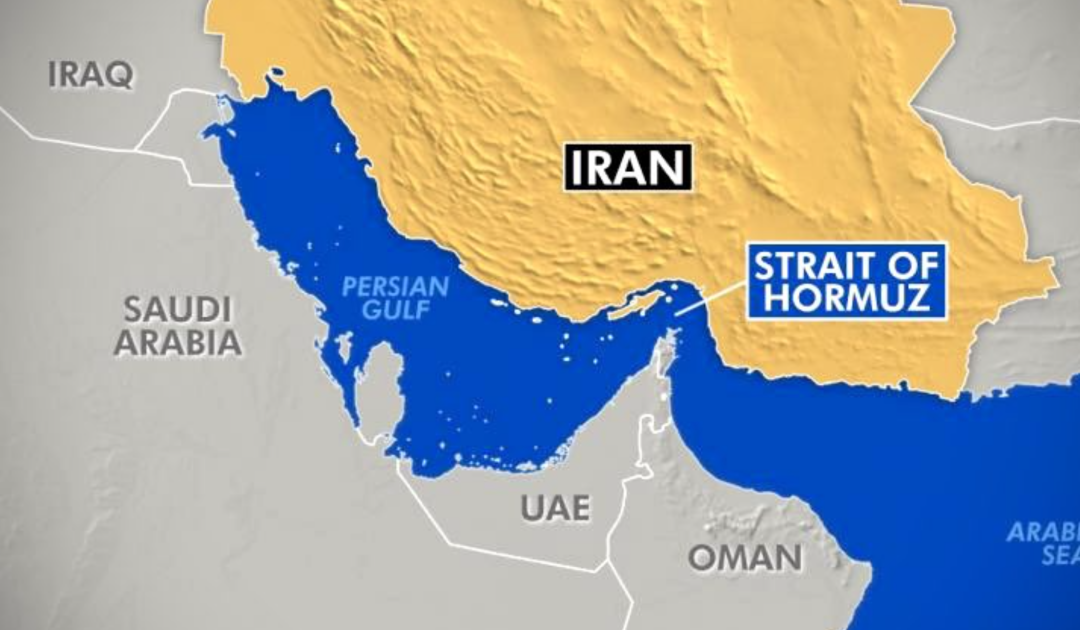
Map of Straight of Hormuz via Wikimedia Commons

Europe’s energy anxieties have surged to the forefront of international politics as tensions in the Persian Gulf threaten one of the most critical arteries of the global economy: the Strait of Hormuz.

In recent days, France and Italy have quietly opened diplomatic contacts with Iran in an attempt to secure safe passage for European commercial vessels through the strategic waterway.

The discussions, first reported by the Financial Times, underscore the growing concern among European governments that prolonged instability in the region could trigger severe economic consequences.

The Strait of Hormuz isn’t just another shipping route. It is the narrow maritime corridor through which roughly one-fifth of the world’s oil and a similar share of liquefied natural gas passes each day.
When traffic through this chokepoint slows or stops, the ripple effects are felt almost immediately across global markets.

European officials say the current outreach to Tehran is aimed at restoring at least partial shipping flows while avoiding a broader regional escalation. But even those involved in the discussions admit there is no certainty that Iran will agree to any arrangement guaranteeing free navigation.

The urgency of the situation is obvious. Oil prices have surged toward the $100-per-barrel mark, threatening to spike even further, while European natural gas prices have climbed dramatically since the crisis erupted.

For governments already grappling with inflation and sluggish economic growth, the prospect of a prolonged disruption in Gulf energy flows is deeply alarming.

Energy security has long been one of Europe’s most vulnerable strategic weaknesses. Despite years of rhetoric about diversification and green transition, the continent remains heavily dependent on external energy supplies.

That vulnerability becomes painfully clear whenever instability threatens the global transport routes that deliver those resources.

The Strait of Hormuz, located between Iran and Oman, is widely considered the single most important maritime bottleneck in the energy world. Although the channel is approximately fifty kilometers wide, the navigable shipping lanes used by massive oil tankers are far narrower, making the route extremely sensitive to disruption.

The International Energy Agency estimates that global oil demand now exceeds 100 million barrels per day. A large share of the energy that fuels Asia’s industrial giants—and significant volumes bound for Europe—passes through this narrow corridor. Countries such as China, India, Japan, and South Korea rely heavily on shipments moving through Hormuz.

For China in particular, the strait represents a critical lifeline. Roughly half of the country’s oil imports move through the corridor, meaning any prolonged disruption could affect manufacturing output, electricity generation, and broader economic stability.

The shockwaves of the current crisis are already being felt in financial markets.

Stock exchanges across Europe and Asia have recorded losses amid fears that escalating tensions could choke off energy supplies and drive up costs for industries dependent on oil and gas.

Shipping companies are also beginning to alter their routes. Tankers and cargo vessels that would normally pass through the Persian Gulf and the Suez Canal are increasingly being diverted around the Cape of Good Hope, a detour that adds up to two weeks to transit times. Those delays carry significant economic consequences. Longer journeys increase fuel consumption, strain supply chains, and push up the price of goods moving between Asia and Europe.

Insurance markets have reacted as well. Several maritime insurers have sharply increased premiums for vessels operating in the Persian Gulf, while others have suspended war-risk coverage entirely. Without insurance protection, many shipping companies simply refuse to enter the area. That dynamic has forced dozens of vessels to remain anchored near regional ports, waiting for clarity on whether the route will become safe again.

Meanwhile, air transport networks across the Middle East have also been affected. Airspace closures over Iran, Iraq, Syria, and parts of the Gulf have disrupted one of the busiest aviation corridors linking Asia, Europe, and North America.

For the past two decades, Gulf airports such as Dubai and Doha have served as major global hubs. But that system depends on open skies and predictable regional stability. With multiple air corridors now restricted, airlines are being forced to reroute flights through Central Asia or Africa, increasing costs and travel times.

The economic consequences extend far beyond the aviation sector. Modern supply chains rely heavily on the tight coordination between maritime shipping and air freight. When both systems experience disruption simultaneously, the result can be shortages, contract cancellations, and production slowdowns.

Central banks are watching the situation closely. Energy price spikes have historically been one of the fastest ways to trigger inflation and force policymakers into difficult decisions on interest rates. For European economies already burdened by high public debt and fragile growth, another energy shock could prove extremely painful.

Yet the diplomatic response within Europe remains fragmented.

While France and Italy have chosen to pursue direct discussions with Iran, other European governments remain skeptical about engaging Tehran directly.

Britain, for example, has not opened talks with Iranian officials regarding shipping guarantees in the strait. Instead, British authorities are focusing on consultations with Gulf states to secure alternative energy supplies.

Meanwhile, European naval forces already operating in the region are facing difficult choices.

Several countries maintain warships in the Red Sea under the EU’s Aspides maritime protection mission, but officials acknowledge that escorting commercial vessels through the Strait of Hormuz would carry serious risks. No European navy is currently prepared to conduct such escort operations if the threat of attack remains high.

French President Emmanuel Macron has stated that military escorts could be considered if tensions ease and if Iran agrees to respect freedom of navigation.

Until then, European governments appear to be relying primarily on diplomacy.

Turkey has also been drawn into the crisis. According to Turkish transport officials, a Turkish-owned vessel was recently granted permission by Iranian authorities to transit the strait after negotiations.

Fourteen additional Turkish vessels remain in the region awaiting similar authorization. The situation illustrates the delicate balance many governments are trying to strike.

Of course, no country wants to see the global energy artery closed, yet few are eager to trigger a wider conflict that could make matters even worse.

Ultimately, the Strait of Hormuz is more than just a geographic chokepoint. It is a central pillar of the global economic system—a place where geopolitics, energy markets, and international trade intersect.

When that pillar begins to shake, the consequences travel quickly from oil tankers and shipping routes to household energy bills and national budgets.

The turmoil surrounding Hormuz shows just how fragile that system can become when global tensions spill into the world’s most important energy corridor.

The post FT Report: France and Italy Quietly Seek Deal With Iran to Safeguard Shipping Through Hormuz appeared first on The Gateway Pundit.

Go to Source
Author: Robert Semonsen

BEWARE: AI’s New Role in Election Fraud

BEWARE: AI’s New Role in Election Fraud

BEWARE: AI’s New Role in Election Fraud
March 13, 2026

Close-up of a computer chip featuring the letters "Ai," symbolizing artificial intelligence technology on a blue circuit board background.

Guest post by Jonathon Moseley

The full extent of internet “deep fakes” and manipulations is now “maturing” into massive election fraud from the Left.

Apparently fueled by massive dark money and foreign money (both illegal under campaign finance laws), lying by altered photographs is swamping social media. What do Trump supporters and honest voters need to know?

First, on Twitter (X), the “ASK GROK” function (@Grok …..) is a powerful tool for detecting fraudulent photographs.

While Grok and AI are oversold in many contexts, @Grok is able to collect all the analysis of these photographs anywhere and expose the lies by fake photos.

If you see photographs of Donald Trump or conservatives on X, reply with “@Grok Is the photograph/video above real or altered?” (It seems that X has just changed GROK to require a premium membership, but it is still a powerful tool.)

Second, shockingly, left-wing SNOPES has come out for truth and honesty in a big, big way recently. Most of these photos are exposed on the SNOPES fact-checking system.

Third, one of the dead giveaways (“tells”) of deep fake photograph fraud can be explored by asking:  “Who is taking this photograph?  And why?”

In today’s movie/television generations, we lose perspective to enter the story. In reality, someone has to be taking the photograph. Sinister claims are exposed by the fact that nobody would be taking this photograph if it were real.

People love to take photographs. But the photograph is innocent—for fun or friendship—or no one would take the photograph.

Fourth, for example, this is one of the photographs swamping the internet accusing Trump of being a pedophile.

First, my analysis after research: No one taking this photograph would label it “Trump.”

It would be the occasion of the gathering. The caption is written differently in different colors in different versions floating around.

Donald Trump poses with a group of children and an adult male in a hotel room, captured in a photo dated July 7, 1997.
Image courtesy of Facebook user

The girl in the lower left corner appears to be Kai, Trump’s granddaughter, at a young age.  Her eyes and head shape are distinctive.  It’s Trump’s granddaughter.

Others may be Kai’s friends from school. The woman Epstein is holding is clearly 20 years old or older. She is not underage.

The room is too small to be Trump’s or Epstein’s room. The bed is unmade but Trump is dressed in a business suit like he just came from a Board of Directors’ meeting.  This is a child’s room.

But now let’s go to SNOPE’s analysis:

”The image bore clear signs of the use of AI. Trump and three of the children shown had either too few or too many fingers or lacked detail in their hands or faces. The photo showed Epstein with dark or black hair, though a real photo taken in the weeks before July 7, 1997, for the reputable photo agency Getty Images showed Epstein with grey hair that appeared much lighter in photos.”

“Trump appeared to have only four fingers on his right hand, while a child at the front of the image appeared to have six on their left. Another child’s hand also appeared misshapen. Additionally, the nose of one of the children appeared to blend into the child’s face in an unnatural way.”

“…  Searches of parts of the image (the children in the foreground or Epstein or Trump behind them) also revealed no links to authentic photos, appearing to suggest that whoever created the image did so from scratch rather than by stitching together existing photos.”

I disagree in part. Kai’s very young image is recognizable. However, an alternate photo is made up of original pieces from some other photograph.

Note, for example, that the little girl in the center right has an abnormally small head but an abnormally long arm.

Someone’s hand is around the boy’s bottom center, but it doesn’t fit any of the children in the photo. On the contrary, one hand appears to connect to three different girls at once.

Fifth, several bizarre videos—which do not show Epstein or anyone connected to him—are circulating as being from the Epstein files.  But these are ordinary movies.  Well, they are from the horror genre, which isn’t this author’s taste.

But they have absolutely nothing to do with Epstein. @Grok identifies the precise original movies each of these comes from.

One video shows the back of a Trump figure – with the wrong color hair, face unseen – watching young girls fully clothed marching in a large circle.

The innocent asexual video suggests teaching future, would-be models proper posture and balance.  But it is presented as proof that Trump is a pedophile.

Sixth, photographs showing two or more people does not mean anything about what is happening as shown. People love to take photographs with celebrities.

Maybe 99% of all photographs of people with Trump are simply people wanting a photo with someone famous. It does not mean they know each other or are doing anything together.

A photo your author found of Nicholas Cage surrounded by fans taking selfies does not mean that Cage is plotting to rob Ft. Knox with the random fans he is standing with.

A photograph of Taylor Swift with two fans does not mean the three of them are plotting to smuggle weapons-grade uranium.

The photographs used to attack Trump do not show that the people know each other or are doing anything other than taking a photograph.

Let’s try that again: What does the photograph show? Seriously. It shows people posing for a photograph. That’s it. What’s happening in the photograph? Trump is posing for a photo with people he just met who want a photograph.

Seventh, the policy of the U.S. Department of Justice – I worked as a defense lawyer in January 6 prosecutions – is to redact anyone who has not been formally charged.

I once negotiated with prosecutor Kathryn Rackozy to redact uncharged people to get the Form 302 FBI interview of Michael Green released publicly.

So women’s faces are blacked out with boxes in documents from the Epstein files. One photo accusing Trump of hanging out with pedophiles shows a woman with wrinkles around her neck, thinning hair, and dark roots beneath bleached hair.

Just putting a black box on a middle-aged woman’s head does not make her an underage girl. It means that under the DOJ’s longstanding policy, unrelated bystanders are always redacted. Age is irrelevant.


UPDATE: While correcting the misinformation against Donald Trump on Elon Musk’s Twitter (X), the author was just now permanently banned from X for “inauthentic activity.”

Answering the flood of misleading information about Trump ahead of a federally regulated election, Elon Musk’s team silenced the truth and objections.

X did not stop the massive number of misleading posts against Trump. Instead, X permanently banned the corrections.

“Elon needs to finish cleaning house,” the author responds. Despite Musk’s purchase of X, repeated challenges to whether a user is a real human being are used almost weekly to silence or discourage conservatives.

The author asks, “If I proved I am a human last week, am I still a human this week?” Facing a large quantity of election-related, regulated attacks on Republicans, posting corrections is counted as spam.

Email notification regarding account suspension for violating X platform's rules against inauthentic accounts, with instructions for appeal and account management.
Screenshot

The post BEWARE: AI’s New Role in Election Fraud appeared first on The Gateway Pundit.

Go to Source
Author: Jim Hᴏft

NOW CUBA! Cuban Dictator Díaz-Canel Begins Negotiations with the United States

NOW CUBA! Cuban Dictator Díaz-Canel Begins Negotiations with the United States

NOW CUBA! Cuban Dictator Díaz-Canel Begins Negotiations with the United States
March 13, 2026

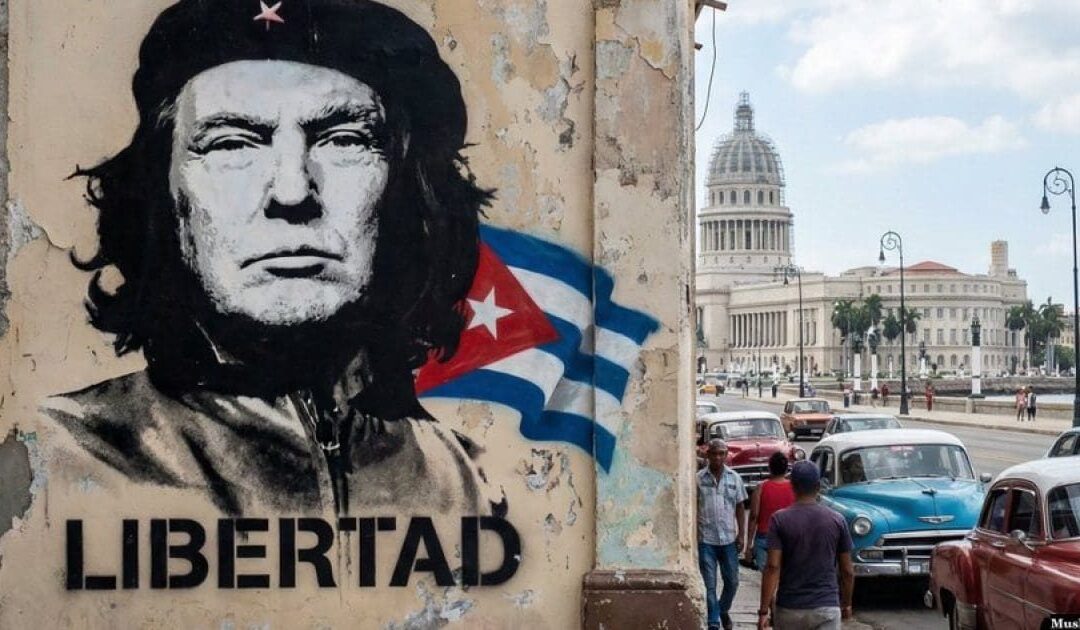
Street art featuring a stylized face and the word "Libertad," set against a backdrop of classic cars and the iconic Capitol building in Havana, Cuba.

President Trump is making the world a better place seemingly overnight. Wow, this is amazing. Cuban dictator Díaz-Canel announces on national broadcast that the regime has begun negotiations with the … Read more

The post NOW CUBA! Cuban Dictator Díaz-Canel Begins Negotiations with the United States appeared first on The Gateway Pundit.

Go to Source
Author: Joe Hoft

“Watch What Happens to These Deranged Scumbags Today!” – President Trump Warns Iran (Video)

“Watch What Happens to These Deranged Scumbags Today!” – President Trump Warns Iran (Video)

“Watch What Happens to These Deranged Scumbags Today!” – President Trump Warns Iran (Video)
March 13, 2026

President Trump went to TRUTH Social on Friday morning to warn the Iranian regime of scumbags what is about to hit them.

Trump warned the evil despots in Iran, “Watch what happens to these deranged scumbags today!”

President Trump:  We are totally destroying the terrorist regime of Iran, militarily, economically, and otherwise, yet, if you read the Failing New York Times, you would incorrectly think that we are not winning.

Image of two prominent political figures, one from the United States and the other from Iran, highlighting contrasting leadership styles and geopolitical perspectives.
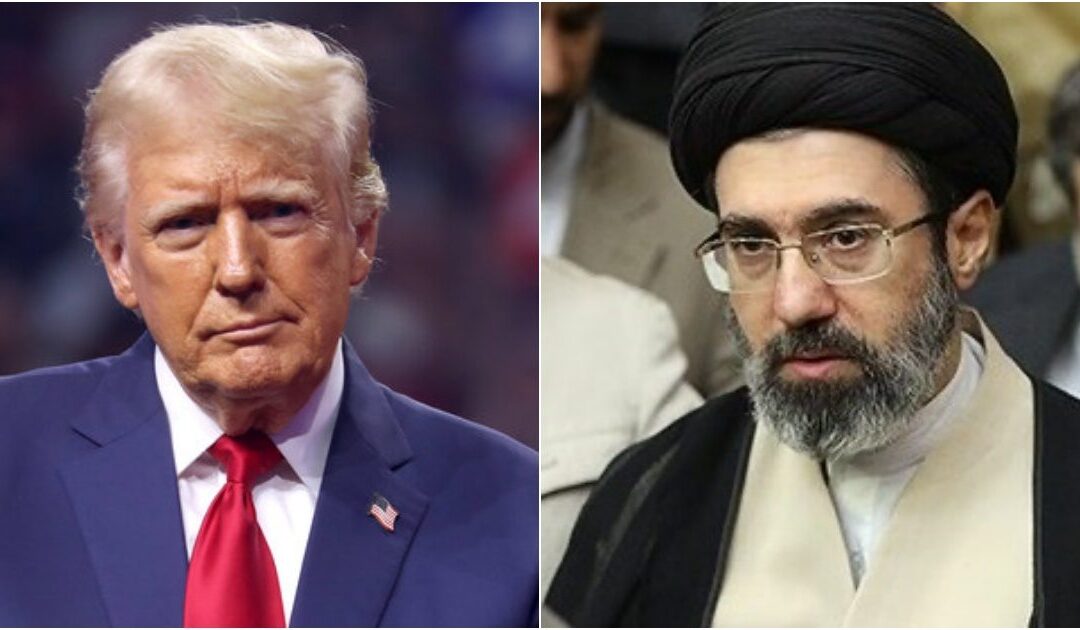
President Donald Trump and the mysteriously absent Iranian leader Mojtaba Khamenei

Iran’s Navy is gone, their Air Force is no longer, missiles, drones and everything else are being decimated, and their leaders have been wiped from the face of the earth.

We have unparalleled firepower, unlimited ammunition, and plenty of time – Watch what happens to these deranged scumbags today.

They’ve been killing innocent people all over the world for 47 years, and now I, as the 47th President of the United States of America, am killing them. What a great honor it is to do so! Thank you for your attention to this matter. President DONALD J. TRUMP

Tweet by Donald J. Trump discussing military actions against Iran, highlighting the destruction of its military capabilities and the impact on innocent lives.

And there is still no sign of life from the new Iranian replacement ruler.

The late ayatollah Khamenei was killed during the airstrikes by the US-Israeli coalition, and now it arises that his son, Mojtaba, has been chosen to be the new ‘Supreme Leader’.

However, that is not the only report going around, as it’s been widely published that Mojtaba has been gravely wounded, also by coalition airstrikes.

The news was first reported by Iranian TV, but has been subsequently picked up by the UK’s Mirror and LBC, Times of Israel, The Western Journal, among others.

With each passing day, it becomes more likely that Iran has elected a dead or incapacitated Ayatollah.

Iran’s new Supreme Leader, Mojtaba Khamenei, has allegedly ordered his nation to ‘weaponize the Strait of Hormuz’ in his first ‘written statement’.

But Mojtaba still hasn’t been seen, as claims are mounting that he has ‘lost a leg’ and is ‘in a coma’ as a result of injuries sustained during air strikes.

Things don’t look too good for the evil Iranian regime.

The post “Watch What Happens to These Deranged Scumbags Today!” – President Trump Warns Iran (Video) appeared first on The Gateway Pundit.

Go to Source
Author: Jim Hoft

Everything You Need to Know About 0% Interest Cards Before You Decide

Everything You Need to Know About 0% Interest Cards Before You Decide

Everything You Need to Know About 0% Interest Cards Before You Decide
March 13, 2026

Note: The information provided here or in any related communications is for informational purposes only and should not be considered as financial advice. We do not provide personalized investment, financial, or legal advice. Gateway Pundit benefits from purchases made through our sponsors.

Woman analyzing financial growth on a laptop while using a calculator and credit card at a wooden desk, with a coffee cup nearby.

You Already Know Something Is Wrong With How Much You’re Paying in Interest. 

You’ve done the math. Maybe not on paper, maybe not with a spreadsheet, but somewhere in the back of your mind you’ve felt it: the money you’re sending to your credit card company every month isn’t paying down what you owe. It’s going to interest. You’re paying to stand still. And you’re smart enough to know that there’s a better way. You’ve just been waiting to find an option that actually makes sense before you do anything about it.

This Isn’t a Trick. Here’s Exactly What’s Available Right Now. 

Several major credit card issuers are currently offering 0% introductory APR periods of up to 21 months, meaning every dollar you pay goes directly toward your balance, not toward interest. Two of the top-rated cards on FinanceBuzz’s current list offer 0% intro APR for a full 21 months on both purchases and balance transfers, with no annual fee. That’s nearly two years to pay down what you owe without the balance growing. There’s no catch buried in the structure. The rate is 0%, the annual fee is $0, and the math works in your favor from day one.

The Reason You Haven’t Done This Yet Is Completely Understandable. 

Financial products and credit cards have a long history of sounding good in the headline and hiding the problem in paragraph six. Late fees that spike your balance. Penalty APRs that kick in if you miss one payment. Transfer fees that eat a chunk of your savings before you’ve even started. So if you’ve looked at offers like this before and felt skeptical, that instinct was protecting you, and it was right more often than it was wrong. What’s different here is specificity: one of the cards on FinanceBuzz’s current list explicitly charges no late fees, no penalty rate, and no annual fee, ever. That’s not marketing language. That’s a commitment to not punishing you when life gets complicated.

You Are Allowed to Prioritize Getting Out of Debt. 

This is the part that doesn’t get said enough. There’s a quiet cultural pressure to deprioritize financial moves that are “just for you,” to put the household budget, the kids’ needs, the emergency fund first, and deal with the interest later. But carrying high-interest debt costs you real money every single month, money that could be redirected toward every other thing on that list. Choosing a card with a 0% intro period isn’t a luxury. It’s the most practical financial decision you can make right now, and you don’t need anyone’s permission to make it.

If You’ve Tried to Get Ahead Financially Before and It Didn’t Stick, That’s Not on You. 

You may have transferred a balance before and watched the interest come back because the window was too short, or because something unexpected hit the budget in month four. You may have opened a card with a good intro offer and then found the ongoing terms weren’t what you expected. Those experiences are data, not failures. The cards on this list were specifically selected for people who’ve been through that loop. Two of them offer full 21-month windows precisely because real paydown takes real time, and every card on the list carries no annual fee, so you’re not penalized for keeping one once the intro period ends.

Here’s What Each Card Actually Does and Who It’s Best For. 

If eliminating existing debt is your primary goal, the two cards offering 21 months at 0% on both purchases and balance transfers are the clearest tools. No rewards complexity, no annual fee, just a long runway to make a dent. If you want your everyday spending to work for you while you pay down debt, one card earns up to 5% cash back on purchases, includes a $200 bonus after modest early spending, and gives you 15 months at 0% APR. If you travel and want miles building quietly in the background, another option earns miles on every purchase and significantly more on hotels and rental cars. And if you want the longest possible balance transfer runway with the simplest terms, two cards on the list offer 21 months on balance transfers with no annual fee and no penalty rate, ever. 

What Happens After You Apply. Walk Through It Before You Decide. 

You apply through a secure website. If approved, your new card arrives within 7 to 10 business days. You can typically initiate a balance transfer online within the first few months of account opening. The transferred balance starts accruing 0% interest immediately. You make monthly minimum payments, or more, ideally much more, and watch the principal decrease without interest working against you. After the intro period ends, the regular variable APR applies, which is why the goal is to have the balance meaningfully reduced or gone before that date. Most cards on this list also include free credit score monitoring, so you’re watching your financial picture improve in real time.

The Fine Print You Should Actually Read. 

Balance transfer fees typically range from 3% to 5% of the amount transferred. On a $5,000 balance, that’s $150 to $250, still a fraction of what you’d pay in interest over 21 months at a typical 20%+ APR. Most cards require you to initiate the transfer within the first three to four months of account opening to qualify for the intro rate. These offers require good to excellent credit, generally a FICO score of 670 or above. And minimum monthly payments are required, because missing one can affect your rate and your credit. These aren’t warnings designed to talk you out of it. They’re the information you need to make this work exactly as planned.

The People Using These Cards Aren’t People With Perfect Finances. 

They’re people who got into debt during a hard year, or a medical situation, or during the stretch when everything cost 30% more and the budget didn’t stretch the way it used to. They’re people who are tired of watching the interest number on their statement and are ready to make a move that actually changes the trajectory. One card on the list was clearly built with real household spending in mind, offering high cash back at grocery stores, restaurants, and gas stations, with a full cash back match at the end of your first year. It’s designed for someone managing a life, not just making purchases.

You Don’t Have to Decide Everything Today. 

Take the time you need. Look at your current balance and your current interest rate. Calculate what you’d save in interest over 21 months. Compare it to the transfer fee. Look at which card fits the way you actually spend. The offers aren’t going anywhere before you’ve had time to think them through, and making a thorough decision is how you make a good one. Every card on this list has been independently reviewed and rated by FinanceBuzz editors. You’re not relying on a single company’s marketing pitch. You’re looking at side-by-side evaluations built for someone who asks questions before she commits.

This Is the Kind of Decision That Compounds. In the Right Direction. 

When you stop paying interest, that money stays in your hands. When it stays in your hands, you can direct it toward the balance itself, which accelerates the payoff. When the balance is paid off, your credit utilization drops, which typically improves your credit score. When your score improves, better financial options become available. The whole thing moves in a different direction than it’s been moving, and it starts with one application. That’s not a sales pitch. It’s the actual math of what a 0% APR period does when you use it with intention.

When You’re Ready, Here’s Where to Go. 

All seven cards are available to review and compare on FinanceBuzz’s independently maintained page. You’ll find the full terms, current rates, credit score requirements, and direct links to each card’s secure application. There’s no pressure, no countdown timer, and no version of this that requires you to decide in the next 10 minutes. Just clear information, laid out honestly, for someone who takes her finances seriously and makes decisions when she’s ready. Not before.

View and compare all seven 0% intro APR cards by clicking here → 

The post Everything You Need to Know About 0% Interest Cards Before You Decide appeared first on The Gateway Pundit.

Go to Source
Author: Promoted Post