Germany’s Green Energy Diktat Is About to Blow Up the European Union – Pro-Sanity Nations Prepare to Walk Away and Team Up With Trump’s America: “Drill Baby Drill!”

Germany’s Green Energy Diktat Is About to Blow Up the European Union – Pro-Sanity Nations Prepare to Walk Away and Team Up With Trump’s America: “Drill Baby Drill!”

Germany’s Green Energy Diktat Is About to Blow Up the European Union – Pro-Sanity Nations Prepare to Walk Away and Team Up With Trump’s America: “Drill Baby Drill!”
April 11, 2026

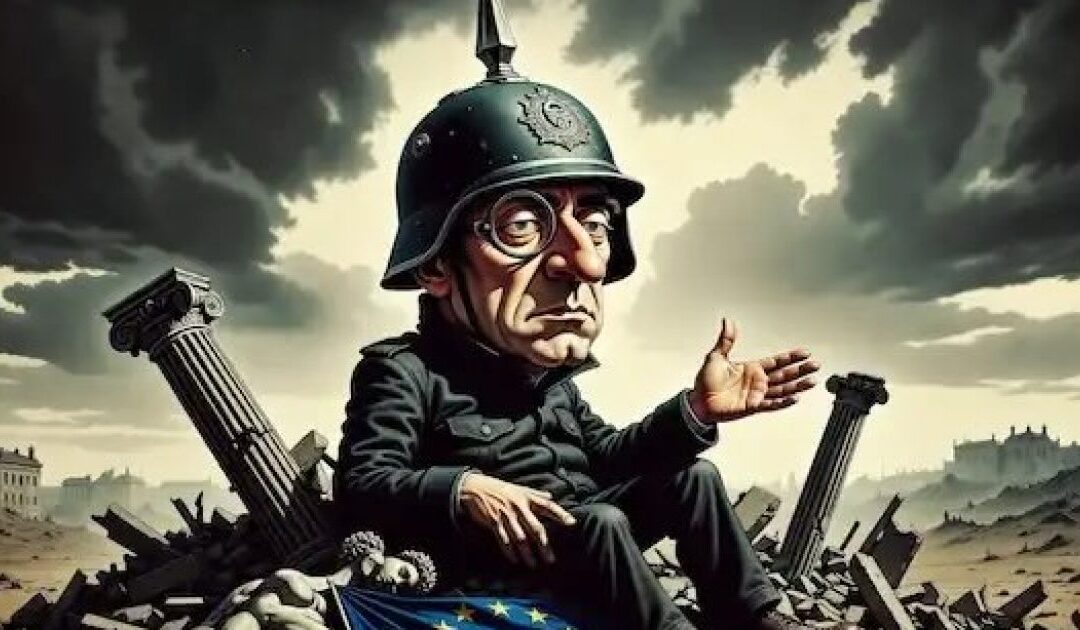
A satirical illustration of a soldier in a German helmet sitting on rubble, symbolizing the aftermath of conflict in Europe, with an EU flag in the background.
For the third time in a century, Germany is destroying Europe

The suicidal Energiewende (energy transition) that Berlin forced on the entire European continent is now threatening to shatter the EU itself. If Germany refuses to abandon its wind-and-solar fantasy at home and in Brussels, France, Poland, the Nordics, Benelux and Central Europe are ready to form a new energy alliance. One that puts cheap, abundant power first and could link arms with energy-dominant America.

BRUSSELS – While the globalist elite in Europe continue to worship at the altar of the “Green Transition,” a quiet rebellion is brewing that could finally rip the EU apart. A radical new proposal circulating in Brussels cuts through all the climate cult nonsense with brutal clarity. One single article declaring cheap, abundant energy the absolute top priority of the European Union – and automatically nullifying any existing EU regulation that gets in the way.

The text is short, savage, and long overdue: “European Regulation – Single Article. Cheap, abundant energy is now the #1 priority of the European Union. From this day forward, any existing European regulation that contradicts this imperative is hereby declared null and void.”

Translation for the Brussels bureaucrats: Stop destroying your own continent with ideology. The villain of the story is Germany’s infamous Energiewende – the green energy “transition” launched in 2011 that has become the textbook definition of economic self-immolation.

Berlin decreed: close perfectly safe nuclear plants, flood profitable coal mines, bet everything on unreliable wind and solar. Then ram the same madness down the throat of every EU member through the unelected European Commission.

Europe followed Berlin like lemmings

Result? Germany now has the most expensive electricity in the world. Contracts for German power were trading at up to five times the price of French nuclear power as recently as March 2026. German industry is being gutted. Hundreds of billions of euros have been burned on grid overhauls, subsidies, backup power plants, and energy imports. All while households and factories get crushed by prices four times higher than in the United States.

And Europe followed Berlin like lemmings. The continent blew tens of billions more on emergency gas imports in 2025 alone, making itself hostage to geopolitics while its industrial base crumbled. The very foundation of modern civilization – reliable, affordable energy – was sacrificed on the altar of intermittent “renewables” and German green virtue-signaling.

Meanwhile, France looks like the adult in the room. Its nuclear fleet delivers stable, dispatchable, competitive power. France exports electricity to its neighbors and keeps its industry alive. The contrast could not be starker.

Now the bill is coming due. If Germany refuses to abandon the Energiewende – both inside its own borders and at the EU level – the countries that still possess an “instinct for industrial survival” have no choice but to act.

France, Poland, the Nordic nations, Benelux, and several Central and Eastern European states share a vital national interest that overrides everything else: realistic energy policy based on physics, not fantasy.

Toward a privileged strategic partnership with the United States?

The writing is on the wall. A new European energy union could emerge – one founded on abundant, cheap, reliable power instead of German-imposed green dogma. And in a world where America under President Trump is once again embracing “Drill Baby Drill,” opening up domestic production and driving energy prices down, why wouldn’t the saner European nations seek a privileged strategic partnership with the United States?

Energy is not a “nice-to-have.” It is the prerequisite for industry, jobs, prosperity, and genuine sovereignty. An EU that continues to let Germany’s ideological fever dream dictate policy is an EU marching toward decadence and eventual breakup.

The proposed one-article regulation is not just a policy tweak. It is a declaration of economic survival. The Gateway Pundit has warned for years that the climate cult and globalist green agenda would destroy Western industry. Germany proved us right. Now even the Europeans are starting to wake up.

If Berlin won’t drop the Energiewende, the rest of Europe should drop the EU. And build something better with the energy superpower across the Atlantic.

Drill baby drill isn’t just an American slogan anymore. It’s the future Europe desperately needs – whether Berlin likes it or not.

The post Germany’s Green Energy Diktat Is About to Blow Up the European Union – Pro-Sanity Nations Prepare to Walk Away and Team Up With Trump’s America: “Drill Baby Drill!” appeared first on The Gateway Pundit.

Go to Source
Author: Drieu Godefridi
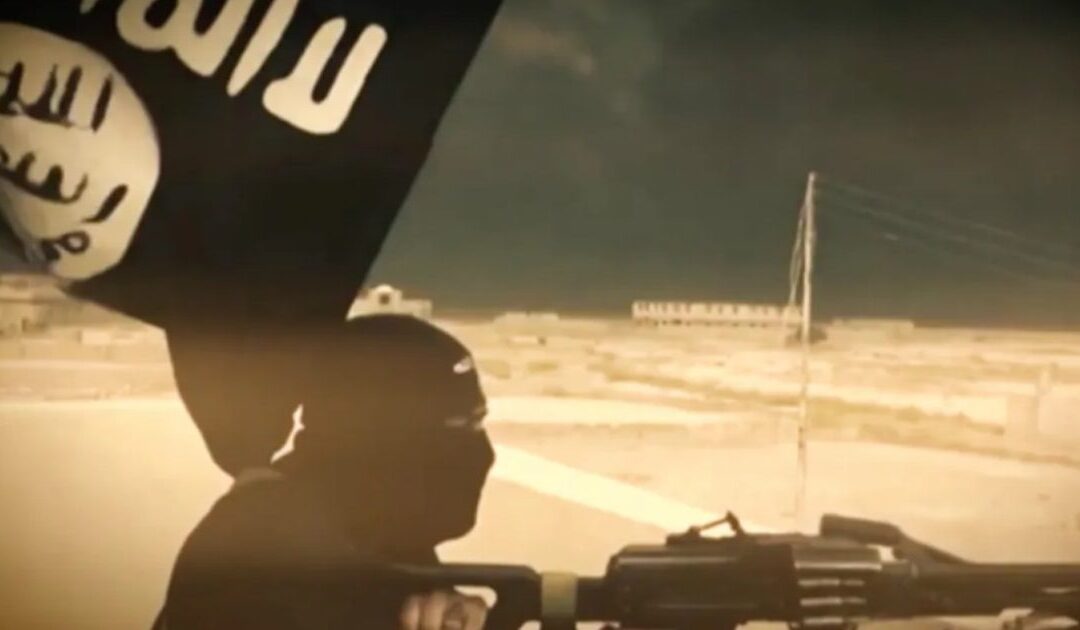
Islamic Extremism Rising Worldwide: Leadership, Financing, and a Growing Threat Network

Islamic Extremism Rising Worldwide: Leadership, Financing, and a Growing Threat Network

Islamic Extremism Rising Worldwide: Leadership, Financing, and a Growing Threat Network
April 11, 2026

Militant holding a weapon while displaying a flag in an arid landscape, symbolizing conflict and extremism.
ISIS and other Islamist terrorist organizations are on the rise around the world. Photo courtesy of the Modern War Institute at West Point.

The UN Security Council Monitoring Team’s 37th report (S/2026/44), covering June 23 to December 15, 2025, describes the global threat from ISIS and al-Qaeda as multipolar and increasingly complex, intensifying across multiple theaters simultaneously, with no single country or region constituting the sole epicenter.

Al-Qaeda’s leadership remained cohesive but isolated. Sayf al-Adl served as de facto leader despite growing dissatisfaction among rank-and-file members. The group retained ambitions for large-scale “spectacular” external attacks aimed at global media impact. It also continued to act as a service provider and force multiplier for affiliated groups in Afghanistan, particularly Tehrik-e Taliban Pakistan (TTP).

With senior leadership isolated, Al-Qaeda in the Arabian Peninsula (AQAP), under leader Saad bin Atef al-Awlaki, increasingly asserted ideological and operational leadership of the broader network. AQAP’s estimated strength stood between 2,000 and 3,000 fighters. These forces were primarily located in remote areas of Yemen’s Abyan, Shabwah, Ma’rib, and Hadramawt provinces.

Between June and October, the group conducted at least 14 attacks employing weaponized drones, double suicide bombings, improvised explosive devices, vehicle-borne improvised explosive devices, ambushes, and thermal-sighted sniper rifles. AQAP also explored maritime operations, including uncrewed boats, and took interest in liquid explosives.

The Houthis paid AQAP approximately $65,000 in June in exchange for an attack and participated in joint operational planning in August. Meetings in October aimed at forming a joint unit comprising Houthis, AQAP, and Al-Shabaab were reported. AQAP also profited from Al-Shabaab piracy by receiving a share of revenue from vessels paying to transit safely through high-risk waters and used encrypted platforms, including Telegram, to solicit funds and connect supporters to financial intermediaries.

West Africa and the Sahel represent the most alarming theater. JNIM (Jama’at Nusrat al-Islam wal Muslimin), al-Qaeda’s West African affiliate, continued to expand territory under its control across Mali, Burkina Faso, and Niger while pressing southward toward coastal states. In October 2025, JNIM carried out its first documented attack in Nigeria, killing a soldier in Kwara State near the Benin border. A new senior leader, Sekou Muslimu, was appointed to expand JNIM’s presence into Benin, Côte d’Ivoire, Ghana, Niger, and Togo, with a separate emir appointed for Benin.

JNIM’s Katiba Hanifa faction targeted security forces, attacked posts, and intimidated and abducted villagers in Benin’s Alibori, Borgou, and Atacora Departments. In Mali, JNIM launched large-scale coordinated attacks on mining sites, industrial facilities operated by foreign investors, and key logistics routes. Beginning in September, JNIM implemented a fuel blockade on Bamako, mobilizing fighters along highways from Côte d’Ivoire, Guinea, Mauritania, and Senegal and systematically destroying hundreds of fuel tankers.

The report assesses that, while JNIM lacked the capacity to overrun Bamako, the blockade was designed to force the Malian government into negotiations. Malian security forces killed several JNIM leaders, including Ridwan al-Ansari, a close associate of top JNIM leader Iyad Ag Ghali, and Abou Salam Oumarou in Soumpi, Timbuktu Region.

JNIM’s finances were described as swollen. The report notes a single ransom payment of approximately $50 million, reportedly for a Gulf royal family member abducted in September, with unconfirmed reports that prisoner releases and arms shipments were part of the deal. From May to October, JNIM nearly doubled its kidnappings of foreign nationals to 22 cases. The group raises revenue through territorial control, gold mining taxation, road tolls, livestock rustling, smuggling, and zakat collection, which the report notes can be raised to extortionate levels when communities resist. JNIM was identified as the wealthiest al-Qaeda affiliate after Al-Shabaab.

Violent incidents involving Islamist groups in the Niger-Benin-Nigeria tri-border area rose 90 percent between 2024 and 2025, and deaths more than doubled to over 1,000. Fighters aligned with al-Qaeda and ISIS deepened their presence in Benin’s Alibori and Borgou Departments, Niger’s Dosso Region, and Nigeria’s Sokoto, Kebbi, Niger, and Kwara States.

Islamic State West Africa Province (ISWAP) carried out more than 500 attacks between January and October 2025 in Borno State, with drone attacks rising from one in 2024 to seven. ISWAP reinforced its bases in Gargash and Sambisa with approximately 100 additional fighters each following specialized training and elevated Sambisa to the status of a formal ISIS administrative province headed by a wali, signaling a shift toward territorial governance. Active ISWAP cells operated in Kogi, Zamfara, Sokoto, and Katsina States, as well as Cameroon’s Far North, Niger’s Diffa Region, and Lake Chad’s Lac Province.

Following the death of ISIS deputy leader Abu Khadija in Iraq in March 2025, Abu Bakr ibn Muhammad ibn Ali al-Mainuki, head of the al-Furqan office in West Africa, assumed a more prominent role in global ISIS leadership, with some Member States suggesting he may have become head of ISIS’s General Directorate of Provinces.

The resurgence of Ansarul Muslimina fi Biladis Sudan (Ansaru) was documented in Nigeria, with bases in Kwara and Niger States collaborating with JNIM. The Lakurawa group, linked to Islamic State in the Greater Sahara, gained a foothold in northwest Nigeria through illegal tax collection and cattle rustling.

Islamic State in the Greater Sahara remained active in Niger’s Tillabéri, Tahoua, and Dosso Regions, with ISGS and JNIM clashing between August and October in Yagha Province, Burkina Faso, and in Tillabéri and Ménaka over territorial dominance, ending a détente established earlier in 2025.

Across all theaters, both ISIS and al-Qaeda expanded their use of commercial satellite communications, enabling cheap, fast, and secure communication in remote areas. Both organizations demonstrated greater proficiency with artificial intelligence in propaganda, using AI-enhanced translation tools for rapid multilingual content deployment.

The Cyber Jihad Movement pledged allegiance to al-Qaeda’s Sayf al-Adl in August, potentially expanding al-Qaeda’s cyber capabilities.

In Canada, nearly one in ten terrorism investigations included at least one person under the age of 18. In Indonesia, 110 minors were recruited through gaming platforms, including Discord and Roblox, in 2025. In Tunisia, ISIS prioritized online recruitment of minors, recruiting over 30 youths during the year.

ISIS propaganda showed a clear shift toward Central Africa, with references to Mozambique and targeting of Christian communities increasing in Al-Naba over the reporting period, while references to Nigeria and Cameroon declined. ISWAP expected delivery of 25 drones from parties in Sudan in September 2025 for reconnaissance and offensive operations. ISIS’s Al-Karrar office in Somalia generated approximately $360,000 a month, facilitating transfers to branches worldwide through mobile money platforms, hawala, and money laundering.

The post Islamic Extremism Rising Worldwide: Leadership, Financing, and a Growing Threat Network appeared first on The Gateway Pundit.

Go to Source
Author: Antonio Graceffo

The Irish Have Had Enough – Efforts to Squash Protests Fail Miserably as They Increase in Size

The Irish Have Had Enough – Efforts to Squash Protests Fail Miserably as They Increase in Size

The Irish Have Had Enough – Efforts to Squash Protests Fail Miserably as They Increase in Size
April 11, 2026

A man and a boy sit on a large tractor tire in front of a historic building, highlighting agricultural themes and community.

The Irish have had enough!   “Ordinary Irish people — farmers, truckers, bus drivers — by the thousand have taken to the streets to protest high fuel taxes. They’ve blocked highways, … Read more

The post The Irish Have Had Enough – Efforts to Squash Protests Fail Miserably as They Increase in Size appeared first on The Gateway Pundit.

Go to Source
Author: Joe Hoft

Eric Swalwell’s Lawyer Says His Client is Just Too ‘Busy’ to Answer Questions About Rape Allegations (VIDEO)

Eric Swalwell’s Lawyer Says His Client is Just Too ‘Busy’ to Answer Questions About Rape Allegations (VIDEO)

Eric Swalwell’s Lawyer Says His Client is Just Too ‘Busy’ to Answer Questions About Rape Allegations (VIDEO)
April 11, 2026

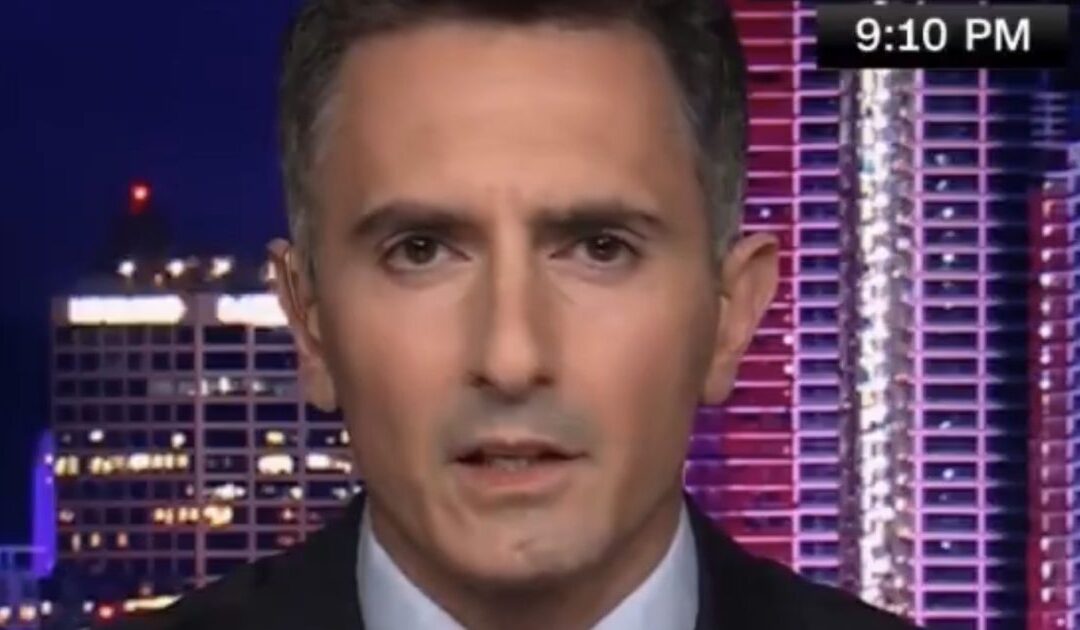
Swalwell’s lawyer Elias Dabaie on CNN.

A lawyer for the disgraced far-left Rep. Eric Swalwell has said his client is too “busy” to answer questions about the flurry of rrape and sexual assault allegations against him.

The California Congressman, who was among the favorites to win the state’s upcoming gubernatorial election, was hit by numerous allegations of rape and sexual assault on Friday evening.

During an appearance on CNN, Swalwell’s lawyer, Elias Dabaie, said his client had more important things to do than respond directly to questions about the claims.

“Well, let me start by telling you that we take these allegations very seriously,” Dabaie began.

”The Congressman categorically denies any misconduct took place, and we intend to vindicate his rights in court.”

“So, your investigation is ongoing. Why isn’t he here, though, to answer those questions?” asked host Elex Michaelson.

“Well, he has a campaign to run,” Dabaie responded. “He’s busy.”

”He’s taking these allegations seriously. And, again, as he told you in that video, he’s spending time with his family and his wife and his friends, and that’s his choice.”

In a video posted on X, Swalwell vowed to fight the allegations with “everything I have”.

“These allegations of sexual assault are flat false. They are absolutely false, they did not happen. They have never happened. And I will fight them with everything I have,” he said,.

“I do not suggest to you in any way that I am perfect or that I’m a saint. I have certainly made mistakes in judgement in my past.

”But those mistakes are between me and my wife and to her, I apologize deeply for putting her in this position.

”I also apologize to you if in any way, you have doubted your support for me. But I think you know who I am.”

Politico reported on Friday that Swalwell’s gubernatorial campaign is already imploding as a result of the allegations, with multiple staff resigning before the story broke.

Meanwhile, the majority of Swalwell’s supporters including California Senator Adam Schiff have pulled their endorsements and called on him to drop out the race.

Sleazebag Rep. Eric Swalwell’s California Governor Campaign Implodes After Former Aide Accuses Him of Sexual Assault — Multiple Staff Resign

The post Eric Swalwell’s Lawyer Says His Client is Just Too ‘Busy’ to Answer Questions About Rape Allegations (VIDEO) appeared first on The Gateway Pundit.

Go to Source
Author: Ben Kew

MORE LEFTIST VIOLENCE: UC Berkeley Student Douses Conservative TPUSA Table With Coffee — University Silent

MORE LEFTIST VIOLENCE: UC Berkeley Student Douses Conservative TPUSA Table With Coffee — University Silent

MORE LEFTIST VIOLENCE: UC Berkeley Student Douses Conservative TPUSA Table With Coffee — University Silent
April 11, 2026

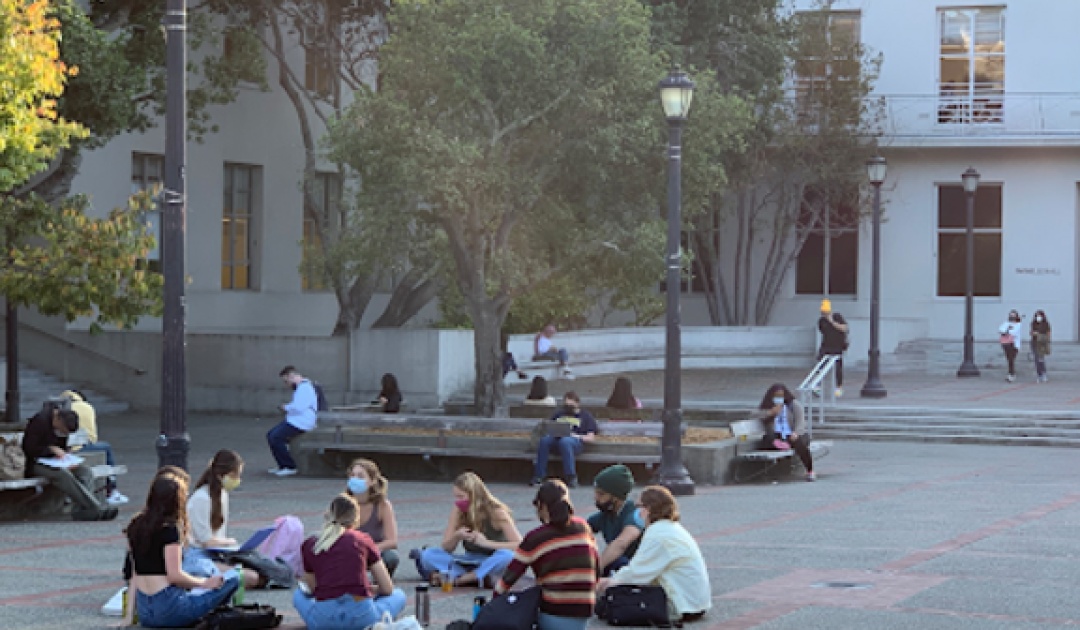
Students gather in a campus courtyard, sitting on the ground and engaging in discussion, with some individuals studying in the background.
UC Berkeley Extension Fall 2021.

A disturbing incident at the University of California, Berkeley, is once again raising serious questions about whether conservative students can safely and freely express their views on campus.

According to reporting from Campus Reform, a leftist student poured coffee over a table hosted by members of the Turning Point USA club on campus, damaging materials and disrupting outreach efforts.

The account comes directly from eyewitness John Paul Leon, who serves as president of the Berkeley TPUSA chapter and was present at the time of the incident.

Leon described how, on April 1, an unidentified student approached the group’s table under the pretense of interest, saying, “Wow, I’m interested in hearing more about this event,” before suddenly pouring coffee across the table and its contents.

The table had been set up to promote an upcoming speaking event titled “Women’s Rights or Human Rights,” which is set to feature Lila Rose, CEO of Live Action.

The event is expected to include a Q&A session and an on-stage debate with students—precisely the kind of open exchange universities claim to encourage.

Realistically speaking, no one is going to cry over a spilled cup of coffee. However, the incident reveals something far more serious: a willingness to engage in disruptive behavior without hesitation or consequence.

The normalization of this kind of conduct reflects a campus environment where political intolerance is not only present but increasingly accepted. Berkeley’s political climate did not develop in a vacuum. 

Many students arrive from K–12 systems with limited exposure to political debate or foundational civic knowledge.

Once on campus, students are often immersed in academic environments dominated by left-leaning perspectives, shaping views in a way that discourages dissent. 

The result is a campus culture that overwhelmingly leans in one ideological direction, with little room for opposing viewpoints.

That reality becomes visible in moments like this. When students feel comfortable openly vandalizing a table representing a political viewpoint, the issue is not the coffee—it is the underlying culture that permits and even encourages such actions.

Berkeley has long been associated with political activism, but repeated incidents targeting conservative groups raise legitimate concerns about whether the university is upholding its responsibility to protect viewpoint diversity.

Federal law and longstanding Supreme Court precedent affirm that public universities cannot discriminate against students based on viewpoint. Yet repeated incidents targeting conservative groups suggest that enforcement of those principles remains inconsistent at best.

UC Berkeley has faced scrutiny before over campus unrest and alleged failures to protect student expression. The latest incident adds to a growing body of evidence that certain viewpoints—particularly conservative ones—are not afforded the same level of tolerance.

At a university that prides itself on being the birthplace of the Free Speech Movement, the irony is difficult to ignore.

The post MORE LEFTIST VIOLENCE: UC Berkeley Student Douses Conservative TPUSA Table With Coffee — University Silent appeared first on The Gateway Pundit.

Go to Source
Author: Gregory Lyakhov