Newsmax Host Claims Heightened Security Concerns Over Cuba Feels Like a “False Flag”

Newsmax Host Claims Heightened Security Concerns Over Cuba Feels Like a “False Flag”

Newsmax Host Claims Heightened Security Concerns Over Cuba Feels Like a “False Flag”
May 21, 2026

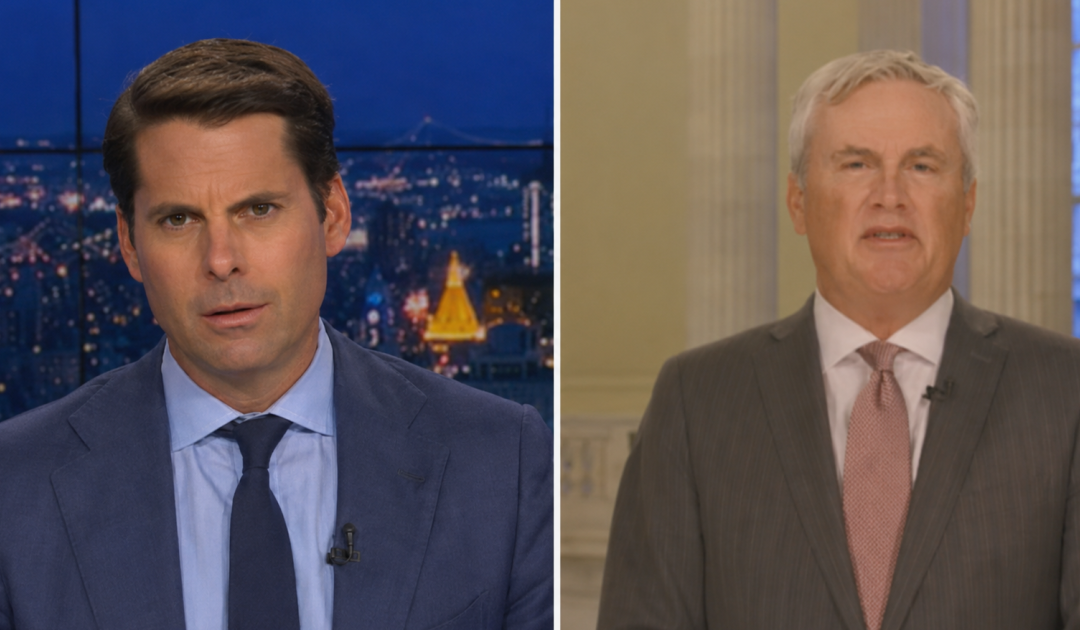
Screengrab of Senator James Comer via Newsmax

Newsmax host Rob Finnerty made an interesting claim regarding the current tensions between the United States and Cuba.

While conducting an interview with House Oversight Chairman James Comer, the Newsmax host told Comer that with gas sitting at $4.55, he finds it hard to believe that U.S. military operations in Cuba are an American First policy.

Finnerty then followed up his statement by asking Rep. Comer if he believes Cuba is a legitimate threat to the United States.

Comer responded, “If some country went in and loaded Cuba with the same drones that Iran had when we first started bombing Iran, then yes, I think it could be a threat.”

Finnerty then responded, “This just sounds like we’re trying to make the case to attack Cuba. I don’t buy it. It sounds like a false flag operation.”

WATCH:

Mediaite provided a transcript:

FINNERTY: Do you really think that Cuba’s a threat?

COMER: If some country went in and loaded Cuba with the same drones that Iran had when we first started bombing Iran, then yes, I think it could be a threat. I don’t think that’s there. I know John Ratcliffe has been on the ground. The CIA– he’s on the ground as we speak, talking to the Cuban officials. I really don’t think, Rob, it’ll get to any type of military action, but the president is threatening that. […] But, at the end of the day, I think that we’ve got to be on guard because of the new types of warfare that’s out there with these new drones–

FINNERTY: Well, I get it–

COMER: –we’re seeing play out in Iran.

FINNERTY: I understand that. Axios had a report this week that the U.S. is concerned, I’m sure you saw this, about a possible Cuba drone strike on Florida. And I’ll be honest, Mr. Chairman, I know that you’ve got the security clearance to know more about this, but to me, this just sounds like we’re trying to make the case to attack Cuba. I don’t buy it. It sounds like a false flag operation. Would you support military action in Cuba if it came to that? And I guess, more importantly, do you buy this report in Axios?

COMER: I know that I’ve been one of the biggest critics of our intelligence over the past ten years. They’re usually wrong. They usually do everything they can to get us to the point of warfare because that’s what they like to do, apparently. But at the end of the day, I don’t think anybody right now supports an invasion of Cuba or anything else. We’re hoping that this can turn diplomatically.

Finnerty and Comer’s remarks come just days after Axios reported Cuba has acquired over 300 military drones and top Cuban officials have discussed possibly using them to attack U.S. bases such as Guantanamo Bay.

Finnerty’s remarks may not seem so outlandish considering that, in 1962, the U.S. Department of Defense and the Joint Chiefs of Staff proposed staging false flag events, including deadly attacks on American military and civilian targets, under a plan known as Operation Northwoods, which was ultimately rejected by President John F. Kennedy.

The post Newsmax Host Claims Heightened Security Concerns Over Cuba Feels Like a “False Flag” appeared first on The Gateway Pundit.

Go to Source
Author: Anthony Scott
Germany’s Merz Pushes Special EU Status for Ukraine—Without a Vote, But With Big Consequences

Germany’s Merz Pushes Special EU Status for Ukraine—Without a Vote, But With Big Consequences

Germany’s Merz Pushes Special EU Status for Ukraine—Without a Vote, But With Big Consequences
May 21, 2026

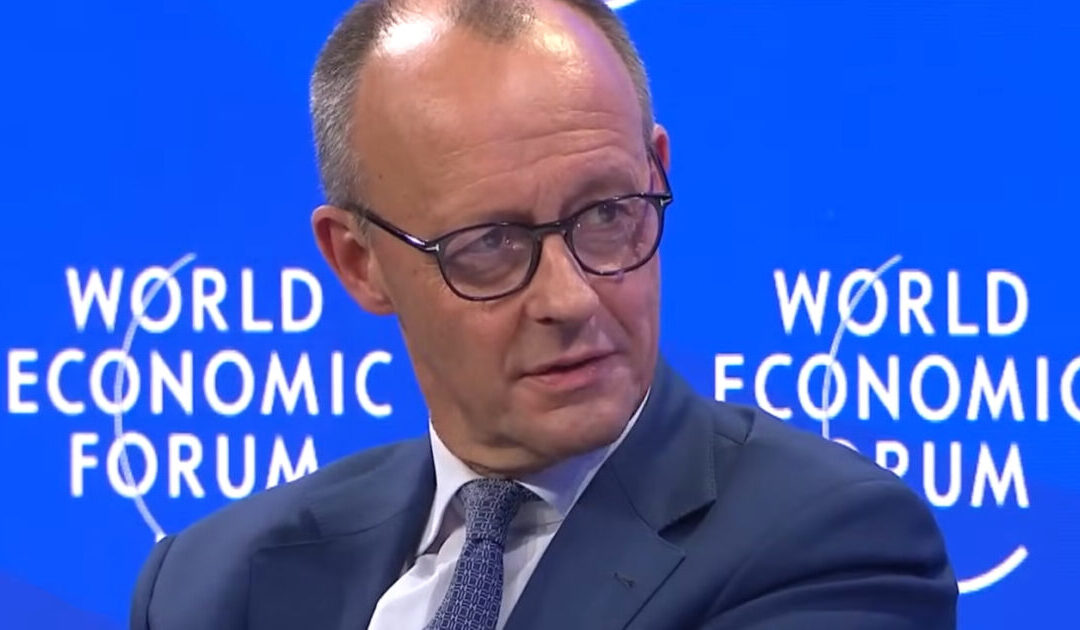
Freidrich Merz / WEF

A controversial push by Friedrich Merz to fast-track Ukraine into the inner workings of the European Union is triggering a growing backlash, as a chorus of critics warn the plan risks importing rampant corruption, instability, and economic disruption into the heart of Europe.

Central to the proposal, according to various media reports, is a newly made up form of “associated membership” for Ukraine—effectively granting Kyiv access to key EU institutions without full membership.

Under the plan, Ukraine would be allowed to take part in European Council meetings—where EU leaders set the bloc’s overall political direction—and in ministerial sessions of the Council of the European Union, which coordinates laws and policies among member states, albeit without voting rights.

It would also gain a presence within the European Commission, the EU’s executive body responsible for proposing and enforcing legislation; the European Parliament, which represents EU citizens and helps pass laws; and even elements of the EU’s judicial system, including roles linked to the European Court of Justice, which interprets and upholds EU law.

Merz has pitched the idea as a necessary response to Ukraine’s wartime situation. He claims it would “accelerate” the accession process and send a powerful signal of support.

But across Central Europe, the reaction has been far less enthusiastic. Many see the proposal as a reckless gamble with long-term consequences.

The core concern is simple: Ukraine remains one of the most corruption-ridden countries in Europe. Despite years of promises, reforms have been slow, uneven, and often superficial.

Billions of dollars in Western aid have poured into the country since the war began. Yet transparency remains limited, and questions about where that money ends up continue to mount.

The idea of rapidly integrating Ukraine into EU structures under these conditions, for detractors, is deeply troubling. It risks importing systemic corruption directly into the European system.

Even before the war, Ukraine struggled with entrenched oligarch networks and weak institutions. The conflict has only made oversight more difficult.

The concern is not just political—it is economic. Ukraine’s massive agricultural sector could severely disrupt markets across Central Europe.

Farmers in Poland, Hungary, and Slovakia have already sounded the alarm. Cheap Ukrainian imports have flooded local markets, undercutting domestic producers.

Full or partial EU integration would likely intensify that pressure. For many working families, it could mean lost income and economic instability.

There are also fears about labor markets. A large influx of Ukrainian workers could drive down wages and strain public services.

Many many, this represents a direct threat to economic sovereignty and social stability.

The proposal also carries significant and obvious geopolitical risks. By tying Ukraine more closely to EU institutions, Brussels could deepen its involvement in an ongoing war.

Merz’s plan includes a political commitment to extend EU security guarantees to Ukraine. Critics warn this could entangle the bloc in a broader conflict, saying it blurs the line between partnership and direct involvement.

There is also the issue of fairness. Several candidate countries—such as Serbia, Montenegro, North Macedonia, and Albania—have spent years, in some cases decades, navigating the slow, complex, and often frustrating EU accession process, implementing reforms and meeting strict criteria along the way. Turkey, despite its long-standing candidacy, has effectively been stalled for years, Some say placing Ukraine ahead of these nations—despite its ongoing war, economic instability, and unresolved corruption concerns—undermines the credibility of the entire accession framework and sends a message that political expediency now outweighs merit and reform.

Ukraine, by contrast, is being offered a fast track—despite far greater structural problems. That double standard has not gone unnoticed.

Even Merz has admitted that full EU membership remains unrealistic in the near term. The legal and institutional hurdles are simply too large.
Yet instead of addressing those challenges, Brussels appears eager to bypass them.

For many in Central Europe, the proposal confirms their worst fears. The EU, they argue, is increasingly driven by ideology rather than practical governance.

Zelensky’s push for deeper integration is also seen through a political lens. Analysts suggest it could help him secure domestic support amid ongoing war pressures.

But that raises a critical question. Should EU policy be shaped by the internal needs of a government facing mounting challenges?

For a growing number of Europeans, the answer is no. They believe the EU must prioritize its own citizens first.

The debate comes at a time of rising skepticism toward Brussels. Across the continent, voters are pushing back against policies seen as disconnected from reality.

Mass migration and the social cohesions problem that come with it, economic strain, and sovereignty are already major fault lines. Adding Ukraine into the mix could very well intensify those divisions significantly.

The post Germany’s Merz Pushes Special EU Status for Ukraine—Without a Vote, But With Big Consequences appeared first on The Gateway Pundit.

Go to Source
Author: Robert Semonsen

Chicago City Council Passes Ordinance to Conceal Election Workers Identities From Public

Chicago City Council Passes Ordinance to Conceal Election Workers Identities From Public

Chicago City Council Passes Ordinance to Conceal Election Workers Identities From Public
May 21, 2026

Document folder with silhouettes and a padlock symbol against a Chicago skyline, representing privacy and security in voter registration and personal data.

In a 42-8 vote, Chicago’s City Council voted to pass the Reverend Jesse L. Jackson Sr. Fair Access to Democracy Ordinance.  The ordinance will essentially ban the doxing of government workers, especially election workers, and bolster requirements for landlords to provide secure mailboxes in accordance with United States Postal Service rules.

An earlier version of the ordinance included the creation of “democracy zones,” which would have forbidden federal immigration officials from entering the areas outside of polling places.  That provision, however, was removed prior to its passage.

The doxing stipulation claims the information can be used by those who wish to cause “death, bodily injury, stalking, harassment, or intimidation” to the government workers.  Those whose information was disclosed would be able to bring civil action for “damages, injunctive relief, and reasonable attorney’s fees.”

Last year, local officials in Chicago were calling for federal agents tasked with tracking down dangerous foreign gang members and detaining violent criminals to remove their masks and to provide identification upon request.  Two Chicago-area U.S. Representatives co-sponsored the “No Secret Police Act,” requiring ICE agents to wear identifying information on their uniforms, as reported by WTTW.

CBS News reported that the debate got contentious with some fierce language slung amongst the aldermen, with one claiming  that a threat of putting “a knife to your throat” if the ordinance is not passed was made:

Debate over the ordinance grew heated, as some alders expressed fears about potential voter suppression in the upcoming November elections, while others said it’s already the role of the Chicago Board of Elections to make sure polling places are secure from voter interference.

“This federal government is going to rig the elections this November. Make no mistake about it. So, choose a side. You’re on the side of history, when Reverend Jackson was fighting to encourage voting rights and protect them, or you are on the side of the fascists taking those rights away,” said Ald. Byron Sigcho-Lopez (25th).

Ald. Scott Waguespack (32nd), who argued the ordinance was not yet ready for a vote by the full City Council, and said it’s already the job of the Chicago Board of Elections to secure polling places and protect voter privacy, said the threatening tone some of his colleagues used to pass the measure [was concerning.]

“It’s not about creating this situation here where dissent over a poorly drafted ordinance is something that should equate to divisive language that should be halted on the opinion of one person in this council,” he said. “One of the other comments yesterday, probably by one of the drafters, was if you don’t pass this, we will have a knife to your throat, and that kind of set me back a little bit when I was sitting in that committee meeting, because I heard that and I thought the same people who want me to vote on something recognizing the achievements of what is hopeful to be the long-lasting legacy of Jesse Jackson said, ‘If you don’t pass this we will have a knife to your throat.’”

The ordinance will also create the Reverend Jesse L. Jackson Sr. Working Group on Strengthening Access to Democracy.  The Working Group will “study and make recommendations regarding policies and practices that promote safe, fair, and accessible participation in elections within the jurisdiction of the City of Chicago.”

Among the “Purposes” of the group are “connecting with residents who are disengaged from the democratic process” and “increasing civic engagement and democratic participation” through “partnerships with community organizations, educational institutions, and local stakeholders,” sounding much like a taxpayer-funded ‘get out the vote’ campaign.

Earlier this week, The Gateway Pundit reported on Jessica Jackson’s public comment in Cook County last week, calling out the City Council for insinuating that black citizens were somehow having their voting rights taken away while insisting they focus on issues that are actually suppressing the black community:


The post Chicago City Council Passes Ordinance to Conceal Election Workers Identities From Public appeared first on The Gateway Pundit.

Go to Source
Author: Brian Lupo

Iran Threatens To Strike Nations Outside the Middle East if the US Resumes Attacks

Iran Threatens To Strike Nations Outside the Middle East if the US Resumes Attacks

Iran Threatens To Strike Nations Outside the Middle East if the US Resumes Attacks
May 21, 2026

Iranian missiles can reportedly reach as far as Europe – Wiki Commons

Will it turn into a global war?

While the negotiations to end the military conflict in Iran are ongoing, both the US and the Mullahs’ regime are making threats regarding what will happen if combat operations resume.

As US President Donald J. Trump warned of a ‘big hit’ if talks do not succeed, Iran vowed to take the war global, and attack countries outside the Middle East.

The New York Post reported:

“If aggression against Iran is repeated, the promised regional war will extend beyond the region this time,” Iran’s Revolutionary Guards said in a statement aired on state media.

The threat comes after Trump revealed he’d come close to scrapping his six-week cease-fire but changed his mind at the last minute in the hopes of more diplomatic talks.”

“’I was an hour away from making the decision to go today’, Trump told reporters on Tuesday. ‘We may have to give them another big hit. I’m not sure yet. You’ll know very soon’.”

The Iranian regime already threatened to retaliate by striking Middle East countries that house US bases – but now the threat is to take full advantage of their missile capabilities to strike long-range targets.

Tehran wouldn’t elaborate on what targets it could strike beyond the Middle East.

“Trump, for his part, has made clear that his primary goal to bring an end to the war centers on Iran’s commitment not to seek nuclear weapons.”

Read more:

(VIDEO) Trump Says Iran Ceasefire on “Life Support” After “Garbage” Proposal from Iran

The post Iran Threatens To Strike Nations Outside the Middle East if the US Resumes Attacks appeared first on The Gateway Pundit.

Go to Source
Author: Paul Serran

UNITE4FREEDOM: New York Voters File Federal HAVA Complaint Demanding Formal Review of Election Law Compliance

UNITE4FREEDOM: New York Voters File Federal HAVA Complaint Demanding Formal Review of Election Law Compliance

UNITE4FREEDOM: New York Voters File Federal HAVA Complaint Demanding Formal Review of Election Law Compliance
May 21, 2026

New York Voters File Federal HAVA Complaint Demanding Formal Review of Election Law Compliance

The following comes from Unite4Freedom

New filing follows successful citizen enforcement actions in Missouri and Colorado, where complainants secured the right to hearings under federal election law

ALBANY, NY — New York voters, working as volunteers with Unite4Freedom (U4F), have filed a formal administrative complaint under the Help America Vote Act of 2002 (HAVA), demanding a hearing on the record and a written determination regarding whether New York is complying with mandatory federal election law requirements.

The complaint, led by our New York volunteers and voters and joined by additional complainants, was filed with the New York State Board of Elections under Section 402 of HAVA.

Additional complainants include leadership from Project Civica, reflecting our growing collaboration among citizen-led organizations working to ensure lawful, transparent election administration ahead of the 2026 federal election cycle.

The filing presents a single legal question:

Is New York maintaining and using a single, uniform, official, centralized and accurate statewide voter registration list as required by federal law for the administration of federal elections?

The complaint alleges that New York’s own official statewide records reflect materially inconsistent figures across multiple federal election cycles, raising serious questions about whether the state can identify one authoritative statewide record as required by law.

Specifically, the filing points to discrepancies among statewide turnout figures, certified election totals, and statewide voter participation records for both the 2022 and 2024 federal election cycles.

The complaint asks basic questions New Yorkers deserve to have answered:

  • What exactly did state officials certify?
  • Can they prove those certified totals from the single official statewide voter registration record required by federal law?
  • Did they save the auditable items required under law?

For 2024 alone, New York’s own official records reflect 130,165 more votes counted than voters credited with voting. In 2022, the discrepancy was 35,312.

The complaint also identifies official records reflecting millions of apparent duplicate, unverifiable, incomplete, or otherwise anomalous registration conditions requiring explanation.

The complainants are not asking election officials to relitigate election outcomes or speculate about causes.They are asking for something far more basic:

A lawful administrative review, a formal evidentiary hearing, identification of the official statewide record required by federal law, and reconciliation of the state’s own reported figures.

This filing follows successful HAVA enforcement actions in other states.

  • In Missouri, a citizen complainant secured judicial recognition of her right to proceed under the HAVA administrative complaint process after state officials attempted to block review. Missouri was ordered to provide the process federal law requires, including a formal hearing on the record.
  • In Colorado, a similar HAVA complaint advanced to public administrative review, reflecting growing citizen use of HAVA’s federally mandated enforcement process.

There is a growing trend of citizens using HAVA’s federally mandated enforcement mechanism to demand accountability and statutory compliance.

“Federal election law is not optional,” said Unite4Freedom Chairman Harry Haury. “Congress required states to maintain specific systems, records, and procedures to secure safe, accurate and honest federal elections. Citizens have every right to demand compliance when official records raise serious unresolved questions.”

The complaint requests:

  • acceptance of the complaint under New York’s HAVA process;
  • a formal hearing on the record;
  • a written determination regarding compliance with federal law;
  • identification of the authoritative statewide voter registration record;
  • identification of the related voter histories;
  • reconciliation of conflicting statewide official figures;
  • preservation of relevant statewide records, audit logs, and change-history records; and
  • corrective action if violations are found.

Under HAVA, states that accept federal election funding must maintain an administrative complaint process allowing citizens to raise allegations of violations of Title III requirements.

This New York filing represents another use of this powerful federal accountability framework.

As similar efforts in Missouri and Colorado have already demonstrated, citizens do not need permission to insist that election officials comply with the law. Unite4Freedom is also rolling out direct federal litigation across the country challenging what appears to be extensive malfeasance in office of various state and local officials and bureaucrats.

Visit unite4freedom.com/litigation to view the New York Complaint as well as others.

Reach out to Media@Unite4Freedom.com for additional information or to request media appearances.

The post UNITE4FREEDOM: New York Voters File Federal HAVA Complaint Demanding Formal Review of Election Law Compliance appeared first on The Gateway Pundit.

Go to Source
Author: Joe Hoft