
China Off-Balance-Sheet Debt Exceeds GDP of Most Nations

China Off-Balance-Sheet Debt Exceeds GDP of Most Nations

China Off-Balance-Sheet Debt Exceeds GDP of Most Nations
May 19, 2026

Woman washing clothes by a tranquil waterway in a traditional village setting, surrounded by rustic buildings and lush green scenery.
As of 2025, about 32% of the Chinese population still lives rurally. Approximately half earn less than $10 per day, and about 20% have disposable income of less than $4 per day. Photo via Facebook

For decades, there have been claims that China had the fastest-growing economy, and that it would eventually overtake the U.S. as the world’s largest economy. However, the fastest-growing economies are always developing economies because mature economies do not have as much room to grow.

In other words, a country with a per-capita GDP of $80 per month, as China had in the year 2000, has far more room for rapid expansion than a country like the United States, where the figure now stands at around $7,000 per month.

There is also the concept of low-hanging fruit. When a country has no highways or rail infrastructure, building highways and railways causes GDP to skyrocket. But once all major cities are connected, building additional highways and rail lines has only a marginal impact on economic growth.

A case in point is China’s famous high-speed rail system. Once highways and conventional railways already existed in China, converting to high-speed rail represented a massive economic investment and a large accumulation of debt, while the resulting increase in GDP was relatively minimal. For one thing, high-speed rail cannot be used to carry freight.

While China is still building high-speed rail lines, linking small communities with other small communities, the world is moving toward a remote-work model, making the movement of people a smaller contributor to GDP. Moving freight, however, remains critically important. Despite having a population less than one-quarter the size of China’s, the United States operates approximately 220,000 kilometers of total rail, about 33 percent more than China’s 162,000 kilometers, the vast majority of which is dedicated to freight.

Along with this development boom in China came debt. Because of the centrally planned economy, the central government was able to order local governments to invest and develop by creating debt. That debt was financed largely through real-estate sales, as the Chinese government controls actual land ownership rather than simple lease arrangements, which is what individual “homeowners” in China actually possess.

In order to keep this debt from detracting from the appearance of investment and economic performance, large portions of the debt were kept off the balance sheet.

In accounting, off-balance-sheet debt, sometimes called incognito leverage, describes an asset, debt, or financing activity that does not appear on an entity’s balance sheet. The structure involves using legal arrangements to borrow money, acquire assets, or take on obligations that do not appear on the balance sheet. Common instruments include operating leases, special purpose entities (SPEs), and joint ventures.

In China’s case, the instrument is the Local Government Financing Vehicle, or LGFV, a government-created special purpose entity that borrows on behalf of local governments while keeping the resulting debt off official government balance sheets.

The LGFV structure is rooted in a 1994 budget law that banned local governments from issuing bonds or running deficits. To work around this, local governments created special-purpose entities to borrow from banks and capital markets, primarily to fund infrastructure. Because LGFV debt does not count toward official government debt ceilings, no definitive official statistics exist on total liabilities.

Because much of this debt is off the balance sheet, it is difficult to estimate accurately, and different methods produce different totals. The IMF estimates LGFV debt at $9.04 trillion as of the end of 2024. Other approaches produce significantly higher figures. A compilation of interest-bearing liabilities across roughly 4,000 LGFVs places the total at $12.10 trillion, while broader market estimates place the range between $8.35 trillion and $11.13 trillion. Overall, estimates suggest that China’s LGFV debt load has grown from approximately $1.2 trillion in 2014 to between $9 trillion and $14 trillion in 2024, representing roughly 50 to 80 percent of China’s GDP.

Only four countries, the United States, China itself, Germany, and Japan, have total GDPs exceeding $4 trillion. At the IMF’s conservative estimate, LGFV debt alone exceeds the GDP of every other nation on earth. China’s foreign-exchange reserves, the largest in the world, stood at approximately $3.2 trillion at the end of 2024, meaning estimated LGFV debt is larger than the foreign-exchange reserves of any country on earth and roughly three to four times larger than China’s own reserves.

The IMF has warned that even a 5 percent LGFV default rate would be equivalent to a 75 percent increase in the banking system’s non-performing loans. Debt not backed by earnings sufficient to cover interest payments already amounts to 37 percent of GDP.

Additionally, China is throwing good money after bad. Proof that massive state investment now has minimal impact on GDP is that only 3 percent of LGFVs post a return on equity of 4 percent or higher, while approximately 10 percent record net losses. Aggregate net profit for 2024 totaled $76.5 billion, yet government subsidies exceeded $139.1 billion, meaning that absent subsidies, nearly half would be loss-making.

Following the collapse of land-sale revenues after 2022, the primary source of financing for LGFVs, many vehicles lost cash flow and have relied on bank forbearance, debt refinancing, and repayment-deadline extensions. In November 2024, Beijing announced a 12 trillion yuan package to address hidden debt, the largest policy intervention directed at local-government liabilities.

However, Fitch Ratings estimated that the restructured portion covered only approximately 25 percent of the hidden debt load. Beijing’s own executive director to the IMF placed total LGFV debt at 44 trillion yuan, roughly three times the figure cited at the time of the restructuring announcement.

China has accumulated a second category of debt that exists outside formal accounting ledgers. Shadow banking refers to credit intermediation conducted outside the regulated banking system, primarily through non-bank entities and bank off-balance-sheet vehicles that circumvent the capital, liquidity, and lending restrictions imposed on commercial banks.

A key characteristic distinguishing China’s shadow-banking system from the Western model is that Chinese commercial banks themselves dominate the system, routing credit through structures that keep liabilities off their books while retaining effective control.

The primary instruments include wealth-management products, trust loans, entrusted loans, bankers’ acceptances, and informal lending. Wealth-management products are issued by banks, trusts, and securities firms and offer returns above standard deposit rates. They are sold as savings products that do not appear on the issuing institution’s balance sheet. Depositors’ funds are packaged into WMPs and deployed into property developers, LGFVs, or other restricted borrowers while the bank’s balance sheet shows nothing.

Trust companies, separately regulated firms with broad latitude to lend to restricted industries, including real estate and LGFVs, serve as conduits through which state banks on-lend to borrowers they cannot officially finance. Entrusted loans are made by one non-bank party to another borrower using a bank as a servicing agent, a structure necessitated by Chinese legislation prohibiting direct lending between companies.

Bankers’ acceptances are certificates issued by banks promising future payment, allowing financing to occur without a formal loan appearing on either party’s books. Informal lending consists of loans between private entities with no payment agents, operating entirely outside the banking system and unreported to regulators.

These mechanisms expanded after the 2008 global financial crisis as fiscal stimulus and tight formal credit controls pushed borrowers toward unregulated channels. Credit through shadow channels grew at an annualized rate of 34 percent from 2010 to 2013,  with the sector reaching an estimated 60 trillion RMB before regulatory interventions reduced it by 16 trillion RMB by the end of 2019. Broad shadow banking assets rose to RMB 53.3 trillion in 2024, equivalent to approximately $7.3 trillion. China’s banking regulator previously estimated shadow banking at 84.8 trillion yuan ($12.9 trillion) in 2019, equivalent to 86 percent of GDP.

Shadow banking and LGFV debt are distinct pools that fund different borrowers through different mechanisms. LGFVs finance government infrastructure through special-purpose entities; shadow banking finances property developers, small businesses, and consumers through non-bank channels. However, local governments have used both simultaneously, and LGFVs themselves borrow through shadow banking channels, meaning the two systems are interconnected. A stress event in one transmits directly into the other.

Stacking the figures, the IMF estimates LGFV’s hidden debt at approximately $9 trillion, while broader market estimates place it between $9 trillion and $14 trillion. Shadow-banking assets stand at approximately $7.3 trillion, and official local-government bonds total roughly $7.5 trillion. The conservative combined total is approximately $24 trillion, while the high-end estimate approaches $29 trillion, against China’s official GDP of roughly $18 trillion.

China’s total non-financial debt, government, corporate, and household combined, reached 302.3 percent of GDP in 2025, according to the National Institution for Finance and Development, and 312 percent as of 2024, according to the IMF’s Article IV Consultation, up from 245 percent in 2019. By comparison, total U.S. public and private debt stood at approximately 265 percent of GDP in 2024.

The post China Off-Balance-Sheet Debt Exceeds GDP of Most Nations appeared first on The Gateway Pundit.

Go to Source
Author: Antonio Graceffo
BREXIT BETRAYAL: Failing British PM Starmer Flirts With Rejoining the EU To Sabotage His Challenger Burnham’s Chances in by-Election

BREXIT BETRAYAL: Failing British PM Starmer Flirts With Rejoining the EU To Sabotage His Challenger Burnham’s Chances in by-Election

BREXIT BETRAYAL: Failing British PM Starmer Flirts With Rejoining the EU To Sabotage His Challenger Burnham’s Chances in by-Election
May 19, 2026

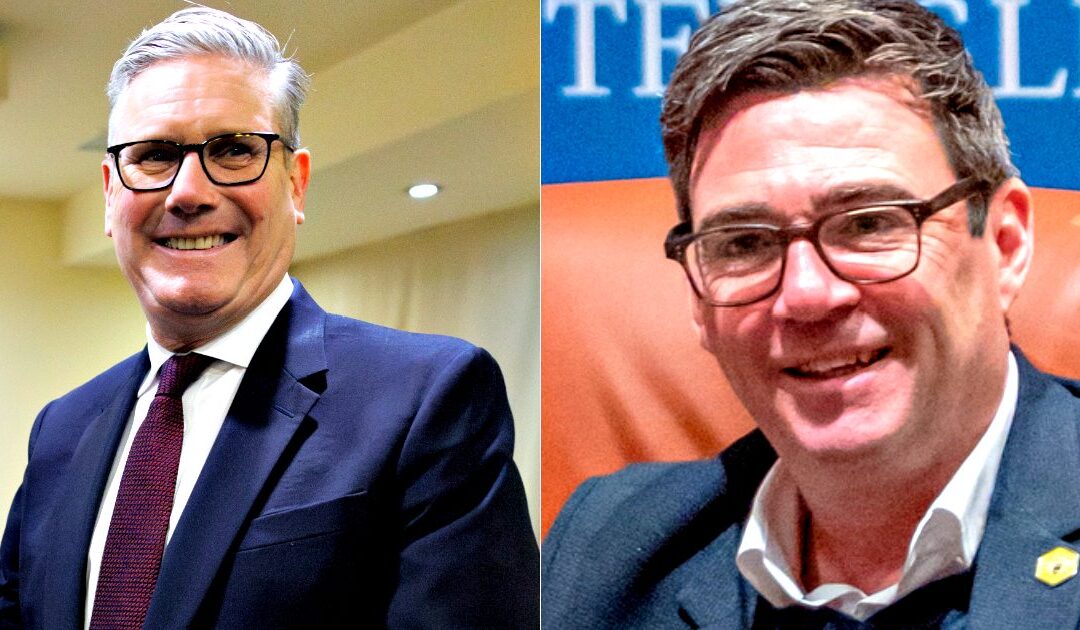
Failing PM Starmer and his challenger, Manchester mayor Burnham – Wiki Commons

Peculiar situation has Starmer rooting for Reform UK against his own party.

Polls among the Labour Party sitting MPs show that Manchester mayor Andy Burnham is the clear favorite to become the new party leader (and British prime minister) in a challenge to scandal-crisis-plagued Keir Starmer.

But first, Burnham has to win the by-election in Makerfield, a constituency where Nigel Farage’s Reform UK is polling very strongly.

So, Starmer is actively undermining Burnham’s electoral chances by flirting with Britain rejoining the EU, knowing this will alienate many (perhaps most) of the voters.

Yes – Starmer is counting on Reform UK to keep his challenger out of Parliament. Crazy times.

The Telegraph reported:

“The Prime Minister acknowledged on Monday that a debate on Brexit ‘might happen years down the line’, while a Downing Street spokesman did not rule out the prospect of a Labour pledge to rejoin the EU before the next election.”

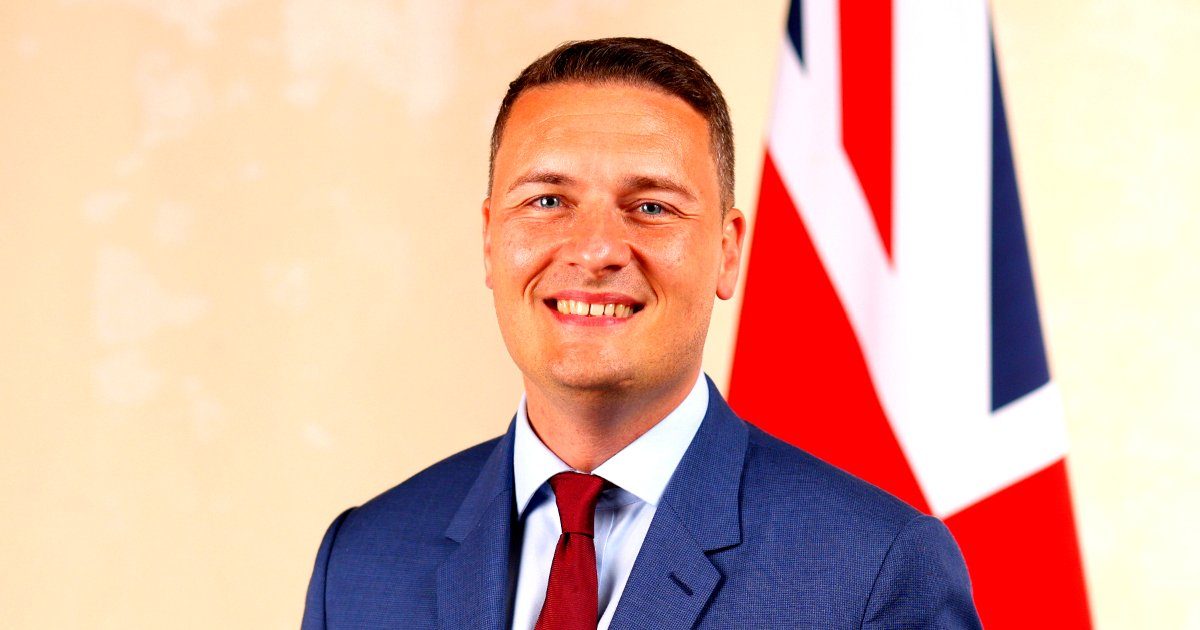
Smiling man in a blue suit with a red tie poses in front of a blurred British flag background.
Former Health Secretary Wes Streeting – Picture by Lauren Hurley / No 10 Downing Street/Wiki Commons

While Burnham has expressed a desire to reverse the 2016 referendum, he is trying to distance himself from his comments, since Makerfield is a strong constituency that strongly supports Brexit.

“Sir Keir’s intervention is likely to raise eyebrows among allies of Mr. Burnham, who previously accused Mr. [Wes] Streeting of attempting to derail his campaign by bringing up Brexit before the by-election in a Leave-voting area.

Asked whether he wanted to rejoin the EU at some point, Sir Keir said: ‘This year, we have another summit with the EU where we’re going to take a really important leap forward in terms of the relationship, bring us closer to Europe’.”

Starmer privately says that he will not change his stance on the EU before the next election, but Cabinet ministers push for closer ties with Europe to win back Left-wing voters from the Green Party.

Read more:

Failing British PM Starmer Attacks Trump and Putin, Tries to Avoid Blame for His Own Energy Fiasco – PLUS: Scandal Erupts as It’s Revealed He Was ON A HOLIDAY as Iran War Escalated

The post BREXIT BETRAYAL: Failing British PM Starmer Flirts With Rejoining the EU To Sabotage His Challenger Burnham’s Chances in by-Election appeared first on The Gateway Pundit.

Go to Source
Author: Paul Serran

Democrat Senate Candidate with Nazi Tattoo Caught Making a Repulsive Porta Potty Admission in Unearthed Social Media Post

Democrat Senate Candidate with Nazi Tattoo Caught Making a Repulsive Porta Potty Admission in Unearthed Social Media Post

Democrat Senate Candidate with Nazi Tattoo Caught Making a Repulsive Porta Potty Admission in Unearthed Social Media Post
May 19, 2026

Graham Platner – Screencap of YouTube video.

Far-left Maine Democrat Senate candidate Graham Platner is under fire once again for previous social media posts, this time involving something he claims he does in public toilets.

As The Gateway Pundit previously reported, Platner, a 41-year-old Marine veteran turned radical leftist, came under fire last year after it was revealed that he has a chest tattoo resembling the infamous SS Totenkopf skull and crossbones, a symbol straight out of Hitler’s playbook.

He claims he got it on a drunken liberty stint in Croatia and had no idea it screamed “Nazi,” but CNN’s KFile dug up deleted Reddit posts from 2019 where Platner discussed the very same symbol and its Nazi ties.

News outlets have since discovered more Reddit posts by Platner, which show him mocking rural white people, calling himself a communist, and calling Jesus a “zombie.”

Now, Fox News has uncovered a March 2017 post on Reddit’s r/Military forum by Platner where he responded to a discussion about ‘nostalgic’ military smells.

What he said was quite disturbing.

“I still have to jerk off every time I sit in a porta-potty —-er… that blue water smell conditioned me,” he wrote.

The post was made under P-Hustle,” a now-deleted Reddit account that Platner has admitted belonged to him.

Fox News also reveals that Platner also gushed over a crude pe*is drawing inside a portable toilet while deployed overseas.

He praised the image in disgusting terms, calling it “beautiful,” “engorged and veiny,” and moving “towards its penetrative glory.”

“Oh s—!!!,” Platner added. “You’ve got the Hot Rod C*** from Manas!”

Platner had claimed he was joking in other Reddit posts.

“You should read the comments in context. It’s very clear I’m joking,” he previously told Fox News. “It’s called sh*t-posting. It’s when you argue with people on the internet and try to bother them.”

“So, yeah, no, it’s very obviously not true.”

While Platner’s Reddit posts are alarming, he has even more awful things planned for America should he win the Maine Senate seat in November.

The post Democrat Senate Candidate with Nazi Tattoo Caught Making a Repulsive Porta Potty Admission in Unearthed Social Media Post appeared first on The Gateway Pundit.

Go to Source
Author: Cullen Linebarger

New Book Depicts France’s Macron as an Indecisive Character, Desperate To Be Loved and Totally Dependent on His Wife Brigitte

New Book Depicts France’s Macron as an Indecisive Character, Desperate To Be Loved and Totally Dependent on His Wife Brigitte

New Book Depicts France’s Macron as an Indecisive Character, Desperate To Be Loved and Totally Dependent on His Wife Brigitte
May 19, 2026

Brigitte is the powerful one in the couple, Tardif claims.

We’ve been reporting here on TGP about the new book ‘Un couple (presque) parfait’ [An (Almost) Perfect Couple], by Paris Match journalist Florian Tardif, and how it sheds light on the rulers of France, Emmanuel and Brigitte Macron.

The first revelation from the book to reach the world’s headlines was the fact that the ‘slap’ caught a year ago on camera as the couple disembarked from the presidential plane in Vietnam was triggered by Brigitte discovering a message on her husband’s phone from Golshifteh Farahani, a much younger Franco-Iranian actress.

But now, further reports reveal how the French president is depicted in the book as a 48-year-old indecisive man suffering from ‘good pupil’ syndrome – a man stuck under the thumb of his older wife, Brigitte Macron.

The Telegraph reported:

“Mrs. Macron is presented as the more politically astute, emotionally intelligent and decisive of the two, while Mr. Macron is tormented by a need to be loved and an acute anxiety over becoming irrelevant once the presidential curtain falls.”

Brigitte slapped Macron out of jealousy, the book says

One ‘intimate’ friend of the couple is quoted as saying that the psychological ascendancy that Brigitte has over Emmanuel is an impressive thing.

“’[Macron] is afflicted by the syndrome of the good pupil [bon élève]. He needs to know everything, understand everything, feel everything, before he can pronounce. Otherwise, he stays silent’, writes the author.”

The author shows Macron to be – much as we have here on TGP – a ‘domestic lame duck hunting for relevance abroad’.

Book suggests Brigitte totally controls her husband

“Tardif describes Brigitte as deeply suspicious of ambitious women around her husband. On one occasion, spotting a photo of a young woman in the palace corridor, she declared flatly: ‘That one is not coming into the Élysée’. It is a vigilance, one friend notes, that has ‘contributed to the president being surrounded predominantly by men’.”

At one point in the book, the author shows Brigitte afraid of ‘having done all of this for him to abandon [her]’.

“Assessing the book, Le Monde wrote: ‘It is the curse of the final days of a presidential term: as power slips away and control over people and events loosens, tongues are loosened and the pretenses are laid bare’.”

Read more:

Peter Sweden: IT’S SPREADING – Massive Farmers Protest in Germany (Video)

The post New Book Depicts France’s Macron as an Indecisive Character, Desperate To Be Loved and Totally Dependent on His Wife Brigitte appeared first on The Gateway Pundit.

Go to Source
Author: Paul Serran

WATCH: Trump Praises Liberal Billionaire Mark Cuban at White House TrumpRX Event, Says Kamala Harris Endorsement Was “a Big Mistake”

WATCH: Trump Praises Liberal Billionaire Mark Cuban at White House TrumpRX Event, Says Kamala Harris Endorsement Was “a Big Mistake”

WATCH: Trump Praises Liberal Billionaire Mark Cuban at White House TrumpRX Event, Says Kamala Harris Endorsement Was “a Big Mistake”
May 19, 2026

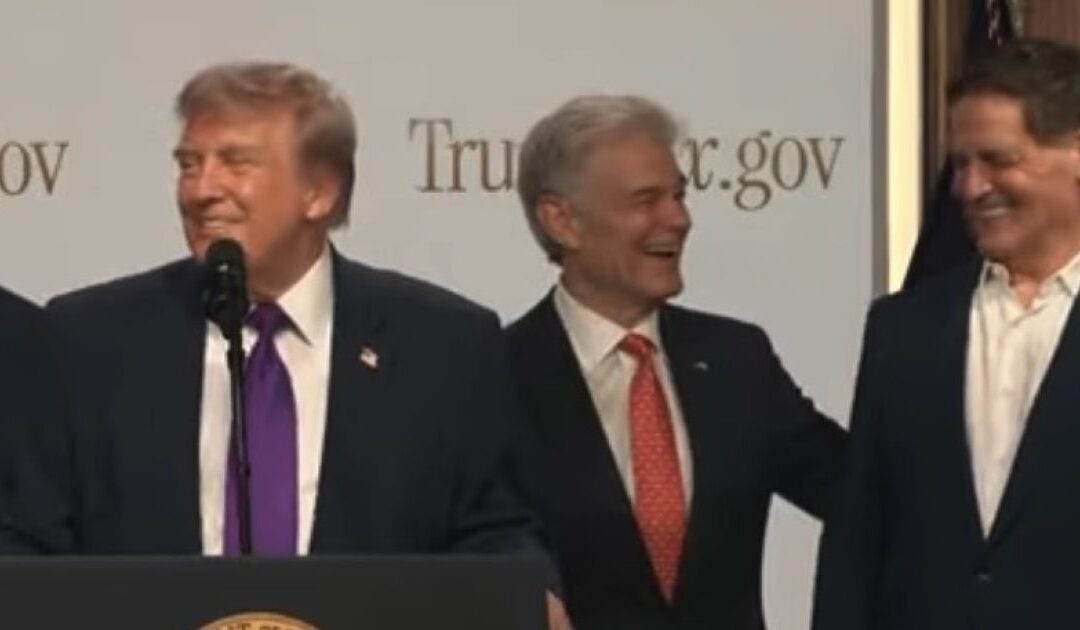
Mark Cuban, the liberal former Dallas Mavericks owner and Shark Tank co-host, made an appearance alongside President Trump at the White House on Monday to announce an expansion of the President’s TrumpRX website. 

Cuban’s online pharmacy, Cost Plus Drugs, along with Amazon Pharmacy and GoodRx, are set to list over 600 generic drugs on TrumpRX at lower costs for consumers. Cuban said 559 of the drugs come from his company.

“I’ve been the biggest proponent of TrumpRX.com,” Cuban said in brief remarks at the event. “Republicans want cheaper drugs. Independents want cheaper drugs. Democrats want cheaper drugs. And together, I think we’re going to do something special.”

However, Cuban has never supported Trump, frequently attacking him and supporting Kamala Harris in 2024.

One America News Network’s Daniel Baldwin asked the President about Cuban’s history as a Never Trumper, and Trump squashed the beef.

“he’s got a good company, and he’s going to do a lot of business with this,” Trump said, describing Cuban as “very gracious.” He continued, “I think I have a lot of respect for Mark, frankly, and I always have.”

WATCH:

Baldwin: It’s pretty remarkable seeing you and Mark Cuban up there, and the fact that, obviously, Mark endorsed Kamala Harris back in 2020–

Trump: Well, he made a mistake; it was a big mistake.

Baldwin: What does this say about what you two are building here?

Trump: Well, it says we love people, we love our country. He wants to, he’s got a good company, and he’s going to do a lot of business with this, and I’m going to get drugs out through Amazon, through the whole group, and we’re going to get drugs out. And Mark wanted to be a part of it, and I think Mark was very gracious. He said, “This is something that really works, the first time you’ve seen it.” And he had to believe that if he said it about me, you have to understand that. But look, I think I have a lot of respect for Mark, frankly, and I always have.

Later, Cuban spoke to reporters, who asked him about his plans for a Presidential run, his past criticism of Trump, and Trump’s comments about his support for Harris.

Cuban said, “Hell no” when asked about a future White House bid and chalked up his past hatred for Trump as election season rhetoric. “He was playing,” Cuban added of Trump calling his Harris endorsement a “mistake.”

He further declined to say whether he regrets supporting Kamala Harris on the campaign trail. “I’m not going into my politics at all,” he said.

WATCH:

The post WATCH: Trump Praises Liberal Billionaire Mark Cuban at White House TrumpRX Event, Says Kamala Harris Endorsement Was “a Big Mistake” appeared first on The Gateway Pundit.

Go to Source
Author: Jordan Conradson