Iranian Drone Strike on the UAE Ignites Fire Near Nuclear Plant – No Radiation Leak Reported
May 17, 2026
UAE’s Barakah Nuclear Power Plan – Wiki Commons
To launch missile and drone attacks at nuclear power plants is the ultimate irresponsibility.
The cease-fire between the US and Iran, fragile as it is, still holds, but in the meantime, the UAE and Iran have been exchanging strikes back and forth, in a show of instability in the Middle East.
Today, it arises that a drone strike sparked a fire near the UAE’s Barakah nuclear plant.
Emirati officials say that no injuries or radiation leak have been reported.
UAE: drone strike at Barakah NUCLEAR power plant
Fire in electrical generator outside inner perimeter under control
“A drone strike sparked a fire on the perimeter of the UAE’s Barakah nuclear power plant on Sunday, further straining an already fragile ceasefire linked to the Iran conflict.
The Abu Dhabi Media Office said an electrical generator caught fire outside the main facility. The statement added there was no radiation leak or injuries reported, and confirmed the plant continued operating normally.”
UPDATE: UAE says investigations under way to determine source of attack near Barakah nuclear power plant, adds drones launched from “western border”
— Al Jazeera Breaking News (@AJENews) May 17, 2026
The western UAE border is the one that faces Iran right across the Strait of Hormuz.
“The IAEA secretary general Rafael Grossi expressed his ‘grave concern about the incident’ and said that ‘military activity that threatens nuclear safety is unacceptable’.
He urged all parties ‘for maximum military restraint near any NPP [Nuclear Power Plant] to avoid the danger of a nuclear accident’.”
UAE’s MoD says a drone struck an electrical generator outside the Barakah Nuclear Power Plant in UAE.
Two others were intercepted.
The UAE adds the UAVs came from the western border — no source identified yet. pic.twitter.com/VwZHmNHIwf
Popular NPR Host Quits Amid Internal Probe into Inappropriate Workplace Conduct
May 17, 2026
The longtime co-host of NPR’s popular history podcast “Throughline” has quietly left the network following an internal investigation into allegations of inappropriate workplace conduct, according to reports.
Ramtin Arablouei, 43, who has been at NPR since 2015 and co-hosted “Throughline” alongside Rund Abdelfatah, left the broadcaster after a female employee on the show filed a complaint in March.
The employee alleged that Arablouei made her uncomfortable during frequent one-on-one meetings by divulging extensive details of his personal life. She also claimed he made inappropriate remarks during team meetings, including a comment describing a producer as “a case for race mixing” that left staff uncomfortable, according to a report from the New York Post.
Additionally, the employee accused Arablouei of flirting with guests and a contract worker associated with the podcast.
NPR’s senior assistant general counsel, Ali Parker, conducted interviews with multiple “Throughline” staff members over the course of several weeks.
On April 1, Parker informed the complaining employee that many of her allegations had been corroborated. That same day, podcast staff were notified in an internal meeting that Arablouei was leaving NPR, though no specific reason was provided at the time.
NPR has not issued a public announcement about Arablouei’s departure. His official bio page on the NPR website, which previously highlighted his role as co-host of “Throughline,” has been removed, though his archive of past stories remains accessible.
Rund Abdelfatah is currently hosting the show alone.
In a recent internal email to staff, NPR’s vice president of podcast strategy, Yolanda Sangweni, said the network is “working closely with the Throughline team on the show’s future direction” and expressed gratitude to Abdelfatah for continuing as the sole host.
NPR spokesperson Heather Walls issued a general statement on workplace conduct, saying, “Any concerns raised through appropriate channels are reviewed carefully. We take allegations regarding workplace conduct seriously and are committed to maintaining a safe, respectful and professional environment for all employees.”
False Framing of the GENIUS Act: Democrats Love Regulation, But Not When It Comes From President Trump
May 17, 2026
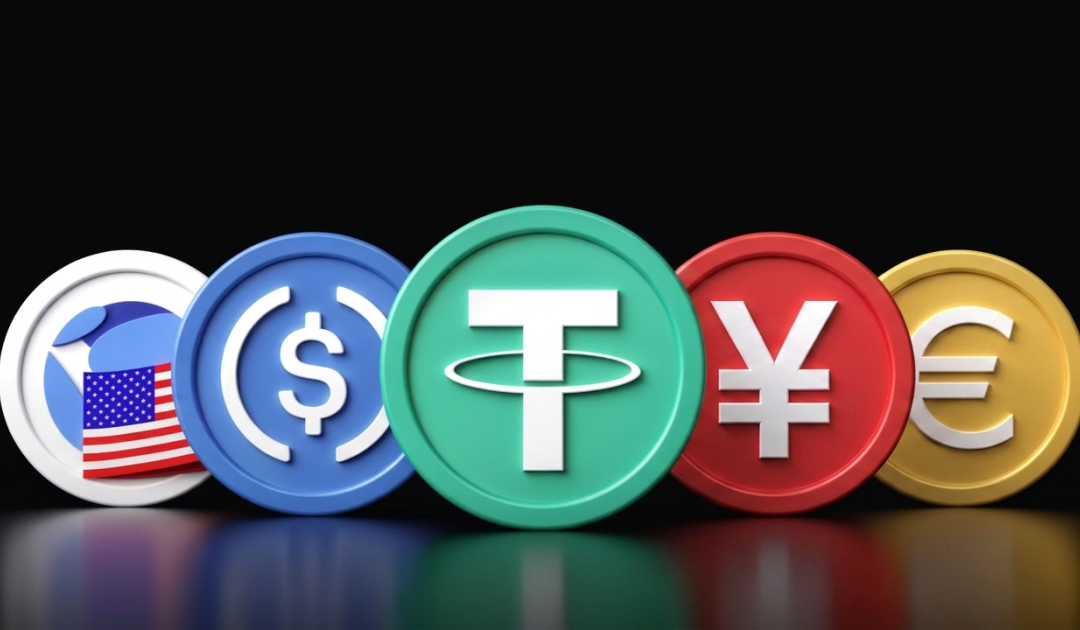
Democrats oppose the GENIUS Act because they argue it could benefit President Trump, his associates, and wealthy individuals with political influence. The law is necessary, however, because stablecoins have already become a massive, largely unregulated financial market, creating consumer, national security, and strategic risks if the U.S. fails to establish its own rules. Image generated by Google Gemini.
In July 2025, President Trump signed the GENIUS Act, the first federal law in U.S. history to regulate stablecoins, which passed with strong bipartisan support: 68–30 in the Senate and 308–122 in the House.
Democrats oppose the GENIUS Act because they claim its lighter regulatory framework could benefit large, well-funded stablecoin issuers, including companies they allege may have ties to President Trump or his associates. Critics argue the bill gives non-bank issuers a potential regulatory advantage and raises concerns about political favoritism and conflicts of interest.
However, the GENIUS Act is necessary because stablecoins have already grown into a massive, systemically important financial market operating largely outside the federal regulatory framework. Without clear U.S. rules, the industry would continue developing under foreign regulations, creating consumer and national-security risks while allowing strategic competitors to shape the future of dollar-backed digital finance.
A stablecoin is a privately issued digital currency pegged to $1.00. Unlike Bitcoin, it doesn’t fluctuate. You can send it anywhere in the world instantly. The biggest issuers are Tether and USD Coin (USDC). Private companies run them, not governments. The business model is simple: a user deposits $1,000, gets 1,000 digital tokens, and the company invests that $1,000 in U.S. Treasury bonds and keeps the interest, say 4–5%, while the user collects nothing. At scale, this is enormously profitable.
Tether alone holds over $100 billion in reserves and earned roughly $6.2 billion in 2023. Before the GENIUS Act, none of this was federally regulated. Companies were not legally required to verify that they held the dollars they claimed to hold, faced no mandatory audits, had no anti-money laundering obligations, had no consumer protections, and had no mechanism for law enforcement to freeze or seize funds.
Tether had for years resisted full independent audits, raising legitimate questions about whether it actually held the dollars backing its tokens. The law changed that, requiring issuers to hold $1 in cash or short-term Treasury bills for each token issued, to publish monthly disclosures of reserve composition, to follow anti-money laundering rules under the Bank Secrecy Act, and to comply with court orders to freeze or destroy tokens.
The necessity of the law is factually grounded. Stablecoin transaction volumes had grown to exceed those of Visa and Mastercard combined by 2024, up 28% year over year. This represented a systemically significant payment infrastructure operating entirely outside the federal regulatory framework governing every other payment system of comparable scale. Dollar-denominated stablecoins also extend the reach of the U.S. dollar globally, including into economies where people distrust their local currency.
Without a domestic framework, that market was being shaped by foreign jurisdictions. The EU had already passed stablecoin regulations, and Hong Kong followed in May 2025. American companies would have faced the choice of operating under foreign rules or remaining in legal limbo domestically.
From a national-interest standpoint, the case is straightforward. A major and growing financial market was unregulated, creating consumer risk, systemic risk, national security vulnerabilities through potential sanctions evasion, and ceding strategic ground to foreign competitors.
Across social media, there are claims that through the GENIUS Act, President Trump is transferring U.S. dollars to offshore oligarchs who then invest in U.S. Treasuries. Critics also claim this constitutes a form of economic imperial domination. These criticisms mirror statements from the Chinese Communist Party (CCP) and China-backed social media accounts. Essentially, China sees the law as a form of extraterritorial U.S. financial power projection and correctly recognizes it as another obstacle to the broader international use of the yuan as a trade settlement and reserve currency.
The claim about offshore oligarchs is, of course, false. The law actually pulls foreign stablecoin issuers into U.S. jurisdiction by prohibiting them from offering payment stablecoins in the United States unless they operate under a comparable regulatory framework, register with the OCC, and hold reserves at U.S. financial institutions sufficient to meet the liquidity demands of U.S. customers.
The claim that requiring reserves to be held in Treasury bonds constitutes ‘imperial domination’ is extremely dishonest. Permitted reserve assets include U.S. coins and currency, deposits at insured banks, short-dated Treasury bills, repurchase agreements backed by Treasury bills, government money-market funds, and central-bank reserves.
The bottom line is that companies are required to hold something of measurable and stable value, which naturally includes U.S. government debt, the reserve asset of choice for much of the world. This does create more demand for U.S. government debt instruments, but that benefits the United States, is entirely legal, and does not directly benefit President Trump or his associates. What it does do is strengthen the U.S. dollar globally and create another barrier to the internationalization of the Chinese yuan, which still accounts for less than 3% of foreign reserve assets held by central banks worldwide.
In September 2021, Beijing banned all cryptocurrency transactions domestically precisely because dollar-denominated stablecoins, which move freely across borders, are harder to monitor, tax, or block than money flowing through state-controlled traditional banking channels. Chinese authorities also see stablecoins as a threat to the digital yuan’s reach. More broadly, they undermine state control over monetary policy and capital flows.
The only two non-Democrats to vote against the bill were Rand Paul and Josh Hawley. Paul, a libertarian, opposed the bill on principle, saying he is not a “big fan of federal regulations, much less starting a whole new scheme for a whole new industry that exists and seems to be doing OK without federal regulations.”
Hawley’s objection came from the opposite direction. He wanted the bill to go further by explicitly banning Big Tech companies from owning or issuing stablecoins, arguing that the legislation, as written, ceded too much financial power to large technology firms. When that prohibition was not included, he voted no.
The debate over the GENIUS Act illustrates yet another example of Democrats opposing much-needed regulation while simultaneously pushing for overregulation elsewhere. At the same time, they are resisting policies that strengthen the United States while advancing narratives and positions that ultimately benefit China rather than America.
Southern California Police Urge Homeowners to Search Their Yards for Hidden Cameras Planted by Illegal Alien Burglary Rings, Thanks to Gavin Newsom’s Sanctuary State Policies (VIDEO)
May 17, 2026
Southern California residents are being urged to physically inspect their property after the Los Angeles County Sheriff’s Department confirmed that organized burglary crews, many tied to illegal South American theft rings, are planting hidden cameras in bushes, flower beds, planters, and landscaping to scout and monitor targeted homes before striking.
The alarming announcement comes after deputies responding to a residential burglary in San Dimas discovered concealed surveillance devices that were actively feeding live video to criminals.
On Tuesday, San Dimas Sheriff’s Station deputies were called to a home break-in.
While investigating, they located a small camera hidden deep in the bushes directly across from the victim’s residence.
The device was wired to a portable hotspot and an external battery pack, allowing the burglars to remotely watch the home in real time.
Approximately one week earlier, a landscaper working in the same neighborhood found a second identical device concealed in hedges he was trimming.
Both cameras were camouflaged with artificial plants, green tape, and surrounding foliage to blend seamlessly into the yard.
The Los Angeles County Sheriff’s Department issued a formal “Special Bulletin” titled “Situational Awareness – Be on the Lookout for Hidden Cameras.”
The bulletin includes photos of the recovered devices and where to look for them.
The Los Angeles County Sheriff’s Department is urging residents to:
Regularly inspect shrubs, planters, flower beds, and landscaping for suspicious devices.
Look for small cameras, wiring, battery packs, or portable hotspots that don’t belong.
Monitor their own security cameras for signs of tampering or jamming.
Report anything suspicious immediately to local law enforcement.
Burglars use the devices to observe resident routines, determine when homes are empty, and even monitor escape routes.
In one instance captured on the bulletin, the suspects used hand radios to coordinate with a getaway driver while a Wi-Fi jammer disabled the homeowners’ own security cameras.
Law enforcement across Southern California has linked the tactic to “South American Theft Groups” (SATG), organized crews, frequently consisting of Chilean, Colombian, or Venezuelan nationals who enter the U.S. on tourist visas or cross illegally and then conduct coordinated daytime burglaries.
WATCH:
Police urging homeowners across Southern California to search around their yards and in the bushes for hidden cameras placed there by illegal alien South American Burglary Rings.
These groups have been operating in the region for years, targeting upscale and suburban neighborhoods with high-value items.
Similar hidden-camera operations have been reported in Torrance, Glendale, Santa Clarita, and other areas, with authorities noting a surge in these sophisticated, low-risk scouting methods.
Sanctuary state policies in California, championed by Governor Gavin Newsom, are clearly emboldening criminal networks.
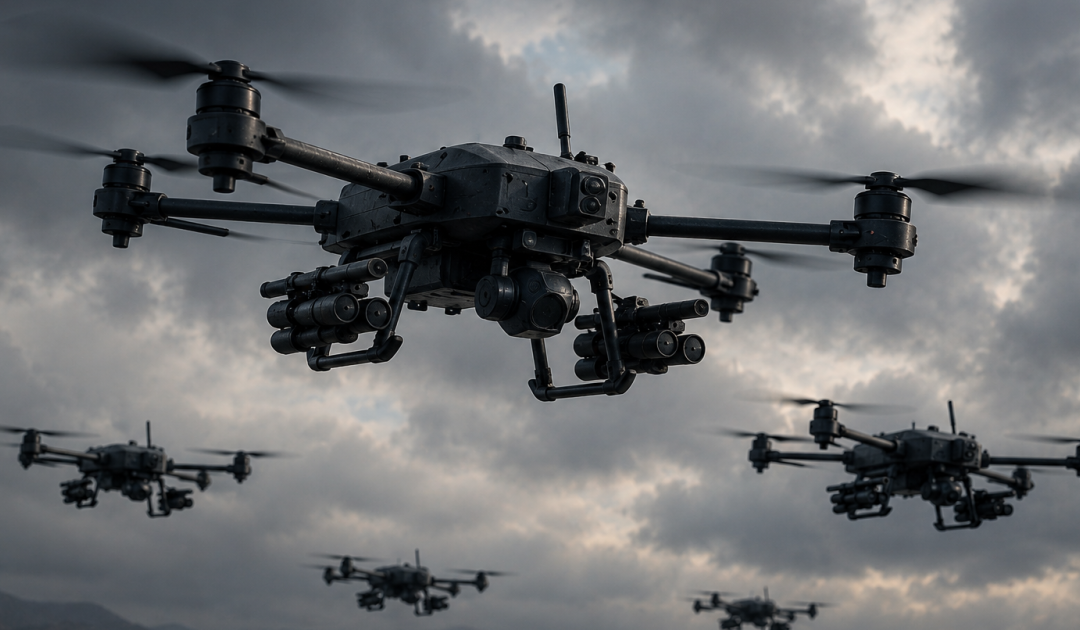
REPORT: Communist Cuba Stockpiling Drones Amid Fears of Potential U.S. Military Action
May 17, 2026
Communist Cuba has reportedly expanded its military drone capabilities and is seeking additional equipment from Russia and Iran as the communist regime prepares for the possibility of direct confrontation with the United States.
According to classified intelligence cited by Axios, Cuban officials have acquired more than 300 military drones of varying capability since 2023 and have held discussions about how such systems could be used in the event of hostilities with Washington.
Potential targets discussed include the U.S. naval base at Guantanamo Bay, American military vessels, and possibly even locations in southern Florida, including Key West.
The report comes amid escalating tensions between Washington and Havana, with the Trump administration viewing Cuba as a growing security concern due to its military cooperation with hostile powers and its collapsing energy and core infrastructure.
The regime has suffered massively in the wake of the Trump administration’s capture of Venezuelan dictator Nicolas Maduro, with Caracas effectively forced to cut ties with its communist ally.
CIA Director John Ratcliffe traveled to Cuba this week to deliver a warning directly to Cuban officials against engaging in any hostile activity.
A CIA official told Axios: “Director Ratcliffe made clear that Cuba can no longer serve as a platform for adversaries to advance hostile agendas in our hemisphere.”
U.S. intelligence reportedly indicates that Cuba has recently sought additional drone systems and military hardware from Moscow.
They have also been studying Iranian military tactics, particularly drone warfare strategies that have proven disruptive in the Middle East.
There remain longstanding concerns about hostile foreign infrastructure in Cuba, with Russian and Chinese intelligence operations known to be active on the island.
Analysts do not believe Cuba is preparing an imminent attack, but intelligence intercepts suggest military planners in Havana are actively considering contingency options should the U.S. ramp up the threat of a military attack.
The threat calculation has increased due to the growing use of drone warfare globally, particularly by Iran and Russia.
U.S. officials also believe that thousands of Cuban personnel have served alongside Russian forces in Ukraine, potentially giving Havana exposure to modern battlefield drone tactics.
Meanwhile, the administration is reportedly considering additional sanctions, while a Justice Department indictment against Raúl Castro is expected over the 1996 shootdown of two Brothers to the Rescue aircraft.
We use technologies like cookies to store and/or access device information. We do this to improve browsing experience and to show (non-) personalized ads. Consenting to these technologies will allow us to process data such as browsing behavior or unique IDs on this site. Not consenting or withdrawing consent, may adversely affect certain features and functions.
Functional
Always active
The technical storage or access is strictly necessary for the legitimate purpose of enabling the use of a specific service explicitly requested by the subscriber or user, or for the sole purpose of carrying out the transmission of a communication over an electronic communications network.
Preferences
The technical storage or access is necessary for the legitimate purpose of storing preferences that are not requested by the subscriber or user.
Statistics
The technical storage or access that is used exclusively for statistical purposes.The technical storage or access that is used exclusively for anonymous statistical purposes. Without a subpoena, voluntary compliance on the part of your Internet Service Provider, or additional records from a third party, information stored or retrieved for this purpose alone cannot usually be used to identify you.
Marketing
The technical storage or access is required to create user profiles to send advertising, or to track the user on a website or across several websites for similar marketing purposes.

Iran targets UAE’s nuclear power plant!!






 Police urging homeowners across Southern California to search around their yards and in the bushes for hidden cameras placed there by illegal alien South American Burglary Rings.