Fighting for Food Freedom: A Georgia Farmer’s Stand Against Bureaucratic Overreach
May 30, 2026
Jones Creek Farm/Image courtesy of Stephanie Jones
“I never set out to battle county government. I simply wanted to sell the food I grow—healthy, local produce and value-added goods—to my neighbors,” Georgia farmer Stephanie Jones shared with The Gateway Pundit.
Recently, The Gateway Pundit spoke with Stephanie Jones, owner of Jones Creek Farm, a small family farm in Liberty County, Georgia.
In an era when Americans are increasingly demanding transparency and control over what ends up on their plates, the farm-to-table movement has emerged as a powerful counter to our industrialized food system.
By supporting small farmers and cottage food businesses, communities gain access to fresher, more nutritious food while strengthening local economies and preserving agricultural traditions.
These direct connections between growers and consumers are vital—not only for economic resilience, but for restoring personal agency over the food we eat.
This push for greater food sovereignty sits at the heart of the growing MAHA (Make America Healthy Again) movement, which seeks to reduce chronic disease by reforming agricultural policy, empowering small producers, and challenging the dominance of ultra-processed foods.
In this interview, this dedicated Georgia farmer shares her firsthand battle with local bureaucracy and her vision for a more resilient, community-centered food system.
Q: Stephanie, can you tell us about the current situation with your farm stand and the county?
A: The county recently paused our operations, claiming that because we sell items from other local Georgia vendors, we are operating a ‘retail store’ rather than a farm stand. Because our land isn’t zoned for commercial retail, they required us to file for a Conditional Use Permit.
We have complied and filed for the permit under that retail definition just to keep the process moving, but the reality is that a retail label completely misrepresents what we do. We are not a big-box store; we are a working family farm dedicated to community wellness and local food security.
In fact, Georgia state law explicitly protects agritourism and farm stands, allowing us to sell value-added products that are grown, baked, or produced right here in Georgia without needing a retail license. These items—like local olive oil, pecans, cane syrup, fresh eggs, regional dairy, fresh flowers, and organic baked goods from local cottage food bakers—help draw traffic to the farm and support our fellow small business owners.
We have provided the county with the specific state statutes that protect our right to operate. It is incredibly frustrating to be forced into a rigid bureaucratic box when our only goal is to connect our neighbors with healthy, local food, but we are hopeful the county will work with us to recognize the state-level protections designed for farms like ours.
Jones Creek Farm/Image courtesy of Stephanie Jones
Q: What would you like to see happen next with this movement?
A: I would like people to understand the importance of “Food Freedom,” and the vital need for accessible farm stands in every community. This goes far beyond my own stand — it’s about giving people real choices for their food. Roadside stands, farm stands like mine, or even a cottage food baker who has all the required labeling and licensing and wants to set up a pop-up table at the end of their driveway. The freedom to choose how we get our food is very important when the alternative is heavily processed foods in the grocery store.
Q: Your story involves more than just produce. Can you share an example of how your farm stand has impacted someone’s life?
A: Absolutely. My sourdough baker, DreamsDay Preppers, is the perfect example of why these stands matter. She lives with MS and uses a cane; she cannot hold a traditional job. But selling her preservative-free sourdough at my stand allows her to pay her mortgage and contribute to her household.
Since the county shut us down, she has lost that essential income.
Jones Creek Farm/Image courtesy of Stephanie Jones
Q: You’ve mentioned a conflict between local rules and state law. What legal protections do you believe should apply to your farm stand?
A: My struggle highlights a growing friction between local bureaucratic zoning and the state-level protections intended to support Georgia’s agricultural economy. Our county has little to no ordinances written to support local farms.
I am pushing for my county to recognize that a farm stand selling third-party vendor products is a legitimate agricultural extension, protected by several state-level frameworks:
Agritourism & Right to Farm: Georgia law supports agritourism, allowing farms to integrate direct-to-consumer sales to keep family farms financially viable. The spirit of the Georgia Right to Farm protections is to allow farmers to pursue these essential revenue streams — including selling value-added products — without being stifled by restrictive, non-agricultural zoning ordinances.
Jones Creek Farm/Image courtesy of Stephanie Jones
HB 398 (Cottage Food Laws): Recent legislative shifts, specifically HB 398, were designed to support small-scale producers. This law authorizes the production and sale of cottage food items like sourdough and aims to foster community food access. While local authorities retain some zoning oversight, these state protections emphasize that small-scale production should be encouraged, not penalized.
Agricultural Exemption: Georgia state law generally prohibits municipalities from levying taxes or license fees on the sale of agricultural products raised in the state. By forcing a small farm stand to carry the same “retail” burden as a commercial store, the county is misclassifying a community food hub as a standard retail development.
Q: What frustrates you most about the current food system?
A: The disconnect is profound. If bread from a grocery store can sit on a counter for six weeks without molding, we have to question our food system. People are craving alternatives to the highly processed, dye-filled, and pesticide-heavy options on supermarket shelves.
Q: What does a successful farm stand look like in your vision?
A: My daily reality is a 90-hour work week, but the feedback I get from my community is what keeps me going. They tell me daily how grateful they are for an alternative. I envision this stand as a hub for local food security. The go-to for local organic farm fresh products.
Jones Creek Farm/Image courtesy of Stephanie Jones
Q: You mentioned eggs, which brings in backyard hens. Why is that part of this conversation?
A: Across the nation, restrictive ordinances frequently criminalize the tradition of keeping backyard hens. Yet there was a time when the government didn’t just permit backyard poultry — it actively encouraged it as a pillar of self-reliance.
True food freedom must include the right to raise one’s own food. Allowing every household to keep hens is a common-sense solution: it empowers families to secure their own protein, diverts kitchen waste from landfills, and creates a sustainable, closed-loop system.
Several towns in Belgium and France (such as Mouscron, Diest, Etterbeek, and Colmar) have implemented municipal programs where they offered free or deeply discounted chickens to residents. The primary motivation was waste management.
By providing residents with chickens, the towns aimed to reduce the volume of food scraps entering the municipal waste stream.
In Diest, Belgium, the program reportedly distributed chickens to thousands of families and achieved significant reductions in landfill waste. We could encourage local governments to implement similar ideas here in the USA.
Q: What’s the bigger picture you hope people understand?
A: We need a system where communities can feed themselves without government overreach.
We need the freedom to choose where our food comes from and how it is grown. This is a popular movement across the nation.
Local food security is a growing issue, so I have tried to combat that here on my farm by recently starting a small garden group where I teach 22 ladies how to grow food without the use of pesticides and chemical fertilizers, focusing instead on soil health. By offering healthy alternatives and teaching others to grow healthy food, I hope to encourage more people to find better food options.
Law Students Threatened for Not Attending Mandated DEI Training: Report
May 30, 2026
Students at Southern Illinois University’s Simmons Law School were reportedly threatened with a “letter of reprimand” that would be placed in their permanent file if they did not attend a mandatory diversity, equity, and inclusion training session.
The reprimand letter could also be shared with the state bar, according to a report from the Daily Signal published earlier this week.
“Those who cannot attend in person typically fulfill the make-up expectations without issue,” an associate dean wrote to one of the students who didn’t wish to participate.
“If a student misses a required session and does not complete a make-up within a reasonable period of time, we typically issue a letter of reprimand,” the dean added.
The email was obtained by a parental rights group called Defending Education.
After multiple Freedom of Information Act requests, Defending Education obtained the message, which also said that the “letter is placed in the student’s permanent file and would be shared with the bar if the file is requested as part of the character and fitness process.”
In addition, other emails revealed that the university is teaching students that the law, and legal field, can be “racially discriminatory.”
The Daily Signal highlighted a specific part of the training that mentioned bullying.
One of the presentation slides read, “Bullying disproportionately affects traditionally underrepresented groups,” while another slide claimed “lawyers of color were bullied more often than white lawyers.”
Erika Sanzi, senior director of communications at Defending Education, told the outlet that the school’s tactics are “indefensible and embarrassing.”
“Threatening law school students with a letter of reprimand if they refuse to attend a DEI session they were deceived about is indefensible and embarrassing,” a statement from Defending Education noted.
This news comes just days after the council of the American Bar Association, which oversees law school accreditation in the United States, moved to change a rule that forces schools to support DEI.
This represents a major reversal from the decades-old requirement that law schools actively work to increase the amount of female and minority students within their ranks.
The rule will not officially change, however, until the ABA’s House of Delegates examines the issue in August.
The requirement may not be formally changed until 2027, and was initially suspended back in February 2025, one month after President Donald Trump began his second term in office.
The president has continually opposed DEI initiatives and has worked to eliminate such doctrines within federal agencies.
He has also threatened to withhold federal funds from organizations that continue to push DEI, and those that attempt to rebrand in an effort to sidestep the new regulations.
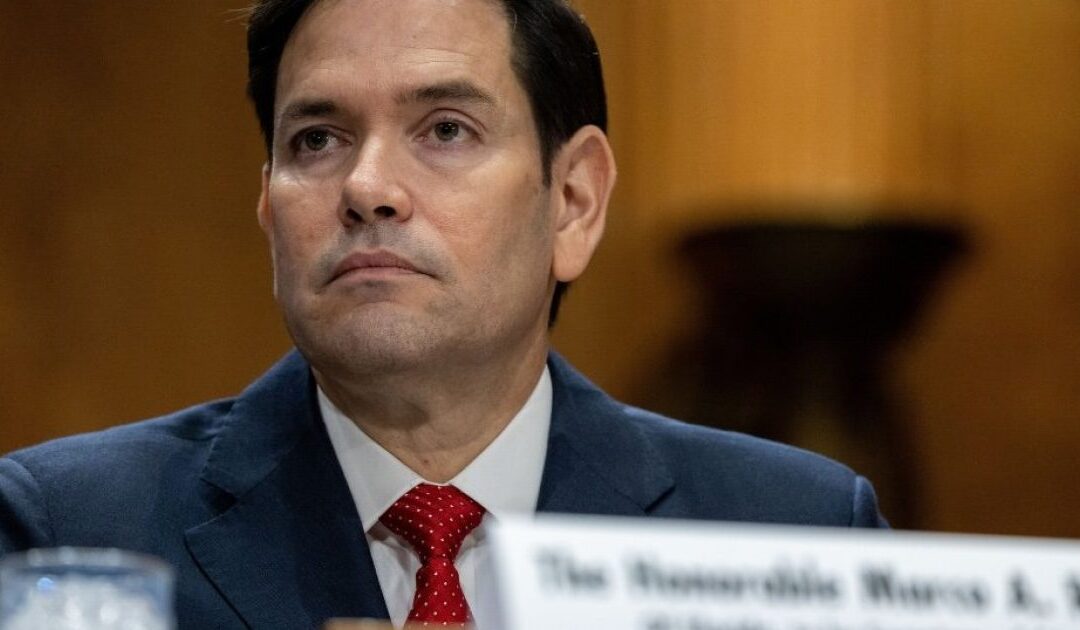
Secretary of State Marco Rubio Announces Deportation and Third-Country Acceptance Agreements for Illegal Immigrants and Non-Nationals with More Than 20 Countries
May 30, 2026
Secretary of State Marco Rubio stated yesterday on television that the United States has secured agreements with 20 countries around the world to accept people living illegally in the U.S. and deport them when returning them to their country of origin is not feasible.
Just after these remarks, made during a cabinet-related discussion, broader updates emerged regarding immigration enforcement. Rubio explained: “One of the key things we’ve achieved is that 20 countries have now signed third-country agreements… We’ve gotten 20 countries around the world to sign agreements allowing us to deport people to those places.”
These arrangements — commonly known as “safe third country” or third-country removal agreements — allow the U.S. Department of Homeland Security (DHS) to send non-citizens to countries other than their homeland when direct repatriation faces obstacles, such as refusal by the home country to accept them, documentation issues, or legal complications.
How the Strategy Works as a Pressure Tool
Rubio highlighted a practical effect of these agreements: they serve as leverage to encourage voluntary departures. He stated: “What usually happens when you go to the person who is here illegally and tell them, ‘We’re going to send you to this third country,’ suddenly they decide they would rather return to their home country.”
This more aggressive enforcement strategy aligns with the Trump administration’s immigration objectives. According to the approach currently being implemented by DHS, informing migrants that they may be removed to a distant third country often leads them to stop resisting and instead agree to deportation to their country of origin.
Immigration Priorities Under the Trump Administration
The announcement builds on the administration’s broader immigration priorities, which include accelerating removals of individuals with criminal records or final deportation orders.
El Salvador, under President Nayib Bukele, has emerged as a prominent partner by accepting deportees of multiple nationalities — including some foreign criminals — and housing them in detention facilities.
Public reports indicate that the U.S. has sought or secured agreements with more than 20 countries, with some sources suggesting the number could be as high as 27 by early 2026. Countries mentioned in public reporting include partners in Africa and Latin America, although the full official list referenced by Rubio has not been publicly detailed.
Among the Hispanic nations known to cooperate in these operations are Costa Rica, Mexico, Panama, El Salvador, Guatemala, Honduras, and Ecuador, in addition to Rwanda, Sudan, and Uganda.
The administration has actively pursued additional partners, emphasizing deterrence and stricter immigration enforcement. Some agreements reportedly involve financial incentives or diplomatic arrangements, prompting criticism from congressional Democrats over costs and human rights concerns.
Legal and Operational Framework
U.S. immigration law (Section 241 of the Immigration and Nationality Act) authorizes deportation to a third country when removal to the designated country of origin is considered “impracticable, inadvisable, or impossible.”
These agreements expand deportation options beyond traditional repatriation, with the goal of reducing backlogs and avoiding delays.
Critics have raised concerns about conditions in receiving countries and due process protections, while supporters argue the policy is an essential enforcement tool that strengthens border security and public safety.
Rubio’s remarks underscore the administration’s ongoing diplomatic efforts to support DHS operations and fulfill campaign promises on immigration enforcement and border security.
The administration continues seeking additional agreements to expand its deportation capabilities.
WOW! Marco Rubio reveals the US has now secured deportation agreements with 20 third-party countries to deport our illegals to
And DHS is using that as LEVERAGE to get illegals to stop putting up fights to go back to their home countries
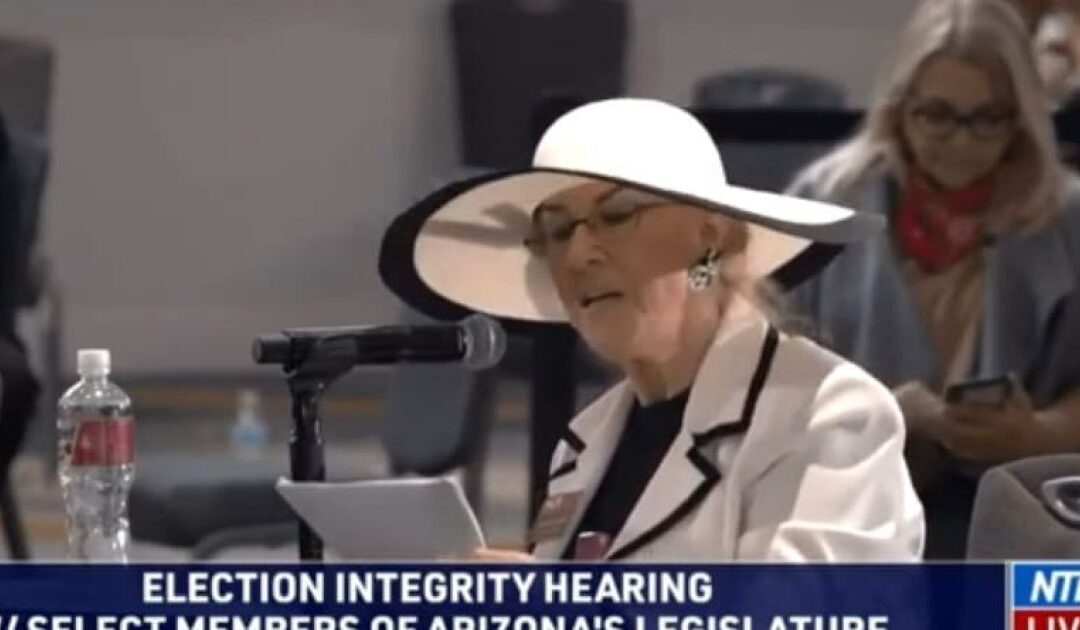
The Hat Lady’s Reflection of the 2020 Election Process – Part II
May 30, 2026
The Hatlady’s Reflection of the 2020 Election – Part II
Disclaimer: This narrative reflects the firsthand observations, recollections, testimony, and preserved records of Linda Brickman related to Arizona’s 2020 election process. Some claims and interpretations discussed remain disputed and publicly debated.
We Still Need Sunlight to Help Restore Public Trust in Elections…
Linda Brickman was a veteran election worker, supervisor and trainer for over 20 years at the precinct level and at the Maricopa County Tabulation and Election Center (MCTEC) before becoming the Chairman of the Republican Party in Maricopa County during the 2020 Election.
It was with that background and experience that she worked at MCTEC during the 2020 Election cycle in various capacities, including Signature Verification, Adjudication, and the Duplication Rooms.
During the 2020 cycle, along with her co-workers, she experienced things she had never witnessed before.
Below are her firsthand recollections and perspectives of the 2020 Election and beyond.
In 2020, she never expected to become part of one of the most controversial elections in modern American history.
At the time, Ms. Brickman was serving as Chair of the Maricopa County Republican Committee and participated directly in multiple aspects of Arizona’s election observation and oversight process. What began as civic involvement quickly became something far more serious as questions emerged regarding election procedures, observer access, signature verification practices, and the certification of voting equipment used in Maricopa County.
For more than four years, public debate surrounding the 2020 election has largely been divided into two extremes: those who insist nothing went wrong, and those who believe the entire system was corrupted.
But lost in the middle are the firsthand witnesses — individuals who were physically present during portions of the process and who documented what they personally observed in real time.
This article is not based upon internet rumors, social media commentary, or secondhand speculation…
It is based upon those firsthand experiences, contemporaneous notes, sworn declarations, legislative testimony, official correspondence, and preserved records related to Arizona’s 2020 election process.
These materials even include communications involving public officials, election personnel, legislative bodies, and legal representatives associated with Dominion Voting Systems.
Reasonable people may ultimately reach different conclusions regarding the significance of the events described here…
However, public confidence in elections depends not only upon outcomes, but also upon transparency, accountability, procedural consistency, and the willingness to examine concerns raised by citizens who directly participated in the process.
What follows is a chronological review of documents, testimony, and firsthand observations connected to the administration of Arizona’s 2020 election in Maricopa County.
According to Brickman’s account, the decision to refuse certification of the Logic and Accuracy testing process was not made lightly.
After reviewing portions of the testing procedures and documenting concerns she believed affected the integrity and transparency of the process, Brickman signed the L&A Testing Certificate with a notation declining certification.
What followed, according to her recollection, was an unexpected confrontation.
Brickman states that shortly after indicating she would not certify the testing process, she was asked to step into a separate room away from the main tabulation area. Anticipating the seriousness of the conversation, she requested that her husband, an election lawyer, accompany her as a witness, having remained with her throughout the day’s proceedings.
According to Brickman, pressure was then applied to reconsider and reverse her decision not to certify the testing results. She maintains that she refused.
Brickman later explained that, in her view, reversing her position would have compromised the credibility of the Maricopa County Republican Committee’s Election Integrity efforts and the concerns she believed had already been identified during the process.
She further recalls responding that election officials and county leadership should have considered the potential consequences before implementing procedures and equipment that had already become the subject of growing public concern and controversy.
The exchange, according to Brickman, became “tense.”
After leaving the room, she walked back through the tabulation area where portions of the testing had occurred, exited the building, and addressed members of the public and media who had gathered outside.
Despite the controversy surrounding the moment, Brickman states that she left believing she had done what she felt obligated to do: document her concerns honestly and refuse certification based upon the observations and questions she believed remained unresolved.
That decision would soon place her at the center of an expanding public and political controversy surrounding Arizona’s 2020 election process.
The dispute surrounding the L&A testing process would later expand beyond legislative hearings and public debate. It would eventually draw legal attention from representatives associated with Dominion Voting Systems itself.
SECTION 5 — FROM INTERNAL CONCERNS TO PUBLIC TESTIMONY
What began as internal concerns surrounding election procedures soon moved into the public arena.
As questions surrounding Arizona’s 2020 election intensified, legislative hearings, public meetings, citizen testimony, and election-related investigations became increasingly common throughout the state. Maricopa County quickly emerged as the focal point of national attention as lawmakers, election officials, observers, and members of the public debated whether proper procedures had been consistently followed during the administration of the election.
Brickman would eventually testify publicly regarding the events she stated she personally witnessed during portions of the election process, including concerns involving the Logic and Accuracy testing procedures, observer access, ballot handling questions, and signature verification issues.
Additional declarations, timelines, correspondence, and supporting materials were later preserved as part of an expanding collection of records connected to those concerns. Among those materials were legislative testimony, written statements, procedural notes, and communications involving election officials and party representatives.
The controversy surrounding Arizona’s election administration increasingly divided public opinion.
Supporters of the election process argued that extensive audits, reviews, and court decisions ultimately upheld the official election results…
Critics, however, continued raising concerns involving non-Legislative changes, including, transparency, procedural consistency, chain-of-custody questions, observer limitations, and the handling of signature verification procedures under Arizona law.
Throughout that period, Brickman continued publicly defending her decision not to certify the Logic and Accuracy testing process, maintaining that the concerns she documented had never been fully addressed to her satisfaction.
As public attention intensified, so did the pressure surrounding individuals who had spoken publicly regarding the election.
That pressure would eventually take a more direct legal form.
SECTION 6 — ESCALATING NATIONAL ATTENTION
As controversy surrounding Arizona’s election procedures intensified, the issues raised in Maricopa County increasingly drew state and national attention.
Brickman’s testimony and public statements eventually expanded beyond local election discussions and county meetings. In addition to appearing before Arizona legislative committees regarding election procedures and Logic and Accuracy testing concerns, Brickman also participated in hearings connected to former New York Mayor Rudy Giuliani’s broader examination of election-related allegations following the 2020 presidential election.
By that stage, Arizona had become one of several battleground states at the center of intense national scrutiny regarding election administration, mail-in voting procedures, ballot verification standards, observer access, and voting system certification.
At the same time, public pressure surrounding those speaking out about election concerns continued to increase.
According to Brickman, one of the most defining moments of that period came when she received a formal Cease-and-Desist Letter connected to statements she had made regarding Dominion Voting Systems.
Rather than silencing her, Brickman states the letter had the opposite effect.
In her view, the legal warning reinforced her belief that citizens who directly participated in portions of the election process had an obligation to continue speaking publicly about what they witnessed, documented, and questioned during the administration of the 2020 election.
Brickman maintains that, by that point, remaining silent was no longer an option.
The controversy surrounding the election had grown far beyond partisan politics. For many involved, including Brickman, the issue had become one of public accountability, transparency, and confidence in the electoral process itself.
SECTION 7 — THE DOMINION LETTER
As public controversy surrounding the 2020 election continued expanding nationally, legal pressure increasingly became part of the public landscape surrounding election-related claims and testimony.
Attorneys representing voting technology companies, media organizations, political figures, and private individuals began issuing legal warnings and defamation notices connected to public statements involving election systems and election administration; and they or their surrogates launched lawfare cases against conservative election attorneys who filed cases or spoke out publicly, and filed baseless ethics complaints with the State Bar, resulting in attorneys backing down, being suspended, and in some cases being disbarred!
Within that environment, Brickman received a formal Cease-and-Desist Letter associated with statements she had made concerning Dominion Voting Systems.
The letter marked a turning point.
Until that point, much of the controversy surrounding the election had centered on procedural concerns, certification questions, legislative testimony, and public debate. The arrival of formal legal correspondence introduced a new reality: individuals publicly raising concerns about election procedures could themselves become the subject of legal scrutiny and pressure.
According to Brickman, the letter did not intimidate her into silence. Instead, it reinforced her belief that citizens who directly witnessed portions of the election process had a responsibility to continue speaking openly about what they observed and documented.
By then, Brickman had already publicly refused certification of the Logic and Accuracy testing process, testified before legislative bodies, communicated concerns to elected officials, preserved extensive records connected to the events surrounding Arizona’s 2020 election, and was called to testify as a witness in election lawsuits and State Bar disciplinary actions.
She maintains that remaining silent after receiving the letter would have contradicted the very reasons she had chosen to speak publicly in the first place.
According to Brickman’s recollection, the legal warning ultimately strengthened her resolve rather than weakening it.
For Brickman, the issue had evolved beyond politics or party affiliation. In her view, the larger question had become whether ordinary citizens who participated directly in election oversight and observation could publicly raise concerns about election procedures without fear of intimidation or suppression.
The controversy surrounding Arizona’s election process continued intensifying throughout the months that followed. Legislative hearings, public testimony, media investigations, citizen audits, and legal disputes increasingly transformed Maricopa County into one of the central battlegrounds in the national debate over election integrity and public confidence in American elections.
Despite the growing controversy surrounding the 2020 election and the increasing public scrutiny directed toward election systems and procedures, Maricopa County leadership ultimately chose to continue its contractual relationship with Dominion Voting Systems, despite documentation and evidence showing serious legal problems, that Courts in Arizona refused to allow into the record.
According to public records and contemporaneous discussions surrounding the election aftermath, the Maricopa County Board of Supervisors later approved the continuation of Dominion’s contract for an additional term rather than terminating the relationship.
For critics of the election process, the decision became another source of frustration and public distrust. Many individuals who had raised concerns regarding election procedures, certification questions, and voting equipment believed the renewal signaled that county leadership had no intention of reconsidering or reevaluating the systems that had become the focus of intense public controversy.
Supporters of the decision, however, maintained that election systems had functioned properly and that continuing the contractual relationship reflected confidence in the county’s election administration and certification procedures.
The disagreement further deepened an already widening divide between election officials seeking to defend the integrity of the process and citizens who continued demanding additional transparency, investigation, and accountability regarding the administration of Arizona’s 2020 election.
SECTION 8 — AN ATMOSPHERE OF ESCALATION
As the controversy surrounding Arizona’s 2020 election intensified, the atmosphere surrounding election personnel, observers, volunteers, attorneys, and party officials became increasingly tense and uncertain.
According to Brickman, complaints, disclosures, witness statements, and election-related concerns were arriving from multiple directions during the weeks and months following the election. Public scrutiny surrounding Maricopa County continued growing as legislative hearings expanded, attorneys became increasingly involved, and national attention focused heavily on Arizona’s election procedures.
During that same period, Brickman recalls additional incidents that reinforced her belief that the controversy had moved far beyond ordinary political disagreement.
Among those events was the sudden departure of an immediate supervisor connected to suspicious activities involving the signature verification process in which Brickman had participated extensively. According to Brickman’s recollection, the supervisor was called into a separate meeting and later presented with a Formal Notice for a Deposition in connection with an election-related lawsuit. Shortly thereafter, and right before her deposition was scheduled to take place, the individual reportedly resigned and left the state permanently. Brickman states she never saw or heard from the supervisor again.
At the same time, election-related complaints and disclosures were increasingly being directed toward the Arizona Republican Party, legislative officials, and attorneys associated with ongoing election litigation and post-election review efforts.
National legal teams connected to President Donald Trump’s post-election challenges also became increasingly involved in Arizona-related disputes and investigations as public scrutiny surrounding Maricopa County continued escalating.
Meanwhile, according to critics of the election process, frustration also grew regarding what many viewed as a lack of meaningful public response from Arizona’s Attorney General’s Office concerning election-related concerns and allegations being raised throughout the state.
For many individuals involved in the controversy, the atmosphere surrounding Arizona’s election aftermath increasingly felt less like an ordinary political dispute and more like an expanding legal, institutional, and public-relations battle unfolding in real time.
According to Brickman, the emotional strain surrounding portions of the election process affected individuals across political lines. She recalls that many of the working environments connected to election operations became increasingly tense, emotionally exhausting, and difficult to navigate as controversy surrounding the election intensified.
Brickman states that she remained involved because she believed the work being performed was important and hoped the atmosphere surrounding the process would improve over time. In her recollection, however, the tensions only continued escalating.
And those who continued to raise questions and speak out, were blacklisted from working at county election facilities in current or subsequent election cycles.
In one work area connected to the 2020 election operations, Brickman recalls a moment in which a Democratic-affiliated coworker became visibly emotional and expressed deep distress regarding what she believed she had witnessed during portions of the ballot adjudication process when the screen on the Dominion machines appeared to have changed ballots from one candidate to another. When Brickman and her co-worker raised the issue with their supervisor, nothing was done to either investigate or correct the changed ballots, and later Brickman was disciplined for bringing the matter up.
Brickman states the incident left a lasting impression on her because it reinforced the extent to which tensions, confusion, and distrust had begun affecting not only outside observers and political activists, but also individuals working inside portions of the election environment itself.
Regardless of political affiliation, the atmosphere surrounding the election had become emotionally charged, legally sensitive, and increasingly consumed by questions that many participants believed were never fully resolved.
After years of controversy, investigations, hearings, accusations, and public debate, many Americans still remain sharply divided regarding the events surrounding the 2020 election. Some believe every question has already been answered. Others believe many questions were never fully addressed at all.
See Ms. Brickman’s testimony after the 2020 election in front of Rudy Giuliani and the world.
Postscript from Ms. Brickman:
I understand that reasonable people may continue reaching different conclusions.
What I can say with certainty is that the events described in these pages were real to those of us who experienced them firsthand.
The meetings were real.
The pressure was real.
The testimony was real.
The documents were real.
And the decisions made in those moments carried consequences that extended far beyond politics.
I did not enter the 2020 election process expecting controversy, national attention, or legal threats. I became involved because I believed citizens had both a right and a responsibility to observe and participate in the electoral process honestly and transparently.
When concerns arose, I documented them.
When questions remained unanswered, I spoke publicly about them.
And when pressure was applied to remain silent, I chose not to remain silent.
History will ultimately decide how the events surrounding the 2020 election are remembered. My responsibility was never to determine history’s final judgment.
My responsibility was simply to tell the truth about what I personally witnessed, preserve the records I believed mattered, and leave future generations with an honest account of one of the most controversial periods in modern American election history.
It is my HOPE that the TRUTH will eventually PREVAIL!
Seattle’s New Socialist Mayor Flatly Refuses to Investigate Fraud at Somali Daycare Centers (VIDEO)
May 29, 2026
Screencap of Twitter/X video.
Given the massive amount of fraud that has been uncovered at Somali daycare centers in Minneapolis alone, you would think that every American city would be looking into this rather seriously.
That is not going to happen in Seattle, however.
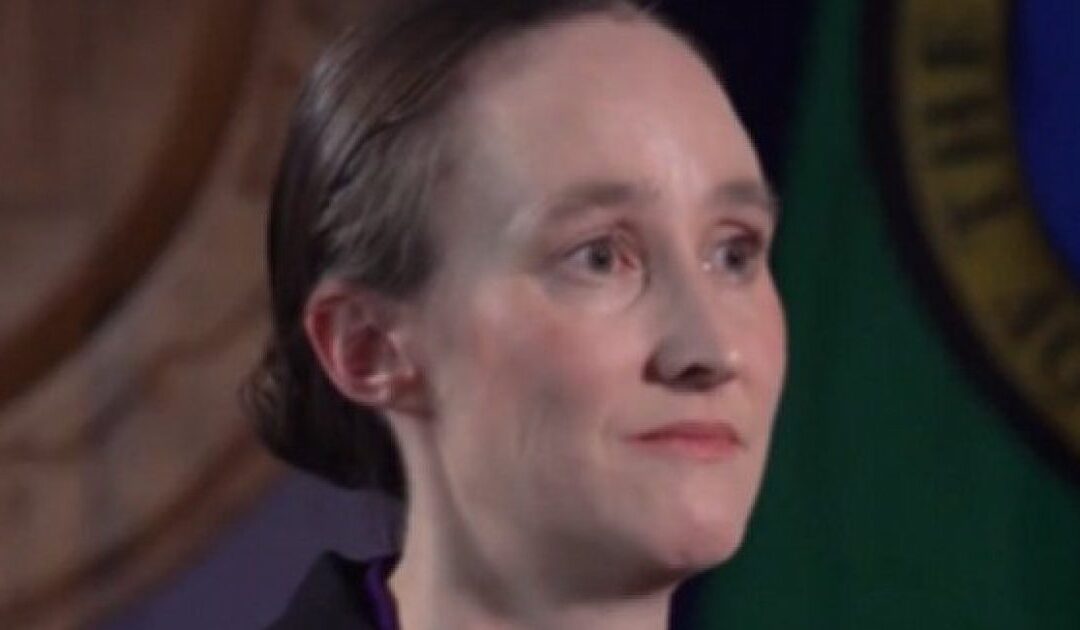
Katie Wilson, the city’s new socialist mayor was recently asked if she is doing any investigation into this and responded with a simple “no.”
Seattle socialist mayor will NOT investigate fraud at Somali-run daycare centers, calls it attack on immigrants
Seattle Mayor Katie Wilson said the city has no intention of investigating fraud claims in taxpayer-funded social programs, claiming the concerns are an effort to target immigrant communities rather than address legitimate financial irregularities.
In an interview with KOMO News, Wilson was asked if she had authorized the Seattle Police Department or the city’s Office of Immigrant and Refugee Affairs to investigate fraud charges involving daycare providers, particularly those in Somali and other immigrant communities. The mayor responded: “No.”
“This whole issue is not really about fraud,” said Wilson. “It’s about dividing and conquering. It’s about making an immigrant community a target. There’s no reason to assume based on the identity of a daycare operator that their small business is doing anything wrong.”
She added that “it’s problematic to have random people showing up to daycares” and emphasized that “the fear in the Somali community is real” and “the fear in immigrant communities are real,” saying her administration is “taking that very seriously.”
See the video below:
Kommissar Katie Wilson said the city will not be looking into any “day cares fraud”….
….meanwhile she’s going back for a $1.3 BILLION tax levy to fund more day cares…. pic.twitter.com/0KM9QXNjWP
— PNW Conservative (@PNWConservative) May 27, 2026
For Wilson, this is clearly an ideological issue. It shouldn’t be.
Making sure that the taxpayers are not being defrauded is not a partisan matter.
We use technologies like cookies to store and/or access device information. We do this to improve browsing experience and to show (non-) personalized ads. Consenting to these technologies will allow us to process data such as browsing behavior or unique IDs on this site. Not consenting or withdrawing consent, may adversely affect certain features and functions.
Functional
Always active
The technical storage or access is strictly necessary for the legitimate purpose of enabling the use of a specific service explicitly requested by the subscriber or user, or for the sole purpose of carrying out the transmission of a communication over an electronic communications network.
Preferences
The technical storage or access is necessary for the legitimate purpose of storing preferences that are not requested by the subscriber or user.
Statistics
The technical storage or access that is used exclusively for statistical purposes.The technical storage or access that is used exclusively for anonymous statistical purposes. Without a subpoena, voluntary compliance on the part of your Internet Service Provider, or additional records from a third party, information stored or retrieved for this purpose alone cannot usually be used to identify you.
Marketing
The technical storage or access is required to create user profiles to send advertising, or to track the user on a website or across several websites for similar marketing purposes.





 WOW! Marco Rubio reveals the US has now secured deportation agreements with 20 third-party countries to deport our illegals to