
Exporting Jihad: Instructions and Propaganda Driving Attacks in the West

Exporting Jihad: Instructions and Propaganda Driving Attacks in the West

Exporting Jihad: Instructions and Propaganda Driving Attacks in the West
May 29, 2026

A person in gloves examines a book featuring Islamic architecture alongside a firearm and an ornate Arabic script on parchment.
Terrorists want people to die and lots of people to watch. Videos of Islamist attacks are disseminated in the West for training and recruitment by jihadist organizations.

The May 2026 vehicle-ramming attack in Modena, Italy, carried out by Salim El Koudri, a 31-year-old Italian citizen of Moroccan origin, and the March 2026 attack in which Ayman Ghazali, a naturalized U.S. citizen from Lebanon, drove a pickup truck into Temple Israel in West Bloomfield, Michigan, followed a blueprint for carrying out jihad on Western soil that has been systematically taught, refined, and disseminated by ISIS, al-Qaeda, and affiliated jihadist organizations.

In the Michigan attack, Ghazali targeted Michigan’s largest Jewish temple while more than 100 children were attending school inside. The tactics used in both attacks closely resemble methods promoted through jihadist operational publications, encrypted platforms, and online propaganda networks.

Terrorism is a specific methodology, not simply an act of violence, and to meet its definition certain conditions must be present. The targets are usually civilians with no direct connection to the government or military the attackers oppose. Italian pedestrians on a Saturday afternoon had no role in Middle East policy, and the Jewish families attending synagogue in Michigan had no connection to Israeli military operations in Lebanon.

Striking people who are manifestly uninvolved maximizes fear across the broadest possible population. The National Consortium for the Study of Terrorism and Responses to Terrorism (START) Global Terrorism Database defines terrorism as the use of violence against civilian targets to achieve political or ideological goals “through fear, coercion, or intimidation.”

The objective is to destroy the public’s sense of security in the places most familiar to them. Attacks on ordinary spaces, where no one expects to be a target, generate the perception that no protective measure or counterterrorism effort can prevent future attacks.

Footage of the carnage is then disseminated across jihadist channels, social media platforms, and encrypted messaging applications. It serves a dual purpose. First, it signals to potential victims that they are vulnerable. Second, it functions as a recruitment tool by demonstrating to potential fighters that lone individuals can strike at the heart of Western societies.

This is why terrorist organizations claim responsibility for attacks even when the operational connection is indirect. They want both audiences, the terrorized and the recruitable, to know who is responsible.

El Koudri drove his car into pedestrians before crashing into a shop window. He then exited the vehicle and stabbed whoever stood in his way. The vehicle-then-knife sequence follows a methodology disseminated through ISIS’s Rumiyah magazine and documented in multiple attacks across Europe and the United States.

In Michigan, Ghazali waited in the parking lot for more than two hours before driving the truck far into the building, hitting a security officer, then exchanging gunfire before shooting himself. The FBI confirmed he had consumed pro-Hezbollah and Iranian militant propaganda for months and planned what he called a “special operation” aimed at causing mass casualties.

His internet searches in the days before the attack included specific terms such as “what is the largest gathering of Israelis in Michigan?” The FBI’s Detroit field office designated the attack a “Hezbollah-inspired act of terrorism purposefully targeting the Jewish community.” His brother Ibrahim had been identified by the IDF as a Hezbollah commander killed in an Israeli airstrike one week before the attack.

On New Year’s Day 2025, Shamsud-Din Jabbar, a U.S. Army veteran from Texas, drove a Ford F-150 Lightning into a crowd on Bourbon Street in New Orleans after posting five videos on Facebook proclaiming his support for ISIS. In the first video, Jabbar explained he originally planned to harm his family and friends but was concerned the news headlines would not focus on “the war between the believers and the disbelievers.”

An ISIS flag was recovered from the back of the truck. Jabbar was killed in a shootout with police after barreling through the crowd over a three-block stretch. His own words confirm that the goal was never the body count. It was the audience.

That doctrine was first formalized by Brian Michael Jenkins of the RAND Corporation in his 1974 paper International Terrorism: A New Kind of Warfare. Jenkins argued that “terrorists want a lot of people watching, not a lot of people dead.” He framed terrorism as theater, with attacks choreographed for maximum audience rather than maximum casualties.

Attacks were staged in public places where civilians felt at ease. Schools, shopping centers, bus and train stations, and restaurants were selected precisely because they attracted large crowds. That framework governed Palestinian hijackings, IRA bombings, and much of the political terrorism of the 1970s and 1980s. These groups used carefully calibrated violence to avoid the backlash that excessive brutality would invite.

The emergence of religiously motivated jihadist terrorism replaced that calculus. Walter Laqueur identified what he termed the “new terrorism,” characterized by decentralized organization, religious justification, and the deliberate pursuit of mass casualties. This stood in contrast to the calibrated, publicity-focused violence of earlier terrorist groups.

Daniel Benjamin and Steven Simon, both former National Security Council counterterrorism directors, reformulated Jenkins’s famous observation. Bin Laden and his adherents, they warned, “want a lot of people watching and a lot of people dead.” The strategy had shifted.

The operational pipeline runs through professionally produced, globally distributed publications. AQAP’s Inspire magazine, published since 2010, is best known for its “Open Source Jihad” section. The publication has included instructions for using a variety of weapons and ideological justifications for killing civilians.

AQAP also produced Inspire Guide, which analyzed lessons learned from recent attacks in the West, including attacks unconnected to al-Qaeda. The publication encouraged readers to study and apply the operational guidance it provided.

ISIS’s Rumiyah focused on encouraging Muslims already living in the West to carry out lone-wolf attacks against non-believers. Its “Just Terror” section provided guidance on vehicle-ramming and knife attacks that closely resemble methods used in attacks in London, Stockholm, Nice, and Modena.

The shift to Telegram as a distribution platform broadened the scope further. Photos, videos, audio recordings, and operational-security guidance became readily accessible to would-be perpetrators.

Attack footage is central to this infrastructure. Unlike earlier terrorist organizations, ISIS constructed a narrative that touched on all facets of life, including career opportunities, family life, and a sense of community. It blended traditional media platforms, glossy publications, and social media campaigns capable of going viral within seconds.

ISIS videos were designed to reach young men already conditioned by first-person-shooter video games. The videos replicated video-game editing styles, weapon progressions, drone footage, and on-screen graphics. In doing so, they normalized the visual language of violence and made it more familiar to potential recruits.

The recruitment pool targeted by this infrastructure is well documented. More than 60 percent of ISIS foreign fighters from Western countries are second-generation immigrants from Muslim-majority countries.

Research by Benmelech and Klor, which examined approximately 30,000 ISIS foreign fighters from 85 countries, found that foreign recruits largely come from prosperous, ethnically homogeneous, and linguistically homogeneous societies. Their findings suggest that social isolation within such societies, rather than poverty, is a primary driver of radicalization.

Countries with comparatively small Muslim populations but disproportionate numbers of ISIS fighters, including Finland, Ireland, and Belgium, ranked among the highest when adjusted for Muslim population size. These findings are consistent with theories that the difficulty of assimilation, rather than economic deprivation, contributes to the supply of radicalized recruits.

The attacks in Nice, Berlin, London, and Westminster followed remarkably similar profiles. On Bastille Day 2016, Mohamed Lahouaiej-Bouhlel, a Tunisian resident of France, rammed a 19-ton truck at high speed into a crowd of families and tourists on the Promenade des Anglais in Nice. He killed 86 people and injured more than 450.

On December 19, 2016, Anis Amri, a Tunisian whose asylum application had been rejected, hijacked a lorry and drove it into a Christmas market in Berlin, killing 13 people. He then fled to Italy, where he was shot dead by police.

The June 3, 2017 London Bridge attack was carried out by Khuram Butt, a Pakistan-born British national known to police; Rachid Redouane, a Moroccan who had lived in Ireland; and Youssef Zaghba, a 22-year-old Italian national of Moroccan descent. The attackers drove a rented van into pedestrians before stabbing bystanders. They killed seven people and wounded 48. All three were shot dead by police.

On March 22, 2017, Khalid Masood drove at speed across Westminster Bridge, killing four pedestrians. He then entered the grounds of Parliament and fatally stabbed PC Keith Palmer before being shot dead by armed officers. The entire incident lasted 82 seconds.

ISIS deliberately designed this cycle of attacks to be self-sustaining. Foreign fighters who returned from combat to their Western countries of origin were often effective at building networks and sleeper cells. The strategy was also calibrated to provoke anti-Muslim backlash in Western countries, which in turn increased the supply of radicalized volunteers.

The Combating Terrorism Center at West Point noted in March 2025 that high-casualty vehicle-ramming attacks produce a “demonstration effect.” Past high-casualty incidents have generated surges in copycat attacks, and the center warned that security agencies must be particularly vigilant following each high-profile event.

Of the 18 terrorist vehicle-ramming attacks recorded between 2014 and March 2025, 83 percent were carried out by jihadists. The attacks in Modena, West Bloomfield, and on Bourbon Street are the product of a system that is methodologically consistent, ideologically coherent, and deliberately designed for an audience far larger than those present at the scene.

The post Exporting Jihad: Instructions and Propaganda Driving Attacks in the West appeared first on The Gateway Pundit.

Go to Source
Author: Antonio Graceffo
Bruce Springsteen, Foo Fighters & Dave Matthews Headline Leftist ‘Power to the People’ Protest Festival Ahead of 2026 Midterms, Tom Morello Promises Day of ‘Rage Against the Machine’ Activism

Bruce Springsteen, Foo Fighters & Dave Matthews Headline Leftist ‘Power to the People’ Protest Festival Ahead of 2026 Midterms, Tom Morello Promises Day of ‘Rage Against the Machine’ Activism

Bruce Springsteen, Foo Fighters & Dave Matthews Headline Leftist ‘Power to the People’ Protest Festival Ahead of 2026 Midterms, Tom Morello Promises Day of ‘Rage Against the Machine’ Activism

May 29, 2026

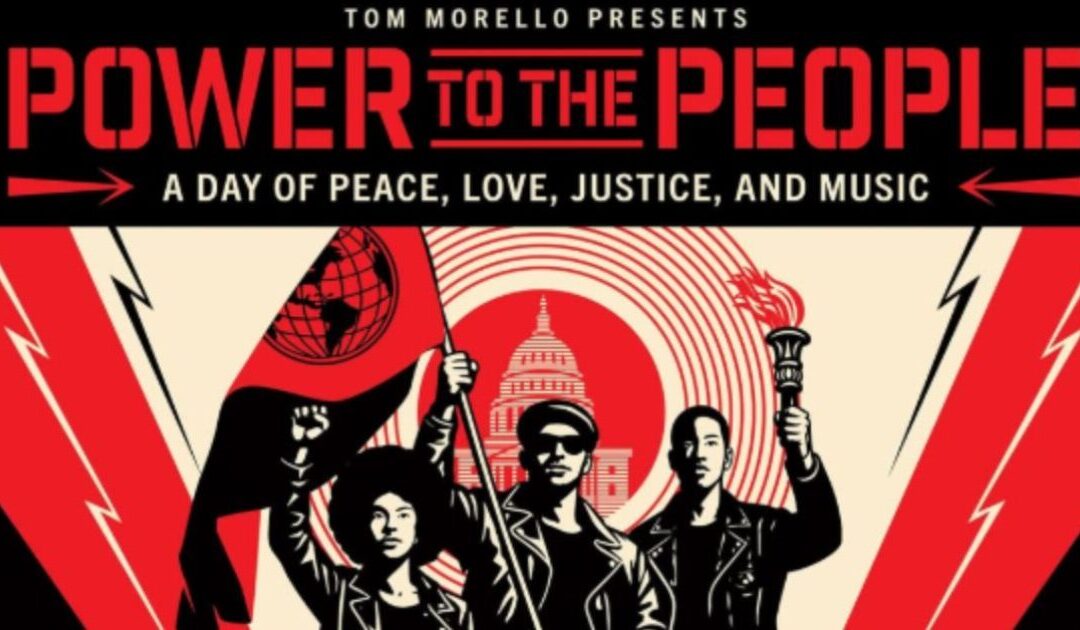
Promotional poster for Tom Morello's Power to the People event, highlighting themes of peace, love, justice, and music with striking graphic elements.

Bruce Springsteen, Foo Fighters, and Dave Matthews Band are headlining an explicitly political music festival organized by Rage Against the Machine guitarist Tom Morello, openly promoted as a left-wing protest event timed just weeks before the November 2026 midterm elections.

The “Power to the People Festival” is scheduled for Saturday, October 3, at the Merriweather Post Pavilion in Columbia, Maryland, just outside Washington, D.C.

Organizers are billing it as a “celebration of peace, justice, solidarity, music, and community action” while repeatedly going on about “fascism” and the need to get out the leftist vote. Promotional materials for the event heavily feature Antifa, black power, and anarchist imagery.

Other confirmed performers and special guests so far include Joan Baez, Brittany Howard of the Alabama Shakes, Dropkick Murphys, Serj Tankian of System of a Down, Cypress Hill, Killer Mike, Jack Black, The Linda Lindas, Taylor Momsen, Grandson, Matt Cameron of Pearl Jam, Darryl “DMC” McDaniels, and a DJ set by artist Shepard Fairey.


View this post on Instagram


A post shared by Tom Morello (@tommorello)

Tom Morello himself will perform and curate the event, which features two stages.

Morello, a longtime far-left activist, has repeatedly described the event as a direct response to what he calls a “rising tide of fascism.”

“The Power to the People festival is about freedom, justice, equality and rock-and-roll,” Morello told the Washington Post. “It’s about the power everyday human beings have when they come together through music, art, community, and action. We’re honored to bring this incredible lineup to the DC area for a day that celebrates the spirit of activism, creativity and hope.”

“There is a palpable feeling that it is not just our country that is at stake, not just democracy that is at stake, but that people’s families, friends and neighbors are in real danger from the rising tide of fascism.”

Springsteen has been consistently whining about the administration on his “Land of Hope and Dreams” tour.

As The Gateway Pundit previously reported, the aging rocker turned the D.C. stop earlier this week into a full-blown political rally.

Springsteen told the crowd, “If you’re feeling helpless, if you’re feeling hopeless, if you’re feeling betrayed, if you’re feeling frustrated, if you’re feeling angry, I understand. That’s why we’re here tonight. We needed to come to Washington and feel your strength and your hope and your faith.”

‘Let ‘Em Hear You in the F*cking White House!’ Bruce Springsteen Unleashes Profane Six-Minute Anti-Trump Meltdown at D.C. Concert (VIDEOS)

"So many of our elected leaders have failed us that this American tragedy can only be stopped by the American people, you. There is no one coming to save us," Springstein continued. "We’ve got to do it ourselves. So join us and let’s fight for the America that we love. Do you hear me, Washington? Do you hear me, Washington?! Are you with us, Washington?! Are you with us, Washington?! Let them hear you at the f-cking White House!"

Tickets to the leftist festival go on sale to the public at 10 a.m. this Saturday.

A portion of proceeds from ticket sales, plus 100 percent of net proceeds from VIP tickets, will be donated to VoteRiders and HeadCount.

VoteRiders describes its mission as working to "eliminate ID barriers to the ballot box." HeadCount will be at the event registering voters.

The post Bruce Springsteen, Foo Fighters & Dave Matthews Headline Leftist ‘Power to the People’ Protest Festival Ahead of 2026 Midterms, Tom Morello Promises Day of ‘Rage Against the Machine’ Activism appeared first on The Gateway Pundit.

Go to Source
Author: Cassandra MacDonald

New European Institute for Remigration Think Tank Launches in Austria

New European Institute for Remigration Think Tank Launches in Austria

New European Institute for Remigration Think Tank Launches in Austria
May 29, 2026

160729-N-EU999-004 MEDITERRANEAN SEA (July 29, 2016) Migrants aboard an inflatable vessel approach the guided-missile destroyer USS Carney (DDG 64). Carney provided food and water to the migrants aboard the vessel before coordinating with a nearby merchant vessel to take them to safety. Carney is forward deployed to Rota, Spain, and is conducting a routine patrol in the U.S. 6th Fleet area of operations in support of U.S. national security interests in Europe. (U.S. navy photo by Chief Information Systems Technician Wesley R. Dickey/Released)

A newly launched Vienna-based organization is seeking to place the concept of “remigration” at the center of Europe’s increasingly contentious debate over mass migration, demographic shift, national identity, and civilizational continuity.

The Institute for Remigration, founded by Austrian activist Martin Sellner, is scheduled to officially launch following a summit in Porto, Portugal, according to a report from The European Conservative. The group describes itself as Europe’s first think tank and advocacy organization dedicated specifically to researching and promoting remigration policies.

According to its founders, the institute will focus on migration trends, demographic change, integration policies, and what it calls the preservation of Europe’s ethnocultural continuity. The organization plans to publish research papers, policy proposals, campaign materials, and political rankings related to migration policy across Europe.

The launch comes at a time when migration remains one of the most politically divisive issues across the continent. Public concern over border control, asylum systems, integration, and demographic change has contributed to the rise of nationalist and conservative parties in several European countries.

Sellner, one of the most prominent figures associated with the European Identitarian movement, has become a central figure in debates surrounding remigration. Supporters view him as an influential activist challenging mainstream migration policies, while critics argue that his proposals raise significant legal, ethical, and social concerns.

In a recent interview, Sellner described remigration as a political and legal project aimed at reducing immigration levels and increasing deportations through stricter enforcement of existing laws. He argued that much of his agenda could be implemented without violating constitutional frameworks.

“I would say about 60–70% of what I propose is simply enforcing existing law,” Sellner said. “The remaining part would involve expanding the legal framework, not breaking it.”

He also called for tighter naturalization rules and reforms to asylum laws, arguing that current legal systems make deportations difficult to carry out. According to Sellner, such changes would require legislative reform rather than constitutional confrontation.

The institute’s managing director, Philipp Huemer, said the organization intends to collect and analyze data related to demographic change, migration, crime statistics, electoral behavior, and religious trends. The goal, he said, is to create a centralized research hub focused on migration-related issues.

The organization also plans to publish a “European Remigration Pact” later this year. According to its founders, the document will seek to consolidate policy proposals from politicians, activists, and organizations active in migration debates throughout Europe.

In addition, the institute intends to evaluate whether political parties fulfill campaign promises relating to migration and border control. It plans to issue rankings assessing politicians’ records on those issues.

The emergence of the institute reflects broader changes in European politics. Immigration has become one of the defining issues in elections across countries including Austria, France, Germany, Italy, the Netherlands, and Sweden.

Parties advocating stricter border controls and reductions in immigration have gained support in many national elections. In some countries, these movements have entered government or become major opposition forces.

Austria’s Freedom Party has proposed creating an EU-level “remigration commissioner,” while similar ideas have been discussed within France’s National Rally and Germany’s Alternative for Germany (AfD).

Supporters of such policies argue that governments have failed to address public concerns about integration, social cohesion, and border security.

Sellner argues that public opinion is increasingly moving in favor of stricter immigration controls. He points to polling data and electoral trends that show rising support for parties campaigning on migration-related issues.

“Right-wing and national-conservative parties are rising across Europe,” Sellner said. “The political shift is clear.”

The debate has become increasingly polarized as migration pressures continue to affect European politics. Governments across the continent face competing demands for stronger border enforcement, labor migration, humanitarian obligations, and integration measures.

Sellner has faced travel restrictions, deplatforming efforts, debanking on a mass scale, and legal disputes in several countries.

In the interview, Sellner described the measures taken against him as ineffective. “You can’t stop ideas by stopping someone at the border,” he said.

He also argued that the growing popularity of migration-focused political movements reflects a widening gap between voters and political elites. According to Sellner, mainstream parties have struggled to respond to public dissatisfaction over immigration policy.

Whether the Institute for Remigration succeeds in influencing policy remains uncertain. However, its creation highlights the growing importance of migration debates in shaping Europe’s political landscape.

As elections across Europe continue to revolve around questions of borders, identity, sovereignty, and integration, organizations seeking to influence those discussions are likely to play an increasingly visible role.

The launch of the institute represents the latest chapter in a debate that shows little sign of fading. With migration remaining one of Europe’s most contested political issues, both supporters and opponents of remigration policies are preparing for a prolonged struggle over the continent’s future direction.

The post New European Institute for Remigration Think Tank Launches in Austria appeared first on The Gateway Pundit.

Go to Source
Author: Robert Semonsen

The Hatlady’s Reflection of the 2020 Election Process – PART I

The Hatlady’s Reflection of the 2020 Election Process – PART I

The Hatlady’s Reflection of the 2020 Election Process – PART I
May 29, 2026

The Hatlady’s Reflection of the 2020 Election – Part I

Disclaimer: This narrative reflects the firsthand observations, recollections, testimony, and preserved records of Linda Brickman related to Arizona’s 2020 election process. Some claims and interpretations discussed remain disputed and publicly debated.

We Still Need Sunlight to Help Restore Public Trust in Elections…

Linda Brickman was a veteran election worker, supervisor and trainer for over 20 years at the precinct level and at the Maricopa County Tabulation and Election Center (MCTEC) before becoming the Chairman of the Republican Party in Maricopa County during the 2020 Election.

It was with that background and experience that she worked at MCTEC during the 2020 Election cycle in various capacities, including Signature Verification, Adjudication, and the Duplication Rooms.

During the 2020 cycle, along with her co-workers, she experienced things she had never witnessed before.

Below are her firsthand recollections and perspectives of the 2020 Election and beyond.

In 2020, she never expected to become part of one of the most controversial elections in modern American history.

At the time, Ms. Brickman was serving as Chair of the Maricopa County Republican Committee and participated directly in multiple aspects of Arizona’s election observation and oversight process. What began as civic involvement quickly became something far more serious as questions emerged regarding election procedures, observer access, signature verification practices, and the certification of voting equipment used in Maricopa County.

For more than four years, public debate surrounding the 2020 election has largely been divided into two extremes: those who insist nothing went wrong, and those who believe the entire system was corrupted.

But lost in the middle are the firsthand witnesses — individuals who were physically present during portions of the process and who documented what they personally observed in real time.

This article is not based upon internet rumors, social media commentary, or secondhand speculation…

It is based upon those firsthand experiences, contemporaneous notes, sworn declarations, legislative testimony, official correspondence, and preserved records related to Arizona’s 2020 election process.

These materials even include communications involving public officials, election personnel, legislative bodies, and legal representatives associated with Dominion Voting Systems.

Reasonable people may ultimately reach different conclusions regarding the significance of the events described here…

However, public confidence in elections depends not only upon outcomes, but also upon transparency, accountability, procedural consistency, and the willingness to examine concerns raised by citizens who directly participated in the process.

What follows is a chronological review of documents, testimony, and firsthand observations connected to the administration of Arizona’s 2020 election in Maricopa County.

SECTION 1 — BEFORE THE ELECTION

In the months leading up to the November 2020 election, Arizona — like much of the nation — was operating under extraordinary circumstances. The COVID-19 pandemic had altered nearly every aspect of daily life, including questionable and rapidly revised election procedures, voting methods, public access, and election administration itself.

At the time, Linda Brickman was serving as the 1st Chair, then later, Chair of the Maricopa County Republican Committee (MCRC), one of the largest Republican County organizations in the United States. In that role, she worked with volunteers, election observers, party officials, and citizens seeking to better understand Arizona’s rapidly changing election procedures during an intensely polarized political environment.

Like many Americans, Brickman initially believed that Arizona’s election systems, procedures, and safeguards were designed to ensure fair and accurate elections regardless of political outcome. Her involvement in election observation efforts was not driven by expectations of controversy, but rather by a belief that public participation and transparency were important components of the electoral process.

However, as Election Day approached, growing concerns began emerging nationally regarding mail-in voting procedures, ballot verification standards, observer access, and the unprecedented procedural changes occurring in response to the pandemic.

In Arizona, many of those concerns became increasingly focused on Maricopa County, home to the state’s largest concentration of voters and one of the most heavily scrutinized election jurisdictions in the country.

And what followed after Election Day would place Maricopa County at the center of national attention — and would ultimately lead Brickman to document a series of concerns involving election observation, signature verification procedures, Logic and Accuracy testing, and certification processes connected to Arizona’s 2020 election.

SECTION 2 — INSIDE THE PROCESS

As the 2020 election process intensified, teams of observers, volunteers, political representatives, and election workers began spending long hours inside election-related facilities throughout Maricopa County. Public attention surrounding election administration had grown dramatically, and many citizens from both political parties were seeking reassurance that proper procedures were being followed consistently and transparently.

According to Brickman’s records and later testimony, concerns did not emerge from a single isolated incident. Instead, questions developed gradually through a series of observations involving election procedures, access limitations, communication issues, training processes, and inconsistencies that observers believed warranted additional scrutiny.

One area that drew increasing attention involved signature verification procedures for early ballots and the statutory requirements connected to Arizona’s ballot “cure” process under Arizona Revised Statute 16-550. Questions surrounding how signatures were reviewed, challenged, corrected, or confirmed became a major point of public controversy both before and after Election Day.

Brickman would later preserve multiple documents related to these concerns, including references to signature verification procedures, ballot curing practices, observer communications, and training materials distributed during portions of the election process.

Another recurring issue involved the ability of observers to meaningfully monitor portions of the process they believe should remain transparent to the public. Throughout the post-election period, debates intensified nationally regarding observer proximity, restricted visibility, procedural explanations, and whether election personnel were applying standards uniformly.

Supporters of Maricopa County election administration maintained that the election had been conducted lawfully under extraordinarily difficult circumstances created by the COVID-19 pandemic, unprecedented turnout, and operational pressures faced by election workers.

Critics, however, argued that procedural inconsistencies, communication breakdowns, and restricted oversight contributed to growing public distrust.

Within that increasingly tense environment, Brickman continued documenting observations, preserving records, and communicating concerns to party officials, legislators, and election authorities regarding issues she believed required further examination.

Those concerns would eventually intensify during one of the most significant events connected to election certification procedures in Arizona: The Logic and Accuracy testing process for Dominion voting equipment.

SECTION 3 — THE LOGIC & ACCURACY TESTING

Among the most consequential events described in Brickman’s records was her participation in the Logic and Accuracy (L&A) testing process connected to voting equipment used during Arizona’s November 2020 election.

Logic and Accuracy testing is designed to verify that election equipment properly records and tabulates votes before ballots are officially counted. The process is intended to provide public confidence that voting systems are functioning correctly and producing accurate results prior to certification.

According to Brickman’s declarations, testimony, and preserved records, concerns arose during portions of the L&A testing process that ultimately led her to refuse certification of the testing results.

That refusal would later become one of the “central events” connected to her public statements regarding the election.

Among the preserved materials is a copy of the actual L&A Testing Certificate bearing Brickman’s signature and notation declining certification.

Brickman later described the events surrounding the testing process in legislative testimony and written declarations, including what she characterized as procedural irregularities, concerns regarding access and transparency, and questions involving the handling and operation of voting equipment during portions of the testing procedures.

The refusal to certify the testing process generated immediate controversy.

Supporters of Maricopa County election administration argued that the equipment had been properly tested and certified according to applicable procedures and that the election systems functioned accurately throughout the election…

Critics, however, viewed Brickman’s refusal as evidence that additional investigation and scrutiny were warranted.

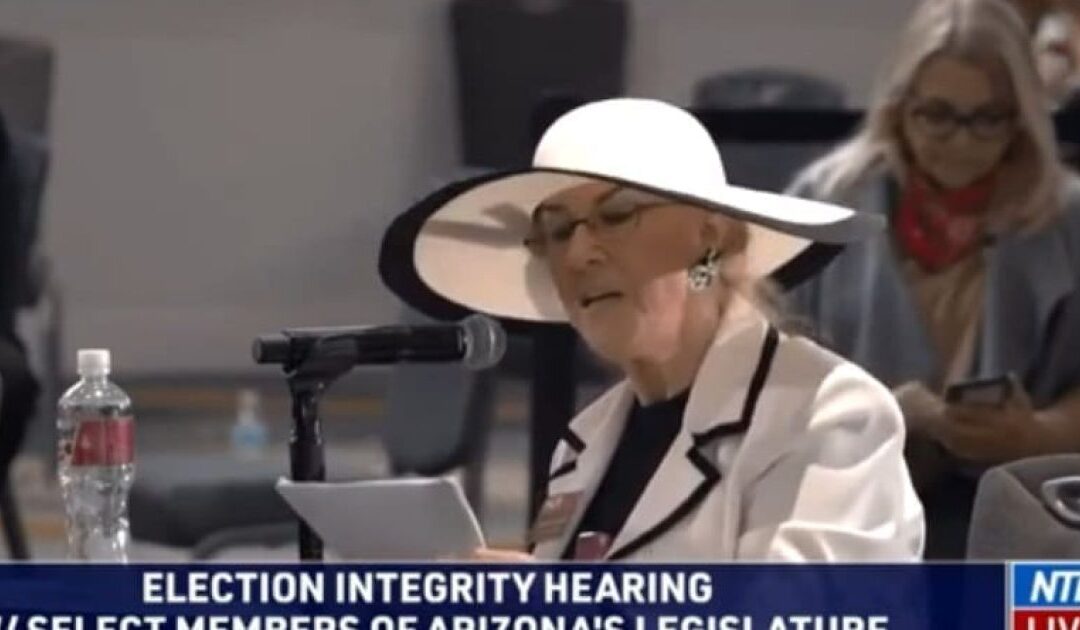
See Ms. Brickman’s testimony after the 2020 election in front of Rudy Giuliani and the world.

Postscript from Ms. Brickman:

I understand that reasonable people may continue reaching different conclusions.

What I can say with certainty is that the events described in these pages were real to those of us who experienced them firsthand.

The meetings were real.
The pressure was real.
The testimony was real.
The documents were real.

And the decisions made in those moments carried consequences that extended far beyond politics.

I did not enter the 2020 election process expecting controversy, national attention, or legal threats. I became involved because I believed citizens had both a right and a responsibility to observe and participate in the electoral process honestly and transparently.

When concerns arose, I documented them.
When questions remained unanswered, I spoke publicly about them.

And when pressure was applied to remain silent, I chose not to remain silent.

History will ultimately decide how the events surrounding the 2020 election are remembered. My responsibility was never to determine history’s final judgment.

My responsibility was simply to tell the truth about what I personally witnessed, preserve the records I believed mattered, and leave future generations with an honest account of one of the most controversial periods in modern American election history.

It is my HOPE that the TRUTH will eventually PREVAIL!

Linda Brickman

PS: I still wear a hat every day.

The post The Hatlady’s Reflection of the 2020 Election Process – PART I appeared first on The Gateway Pundit.

Go to Source
Author: Joe Hoft

Buck Sexton: What I heard in the White House

Buck Sexton: What I heard in the White House

Buck Sexton: What I heard in the White House
May 29, 2026

(Note: Thank you for supporting businesses like those presenting a sponsored message below and ordering through the links below, which benefits Gateway Pundit. We appreciate your support!)

Donald Trump smiles while seated at the Resolute Desk in the Oval Office, accompanied by a man in a suit, with American flags in the background.

Hey, it’s Buck Sexton.

Things are happening FAST. So I wanted to get this to you ASAP.

I was recently in the White House meeting with President Trump.

And I have every reason to believe that he is going to make a major announcement any day now that could send a handful of tiny Silicon Valley firms soaring…

The facts:

  • The Iran excursion (and Venezuela raid before that) demonstrated a new class highly advanced AI. (Take a look at this jaw dropping new AI here.)

  • Trump wants more of it immediately – not just for the military but ALSO to use in manufacturing and industry to boost the economy before the mid-terms.

  • I believe the administration is about to announce an estimated $2.2 trillion 10 year plan to unleash it….

Put all that together and you get one conclusion:

I believe this could be the biggest tech initiative in U.S history.

That means the under the radar companies responsible for building these AI systems could see massive stock surges when the news gets out.

In fact, based on my talks with folks inside the Trump administration – and my research, — I’ve identified three companies that I believe could get huge contracts any day now.

This is why I’m rushing this to you now at short notice… today.

Watch my short briefing now… so you can get ahead of the crowd on this.

The post Buck Sexton: What I heard in the White House appeared first on The Gateway Pundit.

Go to Source
Author: Promoted Post