Romania’s Poison Mystery: Ministers, Intelligence Chiefs, Public Figures and Mercury Allegations Haunt Political Elite

Romania’s Poison Mystery: Ministers, Intelligence Chiefs, Public Figures and Mercury Allegations Haunt Political Elite

Romania’s Poison Mystery: Ministers, Intelligence Chiefs, Public Figures and Mercury Allegations Haunt Political Elite
May 29, 2026

Cozmin Gusa, Romanian investigative journalist Via mediafax.ro

The renewed focus on the alleged poisoning of former Romanian minister Doina Pană—coupled with similar, more recent cases—has revived public debate over a string of mysterious illnesses targeting Romanian political figures over the last two decades.

Some observers say similarities between these cases—sudden health collapses, confirmed heavy metal contamination, years of suffering, and investigations that either stalled or quietly disappeared—are simply too striking to ignore outright.

One of the most frequently cited examples is former Interior Minister Ioan Rus, of the Romanian Social Democratic Party (PSD). According to reports, Rus allegedly suffered prolonged poisoning with heavy metals while serving at the highest levels of government.

The symptoms were severe and debilitating. Rus reportedly lost nearly 100 pounds as his health deteriorated dramatically over an extended period.

Friends and associates described a prolonged struggle between life and death. He underwent treatment in multiple hospitals before eventually seeking care abroad, including in Vienna.

People close to the case say Romanian authorities never seriously clarified what happened. Despite widespread speculation and internal discussions within political circles, the matter faded without definitive public conclusions.

The allegations surrounding Rus are especially striking because they fit a pattern repeatedly mentioned in discussions about political poisonings: slow exposure through everyday consumables such as tea, coffee, or juice.

That same alleged method was later described by Doina Pană, the former Minister of Water and Forests, herself. She believes mercury may have been administered through fruit juice prepared at the ministry by someone she trusted.

Another case drawing renewed attention is that of former PSD deputy Vasile Bleotu. Bleotu became known for leading parliamentary efforts targeting figures tied to the administration of former President Traian Băsescu.

Shortly after his political offensive intensified, Bleotu reportedly developed serious medical problems. According to accounts cited in Romanian media commentary, tests later revealed dangerously high mercury contamination levels in his body.

Bleotu survived, but his political career effectively ended. Supporters and allies claimed the poisoning was linked to his anti-corruption investigations and political activities.

Yet, just as in Pană’s case, no clear legal resolution emerged. The allegations remained suspended between rumor, medical evidence, and institutional silence.

Another controversial figure mentioned in connection with alleged poisoning is the late Radu Timofte, former director of Romania’s domestic intelligence service, the SRI.

Commentators and former associates have claimed Timofte also suffered poisoning before his death, though the circumstances were never publicly clarified in a conclusive manner.

Just last week, an anti-establishment think-tank founder and pro-Georgescu publisher was hospitalized, and found himself fighting for his life on an IV drip. Speaking to The Gateway Pundit following a recent toxicology report, he revealed that he tested positive for both lead and mercury poisoning. He is currently recovering in a Swiss hospital.

For critics of Romania’s political system, these recurring allegations point toward something larger than isolated incidents, arguing that sensitive cases involving powerful interests too often dissolve into ambiguity once they approach politically dangerous territory.

The accusations have fueled broader fears about corruption, impunity, and the vulnerability of officials who challenge entrenched networks tied to money and influence.

Some commentators have also drawn historical parallels between these allegations and methods associated with Romania’s communist-era security apparatus. During the Cold War, intelligence services across the Eastern Bloc—including the feared Securitate in communist Romania and the Soviet KGB—were frequently accused of using poison, intimidation, and covert tactics against perceived enemies of the regime.

While there is no evidence directly linking modern cases to former communist structures the persistence of unresolved poisoning allegations reflects a lingering culture of opacity and impunity that appears to have survived the post-1989 transition. For many Romanians, the fear is not simply about individual incidents, but about whether parts of the old system’s mentality—where powerful networks operated beyond public accountability—ever truly disappeared.

In Pană’s case, those networks allegedly centered around illegal logging and the timber industry. In others, the motives are less clear—but the outcomes followed a disturbingly similar trajectory.

The lack of transparency has only deepened public mistrust. In a country already struggling with corruption scandals and institutional skepticism, unresolved poisoning allegations carry enormous political weight.

The controversy also raises uncomfortable questions about the limits of accountability inside the Romanian state. If senior officials and public figures can allegedly suffer mercury poisoning without definitive answers ever emerging, what confidence can ordinary citizens have in the system?

Whether those suspicions are ever fully proven remains uncertain. But the persistence of these allegations—and the absence of clear resolutions—continues to haunt Romania’s political landscape.

The post Romania’s Poison Mystery: Ministers, Intelligence Chiefs, Public Figures and Mercury Allegations Haunt Political Elite appeared first on The Gateway Pundit.

Go to Source
Author: Robert Semonsen
BREAKING: Clinton Judge ‘Temporarily’ BLOCKS Trump’s $1.8 Billion Compensation Fund for Victims of Wrongful DOJ Prosecutions

BREAKING: Clinton Judge ‘Temporarily’ BLOCKS Trump’s $1.8 Billion Compensation Fund for Victims of Wrongful DOJ Prosecutions
May 29, 2026

President Trump’s efforts to deliver justice for victims of wrongful prosecutions by the Department of Justice are now on hold thanks to an activist judge.

As Reuters reported, U.S. District Court Judge Leonie Brinkema of the Eastern District of Virginia, who was appointed by former President Bill Clinton, ‘temporarily’ blocked Trump from setting up his $1.8 billion fund to compensate these victims of the Deep State.

From Reuters:

U.S. ​judge on Friday temporarily ‌blocked President Donald Trump’s administration from setting up a ​nearly $1.8 billion fund to ​compensate victims of what ⁠Trump has called government “weaponization.”

The ​order by U.S. District ​Judge Leonie Brinkema of the Eastern District of Virginia blocks the ​Trump administration from “taking ​any further action” to set up ‌or ⁠operate the fund while the judge hears additional legal arguments.

As The Gateway Pundit previously reported, the Trump administration announced earlier this month the creation of a $1.776 billion fund to compensate those who believe they have been unjustly investigated for political purposes, including by the Biden regime.

The fund resulted from a settlement that resolved Trump’s lawsuit against the IRS following the leak of his tax returns. Naturally, Democrats and liberal activists are alleging a corrupt bargain.

This is a breaking news story and will be updated.

The post BREAKING: Clinton Judge ‘Temporarily’ BLOCKS Trump’s $1.8 Billion Compensation Fund for Victims of Wrongful DOJ Prosecutions appeared first on The Gateway Pundit.

Go to Source
Author: Cullen Linebarger

NEW: Trump ZINGS Jill Biden After Claiming She Thought Joe Biden Was Stroking Out During Debate

NEW: Trump ZINGS Jill Biden After Claiming She Thought Joe Biden Was Stroking Out During Debate

NEW: Trump ZINGS Jill Biden After Claiming She Thought Joe Biden Was Stroking Out During Debate
May 29, 2026

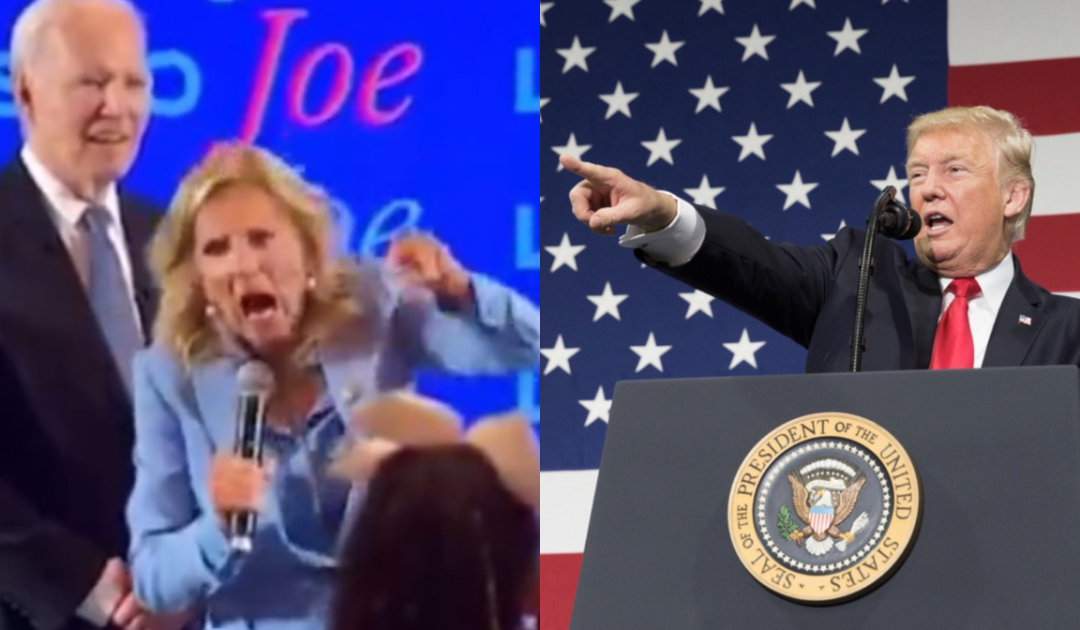
Joe Biden and Jill Biden appear at a campaign event, while Donald Trump speaks passionately at a rally, highlighting their contrasting political styles.

President Trump slammed former First Lady Jill Biden in a Truth Social post on Friday morning, responding to her opening up about Biden’s debate performance against President Trump in 2024. 

Biden performed so poorly that they tried to kill President Trump two weeks later at his July 13 rally in Butler, Pennsylvania. When that failed, they replaced Biden as the nominee with Kamala Harris.

As The Gateway Pundit reported, Jill Biden, in a recent interview, claimed that Biden’s debate performance against Trump “frightened” her and that she thought he was having a stroke when he crashed out on the stage.

“I was frightened, because I had never ever seen Joe like that before or since. Never since,” Jill Biden told CBS News Sunday Morning’s Rita Braver. “As I watched it, I thought, ‘Oh, my God, he’s having a stroke.’ And it scared me to death.”

“Oh My God He’s Having a Stroke!” – Jill Biden Says She Was “Frightened” by Joe Biden’s Debate Performance and Thought He Was Stroking Out in New Shock Claim (VIDEO)

However, some may recall Jill's raving review of the debate at the Democrats' watch party immediately afterward.

Talking to him like a two-year-old, Jill exclaimed to her husband, "Joe, you did such a great job, you answered every question, you knew all the facts!" She continued, "And let me ask the crowd, what did Trump do? Lie!"

WATCH:

If, in fact, she did think Joe Biden was having a stroke, Trump said, "any good wife" would have "rushed onto the stage to help her troubled husband."

Trump cheered on Friday that Jill Biden is "finally admitting that she did NOT know what went wrong with Sleepy Joe during our spectacular, and highly rated, 2024 Presidential Debate, where Joe was not exactly performing to the highest level of debate standards."

"The only thing she failed to mention was how well I was doing prior to his near total collapse," he continued. "In other words, as many have asked, did my strong performance in that debate cause him to plain and simple “choke,” leading to his ignominious defeat, or were other reasons the cause? Nobody else knows the answer to that, BUT I DO!!!"

Jill Biden is now out there finally admitting that she did NOT know what went wrong with Sleepy Joe during our spectacular, and highly rated, 2024 Presidential Debate, where Joe was not exactly performing to the highest level of debate standards. She said that she thought he was having a “stroke,” and various other really bad things, and yet never rushed onto the stage to help her troubled husband, as any good wife would do.

The only thing she failed to mention was how well I was doing prior to his near total collapse. In other words, as many have asked, did my strong performance in that debate cause him to plain and simple “choke,” leading to his ignominious defeat, or were other reasons the cause? Nobody else knows the answer to that, BUT I DO!!!

The post NEW: Trump ZINGS Jill Biden After Claiming She Thought Joe Biden Was Stroking Out During Debate appeared first on The Gateway Pundit.

Go to Source
Author: Jordan Conradson

Minutes 8 and 9: Football, Freedom, and the Fight for Iran’s True Identity

Minutes 8 and 9: Football, Freedom, and the Fight for Iran’s True Identity

Minutes 8 and 9: Football, Freedom, and the Fight for Iran’s True Identity
May 29, 2026

Minutes 8 and 9: Football, Freedom, and the Fight for Iran’s True Identity

The following is from a Substack piece by Banafsheh Zand, republished with permission.

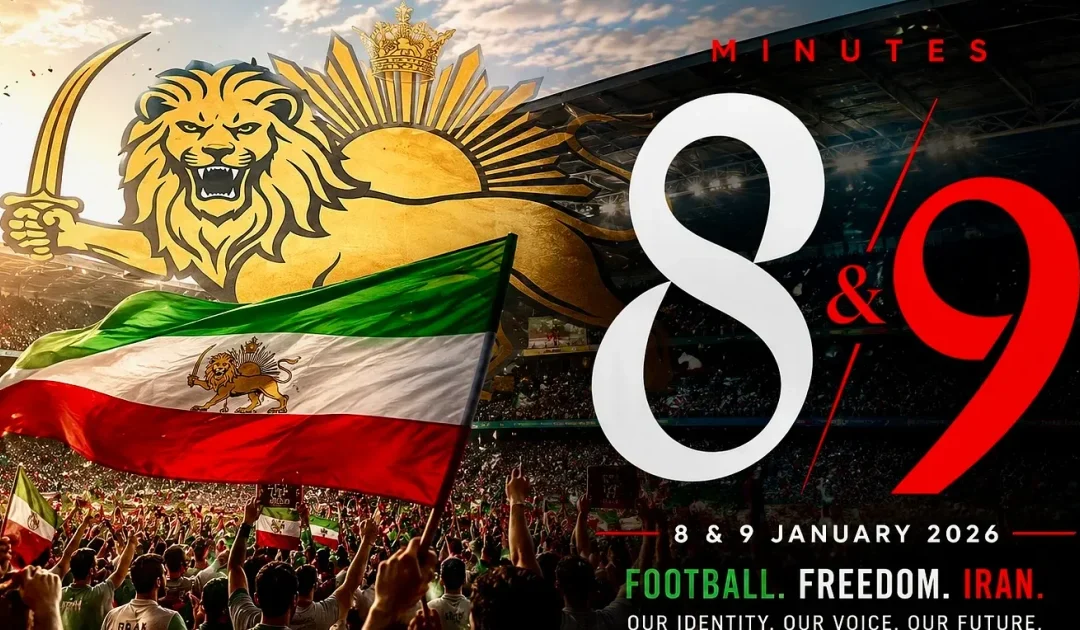
The Minutes 8 and 9 project is more than a clothing campaign; it is a direct challenge to the Islamic Republic’s control over Iranian football, identity, and the international narrative surrounding both. Built around the website minutes8-9.com, the initiative uses T-shirts and caps marked “Minutes 8 & 9 Iran” as symbols of protest during upcoming World Cup matches and football events, particularly in Los Angeles and Seattle, where Iranian fans are expected to gather in large numbers.

The name Minutes 8 and 9 refers to January 8 and 9 of this year, when the Khomeinist regime’s violence against Iranian protesters became visible to the world in real time. On those days, thousands of Iranians demanding freedom, dignity, and basic rights faced gunfire, beatings, arrests, and organized state brutality. The campaign’s name is therefore not abstract branding; it is a reference to the regime’s crackdown, marking the moment the world watched the Islamic Republic answer public protest with bloodshed.

At its core, the campaign reclaims Iranian identity from a regime that has spent decades attempting to monopolize it. Organizers argue that football—perhaps more than any other public arena—has become a political instrument of the Islamic Republic. What should be a source of national pride and unity has instead become tightly managed by a dictatorship demanding ideological conformity from players, fans, journalists, and even spectators.

The campaign emerges amid growing anger over FIFA’s repeated willingness to accommodate the Islamic Republic’s demands and sensitivities while restricting anti-regime Iranian expression inside stadiums. Iranian fans attending international matches increasingly face disputes over flags, banners, and symbols—especially the historic Lion and Sun emblem associated with Iran before the 1979 Islamic Revolution. Many Iranians, particularly in the diaspora, view the Lion and Sun not as a partisan political symbol but as part of Iran’s historical identity. Yet FIFA and local stadium authorities have repeatedly restricted or scrutinized its display during Iran matches, often under pressure from Khomeinist regime agents.

Critics argue that FIFA has effectively enabled the regime’s attempts to control how Iran is represented internationally. To many Iranian fans, the contradiction is obvious: a regime accused of repression, censorship, and violence receives full representation on the world stage, while ordinary Iranians displaying alternative symbols of national identity are treated as a security or political problem.

The Minutes 8 and 9 campaign argues that this dynamic reflects a larger reality about football under the Islamic Republic. Since 1979, the regime has viewed sports not merely as entertainment but as an extension of state ideology. Football players are expected to remain politically compliant. Public dissent is punished. National representation is carefully controlled. Stadiums have often functioned as spaces of surveillance and political intimidation rather than open public gathering places.

No example better illustrates this reality than the story of Sahar Khodayari, known internationally as the “Blue Girl.”

Khodayari, a young supporter of Esteghlal Football Club, attempted to enter a stadium in 2019 disguised as a man. Women had been effectively banned or severely restricted from attending men’s football matches in Iran for decades following the Islamic Revolution. After arrest and prosecution, she set herself on fire outside a Tehran courthouse and later died from her injuries.

Her death sparked international outrage and exposed the regime’s treatment of Iranian women in sports and public life. For years, Iranian women had fought to attend football matches despite harassment, arrests, intimidation, and humiliation. Some disguised themselves as men to enter stadiums. Others publicly campaigned for equal access, often at significant personal risk.

The regime justified the restrictions with religious and moral arguments, claiming football stadiums were inappropriate for women because of chanting, crowds, and male spectators. But critics—including many Iranians familiar with Islamic jurisprudence—have long argued these claims were entirely fallacious. There is no explicit prohibition in the Quran, Sharia, or mainstream Islamic legal tradition banning women from attending public sporting events or large public gatherings such as football matches. The restrictions were never rooted in any clear religious mandate. Rather, opponents argue, the regime manufactured pseudo-religious justifications to assert ideological control over public space and provoke a culture war designed to reinforce its authority.

To many Iranians, the stadium bans became emblematic of the Islamic Republic’s broader pattern of political fakery: presenting authoritarian social control as religious necessity. The issue was never genuinely about faith but about domination—controlling visibility, public life, and who could participate in one of the country’s most emotionally unifying cultural spaces. The regime’s repeated invocation of religion in this context was widely viewed by critics as an abuse of religion itself, using selective moral panic to justify restrictions that had no serious theological basis.

Despite periodic criticism from international organizations, FIFA consistently stopped short of serious action against the Khomeinist regime. While issuing occasional statements calling for women’s access to stadiums, FIFA largely accepted symbolic gestures and limited arrangements that left the underlying system intact.

That frustration now extends to FIFA’s handling of anti-regime Iranian fans abroad. The Minutes 8 and 9 project argues that international football institutions have repeatedly shown more sensitivity toward the Islamic regime’s political concerns than toward the rights of ordinary Iranians seeking to express their identity or opposition peacefully.

The campaign also points to the treatment of prominent Iranian football figures who have criticized the government or shown solidarity with protesters. Former national team stars such as Ali Karimi and Ali Daei have faced mounting pressure after publicly supporting anti-regime demonstrations.

Karimi became one of the most outspoken athlete voices supporting nationwide protests following Mahsa Amini’s death in 2022. Iranian authorities reportedly responded with legal threats, financial pressure, and public targeting. Daei, one of Iran’s most respected athletes, reportedly faced travel restrictions and pressure on his businesses after expressing solidarity with demonstrators. Their cases demonstrate that even globally celebrated national icons are not exempt from retaliation when they cross the regime’s political boundaries…

(Read more here)

Please, buy the shirts, wear them proudly, and make sure every person you meet knows what they stand for—because when millions of voices echo the truth, the Iranian people’s message becomes unstoppable.


The post Minutes 8 and 9: Football, Freedom, and the Fight for Iran’s True Identity appeared first on The Gateway Pundit.

Go to Source
Author: Joe Hoft

Woke Judge Suspended For Attacking White People & Tim Walz Panders For George Floyd On Memorial Day? | Drew Hernandez

Woke Judge Suspended For Attacking White People & Tim Walz Panders For George Floyd On Memorial Day? | Drew Hernandez

Woke Judge Suspended For Attacking White People & Tim Walz Panders For George Floyd On Memorial Day? | Drew Hernandez

May 29, 2026

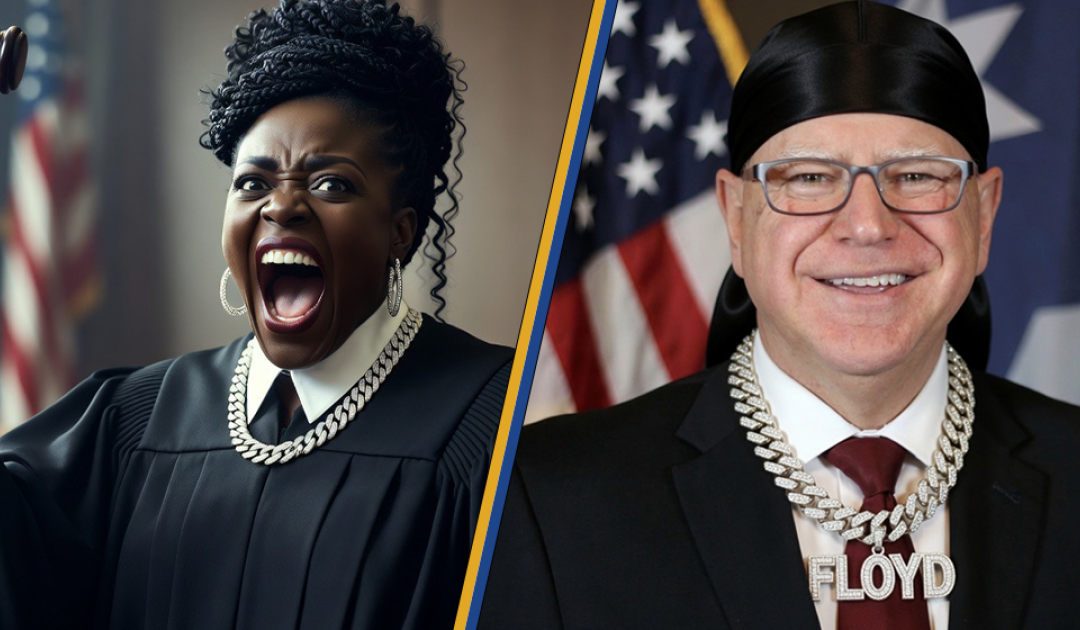
A judge in a black robe passionately raises a gavel, while a man in a suit and chain necklace smiles, both set against a backdrop of American flags.

Woke Alabama probate judge Yashiba Glenn Blanchard has been suspended after a state complaint accused her of making racist remarks about a white court clerk and failing to promptly handle critical cases involving hospitalized patients.

According to the Judicial Inquiry Commission filing, Blanchard allegedly responded to a staffer who said she liked Chief Clerk Amanda Reid, who is white, by saying, “Oh, I forgot you all like kissing white ass,” a remark cited as part of the misconduct charges.

The complaint further alleges that Blanchard repeatedly delayed or canceled hearings for patients involuntarily committed to hospitals, with one attorney emailing that he was “so worried that my client is going to die” if another continuance were granted.

Hospital officials warned that one canceled docket left a patient hospitalized an extra two weeks and disrupted unit flow, delaying care for other patients needing admission and posing potential risks to public safety.

Investigators say Blanchard told staff she was late to an involuntary commitment docket because she “had three dogs to walk,” and that she did not hear a single involuntary commitment case for the first nine months of her term, creating what they describe as a chaotic backlog.

In all, the Judicial Inquiry Commission has brought seven charges accusing Blanchard of violating multiple provisions of the Alabama Canons of Judicial Ethics, leading to her indefinite suspension while the case proceeds.

In Minnesota, Gov. Tim Walz is under fire after local outlet Alpha News and other media reported that he was a no-show at a Memorial Day ceremony at Fort Snelling National Cemetery, where he was listed in the program as a speaker, while instead appearing at George Floyd Square.

Video from the “Rise & Remember” festival at George Floyd Square shows Walz laying flowers, joining the crowd for music and dancing during events marking the sixth anniversary of Floyd’s death, held on Memorial Day.

In one widely shared clip, Walz can be heard joking that his moves were “not bad for an old white guy,” a line that drew cheers on-site by black activists but sparked online outrage from critics who called his absence from the Fort Snelling program a “slap in the face” to veterans.

Walz’s office has so far not publicly explained why he missed the Fort Snelling ceremony, even as Republican officials and veterans’ advocates on social media accuse him of prioritizing the Floyd commemoration over honoring fallen service members.

Sponsor | https://www.purgestore.com | Use promo code DREW for 20% off and support The Gateway Pundit today!

Follow Drew on X: https://x.com/DrewHLive
Follow Drew on Rumble: https://rumble.com/DrewHernandez

The post Woke Judge Suspended For Attacking White People & Tim Walz Panders For George Floyd On Memorial Day? | Drew Hernandez appeared first on The Gateway Pundit.

Go to Source
Author: Drew Hernandez